Marine Biodiversity Science Center

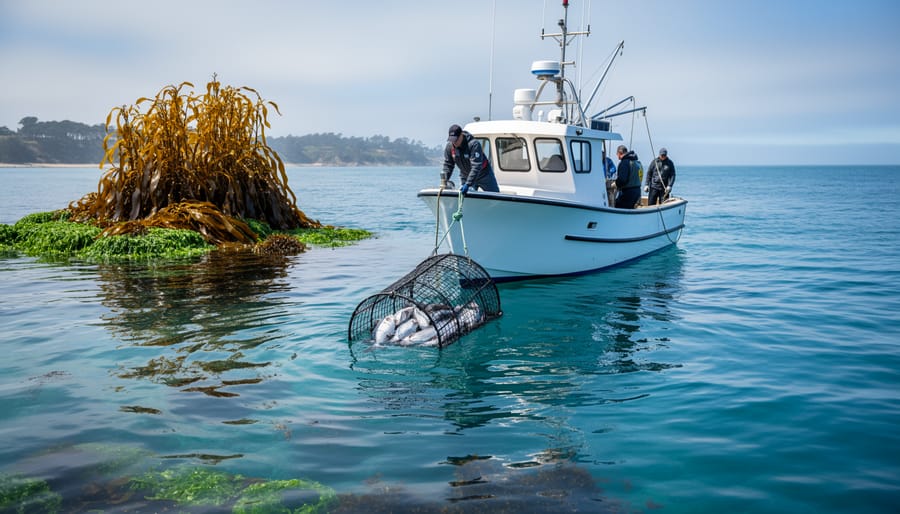
Ethical fishing practices are methods of harvesting fish and seafood that minimize environmental harm, protect marine ecosystems, and ensure fair treatment of workers throughout the supply chain. These approaches stand in sharp contrast to industrial fishing methods that have pushed one-third of global fish stocks into overfished territory and devastated countless ocean habitats.
The stakes couldn’t be higher. Our oceans face unprecedented pressure from overfishing, destructive gear that scrapes the seafloor clean, and bycatch that kills millions of dolphins, sea turtles, and sharks each year. Yet the fishing industry remains vital to global food security, providing protein for over 3 billion people and livelihoods for roughly 60 million fishers and fish farmers worldwide.
This is where ethical fishing becomes essential. Rather than abandoning seafood entirely, these practices offer a path forward that balances human needs with ocean health. When fishers use selective gear that targets specific species and sizes, when they respect seasonal closures that allow populations to rebuild, and when they avoid sensitive habitats like coral reefs and spawning grounds, fishing can actually coexist with thriving marine ecosystems.
Dr. Sarah Chen, a marine biologist who has spent fifteen years researching fishery impacts in the Pacific Northwest, puts it simply: “We’ve seen firsthand how transitioning from bottom trawling to trap fishing can allow seafloor communities to recover within a single season. The fish come back, the ecosystem rebounds, and fishers maintain their catch rates long-term.”
The connection to sustainable fishing is direct. Ethical practices form the foundation of truly sustainable fisheries, ensuring that the seafood on your plate today doesn’t compromise ocean abundance for future generations. This article will walk you through what ethical fishing looks like in practice, the different approaches fisheries use, and how you can support these methods through your choices and actions.
What Ethical Fishing Practices Mean
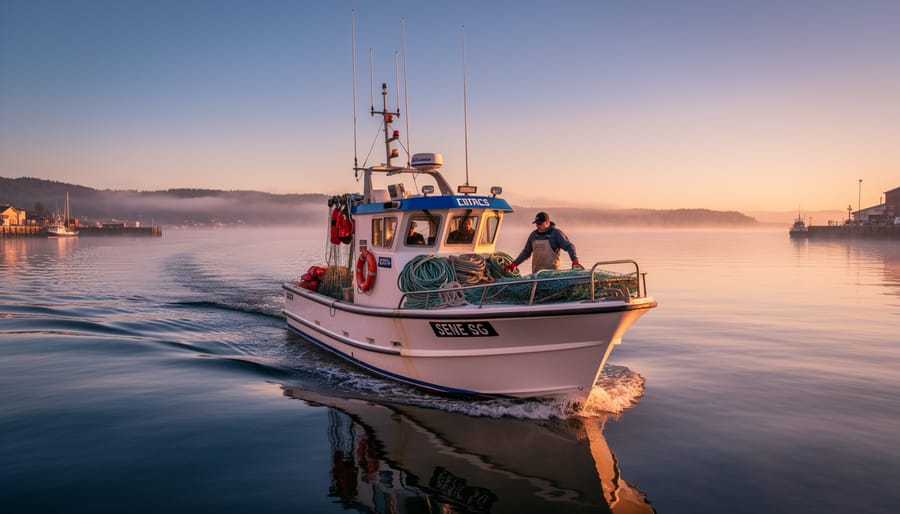
Ethical fishing practices represent a comprehensive approach to harvesting marine life that balances human needs with the long-term health of ocean ecosystems. At their core, these practices prioritize four interconnected pillars: protecting marine environments from degradation, ensuring humane treatment of fish and other sea life, supporting the livelihoods and rights of fishing communities, and maintaining economically viable fisheries for future generations.
What sets ethical fishing apart from conventional methods is its foundation in scientific understanding and precautionary principles. Rather than maximizing short-term catch volumes through destructive methods that damage habitats and deplete populations, ethical approaches use selective gear, respect breeding cycles, and stay within science-based limits. These practices actively prevent the cascade of ecological consequences that conventional industrial fishing often triggers, from collapsing food webs to destroying critical nursery habitats.
To understand ethical fishing, several key concepts provide essential context:
- Bycatch
- The unintentional capture of non-target species, including juvenile fish, seabirds, marine mammals, and sea turtles. Ethical practices use specialized gear and techniques to minimize these harmful catches.
- Overfishing
- Harvesting fish faster than populations can reproduce and replenish themselves, leading to stock depletion and ecosystem imbalance. Ethical fishing explicitly avoids this through strict catch limits.
- Maximum Sustainable Yield
- The largest catch that can be removed from a fish population year after year without causing long-term decline. This scientific benchmark guides ethical harvest levels.
- Ecosystem-Based Management
- A holistic approach that considers entire marine ecosystems rather than single species, accounting for predator-prey relationships, habitat needs, and environmental changes when setting fishing rules.
- Fair Trade Fishing
- Certification systems ensuring fishers receive fair compensation, work in safe conditions, and have decision-making power in how fisheries are managed.
These practices have become critical for marine biodiversity in 2026 because conventional fishing has pushed numerous species toward commercial extinction while disrupting entire ocean food webs. Ethical fishing offers a proven pathway to reverse these trends, allowing depleted populations to recover while maintaining fishing as a viable livelihood and food source.
How Ethical Fishing Methods Work
Selective Gear and Techniques
Selective gear transforms fishing by engineering precision into the catch. Circle hooks, for instance, curve inward so the hook point turns toward the shank, catching fish in the jaw corner rather than deep in the throat. This design means that non-target species like sea turtles can swallow baited hooks but swim away unharmed as the curved shape fails to lodge in their digestive tract, field trials in Ecuadorian fisheries show circle hooks reduce sea turtle bycatch by more than 60% without sacrificing target catches.
Turtle excluder devices (TEDs) function like escape hatches built into trawl nets. Metal or plastic grids angle across the net’s throat; small shrimp pass through to the cod end while larger animals, turtles, rays, juvenile sharks, strike the bars and exit through a trapdoor before reaching the catch bag. The grid spacing is calibrated to the fishery’s target species, ensuring shrimp retention while releasing everything above a certain size.
Modified net designs further refine selectivity. Raised footropes on bottom trawls lift the net mouth above flatfish resting on the seabed, letting them pass underneath while catching swimming species above. Escape panels use larger mesh sections placed where juvenile fish concentrate, allowing undersized individuals to slip out while adults remain caught.
Science-Based Catch Limits
Science-based catch limits prevent overfishing by capping harvests at levels that allow fish populations to replenish. Marine scientists establish these quotas through stock assessments, comprehensive evaluations that combine field data, historical catch records, and biological knowledge. Researchers count fish through underwater surveys, analyze age and growth rates from sample catches, and track reproductive success. These stock assessment model inputs feed into population models that simulate how many fish can be removed without triggering decline.
Institutions like the Marine Biodiversity Science Center contribute essential ecosystem monitoring data. Their research tracks not just target species but the prey they depend on, the predators that feed on them, and environmental factors like water temperature shifts. This ecosystem perspective ensures science-based limits account for real-world complexity rather than treating each species in isolation.
Fishery managers use these scientific recommendations to set annual quotas and seasonal closures, adjusting them as new data arrives. When assessments show a stock is rebuilding, quotas can increase. When warning signs appear, limits tighten immediately, a responsive system that balances fishing livelihoods with long-term marine health.
Traceability and Certification Systems
Traceability systems track seafood from the moment it’s caught to when it reaches consumers, creating an unbroken chain of custody that prevents illegal fish from entering the market. Modern vessels use electronic logbooks and GPS monitoring that record catch locations, species, and quantities in real time. This data flows to government databases where fisheries managers verify compliance with quotas and area restrictions.
Third-party certification programs like the Marine Stewardship Council assess entire fisheries against environmental standards, examining stock health, ecosystem impacts, and management effectiveness. Certified fisheries earn a recognizable eco-label that helps consumers identify responsibly sourced seafood. DNA testing and blockchain technology are increasingly used to verify species identity and catch history, addressing fraud that undermines ethical fishing efforts. These overlapping systems work together to reward compliant fishers with market access while exposing operations that violate sustainability principles.
Different Approaches to Ethical Fishing
Pole-and-Line Fishing
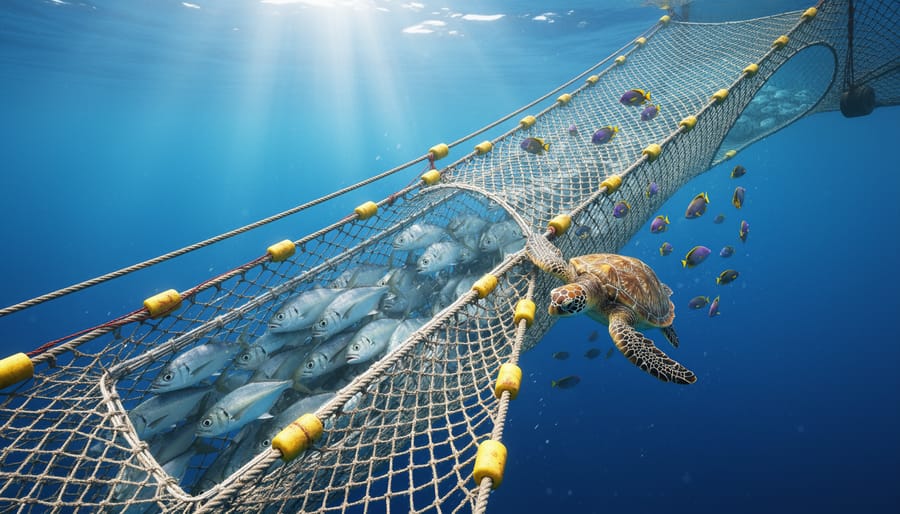
Pole-and-line fishing represents one of the most selective ethical fishing techniques available to commercial fishers. Each fish is caught individually using a baited hook and line, allowing fishers to immediately release unwanted species, juveniles, or protected animals unharmed. This method is particularly effective for skipjack and albacore tuna, where vessels attract schools to the surface using live bait before crew members rapidly catch fish one at a time. While pole-and-line operations require more labor and typically harvest smaller volumes than purse seining or longlining, they command premium prices in markets that value sustainability. The Maldives pole-and-line tuna fishery, for instance, has maintained healthy stocks for generations while supporting thousands of fishing jobs, proving the method’s economic viability when paired with proper certification and consumer awareness.
Trap and Pot Fishing
Trap and pot fishing uses rigid or collapsible cages placed on the seafloor, baited to attract target species like lobster, crab, and some finfish. The key to their selectivity lies in precisely sized entrance openings, large enough for market-sized animals to enter but too small for juveniles. Escape vents built into the sides allow undersized catch and non-target species to exit before retrieval, dramatically reducing unintended mortality.
Modern designs incorporate biodegradable panels that deteriorate if traps are lost, preventing “ghost fishing” where abandoned gear continues catching animals indefinitely. Rectangular vents work better than circular ones for crustaceans, whose body shapes vary by species. Fishers set traps in strings along the bottom, marked by surface buoys, and check them on regular cycles, typically every few days, allowing time for unwanted catch to escape while keeping target species contained until harvest.
Managed Trawling
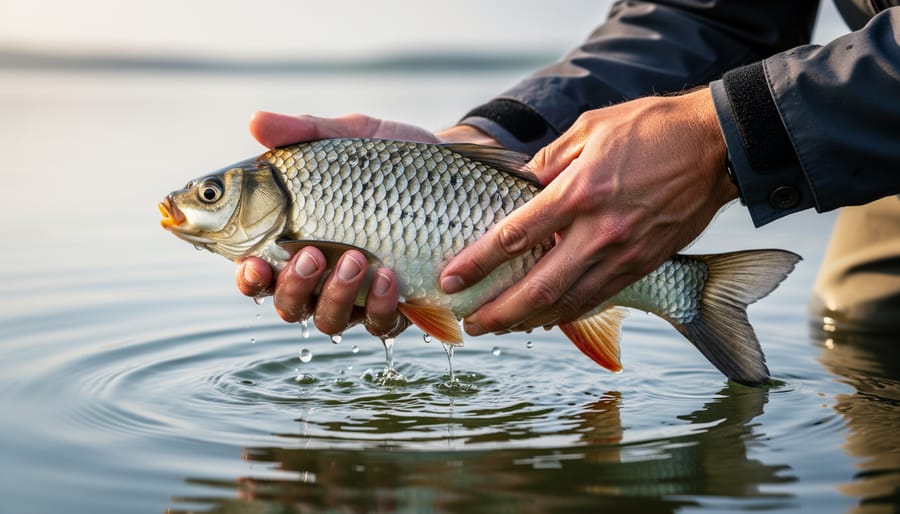
Trawling, dragging weighted nets across the seafloor or through midwater columns, has earned its reputation as one of fishing’s most destructive methods. But modified trawling can significantly reduce its ecological footprint when paired with smart regulations. Raised footropes lift the net’s bottom edge several inches off the seafloor, allowing flatfish and bottom-dwelling creatures to pass underneath while still catching target species. Escape panels built into net designs use larger mesh sections that let juveniles and non-target fish swim free before they reach the cod end where the catch accumulates.
Seasonal and spatial closures protect spawning grounds and sensitive habitats during critical periods. Some fisheries now use real-time monitoring systems that alert vessels when bycatch rates spike, prompting immediate relocation. While managed trawling can’t match the selectivity of hook-and-line methods, these adaptations demonstrate how even controversial techniques can evolve toward sustainability when backed by research and enforcement.
Community-Based Fishing Rights
Community-based fishing rights transfer management authority from distant government agencies to the people who depend on local waters daily. Under territorial use rights in fisheries (TURFs), specific communities receive exclusive access to defined coastal areas, creating strong incentives to protect fish stocks rather than race to catch everything before competitors arrive. A fishing cooperative in Chile’s artisanal sector, for example, might manage kelp beds and benthic species within their designated zone, setting their own harvest schedules based on population monitoring.
Co-management systems formalize partnerships between government scientists and fishing communities, blending regulatory oversight with traditional ecological knowledge. Indigenous fishing practices often incorporate seasonal closures, size restrictions, and harvest rotations that predate modern conservation science yet achieve similar goals. In the Pacific Northwest, tribal nations manage salmon runs using centuries-old knowledge of migration patterns alongside contemporary stock assessments.
These approaches work because they align economic self-interest with conservation. When fishers know their restraint today means abundance tomorrow, and their children will inherit the same fishing grounds, they become the most effective stewards of marine resources.
Where and How Ethical Fishing Is Applied
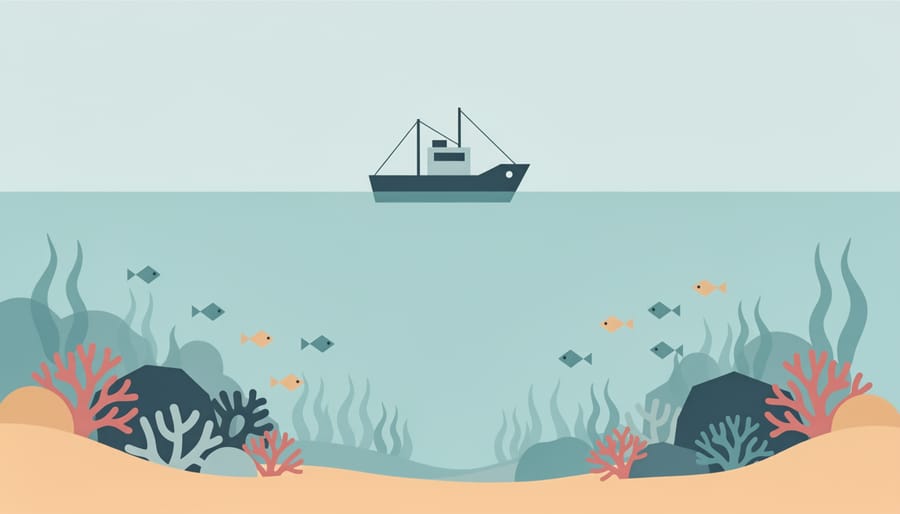
Commercial Fishery Applications
Large-scale commercial fisheries have proven that ethical practices can work at industrial scale without sacrificing profitability. The Alaska pollock fishery transformed in the 1990s after near-collapse, adopting strict bycatch limits and observer programs that now make it one of the world’s most sustainable whitefish sources. Vessels use modified trawl nets with escape panels that reduce unwanted catch by 60%, while real-time data sharing helps boats avoid areas with high bycatch risk.
Third-party certification, particularly Marine Stewardship Council standards, has created market incentives for reform. Certified fisheries gain access to premium buyers and command 8-15% higher prices, offsetting the costs of monitoring and selective gear. The Western Australian rock lobster fishery invested heavily in habitat protection and stock rebuilding after certification, seeing catch values increase by $180 million over a decade despite lower volumes.
Economic analysis shows that reformed fisheries achieve long-term stability that outweighs short-term profit losses. Fishers in certified operations report more predictable income and better working conditions, while companies reduce regulatory conflicts and reputational risks. The transition requires upfront investment in equipment and training, but returns typically materialize within three to five years through improved stock health and market access.
Small-Scale and Artisanal Fishing
Small-scale fisheries account for more than half of the world’s fish catch destined for direct human consumption, yet they often operate with minimal formal oversight. In these community-based operations, ethical practices frequently emerge from necessity rather than regulation, fishers who depend on the same waters year after year develop intimate knowledge of fish behavior, seasonal patterns, and ecosystem limits that inform sustainable harvests.
Traditional ecological knowledge plays a central role here. Indigenous and artisanal fishing communities have refined techniques over generations that naturally align with ethical principles: lunar calendar-based fishing seasons, gear restrictions that allow juvenile fish to escape, and rotational fishing grounds that give depleted areas time to recover. Programs supporting these fishers now work to codify this knowledge while providing access to improved gear, cold storage, and market connections that reduce waste and increase income.
The challenge lies in helping these operations compete economically with industrial fleets without abandoning their sustainable methods. Microfinance programs, cooperative marketing arrangements, and premium pricing for certified artisanal catch offer pathways forward. When small-scale fishers receive fair compensation for ethical practices they’ve long employed, they become powerful conservation allies while maintaining the livelihoods that sustain coastal communities worldwide.
Recreational Fishing Ethics
Recreational anglers contribute significantly to conservation when they follow ethical practices. Catch-and-release fishing, done properly, allows fish populations to thrive while maintaining fishing opportunities. Using barbless hooks makes release faster and reduces injury, improving survival rates for released fish. Wetting hands before handling catch, minimizing air exposure, and using appropriate tackle for the target species all demonstrate responsible angling.
Fishing licenses do more than grant legal permission, they directly fund habitat restoration, research, and fish stocking programs. Many regions require anglers to complete conservation education courses that teach proper handling techniques, species identification, and local regulations. These programs transform casual fishers into stewards who understand their impact on marine ecosystems and actively protect the waters they enjoy.
The Role of Education in Advancing Ethical Fishing
Education isn’t just supporting ethical fishing, it’s fundamentally reshaping how the industry operates. When fishers understand the science behind stock assessments and ecosystem dynamics, they become active participants in conservation rather than passive rule-followers. Training programs run by research institutions and fishing cooperatives teach practical skills like proper handling techniques that reduce discard mortality, gear modifications that minimize bycatch, and data collection methods that improve fisheries management. These programs transform knowledge into tangible behavioral change across entire fleets.
Consumer education drives market demand for ethically caught seafood. When people learn to read eco-labels, ask questions at fish counters, and understand the difference between wild-caught and farmed species, they create economic incentives for fishers to adopt sustainable methods. Educational campaigns explaining certification standards like Marine Stewardship Council or Ocean Wise help shoppers make informed choices that reward responsible fishing operations. This marketplace pressure often achieves what regulations alone cannot.
Policy support builds on an educated public. Citizens who understand marine ecosystem complexity advocate more effectively for science-based catch limits, protected areas, and enforcement funding. University courses in marine conservation, public lectures at facilities like the Marine Biodiversity Science Center’s education center and documentary films create constituencies that hold governments accountable for ocean stewardship.
Volunteer opportunities multiply the impact of formal education. Community members can join beach cleanups that remove ghost gear, participate in citizen science programs monitoring fish populations, or assist with tagging studies that inform stock assessments. These hands-on experiences build personal connections to marine life while generating valuable data. Organizations seeking volunteers typically offer training that transforms enthusiastic newcomers into knowledgeable advocates who spread conservation messages through their networks, creating ripple effects far beyond individual programs.
Challenges and How They’re Being Addressed
Despite growing awareness, ethical fishing faces real barriers that slow its adoption worldwide. Economic pressures top the list, fishing operations running on thin margins struggle to afford selective gear upgrades or absorb the income loss from reduced catch limits. When a traditional trawler costs $50,000 to retrofit with bycatch reduction devices, small-scale fishers without access to subsidies or loans often can’t make the switch, no matter their commitment to sustainability.
Illegal, unreported, and unregulated fishing undercuts compliant fisheries at every turn. Vessels operating outside the rules flood markets with cheap seafood, making it harder for ethical operations to compete on price. Enforcement across vast ocean areas remains patchy, even well-funded coast guards can’t monitor every boat, and jurisdictional gaps between national waters create loopholes that bad actors exploit.
Climate change compounds these challenges by shifting fish populations into new territories, rendering established quotas and management zones obsolete. Warming waters force species into deeper or poleward ranges, disrupting local fishing economies and making stock assessments less reliable.
Solutions are emerging through collaborative effort. Satellite monitoring systems and electronic catch documentation now track vessels in near-real-time, closing enforcement gaps that previously relied on sporadic inspections. Several coastal nations have formed regional partnerships that harmonize regulations across borders, reducing jurisdictional blind spots.
Financial support programs help bridge the affordability gap. Government grants and industry partnerships now cover gear upgrades in exchange for verified sustainable practices. Consumer-driven demand for certified seafood creates market incentives that reward ethical fishers with price premiums, gradually shifting economic pressure in their favor.
Research institutions are developing adaptive management frameworks that adjust quotas rapidly as species distributions shift. These science-based responses help fishing communities maintain sustainable harvests even as ocean conditions change, protecting both livelihoods and marine ecosystems for the long term.
Common Questions About Ethical Fishing
How can I tell if fish was caught using ethical practices?
Look for third-party certification labels like Marine Stewardship Council (MSC), Aquaculture Stewardship Council (ASC), or Fair Trade Certified on packaging. Many retailers now provide information about catch method and origin, pole-and-line, trap-caught, or responsibly farmed fish are good indicators of ethical sourcing.
Does ethically caught fish cost more?
Certified sustainable seafood often carries a modest price premium, typically 10-20% higher, reflecting the costs of selective gear, lower catch volumes, and certification fees. However, prices vary by species and region, and some ethical options like locally caught seasonal fish can be competitively priced.
Can individual choices really make a difference for fish populations?
Consumer demand directly influences what gets stocked and harvested. When shoppers consistently choose certified sustainable options, retailers respond by sourcing more ethically caught fish, which incentivizes fisheries to adopt better practices and creates market pressure for reform across the industry.
What’s the most effective way to support ethical fishing beyond buying certified seafood?
Advocate for stronger fishing regulations by contacting elected officials, support marine conservation organizations through donations or volunteer work, and share what you’ve learned with friends and family to expand awareness and collective impact.
These questions reflect the concerns most people have when they first encounter ethical fishing, but the conversation doesn’t end with purchasing decisions. Understanding what you’re buying matters, yet so does recognizing the broader system those choices influence.
If you’re uncertain about a product’s sustainability, don’t hesitate to ask fishmongers or restaurant staff about sourcing. Many are trained to answer these questions, and your inquiry signals that customers care. Smartphone apps like Seafood Watch provide real-time guidance on which species to choose or avoid based on current stock health and fishing methods. These tools put research-backed recommendations in your pocket wherever you shop or dine.
Beyond the market, consider participating in beach cleanups, citizen science projects monitoring local fish populations, or educational programs that connect communities with marine ecosystems. Organizations like the Marine Biodiversity Science Center offer volunteer opportunities that directly contribute to the research informing ethical fishing standards. You don’t need specialized training to make meaningful contributions, enthusiasm and a willingness to learn count for more than you might think.
When discussions about seafood sustainability come up in your social circles, share what resonates with you. Personal stories about why you choose certain products or support specific causes often inspire others more effectively than statistics alone. Collective awareness grows through these everyday conversations, building the public support that ultimately drives policy changes and industry transformation.
Ethical fishing practices stand as one of our most powerful tools for protecting the ocean’s incredible diversity of life. The transition from extractive fishing to sustainable methods isn’t just an environmental imperative, it’s an investment in the livelihoods of fishing communities, the resilience of marine ecosystems, and the food security of future generations. Every reformed fishery, every trained fisher, and every informed consumer choice contributes to rebuilding what decades of overexploitation have depleted.
The progress made over the past decade demonstrates what’s possible when science, policy, and community action align. Fisheries once on the brink of collapse are recovering. New technologies are slashing bycatch rates. Consumers increasingly demand transparency about where their seafood comes from. These victories didn’t happen by accident, they resulted from researchers documenting problems, advocates pushing for change, and individuals making deliberate choices.
You have a role in this transformation. Whether you’re selecting certified sustainable seafood at the market, volunteering with marine conservation organizations, or simply learning more about ocean health, your engagement matters. The Marine Biodiversity Science Center offers hands-on opportunities to contribute to research and education efforts that advance ethical fishing worldwide.
The ocean’s future isn’t written yet. With continued commitment to ethical practices and collective stewardship, we can ensure thriving marine ecosystems for generations to come.

jessica
Ava Singh is an environmental writer and marine sustainability advocate with a deep commitment to protecting the world's oceans and coastal communities. With a background in environmental policy and a passion for storytelling, Ava brings complex topics to life through clear, engaging content that educates and empowers readers. At the Marine Biodiversity & Sustainability Learning Center, Ava focuses on sharing impactful stories about community engagement, policy innovations, and conservation strategies. Her writing bridges the gap between science and the public, encouraging people to take part in preserving marine biodiversity. When she’s not writing, Ava collaborates with local initiatives to promote eco-conscious living and sustainable development, ensuring her work makes a difference both on the page and in the real world.