Marine Biodiversity Science Center

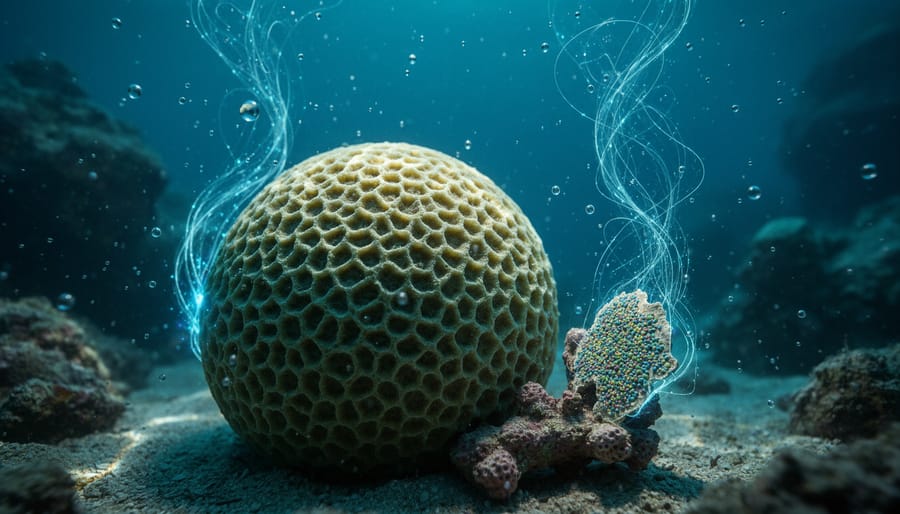
A biosynthetic gene cluster is a group of genes located together on a chromosome that work in concert to produce specialized molecules, often with extraordinary biological properties. In marine organisms, these molecular factories create some of nature’s most potent compounds: antiviral agents, antibiotics, anticancer drugs, and chemical defenses that have evolved over millions of years. Understanding these genetic blueprints matters profoundly for both medical discovery and ocean conservation, because the organisms carrying them represent irreplaceable libraries of biochemical innovation that are disappearing as marine ecosystems decline.
The ocean harbors an estimated 2.2 million species, most still unknown to science, and many of these creatures survive in extreme conditions by producing unique chemical compounds. Marine bacteria living in deep-sea vents, sponges colonizing sunlit reefs, and tiny algae drifting in open water all rely on biosynthetic gene clusters to manufacture the molecules they need. Through marine genomics scientists can now read these genetic recipes directly from environmental samples, revealing a stunning diversity of previously unknown chemical pathways.
What makes marine BGCs particularly valuable is their difference from terrestrial versions. The selective pressures of salt water, pressure extremes, and constant competition have shaped entirely distinct molecular solutions. A single coral-associated bacterium might contain ten or more BGCs, each encoding a different compound. Some of these molecules are already saving human lives as approved medications, while countless others await discovery.
Yet here’s the conservation imperative: we’re losing these genetic treasures before we can study them. As coral reefs bleach, coastal habitats degrade, and deep-sea ecosystems face mining threats, we risk erasing billions of years of evolutionary chemistry. Protecting marine biodiversity means safeguarding not just species, but the remarkable biosynthetic potential they carry.
What Are Biosynthetic Gene Clusters?
How Gene Clusters Work as Chemical Factories
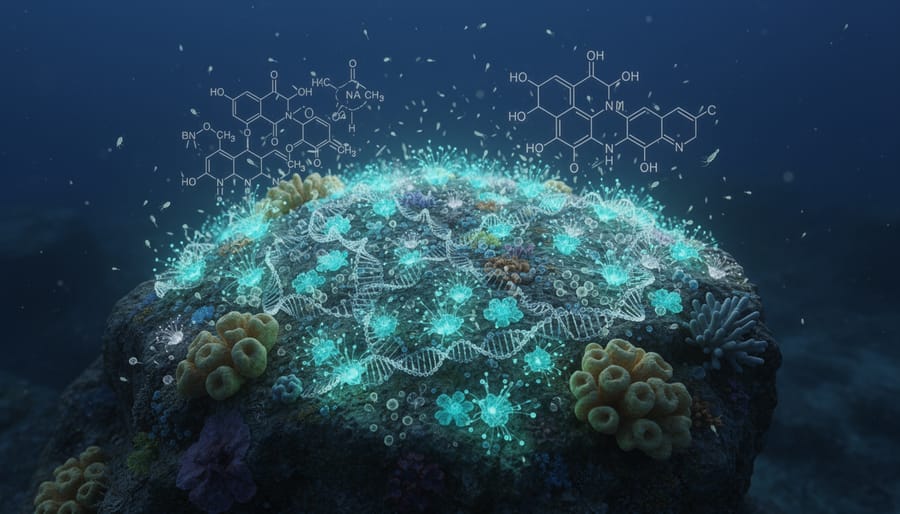
Think of a biosynthetic gene cluster as a highly specialized production line where each gene encodes a specific worker with a particular job. The process begins when the organism activates the cluster, switching on the genes in a coordinated sequence. Each gene produces an enzyme, a protein that catalyzes one chemical transformation.
The first enzymes in the line grab simple molecular building blocks floating around in the cell. These might be amino acids, sugars, or fatty acids. One enzyme modifies this starter molecule, perhaps adding a chemical group or rearranging its structure. It then passes the modified molecule to the next enzyme in the sequence, which performs its own specific transformation.
This relay continues down the line, with each enzyme adding complexity. One might extend a carbon chain, another might form a ring structure, and yet another might attach a sugar molecule or insert an unusual chemical group. The genes are physically clustered on the chromosome precisely because their protein products work together in this sequential manner.
What emerges at the end is often a complex molecule the organism couldn’t possibly build in a single step, a compound with antimicrobial properties, a chemical deterrent against predators, or a signaling molecule for communication. The beauty of this system lies in its efficiency: all the necessary genetic instructions sit together, ready to be activated as a coordinated unit when the organism needs to produce its specialized chemical defense or tool.
Why Marine Organisms Are Rich in BGCs
The ocean presents evolutionary challenges unlike any on land, and marine organisms have responded by becoming some of nature’s most prolific chemical innovators. Competition for space on crowded reefs and rocky surfaces has pushed corals, sponges, and algae to develop chemical weapons that ward off encroaching neighbors without requiring physical movement. These sessile organisms cannot flee predators or chase away competitors, so they manufacture toxic or distasteful compounds instead.
The marine environment itself amplifies this chemical arms race. Water serves as both medium and messenger, carrying chemical signals across distances and diluting defensive compounds that might work effectively in terrestrial settings. Marine life compensates by producing highly potent molecules at concentrations that remain effective even when dispersed by currents. Cold, deep-sea environments with limited nutrients have driven microorganisms to form intricate partnerships with hosts, exchanging chemical services for shelter and food, relationships encoded in specialized gene clusters.
Predation pressure in the ocean runs particularly high. Fish, invertebrates, and microbes face constant threats from animals that can detect chemical cues across remarkable distances. This relentless predation has selected for organisms capable of synthesizing complex defensive molecules, antibiotics that prevent bacterial infection, and deterrents that make them unpalatable. Each generation that survives passes along its biosynthetic toolkit, gradually expanding the chemical repertoire hidden in marine genomes.
Marine Genetic Resources: An Untapped Ocean Pharmacy
From Seabed to Medicine Cabinet
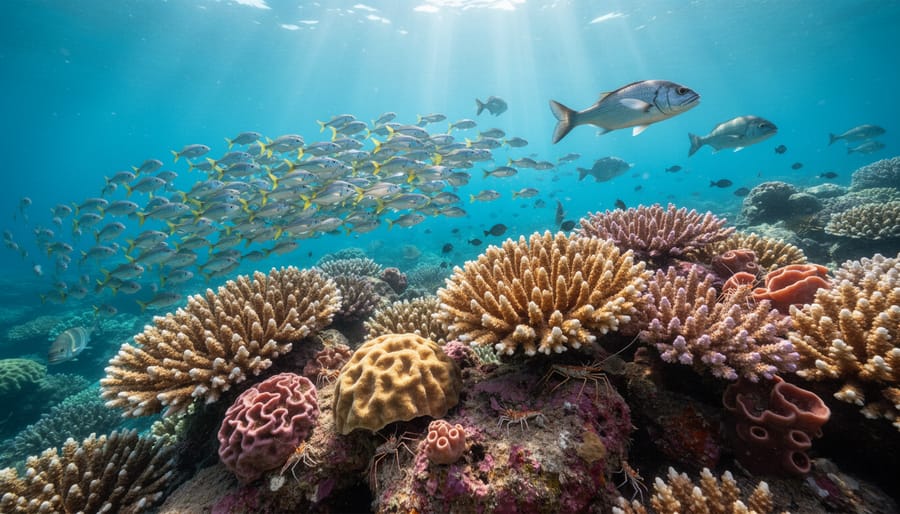
The journey from ocean depths to pharmacy shelves has produced some of medicine’s most powerful treatments. Marine biosynthetic gene clusters have given us trabectedin, an anti-cancer drug originally derived from a Caribbean sea squirt that now treats soft tissue sarcomas and ovarian cancer. This compound’s complex structure, which would be nearly impossible to design from scratch, emerged from the evolutionary pressures of life beneath the waves.
Antibiotics from the sea have proven particularly valuable as drug-resistant bacteria become an urgent global threat. Researchers discovered the antibiotic compound salinosporamide A in ocean sediment bacteria, leading to clinical trials for treating multiple myeloma. Marine microbes living in extreme environments have developed unique chemical defenses that translate into potent pharmaceutical applications.
Pain management has also benefited from marine BGC discoveries. Ziconotide, derived from the venom of cone snails, provides relief for patients with severe chronic pain who don’t respond to morphine. The cone snail’s biosynthetic gene cluster produces a peptide that blocks specific calcium channels in nerve cells, a precision mechanism evolution refined over millions of years.
Beyond these success stories, scientists have identified thousands of potential drug candidates from marine sources. Bryostatin, from a bryozoan colony, shows promise in treating Alzheimer’s disease and certain cancers. Each compound represents not just a medical breakthrough but proof that protecting marine biodiversity means preserving an irreplaceable library of chemical solutions, medicines we haven’t yet discovered but may desperately need tomorrow.
How Scientists Discover and Study Marine BGCs
Genomic Mining: Reading Nature’s Recipe Books
Genomic mining transforms the search for biosynthetic gene clusters from a laboratory bottleneck into a digital treasure hunt. Rather than spending months or years coaxing finicky marine microbes to grow in petri dishes, a challenge that stumps researchers 99% of the time, scientists now extract DNA directly from ocean samples and let computers do the prospecting.
The process starts with environmental sampling. Researchers collect sediment, seawater, or tissue from marine organisms, then sequence all the genetic material present. This eDNA analysis captures DNA from culturable and unculturable species alike, opening a window into the full genetic diversity of marine ecosystems.
Specialized bioinformatics software scans these sequences for telltale BGC signatures, specific gene arrangements that flag potential chemical synthesis pathways. These tools recognize patterns: groups of genes encoding enzymes like polyketide synthases or nonribosomal peptide synthetases, which typically cluster together when building complex molecules. The software can predict what type of compound a cluster might produce based on its genetic architecture.
In 2026, machine learning algorithms have accelerated this hunt dramatically. Programs trained on thousands of known BGCs can now spot promising clusters in minutes, rank them by novelty, and even predict the rough structure of their chemical products before a single molecule enters a test tube. This computational approach has revealed that marine genomes harbor far more biosynthetic potential than anyone imagined, thousands of BGCs waiting to be explored.
From Discovery to Application
Once scientists identify a promising biosynthetic gene cluster in a marine organism’s genome, the real work begins. Turning that genetic blueprint into usable compounds requires navigating several technical hurdles, and marine organisms rarely make it easy.
The discovery-to-application pipeline typically follows these steps:
- Sample collection from marine environments, often requiring specialized diving equipment or remotely operated vehicles to access deep-sea habitats
- DNA extraction and sequencing to read the complete genetic code of the organism or microbial community
- Bioinformatic analysis using computational tools to identify BGC signatures and predict the types of compounds they might produce
- Gene cluster characterization through laboratory experiments to confirm which genes are active and how they interact
- Compound production and testing, either by culturing the source organism or using alternative expression systems
The biggest bottleneck? Most marine microbes refuse to grow in laboratory conditions. Scientists estimate that less than one percent of ocean bacteria can be cultured using standard techniques. These organisms evolved in specific temperature ranges, pressure conditions, and nutrient environments that are extremely difficult to replicate in the lab.
That’s where synthetic biology becomes a game-changer. Researchers can isolate the BGC genes and transplant them into cooperative laboratory organisms like E. coli or yeast that happily grow in flasks. These microbial factories then produce the marine compounds without needing to culture the original ocean dweller. Scientists can also tweak the genes to optimize production or create modified versions of the natural compound, accelerating the path from ocean discovery to potential medical application.
Conservation Challenges and the Race Against Time
Every day, dozens of marine species vanish before scientists can catalog them, taking their unique biosynthetic gene clusters with them into extinction. We face a sobering reality: the ocean floor holds more undiscovered BGCs than we’ve found in all terrestrial ecosystems combined, yet we’re destroying these genetic libraries faster than we can read them.
Coral reefs, which harbor some of the most complex symbiotic relationships and richest BGC diversity on Earth, have declined by nearly 50% since the 1980s due to coastal development, bottom trawling, and destructive fishing practices. When a coral species disappears, we lose not only that organism but also the specialized bacteria, fungi, and algae living within its tissues, each potentially carrying novel gene clusters that produce compounds we’ve never encountered.
Warming oceans add another layer of urgency. As temperatures rise and ocean chemistry shifts, marine organisms face stress that disrupts the very conditions that fostered their biosynthetic diversity. A sponge species adapted to stable cold-water environments over millions of years may harbor BGCs fine-tuned to produce compounds under specific temperature and pH ranges. Climate change doesn’t just kill these organisms, it can alter their gene expression, potentially silencing clusters before we discover what they produce.
Plastic pollution and chemical runoff create additional threats. Microplastics accumulate in filter-feeding organisms like sponges and tunicates, while agricultural runoff creates dead zones that suffocate marine life. Each contaminated habitat represents not just ecological damage but irreversible loss of genetic information.
The timeline is brutal: current extinction rates suggest we might lose 30-40% of marine species by 2050. Behind each statistic lies countless BGCs that could have yielded breakthrough medications, sustainable materials, or solutions to pressing environmental challenges. Conservation isn’t just about saving charismatic species, it’s about preserving humanity’s chance to learn from nature’s four billion years of chemical innovation.
The Future of Marine BGC Research and Conservation
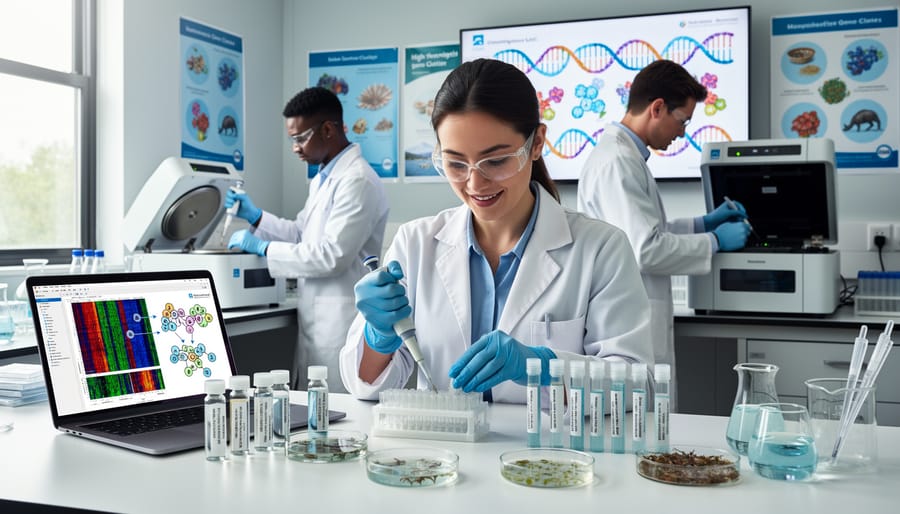
The future of marine BGC research stands at a remarkable intersection of technological innovation and conservation necessity. In 2026, scientists can sequence entire marine genomes in days rather than months, making the process of identifying biosynthetic gene clusters dramatically faster and more affordable. This acceleration means researchers can catalog the chemical potential of marine organisms before they disappear from warming or polluted waters.
Artificial intelligence is transforming how we predict BGC function. Machine learning algorithms trained on known gene clusters can now analyze newly sequenced marine genomes and forecast what types of compounds they might produce, antibiotic, anticancer, anti-inflammatory, before scientists ever isolate the molecules. These predictive tools help prioritize which organisms and which clusters deserve immediate attention, essentially creating a triage system for bioprospecting.
Sustainable approaches are reshaping how we access marine genetic resources. Rather than harvesting organisms in bulk, researchers increasingly use tiny tissue samples, environmental DNA collected from seawater, or even synthetic biology to recreate BGCs in laboratory microbes. This shift protects wild populations while still unlocking their chemical blueprints. The connection between mapping ocean life and preserving it has never been clearer, every survey that documents marine biodiversity also creates a library of potential BGCs that might otherwise vanish unrecorded.
The most promising development might be the growing recognition that protecting marine ecosystems isn’t just about saving species, it’s about safeguarding an incomprehensible chemical library that evolution spent millions of years writing. Marine protected areas now serve dual purposes: ecological refuges and living repositories of biosynthetic potential.
How You Can Support Marine Genetic Resource Conservation
You don’t need a PhD in molecular biology to make a meaningful difference in protecting the ocean’s genetic treasures. Marine conservation organizations urgently need volunteers to support the research and advocacy work that safeguards biosynthetic gene clusters before they vanish.
The Marine Biodiversity Science Center runs citizen science programs where volunteers help catalog coastal species, monitor reef health, and collect environmental data that guides BGC discovery efforts. These observations create the biodiversity maps researchers use to prioritize which ecosystems and organisms to study next. You can participate from shore-based surveys or join expedition teams that work alongside marine biologists in biodiversity hotspots.
Advocacy matters too. Contact your representatives to support marine protected area expansion and sustainable ocean policies. These protections preserve the habitats where BGC-rich organisms thrive, giving scientists time to document genetic resources before development or climate change erases them. Every new marine sanctuary potentially saves thousands of undiscovered gene clusters.
Support organizations conducting marine genome sequencing projects through donations or volunteer technical skills if you have bioinformatics experience. Many research institutions need help processing the massive datasets generated by genomic mining efforts.
Even small actions compound. Reduce single-use plastics, choose sustainably sourced seafood, and share what you’ve learned about marine genetic resources with your community. When people understand that tomorrow’s medicines might come from a coral reef we protect today, conservation becomes personal and urgent.
Common Questions About Biosynthetic Gene Clusters in Marine Life
How many marine biosynthetic gene clusters have been discovered so far?
The exact number changes rapidly as sequencing technology advances, but scientists have catalogued thousands of marine BGCs across diverse organisms, from bacteria living on coral reefs to deep-sea sponges. However, researchers estimate we’ve barely scratched the surface, with potentially millions remaining undiscovered in unexplored ocean habitats.
Can biosynthetic gene clusters be synthesized artificially in the lab?
Yes, scientists can insert marine BGCs into laboratory organisms like bacteria or yeast, which then produce the desired compounds without needing to harvest from ocean life. This synthetic biology approach helps protect wild populations while making production scalable and sustainable.
Are there ethical concerns about using marine genetic resources?
International agreements like the Nagoya Protocol address benefit-sharing when genetic resources are commercialized, ensuring that countries providing marine biodiversity receive fair compensation. The bigger ethical challenge involves balancing bioprospecting with conservation, we need healthy oceans to discover these resources in the first place.
What makes marine BGCs different from those found on land?
Marine organisms face unique evolutionary pressures including extreme pressure, salinity, temperature variations, and intense competition for space on limited surfaces. These conditions have driven the evolution of BGCs that produce compounds with chemical structures and properties rarely seen in terrestrial life, often making them more promising for novel drug development.
One question that surfaces frequently concerns climate change impacts. Rising ocean temperatures and acidification don’t just threaten marine species, they can alter the chemical ecology that drove BGC evolution in the first place. Warming waters may shift which organisms thrive in certain regions, potentially silencing some BGCs while activating others. Coral bleaching events, for instance, disrupt the symbiotic relationships between corals and their microbial partners, many of which harbor valuable gene clusters. We’re essentially changing the chemical conversation happening throughout ocean ecosystems before we’ve had the chance to listen.
The timeline matters here. Unlike terrestrial bioprospecting, where we can revisit a forest or field, marine habitats are changing rapidly and irreversibly in some cases. A reef system that collapses takes its entire community of BGC-producing organisms with it. This urgency underscores why conservation can’t wait for scientific discovery to catch up, we need to protect marine biodiversity now, even when we don’t yet know what compounds those ecosystems might yield.

jessica
Ava Singh is an environmental writer and marine sustainability advocate with a deep commitment to protecting the world's oceans and coastal communities. With a background in environmental policy and a passion for storytelling, Ava brings complex topics to life through clear, engaging content that educates and empowers readers. At the Marine Biodiversity & Sustainability Learning Center, Ava focuses on sharing impactful stories about community engagement, policy innovations, and conservation strategies. Her writing bridges the gap between science and the public, encouraging people to take part in preserving marine biodiversity. When she’s not writing, Ava collaborates with local initiatives to promote eco-conscious living and sustainable development, ensuring her work makes a difference both on the page and in the real world.