Marine Biodiversity Science Center

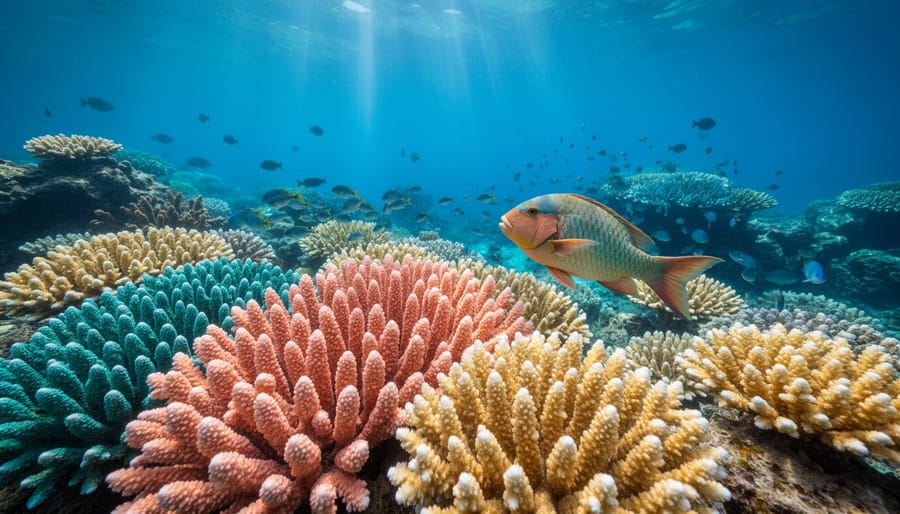
A coral reef ecosystem is a complex underwater community where living corals, fish, invertebrates, and microorganisms interact with each other and their physical environment through energy exchange, nutrient cycling, and symbiotic relationships. Think of it as an underwater city where every resident, from the tiniest plankton to apex predators like sharks, plays a specific role in keeping the entire system alive and functioning.
These vibrant underwater structures support more than 25% of all marine species despite covering less than 0.1% of the ocean floor, making them one of the most biodiverse habitats on Earth. But coral reef ecosystems aren’t just impressive for their diversity. They provide critical services to both marine life and coastal human communities, from protecting shorelines against storm damage to supporting fisheries that feed hundreds of millions of people.
Understanding how reef animals interact within this ecosystem matters now more than ever. With coral reefs facing unprecedented threats from warming oceans, pollution, and overfishing, knowing which species fill which ecological roles helps scientists and conservationists design effective protection strategies. When we grasp how a parrotfish scraping algae off coral or a sea urchin grazing on algae maintains reef health, we can better predict what happens when these species disappear.
This article breaks down the functional groups of animals that make coral reefs work, explains the relationships that keep energy and nutrients flowing through the system, and shows why protecting these interconnected communities requires action from all of us.
What a Coral Reef Animal Ecosystem Means
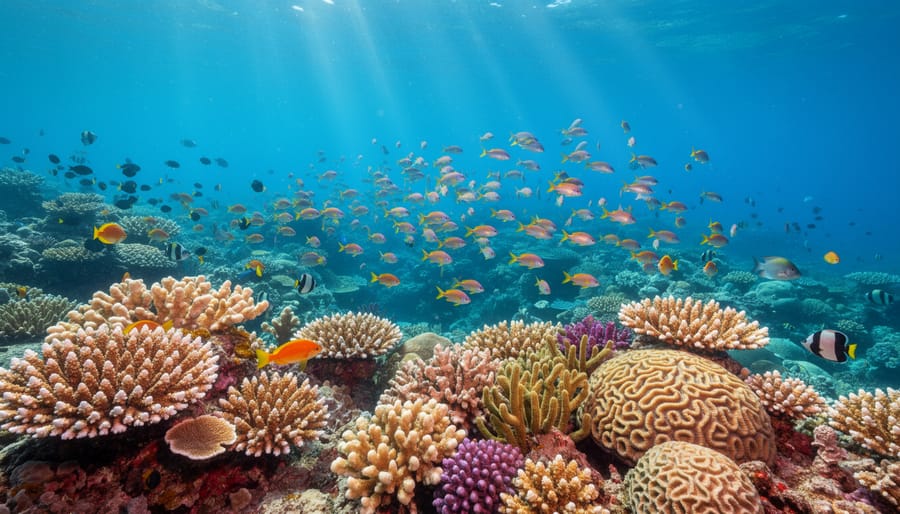
A coral reef animal ecosystem is the living network of organisms that depend on one another and the reef structure for survival. Unlike the physical reef itself, the calcium carbonate skeleton built by corals over centuries, the ecosystem encompasses all the animals, plants, algae, and microorganisms interacting within that habitat, along with the energy flows and nutrient cycles connecting them.
Think of it this way: the reef structure provides the stage, but the ecosystem is the performance. Thousands of species coexist in a tight web of relationships where one creature’s waste becomes another’s food, predators keep herbivore populations in check, and small fish clean parasites from larger ones. This interdependence runs so deep that removing a single species can trigger cascading effects throughout the community.
Several core concepts help us understand how reef ecosystems function:
- Ecosystem
- A community of living organisms interacting with each other and their physical environment as a functional unit. Coral reef ecosystems include all animals, plants, and microbes living on the reef plus the water, sunlight, and nutrients they share.
- Symbiosis
- Close relationships between different species that live together, ranging from mutually beneficial partnerships (like clownfish protecting anemones while gaining shelter) to one-sided arrangements where only one partner benefits.
- Biodiversity
- The variety of life forms in a given area. Coral reefs pack exceptional biodiversity into small spaces, hosting roughly one-quarter of all marine species despite covering less than one percent of the ocean floor.
- Keystone species
- Animals whose impact on the ecosystem far exceeds their abundance. Parrotfish, for example, graze algae that would otherwise smother corals, making them disproportionately important to reef health.
- Trophic levels
- The feeding positions in a food chain, from primary producers (algae capturing sunlight) through herbivores, carnivores, and apex predators. Energy flows upward through these levels, with each transfer supporting fewer organisms.
What makes coral reef animal ecosystems remarkable is their complexity packed into relatively small areas. A single reef the size of a football field might support hundreds of fish species, dozens of coral varieties, countless invertebrates, and millions of microscopic organisms, all interconnected through feeding relationships, shelter arrangements, and chemical signals. The physical reef provides three-dimensional structure with crevices, overhangs, and channels, but the animals bring it to life through their constant activity, reproduction, and interactions that maintain the system’s balance.
How Coral Reef Animal Ecosystems Work
Energy Flow and Food Webs
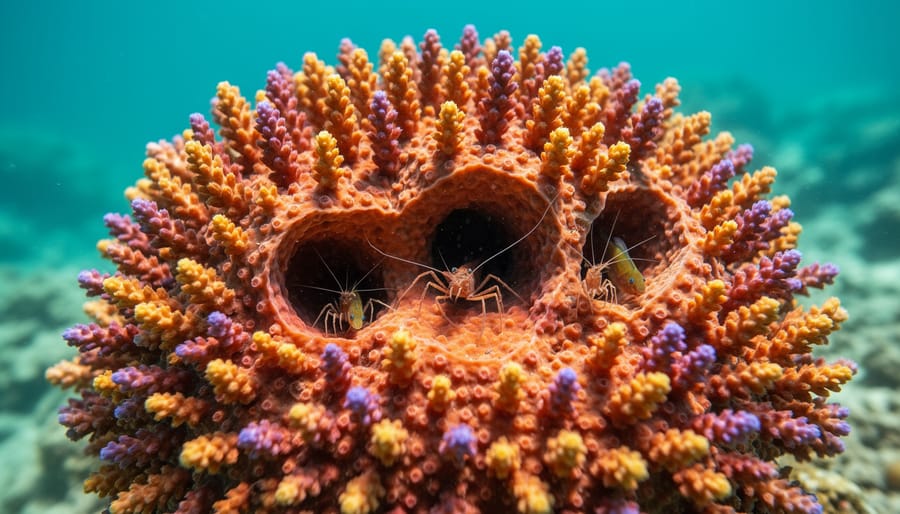
The coral reef’s food web begins at the microscopic level, where zooxanthellae algae living inside coral tissue convert sunlight into chemical energy through photosynthesis. These single-celled dinoflagellates transfer up to 90% of the sugars they produce directly to their coral hosts, fueling sunlight-fueled coral growth and the construction of calcium carbonate skeletons that form the reef structure itself. This partnership creates the foundation of the entire ecosystem’s energy budget.
From there, energy flows upward through distinct trophic levels. Herbivorous fish such as parrotfish and surgeonfish graze on the algae growing on dead coral and rock surfaces, preventing these fast-growing plants from smothering living corals. A single parrotfish can consume several tons of algae annually, converting plant matter into fish biomass that becomes available to the next level of consumers.
Carnivorous fish occupy the middle tiers of this food web. Smaller predators like wrasses and groupers feed on invertebrates and juvenile fish, while larger hunters such as barracuda and jacks target these mid-sized species. At the apex sit reef sharks, large groupers, and occasionally visiting marlins, top predators whose hunting pressure keeps populations of smaller predators in check and maintains the delicate balance between herbivores and algae.
This multilevel structure means that removing any single group creates cascading effects throughout the system, which is why reef health depends on maintaining complete predator-to-prey relationships across all trophic levels.
Symbiotic Relationships That Sustain the Reef
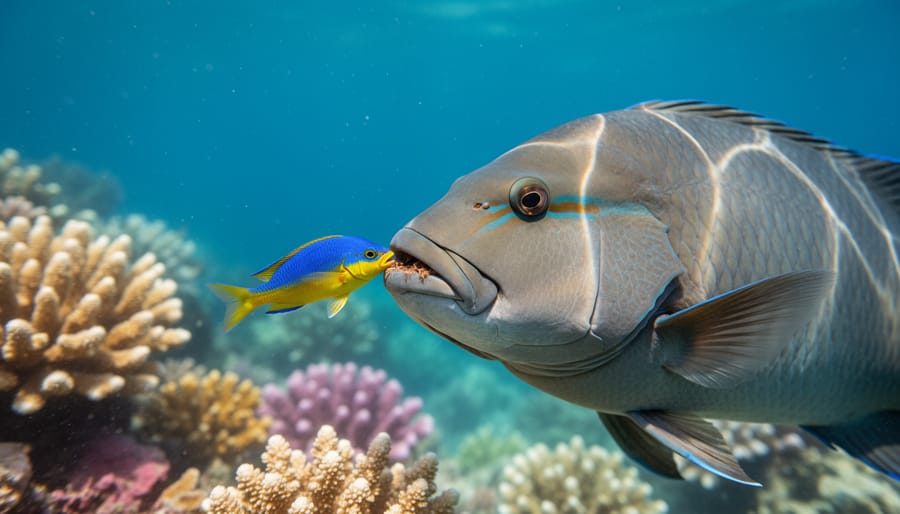
Coral reefs thrive because their residents have evolved partnerships that turn individual survival into collective strength. The most fundamental is the coral-algae partnerships between polyps and zooxanthellae, where microscopic algae produce food through photosynthesis in exchange for shelter and nutrients from coral waste, a mutualism so tight that neither partner survives long without the other.
Cleaner wrasse stations demonstrate another win-win: these small fish remove parasites and dead tissue from larger species like groupers and parrotfish, which line up and hold still despite being capable predators. The cleaners get meals; their clients stay healthy. Clownfish and sea anemones share a similar deal, the fish gains protection from the anemone’s stinging tentacles (to which it’s immune) while defending its host from butterflyfish that eat anemone tissue and fertilizing it with nitrogen-rich waste.
Not all relationships balance so neatly. Some isopod crustaceans parasitize fish by attaching to gills or tongues, draining energy without killing their hosts. Even these lopsided partnerships play a role, keeping populations in check and preventing any single species from dominating the reef’s delicate equilibrium.
Nutrient Cycling and Waste Processing
Coral reefs thrive in what scientists call “marine deserts”, tropical waters with remarkably low nutrient concentrations. The animals living here have evolved ingenious recycling systems that capture and reuse every available nutrient. Filter feeders like sponges and bivalves extract microscopic particles from the water column, processing hundreds of liters daily and trapping organic matter that would otherwise drift away. Parrotfish and sea cucumbers act as detritivores, consuming dead coral and organic debris, then excreting it as fine sediment that bacteria break down into usable nutrients. These bacteria themselves form a critical link, converting animal waste into nitrogen and phosphorus compounds that zooxanthellae and other photosynthetic organisms absorb. This tight recycling loop allows reefs to maintain exceptional productivity despite surrounding nutrient-poor conditions, a testament to ecosystem efficiency.
Categories of Coral Reef Animals
Reef-Building Corals and Their Animal Polyps
Corals aren’t plants or rocks, they’re colonial animals made of thousands of tiny polyps, each with a mouth, tentacles, and a stomach. Hard corals, like brain coral and staghorn coral, secrete calcium carbonate skeletons that form the reef’s physical structure over centuries. Soft corals, such as sea fans and sea whips, lack rigid skeletons and sway with currents, adding flexibility to the reef landscape. Together, these corals create the three-dimensional habitat that supports 25% of ocean life despite occupying less than one percent of the seafloor. As both architects and residents, coral polyps feed on plankton at night while their symbiotic zooxanthellae photosynthesize by day, demonstrating the dual nature that makes them foundation species for the entire ecosystem.
Fish Communities: Herbivores, Predators, and Specialists
Fish make up roughly a quarter of all coral reef species and play distinct roles that keep the ecosystem balanced. Herbivorous fish prevent algae from smothering corals, parrotfish scrape algae off coral surfaces with their fused teeth, while surgeonfish graze constantly on turf algae. Without these grazers, fast-growing algae would outcompete corals for space and sunlight.
Predators maintain population control across the food web. Groupers hunt smaller fish and invertebrates in reef crevices, while reef sharks patrol open waters as apex predators. Their presence regulates prey populations and prevents any single species from dominating, which preserves the diversity that makes reefs resilient.
Specialized feeders fill ecological niches that generalists cannot. Butterflyfish use elongated snouts to pluck coral polyps and small invertebrates from tight spaces. Cleaning gobies set up stations where larger fish queue to have parasites removed, a service that keeps host fish healthy while feeding the cleaners. Damselfish aggressively defend small algae gardens they cultivate on dead coral patches.
This functional diversity means reef ecosystems can withstand disturbances better than communities dominated by a few species. When overfishing removes herbivores or predators, the entire system destabilizes, algae blooms smother corals or prey populations explode unchecked. Protecting fish diversity protects the intricate balance that sustains coral reefs.
Marine Invertebrates
Marine invertebrates form the diverse backbone of coral reef ecosystems, outnumbering vertebrates by a wide margin and performing essential roles that keep reefs healthy. These animals without backbones include echinoderms like sea urchins, starfish, and sea cucumbers; mollusks ranging from octopuses to tiny nudibranchs and venomous cone snails; crustaceans such as cleaner shrimp, hermit crabs, and spiny lobsters; and the often-overlooked sponges that coat reef surfaces.
Sea urchins graze on algae with specialized mouthparts called Aristotle’s lanterns, preventing algal overgrowth that would otherwise smother corals. Sea cucumbers vacuum the sand, processing organic debris and recycling nutrients back into the ecosystem. Starfish occupy various niches: some species prey on mollusks and slow-moving invertebrates, while others consume algae and detritus.
Crustaceans fill critical cleaning roles, with cleaner shrimp removing parasites from fish at designated stations, while crabs scavenge dead matter and aerate the substrate. Sponges pump thousands of liters of water daily through their porous bodies, filtering out bacteria and tiny organic particles that would otherwise cloud the water. This filtration capacity makes sponges vital water-quality regulators.
Mollusks demonstrate remarkable diversity: octopuses hunt at night as intelligent predators, nudibranchs prey on sponges and hydroids while displaying vibrant warning colors, and cone snails use venom-tipped harpoons to capture fish and worms. Each invertebrate group contributes specialized functions that interlock to maintain the reef’s delicate balance.
Larger Marine Vertebrates
Sea turtles are among the most visible vertebrates on coral reefs, with green turtles grazing algae and seagrass while hawksbills feed on sponges that would otherwise overgrow corals. Their foraging maintains the balance between sessile organisms and keeps reef surfaces clear for new coral settlement.
Sharks and rays function as apex predators, controlling populations of mid-level predators and herbivores through both direct predation and behavioral effects, prey species alter their feeding patterns simply by sensing shark presence nearby. Reef sharks like blacktips and grey reef sharks patrol regularly, while larger species such as tiger sharks visit seasonally. Eagle rays dig for mollusks in sandy patches between coral formations, aerating sediment and recycling nutrients.
Marine mammals interact with reefs less frequently but still contribute to ecosystem dynamics. Spinner dolphins hunt in deeper waters adjacent to reefs at night, bringing nutrients from the open ocean when they rest in shallow lagoons during daylight hours.
Microscopic and Planktonic Animals
Though invisible to the naked eye, microscopic animals form the foundation of the reef’s food web. Zooplankton, tiny crustaceans, jellyfish larvae, and drifting invertebrates, convert phytoplankton into protein that feeds everything from coral polyps to whale sharks. The larval stages of reef fish, corals, and invertebrates spend days or weeks as plankton before settling onto the reef, connecting distant reefs through ocean currents. These drifting animals transfer enormous amounts of energy: a single parrotfish produces millions of planktonic larvae, while copepods and other zooplankton concentrate nutrients that larger filter feeders depend on. Without this microscopic tier, the entire pyramid collapses.
Ecological Functions and Services These Animals Provide
The animals inhabiting coral reefs perform ecological roles that extend far beyond the reef itself, supporting both marine ecosystems and human communities in ways scientists are still working to fully quantify. Each species contributes to a web of functions that keep the reef resilient and productive, and together they generate tangible benefits that coastal populations depend on daily.
Herbivorous fish like parrotfish and surgeonfish serve as the reef’s groundskeepers, grazing on algae that would otherwise smother coral polyps and block the sunlight they need to survive. Without these grazers, algae can overtake weakened reefs in months, transforming vibrant coral gardens into algae-covered rubble fields. Predatory fish maintain balance by controlling herbivore populations, preventing overgrazing that can strip reefs bare. Sea cucumbers and other detritivores process organic waste, recycling nutrients and keeping sediment from smothering coral colonies.
Coral reef animals deliver ecosystem services that millions of people rely on:
- Coastal protection: Reef structures absorb 97% of wave energy, reducing erosion and storm damage to shorelines
- Food security: Reefs support commercial and subsistence fisheries that feed over 500 million people globally
- Pharmaceutical compounds: Marine organisms produce unique chemical defenses that have led to treatments for cancer, arthritis, and bacterial infections
- Carbon sequestration: Calcifying organisms lock carbon dioxide into their skeletons, helping regulate ocean chemistry
- Economic benefits: Reef-related tourism generates billions annually for coastal communities through diving, snorkeling, and marine recreation
The shoreline protection from reefs alone prevents an estimated $94 billion in flood damages each year. When hurricane winds push water toward land, the complex three-dimensional structure created by corals and their animal communities breaks wave force before it reaches homes and infrastructure. Islands like the Maldives and entire coastlines in Southeast Asia would face catastrophic erosion without healthy reef systems buffering storm impacts.
Fisheries value ties directly to the diversity of reef animals. Juvenile fish use reef crevices as nurseries, protected by the architecture that corals and other invertebrates build. When those young fish mature and move to open water, they sustain commercial catches that feed coastal cities thousands of miles away. Lose the reef animals, and fishery collapses follow within a generation. Conservation of these ecosystems isn’t just about preserving natural beauty, it’s about maintaining life-support systems that human communities have relied on for millennia.
Threats Facing Coral Reef Animal Communities
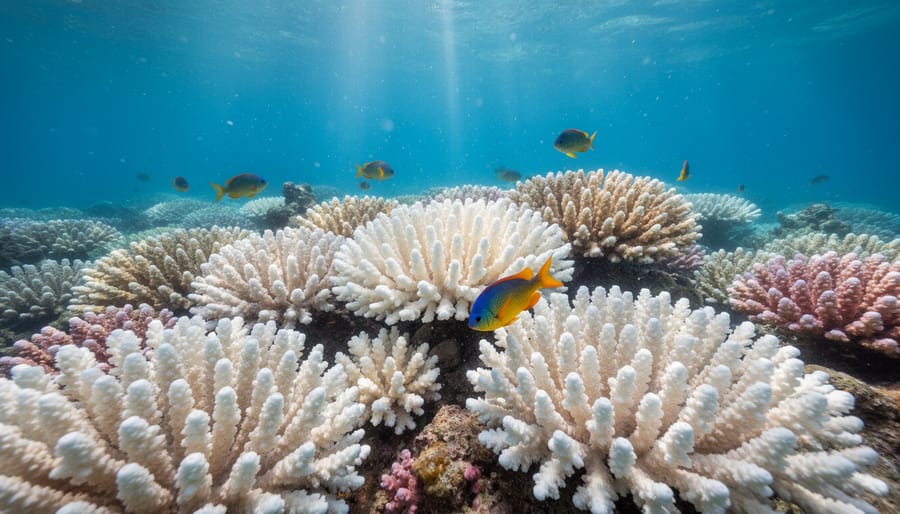
Coral reef animal communities face mounting pressures that threaten to unravel the intricate ecological relationships we’ve explored. Climate change stands as the most pervasive threat. Rising ocean temperatures trigger mass coral bleaching events where stressed corals expel their zooxanthellae partners, severing the primary energy pathway that sustains the entire ecosystem. Without these photosynthetic algae, corals starve, and the fish, invertebrates, and other animals that depend on healthy coral structures lose both food sources and shelter. Ocean acidification compounds this crisis by reducing the availability of carbonate ions corals need to build their calcium carbonate skeletons, making reefs more fragile and slowing recovery after damage.
Dr. Elena Cortez, a marine biologist with the Marine Biodiversity Science Center, witnessed this devastation firsthand during the 2025 bleaching event in the Caribbean. “I’d been studying a thriving reef community near Bonaire for seven years,” she recalls. “Within three weeks of elevated temperatures, 60 percent of the corals had bleached. The parrotfish kept grazing, the cleaner wrasse still set up their stations, but you could see the ecosystem unraveling. Six months later, algae had smothered much of the dead coral, the butterflyfish that fed exclusively on coral polyps had vanished, and predator populations were declining. It wasn’t just losing coral. It was watching an entire functional network collapse.”
Overfishing disrupts the delicate balance these ecosystems require. Removing too many herbivorous fish allows algae to overgrow corals, blocking sunlight and outcompeting them for space. Fishing apex predators like sharks and groupers cascades through food webs, causing prey populations to explode and overgraze lower trophic levels. Destructive practices such as blast fishing and cyanide fishing physically demolish reef structures while killing animals indiscriminately.
Pollution from agricultural runoff, sewage, and industrial waste introduces excess nutrients that fuel algae blooms, smothering corals and creating low-oxygen zones where reef animals suffocate. Plastic debris entangles turtles and fish, while microplastics accumulate in filter feeders. Coastal development destroys mangrove nurseries where juvenile reef fish mature, and sediment from construction buries corals.
Invasive species like the crown-of-thorns starfish consume coral polyps at unsustainable rates when their natural predators are absent. Lionfish in the Caribbean devour native fish faster than the ecosystem can replace them, having no evolved predators to control their populations.
These threats don’t operate in isolation. They compound one another, making reef conservation increasingly urgent as ecosystems lose resilience with each additional stressor.
Conservation Efforts and How You Can Help
Protecting coral reef animal ecosystems requires coordinated efforts at every scale, from international marine protected areas to individual choices. The good news: when given breathing room, these resilient systems can bounce back.
Marine protected areas now safeguard roughly 8% of coral reef habitats worldwide, creating refuges where fish populations rebuild and ecosystem balance can restore itself. Australia’s Great Barrier Reef Marine Park demonstrates how zoning regulations, restricting fishing in some areas while allowing sustainable practices in others, help maintain biodiversity while supporting local communities. Similar no-take zones in the Caribbean and Southeast Asia show measurable recovery within five to ten years, with herbivore populations rebounding first and cascading benefits flowing through the food web.
Coral restoration has evolved beyond planting individual fragments. Scientists now grow climate-resilient coral strains in nurseries, selecting polyps that withstand warmer temperatures and lower pH levels. These “super corals” are outplanted onto degraded reefs, where they establish new colonies and provide habitat for returning fish and invertebrates. Over 500 restoration projects operate globally, engaging thousands of trained volunteers in hands-on reef recovery.
Sustainable fisheries management protects keystone species while preserving fishing livelihoods. Size limits ensure parrotfish and other herbivores reach reproductive age before harvest. Gear restrictions eliminate destructive methods like dynamite and cyanide fishing. These regulations work when communities participate in enforcement and benefit from healthier fish stocks.
You can contribute directly through the Marine Biodiversity Science Center’s reef monitoring programs. Our volunteer divers survey fish populations, document coral health, and collect data that informs conservation policy. No diving certification? Join our coastal cleanup initiatives removing plastic debris before it reaches reef habitats, or participate in our citizen science app where you identify reef animals from submitted photos.
Everyday actions compound into real impact. Choose reef-safe sunscreen without oxybenzone or octinoxate, which damage coral tissue. Support sustainable seafood certified by the Marine Stewardship Council. Reduce your carbon footprint through energy conservation, directly addressing the climate change driving ocean warming and acidification.
Dr. Maria Santos, a marine biologist studying bleaching recovery in the Philippines, sees hope in collective action: “I’ve watched reefs I thought were lost come back when fishing pressure dropped and water quality improved. Every person who changes their behavior, every community that protects its reef, it matters. These ecosystems want to survive. We just need to give them the chance.”
Common Questions About Reef Animals
How many species live on coral reefs?
Scientists estimate that coral reefs support over 25% of all marine species, with more than one million animal species calling reefs home. This extraordinary diversity exists despite reefs covering less than 1% of the ocean floor, making them the most biodiverse marine ecosystems on Earth.
Can coral reefs recover from bleaching?
Reefs can recover from bleaching events if conditions improve quickly enough and the coral polyps survive, though recovery typically takes 10-15 years for hard corals. The outcome depends on the bleaching severity, water temperature returning to normal ranges, and whether additional stressors like pollution or overfishing compound the damage.
What’s the most important animal for reef health?
No single species is most important because reef health depends on the entire web of interactions. However, herbivorous parrotfish and sea urchins play crucial roles by controlling algae that would otherwise smother corals, while apex predators like sharks maintain balance throughout the food web.
How do scientists study reef ecosystems?
Marine biologists use a combination of underwater surveys, photographic monitoring, water sampling, and tagging programs to track animal populations and behaviors. Advanced techniques now include remote underwater cameras, environmental DNA sampling from seawater, and acoustic monitoring to detect fish populations without disturbing them.
What happens if a keystone species disappears?
The loss of a keystone species can trigger cascading failures throughout the ecosystem. When sea urchin populations crashed in the Caribbean during the 1980s due to disease, algae exploded and smothered corals, fundamentally altering reef structure and reducing fish diversity for decades.
Do all reef animals stay on the reef their entire lives?
Many reef animals spend only part of their life cycle on the reef. Numerous fish and invertebrate species release planktonic larvae that drift in open ocean for weeks or months before settling on a reef, while some species like certain sharks and sea turtles visit reefs seasonally for feeding or mating.
These questions reflect the concerns researchers hear most often from students, divers, and community members interested in reef conservation. Understanding the answers helps clarify why protecting entire ecosystems matters more than focusing on individual charismatic species. The interconnected nature of reef life means that changes to one part of the system inevitably affect others, sometimes in surprising ways that scientists are still working to understand.
What becomes clear through both research and these common inquiries is that coral reef animal ecosystems function as tightly integrated communities where every member, from microscopic zooplankton to apex predators, contributes to overall stability. This complexity is part of what makes reefs so resilient when healthy, yet so vulnerable when multiple stressors accumulate.
Coral reef animal ecosystems represent one of nature’s most sophisticated networks of interdependence. Every creature, from microscopic zooplankton to apex predators, plays a role in maintaining the delicate balance that sustains these underwater cities. Understanding these connections isn’t just an academic exercise. It’s the foundation for effective conservation action.
The challenges facing these ecosystems are real and accelerating. Climate change, overfishing, and pollution threaten to unravel millions of years of evolutionary refinement. Yet there’s genuine reason for hope. Coral reefs have demonstrated remarkable resilience when given the chance to recover, and conservation efforts worldwide are making measurable differences. Protected areas are showing species rebounds. Restoration projects are successfully replanting degraded reefs. Communities are shifting toward sustainable fishing practices that allow populations to regenerate.
Your engagement matters more than you might think. The Marine Biodiversity Science Center offers volunteer opportunities ranging from citizen science monitoring to educational outreach programs. Whether you’re documenting reef health through underwater surveys, reducing your carbon footprint, supporting sustainable seafood choices, or simply spreading awareness, you’re contributing to a global movement.
These biodiversity hotspots don’t belong to any single nation or generation. They’re shared treasures that connect us all. By taking action now, collectively and individually, we can ensure that future generations inherit thriving coral reef ecosystems teeming with the spectacular diversity of life that makes them irreplaceable.

jessica
Ava Singh is an environmental writer and marine sustainability advocate with a deep commitment to protecting the world's oceans and coastal communities. With a background in environmental policy and a passion for storytelling, Ava brings complex topics to life through clear, engaging content that educates and empowers readers. At the Marine Biodiversity & Sustainability Learning Center, Ava focuses on sharing impactful stories about community engagement, policy innovations, and conservation strategies. Her writing bridges the gap between science and the public, encouraging people to take part in preserving marine biodiversity. When she’s not writing, Ava collaborates with local initiatives to promote eco-conscious living and sustainable development, ensuring her work makes a difference both on the page and in the real world.