Marine Biodiversity Science Center

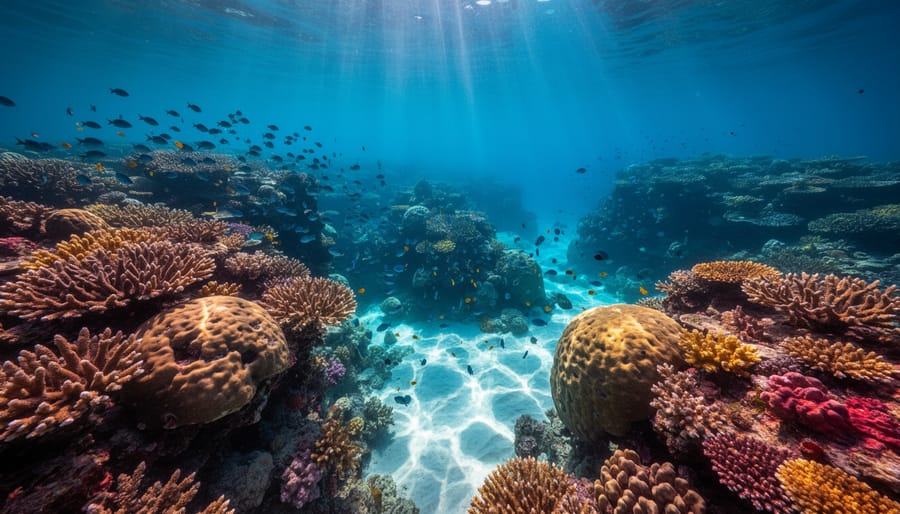
A coral reef ecosystem is a marine environment built around colonies of coral polyps that creates one of the most biodiverse habitats on Earth, supporting roughly 25% of all marine species despite covering less than 1% of the ocean floor. These underwater structures function as both living organisms and geological formations, where tiny animals work in symbiosis with photosynthetic algae to construct massive calcium carbonate skeletons that provide shelter, food, and breeding grounds for thousands of species.
Understanding how vibrant reef ecosystems operate matters now more than ever. Reefs protect coastlines from erosion and storm damage, sustain fisheries that feed over half a billion people worldwide, and generate an estimated $375 billion annually through tourism and coastal protection services. Yet we’re losing these systems at an alarming rate, with the latest 2026 assessments showing continued decline from warming oceans, pollution, and destructive fishing practices.
This article breaks down the biological machinery that makes coral reefs work: the symbiotic relationships between corals and zooxanthellae algae, the intricate food webs connecting predators to prey, and the physical architecture that turns simple polyps into sprawling reef cities. You’ll learn about the different types of reef structures, from fringing reefs hugging coastlines to remote atolls encircling lagoons, and why each configuration supports distinct communities of life.
Whether you’re a student building foundational knowledge, an educator developing curriculum, or simply someone who cares about ocean health, this explainer provides the scientific grounding you need to understand what makes reefs resilient and what pushes them toward collapse. More importantly, you’ll discover concrete ways to contribute to reef conservation, from participating in monitoring programs to supporting restoration projects led by marine biologists working directly in threatened waters.
What Coral Reef Ecosystems Really Are
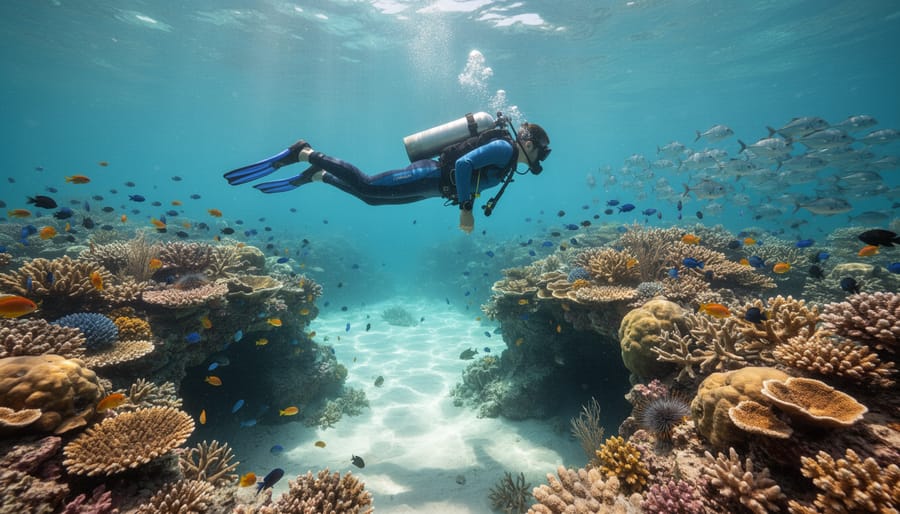
Coral reefs are living cities built by tiny architects. Each coral structure you see underwater is a colony of thousands, sometimes millions, of individual coral polyps, soft-bodied animals related to sea anemones and jellyfish. These polyps secrete calcium carbonate skeletons that fuse together, creating the hard limestone structures we recognize as reefs. But the polyps don’t build alone. Inside their tissues live microscopic algae called zooxanthellae, which photosynthesise sunlight into sugars that feed their coral hosts. In return, the corals provide protection and access to sunlight in clear, shallow waters. This partnership is so efficient that coral reefs thrive in nutrient-poor tropical waters where few other ecosystems could survive.
- Coral Polyp
- A soft-bodied, cylindrical animal with tentacles surrounding a central mouth, typically only a few millimetres in diameter. Polyps are the living building blocks of coral colonies.
- Zooxanthellae
- Microscopic algae living inside coral tissue that photosynthesise and provide up to 90% of the coral’s energy needs. This symbiotic relationship gives corals their vibrant colours.
- Symbiosis
- A close biological relationship between two different organisms where both benefit. The coral-zooxanthellae partnership is one of nature’s most important symbiotic relationships.
- Calcium Carbonate
- The limestone mineral that coral polyps extract from seawater and secrete to build their protective skeletons. Over time, these deposits accumulate into massive reef structures.
- Reef Framework
- The three-dimensional structure created by living and dead coral skeletons, providing complex habitat with crevices, caves, and surfaces. This architecture supports the entire reef community.
The reef framework transforms these coral colonies into biodiversity hotspots. The intricate architecture creates thousands of microhabitats, shaded overhangs for filter feeders, crevices for shy crustaceans, rubble zones for burrowing fish. Scientists estimate that coral reefs support more than a quarter of all marine fish species, despite covering less than one percent of the ocean floor. That’s comparable to tropical rainforests, which cover just six percent of Earth’s land but harbour half of all terrestrial species. The comparison runs deeper than numbers. Like rainforests, reefs are both the habitat and the architects, the corals continuously build and modify their environment, creating conditions that allow other species to flourish.
What makes reefs truly remarkable is their dual identity. They’re living organisms that grow, reproduce, and respond to their environment. Yet they’re also geological formations that have been accumulating for thousands of years, with some modern reefs built atop structures laid down over half a million years ago. The Great Barrier Reef’s current structure began forming around 8,000 years ago as sea levels rose after the last ice age. This blend of biology and geology means reefs operate on multiple timescales simultaneously, polyps feed and grow daily, while the structures they inhabit represent centuries of accumulated history.
How Coral Reef Ecosystems Function
The Symbiotic Foundation
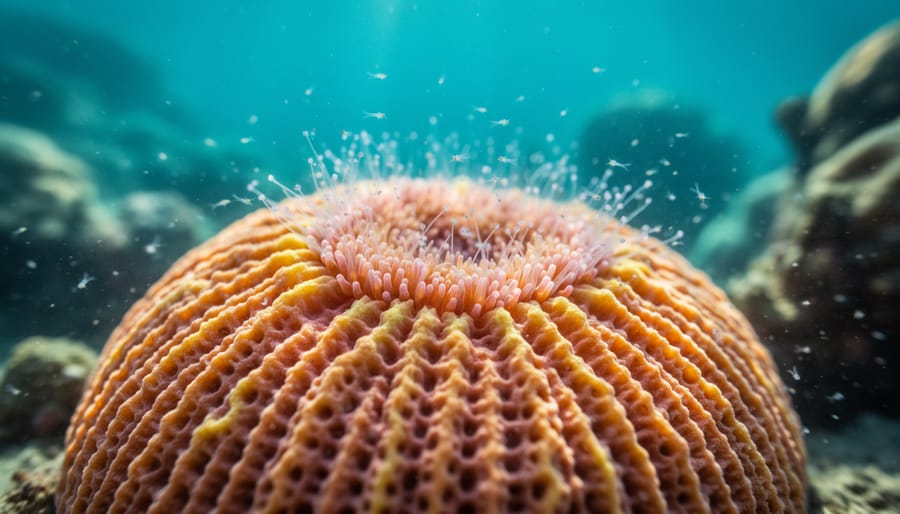
At the heart of every coral reef is a remarkably efficient partnership between two very different organisms. Coral polyps, tiny animals related to jellyfish, harbor millions of microscopic algae called zooxanthellae within their tissues. These algae photosynthesize using sunlight that filters through shallow tropical waters, converting carbon dioxide and water into sugars and oxygen. The coral host receives up to 90% of these photosynthetic products as food, while the algae gain a protected environment and access to the coral’s metabolic waste products like nitrogen and phosphorus. This exchange allows corals to thrive in nutrient-poor tropical seas where most organisms would struggle.
The coral-algae partnerships drive the process of calcification, the construction of limestone skeletons that form reef structures. Corals use energy from their algal partners to pump calcium and carbonate ions from seawater, precipitating them into calcium carbonate crystals. Over time, these skeletons accumulate into massive formations that can be seen from space. A single coral colony may add just a few centimeters of growth per year, yet this slow accumulation over centuries builds the three-dimensional habitats that support thousands of species.
This intimate relationship is also the reef’s greatest vulnerability. When water temperatures rise even 1-2°C above normal seasonal highs, stressed corals expel their zooxanthellae, a phenomenon called bleaching. Without their algal partners, corals lose their primary food source and their vibrant colors, appearing stark white. If conditions don’t improve within weeks to months, the coral starves and dies. Ocean acidification further threatens this partnership by making calcification more energetically costly, slowing reef growth just when reefs need resilience most.
Energy Flow and Nutrient Cycling
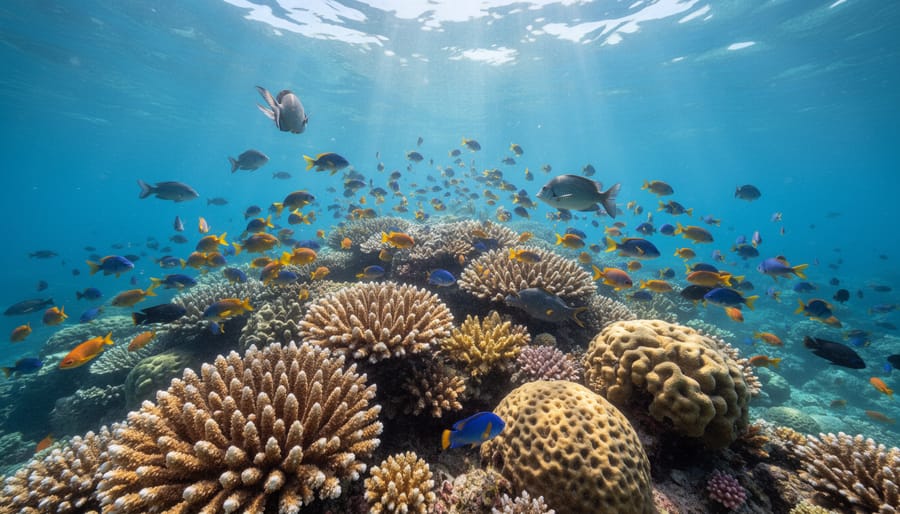
Energy travels through coral reefs in a cascade that begins with sunlight and ends with apex predators, creating one of the ocean’s most efficient nutrient recycling systems. Zooxanthellae algae and other photosynthetic organisms form the foundation, converting solar energy into organic compounds that fuel everything above them. These primary producers generate far more energy per square meter than most marine environments, which explains why reefs support such extraordinary biodiversity in relatively nutrient-poor tropical waters.
The energy then moves through distinct trophic levels:
- Primary producers (zooxanthellae, turf algae, phytoplankton) convert sunlight into biomass through photosynthesis
- Herbivores (parrotfish, surgeonfish, sea urchins) graze on algae and prevent overgrowth that would smother corals
- Filter feeders (sponges, tunicates, bivalves) extract plankton and organic particles from the water column
- Carnivores (wrasses, groupers, moray eels) consume smaller fish and invertebrates, transferring energy upward
- Apex predators (sharks, barracuda) regulate populations below them and maintain ecosystem balance
- Decomposers (bacteria, fungi) break down waste and dead organisms, returning nutrients to the system
What makes reefs remarkable is their tight nutrient cycling. Decomposers work so efficiently that they return nitrogen, phosphorus, and other essential elements back into circulation within hours or days. This rapid recycling allows reefs to thrive in tropical waters often described as “marine deserts.” The system wastes almost nothing. When a parrotfish excretes waste after grazing, bacteria immediately process it, corals absorb the released nutrients, and zooxanthellae incorporate them into new growth. This closed-loop efficiency means reefs retain and reuse nutrients that would otherwise wash away into the open ocean, sustaining their productivity generation after generation.
Reef Building and Erosion Balance
Coral reefs exist in a constant tug-of-war between growth and breakdown. While coral polyps deposit calcium carbonate to build reef structure upward and outward, natural forces simultaneously chip away at that very foundation. In healthy ecosystems, construction outpaces demolition, the accretion and erosion balance tips toward net growth, allowing reefs to expand and maintain their structural integrity against physical and biological assaults.
The erosion side involves relentless work. Wave action pounds exposed reef surfaces, fracturing coral branches and grinding rubble into sand. Boring sponges and bivalves excavate tunnels through limestone skeletons, weakening the matrix from within. Parrotfish scrape algae from coral surfaces with their beak-like teeth, inadvertently consuming chunks of calcium carbonate that they later excrete as fine sand. A single large parrotfish can produce hundreds of pounds of sand annually through this grazing behavior.
When conditions favor corals, stable temperatures, clear water, adequate nutrients, new polyp colonies grow faster than erosion processes can dismantle them. The reef maintains its three-dimensional complexity, creating habitat for countless species. But environmental stressors shift this equilibrium. Bleaching events or disease outbreaks slow coral growth while erosion continues unabated. The structure begins losing height and complexity, collapsing into flattened rubble fields that support far fewer species and provide diminished coastal protection.
The Different Forms Coral Reefs Take
Fringing Reefs
Fringing reefs hug coastlines like living borders, growing directly outward from the shore with no separating lagoon. They’re the most widespread reef type globally, forming wherever conditions allow corals to colonize shallow waters adjacent to land. These reefs typically start just below the low-tide mark and extend seaward to depths of 20-40 meters, creating steeply sloped underwater walls packed with biodiversity.
The close proximity to shore makes fringing reefs incredibly accessible yet vulnerable. Runoff from land brings both nutrients and sediments, a double-edged sword that can feed reef organisms but also smother them. Despite this challenge, healthy fringing reefs support remarkable species density, often harboring 25% of ocean life in these narrow coastal zones.
The Red Sea showcases some of Earth’s most pristine fringing reefs, where hard corals like Acropora and brain corals create intricate structures. Caribbean examples, though increasingly stressed, still demonstrate the classic fringing pattern along islands and mainland coasts, dominated by elkhorn and staghorn corals where these species persist.
Barrier Reefs
Barrier reefs rank among the ocean’s most spectacular formations, massive reef systems running parallel to coastlines but separated by wide, deep lagoons that can stretch for miles. Unlike fringing reefs that hug shorelines, barriers develop when land subsides or sea levels rise over hundreds of thousands of years, creating distance between the living reef and the coast it once bordered. The lagoon between reef and shore creates a sheltered environment where different species thrive compared to the exposed reef front.
Australia’s Great Barrier Reef exemplifies this structure at an enormous scale, stretching over 1,400 miles with lagoons reaching depths of 60 meters. The reef’s seaward slope faces the full force of ocean waves and supports hardy corals and predatory fish, while the protected lagoon harbors seagrass beds, coral reef vegetation and juvenile fish that need calmer conditions to develop.
Barrier reefs create multiple habitat zones within a single system, the outer reef crest absorbs wave energy, the reef slope provides vertical habitat for deep-water species, and the lagoon offers nursery grounds. This complexity supports extraordinary biodiversity, with the Great Barrier Reef alone hosting over 1,500 fish species and 400 coral types, making barrier reefs disproportionately valuable per square kilometer compared to other reef structures.
Atolls
Atolls represent one of nature’s most remarkable geological transformations, circular or horseshoe-shaped reefs that encircle shallow lagoons, often with no land at their center. Charles Darwin first explained their formation in 1842 through his subsidence theory: a fringing reef grows around a volcanic island, then continues building upward as the island slowly sinks over millions of years. Eventually the original island disappears entirely beneath the surface, leaving only the reef structure behind.
The Maldives showcases this process perfectly, with over 1,000 coral islands forming 26 ring-shaped atolls across the Indian Ocean. In the Pacific, Bikini Atoll and Aldabra demonstrate the incredible diversity these formations support. Atolls create unique dual ecosystems, the sheltered lagoon environment hosts juvenile fish and sensitive species, while the ocean-facing outer slopes support dense coral coverage and larger pelagic visitors. These isolated reef systems often develop endemic species found nowhere else, making them biodiversity hotspots despite their remote locations.
Patch and Platform Reefs
Patch and platform reefs form isolated oases of biodiversity scattered across lagoons, continental shelves, and shallow coastal waters. Unlike their massive cousins, these compact structures typically measure just tens to hundreds of meters across, creating discrete coral communities separated by sandy or seagrass-covered seafloor. Their small size belies their ecological importance, these reefs function as critical stepping stones for larval dispersal, allowing coral spawn and juvenile fish to hopscotch between larger reef systems. This connectivity maintains genetic diversity across reef networks and enables species to colonize new areas after disturbances. Platform reefs, found on continental shelves like those off the Florida coast, often develop unique species assemblages adapted to their semi-isolated conditions, making each patch a distinct experiment in community assembly.
Why Coral Reef Ecosystems Matter to Humans and Nature
Coastal Protection and Storm Buffering
Coral reefs act as natural breakwaters, absorbing up to 97% of wave energy before it reaches shorelines. The complex three-dimensional structure of living coral slows and disperses incoming waves, dramatically reducing their erosive power. This protection becomes critical during storms and cyclones, research shows that healthy reefs can reduce wave heights by an average of 70%, preventing billions of dollars in coastal flood damage annually.
Without reef protection, low-lying coastal communities face catastrophic flooding and land loss. Studies from the Caribbean and Pacific islands demonstrate that areas with degraded reefs experience three to five times more coastal erosion than those with intact reef systems. The protective value extends beyond storms, daily wave action over time reshapes coastlines, and reefs provide consistent buffering that prevents gradual land loss.
This coastal defense works best when mangroves and reefs function together, creating layered protection zones.
Fisheries and Food Security
Coral reefs function as critical breeding grounds and nurseries for more than a quarter of all marine fish species, many of which sustain commercial and subsistence fisheries worldwide. The complex reef structure provides juvenile fish with shelter from predators while abundant food sources support rapid growth before they migrate to deeper waters.
For over one billion people in coastal communities, particularly across Southeast Asia, the Pacific Islands, and East Africa, reef fisheries represent the primary source of animal protein. Small-scale fishers depend on healthy reef systems for their daily catch, typically harvesting species like grouper, snapper, and parrotfish that spend crucial life stages within reef habitats.
Beyond direct harvest, reefs support entire marine food webs that extend into surrounding waters. When reef ecosystems degrade, fish populations decline sharply, threatening food security for communities with few alternative protein sources and limited economic options.
Tourism and Economic Value
Coral reefs generate approximately $36 billion annually through tourism and recreation worldwide, making them economic powerhouses for coastal nations. In countries like the Maldives, Palau, and parts of the Caribbean, reef-based tourism accounts for more than half of GDP, supporting hotels, dive operations, restaurants, and local guides.
Sustainable ecotourism models demonstrate how economic benefit and conservation can coexist. Marine protected areas in Bonaire and the Great Barrier Reef Marine Park charge small fees that fund ranger programs and research while limiting visitor numbers to prevent damage. Dive operators increasingly require environmental briefings and enforce no-touch policies.
Volunteer research tourism offers particularly meaningful engagement. Participants contribute to coral monitoring, reef restoration projects, and species surveys while learning from marine biologists. These programs generate research data while building public support for conservation, creating a model where tourism directly strengthens rather than threatens the ecosystems it depends upon.
Medical Research and Biodiscovery
Coral reefs harbor chemical compounds found nowhere else on Earth, making them invaluable laboratories for drug discovery. Marine organisms have evolved unique biochemical defenses against predators, diseases, and competitors, substances that researchers are now testing as treatments for human ailments.
Scientists have isolated anti-cancer compounds from soft corals, sponges, and tunicates living on reef structures. One Caribbean sea squirt yielded trabectedin, now used to treat ovarian and soft tissue cancers. Cone snail venom from reef habitats led to ziconotide, a powerful non-addictive painkiller for chronic conditions.
Beyond pharmaceuticals, reef organisms inspire biomaterials research. Coral skeletons inform bone graft development because their porous structure mimics human bone. Algae associated with reefs produce compounds being tested as anti-inflammatory agents and sunscreens that don’t harm marine life.
Each species lost to reef degradation potentially eliminates undiscovered medical breakthroughs. Protecting these ecosystems preserves not just biodiversity but also a genetic library that could yield tomorrow’s essential medicines.
Major Threats Facing Reef Ecosystems
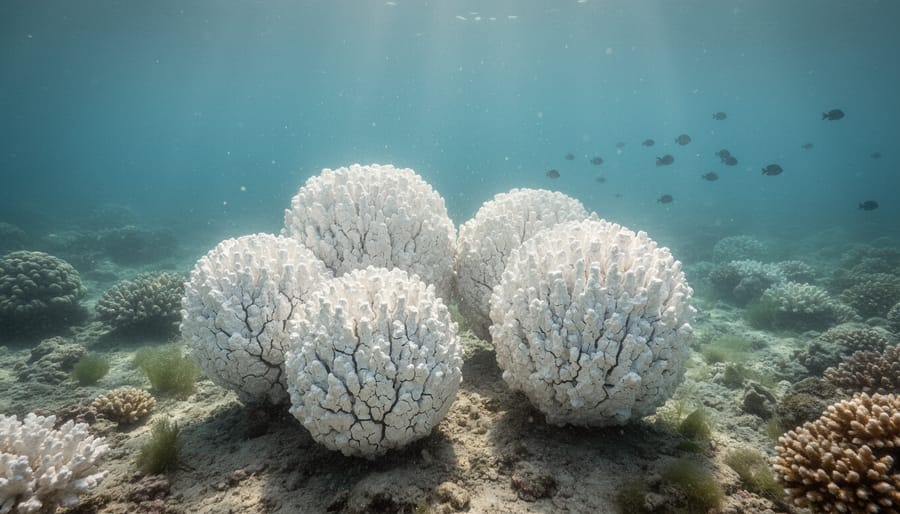
Coral reefs face an unprecedented combination of threats that work together to weaken these ecosystems faster than they can recover. Understanding these stressors helps explain why conservation efforts are so urgent and why multiple approaches are needed to protect reefs effectively.
Climate change represents the most pervasive threat to coral reefs worldwide. Rising ocean temperatures trigger coral bleaching events where stressed corals expel their symbiotic zooxanthellae, losing both their color and primary food source. When bleaching is severe or prolonged, corals starve. The frequency of these events has accelerated dramatically, what used to occur once every few decades now happens multiple times within a single decade in many regions. Ocean acidification compounds this problem by making it harder for corals to build their calcium carbonate skeletons, essentially weakening the reef’s foundation as atmospheric carbon dioxide dissolves into seawater.
Local human activities add additional pressure that can determine whether stressed reefs survive or collapse. Overfishing removes herbivorous fish that keep algae in check, allowing algae to overgrow and smother coral. Destructive fishing practices like blast fishing and cyanide fishing directly destroy reef structures. Coastal development increases sediment runoff that blocks the sunlight corals need for photosynthesis, while agricultural and urban runoff introduces excess nutrients that fuel algae blooms and reduce water quality.
The major threats affecting reef health include:
- Ocean warming and bleaching events, elevated temperatures disrupting the coral-algae symbiosis
- Ocean acidification, reduced pH levels weakening coral skeleton formation
- Overfishing and destructive fishing, removal of key species and physical reef damage
- Land-based pollution, sediment, nutrients, and chemicals degrading water quality
- Coastal development, habitat destruction and increased runoff
- Plastic pollution, physical damage and introduction of toxins
- Disease outbreaks, increasingly common as stressed corals become more vulnerable
These threats rarely act in isolation. A reef weakened by chronic pollution becomes more vulnerable to bleaching, while a bleached reef becomes more susceptible to disease. This synergistic effect means that addressing only one threat often isn’t enough to ensure reef survival.
The scope of these challenges shouldn’t discourage action. Many reefs show remarkable resilience when local stressors are reduced, even as we work toward global climate solutions. Reefs in well-managed marine protected areas with healthy fish populations and clean water often recover better from bleaching events than degraded reefs facing multiple stressors. This resilience gives us concrete reasons for optimism and clear targets for conservation work.
How You Can Support Coral Reef Conservation
Supporting coral reef conservation isn’t just the work of marine biologists, it’s a collective effort where everyone can play a meaningful role. Whether you live near the coast or hundreds of miles inland, your actions and engagement can directly contribute to protecting these vital ecosystems.
The most impactful step is participating in citizen science and volunteer research programs. The Marine Biodiversity Science Center offers structured opportunities for volunteers to contribute to reef monitoring, data collection, and restoration projects. These programs welcome participants with varying levels of experience, from first-time snorkelers to experienced divers. Field volunteers help document coral health, identify species, collect water samples, and assist with reef restoration efforts like coral gardening. The data collected feeds directly into research that shapes conservation strategies and policy decisions.
Dr. Elena Rodriguez, a marine biologist who coordinates volunteer programs, shares why community engagement matters: “I’ve watched volunteers transform from curious observers into passionate advocates. One participant, a high school teacher from Arizona, joined our reef monitoring program during summer break. She returned home and integrated what she learned into her curriculum, inspiring hundreds of students. Five years later, several of those students are now marine science majors. That ripple effect, from one week of volunteering to an entire generation caring about reefs, that’s the power of direct engagement.”
Do I need to be a certified diver to help with coral reef conservation?
No. While diving certification expands your options, many programs need land-based support including data analysis, outreach coordination, and educational program development.
How can I contribute to reef conservation from an inland area?
You can reduce plastic consumption, support reef-safe product choices, participate in virtual monitoring projects, advocate for climate policies, and contribute to the center’s e-network by sharing educational content.
What skills are most valuable for reef conservation work?
Beyond diving, programs need photography skills, data management, education and outreach abilities, fundraising experience, and scientific writing. Every skill set contributes to the larger conservation effort.
Your daily choices carry weight too. Choose reef-safe sunscreen containing non-nano zinc oxide or titanium dioxide rather than chemicals like oxybenzone that damage coral tissue. Reduce single-use plastics, which end up in marine environments and smother reefs. When purchasing seafood, select sustainably caught options to reduce pressure on reef fish populations.
Stay connected through the Marine Biodiversity Science Center’s e-network, which provides research updates, volunteer alerts, and educational resources. Sign up to receive notifications about upcoming field programs, virtual seminars with researchers, and opportunities to contribute to ongoing studies. The center regularly posts calls for specific skills, from underwater photographers to statistical analysts, making it easy to match your abilities with current needs.
Coral reef ecosystems reveal nature’s genius for connection. Each polyp, every fish, the invisible zooxanthellae working inside coral tissue, they’re all part of an intricate web where nothing exists in isolation. Understanding how these systems function isn’t just academic; it’s the foundation for effective conservation. When you grasp the symbiotic partnerships, nutrient flows, and structural complexity that make reefs work, the urgency of protecting them becomes impossible to ignore.
The challenges facing coral reefs are real, but so are the solutions emerging from research stations, community projects, and marine protected areas worldwide. Scientists are developing coral restoration techniques that work. Coastal communities are implementing sustainable fishing practices. Volunteers are contributing data that shapes conservation policy. These aren’t small gestures, they’re building blocks of meaningful change.
Your role in this story can take many forms. Join a reef monitoring expedition and learn species identification firsthand. Support research through citizen science projects that need your observations. Make purchasing decisions that reduce pressure on marine ecosystems. Share what you’ve learned about reef ecology with others who care about the ocean.
The Marine Biodiversity Science Center offers pathways into this work, from weekend volunteer programs to ongoing research partnerships. Our e-network keeps you connected with current projects, scientific findings, and opportunities to contribute. Coral reefs need informed advocates who understand their complexity and champion their future. That can start with you, today.

jessica
Ava Singh is an environmental writer and marine sustainability advocate with a deep commitment to protecting the world's oceans and coastal communities. With a background in environmental policy and a passion for storytelling, Ava brings complex topics to life through clear, engaging content that educates and empowers readers. At the Marine Biodiversity & Sustainability Learning Center, Ava focuses on sharing impactful stories about community engagement, policy innovations, and conservation strategies. Her writing bridges the gap between science and the public, encouraging people to take part in preserving marine biodiversity. When she’s not writing, Ava collaborates with local initiatives to promote eco-conscious living and sustainable development, ensuring her work makes a difference both on the page and in the real world.