Marine Biodiversity Science Center

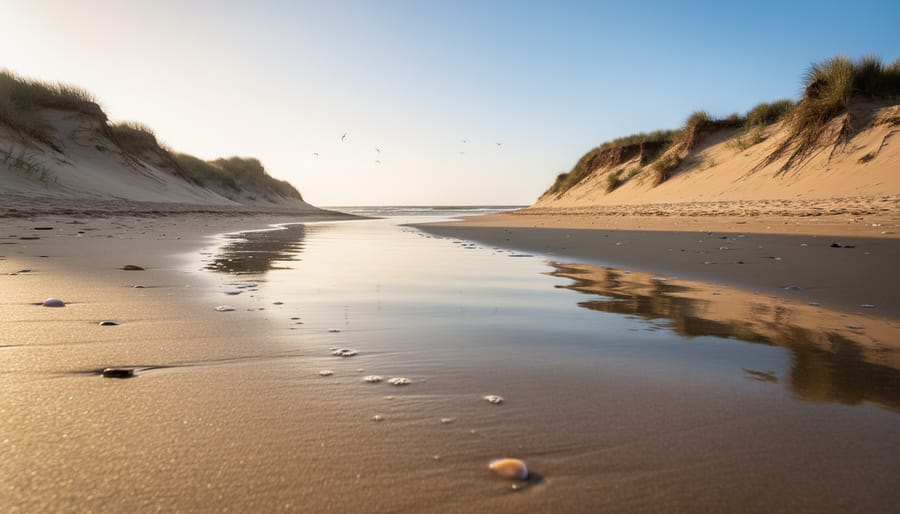
A sandy beach ecosystem is the living community of organisms and physical processes that exist in the zone between land and sea where sand is the dominant substrate. Far from the barren, lifeless stretches they may appear to be during a casual summer visit, these dynamic environments support a surprisingly rich web of life, from microscopic bacteria to shorebirds and sea turtles, all adapted to survive in one of Earth’s most physically demanding habitats.
Sandy beaches cover more than one-third of the world’s ice-free coastlines, making them among the planet’s most widespread coastal ecosystems. They serve as critical nursery grounds for commercial fish species, feeding stations for migratory birds, nesting sites for marine turtles, and natural buffers that protect inland communities from storm surges and erosion. The ecosystem services they provide, particularly for coastal resilience are valued in the billions of dollars annually worldwide.
Yet sandy beaches face mounting pressures from coastal development, pollution, and climate change. Rising sea levels and increased storm intensity threaten to squeeze these ecosystems between hardened shorelines and encroaching waters. Understanding how sandy beach ecosystems function, what lives within them, and how we can protect them has never been more urgent.
This article explains the fundamental workings of sandy beach ecosystems, identifies the different types you’ll encounter along coastlines, introduces the specialized creatures that call these habitats home, and outlines practical conservation actions that volunteers and communities can take to preserve these vital environments for future generations.
What Sandy Beach Ecosystems Really Are
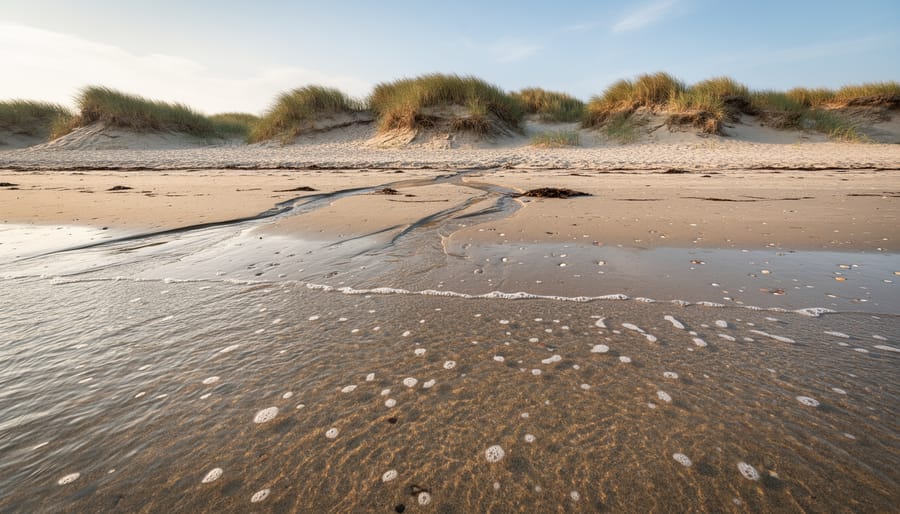
A sandy beach ecosystem is a dynamic coastal habitat that extends from the breaking waves in the surf zone up through the backshore to where permanent dunes begin. Unlike rocky shores with their visible tide pools and kelp forests, or coral reefs with their colorful fish, sandy beaches appear deceptively barren, yet beneath the sand and at its surface, a complex community of specialized organisms thrives.
What sets these ecosystems apart is constant movement. Sand particles shift with every wave and tide, creating an environment where organisms must either burrow, migrate with the tide line, or possess adaptations to withstand burial and exposure. The sand itself acts as both substrate and filter, with spaces between grains harboring microscopic life while allowing water and nutrients to percolate through.
The beach ecosystem consists of distinct vertical zones, each defined by how often seawater reaches it:
- Surf Zone
- The area of breaking waves where sand remains permanently submerged or suspended, supporting fish, crustaceans, and burrowing invertebrates.
- Swash Zone
- The slope where waves run up and retreat with each tidal cycle, creating the most physically demanding habitat on the beach.
- Intertidal Zone
- The beach face alternately covered and exposed by tides, home to sand-dwelling crustaceans, worms, and mollusks.
- Supralittoral Zone
- The upper beach reached only by the highest tides and storm waves, where insects, ghost crabs, and pioneering dune plants establish.
Sandy beaches don’t exist in isolation. They form the seaward edge of a larger sandy beach and dune ecosystem, connected through sand transport, shared species, and ecological processes. Organic matter washed ashore feeds beach invertebrates, which in turn provide food for shorebirds that nest in adjacent dunes. Sand eroded from the beach during storms rebuilds dunes, while dunes supply sand back to beaches during calmer periods. This physical and biological exchange makes the beach-dune interface a transition zone rather than a hard boundary, with species and materials flowing between both environments.
How Sandy Beach Ecosystems Function
Physical Processes That Shape the Ecosystem
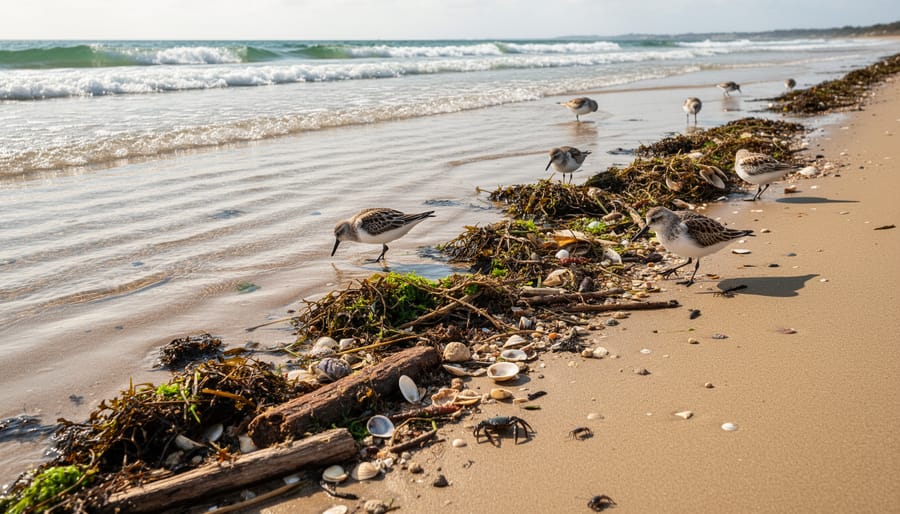
Wave action delivers the primary force sculpting sandy beaches, sorting sediment by size and determining beach slope. High-energy waves create steep, reflective beaches where sand particles are coarse and zones compress; low-energy waves build gentle, dissipative beaches with fine sand and wide surf zones. Each wave carries organic matter and nutrients from the pelagic zone onto the beach, depositing kelp wrack, phytoplankton, and small invertebrates that fuel the entire food web.
Tidal cycles create distinct vertical zones as seawater advances and retreats twice daily. As tides flush beach water through the sand, they exchange nutrients, oxygen, and organisms between marine and terrestrial realms. The intertidal zone experiences dramatic shifts in temperature, salinity, and moisture within hours, selecting for species that tolerate rapid environmental swings. Spring tides reach higher on the beach than neap tides, expanding or contracting available habitat in predictable cycles that organisms have evolved to exploit.
Longshore currents and wind move sand parallel to the coast, redistributing sediment and reshaping beaches over days to decades. Seasonal changes reverse this transport; winter storms strip sand seaward while summer swells rebuild beaches. These cycles create temporary refuge areas, bury or expose food resources, and force organisms to migrate vertically through the sand column or horizontally along the beach to track suitable conditions.
Biological Processes and Nutrient Cycles
Sandy beaches are biochemical reactors where organisms transform organic matter into nutrients that fuel both marine and coastal ecosystems. The process begins when waves deposit wrack, seaweed, dead fish, plankton, and other detritus, onto the beach. Bacteria immediately colonize this material, breaking down complex organic compounds into simpler forms. This microbial decomposition releases nutrients like nitrogen and phosphorus into the sand, where they become available to other organisms.
Meiofauna and small crustaceans consume bacteria-rich detritus, concentrating nutrients in their bodies. Ghost crabs, sandhoppers, and polychaete worms then feed on these smaller organisms, creating a classic detritus-based food web. Unlike kelp forests or coral reefs where photosynthesis drives primary production, sandy beaches rely almost entirely on imported organic matter from the ocean.
The nutrient cycling operates bidirectionally. When high tides wash over the beach, nutrients leached from decomposing wrack flow back into the surf zone, fertilizing phytoplankton and supporting nearshore fish populations. Simultaneously, burrowing invertebrates transport nutrients deeper into the sand column through their feeding and excretion, enriching sediments that may eventually nourish dune vegetation.
Shorebirds accelerate this cycle by consuming invertebrates and depositing nitrogen-rich guano across the beach. Their feeding connects the sandy beach food web to terrestrial ecosystems, illustrating how these seemingly barren environments serve as critical nutrient bridges between ocean and land.
Types of Sandy Beach Ecosystems
Sandy beaches vary dramatically in their physical structure and biological communities, shaped by wave energy, sand grain size, and coastal exposure. Understanding these different types helps scientists assess biodiversity patterns and predict which species will thrive in each environment, considerations that matter when studying the ocean species scale across coastal habitats.
Reflective beaches represent the high-energy extreme. Steep slopes and coarse sand characterize these systems, typically found on exposed coasts where powerful waves crash directly onto shore. Wave energy reflects back toward the ocean rather than dissipating gradually across the beach face. The harsh conditions, constant wave pounding, rapid water drainage through coarse particles, and unstable substrate, limit the diversity and abundance of organisms. Species that do survive here tend to be highly mobile crustaceans capable of rapid burrowing, such as mole crabs and certain beach hoppers. The intertidal zone remains narrow, compressed by the steep gradient.
Dissipative beaches occupy the opposite end of the spectrum. These gently sloping shores feature fine sand and wide surf zones where waves break far offshore, gradually releasing their energy across hundreds of meters. Water percolates slowly through fine sediments, maintaining moisture and creating more stable conditions. The extended intertidal zone provides extensive habitat, supporting richer communities of polychaete worms, bivalve mollusks, isopods, and amphipods. Many species burrow deep into the sand, accessing water tables below. Shorebirds favor these beaches for the abundant invertebrate prey distributed across broad feeding zones.
Intermediate beaches fall between these extremes, exhibiting characteristics of both types depending on seasonal wave conditions. During calm periods they may develop wide, gentle profiles resembling dissipative beaches, but storm events can rapidly transform them into reflective configurations. This variability creates dynamic habitats where species assemblages shift with changing physical conditions. Rather than organizing life in bands as fixed as rocky shores, intermediate sandy beaches maintain more fluid community structures, with organisms responding to episodic disturbances and seasonal patterns.
Beach type strongly influences conservation priorities. Dissipative systems, though hosting greater biodiversity, prove more sensitive to human impacts like vehicle traffic and coastal armoring. Reflective beaches, while naturally harsh, can degrade quickly when development disrupts sediment supply.
The Living Community: Species and Zones
Microscopic Foundation: Bacteria and Meiofauna
The sand beneath your feet teems with microscopic life you’ll never see without a microscope. Bacteria form dense films on sand grains, breaking down organic matter washed ashore and recycling nutrients back into usable forms. These microbial communities can reach concentrations of millions of cells per cubic centimeter of sand, transforming dead material into energy that fuels the entire beach food web.
Meiofauna, organisms between 0.1 and 1 millimeter in size, occupy the spaces between sand grains. Nematodes, tiny roundworms, dominate most beaches, sometimes accounting for 90 percent of meiofaunal abundance. Copepods, turbellarians, and gastrotrichs hunt bacteria or graze on biofilms, while foraminifera and ciliates filter particles from interstitial water.
This invisible community plays outsized roles despite their minute size. They process organic carbon faster than larger organisms, stabilize sand through their movements and secretions, and serve as food for juvenile fish and larger invertebrates. Without these microscopic engineers, the entire sandy beach ecosystem would collapse. Their metabolism drives nutrient cycling that supports every visible creature on the beach.
Invertebrate Engineers of the Sand
Beneath the sand’s surface, an industrious community of invertebrates performs the heavy lifting that keeps the ecosystem functioning. These creatures are the true engineers of sandy beaches, reshaping sediment structure and cycling nutrients with every burrow and feeding movement.
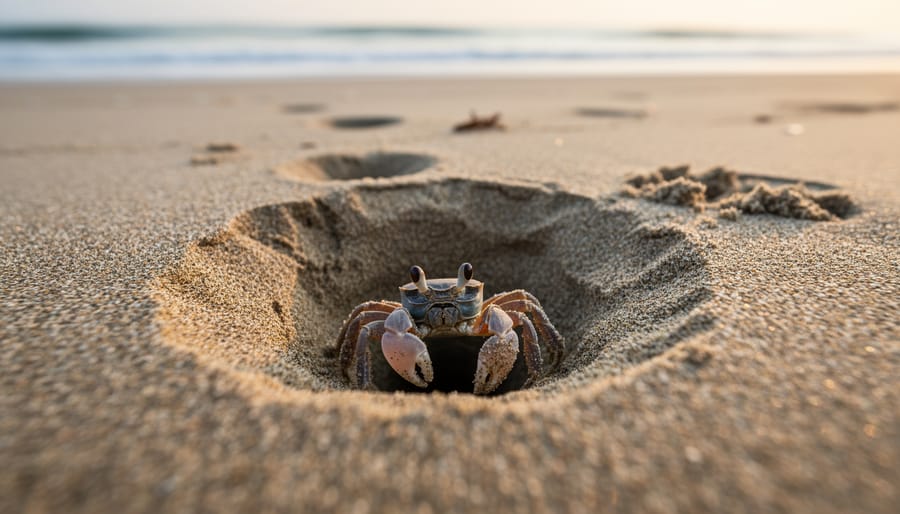
Ghost crabs dominate the upper beach, excavating deep burrows that aerate sand and create habitat for other species. At night, they emerge to scavenge anything edible, from seaweed fragments to turtle hatchlings, acting as the beach’s cleanup crew. Mole crabs in the swash zone use specialized antennae to filter plankton and detritus from receding waves, processing enormous quantities of organic matter daily. A single square meter of surf zone can support hundreds of these efficient filter-feeders.
Burrowing worms, particularly polychaetes and oligochaetes, tunnel through deeper sand layers, mixing oxygen into sediments and breaking down buried organic material. Their activities create channels that enhance water percolation and microbial activity. Coquina clams migrate vertically with tides, filtering phytoplankton as waves wash over their beds. Beach amphipods, sometimes called sand fleas, form massive aggregations under wrack lines, rapidly decomposing stranded kelp and seagrass into nutrients that bacteria and meiofauna can further process.
These invertebrates link microscopic productivity to larger predators. Shorebirds time their migrations to coincide with peak crab and worm abundance. Fish patrol the surf zone hunting mole crabs. Without these engineering species constantly reworking the sand, beaches would become compacted, nutrient-poor deserts incapable of supporting the rich communities observed on healthy shores.
Vertebrates: Fish, Birds, and Marine Mammals
Sandy beaches support a diverse vertebrate community that depends on the invertebrate foundation for survival. Shorebirds are the most visible vertebrates, with species like sanderlings, plovers, and sandpipers probing the sand for crustaceans and worms during low tide. Their feeding leaves telltale tracks and creates small excavations that further aerate the sediment. Many shorebirds use beaches as critical stopover points during long migrations, timing their arrivals to coincide with peak invertebrate abundance.
Sea turtles rely on sandy beaches for nesting, with females returning to their natal beaches to deposit eggs above the high-tide line. Hatchlings emerge weeks later and scramble toward the ocean, facing predation from both terrestrial and marine hunters.
Fish like California grunion spawn directly on beaches during spring high tides, burying their eggs in sand where they develop until the next tidal cycle washes newly hatched larvae into the surf zone. Other fish species patrol the nearshore zone, feeding on invertebrates exposed by wave action.
Marine mammals occasionally haul out on sandy beaches to rest or give birth, particularly seals and sea lions in temperate regions.
Ecological Services Sandy Beaches Provide
Sandy beaches deliver a suite of ecosystem services that ripple far beyond their shorelines, supporting both marine life and coastal communities in ways that are often invisible until they’re gone. These dynamic habitats act as the ocean’s frontline defense, absorbing wave energy during storms and buffering inland areas from erosion and flooding. The sand itself functions as a massive natural filter, trapping pollutants and excess nutrients before they can reach nearshore waters where they might fuel harmful algal blooms or degrade coral reefs.
For countless marine species, sandy beaches serve as essential nursery grounds where juvenile fish and invertebrates find refuge in the surf zone, feeding on the rich supply of small crustaceans and organic matter. Shorebirds depend on these habitats as critical stopover sites during migration, refueling on beaches that support high densities of invertebrate prey. Sea turtles return to specific beaches to nest, linking ocean and land in a cycle that has persisted for millions of years.
The ecosystem biodiversity found on sandy beaches also contributes to nutrient cycling on a remarkable scale. Seaweed, dead fish, jellyfish, and other organic debris washed ashore, collectively called wrack, doesn’t simply decay. It fuels an entire food web of scavenging invertebrates that break down this material, releasing nutrients back into the sand where they support microbial communities and eventually return to the ocean through tidal exchange.
For humans, sandy beaches provide recreational, economic, and cultural value that’s difficult to quantify but impossible to ignore. Coastal tourism generates billions in revenue, while beaches offer mental health benefits, educational opportunities, and spaces for cultural practices. Yet these services remain sustainable only when the underlying ecosystem remains intact and functional.
Threats Facing Sandy Beach Ecosystems in 2026
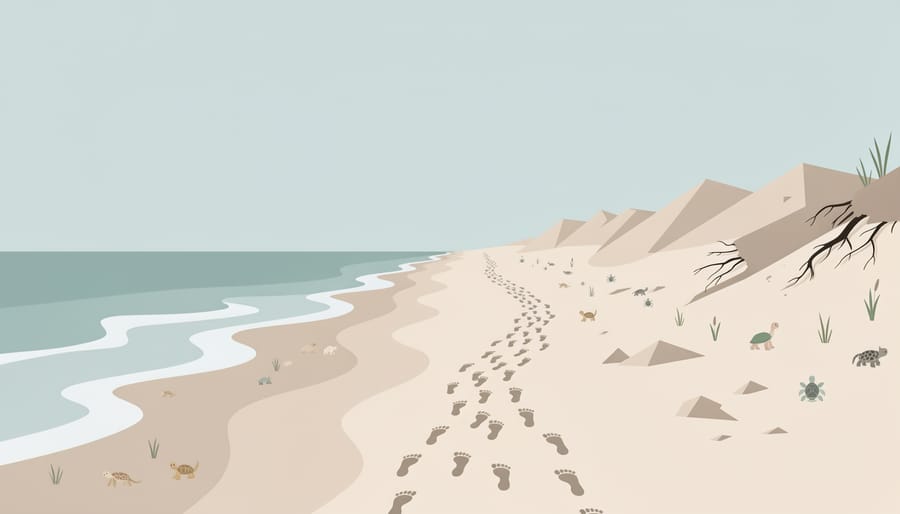
Sandy beaches face mounting pressures that converge from both land and sea, threatening the delicate balance these ecosystems maintain. Understanding these threats requires recognizing how they compound and cascade through interconnected beach-dune systems.
Coastal development remains the most visible threat. Buildings, roads, and seawalls built directly on or near beaches eliminate habitat, block sand movement, and sever connections between beach and dune zones. Hardened structures disrupt natural erosion-accretion cycles, preventing beaches from migrating landward as sea levels rise. This coastal squeeze traps ecosystems between rising waters and immovable barriers, gradually drowning habitat that cannot retreat.
Climate change amplifies nearly every other pressure. Rising seas inundate nesting areas and push saltwater into freshwater zones critical for some beach species. Intensifying storms erode beaches faster than natural processes can rebuild them, while shifting temperature patterns alter breeding cycles and species distributions. Warmer sand temperatures skew sex ratios in sea turtles and affect the timing of invertebrate reproduction.
Beach grooming practices, though intended to create recreation space, destroy the wrack lines where most invertebrates live and feed. Heavy machinery compacts sand, crushes burrows, and removes the organic matter that fuels beach food webs. Some beaches are groomed daily during tourist seasons, preventing any recovery between disturbances.
Pollution arrives from multiple sources. Plastic debris smothers habitats, entangles wildlife, and breaks down into microplastics that infiltrate food chains. Nutrient runoff from coastal development triggers algal blooms that wash ashore, creating anoxic conditions as they decompose. Light pollution from beachfront properties disorients hatchling sea turtles and disrupts the nocturnal activity patterns of ghost crabs and other invertebrates.
Recreational pressure has surged. Vehicle traffic on beaches compacts sand and crushes organisms. Dogs disturb nesting birds. Beach furniture and umbrellas fragment habitat. Even foot traffic in high-use areas can reduce invertebrate populations by ninety percent compared to less-visited stretches.
These threats rarely act alone. Development increases pollution and recreational pressure while eliminating dune systems that would buffer beaches from storms. Climate change intensifies all physical disturbances. The cumulative effect degrades ecosystem function faster than any single stressor could, pushing some beaches toward ecological collapse.
Conservation Strategies That Work
Protecting sandy beach ecosystems requires shifting from outdated management practices toward science-based strategies that recognize these environments as living systems, not just recreational assets. Several proven approaches have demonstrated measurable success in restoring biodiversity and ecosystem function.
Beach management reforms start with eliminating mechanical grooming and raking that destroys the wrack zone, the critical band of decomposing seaweed and organic matter where invertebrates thrive. Cities like Santa Barbara, California reduced grooming frequency by 75% and saw mole crab populations rebound within two years. Restricting vehicle access prevents compression of sand that collapses burrows and kills buried fauna. Simple signage and seasonal closures during shorebird nesting periods protect vulnerable species without requiring extensive infrastructure.
Marine protected areas work when they include sandy beach habitats, not just rocky reefs or kelp forests. Effective designation requires buffer zones extending from the surf zone through the upper beach into the dune system, protecting the full ecological gradient. Research from Australia’s Great Barrier Reef Marine Park shows that ghost crabs and beach amphipods reached densities three times higher inside protected sections compared to heavily trafficked beaches nearby.
Restoration techniques focus on reestablishing natural processes rather than engineering static solutions. Removing seawalls and hardened structures allows sand to move naturally with tides and storms. Planting native dune vegetation stabilizes sand without non-native species that alter invertebrate communities. In North Carolina, restoring natural dune contours increased nesting success for sea turtles by 40% over five years as sand temperatures and drainage improved.
Community-based conservation programs that train local volunteers as citizen scientists generate both data and stewardship. Beach monitoring programs across New Zealand engage hundreds of volunteers who track indicator species monthly, creating datasets that inform regional management decisions while building public support for protective policies.
How You Can Help Protect Sandy Beach Ecosystems
Protecting sandy beach ecosystems starts with individual choices that ripple outward. Every action, from how you walk on the beach to how you advocate for coastal policies, contributes to the health of these critical environments.
The Marine Biodiversity Science Center offers direct ways to contribute to sandy beach conservation through hands-on involvement:
- Monthly beach cleanup and biodiversity surveys at partner beaches along the coast
- Shorebird monitoring programs during nesting season to protect critical breeding habitat
- Ghost crab population surveys that track ecosystem health indicators
- Beach wrack documentation projects that inform management decisions
- Public education programs where volunteers help teach visitors about beach ecology
Beyond organized programs, your beach visits matter. Stay on designated paths to avoid trampling dune vegetation that stabilizes sand and prevents erosion. Leave natural beach wrack where it lies rather than removing it, as this organic matter feeds the ecosystem’s foundation. Keep dogs leashed and away from shorebird nesting areas, especially during spring and summer. Take all trash with you and pick up litter you encounter, particularly plastics that persist for decades.
Citizen science amplifies research capacity. Apps like iNaturalist document species presence and help scientists track population changes. Beach debris monitoring programs need observers to record what washes ashore, data that reveals pollution sources and trends.
Advocacy creates systemic change. Support local ordinances that limit beach grooming, restrict coastal development setbacks, and protect natural shoreline processes. Contact elected officials about policies affecting coastal management. Attend public hearings on beach access and development proposals. Your voice shapes decisions that determine whether these ecosystems survive or disappear beneath concrete and manicured sand.
Small actions compound into meaningful protection when enough people participate.
How A Sandy Beach Ecosystem Works
Sandy beaches operate through constant exchange between ocean, sand, and air. Waves deliver organic matter, seaweed fragments, dead plankton, jellyfish, fish carcasses, that becomes the fuel for everything else. This marine debris piles up along the wrack line, where bacteria immediately begin decomposition.
As bacteria break down organic material, they release nutrients into the sand. Tiny meiofauna (organisms smaller than a grain of rice) graze on bacterial films and decaying matter. Slightly larger invertebrates, sand crabs, amphipods, beach hoppers, polychaete worms, consume both the meiofauna and partially decomposed wrack. These creatures burrow constantly, mixing oxygen into deeper sand layers and transforming nutrients into forms other organisms can use.
Shorebirds arrive during low tide to probe for invertebrates, converting beach production into energy they’ll carry hundreds of miles during migration. Ghost crabs emerge at night, scavenging anything edible and dragging organic matter into their burrows, which extends decomposition deeper underground.
Tidal cycles drive this machine. Each high tide delivers fresh organic input and flushes waste products seaward. Low tides expose feeding zones and allow oxygen to penetrate the sand. These ecosystem connections between marine and terrestrial environments create a nutrient pump that enriches both ocean and land.
How A Sandy Beach Ecosystem Is Used
Sandy beach ecosystems deliver tangible benefits that span ecological, economic, and social dimensions. Coastal communities depend on these systems for storm protection, the sand itself acts as a natural buffer, absorbing wave energy during storms and reducing erosion of inland areas. This protective function saves millions in infrastructure damage annually along developed coastlines.
These beaches serve as critical nursery habitat for commercially valuable fish species. Juvenile mullet, flounder, and surf perch feed in the shallow surf zones before migrating to deeper waters, supporting fisheries that sustain coastal economies. Sea turtles rely on sandy beaches as nesting grounds, with females returning to the same beaches where they hatched decades earlier.
For humans, sandy beaches provide recreational spaces that drive tourism revenue and support mental health through coastal access. Beachcombing, surfing, and simple shoreline walks connect millions of people to marine environments each year.
Scientists use sandy beach ecosystems as natural laboratories for studying climate adaptation, coastal processes, and invertebrate ecology. Long-term monitoring programs track how these systems respond to sea-level rise and temperature changes, providing data essential for coastal management decisions worldwide.
Frequently Asked Questions
Sandy beaches shift constantly with the seasons, and many readers wonder how these changes affect the ecosystem. Understanding these patterns, along with practical questions about conservation and beach health, helps clarify the dynamic nature of these environments.
How do sandy beach ecosystems change with the seasons?
Winter storms typically erode beaches and remove sand, while calmer summer conditions allow sand to return and the beach to rebuild. These seasonal cycles drive predictable changes in species abundance, with many invertebrates burrowing deeper or migrating during high-energy winter months, then recolonizing upper zones as conditions moderate.
What species indicate a healthy sandy beach ecosystem?
Abundant populations of sand crabs, coquina clams, and beach hoppers signal good ecosystem health, as do regular visits from shorebirds like sanderlings and plovers that feed on these invertebrates. The presence of ghost crabs in the upper beach and dune interface also indicates relatively undisturbed habitat with intact ecological connections.
Is beach cleaning harmful to sandy beach ecosystems?
Mechanical beach grooming that removes all wrack and organic matter destroys critical habitat and food sources for invertebrates and shorebirds, effectively sterilizing the ecosystem. Hand removal of litter while leaving natural organic material protects the ecological functions that depend on this detritus.
How do sand dunes support sandy beach ecosystems?
Dunes act as sand reservoirs that replenish beaches after storms, stabilize the upper beach with vegetation, and provide habitat for species that move between beach and dune zones. Protecting dune systems ensures the beach ecosystem has the sediment supply and physical structure it needs to persist through natural cycles.
These questions reflect the most common concerns people have when they start paying closer attention to sandy beaches. The connection between dunes and beaches matters particularly because damage to one system weakens the other, making integrated management essential. Healthy beaches depend on natural processes like seasonal sand movement and organic matter accumulation, which conventional beach maintenance often disrupts. Recognizing indicator species gives beachgoers a way to assess ecosystem health themselves and understand what a functioning sandy beach should look like.
Sandy beach ecosystems stand at the intersection of ocean and land, forming an irreplaceable component of our planet’s coastal biodiversity. These dynamic environments, stretching from surf zone to dune interface, support countless species, filter vast quantities of water, protect shorelines from erosion, and provide critical nursery grounds for marine life. Their connection to adjacent dune systems creates an integrated coastal complex that delivers ecological services we cannot replicate or replace.
The challenges these ecosystems face are real and accelerating. But here’s what gives us reason for optimism: we know what works. Scientific research has identified effective conservation strategies, from reformed beach management to community-based protection programs. We’ve seen degraded beaches recover when given the chance. We’ve watched populations rebound when critical habitats receive protection.
What happens next depends on collective action. Whether you contribute to citizen science programs, volunteer with organizations like the Marine Biodiversity Science Center, advocate for evidence-based coastal policies, or simply treat these environments with respect during your visits, your involvement matters. Sandy beach ecosystems have sustained life for millennia. With informed stewardship, they’ll continue supporting biodiversity for generations to come.

jessica
Ava Singh is an environmental writer and marine sustainability advocate with a deep commitment to protecting the world's oceans and coastal communities. With a background in environmental policy and a passion for storytelling, Ava brings complex topics to life through clear, engaging content that educates and empowers readers. At the Marine Biodiversity & Sustainability Learning Center, Ava focuses on sharing impactful stories about community engagement, policy innovations, and conservation strategies. Her writing bridges the gap between science and the public, encouraging people to take part in preserving marine biodiversity. When she’s not writing, Ava collaborates with local initiatives to promote eco-conscious living and sustainable development, ensuring her work makes a difference both on the page and in the real world.