Marine Biodiversity Science Center

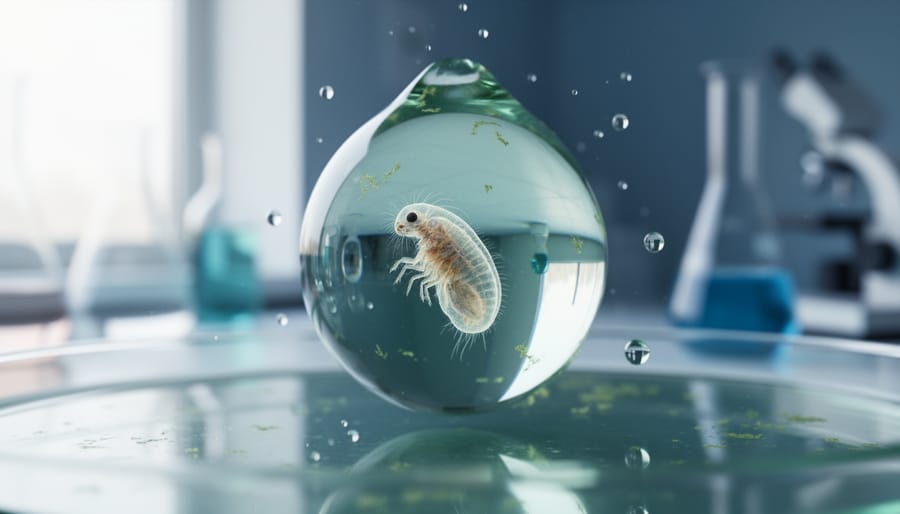
Marine larvae are the tiny, free-swimming early life stages of ocean animals, from corals and oysters to crabs, sea stars, and fish. Most look nothing like the adults they become. They drift, swim, and feed in open water for days or weeks, then face one decisive choice: where to settle. That choice is usually permanent. A coral larva that lands on the wrong patch of seafloor won’t get a second try.
So how does an animal smaller than a grain of rice pick a home? It reads the ocean. Larvae respond to chemical signals from healthy reef or bed communities, the sound of snapping shrimp and grunting fish, light, water flow, and the texture of a surface. Together these cues tell them whether a spot offers food, shelter, and neighbors of their own kind.
Understanding this process matters far beyond the lab. It shapes how scientists restore damaged reefs, rebuild oyster beds, and manage fisheries, and it explains why a healthy, noisy, thriving habitat attracts new life while a degraded one struggles to recover.
This article breaks down what marine larvae are, how settlement works step by step, the main larval types and their strategies, and how this knowledge is already helping conservation. Along the way, you’ll find ways to get involved yourself, because restoration projects often welcome volunteers.
What Marine Larvae Are: A Plain-Language Definition
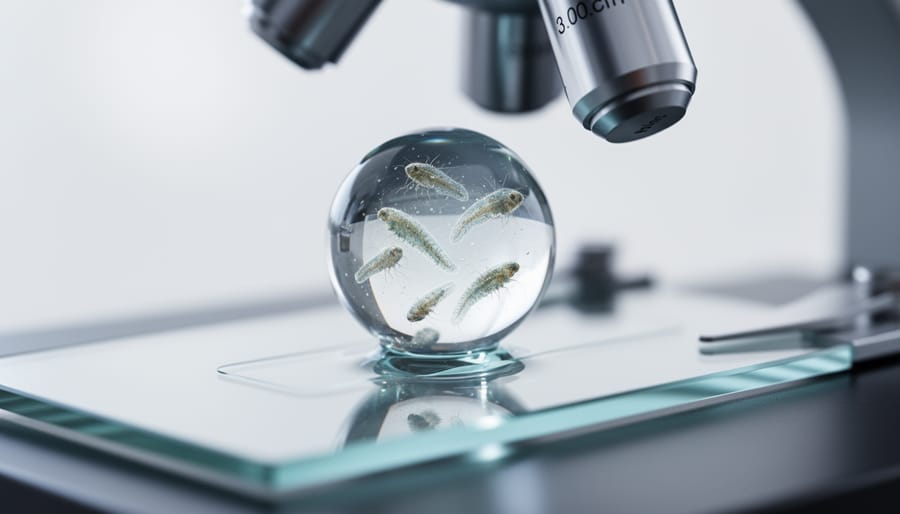
Picture an oyster, a crab, a sea star, and a young reef fish. As adults, they look nothing alike, and none of them looks like the tiny creature they started as. That early stage is the marine larva: the free-living, juvenile form of many ocean animals, built for drifting rather than for the adult life that comes later. A coral larva is a swimming, ciliated blob. A crab larva looks like a spiny, transparent insect. A baby oyster is a microscopic swimmer with a delicate, sail-like organ for catching food and moving through the water.
Why does this stage exist? Many adult ocean animals barely move. Corals, oysters, and barnacles spend their lives fixed in one spot, so they cannot spread their offspring on their own. Larvae solve that problem. By riding ocean currents as part of the plankton, the community of drifting organisms, they travel far from their parents. This travel is called dispersal, and it lets species colonize new reefs, recover after storms, and avoid crowding out their own young.
A few terms help here:
- Plankton
- Organisms that drift with the water rather than swimming against currents, including many larvae.
- Dispersal
- The spreading of young animals away from where they were born, often over many kilometers.
- Settlement
- The moment a larva stops drifting and commits to a particular place on the seafloor, a reef, or another surface.
- Metamorphosis
- The dramatic body change a larva undergoes as it becomes a juvenile that looks like the adult.
Drifting cannot go on forever, though. At some point a larva must choose a home. This is where larval settlement and habitat selection come in. The larva tests its surroundings, decides whether a spot is good enough, and, if it is, attaches or burrows in and begins to transform. It is a one-way decision with lasting consequences, which is why the next sections look at how larvae make it.
How Larval Settlement and Habitat Selection Work
From Drifting to Deciding: The Stages of a Larva’s Journey
Every larva’s journey follows a rough sequence, though the timing changes enormously from species to species.
It starts with hatching or release. Many animals, including corals and oysters, shed eggs and sperm into the water, and the fertilized eggs develop into larvae that join the plankton, the community of small organisms carried along by currents. Next comes dispersal. Larvae drift, and some swim upward or downward to catch different currents, spreading offspring far from the parent population. Depending on the species, this stage can last just a few hours or stretch to several months.
Then comes the competence window. Early on, a larva simply isn’t ready to settle. Once its body and senses have developed enough, it becomes competent, meaning capable of settling and transforming. That readiness doesn’t last forever, which adds pressure to find a good spot.
Competent larvae begin searching. Far from being passive drifters, they are active decision-makers sinking toward the bottom, crawling over surfaces, and sampling what they find. Unsuitable surfaces are often rejected, and the larva moves on.
When a spot passes the test, the larva commits. Corals and oysters cement themselves down, while others burrow into sediment. Finally, metamorphosis begins, the dramatic reshaping from larval body to adult form. After that, there’s usually no going back.
Reading the Ocean: How Larvae Sense the Right Home
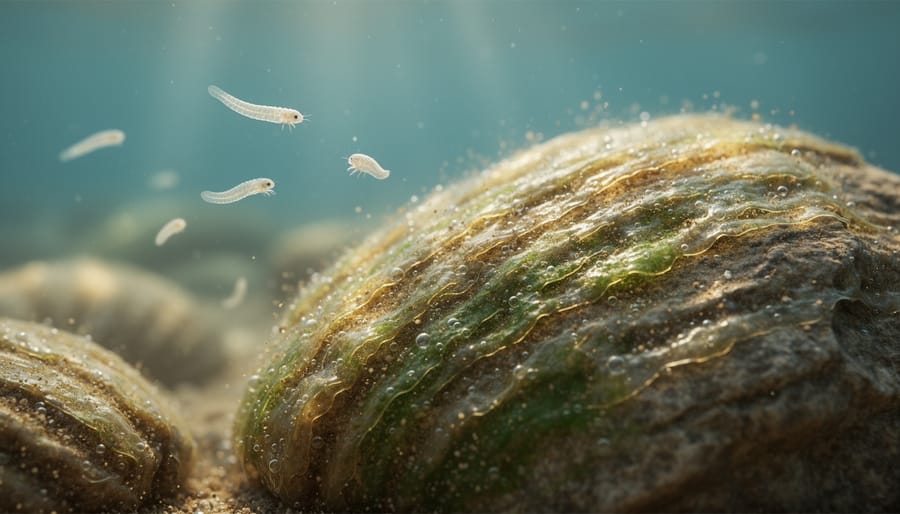
A larva has no map, yet it somehow finds a home. It does this by reading the water around it, and the clues are far subtler than you might expect. Scientists studying larvae’s senses have found that these tiny drifters pick up signals we can barely imagine, then weigh them before committing to a spot.
Here are the major cues that help a larva decide:
- Chemical signals: dissolved compounds drifting from reefs, adult animals, or coralline algae tell a larva that others have thrived nearby.
- Sound: a healthy reef is noisy with snapping shrimp, grunting fish, and crackling surfaces, and larvae steer toward that racket.
- Light and depth: brightness and pressure help a larva judge how close it is to the surface or seafloor.
- Water flow: gentle or swirling currents hint at shelter, food delivery, and whether a spot is too rough to cling to.
- Surface texture: tiny pits, grooves, and ridges can feel like a perfect fit, while smooth surfaces get rejected.
- Biofilms: thin layers of microbes coating rocks and shells signal a surface that has been in the water long enough to be a good home.
What makes this so remarkable is the teamwork between cues. A larva might hear a reef first, taste its chemistry as it gets closer, and finally touch down to test the surface. Much of this works like underwater communication with the ocean itself carrying messages about where life is already flourishing.
Imagine a creature smaller than a grain of rice making a choice based on a faint scent, a distant crackle, and the feel of a rock. When one cue is missing or muddled, the larva keeps searching, and that patience is part of what keeps ocean communities growing.
Types of Marine Larvae and Their Settlement Strategies
Not every larva is built the same, and that shapes how each one goes house hunting.
Coral planulae are tiny, oval, and covered in hair-like cilia. They have no eyes and no real swimming muscles to speak of, so they rely on currents to travel and on chemical and acoustic cues to judge a spot. When one finds a surface it likes, often rock coated with certain coralline algae, it glues itself down and transforms into a polyp.
Oyster and mussel veligers carry a delicate, ciliated swimming organ called a velum, which works like a tiny propeller and feeding net at once. Late in development, they grow a muscular foot. They use it to crawl across surfaces, “tasting” them before cementing down. Oysters are famously drawn to the chemical signature of existing oyster shells, which is why old shell makes such a good restoration surface.
Barnacle cyprids are among the most methodical searchers. Their bodies are enclosed in a two-part shell, and they walk across surfaces on specialized antennae, leaving temporary footprints of sticky protein. They can inspect, reject, and revisit a surface many times before committing permanently, headfirst.
Crab larvae go through two distinct forms. The spiny zoea drifts and feeds in the plankton. Later, it becomes a megalopa, which looks more like a small crab with a tail. The megalopa swims toward shore and often uses cues such as estuary water chemistry and seagrass or marsh smells to find nursery habitat.
Reef fish larvae are the athletes of the group. Many can swim strongly, see well, and hear, which lets them steer toward the sounds and scents of a healthy reef. Some have been tracked swimming impressive distances toward home.
A marine biologist once described the first time she watched cyprids under a microscope this way: “I expected them to land and stay. Instead, one stepped across a slide, stopped, lifted its antennae, and moved on, over and over. It was clearly choosing. I realized I was watching a decision.”
The key components of larval behavior include:
– Swimming ability, from passive drifting to strong directed swimming
– Sensory tools, such as cilia, antennae, eyes, and chemical or sound detection
– Testing behavior, like crawling, tasting, or probing a surface
– Commitment, the moment of attachment or burrowing that triggers metamorphosis
How Settlement Behavior Is Used in Conservation and Restoration
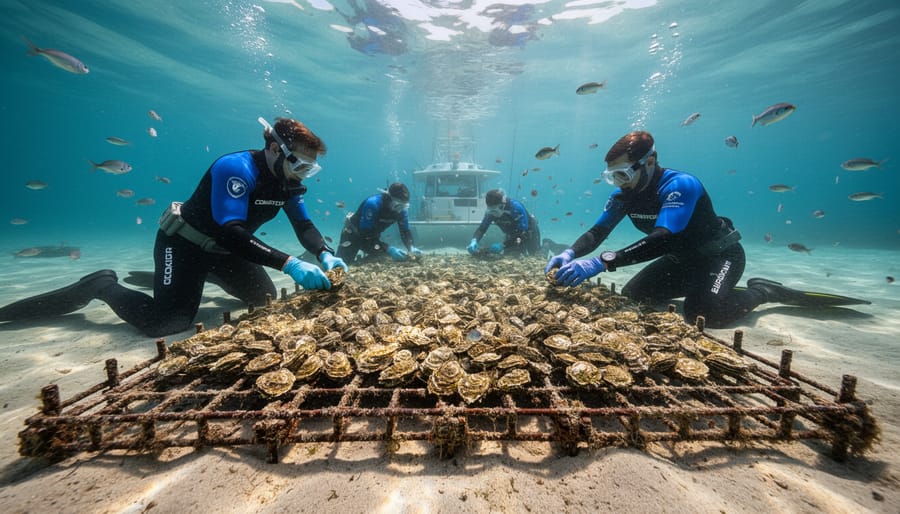
Knowing how a larva chooses its home turns out to be one of the most practical tools in ocean restoration. When restoration teams work with larval behavior instead of against it, more young animals settle, survive, and grow into the adults that rebuild a reef.
Take oyster and coral restoration. Larvae are drawn to specific surfaces, textures, and chemical cues, so restorers now place clean shell, roughened limestone, or biofilm-conditioned tiles right where larvae are most likely to land. Some coral projects even play recorded reef sounds underwater to attract drifting larvae toward degraded sites. Small changes in material and placement can noticeably improve settlement.
Larval knowledge also guides bigger planning decisions. Because larvae travel on currents, scientists track connectivity, meaning which reefs seed which others, to decide where marine protected areas will do the most good. Hatcheries benefit too, since timing the release of larvae to when they become competent to settle makes aquaculture and restocking more efficient.
Here are the key applications:
- Reef and oyster restoration that places settlement surfaces where larvae naturally land.
- Artificial reef design built around textures and cues larvae prefer.
- Protected area planning based on larval connectivity between habitats.
- Hatchery and aquaculture support timed to larval readiness.
- Recruitment monitoring that reveals how healthy an ecosystem is.
That last item, recruitment, simply means counting the young animals that successfully settle. A steady flow of newcomers is an encouraging sign that a habitat is functioning, while a sudden drop can serve as an early warning, giving managers time to act. Together, these tools show that understanding tiny decision-makers can lead to real, hopeful progress for the places they call home.
What Can Disrupt Larval Settlement and How to Help
Larvae depend on subtle cues, so anything that muddies those cues can make settlement harder. Murky water can block the light and chemical signals that point toward a healthy reef. Noise from boat traffic and construction can drown out the crackling soundscape a thriving reef produces, which some larvae use as a homing beacon. Warmer water can speed up development and shrink the window in which larvae are ready to settle, while shifts in ocean chemistry can weaken the sensory abilities of some species. Habitat loss compounds all of this: when fewer healthy reefs, oyster beds, and kelp forests remain, there are fewer adult communities sending out the signals larvae follow. Research on how pollutants disrupt behavior in marine animals shows just how sensitive these responses can be.
The encouraging part is that these pressures respond to people. Cleaner runoff, quieter waters, and restored habitat all give larvae clearer signals and better places to land.
That is where you come in. The Marine Biodiversity Science Center offers several ways to take part:
– Join reef and shoreline restoration events, where volunteers help rebuild the surfaces larvae need.
– Contribute to citizen science monitoring, which tracks recruitment and ecosystem health over time.
– Sign up for the online e-network to hear about new opportunities, share what you learn, and connect with others who care about the ocean.
No scientific background is required, just curiosity and a willingness to help.
Common Questions About Marine Larvae and Settlement
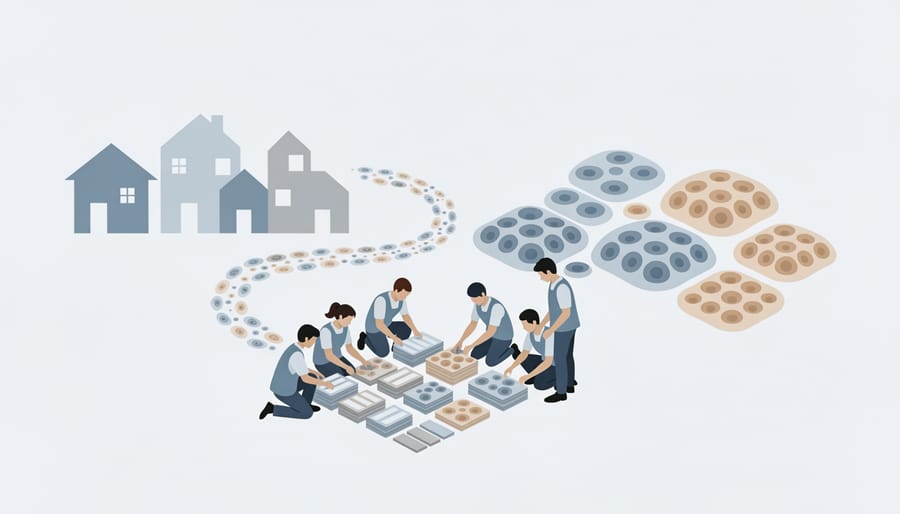
Readers often ask the same handful of questions about these tiny travelers, so here are short answers.
How long do marine larvae drift?
It depends on the species. Some larvae settle within hours or days, while others spend weeks or even months in the plankton before they are ready to commit to a place.
Can a larva settle somewhere else if it lands in a poor spot?
Often, yes. Many larvae test a surface, reject it, and keep searching, though this only works while they are still within their competence window and have the energy to continue.
How do scientists study such tiny organisms?
Researchers watch larvae under microscopes and in lab tanks, where they can offer different surfaces, sounds, and chemical cues and record the choices made. Field plankton nets and settlement plates add real-world data.
Can everyday actions support larval settlement?
They can. Keeping runoff and litter out of waterways, reducing noise and disturbance near sensitive habitats, and joining local restoration or monitoring events all help protect the places larvae depend on.
If you want to go deeper into how animals make decisions in the sea, the work of marine behavior specialists shows how much there is to learn from watching small creatures closely. Every question you ask about larvae is a step toward better protecting the reefs, oyster beds, and kelp forests they rebuild.
A drifting larva, no bigger than a grain of sand, is not a passive passenger. It senses chemicals, listens for the sounds of a healthy reef, reads light, depth, and surface texture, and tests one spot after another before committing to a home. That choice, repeated by billions of tiny animals, is how coral reefs, oyster beds, and kelp forests rebuild themselves after storms, disease, and disturbance.
This is why settlement behavior matters so much for conservation. When we understand what larvae need to feel safe settling, we can design better restoration sites, protect the right connected habitats, and spot trouble early by watching how many young animals arrive. Restoration works best when it cooperates with the way larvae already decide.
The encouraging part is that real people can influence those decisions. Cleaner water, quieter seas, and healthier habitat all send clearer signals to the next generation. You can help by volunteering at a reef or shoreline restoration event, joining a citizen science monitoring effort, or simply sharing what you’ve learned with a friend, a classmate, or your neighbors.
Join our online e-network, add your hands to the work, and become part of a community dedicated to protecting the places larvae call home. Every healthy habitat begins with a tiny traveler finding the right place to land.

jessica
Ava Singh is an environmental writer and marine sustainability advocate with a deep commitment to protecting the world's oceans and coastal communities. With a background in environmental policy and a passion for storytelling, Ava brings complex topics to life through clear, engaging content that educates and empowers readers. At the Marine Biodiversity & Sustainability Learning Center, Ava focuses on sharing impactful stories about community engagement, policy innovations, and conservation strategies. Her writing bridges the gap between science and the public, encouraging people to take part in preserving marine biodiversity. When she’s not writing, Ava collaborates with local initiatives to promote eco-conscious living and sustainable development, ensuring her work makes a difference both on the page and in the real world.