Marine Biodiversity Science Center

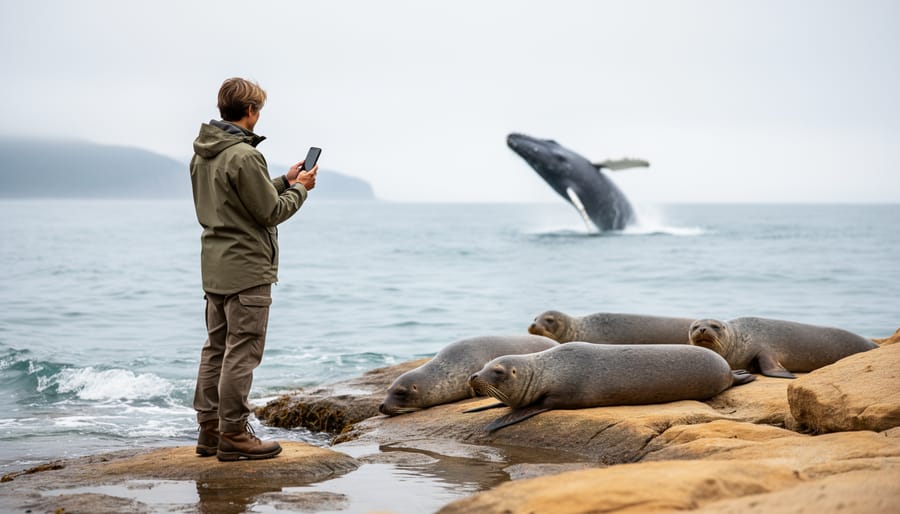
iNaturalist transforms anyone with a smartphone into a field researcher, enabling millions of people worldwide to document marine mammal sightings that directly inform conservation decisions and fill critical gaps in scientific knowledge. By photographing and uploading observations of whales, dolphins, seals, and other marine mammals to this free platform, you’re contributing to a global database that researchers use to track species distributions, identify population trends, and protect vulnerable habitats.
The platform works through a powerful combination of artificial intelligence and community expertise. When you upload a photo, computer vision suggests an identification, then a network of tens of thousands of experienced naturalists and scientists verify the observation. Once an entry reaches “research grade” status with multiple confirming identifications, it becomes available to scientists through the Global Biodiversity Information Facility, where it joins datasets used in peer-reviewed studies, environmental impact assessments, and conservation planning.
What makes iNaturalist particularly valuable for marine mammal research is its ability to capture observations that traditional surveys miss. Shore-based sightings, unexpected range expansions, unusual behaviors, and rare species encounters often happen when researchers aren’t looking. Your casual beach walk documentation of a harbor seal haul-out site or a gray whale mother with calf contributes baseline data that helps scientists understand seasonal patterns, breeding areas, and responses to environmental change.
Getting started requires nothing more than downloading the app and beginning to observe. Every verified sighting matters, whether you’re documenting a common species in your local harbor or capturing something extraordinary.
What Is Citizen Science and Why iNaturalist Matters
Citizen science transforms curious observers into active contributors to scientific knowledge. Rather than research remaining confined to laboratories and universities, citizen science invites anyone, regardless of formal training, to collect data, share observations, and participate in discoveries that shape our understanding of the natural world. When a beachgoer photographs a pod of dolphins or a kayaker spots a seal hauled out on rocks, those moments can become valuable scientific data points.
iNaturalist has emerged as the world’s most widely used biodiversity observation platform precisely because it removes traditional barriers to participation. You need nothing more than a smartphone and curiosity. The platform combines three powerful elements that make it uniquely effective for marine mammal research: a global community of observers who collectively document life wherever it appears, sophisticated AI that suggests species identifications from photos, and a research-grade community agreement that ensures data meet scientific standards before entering formal research databases.
What sets iNaturalist apart from simply posting wildlife photos on social media is its systematic approach to validation. When you upload a marine mammal sighting, the community reviews your identification, experts weigh in, and only observations that meet specific criteria achieve research-grade status. This verification process transforms casual snapshots into scientifically reliable records that contribute to peer-reviewed studies, population assessments, and conservation planning.
For marine mammal conservation specifically, this matters enormously. Scientists cannot monitor every stretch of coastline or patrol vast ocean territories. But thousands of coastal residents, recreational boaters, and beachgoers can. Each verified sighting extends the reach of formal research programs, filling gaps that professional surveys inevitably leave. Your whale fluke photo from a weekend boat trip might document an individual that researchers have been tracking for years, or reveal a species appearing in unexpected waters, evidence of shifting migration patterns that scientists urgently need to understand.
How Marine Mammal Photo-ID Works Through iNaturalist
What Makes a Good Marine Mammal Photo for Identification
A good marine mammal photo for identification captures specific features that allow researchers to distinguish one individual from another. Think of it as taking a biometric snapshot, just like human fingerprints, each marine mammal carries unique markings that remain consistent over time.
The most critical element is capturing the identifying features clearly and in focus. For humpback whales, that means the underside of the tail flukes with their distinctive black-and-white patterns. Gray whales reveal their identity through barnacle clusters and skin pigmentation on their backs. Dolphins and porpoises show unique notches, scars, and shapes along their dorsal fins. Harbor seals and sea lions have facial patterns and whisker spot arrangements as individual as human faces.
Lighting makes the difference between a usable photo and one that researchers must discard. Shoot with the sun behind you when possible, illuminating the animal rather than creating a silhouette. Overcast days actually work well because they eliminate harsh shadows that can obscure markings. Early morning and late afternoon light can be beautiful but watch for extreme angles that flatten details.
For a photo to contribute to research-grade identification, it needs these qualities:
- Sharp focus on the identifying feature (fin, fluke, or face)
- Subject fills at least one-third of the frame
- Clear lighting that reveals texture and markings
- Minimal obstruction from water spray or glare
- Side view or appropriate angle for the species (perpendicular for dorsal fins, overhead or underneath for flukes)
Distance matters more than equipment. A smartphone photo taken at 20 meters often proves more valuable than a distant shot from an expensive camera. Zoom digitally only as a last resort, it degrades image quality. If you are too far away for a clear shot, enjoy the moment and wait for the animal to surface closer. Marine mammals often circle back, giving patient observers better opportunities.
From Upload to Research: The iNaturalist Data Pipeline
When you hit “upload” on a marine mammal observation, you set in motion a sophisticated data journey that transforms a simple photo into scientific evidence.
Your observation enters iNaturalist with several critical pieces of metadata: the image itself, location coordinates (typically accurate to within 10 meters), date and time, and any field notes you’ve added. Within minutes, the platform’s computer vision algorithm suggests possible species matches based on visual features and geographic probability. This initial AI suggestion provides a starting point, but the real magic happens next.
Community members, often including experienced marine mammalogists, dedicated whale watchers, and regional experts, review your observation and offer their own identifications. When two or more community members independently agree on a species identification, and your observation includes date, location, and photo evidence, it achieves “research grade” status. This designation signals that the record meets scientific standards for inclusion in biodiversity databases.
Research-grade observations automatically flow to the Global Biodiversity Information Facility (GBIF) and the Ocean Biodiversity Information System (OBIS), where they join millions of other verified species records. Marine biologists query these databases when studying population distributions, tracking range shifts in response to ocean warming, identifying critical habitats for protection, and documenting seasonal migration patterns.
The precision of your location tag matters enormously. A humpback whale sighting pinned accurately to a coastal feeding area contributes to habitat protection efforts; the same sighting with vague coordinates loses much of its research value. Similarly, accurate timestamps help researchers understand daily activity patterns and seasonal movements.
This pipeline operates continuously across thousands of marine mammal observations worldwide, creating a living dataset that updates faster than any single research team could achieve alone.
Real-World Impact: How Your Sightings Contribute to Conservation
Every observation you submit translates into actionable conservation data. When researchers at the University of British Columbia analyzed iNaturalist records from the Salish Sea, citizen-reported gray whale sightings helped identify previously unknown feeding grounds along the Vancouver Island coast. This discovery prompted local authorities to establish seasonal vessel speed restrictions, reducing ship strike risk during critical foraging periods.
The platform’s geographic reach has proven especially valuable for tracking range shifts linked to climate change. In 2024, aggregated iNaturalist data documented northern elephant seals appearing 200 kilometers farther north than their typical range, alerting scientists to potential ecosystem changes requiring immediate study. Individual sightings that might seem unremarkable become powerful when combined with thousands of similar observations across time and space.
Photo-ID contributions have directly supported population monitoring for endangered species. The North Atlantic right whale project on iNaturalist has enabled researchers to track individual whales across international waters, with citizen photos contributing to the official catalog that informs shipping lane modifications and fishing gear regulations. One amateur photographer’s documentation of a mother-calf pair near Cape Cod led to the discovery of a previously unrecorded calving area.
Collaborative projects demonstrate the true ocean giants tracking potential when institutions partner with citizen observers. The California Academy of Sciences uses iNaturalist data to supplement formal marine mammal surveys, filling gaps between scheduled research cruises. Marine protected area managers in the Mediterranean have incorporated citizen sighting patterns into habitat use models that guide enforcement priorities and marine spatial planning.
Your observations also create historical baselines. As climate and human pressures reshape ocean ecosystems, the archive of timestamped, geolocated sightings becomes increasingly valuable for measuring change. This tangible citizen science impact extends beyond individual projects, building a comprehensive picture of marine mammal distribution that no single research team could achieve alone.
Getting Started: Your Path to Citizen Marine Mammal Science
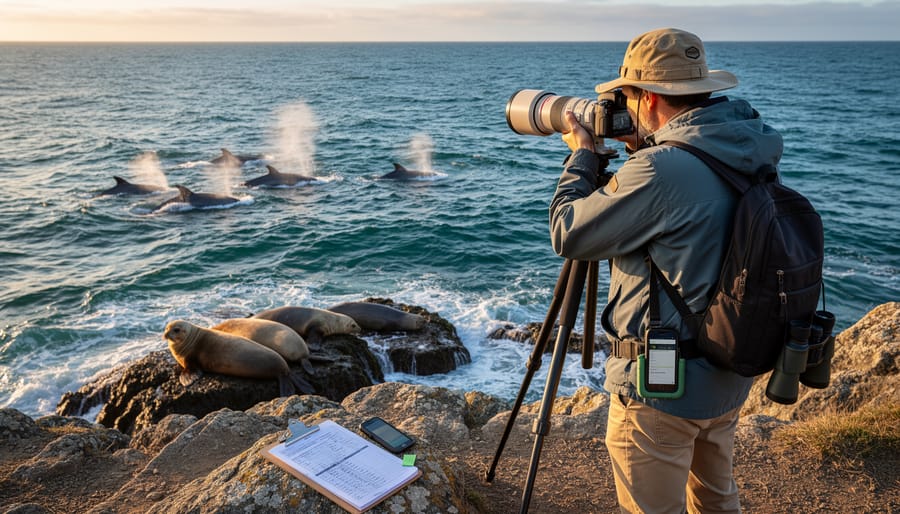
Starting your journey as a citizen marine mammal scientist is simpler than you might think. You don’t need specialized equipment or formal training, just a smartphone, curiosity, and respect for the animals you’re observing.
Download the iNaturalist app from the App Store or Google Play, then create a free account using your email or existing Google or Facebook credentials. The app walks you through a brief introduction, but the real learning happens through doing.
Here’s how to make your first meaningful contribution to marine mammal research:
- Spot a marine mammal from a safe, legal distance, at least 100 yards for most whales and 50 yards for dolphins and seals in U.S. waters.
- Take clear photos capturing identifying features: dorsal fins, flukes, unique markings, scars, or distinctive coloration patterns.
- Tap the observation button in the app and either upload your photos immediately or save them to submit later when you have better cell service.
- Let the app auto-tag your GPS location or manually pin it if you’re submitting from home, accuracy matters for migration and habitat studies.
- Add the date and time if not automatically captured, then use the suggested species identification or search for the specific marine mammal you observed.
- Note any behavior you witnessed in the description field, feeding, traveling, socializing, or resting, as this context enriches the scientific value of your observation.
Before you head out, familiarize yourself with marine mammal protection laws in your region. In the United States, the Marine Mammal Protection Act makes it illegal to harass, feed, or approach protected species too closely. Use binoculars or a zoom lens rather than motoring closer in a boat. If an animal changes its behavior because of your presence, altering direction, diving repeatedly, or showing signs of stress, you’re too close.
The iNaturalist community will help refine your identifications through comments and suggestions. Don’t worry about getting the species wrong initially; part of the platform’s strength lies in collaborative verification. Researchers value honest observations far more than forced certainty.
Joining Organized Marine Mammal Projects on iNaturalist
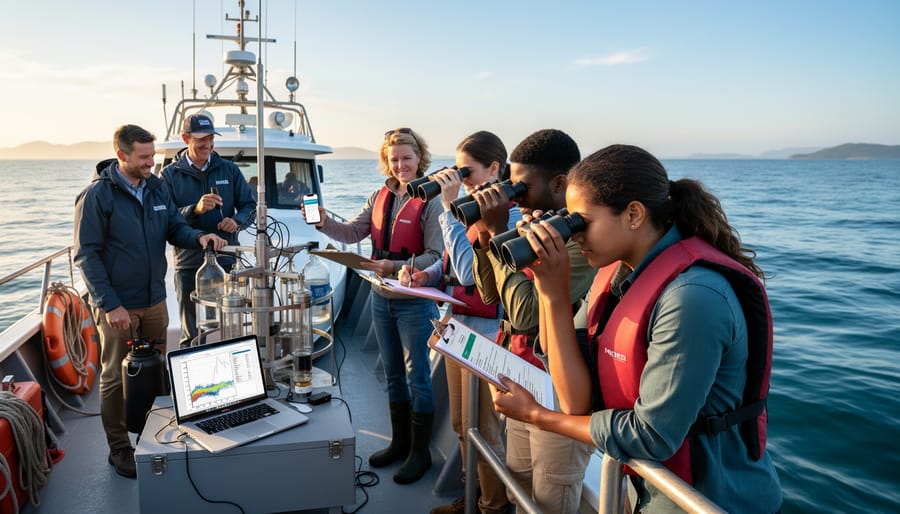
Once you’re comfortable recording individual sightings, joining organized projects amplifies your impact. iNaturalist hosts dozens of marine mammal-focused initiatives that pool observations for specific research goals. Global projects like “Marine Mammals of the World” aggregate sightings across all oceans, helping scientists track distribution patterns and species diversity on a planetary scale. Regional projects narrow the focus, “Whales and Dolphins of British Columbia,” “Mediterranean Cetaceans,” or “Antarctic Seals” connect you with local researchers who need data from your specific coastline.
Finding projects is straightforward. Search iNaturalist’s project directory using terms like “marine mammals,” “cetaceans,” “seals,” or your region’s name. Each project page explains its goals, target species, and geographic scope. Joining takes one click, and your relevant observations automatically contribute to that project’s dataset. Many projects are led by universities, marine sanctuaries, or conservation nonprofits conducting formal research, your photos become part of peer-reviewed studies.
Bioblitzes offer concentrated opportunities to contribute. These time-limited events challenge participants to document as many species as possible in a specific area. Coastal bioblitzes often prioritize marine life, and your whale or seal sightings during these events receive heightened attention from experts. Watch for announcements through iNaturalist or local conservation groups.
Beyond iNaturalist, some organizations recruit citizen scientists for broader field programs. The Marine Mammal Center, Ocean Conservancy, and regional whale-watching groups often seek volunteers who can revive coastal habitats through combined monitoring and restoration efforts. Your iNaturalist track record demonstrates the observation skills these programs value, opening doors to hands-on conservation work that extends well beyond your smartphone screen.
Common Questions About Using iNaturalist for Marine Mammals
Is my observation location shared publicly if I upload a marine mammal sighting?
By default, iNaturalist shows exact coordinates for most observations, but you can manually obscure locations when uploading sightings of threatened or endangered species. The platform automatically obscures coordinates for certain vulnerable species to prevent disturbance or poaching.
What if I’m not sure which species I photographed?
Upload the observation anyway with your best guess at the broadest category you’re confident about (like “Dolphin” or “Whale”). The community will help narrow it down, and AI suggestions often point you in the right direction. Even unidentified observations contribute to understanding marine mammal presence in an area.
Do sightings from a moving boat count as much as those from shore?
Absolutely. Both boat-based and shore observations provide valuable data, though boat sightings sometimes capture species in deeper waters that shore observers miss. Just ensure your location settings are accurate so GPS tracks where the animal was, not where you are now.
What should I do if I spot a stranded or injured marine mammal?
Contact your local marine mammal stranding network immediately, don’t rely on iNaturalist for emergency response. After authorities are notified, you can document the sighting on iNaturalist with notes about the incident, which helps researchers track stranding events and their causes.
One technical question that surfaces regularly concerns how iNaturalist data integrates with other research tools. Your observations sync automatically with global biodiversity databases, which researchers cross-reference with other monitoring efforts like acoustic ocean life tracking to build comprehensive pictures of marine mammal movements and habitat use.
The app works offline too, storing observations until you reconnect to wifi. This matters for coastal areas with spotty cell coverage. You’ll capture the correct timestamp and GPS coordinates when you take the photo, then everything uploads once you’re back in range.
Every marine mammal sighting you record contributes to a living, growing database that scientists around the world rely on for conservation decisions. Your photo of a gray whale off the coast, a harbor seal basking on rocks, or dolphins bow-riding near shore adds another data point to our understanding of species distribution, behavior, and population health. These collective observations create patterns that no single research team could document alone.
The beauty of citizen science through iNaturalist lies in its accessibility. You don’t need specialized equipment, formal training, or a research affiliation to make meaningful contributions. Your smartphone and genuine curiosity about the marine mammals you encounter are enough. Combined with technologies like underwater acoustic research your visual sightings help build a comprehensive picture of marine mammal ecology and conservation needs.
At the Marine Biodiversity Science Center, we believe conservation thrives when communities actively participate in scientific discovery. Every coastal resident, recreational boater, kayaker, and beach visitor represents an opportunity to expand our knowledge of these remarkable animals. Your observations document range expansions, seasonal movements, and habitat use patterns that inform protection policies and recovery efforts.
Start today. Download iNaturalist, record your next marine mammal encounter, and join thousands of citizen scientists building a future where ocean wildlife thrives through collective action and shared knowledge.

jessica
Ava Singh is an environmental writer and marine sustainability advocate with a deep commitment to protecting the world's oceans and coastal communities. With a background in environmental policy and a passion for storytelling, Ava brings complex topics to life through clear, engaging content that educates and empowers readers. At the Marine Biodiversity & Sustainability Learning Center, Ava focuses on sharing impactful stories about community engagement, policy innovations, and conservation strategies. Her writing bridges the gap between science and the public, encouraging people to take part in preserving marine biodiversity. When she’s not writing, Ava collaborates with local initiatives to promote eco-conscious living and sustainable development, ensuring her work makes a difference both on the page and in the real world.