Marine Biodiversity Science Center

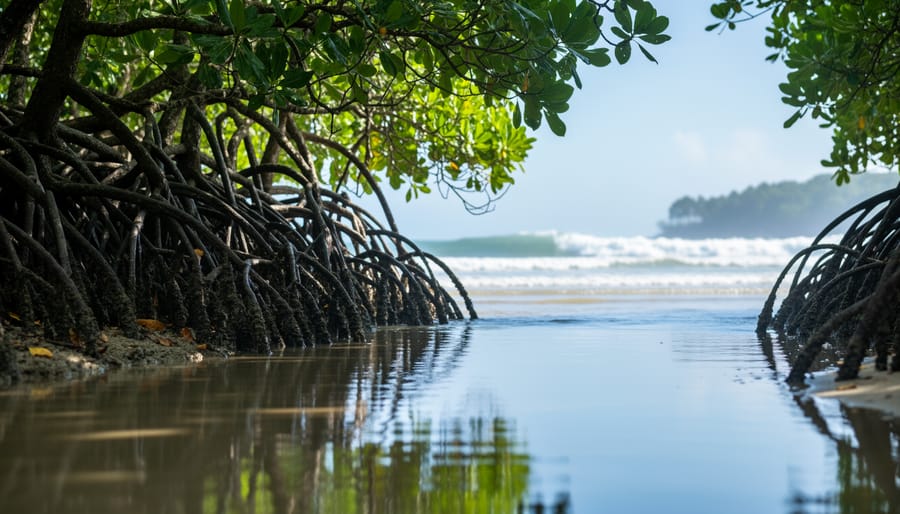
Mangroves are salt-tolerant trees and shrubs that grow in coastal intertidal zones, forming dense forests where land meets sea, and they serve as one of the planet’s most productive environmental guardians. These remarkable ecosystems protect shorelines from erosion and storm damage, sequester carbon at rates up to four times higher than terrestrial forests, filter pollutants from coastal waters, and provide critical nursery habitats for over 1,500 species of fish and invertebrates.
Despite covering less than one percent of tropical forests globally, mangroves punch far above their weight in environmental impact. Their tangled root systems act as natural barriers that dissipate wave energy, reducing coastal flooding by up to 66 percent during storm events. Below the waterline, those same roots create a labyrinth of shelter where juvenile fish, crustaceans, and mollusks find refuge from predators, supporting fisheries that feed millions of people. Above ground, the dense canopy captures and stores atmospheric carbon dioxide in both living tissue and the oxygen-poor sediments below, where organic matter decomposes slowly and locks away carbon for centuries.
Yet we’ve lost approximately 35 percent of the world’s mangrove forests since the 1980s, primarily due to coastal development, aquaculture expansion, and timber harvesting. Understanding exactly how mangroves benefit the environment is the first step toward protecting and restoring these coastal treasures. This article explores the specific mechanisms behind mangrove environmental services, the different types of mangrove species and their unique adaptations, and practical ways you can contribute to mangrove conservation efforts, whether through citizen science projects, restoration volunteering, or supporting research initiatives.
What Are Mangroves?
Mangroves are remarkable salt-tolerant trees and shrubs that thrive where few other plants can survive: in the intertidal zones where land meets sea. These specialized coastal ecosystems form dense forests along tropical and subtropical coastlines, their roots submerged during high tide and exposed to air at low tide. What sets mangroves apart from typical coastal vegetation is their extraordinary adaptation to saltwater. While most plants would quickly perish in such salty conditions, mangroves have evolved filtering mechanisms in their roots and specialized glands in their leaves to excrete excess salt.
Physically, mangroves are distinctive. They develop intricate root systems that extend above the waterline, creating a tangled network that looks like stilts propping up the trees. These aerial roots serve multiple purposes, from anchoring the trees in unstable sediments to enabling the plants to breathe in oxygen-poor mud. The trees themselves vary in height from shrub-like bushes to towering specimens reaching 40 meters tall, depending on the species and environmental conditions.
- Intertidal zone
- The coastal area between high and low tide marks where mangroves establish their unique ecosystems.
- Halophyte
- A salt-tolerant plant species capable of thriving in high-salinity environments where most vegetation cannot survive.
- Pneumatophore
- Specialized breathing roots that project upward from the mud to absorb oxygen for the submerged root system.
- Propagule
- A mangrove seedling that germinates while still attached to the parent tree, then drops into the water to establish new growth elsewhere.
- Mangrove forest
- A coastal woodland ecosystem dominated by mangrove species, typically found in tropical and subtropical regions between 25°N and 25°S latitude.
Geographically, mangroves occupy roughly 138,000 square kilometers of coastline across 123 countries. You’ll find the most extensive mangrove forests in Southeast Asia, particularly Indonesia, followed by Australia, Brazil, and Nigeria. They flourish in protected bays, estuaries, and lagoons where wave action is moderate and sediment accumulates. Temperature limits their range, they require warm waters and cannot tolerate prolonged freezing, which explains their concentration in equatorial regions.
How Mangroves Function as Environmental Guardians
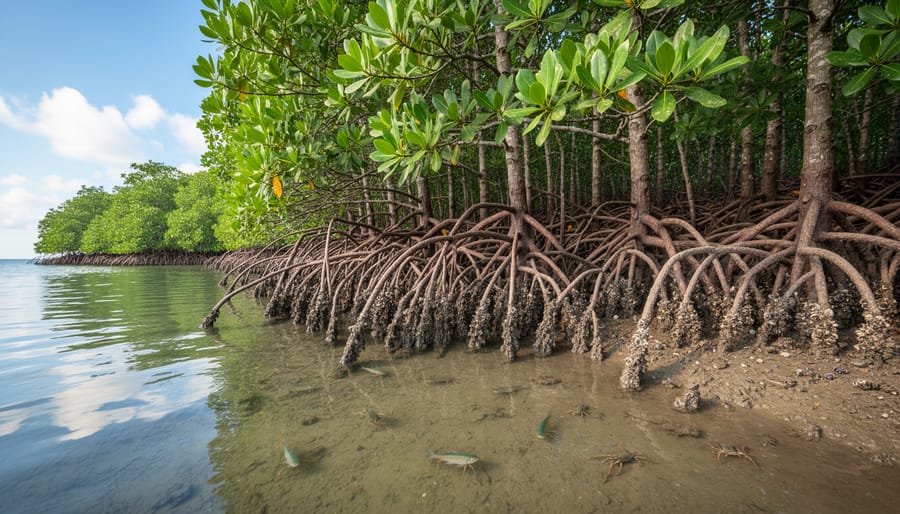
Root Architecture and Coastal Protection
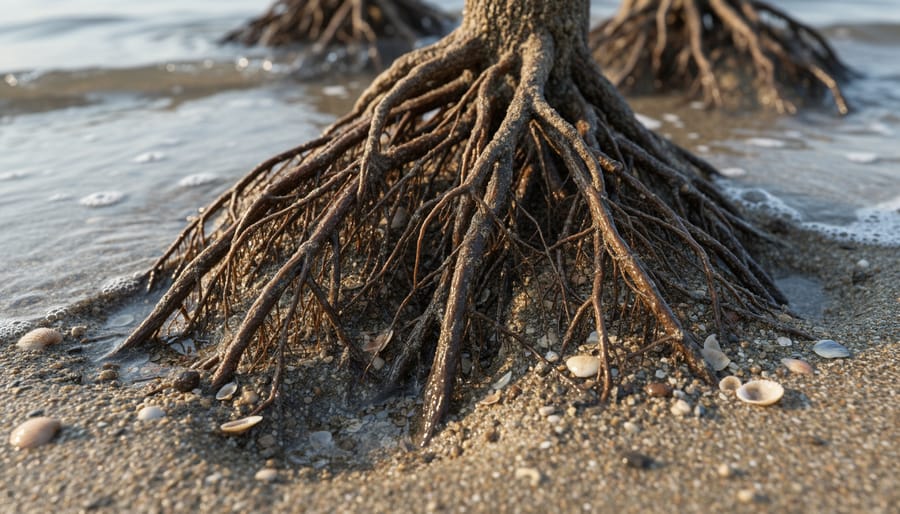
Mangrove roots operate as nature’s coastal defence system through their distinctive three-dimensional architecture. The prop roots of red mangroves and the pneumatophores (breathing roots) of black mangroves create dense, submerged lattices that slow incoming waves, dissipating up to 66% of wave energy before it reaches the shore. This friction-based dampening protects coastlines from storm surges and daily tidal erosion.
Below the waterline, these root networks trap suspended sediments carried by currents, building up substrate over time rather than allowing it to wash away. Studies confirm mangrove roots mitigate erosion by anchoring sediment layers that would otherwise destabilize during storms. The roots physically bind soil particles while their above-ground structures reduce water velocity, creating calm zones where sediments settle.
This stabilization function extends beyond immediate shoreline protection, it maintains the substrate conditions necessary for the ocean nutrient cycle to function in coastal zones. By preventing sediment loss, mangroves preserve the foundation that supports the entire intertidal food web.
Natural Water Filtration Systems
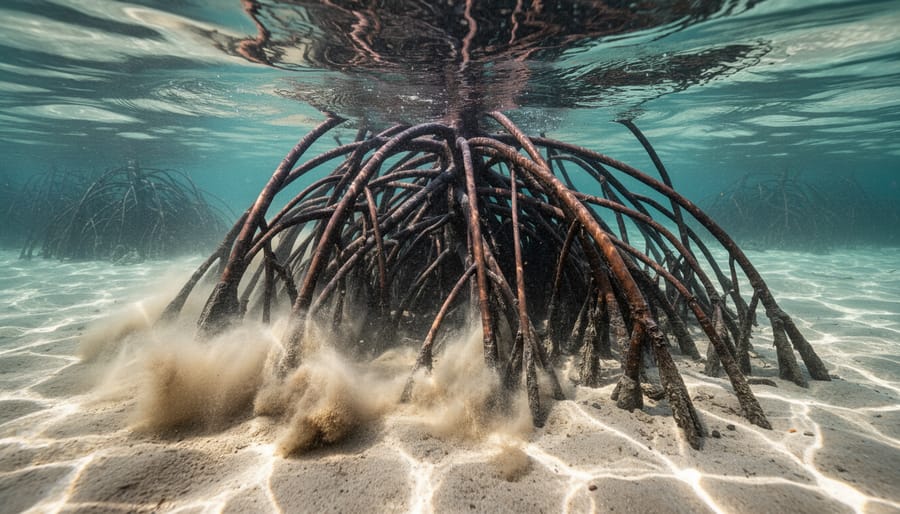
Mangroves act as nature’s water treatment plants, intercepting and removing contaminants before they reach the open ocean. Their dense root networks slow water flow, allowing suspended sediments to settle out naturally. This settling process can remove up to 90% of particulate matter from coastal runoff during tidal cycles.
The trees themselves absorb excess nutrients like nitrogen and phosphorus from agricultural runoff, preventing harmful algal blooms that suffocate marine life. Through their roots and leaves, mangroves trap pollutants including heavy metals, pesticides, and industrial chemicals, effectively preventing these toxins from contaminating coral reefs and seagrass beds.
Bacterial communities living on mangrove roots perform additional filtration work, breaking down organic waste and converting harmful compounds into less toxic forms. The combination of physical settling, biological uptake, and microbial decomposition creates a multi-layered purification system. This natural filtration protects the spawning grounds and feeding areas that hundreds of marine species depend on, maintaining water clarity and chemical balance essential for healthy ocean ecosystems. For coastal communities, this means cleaner water for both marine biodiversity and human activities like fishing and recreation.
Carbon Storage Powerhouses
Mangroves rank among nature’s most efficient carbon sinks, capturing and locking away atmospheric carbon dioxide at rates that dwarf most ecosystems. Research shows mangroves store more carbon per acre than tropical rainforests, with some estimates indicating they sequester carbon at rates up to four times higher than terrestrial forests. This extraordinary capacity stems from their unique position at the land-sea interface, where waterlogged soils slow decomposition dramatically. Organic matter accumulates in thick layers of oxygen-poor sediment beneath the trees, trapping carbon for centuries or even millennia. The combination of rapid above-ground biomass growth and these deep carbon-rich soils creates a dual storage system that makes mangroves critical allies in climate regulation, removing significant amounts of greenhouse gases from the atmosphere while buffering coastal communities against rising seas.
Types of Mangrove Ecosystems and Their Unique Contributions
Mangrove ecosystems vary dramatically across the globe, with over 70 species forming distinct communities that reflect local environmental conditions. These variations aren’t merely botanical curiosities, each configuration delivers specialized environmental benefits shaped by geography, salinity patterns, and climate.
In tropical regions, red mangroves (Rhizophora species) typically dominate the seaward edge with their distinctive prop roots that arch above water. These pioneers bear the brunt of wave action, creating the first line of coastal defense while trapping massive amounts of sediment. Their dense root networks establish foundations that allow more delicate species to colonize inland zones. Black mangroves (Avicennia species) occupy slightly higher elevations, sending pencil-thin pneumatophores vertically through the mud to access oxygen. These breathing roots create complex three-dimensional habitats that shelter juvenile crabs, mollusks, and small fish. White mangroves (Laguncularia racemosa) and buttonwoods thrive in the highest, least-flooded zones, where they filter terrestrial runoff before it reaches marine waters.
Geography fundamentally alters mangrove composition and function. Southeast Asian mangroves, the most species-rich globally, contain specialized forms like Sonneratia species that fruit abundantly, feeding flying foxes and birds that transport nutrients across ecosystems. Caribbean mangroves, with fewer species, compensate through incredibly dense formations that provide proportionally more fish nursery habitat per acre. East African mangroves develop extensive mud flats at low tide, creating feeding grounds for migratory shorebirds while processing nutrients from upland rivers. This vital mangrove biodiversity supports vastly different marine communities depending on location.
Riverine mangroves, found along tidal rivers, flush nutrients and organic matter into adjacent coastal waters daily, fueling offshore food webs. Basin mangroves in low-lying depressions accumulate organic material, creating carbon-rich soils that store centuries of atmospheric carbon. Fringe mangroves along open coasts maximize wave attenuation, protecting shorelines during storms.
Each configuration serves distinct conservation priorities. High-diversity Asian systems excel at supporting rare species. Dense Caribbean forests prioritize fisheries productivity. Expansive African systems bridge terrestrial and marine nutrient cycles. Understanding these differences helps target conservation efforts where specific environmental benefits matter most, from protecting nesting sites for endangered sea turtles to maintaining spawning grounds for commercially valuable fish stocks.
Mangroves as Marine Biodiversity Hotspots
Nursery Grounds for Commercial Fish Species
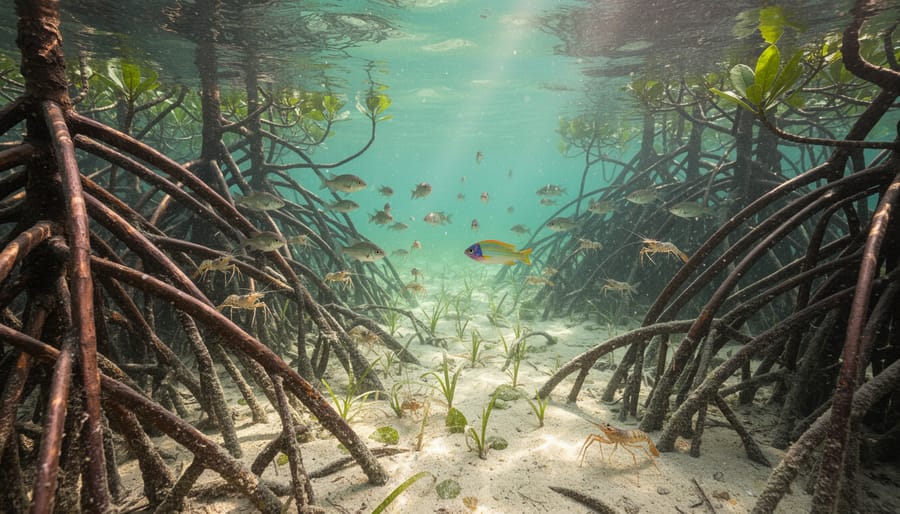
Roughly 70 percent of commercially harvested fish and shellfish species depend on mangrove forests during critical early life stages. Young snapper, grouper, tarpon, and barracuda shelter among the tangled roots where larger predators cannot easily reach them. The intricate root architecture creates thousands of small refuges where juvenile fish grow from larvae into adults capable of surviving in open water.
Shrimp and crab populations particularly benefit from these nurseries, juvenile penaeid shrimp densities in mangrove areas often exceed 50 individuals per square meter, compared to near-zero in adjacent unvegetated zones. The roots trap organic matter and foster dense communities of small invertebrates that provide abundant food for developing fish. This nutrient-rich environment accelerates growth rates, with studies showing juvenile fish in mangroves reaching adult size 30 to 40 percent faster than those in alternative habitats.
The economic stakes are substantial: global fisheries dependent on mangrove nurseries generate over $20 billion annually. When mangroves protect ocean life through these nursery functions, they sustain both marine food webs and coastal livelihoods that depend on healthy fish populations.
Supporting Endangered Marine Species
Mangroves provide critical refuge for some of the ocean’s most vulnerable inhabitants. The endangered smalltooth sawfish, once common across the Atlantic, now depends almost entirely on mangrove nurseries in Florida and the Caribbean for juvenile survival. These fish spend their first years hidden among the tangled roots, protected from predators while they grow large enough to venture into open water.
Similarly, juvenile hawksbill sea turtles forage extensively in mangrove channels, feeding on sponges and small invertebrates while their shells harden. The West Indian manatee relies on mangrove-lined creeks for food and shelter, particularly during cold weather when they seek the relatively warm, protected waters these ecosystems provide.
In the Indo-Pacific, the critically endangered Irrawaddy dolphin uses mangrove estuaries as primary feeding grounds and calving areas. These shallow, food-rich waters offer protection from larger predators and strong currents. Mangroves also support dugongs, which graze on nearby seagrass ecosystems that flourish in the nutrient-rich waters filtered by mangrove forests. Without intact mangrove habitat, recovery efforts for these species face nearly insurmountable obstacles.
Environmental Applications and Conservation Benefits
Mangrove ecosystems deliver measurable environmental benefits that translate into tangible protection for coastal communities and marine life. Their applications span multiple conservation priorities, making them one of nature’s most versatile solutions to pressing environmental challenges.
Coastal Defense Infrastructure
Mangrove forests function as living seawalls, absorbing wave energy that would otherwise erode shorelines and damage coastal infrastructure. Studies from Southeast Asia demonstrate that a 100-meter-wide mangrove belt can reduce wave heights by up to 66%, protecting inland areas from storm surges and tsunamis. This natural defense becomes increasingly valuable as sea levels rise and tropical storms intensify. Communities with intact mangrove forests experience significantly less property damage and lower reconstruction costs following severe weather events compared to areas where mangroves have been removed.
Fisheries Enhancement and Food Security
The nursery function of mangroves directly supports commercial and subsistence fisheries. Research tracking fish populations reveals that approximately 75% of commercially caught fish species depend on mangroves at some point in their life cycle. Regions that restore mangrove habitat see measurable increases in fish catches within three to five years, providing economic benefits to coastal fishing communities while rebuilding depleted marine populations.
Climate Mitigation Through Blue Carbon
Mangroves sequester carbon at rates three to five times higher than terrestrial forests, storing it in both living tissue and the deep peat soils beneath their roots. This “blue carbon” remains locked away for centuries when mangroves stay intact. Conservation projects that protect existing mangrove forests prevent the release of stored carbon while continuing to remove atmospheric CO2. Current global mangrove restoration efforts target 20% expansion by 2030, representing a significant contribution to international climate goals while simultaneously protecting biodiversity and supporting coastal resilience.
Threats Facing Mangrove Ecosystems
Despite their remarkable resilience, mangrove ecosystems face mounting pressures that threaten their ability to sustain marine life and protect coastal communities. Coastal development ranks among the most immediate challenges, shoreline construction for tourism infrastructure, urban expansion, and port facilities directly removes mangrove forests at alarming rates. In Southeast Asia alone, coastal development has claimed over 35% of mangrove coverage since the 1980s.
Aquaculture expansion, particularly shrimp farming, has transformed vast stretches of mangrove habitat into commercial ponds. This conversion disrupts the natural nursery functions that hundreds of fish species depend on for survival. The practice often introduces chemical pollutants and excess nutrients into surrounding waters, compounding environmental stress on remaining mangrove stands.
Pollution from agricultural runoff, industrial discharge, and plastic waste degrades water quality in mangrove zones, weakening trees and reducing their capacity to support biodiversity. Oil spills pose acute threats, coating roots and suffocating the organisms that depend on these habitats.
Climate change introduces complex challenges, rising sea levels can submerge low-lying mangrove forests faster than they can migrate inland, especially where coastal development blocks natural retreat. Increased storm intensity damages mature trees, while shifting temperature and precipitation patterns alter species distributions.
These urgent marine threats demand coordinated response, yet there’s reason for optimism. Successful restoration projects across continents demonstrate that mangroves can recover when given protection and community support. Advances in satellite monitoring now enable rapid detection of forest loss, allowing faster intervention. Growing recognition of mangroves’ economic value, from fisheries support to storm protection, is driving policy shifts toward conservation rather than conversion.
How You Can Support Mangrove Conservation
Supporting mangrove conservation requires action at individual, community, and systemic levels, and you have more power to make a difference than you might realize. The Marine Biodiversity Science Center offers multiple pathways for direct involvement in protecting these critical ecosystems along our coastline.
Our hands-on restoration programs welcome volunteers year-round to participate in mangrove planting initiatives at degraded coastal sites. These weekend events require no previous experience and provide all necessary training and equipment. Past volunteers have helped plant over 15,000 mangrove seedlings since 2023, creating tangible new habitat while learning from marine ecologists about proper planting techniques and ecosystem monitoring.
The center’s citizen science monitoring program trains community members to track mangrove health indicators, juvenile fish populations, and water quality parameters at designated sites. This work generates valuable long-term data that informs conservation strategies while building your field ecology skills. Monthly monitoring sessions typically run for two to three hours and contribute directly to our research database.
Beyond direct participation, you can support mangrove ecosystems through daily choices:
- Participate in local coastal restoration projects and mangrove planting events
- Choose sustainable seafood from fisheries that protect mangrove nursery habitats
- Reduce single-use plastic consumption to decrease coastal pollution
- Join the Marine Biodiversity Science Center’s e-network for conservation updates and opportunities
- Volunteer for water quality monitoring programs in mangrove watersheds
Supporting organizations that acquire and protect mangrove lands amplifies your impact. Consider directing charitable donations toward groups with proven track records in mangrove conservation, particularly those working in regions with high deforestation rates. These contributions fund land acquisition, legal protection, and community partnership programs that address root causes of mangrove loss.
Advocacy matters too. Contact local representatives to support policies that strengthen coastal zone protections, restrict destructive development in mangrove areas, and fund restoration initiatives. Your voice helps counter lobbying from industries that profit from mangrove conversion, and elected officials respond to constituent concerns about environmental protection.
How How Do Mangroves Help the Environment Works
Mangroves create environmental benefits through an interconnected cycle of biological and physical processes that operate continuously throughout their lifecycle. The process begins with their specialized root systems, which trap sediment particles from incoming tides while releasing oxygen into the surrounding soil. This sediment capture builds up coastal land over time, creating natural barriers that absorb wave energy before it reaches shorelines.
Simultaneously, the trees filter water through their roots, removing nitrogen, phosphorus, and heavy metals that would otherwise flow into open ocean waters. This filtration protects adjacent coral reef ecosystems and seagrass beds from nutrient overload and contamination.
Throughout this process, mangroves photosynthesize at remarkable rates, pulling carbon dioxide from the atmosphere and storing it in their biomass and the dense, anaerobic mud below. The decomposition of fallen leaves feeds microorganisms that form the base of complex food webs, supporting juvenile fish, crustaceans, and mollusks that shelter among the roots.
This entire system functions as a self-maintaining environmental service provider, with each component reinforcing the others, cleaner water supports healthier trees, which trap more sediment, which builds more protective coastline, completing the cycle.
Frequently Asked Questions About Mangroves and Marine Conservation
Mangrove conservation raises numerous questions among scientists, educators, and coastal community members. Understanding these common inquiries helps clarify the urgency and practicality of protecting these remarkable ecosystems.
How much coastline do mangroves protect?
Healthy mangrove forests can reduce wave height by 66% and protect up to 18 million people globally from annual flooding. A single kilometer of mangroves can prevent over $50,000 in property damage during storm events.
Can mangroves grow back after destruction?
Yes, mangroves can regenerate naturally if conditions allow, though active restoration accelerates recovery. Successful restoration projects typically show measurable ecosystem function within 5-10 years, with full maturity taking 15-30 years depending on species and site conditions.
Are all mangrove species equally beneficial?
Different mangrove species provide varying benefits based on their root architecture, growth patterns, and salt tolerance. Red mangroves excel at wave attenuation and erosion control, while black mangroves contribute more to carbon storage in deeper sediments.
How do mangroves compare to coral reefs for marine biodiversity?
Mangroves and coral reefs function as complementary ecosystems rather than competitors. While reefs support higher species diversity per square meter, mangroves provide critical nursery habitat that sustains reef fish populations, creating an interconnected system where both ecosystems depend on each other’s health.
Many people wonder whether small-scale conservation efforts truly matter. The evidence consistently shows that local restoration projects create measurable improvements in fish populations, water quality, and coastal resilience within just a few years. Community-based mangrove conservation programs have successfully restored thousands of hectares worldwide, demonstrating that collective action produces tangible environmental benefits.
Questions about personal involvement often arise when discussing mangrove conservation. Volunteers don’t need specialized scientific training to contribute meaningfully, activities range from nursery propagation and planting events to water quality monitoring and educational outreach. The Marine Biodiversity Science Center connects motivated individuals with conservation opportunities that match their skills and available time commitment, making marine conservation accessible to everyone who shares passion for protecting coastal ecosystems.
Mangroves stand as one of our ocean’s most powerful allies in protecting marine biodiversity and environmental health. These remarkable ecosystems don’t just survive at the interface between land and sea, they actively transform coastal environments into thriving centers of life while defending our shores from erosion and storms.
The science is clear: protecting mangroves means safeguarding the nurseries that sustain commercial fisheries, preserving critical habitat for endangered species, and maintaining natural carbon sinks that help regulate our climate. Every mangrove forest we conserve strengthens the resilience of coastal communities and marine life alike.
What makes this moment exciting is that meaningful action is within reach. Whether you’re participating in restoration projects, supporting research initiatives, or making daily choices that reduce pressure on coastal ecosystems, your contribution matters. The Marine Biodiversity Science Center offers hands-on opportunities to work alongside marine biologists, collect vital research data, and witness firsthand the recovery that’s possible when we commit to conservation.
The future of our oceans depends on these coastal guardians, and on all of us who choose to protect them.

jessica
Ava Singh is an environmental writer and marine sustainability advocate with a deep commitment to protecting the world's oceans and coastal communities. With a background in environmental policy and a passion for storytelling, Ava brings complex topics to life through clear, engaging content that educates and empowers readers. At the Marine Biodiversity & Sustainability Learning Center, Ava focuses on sharing impactful stories about community engagement, policy innovations, and conservation strategies. Her writing bridges the gap between science and the public, encouraging people to take part in preserving marine biodiversity. When she’s not writing, Ava collaborates with local initiatives to promote eco-conscious living and sustainable development, ensuring her work makes a difference both on the page and in the real world.