Marine Biodiversity Science Center

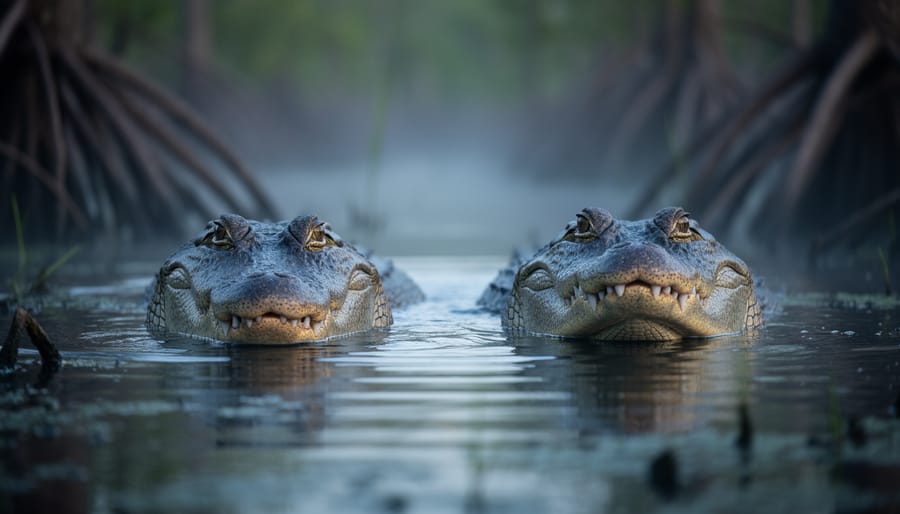
Crocodiles and alligators differ most noticeably in snout shape: crocodiles have narrow, V-shaped snouts designed for a varied diet, while alligators possess wider, U-shaped snouts built for crushing power. Beyond this signature feature, the two reptiles diverge in tooth visibility (crocodiles show teeth when their mouths are closed, alligators don’t), skin texture, habitat preferences, and geographic range. For anyone encountering these ancient reptiles in the wild or simply seeking to distinguish them at an aquarium, understanding these distinctions isn’t just academic curiosity. It carries real-world implications for safety, conservation efforts, and appreciating how each species has carved out its ecological niche over millions of years.
Both crocodilians belong to the order Crocodylia but split into separate families: Crocodylidae (true crocodiles) and Alligatoridae (alligators and caimans). This evolutionary divergence occurred roughly 80 million years ago, long enough for significant adaptations to emerge. Today, 24 crocodile species inhabit tropical regions across Africa, Asia, the Americas, and Australia, while only two alligator species exist: the American alligator in the southeastern United States and the critically endangered Chinese alligator in the Yangtze River basin.
The confusion between these reptiles is understandable. They share similar body plans, ambush-hunting strategies, and crucial roles as apex predators in wetland ecosystems. Yet their differences reveal fascinating stories of adaptation. Marine biologist Dr. Sarah Chen, who has studied both species in Florida’s Everglades, puts it plainly: “Once you know what to look for, you’ll never mistake the two again. And that knowledge matters, especially as climate change and habitat loss force these animals into closer contact with human communities.”
This guide will walk you through every distinguishing characteristic, from obvious visual cues to subtle behavioral patterns, equipping you to identify each species confidently and understand why protecting their wetland habitats remains essential for biodiversity in 2026.
Crocodiles vs. Alligators: At-a-Glance Comparison
The table below highlights the fundamental differences between crocodiles and alligators across the features most critical for identification and understanding their ecological roles.
| Feature | Crocodiles | Alligators |
|---|---|---|
| Snout Shape | V-shaped, narrow and pointed | U-shaped, broad and rounded |
| Tooth Visibility | Fourth lower tooth visible when mouth closed | Upper jaw overlaps, hiding lower teeth |
| Habitat Preference | Saltwater, brackish water, and freshwater | Primarily freshwater swamps, rivers, and lakes |
| Temperament | More aggressive, quicker to defend territory | Generally more docile, less likely to attack |
| Coloration | Olive brown to gray-green, lighter tone | Dark blackish-gray, nearly black in adults |
| Geographic Range | Widespread across tropics: Africa, Asia, Australia, Americas | Limited to southeastern United States and eastern China |
These distinctions reflect millions of years of separate evolution. Crocodiles developed specialized salt glands that allow them to thrive in marine and coastal environments, making them important components of brackish wetlands and mangrove ecosystems. Their wider distribution and salt tolerance mean you’re far more likely to encounter crocodiles near coastlines and estuaries. Alligators, meanwhile, adapted to temperate freshwater habitats, developing cold tolerance that allows American alligators to survive winters as far north as North Carolina. Understanding these differences matters not just for personal safety in wetland areas, but for conservation planning. Each species requires distinct habitat protections and management strategies tailored to their unique ecological needs and behavioral patterns.
Understanding Each Species: What Makes Them Unique
What Are Crocodiles?
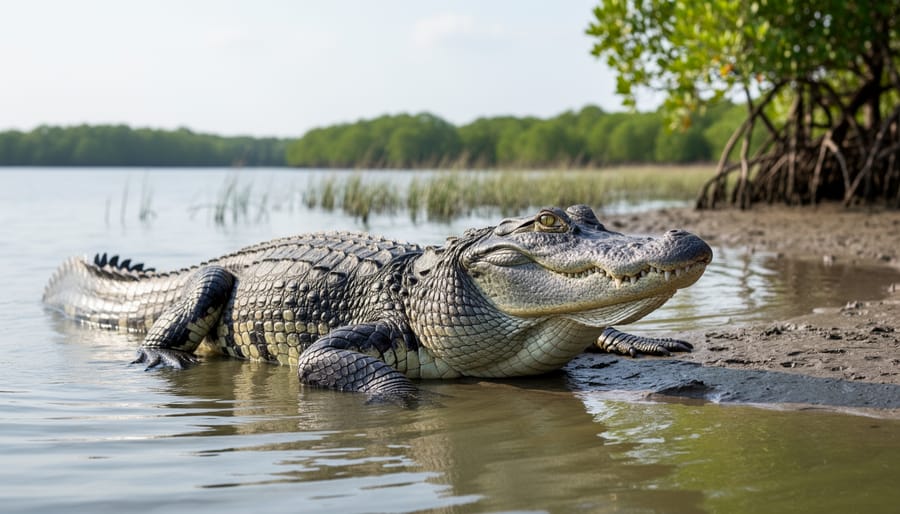
Crocodiles belong to the family Crocodylidae, which includes 14 recognized species distributed across tropical and subtropical regions of Africa, Asia, Australia, and the Americas. These apex predators evolved specialized adaptations that allow many species to thrive in saltwater and brackish environments, setting them apart from their freshwater cousins. Their robust skulls, powerful jaws, and elongated V-shaped snouts contain up to 66 teeth designed to grip and tear prey ranging from fish to large mammals.
What makes crocodiles particularly remarkable is their salt glands, located on their tongues, which actively excrete excess salt from their bloodstream. This physiological innovation enables species like the saltwater crocodile to inhabit coastal waters, estuaries, and even venture into open ocean. The saltwater crocodile adaptations include a tolerance for salinity levels that would be fatal to most reptiles, allowing them to establish territories across thousands of miles of coastline from India to northern Australia.
The American crocodile occupies a different niche, ranging from southern Florida through Central America and into northern South America. Unlike their saltwater relatives, American crocodiles prefer coastal mangrove habitats and brackish lagoons, though they occasionally enter full marine environments. Both species play critical ecological roles as top predators, regulating prey populations and maintaining the health of aquatic food webs.
Crocodiles typically exhibit olive-green to gray-brown coloration that provides camouflage in murky waters. Their armored skin contains osteoderms, bony plates that offer protection from attacks while allowing flexibility for swimming. Most species display exceptional longevity, with individuals living 70 years or more in the wild, continuing to grow throughout their lives.
What Are Alligators?
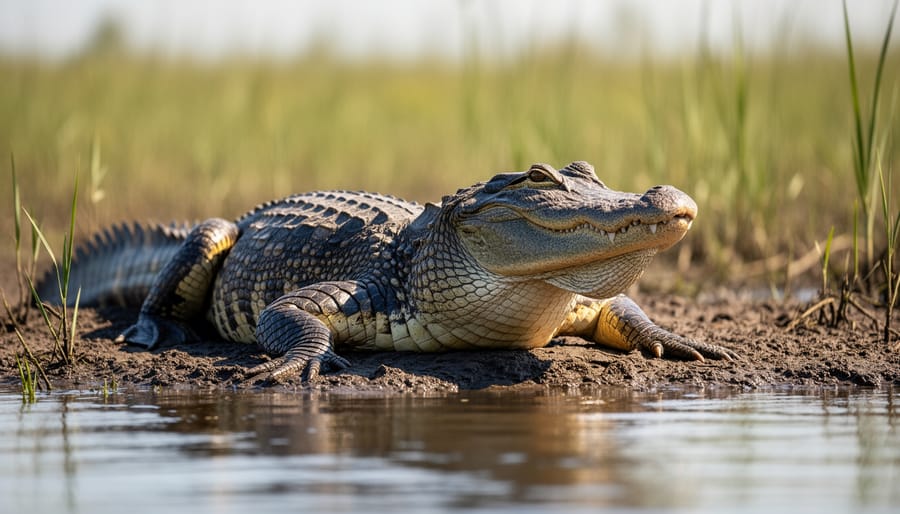
Alligators belong to the family Alligatoridae, a distinct lineage that diverged from crocodiles roughly 80 million years ago. Only two species exist today: the American alligator (Alligator mississippiensis) and the critically endangered Chinese alligator (Alligator sinensis). Unlike their crocodile cousins, alligators evolved specialized adaptations for life in freshwater environments and, remarkably, temperate climates where winter temperatures regularly drop below freezing.
The American alligator inhabits freshwater rivers, lakes, swamps, and marshes across the southeastern United States, from North Carolina to Texas. These robust reptiles can reach 13 to 15 feet in length, with males occasionally exceeding 18 feet. They lack the salt-excreting glands that allow crocodiles to tolerate marine environments, confining them almost exclusively to freshwater systems. During cold snaps, American alligators employ a survival strategy called brumation, they slow their metabolism dramatically and can even remain partially frozen in ice with just their nostrils exposed, breathing through small holes in the surface.
The Chinese alligator, by contrast, rarely exceeds seven feet and lives only in the Yangtze River basin, making it one of the world’s most range-restricted crocodilians. Fewer than 150 individuals survive in the wild, facing severe habitat loss from agricultural expansion.
Ecologically, alligators serve as keystone species in their wetland ecosystem s. They create “gator holes”, deep depressions that retain water during droughts, providing critical refuge for fish, turtles, wading birds, and other wildlife. Their nesting mounds become nutrient-rich platforms where plants germinate, and their presence controls prey populations, maintaining the delicate balance of freshwater biodiversity. This engineering role makes alligator conservation essential for entire aquatic communities.
Key Differences: A Detailed Dimension-by-Dimension Comparison
Physical Appearance and Anatomy
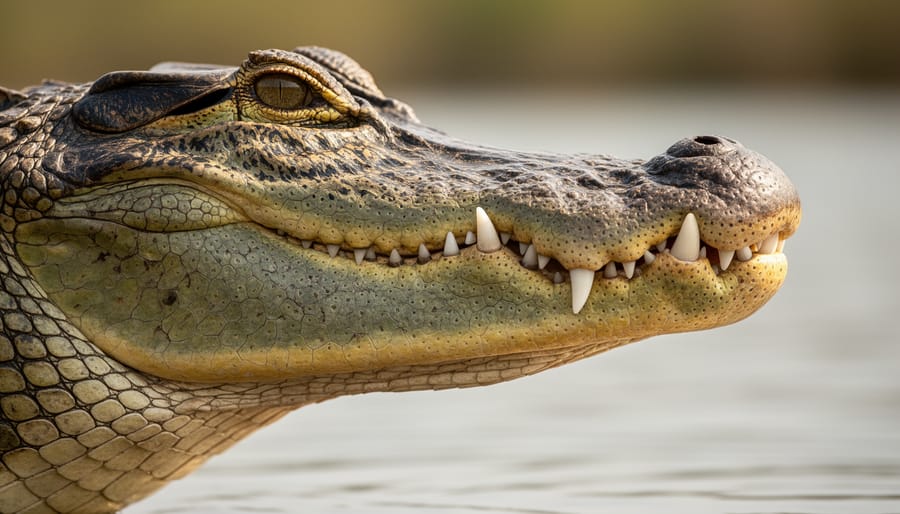
The most reliable way to distinguish a crocodile from an alligator is to examine the snout. Crocodiles have a narrow, V-shaped snout that tapers to a point, while alligators possess a broader, U-shaped snout with a more rounded appearance. This difference isn’t merely cosmetic, it reflects distinct feeding strategies. The crocodile’s slender snout allows for quick lateral movement through water when catching fish, whereas the alligator’s wider jaw generates more crushing force for turtles and hard-shelled prey.
Tooth visibility offers another clear distinction. When a crocodile closes its mouth, the large fourth tooth on each side of the lower jaw remains visible, fitting into a notch on the outside of the upper jaw. Alligators, by contrast, have upper jaws that are slightly wider than their lower jaws, concealing all their lower teeth when the mouth is shut.
Size varies considerably. Saltwater crocodiles can exceed 20 feet and weigh over 2,000 pounds, making them the largest living reptiles. American alligators typically max out around 15 feet and 1,000 pounds, though exceptional individuals may grow larger.
Coloration provides subtle clues. Crocodiles tend toward olive or tan shades, sometimes appearing greenish in certain light. Alligators are generally darker, ranging from black to dark grey-green. Scale patterns differ slightly, with crocodiles displaying more prominent sensory pits on their jaw scales, adaptations for detecting pressure changes in water, crucial for hunting in murky marine environments.
Habitat and Geographic Distribution
Crocodiles thrive in saltwater and brackish environments thanks to specialized salt glands on their tongues that excrete excess salt, allowing them to inhabit coastal areas, estuaries, and even open ocean. Saltwater crocodiles range across Southeast Asia, northern Australia, and parts of the Indian subcontinent, while American crocodiles occupy coastal regions from southern Florida through Central America and the Caribbean to northern South America. This salt tolerance gives crocodiles access to marine and tidal ecosystems that alligators cannot colonize.
Alligators lack functional salt glands, confining them to freshwater habitats like rivers, lakes, swamps, and marshes. The American alligator’s freshwater range spans the southeastern United States from North Carolina to Texas, with the highest concentrations in Florida and Louisiana. The Chinese alligator occupies a far smaller territory in the Yangtze River basin. Climate heavily influences distribution: alligators tolerate cooler temperatures better than most crocodiles, surviving cold snaps by entering brumation, while tropical crocodile species require year-round warmth.
Southern Florida presents a unique overlap zone where American crocodiles inhabit coastal mangroves and brackish waters while American alligators dominate inland freshwater systems. This geographic meeting point allows both species to coexist without direct competition, each occupying its preferred salinity niche within a relatively small area.
Behavior and Temperament
Crocodiles are generally more aggressive and territorial than alligators, a difference rooted in their evolutionary adaptations to different environments. Saltwater crocodiles, in particular, are considered the most dangerous crocodilian species to humans, actively defending large territories and showing less tolerance for perceived threats. American crocodiles, while less aggressive than their saltwater relatives, still display more defensive aggression than alligators when approached.
Alligators typically avoid human contact and attack only when cornered, protecting nests, or mistaking a hand or foot for prey during feeding. They’re more tolerant of human presence in their habitat, which explains why fatal alligator attacks remain relatively rare despite millions of people living near alligator populations in the southeastern United States.
Both species are ambush predators that rely on stealth rather than pursuit. Crocodiles often hunt in saltwater or brackish environments where prey is more varied and competition is higher, contributing to their more aggressive hunting behavior. Alligators hunt primarily in freshwater, using patience and explosive bursts of speed to capture prey at the water’s edge.
The “crocodiles are always more dangerous” narrative oversimplifies the reality. Context matters enormously: a nesting female alligator can be just as dangerous as a crocodile, and even typically docile species become unpredictable when habituated to human feeding. Respect for both species’ space and behavior is essential for coexistence in shared coastal and wetland environments.
Reproduction and Life Cycle
Both crocodiles and alligators exhibit temperature-dependent sex determination, but the threshold temperatures and nesting strategies differ in ways that make each group vulnerable to climate change. In alligators, nest temperatures of 30°C or below produce females, while temperatures above 34°C produce males. Crocodiles show similar patterns, though specific thresholds vary by species. This narrow temperature window means rising global temperatures could skew sex ratios and threaten population stability.
Nesting behaviors reveal distinct approaches. Female alligators build mound nests from rotting vegetation, which generates heat through decomposition. They typically nest in freshwater wetlands and remain highly protective, guarding eggs for about 65 days. Mother alligators respond to hatchling calls and carefully carry young to water in their jaws. Crocodiles, depending on species, may build mound nests or dig holes in sandy banks. Saltwater crocodiles often nest on tidal riverbanks, facing unique flooding risks. While both provide parental care, crocodile mothers generally remain with hatchlings for shorter periods than alligators.
Reproductive success rates differ substantially. American alligators, benefiting from protected freshwater habitats and successful conservation programs, show strong recruitment rates. Many crocodile species face lower success due to habitat loss, nest predation, and human encroachment on nesting beaches. Conservation strategies must account for these reproductive differences. Protecting nesting sites becomes critical for crocodiles that depend on specific coastal areas, while maintaining stable wetland water levels supports alligator populations. Understanding these reproductive distinctions helps conservationists design species-specific protection measures that address each group’s unique vulnerabilities.
Conservation Status and Threats
Both crocodiles and alligators have faced dramatic population declines over the past century, though their current conservation trajectories differ significantly. The American alligator represents one of conservation’s greatest success stories. Once hunted to near extinction for their valuable hides, these reptiles rebounded remarkably after receiving federal protection under the Endangered Species Act in 1967. Today, the species has recovered so well that it’s been downgraded to “Least Concern” on the IUCN Red List, with stable populations throughout the southeastern United States.
Crocodiles present a more complex picture. While some species like the American crocodile have improved from “Endangered” to “Vulnerable” status thanks to targeted protection efforts, others remain critically threatened. The Philippine crocodile and Siamese crocodile rank among the world’s most endangered reptiles, with only hundreds of individuals surviving in fragmented habitats.
The primary threats affecting both species center on habitat destruction and human encroachment. Coastal development destroys critical nesting sites, while salt marsh loss eliminates essential nursery habitats for young crocodiles in brackish environments. Pollution from agricultural runoff and industrial contaminants accumulates in their tissues, affecting reproduction and immune function. Climate change compounds these pressures through rising sea levels, altered precipitation patterns, and temperature shifts that affect egg development and sex ratios.
Human-wildlife conflict remains a persistent challenge, particularly in areas where expanding human populations overlap with crocodilian habitats. Retaliatory killings following attacks on livestock or rare human fatalities continue despite education campaigns.
Dr. Sarah Chen, a marine biologist studying estuarine crocodile populations, emphasizes the interconnectedness of conservation efforts. “Protecting crocodilians means protecting entire wetland systems. These apex predators maintain ecosystem balance, and their presence indicates healthy aquatic environments that support countless other species.”
Ongoing protection requires integrated approaches combining legal safeguards, habitat restoration, community education, and reducing human-crocodilian conflict through proven coexistence strategies.
When to Identify Which Species: A Practical Guide
Accurate species identification serves different purposes depending on your role and location. Field researchers documenting reptile populations need precise identification to track species distribution, monitor population health, and contribute meaningful data to conservation databases. Misidentification can skew ecological surveys and lead to incorrect habitat assessments, potentially misdirecting conservation resources.
Safety considerations make identification critical in areas where both species coexist, particularly in southern Florida and coastal regions. While both deserve caution, knowing which species you’ve encountered helps you assess risk appropriately and respond correctly. Wildlife educators teaching students about wetland ecosystems must identify crocs and alligators accurately to build scientific literacy and dispel common myths that harm conservation efforts.
For quick field identification, focus on these observable features:
- Snout shape when viewed from above: V-shaped means crocodile, U-shaped means alligator
- Visible lower teeth when mouth is closed indicate a crocodile
- Olive-brown to gray coloring suggests crocodile; darker black-green suggests alligator
- Habitat context: saltwater or brackish environments favor crocodiles; freshwater ponds and swamps favor alligators
- Geographic location: outside the southern Florida overlap zone, range alone often determines species
Conservationists working on habitat protection projects need correct identification to design species-appropriate interventions, since crocodiles and alligators have different nesting requirements, salt tolerance levels, and climate sensitivities. Photographers and wildlife enthusiasts documenting these animals contribute valuable citizen science data when they record accurate identifications alongside their observations, helping researchers track range expansions and population trends in response to environmental changes.
What Each Option Is
Crocodiles are large, predatory reptiles belonging to the family Crocodylidae, found across tropical regions of Africa, Asia, Australia, and the Americas. They’re distinguished by their V-shaped snouts, visible lower teeth when their jaws close, and specialized salt glands that allow many species to thrive in saltwater and brackish environments. Saltwater crocodiles can exceed 20 feet in length, making them the largest living reptiles. Their aggressive temperament and tolerance for marine habitats mean they often venture into coastal waters and estuaries.
Alligators belong to the family Alligatoridae and are primarily freshwater specialists. Only two species exist: the American alligator, found in the southeastern United States, and the critically endangered Chinese alligator. They have broader, U-shaped snouts and their upper jaw overlaps the lower, hiding most teeth when closed. American alligators typically reach 10 to 15 feet, though exceptional individuals grow larger. Their limited salt tolerance confines them to freshwater swamps, rivers, and lakes. Learning to tell them apart proves essential for anyone working in or visiting wetland ecosystems where these species overlap.
Who Should Choose Which
Obviously, you can’t “choose” whether to encounter a crocodile or an alligator in the wild, they occupy different habitats and geographic regions. But understanding which species you’re likely to encounter matters enormously for anyone working in, studying, or visiting wetland environments.
If you’re conducting research or conservation work in freshwater systems across the southeastern United States or eastern China, you’ll encounter alligators. Their tolerance for cooler temperatures and preference for calm freshwater make them the species you’ll find in swamps, lakes, and slow-moving rivers in these regions.
If your work takes you to coastal areas, estuaries, or brackish environments in tropical and subtropical zones, particularly in Australia, Southeast Asia, Africa, or southern Florida, you’ll encounter crocodiles. Their salt glands and aggressive nature require different safety protocols and research approaches.
For educators developing wildlife safety programs, focus on alligators if your audience lives in or visits the American South, and emphasize crocodile awareness for those traveling to tropical coastal regions. Conservation volunteers should seek opportunities that match the species in their region, as effective protection requires understanding each animal’s specific ecological needs and human conflict patterns.
Crocodiles vs Alligators Terms to Know
Understanding the terminology around crocodilians helps you communicate more accurately about these species and their conservation needs. These key terms clarify the biological and ecological distinctions that matter for researchers, educators, and anyone working in wetland habitats.
- Crocodylidae
- The taxonomic family containing true crocodiles, characterized by specialized salt glands that allow many species to tolerate brackish and marine environments. This family includes 14 species distributed across tropical regions worldwide.
- Alligatoridae
- The taxonomic family containing alligators and caimans, adapted primarily for freshwater habitats and lacking functional salt glands. Only two alligator species exist: the American alligator and the critically endangered Chinese alligator.
- Saltwater Tolerance
- The physiological ability of crocodiles to excrete excess salt through lingual glands on their tongue, enabling them to inhabit coastal mangroves, estuaries, and even venture into open ocean. Alligators lack this adaptation and cannot survive prolonged saltwater exposure.
- Ectothermic Regulation
- The reliance on external temperatures to control body heat, which limits both species to warm climates but affects their geographic range differently. Alligators can tolerate slightly cooler temperatures than most crocodile species, allowing them to inhabit more temperate zones.
- Clutch Temperature
- The nest temperature during egg incubation, which determines the sex of hatchlings in both species. Higher temperatures generally produce males, while cooler temperatures produce females, making both groups vulnerable to climate change impacts.
These definitions form the foundation for understanding why crocodiles and alligators occupy different ecological niches and require distinct conservation approaches. Recognizing these terms helps you interpret research findings, contribute to citizen science efforts, and communicate effectively about wetland biodiversity protection.
Common Questions About Crocodiles and Alligators
Which is more dangerous to humans?
Crocodiles, particularly saltwater and Nile crocodiles, are generally more aggressive and responsible for more human fatalities worldwide. Alligators are typically more docile and attacks are less common, though both species should always be treated with caution and respect in their natural habitats.
Can crocodiles and alligators live in the same area?
Yes, but only in limited regions where their habitat requirements overlap. Southern Florida is the only place in the world where American crocodiles and American alligators coexist naturally, with crocodiles favoring coastal brackish waters while alligators stick to freshwater areas.
Which species grows larger?
Saltwater crocodiles are the largest living reptiles, reaching lengths over 20 feet and weights exceeding 2,000 pounds. American alligators typically max out around 15 feet, though both species show considerable size variation based on habitat quality and available prey.
How can I quickly tell them apart in the wild?
Look at the snout shape first, crocodiles have a pointed, V-shaped snout while alligators have a broader, rounded U-shaped snout. If you can see the teeth when the mouth is closed, you’re likely looking at a crocodile, as their fourth lower tooth remains visible.
These questions reflect the most common concerns people have when encountering these reptiles or learning about them. The danger question matters for anyone living in, working in, or visiting areas where these animals are present. Understanding that crocodiles pose a statistically higher risk helps inform appropriate safety protocols without promoting unnecessary fear of either species.
The coexistence question often surprises people, as southern Florida’s unique position offers a rare window into how these closely related species partition resources. Researchers studying this overlap zone have gained valuable insights into niche differentiation and competitive exclusion principles that apply broadly to conservation biology.
Size comparisons fascinate both casual observers and scientists. The impressive dimensions of saltwater crocodiles represent millions of years of adaptation to apex predator roles in coastal ecosystems, while alligators have optimized for temperate freshwater environments where extreme size offers fewer advantages.
Understanding the differences between crocodiles and alligators goes beyond simple curiosity, it’s essential knowledge for anyone committed to protecting aquatic ecosystems and the remarkable biodiversity they support. From snout shape to salt tolerance, from habitat preferences to temperament, these distinctions reflect millions of years of evolutionary adaptation to specific ecological niches. Recognizing these differences helps conservation scientists develop targeted protection strategies, enables educators to communicate accurate information about wetland biodiversity, and empowers residents and visitors in crocodilian habitats to make informed safety decisions.
Both species serve as keystone predators in their respective ecosystems, regulating prey populations and maintaining the delicate balance of wetland food webs. Their survival depends on our collective commitment to preserving the coastal marshes, mangrove forests, and freshwater swamps they call home. Climate change, habitat fragmentation, and human encroachment threaten both crocodiles and alligators, making conservation efforts more urgent than ever.
The Marine Biodiversity Science Center offers hands-on volunteer opportunities in wetland and coastal conservation, where you can contribute directly to protecting these ancient reptiles and their habitats. Whether you’re monitoring nesting sites, conducting population surveys, or restoring critical wetland corridors, your involvement makes a measurable difference. Join our e-network to receive ongoing education about aquatic biodiversity, connect with marine biologists working on crocodilian research, and discover how your skills can support conservation initiatives. Together, we can ensure these magnificent species thrive for generations to come.

jessica
Ava Singh is an environmental writer and marine sustainability advocate with a deep commitment to protecting the world's oceans and coastal communities. With a background in environmental policy and a passion for storytelling, Ava brings complex topics to life through clear, engaging content that educates and empowers readers. At the Marine Biodiversity & Sustainability Learning Center, Ava focuses on sharing impactful stories about community engagement, policy innovations, and conservation strategies. Her writing bridges the gap between science and the public, encouraging people to take part in preserving marine biodiversity. When she’s not writing, Ava collaborates with local initiatives to promote eco-conscious living and sustainable development, ensuring her work makes a difference both on the page and in the real world.