Marine Biodiversity Science Center

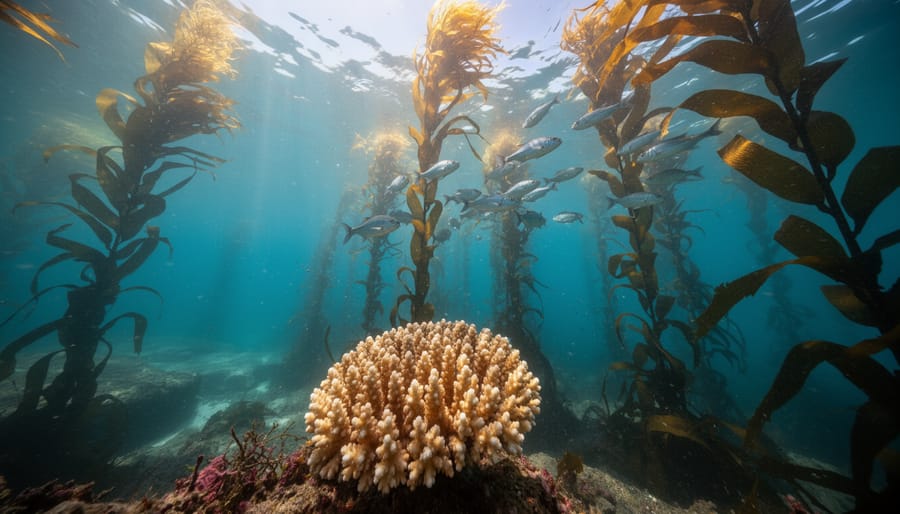
Climate change adaptation strategies for marine life are the proactive measures scientists, conservationists, and policymakers implement to help ocean ecosystems withstand and recover from climate-driven stresses like warming waters, ocean acidification and habitat loss. These strategies range from protecting critical habitats and creating marine corridors to assisted evolution and community-led restoration projects.
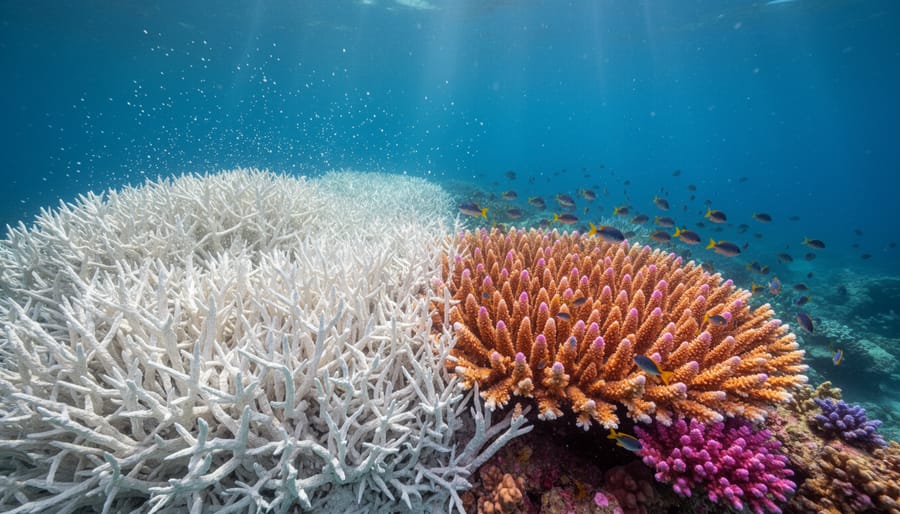
The ocean has absorbed roughly 90% of the excess heat trapped by greenhouse gases since the 1970s, triggering cascading effects throughout marine food webs. Coral reefs are bleaching at unprecedented rates. Fish populations are migrating toward cooler poles, disrupting centuries-old fisheries. Seagrass meadows and kelp forests are vanishing from coastlines where they’ve thrived for millennia.
But here’s what gives marine biologists hope in 2026: adaptation strategies are working. From the Great Barrier Reef to the kelp forests of California, targeted interventions are helping marine species survive the transition while we work to reduce emissions. Protected marine areas have proven that ecosystems given space to recover show remarkable resilience. Coral nurseries are cultivating heat-tolerant strains. Coastal communities are restoring mangrove forests that buffer both marine life and human settlements from climate impacts.
This article breaks down the science behind marine adaptation strategies, explores the different approaches being deployed worldwide, and shows you where these efforts are making measurable differences. You’ll discover how marine biologists are using everything from genetic tools to traditional ecological knowledge, and learn about opportunities to contribute to these conservation efforts yourself. The challenge is immense, but the solutions are real and evolving rapidly.
What Marine Climate Adaptation Strategies Mean for Ocean Ecosystems
Marine climate adaptation strategies are the practical, science-based actions we take to help ocean ecosystems and marine species cope with the changes already happening in our seas. Unlike emissions reduction, which works to slow future warming, adaptation focuses on building resilience now, strengthening the capacity of coral reefs, fish populations, kelp forests, and other marine life to survive in waters that are warming, acidifying, and losing oxygen.
The ocean is already changing in measurable ways. Surface temperatures have risen by approximately 0.9°C since pre-industrial times, with some regions experiencing even sharper increases. Coral reefs face repeated mass bleaching events as heat stress disrupts the symbiotic algae they depend on for energy. Fish and other mobile species are shifting poleward in search of cooler waters, altering food webs and fisheries that communities have relied on for generations. Coastal habitats like mangroves and seagrass beds, critical nurseries for young fish, are being squeezed between rising seas and human development.
Understanding the core concepts helps clarify how these strategies work:
- Climate Mitigation
- Efforts to reduce greenhouse gas emissions and remove carbon from the atmosphere to slow the pace of climate change. Essential for the long term, but does not address impacts already underway.
- Climate Adaptation
- Actions that help ecosystems, species, and communities adjust to current and anticipated climate impacts. In marine systems, this means helping ocean life survive in changing conditions.
- Ecosystem Resilience
- The ability of a marine ecosystem to absorb disturbance, reorganize, and maintain its essential functions and structure despite stress. Healthy, diverse systems bounce back better than degraded ones.
- Ecosystem-Based Adaptation
- Using the conservation, restoration, and management of natural habitats to help both ecosystems and people adapt to climate change. Examples include protecting coral reefs that buffer coastlines from storms.
- Assisted Evolution
- Selective breeding or genetic interventions designed to speed up natural adaptive processes, such as developing heat-tolerant coral strains. An emerging, carefully applied tool in conservation.
Adaptation strategies operate on the premise that while we work to stabilize the climate, marine life needs immediate help adjusting to the ocean conditions of today and tomorrow. These approaches range from expanding marine protected areas to give ecosystems space to recover, to hands-on interventions like relocating vulnerable populations or breeding climate-resilient species. The goal is not to engineer entirely new ecosystems, but to support the natural adaptive capacity that already exists, buying time and space for evolution to continue its work while we address the root causes of climate change.
How Climate Adaptation Strategies Work in Marine Environments
Building Resilience Through Ecosystem Health
Healthy ecosystems function like shock absorbers against climate disruption. When marine habitats maintain their full complement of species, complex food webs, and robust physical structures, they can buffer temperature swings, resist invasive species, and bounce back from disturbances faster than degraded systems. A kelp forest with diverse fish populations, sea urchins, and predators keeps itself in balance even when warming waters shift species ranges. Remove the predators, and urchin populations explode, decimating the kelp and collapsing the entire community.
Protecting these natural defenses starts with reducing human stressors that weaken resilience. Overfishing, pollution, and coastal development strip ecosystems of their ability to self-regulate. Marine protected areas give ecosystems breathing room to rebuild complexity. In the Caribbean, MPAs with intact parrotfish populations show healthier coral cover because these fish graze algae that would otherwise smother heat-stressed corals.
Genetic diversity matters just as much. Fish populations with varied genetic traits can adapt as waters warm, some individuals tolerate higher temperatures, others resist disease better. Bottlenecked populations lack this flexibility. Mangroves illustrate both principles: their dense root systems physically shield coastlines from storms intensified by climate change, while their nursery habitats support hundreds of juvenile fish species, maintaining the genetic breadth those populations need to adapt. The healthier the mangrove, the more services it provides under stress.
Supporting Natural Adaptive Processes
Marine species possess remarkable natural abilities to adapt to environmental change, shifting their ranges poleward or into deeper water, adjusting breeding seasons, or altering migration patterns in response to temperature shifts. The most effective adaptation strategies work with these innate responses rather than against them, clearing pathways for nature’s own resilience mechanisms.
When waters warm, fish like cod and mackerel naturally move toward cooler latitudes. Phytoplankton blooms shift their timing. Sea turtles alter their nesting schedules. These phenological adjustments happen without human intervention, but they succeed only when obstacles don’t block the way. Dams fragment river systems that anadromous fish need for spawning. Coastal development eliminates the shallow nursery habitats where juvenile fish shelter during range expansions. Shipping lanes create deadly gauntlets for migrating whales already stressed by changing food availability.
Supporting natural adaptive processes means identifying and removing these human-created barriers. Conservation efforts now prioritize creating migration corridors, protected routes that allow species to move freely as climate zones shift. This includes reconnecting fragmented habitats, reducing vessel strikes in known migration paths, and establishing marine protected area networks that span latitudinal gradients rather than isolated patches.
The goal is simple: give marine life room to move, time to adjust, and the intact ecosystems they need as refuges during the transition. Nature has adapted to change for millions of years. Our job is to stop blocking the exits.
Types of Marine Climate Adaptation Strategies
Habitat Protection and Restoration
Protecting and restoring critical marine habitats forms the foundation of climate adaptation. Marine sanctuaries and no-take zones shield vulnerable ecosystems from additional human pressures, overfishing, pollution, coastal development, allowing them to channel their energy toward weathering climate stress. Research shows that no-take reserves as climate refugia support higher biodiversity and faster recovery rates after bleaching events or storms. These protected areas become strongholds where species can retreat, reproduce, and potentially repopulate damaged regions.
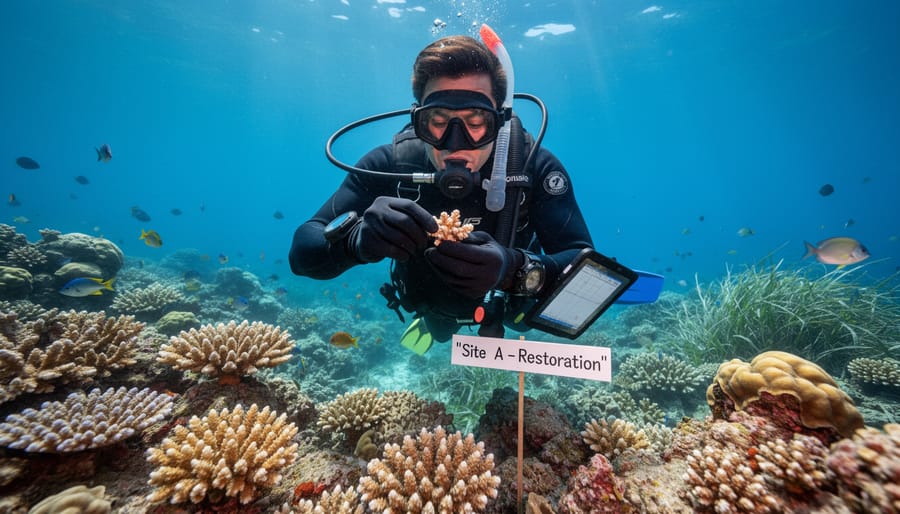
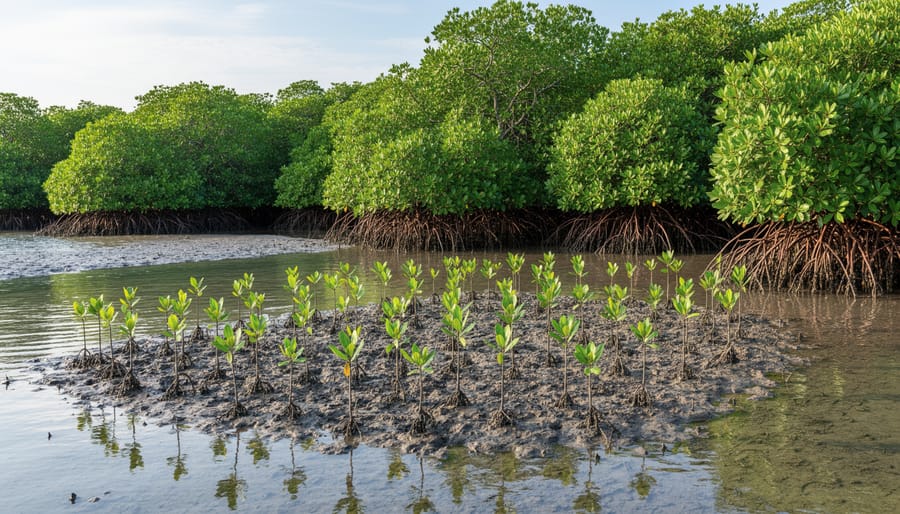
Active restoration complements protection by rebuilding habitats already degraded. Scientists and volunteers are transplanting heat-tolerant coral fragments in nurseries, replanting seagrass meadows that sequester carbon and stabilize sediments, and rehabilitating mangrove forests that buffer coastlines from storm surges. Each restored patch creates a microclimate where conditions remain more stable, cooler, less acidic, better oxygenated, giving marine life a fighting chance.
Priority habitats receiving focused restoration efforts include:
- Coral reefs, which support 25% of marine species despite covering less than 1% of the ocean floor
- Kelp forests that provide critical nursery habitat and carbon storage
- Seagrass beds anchoring food webs and protecting shorelines
- Mangroves buffering coasts while hosting juvenile fish populations
- Deep-sea refugia offering cooler, stable conditions as shallow waters warm
By securing these spaces now, we’re creating lifeboats for biodiversity in a rapidly changing ocean.
Assisted Migration and Translocation
Moving coral larvae to cooler reef patches. Transplanting kelp forests further north. Releasing captive-bred seahorses in newly suitable estuaries. Assisted migration, the deliberate relocation of species to habitats where they can better survive future climate conditions, represents one of the most direct yet controversial adaptation tools.
The approach targets species unable to migrate naturally fast enough to keep pace with warming waters. Marine biologists identify populations at risk, assess potential recipient sites for compatibility, and carefully introduce individuals where environmental conditions now match their needs. Stepping-stone habitats, a network of protected waypoints, help mobile species gradually shift their ranges poleward without crossing inhospitable stretches.
Success stories include relocating abalone populations in Australia to cooler southern waters and establishing sea urchin populations in previously too-cold Arctic regions now warming rapidly. These projects require exhaustive risk assessments: Will the moved species outcompete natives? Could pathogens hitchhike along? What happens if climate predictions prove wrong?
Critics warn against playing ecological roulette. Moved species might become invasive, disrupt existing food webs, or fail to establish at all, wasting conservation resources. Proponents counter that doing nothing guarantees extinction for some species. The middle ground involves rigorous testing, small pilot releases, and continuous monitoring, treating each translocation as an experiment demanding humility and adaptive management.
Genetic Rescue and Assisted Evolution
Genetic rescue and assisted evolution represent some of the most innovative, and carefully monitored, tools in marine conservation. Scientists are actively intervening at the genetic level to help species keep pace with rapid environmental change.
Coral breeding programs now select for heat tolerance by identifying colonies that survived bleaching events, then crossbreeding them to strengthen temperature resilience in their offspring. Research teams in Australia, Hawaii, and the Caribbean are cultivating these hardier corals in nurseries before transplanting them onto degraded reefs. Early results show promise: some bred corals withstand water temperatures two degrees Celsius higher than their wild counterparts.
Gene banks preserve genetic material from endangered marine species, frozen sperm, eggs, and tissue samples stored as insurance against extinction. Facilities around the world now archive genetic diversity from threatened fish, sea turtles, and marine mammals, creating a biological safety net if wild populations crash.
Selective breeding extends beyond corals to commercially important species like oysters and abalone, developing strains that tolerate acidified water or warming seas while maintaining their ecological roles.
These interventions carry ethical weight. Scientists proceed cautiously, weighing potential unintended consequences against the urgency of species loss. Most programs incorporate extensive testing, peer review, and adaptive management, adjusting methods as they learn what works and what risks emerge from reshaping marine genomes for a changing ocean.
Climate-Smart Fisheries Management
Climate-smart fisheries management recognizes that fish populations are moving in response to warming waters, shifting the traditional boundaries of fishing grounds and seasons. Rather than sticking to static quotas set decades ago, adaptive management adjusts catch limits in near-real-time based on current stock assessments, water temperatures, and species distribution data. When Atlantic mackerel move northward into cooler waters, for example, quotas shift accordingly across jurisdictions to prevent overfishing in their new range while allowing sustainable harvest.
Seasonal closures now align with changing spawning times and migration patterns rather than historical calendars. If warming triggers earlier spawning, closure periods move forward to protect breeding fish when they’re actually reproducing, not when they used to. This flexibility requires constant monitoring and cross-border cooperation, but it prevents the double stress of climate pressure plus fishing pressure hitting vulnerable populations simultaneously.
Equally important is reducing non-climate stressors that weaken resilience. Eliminating overfishing gives populations the numbers and genetic diversity to adapt. Cutting bycatch protects non-target species already struggling with habitat loss. Restricting destructive gear preserves seafloor habitats that serve as climate refugia. A healthy, well-managed fishery can absorb climate shocks; an already depleted one cannot. Climate-smart management builds that buffer by keeping fish populations robust enough to shift, adapt, and survive.
How Marine Climate Adaptation Strategies Are Applied in Conservation
Coral Reef Adaptation Programs
Coral nurseries have become laboratories of resilience across tropical waters. Scientists grow coral fragments in controlled underwater gardens, monitoring which genotypes survive heat stress events. In the Caribbean, restoration teams track temperature tolerance across hundreds of individual colonies, selecting the hardiest for propagation. When fragments reach maturity, divers transplant them to degraded reefs, sometimes thousands in a single season.
Heat-resistant strains show measurable differences. Florida’s Coral Restoration Foundation reports that selectively bred staghorn corals maintained tissue health during 2023 bleaching events that killed adjacent wild colonies. Australian researchers have cross-bred Great Barrier Reef corals from warmer northern waters with southern populations, producing offspring that withstand elevated temperatures while retaining local adaptation.
Hybrid programs combine multiple approaches. Teams map thermal refugia, cooler pockets where corals survived past bleaching, then stock these sites with both naturally resilient colonies and lab-selected strains. Genetic diversity remains crucial; monocultures crash under novel stressors. The goal isn’t engineering a super-coral, but maintaining enough variety that reefs hold functional communities as oceans warm, buying time for broader climate action to take effect.
Protecting Climate Corridors for Migrating Species
As ocean temperatures rise, many marine species are following their thermal preferences poleward or into deeper waters. Scientists and conservation managers are now designing networks of marine protected areas that function as stepping stones, ensuring species can move to more suitable habitats without encountering impassable barriers or deadly gauntlets of fishing pressure and coastal development.
This approach, called climate-smart marine spatial planning, uses species distribution models and oceanographic data to predict where animals will go as conditions shift. Instead of static protected zones, planners create connected corridors, stretches of safeguarded habitat that link current ranges to future refugia. For example, along the U.S. West Coast, researchers have mapped potential migration pathways for rockfish and salmon as they move northward, identifying critical areas that need protection to maintain connectivity.
These corridors work best when they cross jurisdictional boundaries. International collaborations, like the Eastern Tropical Pacific Marine Corridor connecting protected areas across Costa Rica, Panama, Colombia, and Ecuador, recognize that tuna, sea turtles, and sharks don’t respect national borders. By coordinating protection along migratory routes, nations give wide-ranging species a fighting chance to adapt as their world warms.
Community and Indigenous-Led Adaptation
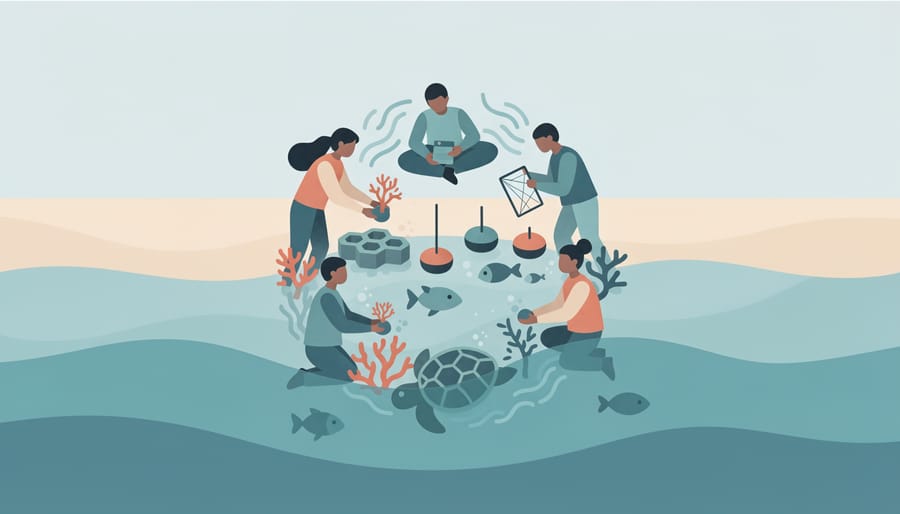
Indigenous and local coastal communities have managed marine resources sustainably for generations, making their knowledge invaluable for climate adaptation. In the Pacific Northwest, First Nations groups combine traditional ecological knowledge with modern science to restore kelp forests and salmon habitat, observing seasonal changes their ancestors tracked for centuries. These insights inform adaptive management that adjusts harvest timing and protected areas as species shift ranges. In the Philippines, community-managed marine sanctuaries integrate ancestral fishing calendars with climate data, creating no-take zones that move with changing ocean conditions. Such collaborative conservation models recognize that communities most dependent on marine resources are often the best stewards. Co-management arrangements grant decision-making power to local groups while providing scientific support and resources. A marine biologist working with Torres Strait Islander communities notes that their multi-generational observations of reef health reveal patterns satellite data might miss, guiding where to focus restoration efforts and how to time interventions with natural cycles.
Common Questions About Marine Climate Adaptation
Can adaptation strategies replace reducing emissions?
No, adaptation and mitigation must work together. While adaptation helps marine life cope with current changes, only emissions reduction can slow the pace of ocean warming and acidification at their source. Think of adaptation as buying time while we address the root cause.
How do we know these strategies actually work?
Scientists measure success through long-term monitoring of ecosystem health indicators: coral survival rates, species diversity, population recovery, and habitat connectivity. Many strategies, like marine protected areas and coral restoration, have decades of data showing measurable improvements when implemented consistently.
What are the risks of intervening in natural systems?
Interventions like assisted migration or genetic selection carry risks, introducing species to new areas can disrupt existing ecosystems, and we can’t predict all long-term consequences. That’s why scientists proceed cautiously, with pilot projects, peer review, and adaptive management that adjusts based on outcomes.
How can I contribute to marine climate adaptation?
Support organizations funding adaptation research and restoration projects, participate in citizen science monitoring programs, and advocate for climate-smart ocean policies. Your daily choices reducing plastic use, choosing sustainable seafood, lowering your carbon footprint, also reduce stressors that make adaptation harder for marine life.
Beyond these common questions, many people wonder about timelines. Marine adaptation is a long game. Coral restoration projects may take a decade to show ecosystem-level results. Protecting migration corridors requires coordinated international agreements that can take years to negotiate. But the urgency is real, delaying action means losing species and ecosystems we can’t bring back.
The good news? You don’t need a marine biology degree to make a difference. Coastal cleanups, reef monitoring dives, and volunteer data collection all feed into the research that guides adaptation strategies. Many conservation organizations offer training programs that turn enthusiastic volunteers into skilled citizen scientists. When you join these efforts, you become part of the adaptive capacity we’re building, not just for marine life, but for the coastal communities that depend on healthy oceans.
Marine climate adaptation strategies offer genuine hope for ocean ecosystems facing unprecedented change, but they’re most powerful when paired with aggressive emissions reduction. We can’t adapt our way out of the climate crisis alone. Every restored reef, every protected migration corridor, every heat-tolerant coral strain we cultivate buys time for marine life while we tackle the root cause of warming and acidification. The science is clear: combine both approaches, and we give ocean biodiversity its best fighting chance.
What makes this moment different is the scale of collaboration. Research institutions share genetic databases across continents. Coastal communities blend traditional knowledge with cutting-edge monitoring tools. Policy frameworks increasingly recognize that healthy oceans need both protection and active support through climate shocks. This collective effort spans careers, borders, and generations.
You can be part of it. Marine conservation organizations worldwide need volunteers for reef monitoring, beach cleanups, citizen science surveys, and advocacy campaigns. Join our e-network to receive updates on adaptation projects, conservation successes, and ways to take meaningful action in your community. Support candidates and policies grounded in marine science. Donate to organizations funding adaptation research and on-the-ground restoration work.
Marine life has survived ice ages, asteroid impacts, and massive geological shifts over hundreds of millions of years. Given breathing room, protection from compounding stressors, and thoughtful human intervention where needed, ocean ecosystems can adapt to this crisis too. The question isn’t whether they’re resilient enough. It’s whether we’ll act fast enough to help them through.

jessica
Ava Singh is an environmental writer and marine sustainability advocate with a deep commitment to protecting the world's oceans and coastal communities. With a background in environmental policy and a passion for storytelling, Ava brings complex topics to life through clear, engaging content that educates and empowers readers. At the Marine Biodiversity & Sustainability Learning Center, Ava focuses on sharing impactful stories about community engagement, policy innovations, and conservation strategies. Her writing bridges the gap between science and the public, encouraging people to take part in preserving marine biodiversity. When she’s not writing, Ava collaborates with local initiatives to promote eco-conscious living and sustainable development, ensuring her work makes a difference both on the page and in the real world.