Marine Biodiversity Science Center

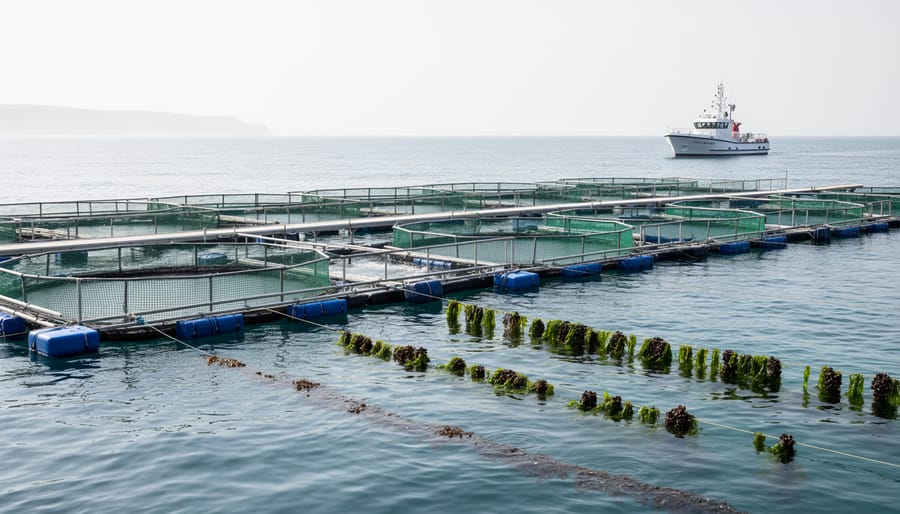
Sustainable aquaculture refers to fish and seafood farming practices that produce protein-rich food without depleting wild fish populations, degrading marine ecosystems, or creating pollution that harms surrounding waters. The key to making aquaculture truly sustainable lies in how it’s governed: strong regulatory frameworks that mandate environmental impact assessments, limit harmful inputs like antibiotics and wild-caught feed, protect critical habitats, and ensure farms operate at ecologically appropriate scales. When policy and governance work effectively, aquaculture becomes a vital tool for feeding a growing global population while preserving ocean health.
The stakes couldn’t be higher. By 2026, more than half of all seafood consumed worldwide comes from farmed sources rather than wild capture fisheries. This shift represents both tremendous opportunity and serious risk. Done poorly, aquaculture destroys mangrove forests, spreads disease to wild fish populations, and concentrates waste that triggers toxic algal blooms. Done right, with science-based policies and accountable governance, it provides jobs, secures food supplies, and takes pressure off overfished wild stocks.
What makes this challenge particularly complex is that aquaculture isn’t one thing. It encompasses everything from small-scale seaweed farms that actually improve water quality to industrial shrimp operations that have leveled coastal forests. The governance structures needed for each are different, yet they must all answer the same fundamental questions: How do we balance economic benefits with environmental protection? Who monitors compliance? What happens when farms fail to meet standards?
Throughout this article, we’ll explore how international frameworks, national policies, and local regulations work together to shape sustainable aquaculture. You’ll discover what scientists and conservationists have learned about best practices, see real examples of governance success and failure, and learn how you can contribute to building better systems through citizen science, advocacy, and informed seafood choices.
What Makes Aquaculture Sustainable
Environmental Impacts to Manage
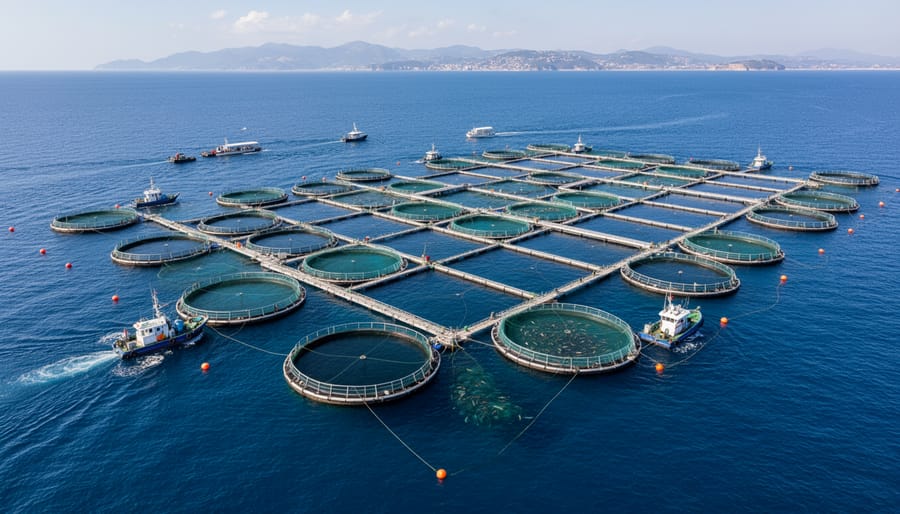
Aquaculture operations, when poorly managed, can trigger a cascade of environmental problems that ripple through marine ecosystems. Nutrient pollution ranks among the most pressing concerns. Excess fish feed and waste release nitrogen and phosphorus into surrounding waters, fueling algal blooms that deplete oxygen and create dead zones where marine life cannot survive. In coastal areas with limited water circulation, these nutrients accumulate rapidly, transforming vibrant habitats into ecological deserts.
Habitat degradation often begins with farm site selection. Coastal aquaculture facilities sometimes destroy mangroves, seagrass beds, and salt marshes, ecosystems that serve as nurseries for countless marine species and protect coastlines from erosion. The physical footprint of cages, nets, and anchoring systems can smother benthic communities on the seafloor, while sedimentation from farm waste buries coral reefs and shellfish beds.
Disease transmission poses a particularly insidious threat. High-density farming creates ideal conditions for parasites and pathogens to proliferate, then spread to wild populations swimming past farm sites. Sea lice outbreaks from salmon farms have devastated wild salmon runs in several regions, with juvenile fish bearing parasite loads they cannot survive.
Escaped farmed fish compound these risks. Thousands of individuals bred for rapid growth and docility slip through damaged nets each year, competing with wild stocks for food and spawning sites. When farm escapees interbreed with native populations, they dilute genetic diversity that wild fish need to adapt to changing ocean conditions.
Effective governance frameworks address these impacts through spatial planning, stocking density limits, disease monitoring protocols, and escape prevention standards, transforming aquaculture from environmental liability into responsible food production.
Innovations Driving Sustainability Forward
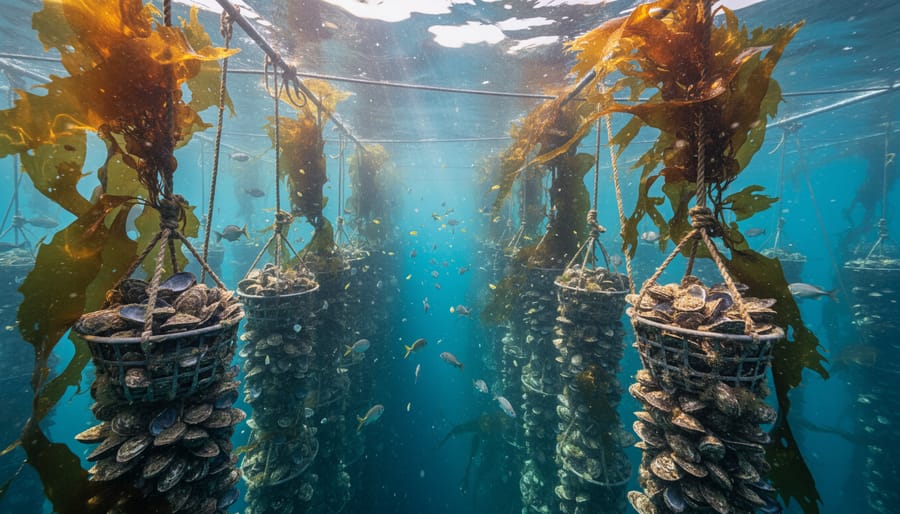
Technology is transforming how we farm the ocean. Integrated multi-trophic aquaculture (IMTA) stands out as one of the most promising approaches, it mimics natural ecosystems by combining species that benefit from each other’s presence. For instance, fish produce waste nutrients that feed seaweed and shellfish grown in the same system, which in turn filter the water and reduce pollution. This circular approach, aligned with principles outlined in the FAO Code of Conduct turns a waste problem into a productive asset while improving overall farm sustainability.
Recirculating aquaculture systems (RAS) offer another breakthrough, especially for land-based operations. These closed-loop systems filter and reuse up to 99% of water, dramatically reducing freshwater consumption and preventing nutrient discharge into surrounding environments. Though energy-intensive, advances in renewable power are making RAS increasingly viable at commercial scale.
Offshore aquaculture is pushing farms into deeper, more dynamic waters where strong currents naturally disperse waste and provide better oxygen exchange. Submersible cages and autonomous monitoring systems enable operations in conditions once considered too harsh, opening vast oceanic spaces while reducing conflicts with coastal communities.
Alternative feeds represent perhaps the most critical innovation. Traditional fish meal and fish oil create the unsustainable paradox of catching wild fish to feed farmed ones. Researchers are developing feeds from insects, algae, bacteria, and even food waste, breaking aquaculture’s dependence on wild fisheries. When smart policy supports these innovations through research funding, streamlined permitting for proven technologies, and incentives for adoption, the industry moves faster toward true sustainability.
The Policy Framework for Sustainable Marine Aquaculture
International Agreements and Standards
International agreements establish the baseline expectations for aquaculture development worldwide, creating shared principles that individual countries translate into national law. The FAO Code of Conduct for Responsible Fisheries, adopted in 1995, remains the foundational framework, it’s voluntary but widely influential, outlining best practices for minimizing environmental impact, protecting genetic diversity, and ensuring aquaculture integrates with coastal zone management. The Code specifically calls for environmental impact assessments before new facilities are approved and promotes ecosystem-based approaches that consider cumulative effects across multiple farms.
The UN Sustainable Development Goals provide broader context, particularly SDG 14 (Life Below Water), which explicitly targets sustainable management of marine resources by 2030. This goal drives national aquaculture strategies to align food production objectives with ocean health metrics, countries increasingly use marine spatial data to identify suitable aquaculture zones that minimize conflicts with conservation areas and traditional fisheries.
Regional sea conventions add geographically specific requirements. The OSPAR Convention for the North-East Atlantic, for instance, mandates member states to prevent pollution from aquaculture operations and protect marine biodiversity in shared waters. Similarly, the Barcelona Convention governing the Mediterranean requires environmental impact assessments and establishes pollution thresholds that national aquaculture regulations must meet.
These international frameworks don’t enforce compliance directly, they work by creating normative pressure and providing technical guidance that countries adapt to local conditions, gradually raising the floor for what constitutes acceptable practice globally.
National and Regional Governance Models
Different countries have developed distinct governance models for aquaculture, each reflecting local priorities, environmental contexts, and institutional capacity. Examining these real-world approaches reveals what regulatory frameworks work best, and where gaps remain.
Norway leads with an integrated national approach that combines strict environmental regulations with industry growth targets. The government controls licensing, requires Environmental Impact Assessments before expansion, and enforces traffic-light zoning systems based on sea lice monitoring. Farms in green zones can increase production; those in red zones face restrictions or closures. This adaptive framework has maintained Norway’s position as the world’s largest salmon producer while reducing environmental risks. However, critics note that economic considerations sometimes override conservation concerns, particularly regarding wild salmon protection.
Canada employs a federal-provincial model where different jurisdictions set varying standards. British Columbia recently moved toward area-based management and introduced timelines to transition open-net pens away from wild salmon migration routes. This precautionary approach reflects decades of conflict between First Nations, conservation groups, and industry. While stakeholder engagement has improved, fragmented jurisdiction creates regulatory inconsistencies that complicate enforcement.
New Zealand integrates aquaculture into comprehensive coastal management under its Resource Management Act. Local councils control zoning and permits, requiring thorough consultation with Māori communities who hold treaty rights to coastal resources. This bottom-up approach creates strong community buy-in but can result in lengthy approval processes that stifle industry growth.
| Country | Regulatory Approach | Key Strengths | Challenges |
|---|---|---|---|
| Norway | Centralized adaptive management with traffic-light system | Clear standards, science-based adjustments, industry growth | Economic priorities sometimes override conservation |
| Canada | Federal-provincial shared jurisdiction | Stakeholder engagement, precautionary measures | Regulatory fragmentation, inconsistent enforcement |
| New Zealand | Local council control with Indigenous co-management | Community buy-in, cultural integration | Slow approval processes, limited growth |
| Developing Nations | Variable capacity, often limited enforcement | Flexibility, potential for leapfrogging to better technologies | Weak monitoring, insufficient resources, corruption risks |
Developing nations face different constraints. Many lack the institutional capacity, funding, and technical expertise for robust oversight. Rapid aquaculture expansion in countries like Vietnam and Bangladesh has driven economic development but sometimes at significant environmental cost. Where enforcement is weak, operations may bypass regulations entirely. The lesson: effective governance requires not just good laws but sufficient resources and political will to implement them. International support through capacity building and technology transfer can help bridge these gaps.
Certification and Industry Standards
Third-party certification programs fill a crucial gap that government regulations alone can’t always address: they set ambitious benchmarks, reward industry leaders, and help consumers identify products from farms genuinely committed to sustainability. While formal governance establishes minimum legal requirements, voluntary standards push the industry forward by incentivizing best practices that go beyond compliance.
The Aquaculture Stewardship Council (ASC) operates as the most recognized global certification for farmed seafood. Developed through collaboration between WWF and the Dutch Sustainable Trade Initiative, ASC standards address environmental impacts like water quality, feed sources, and ecosystem effects, while also requiring social responsibility measures including fair labor practices and community consultation. Farms undergo independent audits before earning the blue ASC label that appears on retail packaging.
Best Aquaculture Practices (BAP), administered by the Global Aquaculture Alliance, takes a different approach by certifying the entire supply chain, from hatcheries and feed mills through processing facilities. This comprehensive model ensures sustainability standards apply at every production stage, not just at the farm level. BAP certification is particularly prevalent among Asian producers supplying North American markets.
Organic certifications, governed by standards like USDA Organic or EU Organic Aquaculture, emphasize natural inputs, prohibit synthetic chemicals, and mandate specific stocking densities. While organic farming appeals to certain consumer segments, debate continues within the conservation community about whether organic standards necessarily produce better environmental outcomes than other rigorous certification programs.
These voluntary schemes complement formal governance by driving innovation faster than regulatory processes typically allow. They create market differentiation that rewards sustainable operators with premium prices, effectively making conservation economically advantageous. However, certification costs can disadvantage small-scale producers, and label proliferation sometimes confuses consumers. The most effective approach combines strong government regulation as a foundation with certification programs that recognize and promote excellence beyond the legal baseline.
Stakeholder Engagement and Community Governance
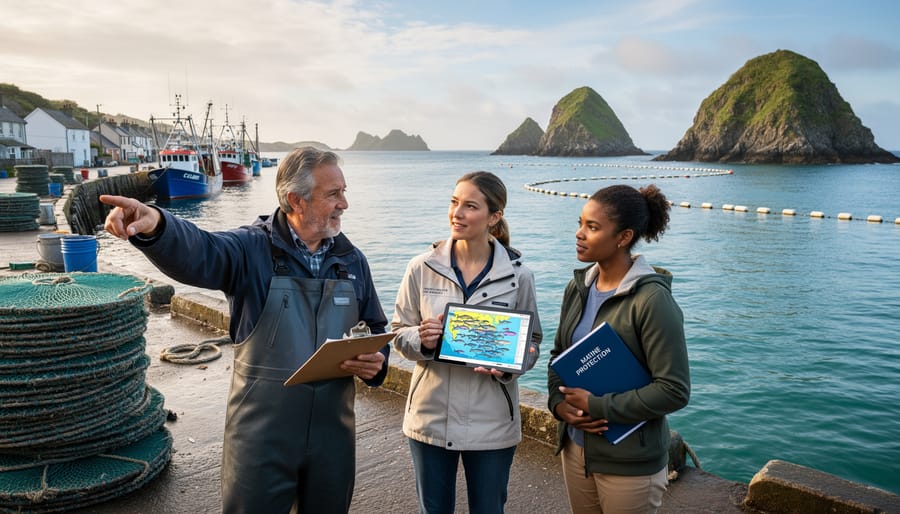
Aquaculture decisions affect more than just farm operators, they ripple through entire coastal ecosystems and the communities dependent on them. Effective governance recognizes this reality by bringing diverse voices to the table before farms are sited, during operations, and when policies evolve. Local fishers understand current patterns and breeding grounds. Indigenous ocean knowledge offers generations of observations about seasonal changes and ecosystem connections that scientific monitoring often misses. Scientists provide technical expertise on carrying capacity and environmental thresholds, while conservation groups highlight biodiversity concerns that might otherwise be overlooked.
Participatory governance models flip the traditional top-down approach. Instead of regulatory agencies deciding alone where farms go and what practices they must follow, co-management structures create forums where stakeholders collaborate on solutions. In British Columbia, some regions have established aquaculture planning committees that include First Nations representatives, municipal officials, existing aquaculture operators, wild fishers, and environmental advocates. These groups review proposed farm sites together, negotiate operational conditions, and monitor coastal community impact over time.
This approach doesn’t eliminate conflict, economic interests and conservation priorities will always create tension, but it surfaces disagreements early when they’re easier to address. Communities that participate in planning decisions are more likely to support sustainable farms and report problems quickly. Co-management also builds local capacity: training programs teach community monitors to collect water quality data, observe fish health, and document wildlife interactions, creating employment while strengthening oversight.
The most successful participatory models include clear decision-making processes, adequate funding for community participation, and genuine authority, not just consultation that agencies can ignore. When stakeholders see their input shaping real outcomes, engagement becomes meaningful rather than tokenistic.
Monitoring, Enforcement, and Adaptive Management
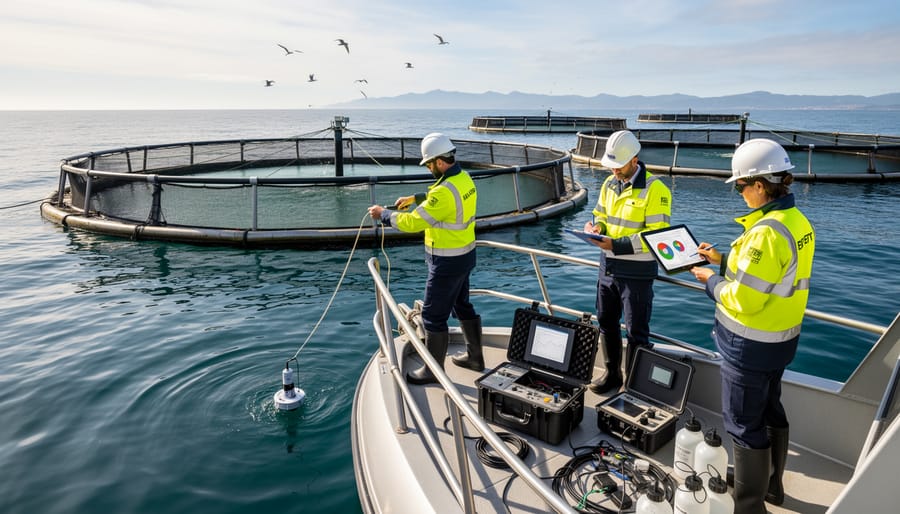
Even the most carefully designed sustainable aquaculture policies will fail without effective oversight. Governance frameworks depend on three interconnected pillars: continuous monitoring, credible enforcement, and the flexibility to adjust course when conditions change.
Monitoring systems form the foundation. Aquaculture operations generate data streams on water quality, feed conversion ratios, fish health, waste discharge, and surrounding ecosystem indicators. Effective governance requires this data to be collected regularly, analyzed systematically, and made publicly accessible. Norway’s digital aquaculture monitoring system, for instance, tracks real-time environmental parameters at every farm site, feeding information into a national database that regulators and researchers can access. This transparency creates accountability and allows early detection of problems before they escalate into environmental crises.
Enforcement mechanisms translate policy into practice. Without consequences for non-compliance, regulations become suggestions. Strong enforcement requires adequate funding for inspection staff, clear authority for regulatory agencies, meaningful penalties for violations, and transparent processes that apply consistently across operators regardless of size. Canada’s aquaculture compliance officers conduct unannounced site visits, review operational records, and can immediately suspend permits when serious violations occur. Yet enforcement remains challenging in many jurisdictions, inspectors may cover vast coastal areas with limited resources, political pressure can undermine action against large operators, and legal proceedings stretch across years while environmental damage continues.
The most effective governance systems embrace adaptive management the recognition that policies must evolve as we learn. This structured cycle looks like:
- Monitoring: Collect data on environmental conditions, farm performance, and ecosystem responses
- Assessment: Analyze trends, identify unexpected outcomes, and evaluate whether policies achieve intended goals
- Policy adjustment: Revise regulations, standards, or practices based on evidence
- Implementation: Put modified approaches into practice at farm and regulatory levels
- Review: Track results of changes and feed findings back into the monitoring phase
New Zealand’s aquaculture management exemplifies this approach. When monitoring revealed localized seabed impacts below mussel farms, regulators adjusted stocking densities and fallowing requirements for those specific sites rather than applying blanket restrictions nationwide. Scotland incorporated adaptive management into salmon farming governance after sea lice outbreaks, implementing regional management areas where strategies adjust based on ongoing wild fish population monitoring.
The adaptive framework acknowledges uncertainty. We don’t have perfect knowledge about long-term ecosystem impacts, climate change interactions, or cumulative effects of multiple farms. Rather than waiting for complete certainty, adaptive management allows governance to proceed with reasonable caution while building in mechanisms to course-correct.
How You Can Support Sustainable Aquaculture
You don’t need a PhD in marine science to make a meaningful difference in promoting sustainable aquaculture, small, informed actions add up to real impact.
Start with your next grocery trip. Look for third-party certification labels like ASC, BAP, or MSC when buying farmed fish and shellfish. These certifications verify that farms meet environmental and social standards. Ask questions at your fishmonger or restaurant about where their seafood comes from and how it was raised. Choosing sustainable seafood sends a market signal that consumers value responsible farming practices.
Support organizations working on aquaculture research and marine conservation. The Marine Biodiversity Science Center offers volunteer opportunities where you can contribute directly to aquaculture monitoring projects, help with educational programs about ocean farming, or participate in coastal ecosystem surveys that inform governance decisions. Citizen science initiatives let you collect water quality data, document species diversity near farm sites, or assist with public outreach, no advanced degree required.
Engage with policy processes when opportunities arise. Public comment periods for new aquaculture permits or zoning changes are your chance to voice support for strong environmental standards. Contact your representatives to advocate for funding marine science research and robust regulatory frameworks. Attend town halls or coastal planning meetings where aquaculture development is discussed.
Share what you learn. Post about certified products, explain what makes aquaculture sustainable to friends, or write to companies requesting transparency about their sourcing. Education multiplies impact, when more people understand the connection between governance and ocean health, collective pressure for responsible practices grows stronger.
The future of sustainable ocean food production hinges on one fundamental truth: technology and innovation alone cannot guarantee a healthy ocean. Strong, adaptive policy and effective governance frameworks are the backbone that transforms well-meaning aquaculture practices into lasting environmental stewardship. We’ve seen remarkable progress, from international agreements setting global standards to local communities co-managing their coastal resources, from breakthrough technologies reducing environmental footprints to transparent certification systems empowering consumers. These advances prove that when governance aligns economic incentives with ecological health, aquaculture can indeed become part of the solution.
Yet challenges remain. Enforcement gaps, resource limitations, and the complexity of marine ecosystems demand constant vigilance and adaptation. The most promising path forward combines robust regulatory oversight with voluntary industry leadership, scientific monitoring with community knowledge, and national policy with international cooperation. Every stakeholder has a role: policymakers crafting evidence-based regulations, scientists providing the data to guide them, industry innovating responsibly, and citizens making informed choices and demanding accountability.
Is farmed fish sustainable?
It depends on how it’s farmed. Operations that follow environmental best practices, manage waste and disease responsibly, and maintain proper certification can be highly sustainable, while poorly managed farms cause significant harm.
How do I know if my seafood is sustainably farmed?
Look for third-party certifications like ASC, BAP, or organic labels on packaging. These indicate the farm has met rigorous environmental and social standards verified by independent auditors.
What’s the difference between aquaculture and wild-caught?
Aquaculture involves farming fish in controlled environments, while wild-caught fish are harvested from natural populations. Both can be sustainable or harmful depending on specific practices and management.
Can aquaculture help endangered species?
Yes, through conservation aquaculture programs that breed threatened species for reintroduction, reducing pressure on wild populations while supporting recovery efforts.
How can I get involved in marine aquaculture conservation?
Join citizen science programs, volunteer with organizations like the Marine Biodiversity Science Center, advocate for stronger aquaculture policies in your region, and support research through donations or participation in educational programs.
Your engagement matters. Whether you’re choosing certified seafood at the market, participating in coastal monitoring, or advocating for stronger governance in your community, these actions collectively shape the trajectory of ocean farming. The Marine Biodiversity Science Center offers hands-on opportunities to contribute to aquaculture research and education, turning concern into meaningful conservation action. Together, informed citizens and sound governance can ensure aquaculture fulfills its promise as a cornerstone of sustainable ocean stewardship.

jessica
Ava Singh is an environmental writer and marine sustainability advocate with a deep commitment to protecting the world's oceans and coastal communities. With a background in environmental policy and a passion for storytelling, Ava brings complex topics to life through clear, engaging content that educates and empowers readers. At the Marine Biodiversity & Sustainability Learning Center, Ava focuses on sharing impactful stories about community engagement, policy innovations, and conservation strategies. Her writing bridges the gap between science and the public, encouraging people to take part in preserving marine biodiversity. When she’s not writing, Ava collaborates with local initiatives to promote eco-conscious living and sustainable development, ensuring her work makes a difference both on the page and in the real world.