Marine Biodiversity Science Center

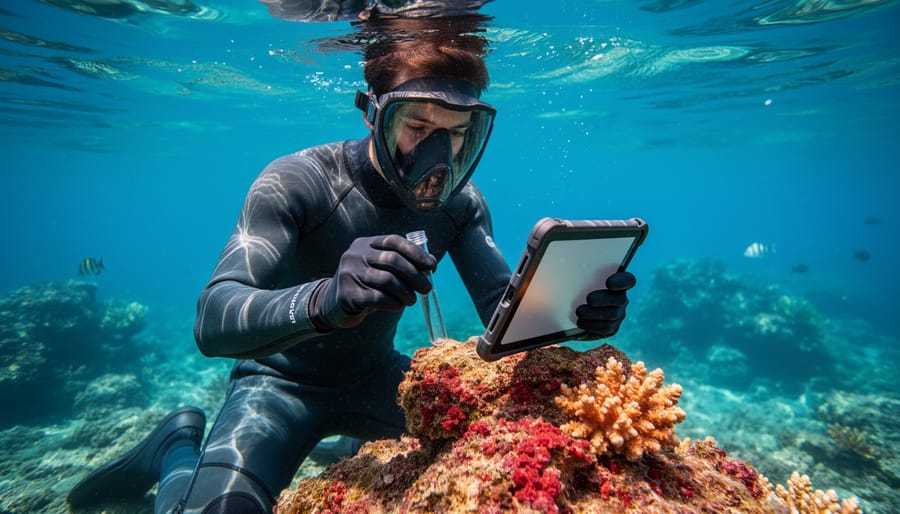
Digital sequencing turns a physical sample, such as a bit of sponge tissue or a cup of seawater, into a string of genetic code that can be stored, shared and studied anywhere in the world. That code is called digital sequence information, or DSI, and for marine genetic resources it has quietly become one of the most debated questions in ocean science. Who can use it? What do they owe in return? And where do you go to find out?
The short answer is this: if you read, download or build on genetic data drawn from marine organisms, you’re part of the DSI conversation, whether you’re a graduate student, a lab researcher or a teacher running a classroom project. Responsibilities vary depending on where a sample came from and which rules apply, so it pays to understand the basics before you start.
This guide explains what DSI means in plain language, who it covers, what rights and obligations come with it, and where to find official guidance. Along the way, you’ll meet a marine biologist’s story from the field and a few ways volunteers can help protect the ocean life behind the data. Because the sequence on your screen began as a living creature in the sea, and looking after both matters.
What Digital Sequencing Is and Why Marine Genetic Resources Are in the Spotlight
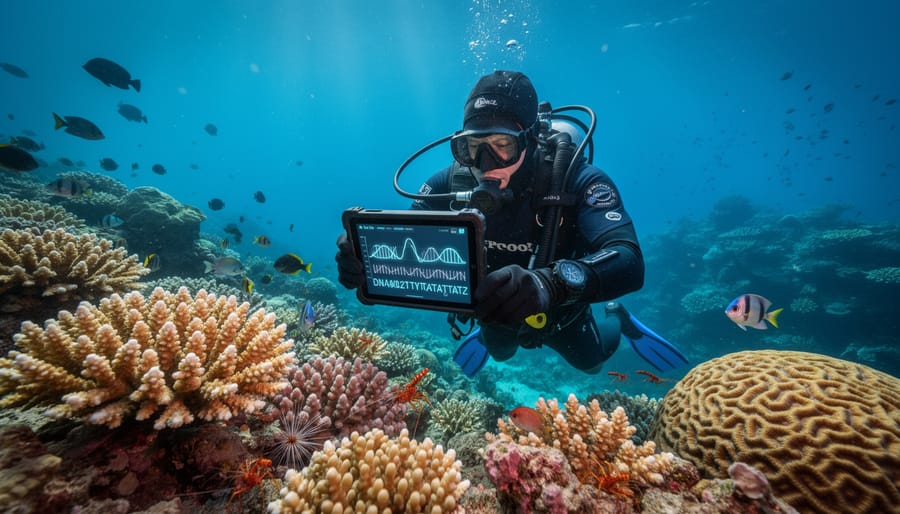
From Ocean Sample to Open Database: How Sequencing Works
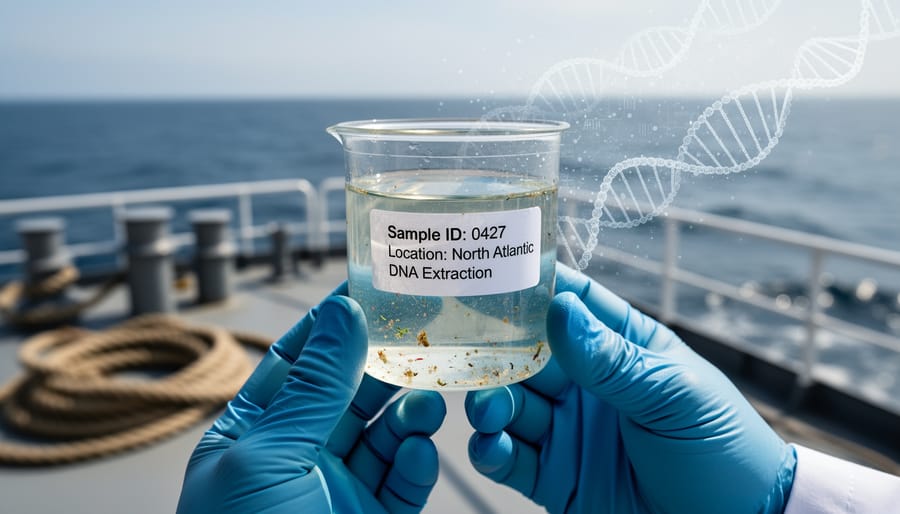
It starts with a sample. A researcher collects a small piece of tissue from a sponge, a vial of seawater, or a seagrass leaf, then notes exactly where, when and under what permit it was taken. That record matters later, because the data inherits its origin story.
Back in the lab, the team extracts DNA by breaking open cells and separating the genetic material from everything else. Some projects skip the organism entirely and use eDNA analysis pulling traces of genetic material straight from water.
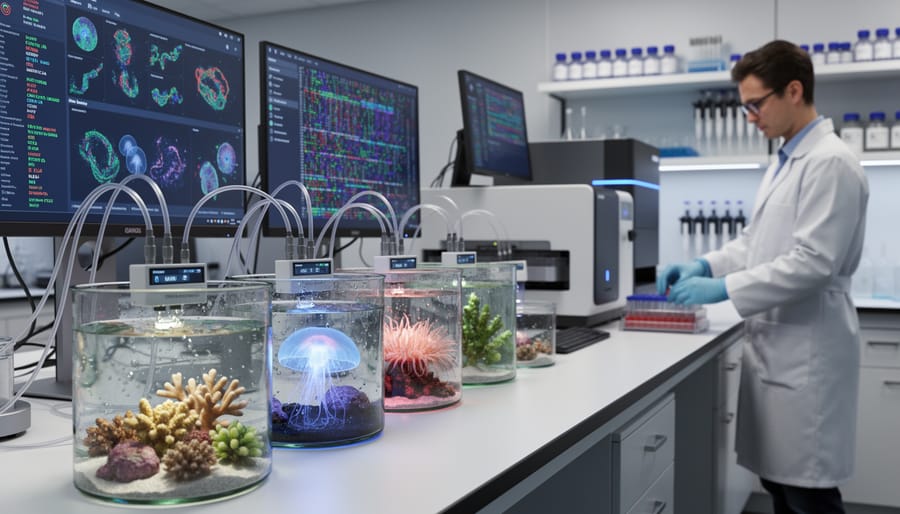
Next comes sequencing. Machines read the DNA’s chemical letters (A, T, C and G) and turn them into a long digital string. Software then cleans, assembles and labels that string so it can be compared with known species.
Finally, the sequence is deposited in a public repository. Journals and funders usually expect researchers to submit newly sequenced data so others can check and reuse it. This is the step that creates Digital Sequence Information, and it is why debates over access and sharing are so active; a DSI evidence review offers useful background.
For many scientists, the payoff is a quiet moment on screen. As one marine biologist put it, “You expect a close match to something known, and then the alignment lights up differently. That’s when you realize you may be looking at a species nobody has described yet.”
Why DSI Matters for Conservation and Fair Benefit-Sharing
Sequence data gives conservationists tools that were hard to imagine a generation ago. A short stretch of DNA can confirm which species a fin, fillet or shell came from, which helps authorities control illegal wildlife trade. Genetic comparisons also show whether a population is diverse and resilient or shrinking and inbred, so managers can spot trouble before numbers collapse. Even the smallest organisms matter here. Studying marine microbes through their sequences helps researchers read the health of whole ecosystems.
The fairness question follows naturally. Much of this data comes from waters that coastal communities and countries have cared for over generations, and discoveries made from those waters can lead to valuable research, products and careers. Many people feel that those who steward marine life should share in what comes from it, whether through access to the data, joint research, training or fair returns from any commercial use.
Conservation and fairness are not competing goals. When stewards are recognized and included, they have stronger reasons to protect the biodiversity everyone depends on, and shared benefits help keep that protection going for the long term.
Key Terms You Will Meet in the DSI Conversation
Digital Sequence Information (DSI) is the genetic code of an organism stored as digital data, such as the letters of a DNA sequence held in a file or database. It is different from the physical sample it came from, which is part of why the term is still debated internationally.
Marine genetic resources are genetic material from ocean life that has real or potential value, whether from a sponge, a deep-sea microbe or a seagrass meadow. Studying them is a core part of marine genomics the field that reads and compares ocean DNA.
Areas beyond national jurisdiction are the parts of the ocean that sit outside any single country’s control, including the high seas and the deep seabed. Much of the ocean’s biodiversity lives there, which makes questions about who may use its genetic resources especially important.
Benefit-sharing means making sure the advantages of using genetic resources, such as knowledge, training, technology or financial returns, reach the communities and countries connected to them, not only the people who do the sequencing.
A genomic database is a public or private repository where sequence data is deposited so others can search, download and reuse it.
Access and benefit-sharing, often shortened to ABS, is the broader system of rules and agreements that governs how genetic resources are obtained and how the resulting benefits are shared fairly.
Who Is Affected: Eligibility and Scope of DSI Rules for Marine Genetic Resources
Not everyone who touches sequence data faces the same rules. Whether DSI frameworks apply to you depends on what you do with the data, where the samples came from, and which country or international instrument has a say. In general, the more a project involves collecting from the ocean, commercial use, or large-scale data handling, the more likely it is that formal conditions apply.
Researchers and institutions are the most commonly affected, especially when they collect samples from national waters or from areas beyond national jurisdiction. Companies that use sequence data to develop products are typically expected to look closely at benefit-sharing. Database managers sit in a quieter but important role, since they decide how data is labeled, shared and credited. Citizen scientists and educators are often covered by simpler expectations, such as respecting permits and giving credit, but they should still ask questions before they begin.
The table below offers a starting point. It is a guide to what to check first, not a legal ruling.
| Type of user or activity | DSI rules likely relevant? | What to check first |
|---|---|---|
| University researcher collecting marine samples | Very likely | Collection permits and access agreements for the sampling location |
| Private biotech company | Very likely | Benefit-sharing expectations and terms attached to the data source |
| Public database curator | Likely | Metadata standards, provenance records and database usage terms |
| Student project using public data | Sometimes | Database terms of use and your institution’s guidance |
| Volunteer monitoring program | Depends on the activity | Whether samples are collected or only observations are recorded |
What falls outside? Work that never involves genetic material, such as counting species from photos or tracking migration visually, usually sits outside DSI rules. Analyzing data that is already public may carry fewer obligations than collecting new samples, though attribution and database terms still apply. Even computational work, like searching archives for biosynthetic gene clusters can raise questions when results point toward commercial use.
One caution matters above all: rules differ from country to country and from one international instrument to another, and they continue to evolve. Please confirm which ones apply to your situation before you start, rather than assuming a single global standard.
Your Rights and Obligations When Using Marine DSI
Practical Steps to Stay Compliant When You Work With Sequence Data
Start with permits, before you collect anything. Confirm that you hold the access permits and any agreements that cover the site, the species and the intended use. A sampling permit is not always the same thing as permission to sequence and publish, so read the conditions closely.
Next, document where each sample came from. Record the collection date, the location, the depth and the habitat, along with who collected it. This is the context that later gives a sequence its meaning.
Then capture your metadata as you work. Note the sequencing method, the software versions and any processing steps, and keep the sample identifier linked to every file. A sequence stripped of its details is far less useful to the next researcher.
When you deposit or reuse data, cite your sources properly. Credit the original data providers, name the database and accession numbers, and follow any attribution terms. If you build on someone else’s sequences, say so clearly.
Finally, keep your records. Store permits, agreements, correspondence and sample logs somewhere safe and organized, ready for a funder, a journal or a partner who asks.
Requirements differ by country and by the agreements you work under. When you are unsure which rules apply, ask your institution’s research office or your national access and benefit-sharing contact before you start.
Where to Get Help and Official Guidance
Rules around digital sequence data can feel tangled, and you don’t have to untangle them alone. The good news is that a handful of official and trusted sources exist precisely to answer these questions. Which one fits best depends on what you’re trying to do.
- National focal points for access and benefit-sharing: best for learning how your country’s permit and access rules apply to your sampling or data use.
- United Nations biodiversity and ocean bodies: best for understanding the international frameworks and how they’re developing.
- Your institution’s research office or legal counsel: best for interpreting agreements, contracts and compliance duties that apply to your specific project.
- Public sequence databases’ guidance pages: best for practical rules on depositing, citing and reusing data, including required metadata.
A good habit is to start close to home. Your institution’s research office often knows which national rules apply and can point you toward the right focal point. From there, the international bodies give you the bigger picture, while database guidance pages tell you exactly what to record when you upload or download a sequence.
Because rules differ by country and keep evolving, always confirm details directly with the relevant authority rather than relying on a summary, including this one. If you’d like plain-language updates without wading through legal documents, join our e-network. We share clear explanations as the conversation develops, so students, volunteers and curious readers can stay informed and take part with confidence.
Common Questions About Digital Sequencing and Marine Genetic Resources
Is DSI the same as a physical sample?
No. A physical sample is the actual sponge, microbe or seagrass leaf, while DSI is the digital record of its genetic code. Because the data can be copied and shared endlessly, it raises different questions about access and sharing than a sample sitting in a freezer does.
Does using public sequence data trigger obligations?
It depends on the database’s terms, your institution’s policies and the rules where you work. Many public repositories ask for proper citation at a minimum, so check each database’s guidance pages and confirm what applies to you.
Can students and volunteers use marine sequence data?
Generally, yes. Much public sequence data is open to anyone for learning and research, and volunteers can contribute through citizen science and data curation. Follow any usage terms and ask your supervisor or program lead if you are unsure.
How does DSI help protect endangered species?
Sequence data lets scientists track population health and genetic diversity, identify species from tiny tissue or water samples, and spot illegal trade. That gives conservation teams earlier, clearer evidence to act on.
Who benefits when a discovery is made? Ideally, many people at once. Researchers gain new knowledge, conservation efforts gain better tools, and the countries and communities that steward marine biodiversity are meant to share in what comes from their waters. How that sharing works in practice is still being shaped, which is exactly why staying informed matters.
Get Involved: Volunteer Opportunities and Ways to Help Protect Marine Biodiversity
You don’t need a lab coat to help protect marine biodiversity. Our volunteers join citizen science sampling days, help curate and check the data that comes out of them, support outreach and education, and stay connected through our online e-network. Each role feeds the same goal: a clearer picture of ocean life, and a fairer way of sharing what we learn from it.
One volunteer, a marine biologist who joined us after a career in the field, put it simply. “I used to think monitoring was just spreadsheets,” she told us. “Then I helped match a sample from a local reef to a record in a public database, and it hit me. That tiny piece of genetic code was telling us something real about a living community. Knowing my small contribution sat beside thousands of others made it feel like part of something bigger.”
That feeling is common. Volunteering turns abstract ideas like digital sequencing into something you can see and touch, and it shows how shared effort adds up to real conservation.
Whether you have an afternoon to spare or a skill to share, there is a place for you. The ocean’s future is a team effort, and we would love to have you on the team.
Digital sequencing turns the genetic code of ocean life into data that anyone can study, share and build on. That simple shift connects two goals we care about deeply: protecting marine biodiversity and making sure the benefits of discovery are shared fairly. Researchers, institutions, database managers, educators and community scientists all play a part, and the rules that apply to you will depend on where you work and what you collect.
If you are ever unsure, start with your institution’s research office, your national access and benefit-sharing contact, or the guidance pages of the public databases you use. Asking early is part of good practice, and the people who answer are usually glad you did.
The science is moving quickly, and there has never been a better time to join in. If you want to see how this work is already helping with mapping ocean life keep reading, sign up for our e-network, and consider volunteering with us. Every sample, every record and every curious question helps protect the sea.

jessica
Ava Singh is an environmental writer and marine sustainability advocate with a deep commitment to protecting the world's oceans and coastal communities. With a background in environmental policy and a passion for storytelling, Ava brings complex topics to life through clear, engaging content that educates and empowers readers. At the Marine Biodiversity & Sustainability Learning Center, Ava focuses on sharing impactful stories about community engagement, policy innovations, and conservation strategies. Her writing bridges the gap between science and the public, encouraging people to take part in preserving marine biodiversity. When she’s not writing, Ava collaborates with local initiatives to promote eco-conscious living and sustainable development, ensuring her work makes a difference both on the page and in the real world.