Marine Biodiversity Science Center

Marine genomics is the study of the complete genetic material of ocean organisms and the application of that knowledge to understand marine life, ecosystems, and evolutionary processes. By decoding the DNA of everything from microscopic plankton to massive whales, scientists can answer fundamental questions about how ocean species survive, adapt, and interact in their environments.
This field matters now more than ever. Our oceans face unprecedented pressures from climate change, overfishing, pollution, and habitat loss. Traditional conservation methods rely on observing what we can see, but marine genomics reveals what’s happening at the molecular level. It shows us which coral populations carry heat-resistant genes, how fish stocks are actually connected across ocean basins, and whether endangered species have enough genetic diversity to survive.
The implications extend far beyond the laboratory. Fisheries managers use genomic data to set sustainable catch limits based on actual breeding populations rather than guesswork. Conservation biologists identify critical habitats by tracking genetic signatures of rare species in seawater samples. Medical researchers discover new antibiotics and cancer treatments from marine bacteria that genomic sequencing helped identify.
Dr. Maya Chen, a marine geneticist working on coral restoration in the Pacific, describes the transformation she’s witnessed: “Ten years ago, we could only guess which coral fragments might survive warming waters. Now we sequence their genomes and select breeding stock with proven resilience traits. We’re giving reefs a fighting chance.”
This article breaks down how marine genomics actually works, explores the different research approaches scientists use, and shows how this knowledge translates into practical conservation wins. Whether you’re a student exploring career paths, an educator seeking current examples, or a conservation professional looking to understand new tools, you’ll find the framework and real-world applications that make marine genomics both accessible and actionable.
What Marine Genomics Means for Ocean Science
Marine genomics is the scientific study of the complete genetic material, the genomes, of organisms living in the ocean. It spans everything from single-celled bacteria drifting in surface waters to deep-sea corals, kelp forests, fish species, and the largest animals on Earth. At its core, marine genomics asks two fundamental questions: what genetic information do these organisms carry, and how do those genes function to help them survive, reproduce, and adapt in one of the planet’s most dynamic environments?
The ocean covers more than 70% of Earth’s surface and contains an astonishing variety of life, much of it still unknown to science. Every marine organism, whether a microscopic phytoplankton or a blue whale, carries DNA that encodes instructions for building proteins, regulating biological processes, and responding to environmental conditions. Marine genomics captures this genetic blueprint and translates it into knowledge we can use to understand ocean ecosystems, track biodiversity, and protect species under threat.
Understanding the language of marine genomics requires familiarity with a few key concepts:
- Genome
- The complete set of DNA in an organism, including all of its genes and non-coding sequences. Think of it as the organism’s genetic instruction manual.
- Genomics
- The study of entire genomes rather than individual genes, analyzing how genes interact, are regulated, and contribute to traits and functions.
- Marine Genetic Resources
- Genetic material from marine organisms that has actual or potential value for humanity, from understanding evolution to developing new medicines.
- Functional Genomics
- The branch of genomics focused on understanding what genes do, how they’re expressed, regulated, and how they influence an organism’s characteristics and responses to its environment.
- DNA Sequencing
- The process of determining the exact order of nucleotides (the building blocks) in a DNA molecule, revealing the genetic code.
The ocean presents unique challenges that make marine genomics both difficult and crucial. Sampling in extreme environments, crushing deep-sea pressure, near-freezing polar waters, or remote open ocean, requires specialized equipment and expeditions. Many marine species live their entire lives underwater, making observation and sample collection far harder than for terrestrial life. The sheer diversity is staggering: scientists estimate we’ve described less than 10% of marine species, meaning most ocean genomes remain completely unknown.
Yet these challenges create extraordinary opportunities. Functional genomics reveals not just which genes marine organisms possess, but how those genes help a coral resist warming waters, enable a fish to survive in darkness, or allow bacteria to break down pollutants. This understanding transforms our ability to predict which species can adapt to rapid environmental change and which need urgent protection.
How Marine Genomics Works
From Ocean to Lab: Collecting Genetic Material
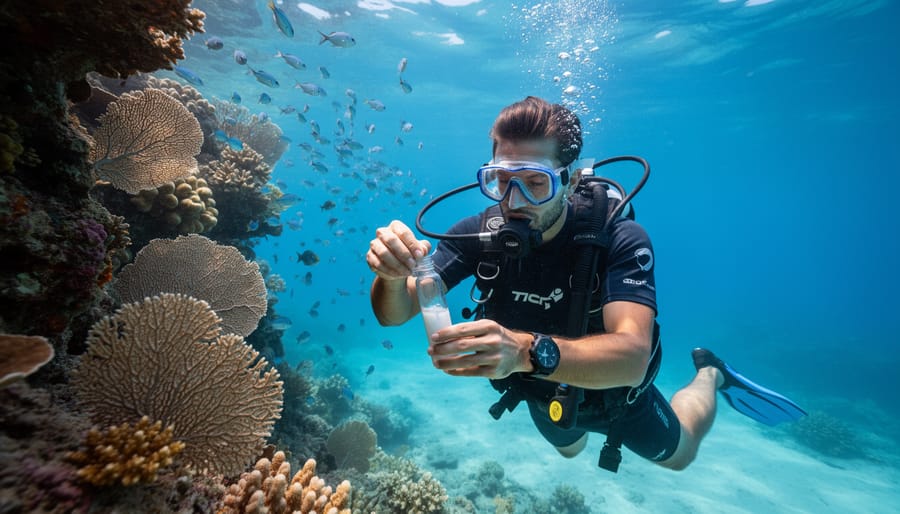
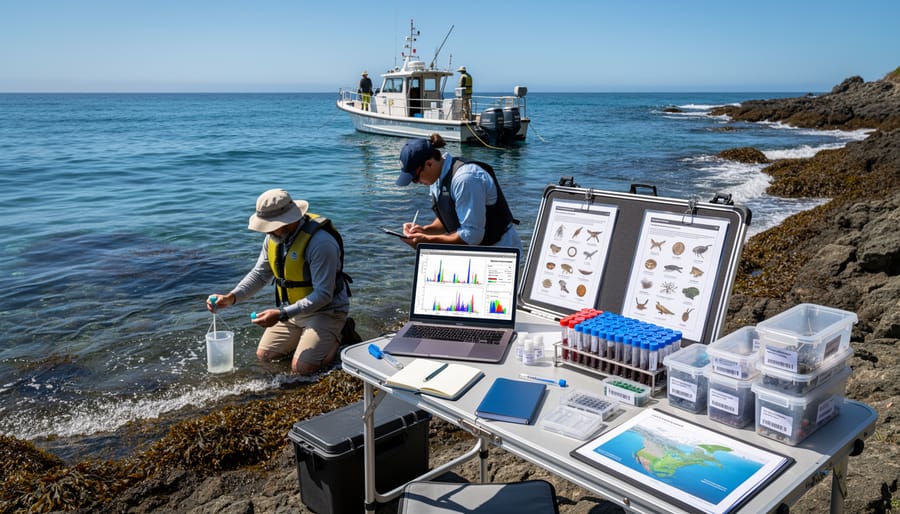
Scientists collect genetic material from the ocean in ways that range from traditional sampling aboard research vessels to cutting-edge methods that require no direct contact with animals. On coral reefs, divers gather tissue samples from fish or coral polyps using small biopsies that cause minimal harm. In the deep sea, remotely operated vehicles retrieve specimens or sediment cores from the seafloor, often thousands of meters below the surface. Water column sampling involves filtering seawater at various depths to capture plankton, microbial communities, and cellular debris that all carry genetic signatures.
The real revolution in marine sample collection is marine eDNA analysis. Every organism sheds genetic material into its environment through skin cells, mucus, feces, and gametes. Scientists can filter a few liters of seawater and extract this environmental DNA to detect which species are present without ever seeing or capturing them. This non-invasive eDNA surveillance works equally well in murky coastal waters and remote polar regions, making it possible to monitor endangered species, track invasive organisms, and assess biodiversity across habitats that are difficult or expensive to access. Once collected, samples are preserved in specialized buffers or flash-frozen, then shipped to labs where the DNA extraction and sequencing process begins.
Decoding the Data: Sequencing and Analysis
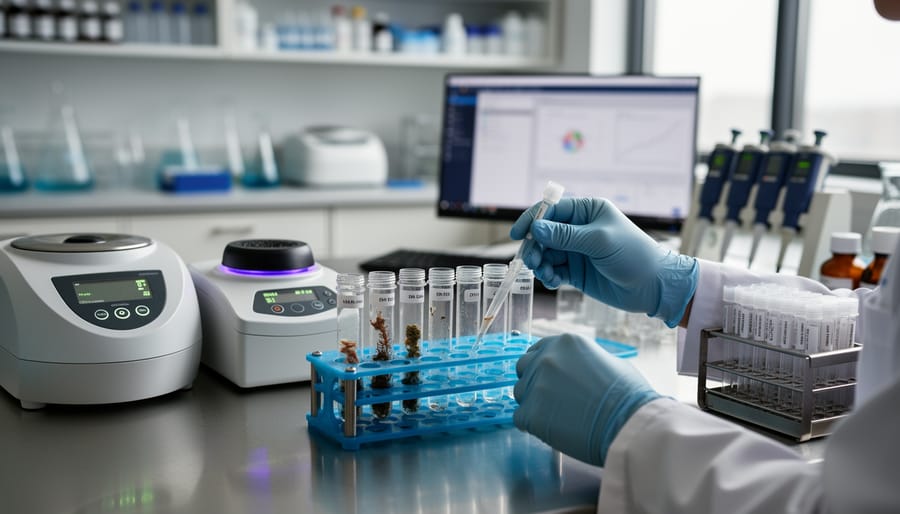
Once marine samples reach the laboratory, the real detective work begins. Scientists extract DNA or RNA from the collected material, then use powerful sequencing machines to read the genetic code letter by letter. These machines generate massive amounts of raw data, billions of individual DNA sequences that look like strings of A’s, T’s, G’s, and C’s. Without sophisticated computational tools, this flood of information would be meaningless.
The raw sequences must pass through a next-generation sequencing analysis pipeline that filters out errors, assembles short fragments into longer stretches, and identifies which genes are present. Bioinformatics software compares these sequences against massive reference databases to determine which species or genetic variants are in the sample. For well-studied organisms like certain fish species, this matching happens quickly. For newly discovered deep-sea creatures, researchers may find genes that have never been documented before.
But identifying genes is only half the story. Functional genomics takes the analysis deeper by revealing what those genes actually do. Scientists examine gene expression patterns, which genes are turned on or off in response to specific conditions like temperature stress or pollution exposure. They look at how genes are regulated, how proteins are produced, and how entire metabolic pathways respond to environmental changes. This functional layer transforms a static genetic blueprint into a dynamic picture of how marine organisms survive, adapt, and interact with their environment. It’s the difference between having a parts list for a car and understanding how the engine runs.
Main Branches of Marine Genomics Research
Comparative and Evolutionary Genomics
Comparing genomes across different marine species works like examining blueprints from related buildings to understand their shared design principles and unique innovations. Scientists sequence and analyze DNA from various ocean organisms, from sea urchins to seahorses, to trace how species evolved and adapted to different marine environments. This approach has revealed that seemingly unrelated species often develop similar genetic solutions to shared challenges. For example, studies of invertebrate genomes show that corals and jellyfish independently evolved genes for symbiotic relationships with algae. By mapping these evolutionary patterns, researchers identify which genetic changes allowed organisms to colonize extreme environments like hydrothermal vents or polar seas. This knowledge helps predict which modern species might possess the genetic toolkit to survive changing ocean conditions, directly informing conservation priorities and restoration efforts focused on climate-resilient populations.
Population Genomics for Conservation
Population genomics zooms in on genetic diversity within a single species, revealing invisible fault lines that can spell the difference between survival and collapse. By sequencing DNA from individuals across a species’ range, scientists map which populations are genetically unique, how much variation remains in their gene pool, and whether isolated groups risk the silent spiral of inbreeding. For endangered marine species like vaquita porpoises or certain sea turtle populations, this information is critical. Breeding programs can pair individuals to maximize genetic diversity and avoid crossing closely related animals, preventing inbreeding with genomics has saved terrestrial species from extinction and the same tools now guide marine recovery efforts. Population genomics also identifies management units: a coral species spread across thousands of miles might actually consist of several genetically distinct groups that don’t interbreed, each requiring separate protection. Managers use these genetic blueprints to decide where to establish marine protected areas and which populations most need intervention before their diversity, and resilience, slips away.
Metagenomics and Ecosystem Health
Metagenomics takes a radically different approach by examining all genetic material in an ocean sample at once, revealing entire microbial ecosystems invisible to traditional methods. Instead of isolating individual organisms, scientists sequence DNA from a liter of seawater and catalog thousands of bacterial, archaeal, and viral species simultaneously. This collective genomic snapshot shows not just what species live there, but what metabolic functions the community performs, nitrogen cycling, carbon storage, pollutant breakdown, making it a powerful diagnostic tool for ocean health.
Recent metagenomic surveys have revealed that marine microbes drive critical planetary processes, from oxygen production to climate regulation. When these communities shift in composition or lose functional diversity, it signals ecosystem stress long before larger organisms show impact. Researchers now use metagenomic baselines to detect early warnings of coral bleaching, track harmful algal blooms, and assess recovery after oil spills, transforming how we monitor and respond to marine environmental change.
Functional Genomics: Understanding What Genes Do
Functional genomics takes marine research beyond cataloging genes to understanding how they actually work in living ocean organisms. This branch examines gene expression, which genes switch on or off under different conditions, and how organisms regulate these genetic responses to survive environmental challenges.
When a coral encounters warming waters, for example, functional genomics reveals which heat-shock proteins activate, how quickly the response occurs, and whether genetic variation exists that could support adaptation. Scientists measure gene activity levels in real time, tracking how marine species respond to acidification, pollution, or changing salinity.
These insights prove invaluable for conservation. By identifying which populations carry stress-tolerance genes, managers can prioritize protected breeding stocks or select resilient individuals for restoration projects. Functional genomics has revealed, for instance, that some oyster populations possess genes enabling survival in polluted estuaries, genetic assets worth preserving.
The approach also uncovers unexpected capabilities. Researchers studying Antarctic fish discovered antifreeze protein genes that activate at specific temperatures, knowledge now informing predictions about climate adaptation potential across polar species.
How Marine Genomics Is Applied in Conservation and Beyond
Protecting Endangered Marine Species
Genomic tools have become essential weapons in the fight to save endangered marine species from extinction. When scientists analyzed vaquita porpoises, fewer than 20 remain in the Gulf of California, genetic sequencing revealed surprisingly high genetic diversity despite the tiny population, suggesting the species could recover if threats were removed quickly. This kind of insight, impossible without DNA mapping directly shapes emergency conservation strategies.
Population genomics has identified distinct genetic groups within species once thought uniform, changing protection priorities overnight. In the Mediterranean, researchers discovered that loggerhead sea turtles nesting on different beaches represent genetically unique populations requiring separate management plans. Mixing them in captive breeding would dilute rare genetic adaptations developed over millennia.
Genomics also fights illegal wildlife trade. Enforcement officers now use rapid DNA tests to confirm whether seized seafood came from protected species or legal substitutes, closing loopholes that traders exploited for decades. In one operation, genetic analysis proved that “sustainable swordfish” sold across Europe actually came from endangered Mediterranean populations. The evidence led to prosecutions and policy changes requiring DNA verification for high-risk species at ports of entry.
Climate Change and Adaptation Research
Climate change is reshaping ocean ecosystems at an unprecedented pace, and functional genomics is revealing which species carry the genetic toolkit to survive. By analyzing gene expression patterns in response to heat stress, researchers have identified specific heat shock proteins and metabolic pathways that allow some corals to tolerate warming waters better than others. These findings directly inform which coral genotypes to prioritize for reef restoration projects, creating “climate-resilient” nurseries that stand a better chance in tomorrow’s oceans.
Ocean acidification research follows similar principles. Scientists examine genes responsible for calcification in shellfish and corals, discovering that certain populations express protective variants that maintain shell formation even as seawater pH drops. This genetic screening helps hatcheries select broodstock with acidification resistance, ensuring commercial and conservation aquaculture programs breed hardier animals.
The insights extend beyond individual stress responses. Functional genomics maps the complex genetic networks underlying warming ocean evolution showing how fish species adjust oxygen transport genes for low-oxygen zones, or how phytoplankton modify photosynthetic machinery for changing light conditions. These adaptation signatures tell restoration managers which source populations possess the genetic diversity needed for long-term resilience, transforming genomic data into actionable conservation strategy that anticipates future climate scenarios rather than simply preserving the past.
Sustainable Use of Marine Genetic Resources
Marine genomics has opened doors to remarkable biotechnological innovations. Cone snail venom peptides became Ziconotide, a powerful painkiller 1,000 times stronger than morphine. Compounds from marine sponges now form the backbone of several cancer treatments, while bacteria from deep-sea hydrothermal vents provide heat-stable enzymes used in industrial processes from detergent manufacturing to biofuel production.
The ocean’s genetic library holds immense promise. Scientists estimate we’ve explored less than one percent of marine microorganisms for their biochemical potential. Functional genomics accelerates this discovery by identifying genes responsible for producing useful compounds, allowing researchers to replicate them without harvesting wild organisms.
Yet this potential raises critical ethical questions. Who benefits when a molecule discovered in international waters becomes a billion-dollar drug? The Nagoya Protocol attempts to ensure fair sharing of benefits arising from genetic resources, requiring researchers to obtain consent from countries in whose waters they collect samples. However, enforcement remains challenging, particularly for organisms found in areas beyond national jurisdiction.
Sustainable use means balancing innovation with conservation. Non-destructive sampling methods, synthetic biology approaches that reduce harvesting pressure, and equitable benefit-sharing frameworks help ensure marine genomic discoveries serve both scientific progress and the communities whose waters yielded them.
Why Marine Genomics Matters for Our Ocean’s Future
Marine genomics has moved beyond the lab to become a critical tool for ocean conservation at a time when we desperately need it. With coral reefs bleaching at unprecedented rates, fish populations collapsing, and entire ecosystems shifting due to warming waters, decision-makers can’t afford to rely on guesswork. Genomic data provides the precision needed to identify which populations are genetically distinct enough to warrant protection, which individuals carry genes for climate resilience, and where to focus limited conservation resources for maximum impact.
This knowledge transforms how we design marine protected areas. Instead of drawing boundaries based solely on geography or political convenience, managers can now use population genomics to ensure protected zones actually safeguard genetically unique groups. When planning coral restoration projects, functional genomics reveals which colonies have heat-tolerant gene variants, allowing scientists to propagate individuals most likely to survive future warming. Fisheries management benefits too, genetic analysis can distinguish separate stocks that need independent quotas, preventing the collapse of one population while another appears healthy in aggregate data.
Yet significant gaps remain. We have sequenced thousands of terrestrial genomes but barely scratched the surface of ocean biodiversity. Deep-sea organisms, polar species, and the vast majority of marine microbes remain genomic black boxes. Many nations lack the infrastructure for genomic research, creating data deserts in biodiversity hotspots. International collaboration is essential, sharing samples, datasets, and expertise across borders, but complicated by questions of who owns marine genetic resources and how benefits should be distributed.
The clock is ticking. Species are disappearing before we’ve even catalogued their genes, taking potential climate solutions and medical discoveries with them. Building a comprehensive genomic atlas of ocean life isn’t just an academic exercise. It’s the foundation for every conservation decision we’ll make in the coming decades, from which species to prioritize in breeding programs to how we’ll help marine ecosystems adapt to a changing planet.
Getting Involved: Opportunities in Marine Genomics Conservation
You don’t need a PhD to contribute to marine genomics research. Right now, dozens of citizen science projects need volunteers to collect water samples for eDNA analysis. Programs like NOAA’s Mussel Watch and various university-led initiatives train participants to gather samples from local beaches, estuaries, or dive sites using simple collection kits. The samples you collect help scientists map species distributions, track invasive species, and monitor biodiversity changes, data that feeds directly into conservation decisions.
Research institutions and marine labs regularly seek volunteers for genomics-related fieldwork and lab support. Tasks range from assisting with sample processing to managing databases of genetic information. The Marine Biological Laboratory at Woods Hole, Scripps Institution of Oceanography, and similar centers offer internships and volunteer positions that provide hands-on experience with genomic technologies. Some programs accept remote volunteers to help with data verification or literature reviews.
Educational pathways are expanding too. Online courses in bioinformatics and genomics basics are increasingly accessible, many offered free through platforms partnered with marine research institutions. If you’re a student or career-changer, look for summer programs at marine science centers that combine genomics training with conservation fieldwork.
Dr. Yuki Tanaka, a marine geneticist studying coral resilience, started as an undergraduate volunteer sorting plankton samples. “I never imagined that tedious work would lead me to discover heat-resistant gene variants in corals,” she recalls. “Now those findings inform which corals we prioritize for reef restoration. Small contributions create ripples.”
Our center’s e-network connects aspiring marine genomics enthusiasts with researchers, project alerts, and skill-building workshops. Members receive updates about sample collection events in their regions and opportunities to analyze real genomic datasets under expert guidance. Whether you can commit one weekend or ongoing participation, your involvement advances the science protecting our ocean’s genetic diversity.
Common Questions About Marine Genomics
Marine genomics raises important questions for anyone curious about how this science works and what it means for ocean conservation. Here are answers to some of the most common queries we hear from students, volunteers, and conservation supporters.
How is marine genomics different from studying genetics on land?
Marine genomics faces unique challenges including vast distances, extreme environments like deep-sea trenches, and the difficulty of accessing many species without disturbing them. Ocean organisms also show extraordinary genetic diversity and adaptations not found in terrestrial life, from pressure-resistant proteins to bioluminescence genes, requiring specialized analytical approaches.
Can genomics actually save endangered marine species?
Yes, genomic tools have already contributed to species recovery by identifying genetically distinct populations that need separate protection, guiding breeding programs to maintain genetic diversity, and detecting illegal wildlife trade. While genomics is one tool among many, it provides critical information that traditional observation alone cannot reveal.
What happens to genetic data after it’s collected?
Genomic data is typically stored in international databases like GenBank where researchers worldwide can access it, accelerating discovery while raising important questions about who benefits from marine genetic resources. Many countries now require benefit-sharing agreements, especially for commercially valuable discoveries, and ethical guidelines govern how indigenous knowledge and territorial waters are respected.
Is marine genomics research expensive?
Costs have dropped dramatically over the past decade. DNA sequencing that cost millions in the early 2000s now runs a few hundred dollars per sample, making genomic tools accessible to smaller research institutions and conservation organizations. However, the computational analysis and expertise required still represent significant investments.
How long does it take to get results from genomic analysis?
The timeline varies by project scope. Basic species identification from eDNA samples can return results in weeks, while comprehensive genome sequencing and functional analysis of a new species might take months to years. Advances in sequencing speed and bioinformatics continue to shorten these timelines.
Can non-scientists contribute to marine genomics research?
Absolutely. Citizen science projects now train volunteers to collect water samples for eDNA analysis, log observations that help researchers target sampling locations, and even assist with data processing tasks. These contributions expand the geographic and temporal scope of research far beyond what professional scientists could achieve alone.
Understanding that genomics complements rather than replaces traditional conservation methods is key. A researcher might use acoustic monitoring to track whale populations, then apply genomic analysis to understand their breeding patterns and genetic health. Visual surveys identify coral bleaching, while functional genomics reveals which coral genotypes carry heat-resistant genes worth preserving for restoration. The most effective conservation strategies integrate multiple approaches, with genomics providing a genetic perspective that makes other tools more powerful.
The field continues evolving rapidly. Techniques that seemed cutting-edge five years ago are now standard, and costs keep falling. This democratization means more organizations can incorporate genomic tools into their conservation work, whether managing a local marine protected area or coordinating international species recovery efforts.
Marine genomics has emerged as one of our most powerful tools for understanding and protecting ocean life at a time when we need it most. With coral reefs bleaching, fish populations declining, and entire ecosystems shifting under climate pressure, the ability to read the genetic blueprints of marine species gives us unprecedented insight into how organisms adapt, survive, and interconnect. This knowledge transforms conservation from guesswork into precision, helping us identify which populations need protection, which corals can withstand warming waters, and which restoration strategies will actually work.
The ocean covers seventy percent of our planet, yet we’ve sequenced the genomes of only a tiny fraction of its inhabitants. Every genetic discovery opens new possibilities for targeted protection, sustainable management, and even medical breakthroughs that benefit humanity while preserving biodiversity. The challenges are real, underfunded research programs, vast data gaps, fragile deep-sea ecosystems we’ve barely begun to study, but the momentum is building.
You don’t need a PhD to be part of this scientific revolution. Citizen scientists are collecting eDNA samples from local beaches. Volunteers are supporting genomics labs and field expeditions. Educators are bringing these discoveries into classrooms, inspiring the next generation of marine biologists. Whether you contribute data, time, or simply stay informed about how genomics is reshaping conservation, your engagement matters. The ocean’s genetic library holds answers we desperately need, and together, we can ensure those answers lead to meaningful protection for the marine world we all depend on.

jessica
Ava Singh is an environmental writer and marine sustainability advocate with a deep commitment to protecting the world's oceans and coastal communities. With a background in environmental policy and a passion for storytelling, Ava brings complex topics to life through clear, engaging content that educates and empowers readers. At the Marine Biodiversity & Sustainability Learning Center, Ava focuses on sharing impactful stories about community engagement, policy innovations, and conservation strategies. Her writing bridges the gap between science and the public, encouraging people to take part in preserving marine biodiversity. When she’s not writing, Ava collaborates with local initiatives to promote eco-conscious living and sustainable development, ensuring her work makes a difference both on the page and in the real world.