Marine Biodiversity Science Center

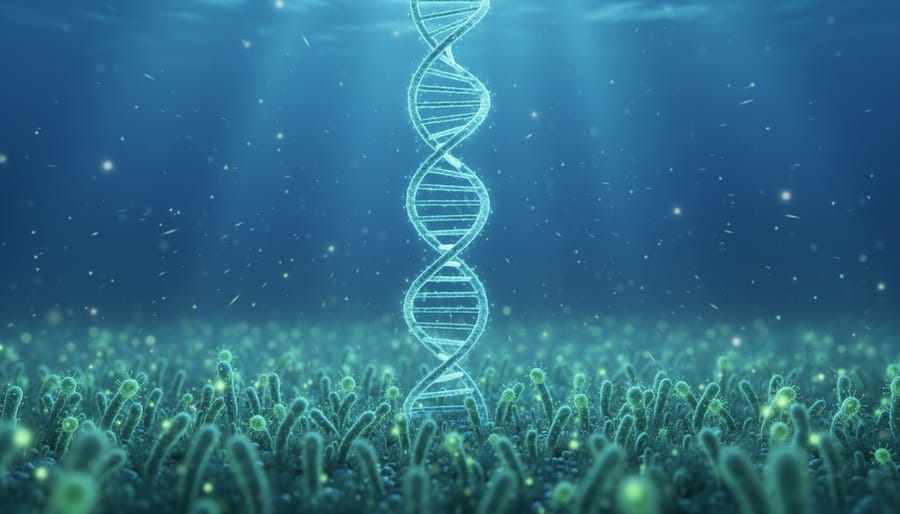
Viral genetic material refers to the DNA or RNA carried by viruses, and in the ocean, this invisible genetic code represents one of the most abundant biological entities on Earth. Every drop of seawater contains millions of viral particles, collectively holding more genetic diversity than all other marine life combined. These microscopic packages of nucleic acids don’t just float aimlessly. They actively shape marine ecosystems by infecting bacteria, algae, and other microorganisms, controlling population dynamics and driving nutrient cycling across entire ocean basins.
Understanding viral genetic material has revolutionized how we view ocean health and function. When viruses infect and destroy marine microbes through a process called lysis, they release nutrients back into the water, fueling the growth of phytoplankton that produce roughly half the oxygen we breathe. This viral shunt, as scientists call it, redirects carbon and nutrients through the marine food web in ways we’re only beginning to comprehend.
The implications stretch far beyond academic curiosity. Researchers now use viral genetic signatures to track ocean health, monitor harmful algal blooms, and even discover novel enzymes for biotechnology applications. Marine biologists working in waters from tropical reefs to polar seas are finding that viral communities respond rapidly to environmental changes, making them valuable indicators of ecosystem stress.
What makes viral genetic material particularly fascinating is its role as an evolutionary catalyst. Viruses transfer genes between different marine organisms, accelerating adaptation and creating genetic combinations that would otherwise take millennia to evolve naturally.
What Viral Genetic Material Actually Is
At its core, viral genetic material is the instruction manual that allows viruses to reproduce and function. Every virus, whether it infects a whale, a microscopic plankton, or a bacterium, carries this genetic blueprint inside a protective protein shell. Unlike the cells that make up animals, plants, and microbes, viruses are stripped-down entities. They lack the complex machinery needed to produce energy, build proteins, or create copies of themselves. Instead, they carry only the essential genetic information, encoded in either DNA or RNA, that hijacks a host cell’s resources to manufacture new viral particles.
Think of viral genetic material as a recipe that can only be prepared in someone else’s kitchen. The virus provides the instructions, but the host cell supplies the ingredients, cooking equipment, and energy. Once inside a host, the viral genetic material takes control, redirecting the cell’s normal functions to produce viral components. These components then assemble into new viruses, which eventually burst out to infect other cells.
- Viral genome
- The complete set of genetic instructions contained within a virus, encoding everything needed for replication and infection. In marine viruses, genomes range from just a few genes to hundreds.
- Nucleic acids
- The chemical molecules (DNA or RNA) that store genetic information. Marine viruses use various forms, including single-stranded RNA, double-stranded DNA, and more exotic configurations.
- Capsid
- The protective protein shell surrounding viral genetic material. This structure determines which host cells a virus can infect and protects the genome in harsh ocean conditions.
- Host cell
- The living cell that a virus infects and uses for replication. In marine environments, hosts range from bacteria and archaea to phytoplankton and fish.
- Bacteriophage
- A virus that specifically infects bacteria, representing the most abundant type of virus in ocean ecosystems. Marine bacteriophages shape microbial communities and drive nutrient cycling.
Marine environments harbor viruses with remarkably diverse genetic material. Some carry double-stranded DNA genomes similar to what we find in human cells, while others use single-stranded RNA that mutates rapidly. Still others employ unusual genetic configurations rarely seen elsewhere. This diversity reflects the extraordinary range of hosts available in ocean ecosystems and the evolutionary pressure to exploit every possible ecological niche. The type of genetic material a virus carries influences how quickly it evolves, how it interacts with hosts, and ultimately, its role in shaping marine biodiversity.
Marine Viromes: The Ocean’s Invisible Genetic Library
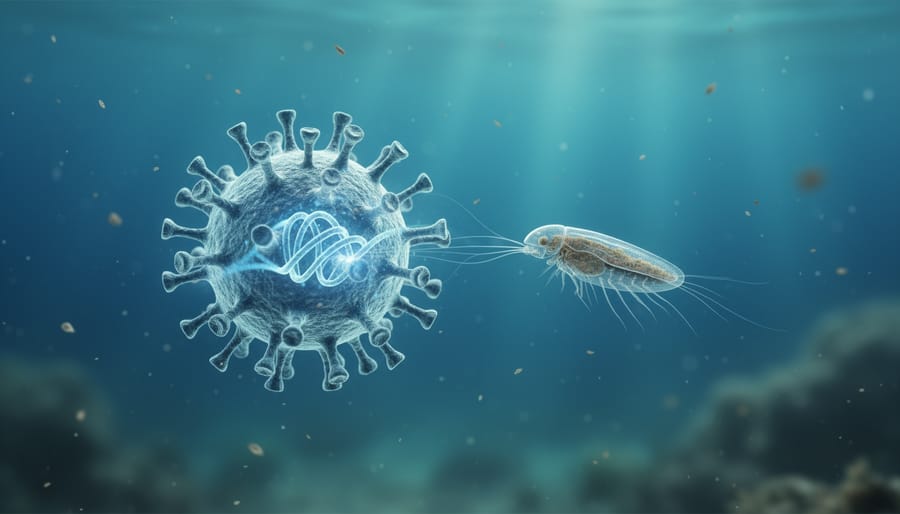
The Scale of Marine Viral Diversity
The ocean harbors roughly 10 million viruses in seawater per milliliter. To put that in perspective, a single drop contains more viral particles than there are people on Earth. These numbers mean that in any given cubic meter of seawater, there are more viruses than stars in the Milky Way galaxy.
This staggering abundance translates directly to ecosystem impact. Every second, viruses collectively infect approximately 20% of all marine bacteria, releasing dissolved organic matter that fuels the microbial loop and supports larger food webs. Without this constant viral activity, nutrients would remain locked inside bacterial cells rather than circulating through ocean systems.
Viral communities vary dramatically across ocean regions. Surface waters in tropical regions teem with different viral assemblages than polar seas, each adapted to local host populations and environmental conditions. Descend into the deep ocean, and you’ll find entirely distinct viral communities thriving in the cold, high-pressure darkness of the abyssal zone.
Depth matters too. Viral abundance typically peaks in surface waters where sunlight drives photosynthetic microbes, then declines with depth. Yet even at 4,000 meters down, millions of viral particles persist in every milliliter, quietly shaping microbial communities we’re only beginning to catalog.
How Scientists Map Viral Genetic Resources
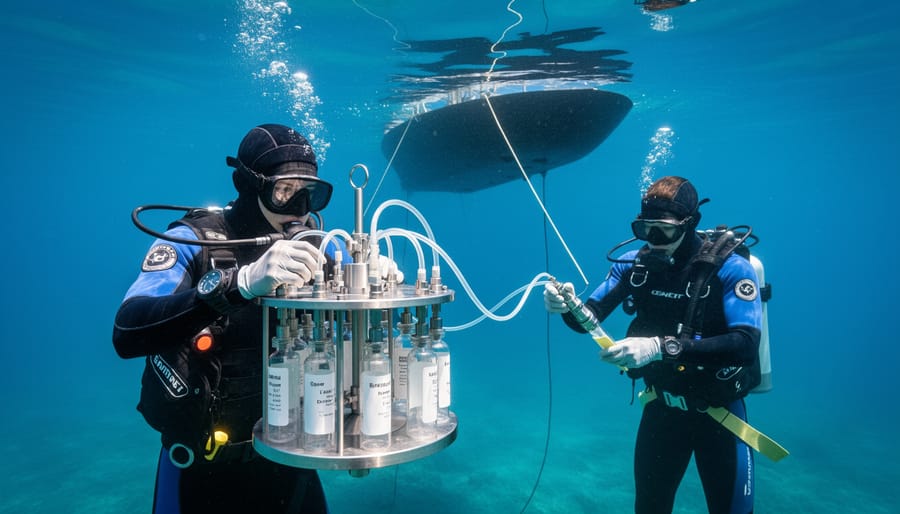
Scientists today catalog marine viral genetic material using metagenomic sequencing, a technique that reads all the DNA and RNA present in a water sample without needing to grow individual viruses in a lab. Researchers filter seawater to capture viral particles, extract their genetic material, then sequence millions of fragments simultaneously. Sophisticated algorithms piece these fragments together into viral genomes, much like assembling a jigsaw puzzle from billions of tiny pieces.
This approach has transformed our understanding. A decade ago, scientists had identified maybe a few thousand marine viruses. By 2022, the Global Ocean Virome dataset had cataloged nearly 200,000 distinct viral populations. Similar to how eDNA genetic fingerprints reveal which animals inhabit an area, viral metagenomics exposes the hidden microbial conflicts and partnerships shaping ocean chemistry.
Recent expeditions have sampled everywhere from Arctic sea ice to hydrothermal vents. Dr. Elena Rodriguez, a marine virologist with the Marine Biodiversity Science Center, recalls collecting samples off Newfoundland during a winter storm: “We were hauling up water from 2,000 meters down, hands numb, and I remember thinking, each of these bottles contains more genetic information than we could analyze in a year. The sequencing revealed viral genomes we’d never seen before, including some that infect keystone bacteria in the North Atlantic food web.”
These efforts complement broader work in mapping ocean DNA building a comprehensive genetic atlas of marine life. Machine learning now helps identify viral signatures in datasets, accelerating discovery and revealing connections between viral diversity and ocean health that were invisible just years ago.
Why Viral Genetic Material Matters for Marine Ecosystems
Controlling Microbial Populations
Viruses act as invisible population controllers in marine ecosystems through what scientists call the viral shunt mechanism. When a virus infects a bacterial cell, it hijacks the cell’s machinery to replicate itself. Eventually, the cell bursts open, a process called lysis, spilling its contents and newly formed viral particles into the surrounding water. This violent but essential cycle releases organic matter that would otherwise remain locked inside bacterial bodies.
The released material doesn’t go to waste. Dissolved organic compounds become available to other marine microbes that might not have accessed those nutrients otherwise. Think of it as recycling at the microscopic level: what was once part of a thriving bacterium becomes food for the next generation of organisms. This constant turnover prevents any single bacterial species from monopolizing resources and outcompeting all others.
The biodiversity implications are profound. Without viral predation, fast-growing bacterial species would dominate entire ocean regions, creating biological deserts where few other organisms could thrive. Instead, viruses preferentially target the most abundant species, the “kill the winner” dynamic, keeping populations in check and maintaining space for diverse microbial communities. This diversity cascades upward through the food web, ultimately supporting the fish, marine mammals, and seabirds we more readily recognize as ocean life.
Driving Evolution Through Gene Transfer
Viruses act as microscopic shuttles, ferrying genes between unrelated marine organisms through a process called horizontal gene transfer. Unlike the vertical inheritance we typically think of, parents passing DNA to offspring, this lateral exchange allows bacteria, archaea, and even eukaryotic plankton to acquire entirely new capabilities in a single generation. When a marine virus infects a host cell, it occasionally packages fragments of that host’s DNA alongside its own genetic material. Upon infecting the next host, the virus may inadvertently deliver these borrowed genes, which can then integrate into the recipient’s genome.
This DNA sharing mechanism drives evolution at speeds natural selection alone cannot match. A bacterium that acquires antibiotic resistance genes or photosynthesis machinery through viral transfer gains immediate survival advantages without waiting for random mutations. In marine environments, scientists have documented viruses transferring genes for phosphorus metabolism, allowing microbes to thrive in nutrient-poor waters. Other transferred genes help hosts tolerate changing temperatures or resist toxic compounds.
The implications ripple through entire food webs. When viruses enhance the metabolic versatility of primary producers like cyanobacteria, they indirectly affect everything that depends on these organisms. This constant genetic shuffling creates what some researchers call an “evolutionary arms race,” where both viruses and their hosts continuously adapt, driving the remarkable biochemical diversity we find in ocean microbes today.
Influencing Carbon and Nutrient Cycles
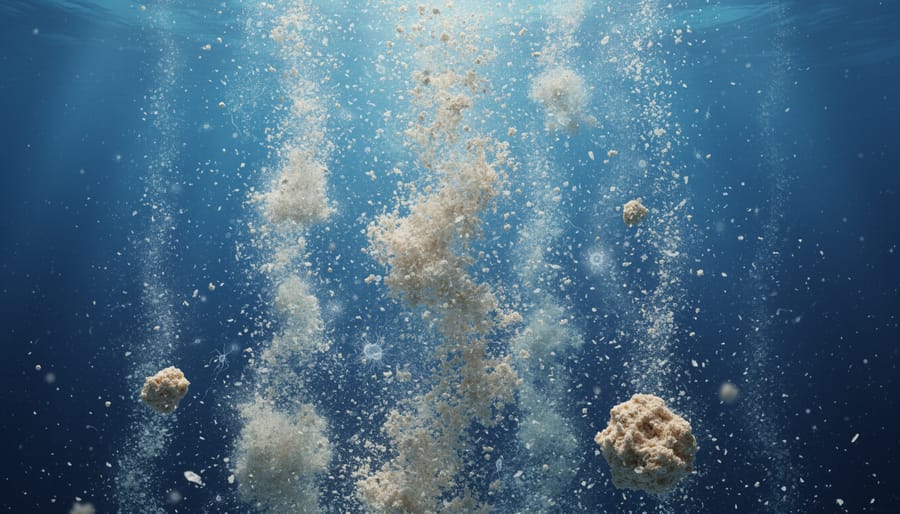
Viral genetic material drives processes that ripple through the entire planet’s carbon budget. When marine viruses infect and lyse microbial cells, they release dissolved organic matter into the surrounding water, a process that fundamentally alters how carbon moves through ocean systems. This “viral shunt” redirects carbon that would otherwise climb the food web into dissolved form, where it fuels bacterial production rather than feeding larger organisms. The result? A significant portion of oceanic carbon remains in the surface waters longer, affecting both biological productivity and atmospheric exchange.
The scale matters for climate. Scientists estimate that viral lysis releases roughly 150 gigatons of carbon annually in marine environments, influencing whether that carbon gets sequestered in deep ocean reservoirs or returns to the atmosphere. Different viral genetic strategies, lytic versus lysogenic cycles, host range variations, mean different outcomes for carbon storage. A virus that targets fast-sinking phytoplankton, for instance, can reduce the efficiency of the biological pump that transports carbon to the ocean floor.
Understanding these viral mechanisms isn’t just academic curiosity. Climate models increasingly incorporate microbial processes, yet viral impacts remain poorly quantified. As ocean temperatures rise and chemistry shifts, viral community composition changes too. We’re essentially watching real-time alterations to the genetic machinery controlling planetary nutrient cycles, with consequences we’re only beginning to map.
Viral Genetic Resources as Biotechnology Tools
The ocean’s viral genetic reservoir isn’t just an ecological marvel, it’s a treasure trove of biological innovation with practical applications that reach far beyond marine science. Researchers worldwide are mining marine viral genetic material for solutions to human challenges, from developing new medicines to creating industrial enzymes and even improving conservation tools.
Marine viruses have evolved in Earth’s most demanding environments for billions of years, producing enzymes and genetic mechanisms that function under extreme pressure, temperature, and salinity. These specialized proteins often outperform their terrestrial counterparts in laboratory and industrial settings. Thermostable polymerases isolated from viruses in hydrothermal vent systems, for instance, have revolutionized molecular biology techniques, enabling DNA amplification at temperatures that would destroy conventional enzymes. Similarly, cold-adapted viral enzymes from Arctic waters show promise for industrial processes that require low-temperature catalysis, reducing energy costs in manufacturing.
The medical potential of marine viral genetic resources is particularly compelling. Scientists are studying viral-derived antimicrobial peptides that could address antibiotic resistance, one of medicine’s most urgent crises. Some marine bacteriophages produce compounds that selectively target harmful bacteria while leaving beneficial microbes intact, a precision that standard antibiotics can’t match. Researchers have also identified unique gene-editing mechanisms in marine viruses that may expand our CRISPR toolkit, offering more precise ways to correct genetic diseases.
Beyond medicine, marine viral genetic material is informing conservation biotechnology itself. Understanding how viruses regulate microbial populations in healthy ecosystems helps scientists develop bioaugmentation strategies for degraded marine habitats. Viral-inspired methods for controlling harmful algal blooms are being tested as alternatives to chemical treatments that damage non-target species.
This exploration of viral genetic resources raises important ethical questions about equitable access and benefit-sharing. International frameworks like the Nagoya Protocol attempt to ensure that countries providing genetic resources receive fair compensation when commercial applications emerge. As we discover more about marine viral diversity, the conservation community must balance the promise of biotechnological breakthroughs with the imperative to protect source ecosystems and share benefits globally.
The key lies in what researchers call “bioprospecting with a conscience”, studying marine viral genetic material in ways that fund and advance ocean conservation rather than exploiting it. When pharmaceutical companies partner with marine research institutions, and when revenues from viral-derived technologies support habitat protection, we create a virtuous cycle where economic value reinforces ecological preservation.
Threats to Marine Viral Diversity
Ocean warming stands as one of the most direct threats to marine viral communities. As temperatures rise, they alter the metabolic rates of both viruses and their microbial hosts, disrupting the delicate balance that has evolved over millennia. Warmer waters can shift which viral strains dominate, potentially causing cascades through entire food webs. In some regions, we’re observing viral communities that no longer resemble their historical baselines, a transformation happening faster than scientists can document it.
Ocean acidification compounds these challenges by stressing host organisms, particularly those with calcium carbonate structures. When hosts weaken, their interactions with viruses change. Some viral infections intensify under acidic conditions, while others become less efficient. We’re only beginning to understand these dynamics, yet we’re already banking ocean genetic material from threatened ecosystems before these relationships disappear entirely.
Pollution introduces another layer of disruption. Chemical contaminants, plastics, and excess nutrients alter microbial community structure, which in turn reshapes viral populations that depend on those hosts. Oil spills can decimate entire viral assemblages in affected waters. Agricultural runoff creates dead zones where hypoxia transforms the viral landscape. Each pollutant creates a different selective pressure, favoring some viral lineages while eliminating others.
Habitat destruction through coastal development, bottom trawling, and dredging physically removes the environments where specific viral communities thrive. When we destroy a coral reef or seagrass meadow, we don’t just lose the visible organisms, we erase the unique viral genetic resources associated with those ecosystems.
The precautionary principle becomes critical here. We’re driving changes to viral diversity at unprecedented rates while possessing only fragmentary knowledge of what these communities do. Genetic sequences vanishing today might have held solutions to problems we haven’t yet encountered. Each lost viral lineage represents evolutionary information accumulated over millions of years, erased before we could read its contents.
Conservation and Sustainable Management of Viral Genetic Resources
Protecting marine viral diversity requires a shift in how we think about ocean conservation. Traditionally, conservation efforts focus on charismatic megafauna or coral reefs, but safeguarding the genetic blueprints within viral communities is equally critical for ecosystem resilience. Marine protected areas (MPAs), long established for fish stocks and habitat preservation, now serve an additional role: they buffer viral communities from anthropogenic stressors like bottom trawling, chemical pollution, and thermal stress. Research shows that MPAs with robust microbial baselines maintain more stable viral populations, which in turn supports healthier food webs. Expanding MPA coverage, particularly in biodiversity hotspots where viral endemism is high, helps preserve genetic resources we haven’t yet cataloged.
International frameworks are beginning to catch up. The Nagoya Protocol, part of the Convention on Biological Diversity, governs access to genetic resources and ensures that benefits from their use are shared fairly with the countries providing them. While originally focused on terrestrial and shallow-water species, the protocol increasingly applies to marine viromes, especially as biotechnology companies prospect ocean viral genes for pharmaceutical and industrial applications. This legal structure matters: it discourages bio-piracy and incentivizes nations to protect their marine genetic heritage rather than exploit it short-term. Countries with rich viral diversity, from the Coral Triangle to polar seas, are now asserting sovereignty over these resources, requiring permits and benefit-sharing agreements for sample collection.
Effective conservation also means reducing the broader stressors that destabilize viral communities. Curbing greenhouse gas emissions slows ocean warming and acidification, both of which shift viral-host dynamics in unpredictable ways. Limiting nutrient runoff from agriculture prevents harmful algal blooms that cascade through microbial networks, altering which viruses thrive. Restricting plastic pollution matters too: microplastics create novel surfaces for viral attachment and may facilitate gene transfer in ways that disrupt natural processes. These actions aren’t specific to viruses alone, but they create conditions where viral genetic diversity can persist alongside the host organisms they depend upon. Conservation isn’t just about setting aside water; it’s about maintaining the chemical, thermal, and biological stability that microbial and viral communities need to function.
How You Can Support Marine Virome Research and Conservation
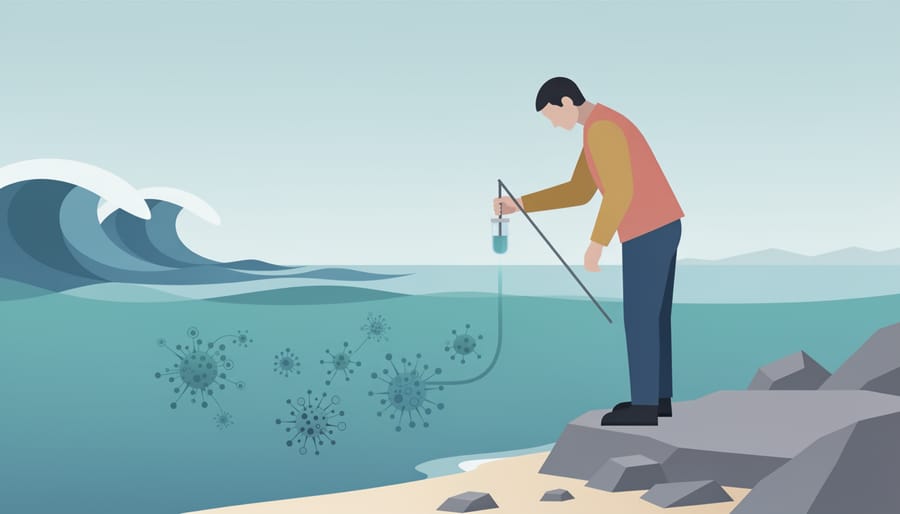
Understanding the importance of marine viral genetic material is only the first step. The next is taking action to support the research and conservation efforts that protect these invisible ecosystems.
The Marine Biodiversity Science Center offers several ways to get involved directly. Volunteer opportunities range from assisting with laboratory sample processing to participating in coastal sampling expeditions where scientists collect seawater for viral community analysis. No advanced degree is required for many roles, just curiosity and commitment. Past volunteers have helped catalog specimens, maintain equipment, and even contribute to data analysis under scientist supervision.
“I started volunteering because I wanted hands-on marine conservation work,” says Jordan Chen, a high school teacher who now dedicates weekends to the center. “Learning that viruses are essential to ocean health completely changed how I teach ecology. Now I bring that perspective back to my classroom.”
Educational programs provide another avenue for impact. The center runs workshops for teachers, curriculum development support for schools integrating marine science, and public seminars explaining current virome research. These programs help spread awareness that protecting ocean genetic resources means safeguarding biodiversity at every scale.
Beyond direct participation, supporting science-informed policy matters enormously. Contact elected representatives to advocate for expanded marine protected areas and funding for ocean microbiome research. International frameworks governing genetic resources depend on public pressure to remain effective.
Small coastal cleanups reduce pollution that disrupts viral communities. Reducing personal carbon footprints helps slow ocean warming and acidification. Every action that protects ocean health protects the genetic library viruses represent, and the ecosystems they sustain.
Common Questions About Viral Genetic Material in Oceans
Are marine viruses dangerous to humans?
No. Marine viruses have evolved to infect ocean organisms like bacteria, phytoplankton, and fish, not human cells. Their genetic material is highly specialized for aquatic hosts, so swimming in seawater poses no viral health risk from these microscopic entities.
How does climate change affect viral genetic diversity in oceans?
Rising temperatures and ocean acidification alter which viral strains thrive, potentially reducing overall genetic diversity in marine viromes. Warmer waters can shift viral replication rates and host availability, changing the composition of viral communities that have maintained ecological balance for millennia.
Why should we care about organisms we can’t even see?
Viruses regulate the entire marine food web by controlling microbial populations and cycling nutrients that support all ocean life. Without their genetic material driving these processes, the fish we eat, the oxygen we breathe from ocean phytoplankton, and the climate regulation provided by marine carbon sequestration would all collapse.
What makes marine viral genetic material different from terrestrial viruses?
Marine viruses display far greater genetic diversity than their land-based counterparts, with many carrying unique genes not found anywhere else on Earth. They’ve adapted to extreme ocean conditions, high pressure, varying salinity, darkness, resulting in genetic innovations that terrestrial viruses simply don’t possess.
Can protecting marine viruses actually help conserve larger species?
Absolutely. Viral genetic material maintains the microbial foundation that supports entire ocean food webs, from tiny zooplankton to whales. By ensuring healthy viral communities regulate bacterial populations and nutrient cycles, we’re protecting the ecosystem services that all marine species depend on for survival.
How do scientists study something so small and abundant?
Researchers collect seawater samples and extract all viral genetic material present, then use DNA sequencing technology to identify and catalog the genes. This metagenomic approach reveals which viruses are present, what they might do, and how communities change across different ocean regions and depths.
Will we lose viral genetic resources before discovering their potential?
That’s a real concern. Ocean degradation happens faster than we can catalog marine viral diversity, meaning unique genetic sequences with potential applications in medicine or biotechnology may vanish before we even know they exist. This reality makes ocean conservation urgently important for preserving these invisible resources.
What role do marine protected areas play in conserving viral diversity?
Protected areas safeguard entire ecosystems, including the viral communities within them. By reducing pollution, overfishing, and habitat destruction in these zones, we allow viral populations to maintain their natural diversity and continue performing their essential ecological functions without additional human stressors.
These questions reflect what people genuinely wonder when they first encounter the concept of marine viral genetic material. The concerns are practical: personal safety, relevance to everyday life, and whether conservation efforts make a tangible difference. Understanding that viruses form the hidden architecture of ocean health helps frame why protecting something invisible matters as much as saving charismatic megafauna. The genetic innovations locked in marine viromes represent billions of years of evolution adapting to Earth’s largest and least-explored habitat, and we’re only beginning to grasp their significance for both ocean function and human benefit.
The ocean’s smallest genetic architects operate beyond our sight, yet their influence ripples through every marine ecosystem on the planet. Viral genetic material shapes microbial evolution, regulates nutrient availability, and maintains the delicate balance that supports all ocean life, from phytoplankton to whales. When we talk about protecting marine biodiversity, we can’t focus only on charismatic species while ignoring the microscopic communities that make their existence possible.
Understanding viral genetic resources transforms how we approach ocean conservation. These viral communities aren’t just passive bystanders in marine ecosystems; they’re active participants driving ecological processes we’re only beginning to comprehend. Every viral particle destroyed through pollution or habitat degradation represents lost genetic information that might have held solutions to pressing environmental challenges.
The encouraging news is that awareness is growing. More research institutions are dedicating resources to studying marine viromes, and international frameworks increasingly recognize genetic resources as worth protecting. But scientific understanding alone won’t save these invisible communities. We need engaged citizens, informed policymakers, and dedicated volunteers willing to advocate for comprehensive ocean protection.
The Marine Biodiversity Science Center offers multiple pathways for involvement, from citizen science projects that contribute to viral ecology research to educational programs that spread awareness about ocean microbiology. Whether you’re a student, educator, or simply someone who cares about ocean health, your participation matters. The future of marine conservation depends on recognizing that every level of life, visible and invisible, deserves our attention and protection.

jessica
Ava Singh is an environmental writer and marine sustainability advocate with a deep commitment to protecting the world's oceans and coastal communities. With a background in environmental policy and a passion for storytelling, Ava brings complex topics to life through clear, engaging content that educates and empowers readers. At the Marine Biodiversity & Sustainability Learning Center, Ava focuses on sharing impactful stories about community engagement, policy innovations, and conservation strategies. Her writing bridges the gap between science and the public, encouraging people to take part in preserving marine biodiversity. When she’s not writing, Ava collaborates with local initiatives to promote eco-conscious living and sustainable development, ensuring her work makes a difference both on the page and in the real world.