Marine Biodiversity Science Center

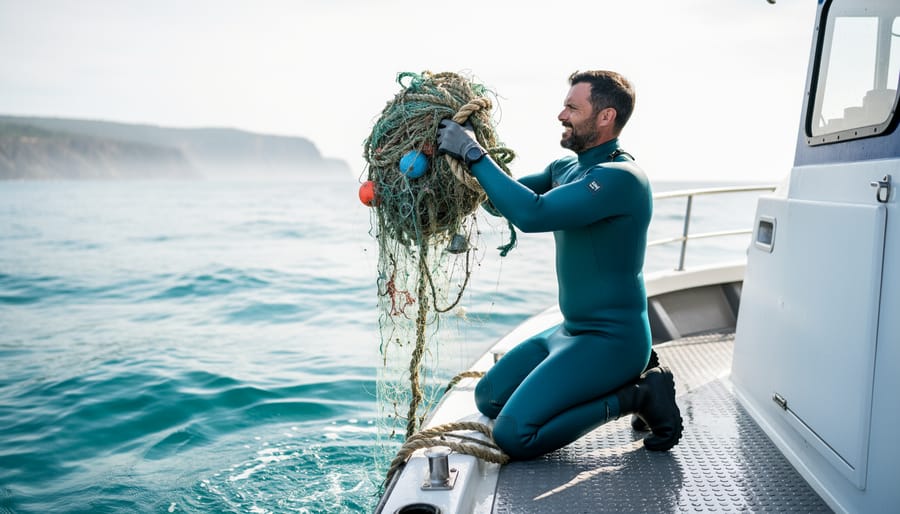
Marine waste management addresses ocean pollution through integrated strategies that combine science-based policy, community education, and targeted cleanup efforts to reduce the estimated 8 million metric tons of plastic entering our oceans annually. Success requires coordination across governments, industries, educational institutions, and citizen volunteers working together to prevent waste at its source, intercept debris before it reaches marine environments, and restore damaged ecosystems.
The challenge facing our oceans stems from decades of inadequate waste infrastructure, single-use plastic dependence, and a disconnect between human consumption patterns and their downstream impacts on marine life. Ghost fishing gear entangles sea turtles and marine mammals. Microplastics infiltrate food chains from plankton to apex predators. Chemical pollutants from industrial runoff create dead zones where oxygen levels plummet and biodiversity collapses.
Yet the outlook isn’t bleak. Effective marine waste management represents one of the most achievable conservation wins available today because we understand both the problem’s mechanics and the solutions. Unlike climate change or ocean acidification, which require systemic energy transformations, reducing marine debris responds directly to improved waste systems, behavioral shifts, and policy interventions already proven in coastal communities worldwide.
Dr. Sarah Chen, a marine biologist who spent five years studying debris accumulation in the Pacific, puts it simply: “Every piece of trash we keep out of the ocean is a immediate win for marine life. I’ve watched cleanup volunteers remove fishing line that would have killed seabirds for decades. That tangible impact drives people to stay involved.”
This article explores how marine waste management works in practice, from the policies shaping national strategies to the hands-on restoration projects where students and community members make measurable differences. Whether you’re an educator designing curriculum, a student exploring conservation careers, or someone ready to volunteer, understanding this framework reveals where your effort creates the greatest impact.
Understanding Marine Waste: Sources, Types, and Ocean Impact
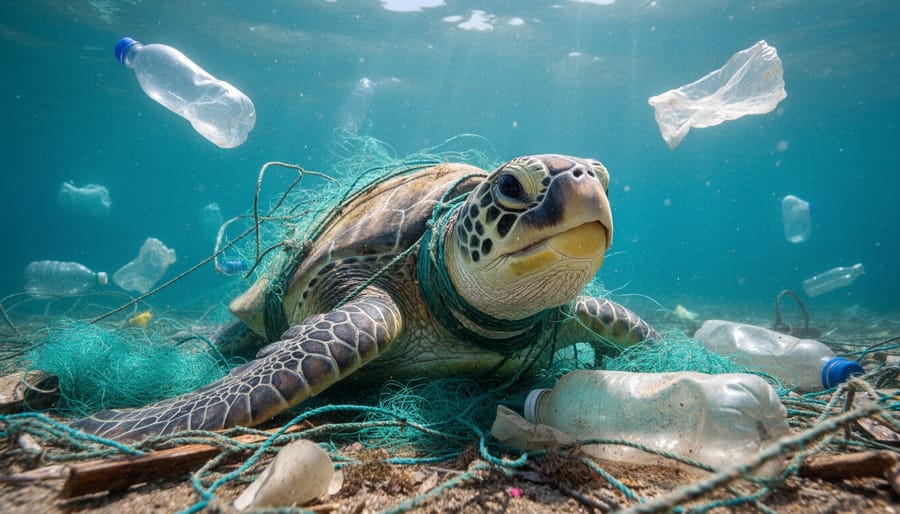
Marine waste encompasses everything humans discard that finds its way into the ocean, creating one of the most pressing environmental challenges of our time. This debris ranges from visible plastic bottles and fishing nets to invisible chemical compounds, each threatening marine life in different but equally devastating ways.
The problem begins far from the shoreline. Rivers carry trash from inland communities, acting as highways that transport waste from cities and agricultural areas directly into coastal waters. Storm drains flush street litter into waterways during heavy rains. Coastal runoff washes pollutants from beaches, parking lots, and industrial sites into the sea. Ships discharge waste illegally or lose cargo overboard. Offshore industries and maritime activities contribute abandoned equipment and operational waste. Together, these pathways deliver an estimated 8 million metric tons of plastic into our oceans annually, alongside countless gallons of chemical runoff.
- Macroplastics
- Large plastic items visible to the naked eye, such as bottles, bags, and fishing gear, that persist in the ocean for decades or centuries.
- Microplastics
- Plastic fragments smaller than 5mm resulting from the breakdown of larger debris or released directly from products like cosmetics and synthetic fabrics.
- Ghost Gear
- Abandoned, lost, or discarded fishing equipment that continues trapping and killing marine animals long after being discarded.
- Marine Debris
- Any persistent manufactured or processed solid material discarded, disposed of, or abandoned in the marine environment.
- Bioaccumulation
- The gradual buildup of toxins in an organism’s tissues as it consumes contaminated prey, magnifying up the food chain to apex predators.
- Persistent Organic Pollutants
- Toxic chemicals that resist degradation, accumulate in marine organisms, and travel globally through ocean currents.
The diversity of marine waste creates multiple ecological hazards. Plastics dominate by volume, from grocery bags to food packaging, breaking down into the microplastics threat that infiltrates every ocean layer. Abandoned fishing gear, nets, lines, and traps, becomes “ghost gear” that continues catching and killing marine animals without human intervention. Industrial and agricultural runoff introduces heavy metals, pesticides, and nutrients that trigger algal blooms and create oxygen-depleted dead zones. The chemical pollution from oil spills, untreated sewage, and pharmaceutical residues adds invisible but potent threats.
Marine biodiversity suffers catastrophic consequences. Sea turtles, seabirds, and marine mammals mistake plastic bags for jellyfish, filling their stomachs with indigestible material until they starve. Seals and dolphins become entangled in fishing nets, drowning or suffering severe injuries. Research confirms that plastic debris harms wildlife through both physical trauma and toxic exposure. Coral reefs smother under plastic sheeting. Filter feeders ingest microplastics that accumulate toxins, poisoning species higher up the food web. Ghost gear alone kills an estimated 136,000 seals, sea lions, and whales annually. Beyond individual animals, entire habitats degrade as waste settles on the seafloor, altering substrate composition and disrupting the foundational species that countless organisms depend upon.
The Science Behind Effective Marine Waste Management
Monitoring and Data Collection
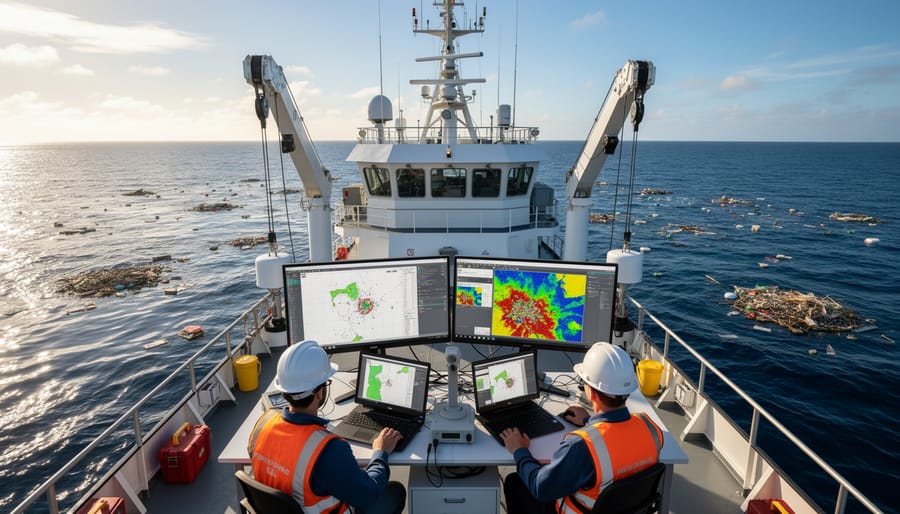
Effective marine waste management relies on robust data collection systems that reveal where waste accumulates, how it moves, and what impact it creates. Scientists employ multiple monitoring approaches, each capturing different aspects of the ocean pollution puzzle.
Satellite imaging has revolutionized our ability to track large debris fields and plastic accumulation zones across vast ocean areas. These systems detect concentrations of floating waste, mapping the infamous garbage patches and identifying emerging hotspots before they expand. Meanwhile, aerial surveys using drones and aircraft provide higher-resolution imagery of coastal regions and surface debris.
Below the surface, autonomous underwater vehicles equipped with cameras and sensors document submerged waste in deeper waters. These robots traverse areas too dangerous or remote for human divers, cataloging everything from ghost nets to microplastic concentrations at various depths.
Citizen science initiatives generate invaluable ground-level data through organized beach cleanups. Volunteers use standardized protocols to record what they collect, documenting item types, quantities, and brand information when visible. This creates datasets revealing which products most commonly pollute coastlines and how waste patterns shift seasonally.
Ocean current modeling combines physical oceanography with debris tracking data, predicting where waste will drift and accumulate. Research vessels deploy GPS-tagged buoys that mimic floating debris, their movements revealing transport pathways scientists use to optimize cleanup operations.
Together, these monitoring methods create a comprehensive picture that guides resource allocation, validates cleanup effectiveness, and provides the evidence base policymakers need when crafting regulations.
Innovative Scientific Solutions
Scientists and engineers worldwide are developing innovative solutions that tackle marine waste through both technological advancement and nature-inspired approaches. These breakthroughs offer practical pathways to complement prevention and cleanup efforts.
Biodegradable Materials Research
Laboratories are creating alternatives to conventional plastics that break down harmlessly in marine environments. Researchers have developed seaweed-based packaging, mushroom mycelium materials, and polymers derived from fish waste that decompose within months rather than centuries. Some bioplastics now incorporate enzymes that accelerate breakdown when exposed to saltwater, though scientists continue refining these materials to ensure they leave no toxic residues.
Advanced Cleanup Technologies
Autonomous systems represent a leap forward in removing existing waste. Floating barriers that harness ocean currents passively collect surface debris in high-concentration zones, while underwater drones equipped with cameras and collection mechanisms target submerged waste in coastal areas. Solar-powered skimmers patrol harbors and estuaries, intercepting trash before it reaches open water.
Bioremediation Approaches
Nature provides its own solutions through organisms that consume or neutralize pollutants. Scientists are cultivating bacteria and fungi strains that digest petroleum products and certain plastics, introducing them strategically in contaminated zones. Marine researchers also study filter-feeding species like oysters and mussels, whose natural filtration can remove microplastics from water columns when deployed in large-scale reef restoration projects.
These solutions work best when integrated into comprehensive management strategies that prioritize waste prevention while addressing legacy pollution already in our oceans.
Policy Frameworks Governing Marine Waste
International Agreements and Conventions
Global cooperation forms the backbone of marine waste management through several key international agreements. The MARPOL Convention (International Convention for the Prevention of Pollution from Ships), adopted in 1973 and updated through 1978, remains the primary maritime treaty regulating vessel-generated waste. Its Annex V specifically prohibits the discharge of plastics and restricts other garbage disposal at sea, covering over 99% of the world’s merchant shipping tonnage through its 164 contracting states.
The Basel Convention controls the transboundary movement of hazardous wastes, preventing wealthy nations from dumping waste in developing countries’ coastal zones. In 2019, amendments added plastic waste to its scope, requiring exporters to obtain consent before shipping contaminated or mixed plastics.
Regional Sea Conventions, such as the Barcelona Convention for the Mediterranean and the Nairobi Convention for the Western Indian Ocean, enable neighboring countries to coordinate waste management strategies specific to their shared waters. These frameworks establish monitoring protocols, pollution reduction targets, and joint enforcement mechanisms.
The UN plastic initiatives including the ongoing negotiations for a legally binding treaty on plastic pollution, represent the most ambitious effort yet to create comprehensive global standards. These agreements work because they transform voluntary environmental commitments into enforceable obligations, creating the legal architecture nations need to hold each other accountable while sharing scientific data and best practices across borders.
National and Regional Regulations
Countries worldwide are implementing diverse waste management strategies tailored to their specific coastal challenges and legislative frameworks. The European Union’s Single-Use Plastics Directive, introduced in 2021, bans items like plastic straws and cutlery while requiring member states to collect 90% of plastic bottles by 2029. Individual nations have strengthened these measures further, Germany and Norway operate successful deposit-return schemes achieving return rates exceeding 95% for beverage containers.
In Asia, Indonesia has committed to reducing marine plastic waste by 70% through improved waste collection infrastructure in coastal communities and strict regulations on plastic bag distribution. Thailand banned single-use plastics at national parks and marine protected areas, combining conservation with waste reduction.
The United States approaches marine waste through a patchwork of state legislation. California’s Coastal Commission enforces stringent coastal development standards that include waste management requirements, while Hawaii became the first state to ban plastic bags statewide. Canada’s Ocean Plastics Charter sets national reduction targets while provinces implement region-specific measures like bottle deposit programs.
Small island nations face unique challenges. Palau pioneered comprehensive plastic bans in 2020, prohibiting imports of single-use plastics and styrofoam containers, a survival measure for economies dependent on pristine marine environments.
Enforcement and Compliance Challenges
Enforcing marine waste policies sounds straightforward on paper, but the reality is far more complex. The ocean doesn’t recognize borders, and jurisdictional authority becomes murky once ships leave territorial waters. International waters, the high seas beyond any nation’s exclusive economic zone, cover nearly half the planet’s surface, yet no single government can patrol or regulate them effectively. When violations occur hundreds of miles from shore, determining which country has legal authority to prosecute becomes a diplomatic puzzle that often results in no enforcement at all.
Resource constraints compound these jurisdictional headaches. Coast guards and environmental agencies in many nations lack sufficient vessels, personnel, and technology to monitor vast ocean territories. Satellite tracking helps identify potential dumping incidents, but verifying violations requires physical inspections that many countries simply can’t afford to conduct regularly. Developing nations with extensive coastlines face particularly acute resource gaps, creating enforcement blind spots that illegal dumpers exploit.
Compliance monitoring presents its own challenges. Unlike land-based pollution sources with fixed locations, ships are mobile and can disable tracking systems. Proving that specific waste originated from a particular vessel or coastal facility requires evidence chains that are difficult to establish in marine environments where currents disperse debris across thousands of miles.
Education as a Cornerstone of Marine Waste Solutions
Education transforms bystanders into stewards. Without widespread understanding of how our daily choices affect ocean health, even the most sophisticated cleanup technologies and strongest policies will struggle to address marine waste at its source. Environmental literacy creates the foundation for long-term behavioral change, turning awareness into action across every level of society.
Educational programs work precisely because they reach people where they are. Primary schools introduce ocean conservation through age-appropriate activities, beach cleanups where children measure and categorize debris teach scientific observation while building emotional connections to marine ecosystems. University programs train the next generation of marine scientists and policy experts who will advance the field. An education center focused on marine conservation can demonstrate restoration techniques while explaining the waste management challenges threatening those same ecosystems, creating powerful learning experiences that stick with visitors long after they leave.
Industry-focused training matters just as much. When maritime professionals, waste management operators, and product designers understand how their decisions ripple through marine environments, they innovate solutions from within their sectors. A shipping company that educates crews about MARPOL regulations sees measurable reductions in waste violations. Manufacturing workshops on circular design principles lead to products that generate less ocean-bound waste.
Research consistently shows that environmental education changes behavior. Communities with robust ocean literacy programs demonstrate higher recycling rates, greater participation in cleanup initiatives, and stronger support for conservation policies. People who understand that a plastic bottle takes 450 years to degrade, or that microplastics concentrate toxins that enter the food chain, make different purchasing decisions. Knowledge creates motivation, and motivation sustains the collective effort required to protect our oceans.
Implementing Integrated Waste Management Strategies
Prevention and Source Reduction
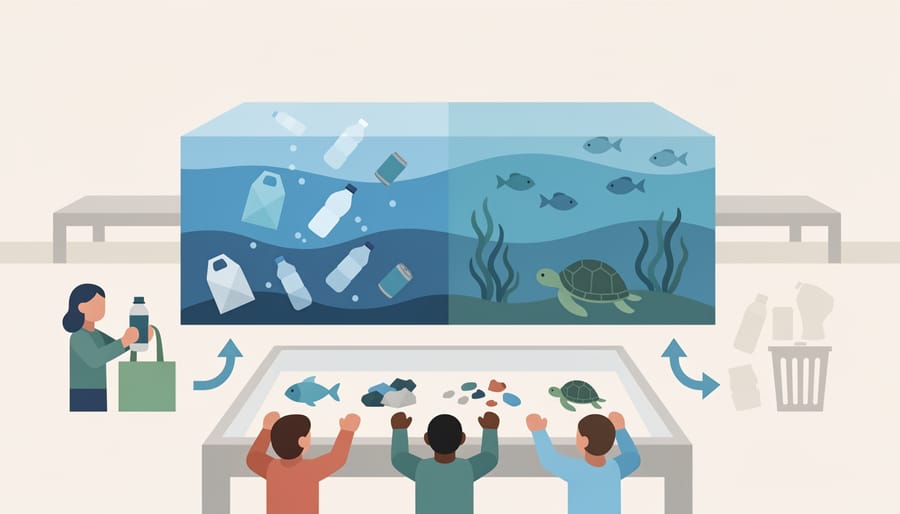
The most effective approach to marine waste is stopping it before it reaches the ocean. Improved waste collection infrastructure represents the foundation of prevention, particularly in coastal communities where gaps in municipal services allow debris to escape into waterways. Investment in secure bins, regular collection schedules, and proper disposal facilities prevents an estimated 80% of land-based ocean pollution.
Reducing single-use plastics tackles the problem at its source. Policies banning plastic bags, straws, and takeaway containers have demonstrated measurable results in countries like Kenya and France, where beach debris surveys show 40-60% reductions within two years of implementation. Equally important are deposit-return schemes for beverage containers, which achieve recovery rates exceeding 90% in Germany and Norway.
Circular economy principles extend product lifecycles and eliminate waste altogether. This means designing products for durability and recyclability from the start, establishing take-back programs for fishing gear and marine equipment, and supporting industries that process ocean-bound materials into new products. When manufacturers accept responsibility for their products’ entire lifecycle, the incentive shifts from disposable to sustainable design. These upstream interventions prove far more cost-effective than cleanup operations, preventing thousands of tons of waste from ever threatening marine ecosystems.
Cleanup and Remediation Efforts
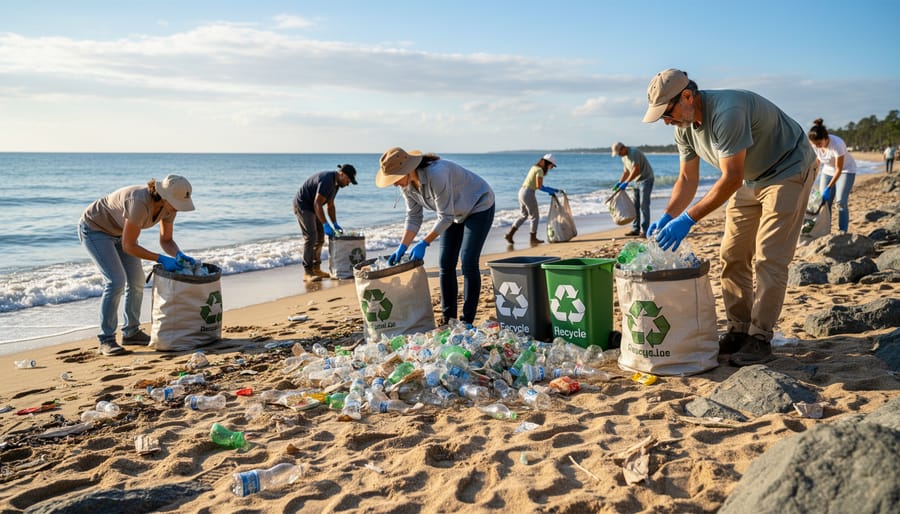
Beach cleanups remain the most visible face of marine waste removal, drawing thousands of volunteers worldwide who collect tons of debris from coastlines annually. These events serve dual purposes: they remove waste before tides carry it offshore, and they generate crucial data about pollution sources when participants log what they find.
Beyond shorelines, specialized vessels now tackle open-ocean accumulations using nets and collection systems designed to capture floating plastics without harming marine life. Projects like The Ocean Cleanup deploy barriers that concentrate debris in high-density areas, making removal more efficient. However, these large-scale operations require substantial funding and ongoing maintenance to sustain their impact.
Underwater remediation presents greater challenges. Divers retrieve ghost nets and sunken debris from reefs and seafloors, but the sheer volume and depth of submerged waste limits what manual efforts can achieve. Emerging technologies, including remotely operated vehicles equipped with grabbing mechanisms, show promise for accessing deeper sites.
While cleanup efforts provide immediate relief for affected ecosystems, scientists emphasize they cannot substitute for prevention. Removing existing waste addresses symptoms rather than causes, making upstream solutions, better waste infrastructure and reduced plastic production, essential for lasting change.
How You Can Contribute to Marine Waste Management
You don’t need to wait for governments or corporations to lead the charge, meaningful contributions to marine waste management start with individual action today. The most direct way to make an impact is joining organized beach and coastal cleanup events. Marine biodiversity centers and conservation groups across North America actively recruit volunteers year-round, offering opportunities that range from single-day beach cleanups to ongoing monitoring programs. These events provide hands-on experience while collecting valuable data about waste types and sources that scientists use to refine management strategies.
Citizen science projects offer another powerful avenue for engagement. Programs like Marine Debris Tracker and local coastal monitoring initiatives welcome participants to document and classify waste they find during beach visits, contributing to global databases that inform policy decisions. You don’t need scientific training, just a smartphone and willingness to record what you observe. Many marine conservation organizations also seek volunteers for educational outreach, helping staff information booths at community events or assisting with school presentations about ocean health.
Beyond organized programs, daily lifestyle changes compound into significant collective impact. Refuse single-use plastics by carrying reusable bags, bottles, and containers. Choose products with minimal packaging and support companies committed to circular economy principles. When purchasing seafood, select sustainably harvested options that avoid destructive fishing practices that generate marine debris. Properly dispose of hazardous materials like batteries and chemicals through designated collection programs rather than regular trash.
Advocacy amplifies your impact further. Contact elected officials to support stronger waste management legislation, extended producer responsibility laws, and increased funding for coastal cleanup infrastructure. Share credible information about marine waste on social media to expand awareness within your network. Every action, however small it seems individually, contributes to the cultural shift necessary for systemic change.
Common Questions About Marine Waste Management
Every day, people concerned about ocean health ask practical questions about how marine waste affects our seas and what they can do about it. Whether you’re a student beginning to explore marine conservation or someone looking to make a tangible difference, understanding the fundamentals helps you take meaningful action.
How long does plastic waste actually last in the ocean?
Different plastics persist for vastly different periods, a plastic bottle takes roughly 450 years to decompose, fishing line can last 600 years, and styrofoam essentially lasts indefinitely in marine environments. Even when plastics break apart, they fragment into microplastics that continue polluting for centuries rather than truly biodegrading.
Do beach cleanups and ocean cleanup projects actually make a difference?
Yes, organized cleanup efforts remove tons of debris annually and prevent further harm to marine life, but they work best as part of broader strategies that also address waste at its source. Cleanups provide immediate relief to ecosystems while raising awareness and generating data that informs better policies.
What can I realistically do as one person to reduce ocean waste?
The most impactful individual actions include refusing single-use plastics, properly disposing of waste (especially fishing line and cigarette butts), participating in local cleanup events, supporting businesses with sustainable practices, and advocating for stronger waste management policies in your community.
Are biodegradable plastics a real solution to marine waste?
Most biodegradable plastics require specific industrial composting conditions to break down and won’t decompose in cold ocean water, making them nearly as persistent as conventional plastics in marine environments. True solutions focus on reducing plastic use altogether and developing materials that safely degrade in natural ocean conditions.
What career paths exist in marine waste management?
The field spans marine biology research positions studying pollution impacts, environmental policy roles developing regulations, waste management engineering designing collection systems, education and outreach coordinators, and conservation project managers overseeing cleanup initiatives. Many organizations seek both professional staff and dedicated volunteers.
Understanding these realities helps separate genuine solutions from well-intentioned but ineffective approaches. The persistence of plastics in marine environments underscores why prevention matters more than cleanup alone, though both play vital roles. When materials take centuries to break down, every piece of waste we prevent from reaching the ocean represents centuries of avoided pollution.
The question of individual impact often feels overwhelming, but collective individual choices shape markets, influence policy, and create cultural shifts. Marine biologists working in waste research consistently note that the combination of personal action, community participation, and policy advocacy creates the conditions for systemic change. Your voice matters when you contact representatives about plastic legislation, your purchases influence corporate behavior, and your participation in citizen science projects provides researchers with essential data.
The marine waste crisis won’t be solved by science alone, policy alone, or education alone. Real progress emerges at the intersection of all three. When researchers develop innovative cleanup technologies, policymakers translate those discoveries into enforceable regulations, and educators inspire communities to change behaviors, we create a powerful feedback loop that accelerates ocean recovery.
We’re witnessing this momentum build in 2026. Breakthrough biodegradable materials are replacing persistent plastics. Nations are strengthening enforcement of waste regulations and closing loopholes that allowed ocean dumping. Schools are integrating marine conservation into curricula, and millions of people worldwide are participating in cleanup efforts and citizen science projects. Each component amplifies the others.
The scale of marine waste can feel overwhelming, but history shows that environmental challenges once considered insurmountable have been reversed through sustained collective action. The ozone layer is recovering. Whale populations are rebounding. Rivers once declared biologically dead are thriving again.
Our oceans can heal too, but they need us. Every beach cleanup removes harmful debris. Every conversation about marine conservation expands awareness. Every volunteer hour spent with conservation organizations directly contributes to habitat restoration and species protection. Your participation matters because widespread problems require widespread solutions.
The question isn’t whether we can clean our oceans. The question is how quickly we’ll act together to make it happen. Join a cleanup. Support stronger policies. Share what you’ve learned. Become part of the solution today.

jessica
Ava Singh is an environmental writer and marine sustainability advocate with a deep commitment to protecting the world's oceans and coastal communities. With a background in environmental policy and a passion for storytelling, Ava brings complex topics to life through clear, engaging content that educates and empowers readers. At the Marine Biodiversity & Sustainability Learning Center, Ava focuses on sharing impactful stories about community engagement, policy innovations, and conservation strategies. Her writing bridges the gap between science and the public, encouraging people to take part in preserving marine biodiversity. When she’s not writing, Ava collaborates with local initiatives to promote eco-conscious living and sustainable development, ensuring her work makes a difference both on the page and in the real world.