Marine Biodiversity Science Center

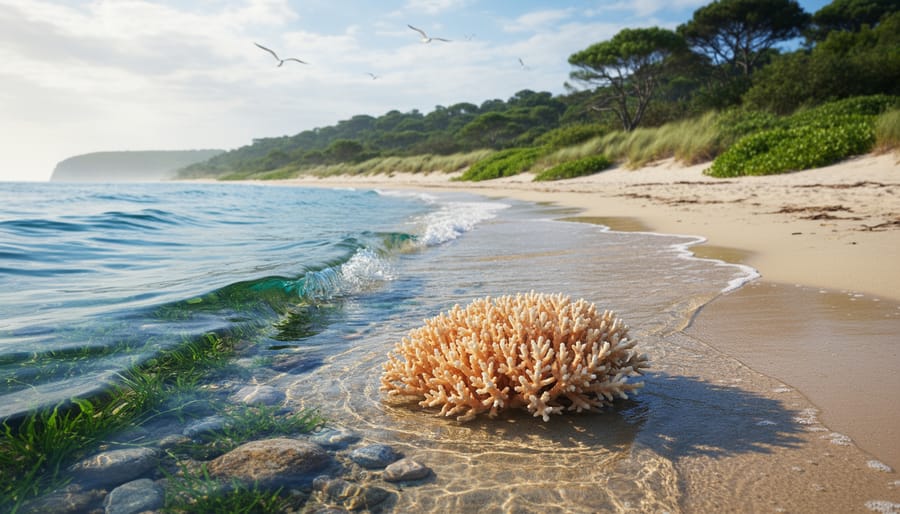
A sustainable environment is one that meets the needs of the present without compromising the ability of future generations to meet their own needs, maintaining ecological balance, biodiversity, and natural resources over time. This concept extends beyond pristine wilderness to include cities, farms, coastlines, and every ecosystem where human activity intersects with nature.
The question of what makes an environment sustainable has never been more urgent. Marine ecosystems face unprecedented pressure from overfishing, pollution, and climate change, while terrestrial habitats grapple with deforestation and habitat fragmentation. Understanding sustainability isn’t just an academic exercise. It’s the framework that guides conservation decisions, shapes policy, and determines whether the planet’s life-support systems remain functional for centuries to come.
At its core, a sustainable environment operates on principles that sound simple but require careful balancing: renewable resources regenerate faster than they’re consumed, waste production stays within nature’s capacity to absorb it, and biodiversity remains robust enough to maintain ecosystem services. These aren’t abstract ideals. Marine biologists working on coral reef restoration see them play out daily. When fish populations recover within marine protected areas, they spill over into surrounding waters, supporting both ecosystem health and fishing communities.
This article breaks down the mechanics of environmental sustainability, explores the essential components that keep ecosystems resilient, and examines how these principles apply across different contexts, with particular attention to marine conservation where the stakes are especially high. You’ll gain clarity on what sustainability actually requires and discover how collective action translates scientific understanding into measurable protection for the natural world.
What a Sustainable Environment Means
A sustainable environment is one where natural systems can regenerate as quickly as humans use them, and where waste production doesn’t exceed nature’s ability to absorb it. Think of it as a balance sheet where withdrawals and deposits must even out over time. When we extract fish from the ocean, harvest timber from forests, or release carbon into the atmosphere, we’re making withdrawals. A sustainable environment ensures those withdrawals never outpace nature’s capacity to replenish what we’ve taken and process what we’ve discarded.
The core principle, established by the Brundtland Commission in 1987, centres on meeting present needs without compromising the ability of future generations to meet theirs. In marine contexts, this means today’s fishing communities can make a living from the ocean while ensuring their grandchildren will have healthy fish populations to harvest. It means coastal development provides homes and livelihoods without destroying the mangroves and wetlands that protect shorelines and nurture juvenile fish.
To understand how this works, several key concepts define the framework:
- Carrying Capacity
- The maximum population size an environment can support indefinitely without degradation. For a coral reef, this includes the number of fish, the frequency of human visits, and the amount of nutrient input the system can handle while maintaining its health.
- Ecosystem Services
- The benefits nature provides to humans, such as oxygen production by phytoplankton, coastal protection by mangroves, and nutrient cycling by marine bacteria. These services have immense economic value but function only when ecosystems remain healthy.
- Regenerative Capacity
- The rate at which natural resources can renew themselves. A fish population’s regenerative capacity depends on breeding success, habitat quality, and the number of individuals left to reproduce after fishing.
- Ecological Footprint
- The measure of human demand on nature, calculated as the area of biologically productive land and sea needed to supply the resources we consume and absorb our waste. When footprints exceed available capacity, we’re living unsustainably.
Marine ecosystems illustrate these principles vividly. A healthy kelp forest supports diverse species, absorbs wave energy protecting coastlines, and sequesters carbon, but only if harvesting stays within regenerative limits and pollution doesn’t overwhelm the system’s waste-processing capacity. Sustainability isn’t about eliminating human use; it’s about calibrating our demands to what nature can continually provide.
How Sustainable Environments Function
Natural Resource Regeneration
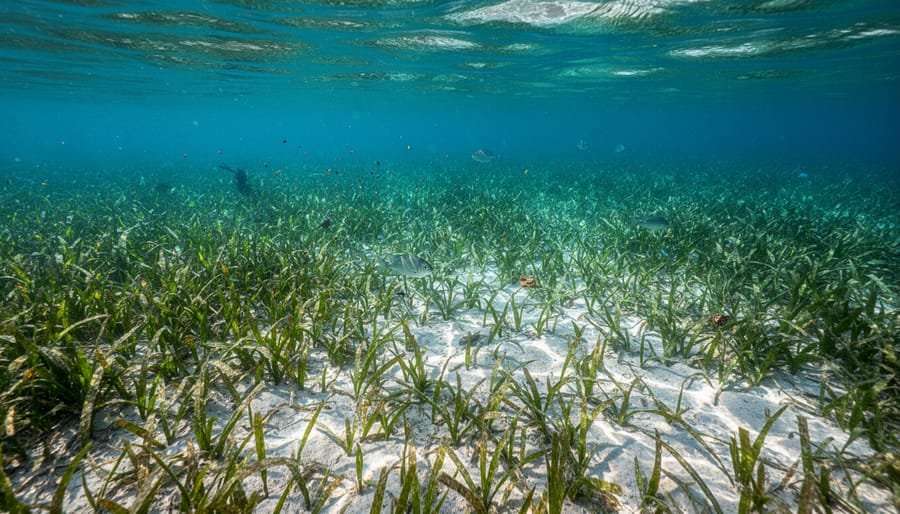
Marine ecosystems possess a remarkable ability to renew themselves when given adequate protection and time. Fish populations can rebuild to healthy levels within 5 to 15 years under proper management, as demonstrated by successful fish stocks rebuilding programs in previously depleted fisheries. This recovery depends on maintaining sufficient breeding populations and protecting spawning grounds during critical reproductive periods.
Coral reefs, though slower to regenerate, can recover from bleaching events in 10 to 20 years if water quality remains high and stressors like overfishing are eliminated. The presence of herbivorous fish to control algae growth proves essential for coral recruitment and survival. Coastal wetlands regenerate relatively quickly, salt marshes can establish vegetation within 3 to 5 years, and mangrove forests begin providing habitat value within a decade, though full structural maturity takes 50 years or more.
These regeneration processes require specific conditions: reduced human pressure, intact ecosystem connections, and the presence of source populations for recolonization. Understanding population sustainability principles helps us set appropriate harvest limits and restoration targets that allow natural renewal to occur.
Waste Assimilation and Ecosystem Health
Healthy oceans act as nature’s waste processors, breaking down organic matter and cycling nutrients back into the food web. Marine bacteria decompose dead organisms, phytoplankton absorb carbon dioxide, and filter feeders like oysters clean water by removing particles and excess nutrients. These natural systems can handle substantial amounts of waste, but only up to a point.
When we exceed this capacity through pollution, agricultural runoff, or carbon emissions, the consequences cascade rapidly. Excess nitrogen and phosphorus fuel massive algae blooms that sink and decompose, consuming oxygen and creating dead zones explained as hypoxic areas where fish and bottom-dwelling creatures can’t survive. The Gulf of Mexico’s dead zone now spans thousands of square miles each summer, forcing marine life to flee or suffocate.
Meanwhile, the ocean absorbs roughly a quarter of human-produced CO₂, triggering ocean acidification a process ocean acidification defined as the chemical shift that dissolves coral skeletons and shellfish shells. When waste inputs overwhelm natural assimilation, we don’t just damage ecosystems; we dismantle the very mechanisms that keep them functioning.
Core Components of Environmental Sustainability
Environmental Integrity
Environmental integrity forms the ecological foundation of sustainability, requiring that we maintain the health and diversity of natural systems. In marine ecosystems, this means protecting the full range of species, from microscopic plankton to apex predators, that evolved together over millions of years. Each organism plays a role: phytoplankton produce half the oxygen we breathe, filter feeders clean water, and predatory fish regulate prey populations.
Habitat protection proves equally critical. Coral reefs, seagrass meadows, and mangrove forests aren’t just homes for marine life; they buffer coastlines from storms, sequester carbon, and serve as nurseries where juvenile fish mature. When these habitats disappear, entire food webs collapse.
Preserving natural processes matters too. Ocean currents distribute nutrients, spawning migrations replenish populations, and seasonal upwellings bring deep-water nutrients to the surface. Human activities like coastal development, bottom trawling, and pollution disrupt these processes, weakening the ecosystem’s ability to sustain itself. Environmental integrity demands we protect both the components and the connections that allow marine systems to function and adapt over time.
Social Equity and Community Well-being
Coastal communities worldwide depend on healthy marine ecosystems for their livelihoods, food security, and cultural identity. When ocean resources decline, marginalized populations, often those who’ve stewarded these waters for generations, suffer disproportionately. Social equity in marine sustainability means ensuring that conservation policies don’t displace traditional fishers or deny them access to resources their communities have managed responsibly for centuries.
Indigenous coastal groups frequently possess deep ecological knowledge about sustainable harvesting practices, yet they’re sometimes excluded from decision-making processes about marine protected areas or fishing regulations. True sustainability integrates this traditional wisdom while guaranteeing fair distribution of ocean resources and economic opportunities from conservation initiatives like eco-tourism.
Healthy oceans provide protein for over three billion people globally. When we protect marine environments through equitable frameworks that respect local rights and include diverse voices in governance, we create systems that support both ecological health and human well-being. Communities that benefit directly from conservation become its strongest advocates and stewards.
Economic Viability
Sustainable marine economies depend on healthy oceans, not their depletion. When fisheries respect spawning cycles and catch limits, they generate stable income for decades rather than collapsing after a few profitable years, a pattern seen repeatedly in overfished regions worldwide. The Grand Banks cod fishery, once among the world’s richest, shut down in 1992 after centuries of use, costing 40,000 jobs. Sustainable management prevents such crashes.
Eco-tourism built around thriving reefs, whale migrations, and diving sites creates lasting revenue streams that often exceed what extraction would yield. A live shark generates roughly $2 million in tourism over its lifetime compared to a few hundred dollars when caught. Marine protected areas attract visitors while supporting recovery of fish stocks that spill into surrounding waters, benefiting commercial fishers.
The economic argument is straightforward: conservation preserves the natural capital that coastal economies rely on. Short-term gains from overexploitation destroy the resource base itself, whereas sustainable practices maintain both livelihoods and ecosystems indefinitely.
Where Sustainable Environments Are Applied
Marine Protected Areas and Conservation Zones
Marine protected areas function as ecological safe zones where restrictions on fishing, shipping, and development allow depleted populations to rebuild and damaged habitats to heal. By reducing human pressures, these zones let natural processes regain their balance, predator-prey ratios stabilize, fish spawn without disturbance, and seafloor habitats recover from trawling scars. Well-enforced marine sanctuaries demonstrate measurable results within years: coral cover increases, fish biomass rebounds, and genetic diversity strengthens as populations reconnect. Effective MPAs don’t lock people out entirely; instead, they create zones where extraction stops or slows, giving ecosystems the breathing room they need. This approach works because marine life, unlike terrestrial wildlife, often disperses larvae and adults across boundaries, so a protected core can replenish surrounding fishable waters, a spillover effect that benefits both conservation and fishing communities.
Sustainable Fisheries Management
Sustainable fisheries management demonstrates environmental sustainability in action by balancing harvest with regeneration. Rather than extracting as many fish as possible in the short term, this approach sets catch limits based on scientific assessments of population health, breeding cycles, and ecosystem needs. Managers establish quotas that allow enough adult fish to reproduce and replenish stocks each season.
Effective programs incorporate multiple strategies: seasonal closures during spawning periods, size limits that protect juvenile fish until they’ve reproduced at least once, and gear restrictions that reduce bycatch of non-target species. Iceland’s cod fishery recovery and Alaska’s salmon management show how science-driven limits can restore depleted populations while maintaining viable commercial operations.
The approach also considers fishing communities’ livelihoods. Quotas must provide stable income over decades, not boom-and-bust cycles. When properly implemented, sustainable fisheries create long-term economic stability, fishers can plan their businesses knowing the resource will persist for their children.
Habitat Restoration Projects
Habitat restoration demonstrates sustainability principles in action by actively rebuilding degraded marine ecosystems. Mangrove restoration, for instance, involves replanting coastal areas where these salt-tolerant trees once thrived. Successful projects in Southeast Asia have shown that restored mangrove forests can regain 80% of their original biodiversity within 15 years, while simultaneously protecting coastlines from erosion and storm surge.
Seagrass bed restoration requires transplanting shoots or scattering seeds in areas with suitable depth and water quality. These underwater meadows sequester carbon at rates 35 times faster than tropical rainforests and provide crucial nursery habitat for juvenile fish.
Coral reef restoration uses techniques like coral gardening, where fragments are grown in underwater nurseries before being transplanted to damaged reefs. Though challenging, these projects have achieved survival rates above 70% in ideal conditions, rebuilding the structural complexity that thousands of species depend on.
Population Growth and Environmental Sustainability
Human population growth places unprecedented pressure on coastal and marine environments. As more people settle near oceans, currently over 40% of the global population lives within 100 kilometers of a coast, the demand for seafood, coastal development, and marine resources intensifies. This concentration strains the very ecosystems that support these communities, creating a challenge that requires thoughtful approaches to balancing human numbers with environmental capacity.
Population and Sustainability Work addresses this tension through integrated research that examines how demographic trends affect marine biodiversity. Scientists study carrying capacity in coastal regions, measuring how many people an area can support without degrading critical habitats like mangroves, coral reefs, and seagrass beds. This research reveals that sustainable population levels depend on consumption patterns as much as raw numbers, a small community practicing intensive trawling can damage ecosystems more severely than a larger population using selective fishing methods.
Educational programs within this field help coastal communities understand their dependence on healthy oceans. When fishers learn how spawning cycles work and why closed seasons matter, they become advocates for population-conscious policies that protect their livelihoods. Family planning services, when combined with marine conservation education, give communities tools to plan their futures while preserving the ecosystems they rely on.
Policy recommendations emerging from this work guide governments in coastal zone management. Effective strategies include limiting development in sensitive areas, establishing quotas that account for both fish populations and human needs, and creating alternative livelihoods that reduce pressure on marine resources. The most successful approaches recognize that environmental sustainability and human well-being are inseparable, thriving coastal communities require thriving oceans, and healthy marine ecosystems need communities that can steward them responsibly across generations.
How You Can Support Sustainable Marine Environments
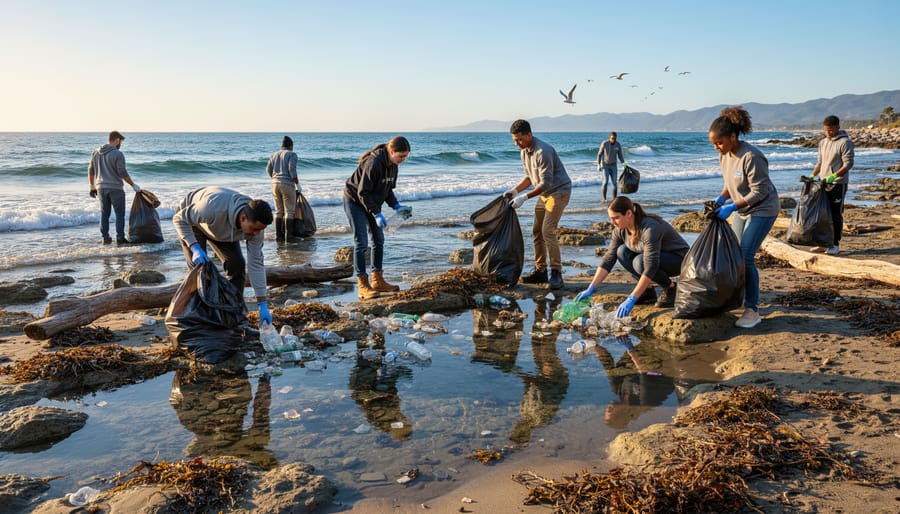
Supporting a sustainable marine environment begins with everyday choices and personal involvement. You don’t need a science degree to make a meaningful difference, whether you live near the coast or hundreds of miles inland, your actions ripple through the ocean ecosystems that sustain all life on Earth.
The Marine Biodiversity Science Center offers hands-on volunteer opportunities that let you contribute directly to conservation research. Volunteers help with species monitoring, data collection during field surveys, and habitat restoration projects like replanting seagrass beds or stabilizing dunes. These programs welcome people of all backgrounds and provide training, so you gain real skills while supporting critical work. Citizen science initiatives extend this impact further, allowing you to report sightings of marine life through mobile apps, participate in seasonal beach surveys, or help classify underwater photos from remote cameras.
Beyond fieldwork, your daily decisions shape ocean health:
– Volunteer for beach cleanups to remove debris before it enters marine food webs
– Join monitoring programs that track water quality or migratory species
– Make sustainable seafood choices by consulting guides and asking questions at markets
– Reduce plastic use, especially single-use items that become ocean pollution
– Support marine conservation organizations through donations or membership
– Educate others by sharing what you learn about marine ecosystems
Dr. Elena Cortez, a marine biologist at the center, recalls her first volunteer project restoring a degraded salt marsh. “I expected to plant some grasses and leave,” she says. “Instead, I watched that patch transform over three years into a nursery teeming with juvenile fish and crabs. It showed me that restoration works when we commit to it, and that everyone who showed up mattered, from the high schooler planting beside me to the retired teacher monitoring progress.” That experience shaped her career and proved that collective action, even on a small scale, builds sustainable environments one restored habitat at a time.
Sustainable environments are not distant ideals, they are practical outcomes of informed choices, community commitment, and science-based action. The balance between human needs and ecological health is within reach when we combine research with policy and personal responsibility. Marine ecosystems demonstrate this potential clearly: protected areas rebuild fish populations, restored habitats return biodiversity, and communities that shift to sustainable practices see long-term economic and environmental gains.
Your participation matters. Whether you join our volunteer programs, contribute to citizen science initiatives through our e-network, or simply make more informed seafood choices, each action strengthens the foundation for healthier oceans. Marine biologists and conservationists cannot protect these ecosystems alone, we need educators, students, policymakers, and ocean advocates working together.
The health of our oceans directly affects human well-being. Coastal communities depend on thriving marine life for food security and livelihoods, while ocean systems regulate climate and produce much of the oxygen we breathe. When we invest in sustainable marine environments, we invest in our own future and the generations that follow. The science is clear, the solutions exist, and the opportunity to contribute is here now.
Common Questions About Sustainable Environments
The path to sustainability often raises practical questions, especially when we’re talking about the world’s oceans and the communities that depend on them. Here are answers to some of the most common queries about sustainable marine environments.
How long does it take for a marine ecosystem to become sustainable again?
Recovery timelines vary dramatically depending on the damage and the ecosystem type. A moderately overfished reef might show signs of recovery within 5 to 10 years of protection, while severely degraded coral systems can require 20 to 50 years or more to rebuild complexity and biodiversity.
Can overfished areas actually recover?
Yes, with proper management and enforcement. Many fish populations have rebounded when fishing pressure is reduced and habitats are protected, though recovery speed depends on the species’ life cycle, the extent of depletion, and whether critical spawning grounds remain intact.
What’s the difference between conservation and sustainability?
Conservation focuses on protecting and preserving specific species, habitats, or areas, often by limiting human use. Sustainability aims to balance human needs with ecosystem health over the long term, allowing managed use that doesn’t deplete resources or damage ecological functions.
How does climate change affect environmental sustainability?
Climate change shifts the baseline conditions that ecosystems evolved to handle, making sustainability harder to achieve. Ocean warming, acidification, and changing currents alter fish distributions, coral resilience, and nutrient cycles, requiring adaptive management strategies that account for these new realities.
What role do individuals play versus governments in creating sustainable environments?
Both are essential and interconnected. Governments set policy frameworks, enforce regulations, and fund large-scale conservation, while individuals drive demand through consumer choices, volunteer for monitoring and restoration projects, and advocate for stronger protections.
How do we measure whether a marine environment is sustainable?
Scientists track indicators like fish population trends, biodiversity levels, water quality, habitat extent, and ecosystem services. A sustainable marine environment maintains these metrics within healthy ranges over time, supporting both ecological functions and the human communities that depend on them.
These questions highlight that sustainability isn’t a fixed state but an ongoing process of monitoring, adapting, and balancing multiple factors. The encouraging reality is that marine ecosystems have remarkable resilience when given the chance to recover, and our understanding of how to support that recovery grows stronger each year through research and collaborative conservation efforts.

jessica
Ava Singh is an environmental writer and marine sustainability advocate with a deep commitment to protecting the world's oceans and coastal communities. With a background in environmental policy and a passion for storytelling, Ava brings complex topics to life through clear, engaging content that educates and empowers readers. At the Marine Biodiversity & Sustainability Learning Center, Ava focuses on sharing impactful stories about community engagement, policy innovations, and conservation strategies. Her writing bridges the gap between science and the public, encouraging people to take part in preserving marine biodiversity. When she’s not writing, Ava collaborates with local initiatives to promote eco-conscious living and sustainable development, ensuring her work makes a difference both on the page and in the real world.