Marine Biodiversity Science Center

Beneath the ocean’s surface thrives a microscopic yet mighty force: Vibrio bacteria. These remarkable marine microbes shape our planet’s biochemistry, influencing everything from global carbon cycles to the health of marine ecosystems. As one of the most abundant and diverse bacterial genera in marine environments, Vibrio species have evolved fascinating adaptations that allow them to flourish in virtually every ocean habitat, from sun-drenched surface waters to the darkest depths of the sea.
Some Vibrio species form crucial symbiotic relationships with marine creatures, while others can cause devastating diseases in marine life and humans alike. Their genetic flexibility and rapid adaptation capabilities make them both fascinating subjects for scientific study and important indicators of ocean health and climate change. As ocean temperatures rise and marine ecosystems face unprecedented challenges, understanding these powerful microorganisms becomes increasingly critical for marine conservation efforts and public health initiatives.
Through cutting-edge genomic research and environmental monitoring, scientists are uncovering new insights about these remarkable bacteria that could hold the key to addressing some of our most pressing marine conservation challenges.
The Diverse World of Vibrio Bacteria
Common Vibrio Species in Marine Environments
Vibrio species are widely distributed throughout marine environments, with several key species playing crucial roles in ocean ecosystems. Vibrio fischeri stands out for its remarkable bioluminescent properties and symbiotic relationships with marine organisms like the Hawaiian bobtail squid, demonstrating the intricate connections between bacteria and marine life.
Vibrio parahaemolyticus is commonly found in coastal waters worldwide, particularly in warmer regions. This species tends to associate with plankton and shellfish, contributing to marine nutrient cycling. During summer months, when water temperatures rise, their populations can increase significantly, influencing local ecosystem dynamics.
Another significant species, Vibrio alginolyticus, is known for its ability to break down complex organic compounds in marine environments. This species plays a vital role in decomposition processes and nutrient recycling in coastal ecosystems. Marine biologists have observed its highest concentrations in tropical and subtropical waters, where it contributes to maintaining ecosystem balance.
Vibrio harveyi is notable for its bioluminescent properties and widespread distribution in marine environments. This species often forms beneficial relationships with marine organisms and can be found from surface waters to deeper ocean zones. Scientists have documented its presence in various marine habitats, from coral reefs to open ocean environments.
These species demonstrate the remarkable diversity and adaptability of Vibrio bacteria in marine ecosystems, highlighting their importance in ocean health and biodiversity.

Ecological Relationships and Interactions
Vibrio species play crucial roles in marine ecosystems through their diverse interactions with other organisms. These bacteria form both beneficial and potentially harmful relationships with marine life, contributing to nutrient cycling and ecosystem balance.
In symbiotic relationships, many Vibrio species provide essential services to their hosts. For example, certain Vibrio strains colonize the light organs of deep-sea fish and squid, enabling bioluminescence through a mutually beneficial partnership. The bacteria receive nutrients and shelter while the host gains the ability to communicate, attract prey, or avoid predators.
Marine invertebrates, particularly corals and sponges, often harbor beneficial Vibrio populations that aid in nitrogen fixation and protect against pathogens. These bacteria also break down chitin, the primary component of crustacean shells, contributing significantly to carbon and nitrogen cycling in marine environments.
However, some Vibrio species can become opportunistic pathogens under specific environmental conditions, particularly during warming events. They may affect various marine organisms, from shellfish to corals, especially when environmental stressors compromise host immunity.
Scientists have observed that Vibrio populations respond rapidly to environmental changes, making them excellent indicators of marine ecosystem health. Their relationships with plankton are particularly noteworthy, as they attach to zooplankton surfaces, creating microscopic biofilms that influence marine food webs and biochemical cycles.
Understanding these complex ecological interactions helps marine biologists develop better conservation strategies and predict ecosystem responses to environmental changes.
Genomic Adaptations and Survival Strategies
Environmental Stress Response Genes
Vibrio marine bacteria possess remarkable genetic mechanisms for adapting to changing ocean conditions, showcasing their resilience in diverse marine environments. These microorganisms have evolved sophisticated stress response genes that activate when faced with environmental challenges such as temperature fluctuations, salinity changes, and nutrient availability.
One of the most notable features of Vibrio species is their ability to rapidly modify gene expression through stress-responsive regulatory networks. When exposed to sudden temperature shifts, these bacteria activate heat shock proteins (HSPs) and cold shock proteins (CSPs) that protect cellular components and maintain essential functions. These molecular chaperones help reorganize and stabilize proteins that might otherwise be damaged by environmental stress.
The rpoS gene plays a crucial role in Vibrio’s stress response system, acting as a master regulator that coordinates the expression of numerous survival genes. When triggered by environmental signals, rpoS activates pathways that enhance cell membrane stability, modify metabolism, and produce protective compounds.
Vibrio species also possess unique osmotic stress response genes that help them thrive in varying salinity levels. The ectoine biosynthesis pathway, for instance, produces compatible solutes that protect cellular components from osmotic pressure changes. This adaptation is particularly important in coastal environments where freshwater input can rapidly alter salinity levels.
These genetic mechanisms not only ensure survival but also contribute to Vibrio’s success as one of the most abundant marine bacterial genera. Understanding these adaptations helps scientists predict how marine microorganisms might respond to climate change and other environmental challenges.
Horizontal Gene Transfer in Marine Environments
In the dynamic marine environment, DNA sharing between marine organisms plays a crucial role in bacterial adaptation and evolution, with Vibrio species being particularly active participants in this genetic exchange. These bacteria have developed sophisticated mechanisms for transferring genetic material horizontally, allowing them to acquire new traits that enhance their survival in diverse ocean conditions.
Vibrio species regularly exchange genetic elements through three main mechanisms: conjugation (direct cell-to-cell contact), transformation (uptake of external DNA), and transduction (virus-mediated transfer). This genetic flexibility enables them to rapidly adapt to environmental changes, acquire antibiotic resistance, and develop new metabolic capabilities.
Recent studies have shown that Vibrio bacteria are more likely to engage in horizontal gene transfer in nutrient-rich coastal waters, where bacterial populations are dense and diverse. During algal blooms, for instance, the rate of genetic exchange increases dramatically, leading to the rapid spread of beneficial traits throughout Vibrio communities.
Marine microbiologists have observed that this genetic sharing contributes to the emergence of new Vibrio strains better equipped to handle environmental stressors like temperature changes, pH fluctuations, and varying salinity levels. Some acquired genes even allow certain Vibrio species to break down complex organic compounds, expanding their ecological roles in marine ecosystems.
The implications of this genetic flexibility extend beyond individual species, influencing entire marine food webs and biogeochemical cycles. Understanding these transfer mechanisms helps scientists predict how Vibrio populations might respond to climate change and other environmental challenges, making this knowledge crucial for marine conservation efforts.

Impact on Marine Ecosystems and Human Health
Ecosystem Services and Nutrient Cycling
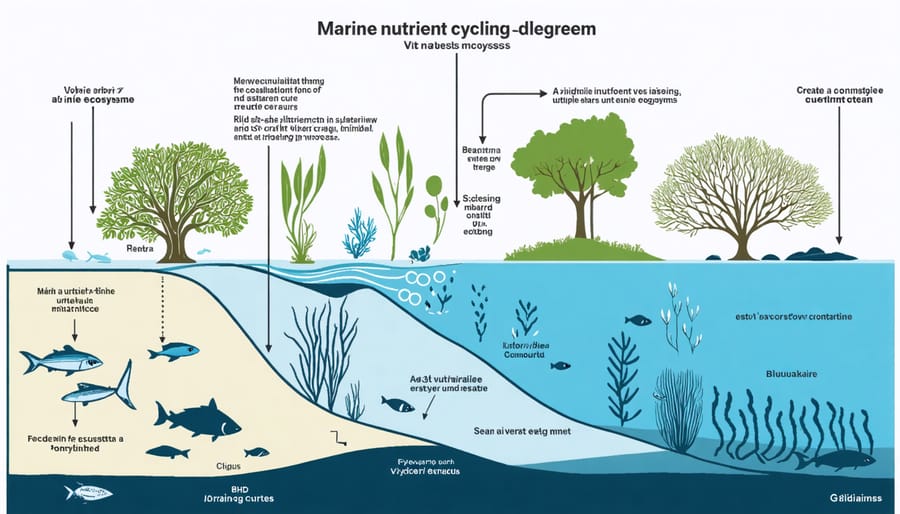
Vibrio marine bacteria play crucial roles in maintaining healthy ocean ecosystems through their participation in various biogeochemical cycles. These microscopic organisms are particularly important in the nitrogen cycle, where they help convert organic nitrogen into forms that other marine organisms can use. Some Vibrio species form symbiotic relationships with marine animals, such as squid and coral, providing essential nutrients and protection to their hosts.
In coastal environments, Vibrio bacteria contribute significantly to carbon cycling by breaking down complex organic matter. This process not only recycles nutrients but also supports the marine food web by making essential elements available to primary producers like phytoplankton. Through their chitinase enzymes, Vibrio species are especially effective at decomposing chitin, one of the most abundant biopolymers in marine environments, derived from the shells of crustaceans and other marine organisms.
The bacteria’s role in nutrient cycling extends to phosphorus and sulfur cycles as well. They help solubilize phosphate compounds, making this vital nutrient available to other marine life. Some Vibrio species can also process sulfur compounds, contributing to the natural sulfur cycle in marine ecosystems.
Scientists studying these beneficial aspects of Vibrio have discovered that their metabolic activities help maintain the chemical balance in marine environments, particularly in estuarine and coastal areas where nutrient cycling is crucial for ecosystem health. Understanding these positive roles has become increasingly important for marine conservation efforts and ecosystem management strategies.
Public Health Considerations
Vibrio bacteria pose significant public health challenges, particularly in coastal communities and among seafood consumers. These organisms can cause various illnesses, ranging from mild gastrointestinal distress to severe infections. The most common transmission routes include consuming contaminated seafood, especially raw or undercooked shellfish, and exposure to seawater through open wounds.
To minimize health risks, public health authorities recommend several preventive measures. These include thoroughly cooking seafood, especially shellfish, to appropriate temperatures, avoiding raw oyster consumption, and protecting open wounds from direct seawater contact. Immunocompromised individuals and those with liver conditions should exercise particular caution with seafood consumption.
Climate change and warming ocean temperatures have led to increased Vibrio populations in previously unaffected areas, expanding their geographic range. This expansion has prompted enhanced surveillance systems and monitoring programs in coastal regions worldwide.
Medical professionals and public health officials emphasize the importance of rapid treatment when Vibrio infections are suspected, as some species can cause severe complications if left untreated. Symptoms typically appear within 24 hours of exposure and may include diarrhea, abdominal cramping, fever, and in severe cases, wound infections that can progress rapidly.
Regular water quality monitoring, seafood safety inspections, and public education campaigns remain crucial tools in preventing Vibrio-related illnesses. These efforts, combined with proper food handling practices and increased awareness, help maintain public safety while allowing continued enjoyment of marine resources.
Research Frontiers and Conservation Implications
Recent advances in marine genomic research have opened exciting new frontiers in understanding Vibrio bacteria and their crucial roles in marine ecosystems. Scientists are particularly focused on investigating how these organisms adapt to changing ocean conditions and their potential as indicators of ecosystem health.
One promising area of study involves tracking Vibrio populations as early warning systems for climate change impacts. Researchers have discovered that certain Vibrio species respond rapidly to temperature fluctuations and changes in ocean chemistry, making them valuable bioindicators for monitoring marine ecosystem health.
Conservation efforts are increasingly incorporating Vibrio research into habitat protection strategies. For example, scientists have found that healthy coral reefs maintain balanced Vibrio communities, while stressed reefs show dramatic shifts in bacterial populations. This knowledge is helping conservationists develop more effective reef protection measures.
Emerging research also explores the potential of beneficial Vibrio species in marine restoration projects. Some strains have shown promise in promoting the growth of seagrass beds and supporting the recovery of damaged coral systems. These findings offer hope for innovative approaches to ecosystem rehabilitation.
Citizen science initiatives are playing an increasingly important role in Vibrio research. Through organized monitoring programs, volunteers help scientists collect data on Vibrio populations across different marine environments. This collaborative approach not only advances our understanding but also builds public awareness about marine microbial ecology.
Looking ahead, researchers are developing new tools to better understand Vibrio’s role in marine food webs and their interactions with other organisms. This knowledge is crucial for predicting and managing ecosystem responses to environmental change, ultimately contributing to more effective marine conservation strategies.
As we’ve explored throughout this article, Vibrio marine bacteria play a pivotal role in ocean ecosystems, from their involvement in nutrient cycling to their complex relationships with marine organisms. These remarkable microorganisms demonstrate incredible adaptability and diversity, with some species forming beneficial symbiotic relationships while others can potentially impact human health and marine life.
Understanding Vibrio bacteria has become increasingly important as our oceans face unprecedented changes due to climate change and human activities. Research continues to unveil new insights into their genetic capabilities, ecological functions, and potential applications in biotechnology and environmental monitoring.
Looking ahead, emerging technologies in genomic sequencing and environmental DNA analysis promise to deepen our understanding of these fascinating microorganisms. Scientists are particularly excited about discovering new Vibrio species and understanding their roles in maintaining marine ecosystem health.
For marine conservationists and researchers, this knowledge is crucial for predicting and managing marine ecosystem responses to environmental changes. The future of Vibrio research holds promising opportunities for developing new conservation strategies and biotechnology applications.
We encourage continued support for marine microbiology research and citizen science initiatives that help monitor Vibrio populations in our oceans. By understanding these microscopic yet mighty organisms, we can better protect our marine ecosystems for future generations.
Remember, every discovery about Vibrio marine bacteria brings us closer to understanding the intricate web of life in our oceans and reinforces the importance of marine conservation efforts.

jessica
Ava Singh is an environmental writer and marine sustainability advocate with a deep commitment to protecting the world's oceans and coastal communities. With a background in environmental policy and a passion for storytelling, Ava brings complex topics to life through clear, engaging content that educates and empowers readers. At the Marine Biodiversity & Sustainability Learning Center, Ava focuses on sharing impactful stories about community engagement, policy innovations, and conservation strategies. Her writing bridges the gap between science and the public, encouraging people to take part in preserving marine biodiversity. When she’s not writing, Ava collaborates with local initiatives to promote eco-conscious living and sustainable development, ensuring her work makes a difference both on the page and in the real world.