Marine Biodiversity Science Center

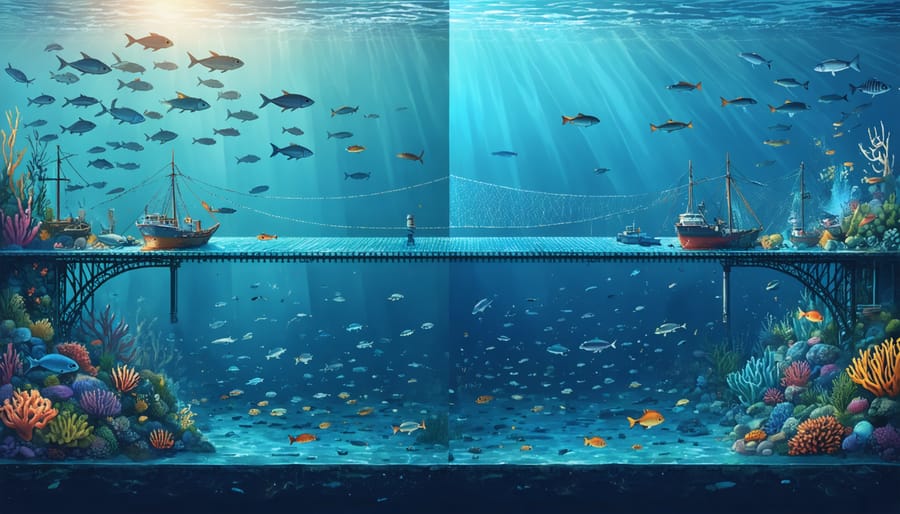
The future of our oceans hangs in a delicate balance between meeting global food demands and preserving marine ecosystems. While current destructive fishing practices threaten to empty our seas, emerging evidence suggests sustainable fishing isn’t just possible—it’s essential for our planet’s survival. Innovative tracking systems, quota management, and marine protected areas have already demonstrated remarkable success in rebuilding fish populations while supporting fishing communities. In Norway’s cod fisheries, for instance, strict quota systems helped recover stocks that were once on the brink of collapse, now supporting both commercial fishing and species conservation. The challenge lies not in choosing between fishing and conservation, but in reimagining how we can achieve both. Through science-based management, advanced monitoring technologies, and collaborative efforts between fishers and conservationists, we’re discovering that sustainable fishing isn’t merely an idealistic goal—it’s a achievable reality that could transform our relationship with the ocean’s resources.
The Science Behind Sustainable Fishing
Population Dynamics and Stock Assessment
Scientists employ sophisticated methods to monitor and assess fish populations, combining traditional sampling techniques with cutting-edge technology. Through regular surveys, researchers collect data on fish abundance, age distribution, and reproductive rates. These surveys often involve both fishery-dependent methods, such as analyzing commercial catch data, and fishery-independent approaches like acoustic surveys and underwater video monitoring.
Population dynamics models help scientists understand how fish populations change over time in response to various factors, including fishing pressure, environmental conditions, and natural mortality. These models incorporate multiple data points, from egg production to adult survival rates, enabling researchers to estimate sustainable harvest levels.
Modern stock assessment techniques now include satellite tracking, environmental DNA analysis, and artificial intelligence to process vast amounts of data. Marine biologists like Dr. Sarah Martinez from the Pacific Marine Research Institute use autonomous underwater vehicles to conduct non-invasive population surveys. “Technology has revolutionized our ability to accurately assess fish populations,” she explains. “We can now track changes in real-time and adjust management strategies accordingly.”
The effectiveness of these assessment methods has been demonstrated in success stories like the recovery of North Atlantic swordfish populations. By combining accurate population monitoring with responsive management policies, scientists helped this species rebound from dangerous levels in the 1990s to sustainable numbers today.
Maximum Sustainable Yield
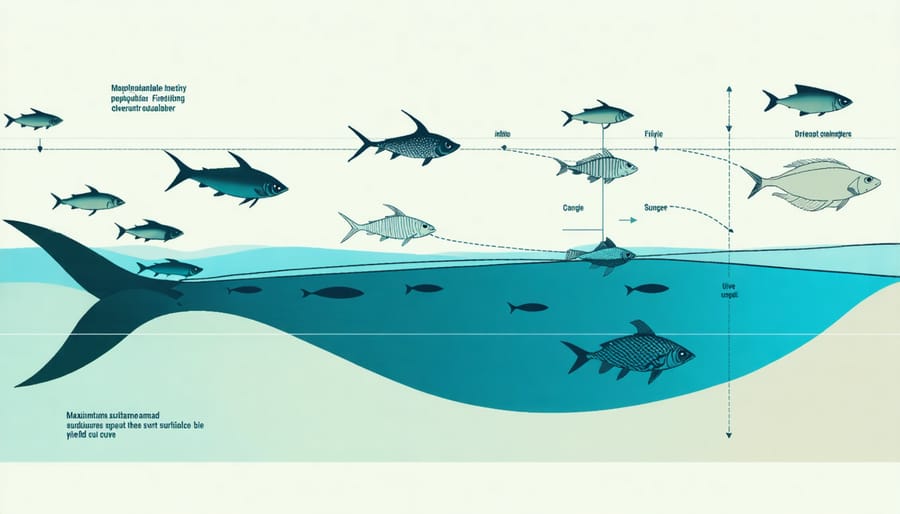
Maximum Sustainable Yield (MSY) represents a crucial concept in sustainable fisheries management, defining the highest level of fishing that a species can withstand while maintaining its population stability. Think of it as finding the sweet spot where we can harvest fish without compromising their ability to reproduce and maintain healthy population levels.
Scientists calculate MSY by analyzing various factors, including a species’ reproduction rate, growth patterns, and natural mortality. This mathematical model helps determine the optimal fishing quota that allows fish populations to replenish themselves naturally. However, it’s important to note that MSY isn’t a fixed number – it fluctuates based on environmental conditions, ecosystem health, and other biological factors.
Modern fisheries managers use MSY as a baseline rather than a target, often setting catch limits below MSY to create a buffer against uncertainties. This precautionary approach helps protect against environmental changes, data limitations, and the complex interactions within marine ecosystems.
While MSY provides a valuable framework, its implementation faces challenges. Factors such as climate change, habitat destruction, and the interconnected nature of marine ecosystems can affect its accuracy. Success stories from various regions show that when properly implemented alongside other conservation measures, MSY-based management can help restore and maintain fish populations while supporting fishing communities.
Modern Sustainable Fishing Technologies

Selective Fishing Gear
Modern selective fishing gear represents a significant advancement in sustainable fishing practices, utilizing innovative designs to minimize unintended catch while maximizing target species capture. These specialized tools include modified nets with escape panels, turtle excluder devices (TEDs), and acoustic deterrent devices that help prevent dolphin and whale entanglement.
One of the most successful innovations is the circle hook, which has reduced sea turtle bycatch by up to 90% in some longline fisheries while maintaining profitable catch rates of target species. These hooks are designed to catch fish in the corner of the mouth rather than being swallowed, making it easier to release non-target species unharmed.
Smart nets equipped with LED lights and acoustic pingers help warn away marine mammals and other non-target species. These technological solutions have proven particularly effective in reducing porpoise and dolphin bycatch in gillnet fisheries. Additionally, modified trawl designs incorporating sorting grids allow juvenile fish and non-target species to escape while retaining marketable catch.
Recent developments in real-time monitoring systems enable fishers to adjust their gear based on environmental conditions and species presence. Some vessels now use underwater cameras and sensors to observe catch composition as it happens, allowing crews to modify their fishing strategy if bycatch levels become too high.
The adoption of these selective fishing methods demonstrates how technology can balance commercial fishing needs with marine conservation goals, offering hope for more sustainable fishing practices worldwide.
Digital Monitoring Systems
Modern marine monitoring technologies have revolutionized our ability to ensure sustainable fishing practices. Vessel Monitoring Systems (VMS) use satellite tracking to provide real-time data about fishing vessel locations, speeds, and patterns. This technology helps authorities identify illegal fishing activities and ensures vessels remain within their designated fishing zones.
Electronic Monitoring (EM) systems, including video cameras and sensors, record fishing activities 24/7. These systems document catch composition, bycatch incidents, and compliance with fishing regulations. The footage can be reviewed by analysts to verify that sustainable practices are being followed and quotas are being respected.
Artificial Intelligence and machine learning algorithms now process vast amounts of data from these monitoring systems, flagging suspicious activities and identifying potential violations more efficiently than ever before. These smart systems can detect patterns that might indicate illegal fishing or unreported catches.
Digital catch documentation and traceability systems enable fishing vessels to report their catches electronically, creating a transparent supply chain from ocean to plate. This technology helps prevent illegal fish from entering the market and allows consumers to verify the sustainability of their seafood purchases.
Remote sensing technologies, including satellite imagery and drone surveillance, provide additional oversight by detecting fishing activities in protected areas or during closed seasons. These tools have become particularly valuable in monitoring large marine protected areas where traditional enforcement methods are challenging.
Together, these digital monitoring systems create a comprehensive framework for ensuring compliance with sustainable fishing practices, making it increasingly difficult for illegal operators to evade detection.
Success Stories from the Field
The Alaska Pollock Fishery
The Alaska Pollock fishery stands as a shining example of how sustainable fishing can work at a large scale. Operating in the Bering Sea and Gulf of Alaska, this fishery harvests approximately 1.5 million metric tons of Pollock annually while maintaining healthy fish populations through careful management.
What makes this fishery particularly remarkable is its comprehensive approach to sustainability. Vessels use advanced sonar technology and modified nets that minimize bycatch of other species. Real-time monitoring systems track catch levels, ensuring they stay within scientifically determined limits. Independent observers are present on larger vessels, collecting data and ensuring compliance with regulations.
The fishery’s management system includes seasonal fishing restrictions, area closures to protect sensitive habitats, and strict quota controls. These measures have helped maintain the Pollock population at sustainable levels since the mid-1970s, even as it supports one of the world’s largest commercial fisheries.
The success of this fishery has earned it multiple certifications, including from the Marine Stewardship Council. Its products can be traced from ocean to plate, providing consumers with confidence in their sustainable seafood choices. The Alaska Pollock fishery demonstrates that with proper management, science-based decisions, and industry cooperation, large-scale commercial fishing can be both profitable and environmentally responsible.
This model has become a blueprint for other fisheries worldwide, proving that sustainable fishing isn’t just possible – it’s achievable at scale.
Community-Based Management Success
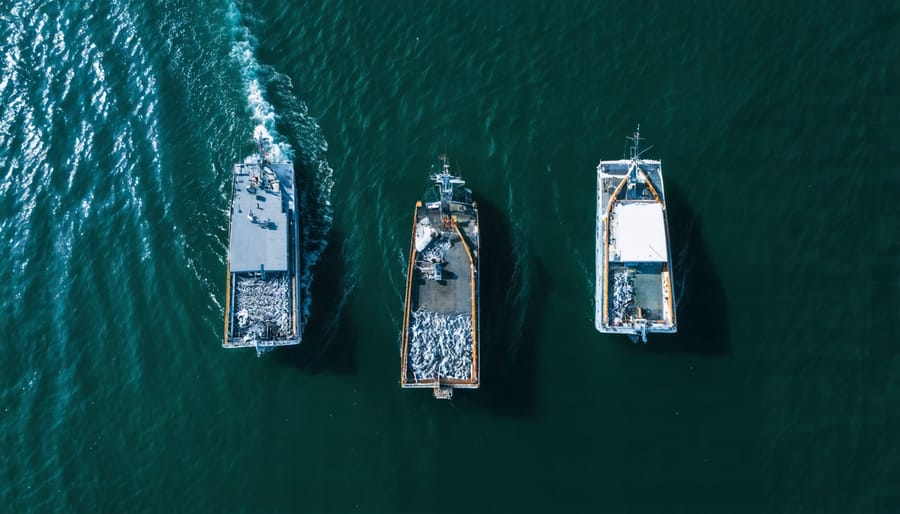
Community-based fisheries management has proven remarkably successful in various locations worldwide, demonstrating that sustainable fishing is achievable when local communities take charge. In the Philippines, the small fishing village of Apo Island stands as a shining example, where local fishers established a marine protected area in the 1980s. Today, their fish populations have increased by 300%, and the community enjoys steady income from both fishing and ecotourism.
Similar success stories emerge from Chile’s coastal communities, where the implementation of Territorial Use Rights in Fisheries (TURFs) has revolutionized local fishing practices. Local fishers maintain exclusive access to specific areas, encouraging long-term stewardship of marine resources. This approach has led to the recovery of valuable species like the Chilean abalone and improved economic outcomes for fishing families.
In Maine, United States, the lobster fishery showcases how traditional knowledge combined with modern conservation practices can create sustainable outcomes. Local lobstermen follow strict size limits, protect breeding females, and use trap limits to maintain healthy populations. This community-based approach has helped Maine’s lobster fishery remain productive for generations.
These examples share common elements: strong local leadership, clear access rights, scientific monitoring, and community buy-in. When fishing communities have a direct stake in resource management, they’re more likely to enforce regulations and adapt practices to ensure long-term sustainability.
The Role of Education and Certification
Education and certification programs play a vital role in ensuring the future of sustainable fishing practices worldwide. Through comprehensive training initiatives, fishers learn about marine ecosystems, fish population dynamics, and the latest sustainable harvesting techniques. These educational programs help bridge the gap between traditional fishing methods and modern conservation needs.
Professional certification programs, such as the Marine Stewardship Council (MSC) certification, have become increasingly important in the fishing industry. These programs establish strict standards for sustainable fishing practices and provide consumers with reliable ways to identify sustainably sourced seafood. When fisheries achieve certification, they demonstrate their commitment to maintaining healthy fish populations and minimizing environmental impact.
Many coastal communities now offer specialized training programs that combine traditional fishing knowledge with contemporary scientific understanding. These programs often include hands-on experience with sustainable fishing gear, workshops on marine biology, and instruction in data collection methods. For example, in Alaska, the Young Fishermen’s Development Program provides comprehensive education to the next generation of sustainable fishers.
Universities and marine research institutes contribute significantly by offering courses and workshops focused on sustainable fishing practices. These educational opportunities aren’t limited to professional fishers – they often extend to recreational anglers, helping ensure that all forms of fishing contribute to marine conservation efforts.
Digital learning platforms have made sustainable fishing education more accessible than ever. Online courses, webinars, and mobile apps provide fishers with up-to-date information about sustainable practices, regulations, and marine ecosystem health. These resources allow fishers to continue their education and stay informed about the latest developments in sustainable fishing methods.
The impact of education and certification extends beyond individual fishers to influence entire supply chains. Retailers and restaurants increasingly require sustainable certification from their suppliers, creating economic incentives for fisheries to adopt and maintain sustainable practices. This market-driven approach, combined with educational initiatives, helps ensure that sustainable fishing practices become the industry standard rather than the exception.
Sustainable fishing is not just a possibility – it’s an achievable necessity for our planet’s future. Throughout this exploration of sustainable fishing practices, we’ve seen how traditional knowledge, modern technology, and scientific research can work together to protect our marine ecosystems while maintaining food security. The success stories from various regions demonstrate that when communities, governments, and fishing industries collaborate, remarkable progress in ocean conservation is possible.
As we face growing ocean conservation challenges, each of us has a role to play in supporting sustainable fishing. Start by making informed seafood choices using sustainable fishing guides and certifications. Support local fisheries that practice responsible harvesting methods, and advocate for stronger fishing regulations in your community.
Consider joining citizen science projects that monitor marine ecosystems or volunteering with conservation organizations. Share your knowledge about sustainable fishing practices with others, and encourage restaurants and retailers to source sustainably caught seafood. By taking these steps and remaining committed to ocean conservation, we can ensure that future generations will continue to benefit from healthy marine ecosystems and abundant fish populations.
The path to sustainable fishing requires ongoing dedication, innovation, and collaboration, but the evidence shows it’s within our reach. Together, we can create a future where marine resources are managed responsibly and fish populations thrive alongside human communities.

jessica
Ava Singh is an environmental writer and marine sustainability advocate with a deep commitment to protecting the world's oceans and coastal communities. With a background in environmental policy and a passion for storytelling, Ava brings complex topics to life through clear, engaging content that educates and empowers readers. At the Marine Biodiversity & Sustainability Learning Center, Ava focuses on sharing impactful stories about community engagement, policy innovations, and conservation strategies. Her writing bridges the gap between science and the public, encouraging people to take part in preserving marine biodiversity. When she’s not writing, Ava collaborates with local initiatives to promote eco-conscious living and sustainable development, ensuring her work makes a difference both on the page and in the real world.