Marine Biodiversity Science Center

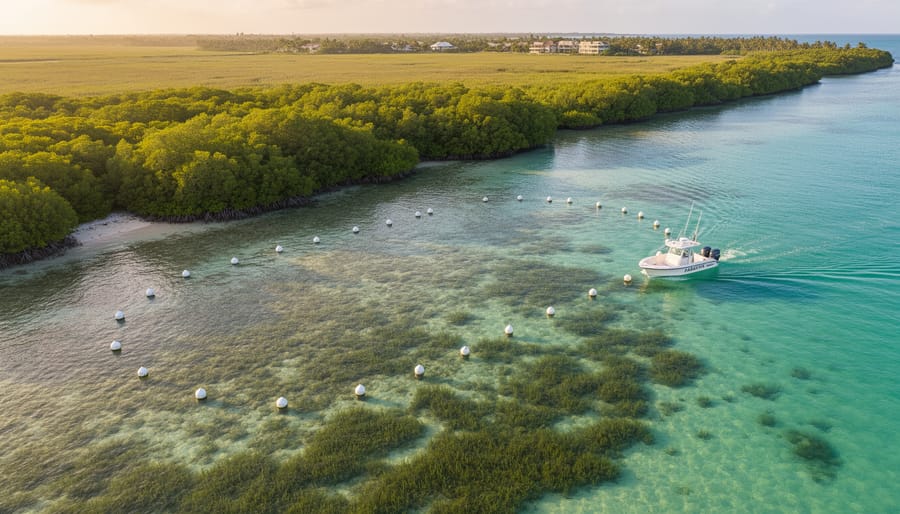
The seagrass meadows, mangrove forests, and salt marshes lining our coasts don’t just provide breathtaking scenery—they capture and store carbon at rates up to 40 times faster than terrestrial forests. Yet despite their extraordinary climate mitigation potential, these blue carbon ecosystems have lost more than half their global coverage in recent decades, degraded by coastal development, pollution, and inadequate protection. The difference between continued destruction and meaningful restoration often comes down to one critical element: effective policy frameworks.
A policy framework serves as the architectural blueprint that transforms conservation intentions into tangible protection. It establishes the legal authority to designate marine protected areas, allocates funding for restoration projects, coordinates actions across multiple government agencies, and creates enforceable standards that prevent destructive activities. Without this structured approach, even the most passionate conservation efforts remain fragmented, underfunded, and vulnerable to competing economic pressures.
Consider the contrast between two coastal regions. In one, mangroves disappear steadily for aquaculture development, with no authority empowered to intervene. In another, an integrated policy framework mandates environmental impact assessments, provides economic incentives for sustainable fishing practices, and dedicates restoration budgets—resulting in expanding mangrove coverage and thriving fishing communities. The ecosystems are identical; the outcomes drastically different.
Understanding policy frameworks isn’t reserved for legislators or government officials. Environmental scientists need this knowledge to translate research findings into policy recommendations. Educators require it to explain how conservation actually happens beyond individual actions. Students benefit from grasping how systemic change occurs. Even concerned citizens gain power when they understand which policy levers to push and which decision-makers to engage.
This article breaks down the essential components of blue carbon policy frameworks, examines successful international and national examples, and reveals how these governmental structures connect to real conservation work happening in coastal communities today. You’ll discover not just what policies exist, but how they function, why they succeed or fail, and how you can participate in strengthening the frameworks protecting our planet’s most productive carbon sinks.
What Makes Blue Carbon Ecosystems Worth Protecting
Carbon Storage Powerhouses
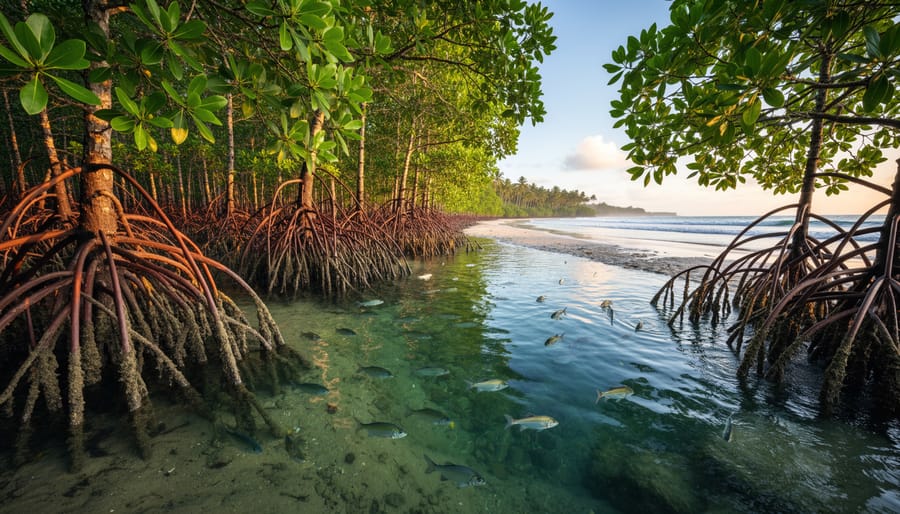
Understanding why blue carbon ecosystems deserve special policy attention starts with recognizing their extraordinary carbon storage capacity. Mangroves, seagrasses, and salt marshes store carbon up to 40 times faster per area than tropical rainforests. The secret lies beneath the surface: while terrestrial forests primarily store carbon in wood and leaves, coastal ecosystems lock away massive amounts in their waterlogged soils, where low-oxygen conditions slow decomposition dramatically.
Dr. Elena Rodriguez, a marine ecologist who has spent two decades studying mangrove systems in Southeast Asia, describes it vividly: “When I show people soil core samples, they’re amazed. We can find carbon that’s been stored for thousands of years, just meters below the surface. It’s like a time capsule of atmospheric history.”
These underwater carbon vaults can extend several meters deep, accumulating organic material over centuries. A single hectare of seagrass meadow can store the same amount of carbon as 15 hectares of terrestrial forest. This remarkable efficiency makes blue carbon ecosystems critical climate allies, which is precisely why effective policy frameworks must prioritize their protection and restoration.
Marine Biodiversity Hotspots
Blue carbon ecosystems rank among Earth’s most biologically productive habitats, supporting an extraordinary array of life that rivals even tropical rainforests. Mangrove forests alone provide shelter for over 1,500 species of fish and invertebrates, while seagrass meadows harbor diverse communities including seahorses, sea turtles, and countless juvenile fish species. This remarkable marine biodiversity represents not just ecological treasure but economic lifeline for coastal communities worldwide.
These ecosystems function as nature’s nurseries, offering protected shallow waters where young fish find abundant food and refuge from predators. Research shows that up to 80% of commercially valuable fish species depend on mangroves, seagrasses, or salt marshes during critical life stages. Species like snapper, grouper, and shrimp spend their juvenile months in these sheltered zones before migrating to deeper waters. The economic value is staggering: healthy mangrove systems can support fisheries worth thousands of dollars per hectare annually.
Marine biologist Dr. Elena Santos shares her perspective: “Every time I survey a restored seagrass bed, I’m amazed by the explosion of life. Within months, we see octopus, cuttlefish, and schools of juvenile fish returning. These habitats don’t just store carbon; they regenerate entire marine food webs.” Understanding this biodiversity connection strengthens the case for robust policy frameworks that protect these multifunctional ecosystems.
The Building Blocks of Effective Policy Frameworks
Legal Recognition and Protection Status
Ecosystems gain legal protection through several mechanisms, with the most common being designation as protected areas under national or international frameworks. Marine protected areas (MPAs), national parks, and special conservation zones provide regulatory safeguards that restrict harmful activities like dredging, development, and destructive fishing practices within blue carbon ecosystems.
The Ramsar Convention on Wetlands has been particularly successful in protecting coastal wetlands and mangroves. Since 1971, over 2,400 wetland sites spanning more than 250 million hectares have received international recognition, ensuring these areas maintain their ecological integrity. For example, the Sundarbans mangrove forest, shared by India and Bangladesh, gained Ramsar designation and UNESCO World Heritage status, providing multiple layers of legal protection for the world’s largest mangrove ecosystem.
In the United States, the National Estuarine Research Reserve System protects 1.4 million acres of estuarine habitat, including critical seagrass beds and salt marshes. These reserves not only safeguard ecosystems but also serve as living laboratories for conservation science.
Marine biologist Dr. Jennifer Hayes shares her experience: “When our local seagrass meadow received MPA status, we witnessed immediate recovery. Commercial trawling ceased, water quality improved, and within two years, fish populations rebounded dramatically.”
Effective legal protection requires strong enforcement mechanisms, adequate funding, and community involvement to ensure long-term success and ecosystem resilience.
Governance Structures and Stakeholder Involvement
Successful blue carbon ecosystem conservation depends on inclusive governance structures that bring together diverse voices and expertise. Effective policy frameworks recognize that no single entity can protect these complex habitats alone—instead, they create spaces for local communities, indigenous groups, scientists, policymakers, and conservation organizations to collaborate meaningfully.
Community-based management has proven particularly effective in coastal regions where people depend directly on these ecosystems for their livelihoods. When fishing communities participate in creating mangrove protection zones, they’re more likely to respect boundaries and report violations because they helped design the rules. These stakeholders bring traditional ecological knowledge that scientists might miss, like seasonal patterns in fish migration or historical changes in vegetation.
Dr. Maria Santos, a marine biologist working in Southeast Asia, shares how this approach transformed conservation outcomes: “We initially designed a coastal protection plan from our research station. It failed within months. When we sat down with village elders and fishers, they showed us nursery areas we hadn’t identified and explained why certain restrictions wouldn’t work. The revised plan, co-created with the community, has protected over 500 hectares for five years.”
Multi-stakeholder governance also creates accountability mechanisms that single-agency management often lacks. Regular forums where communities can voice concerns, scientists present findings, and officials explain enforcement actions build trust and adaptive capacity. This collaborative approach doesn’t just protect ecosystems—it creates conservation champions who spread awareness and recruit volunteers for monitoring programs, multiplying the impact of formal policies.
Enforcement Mechanisms That Actually Work
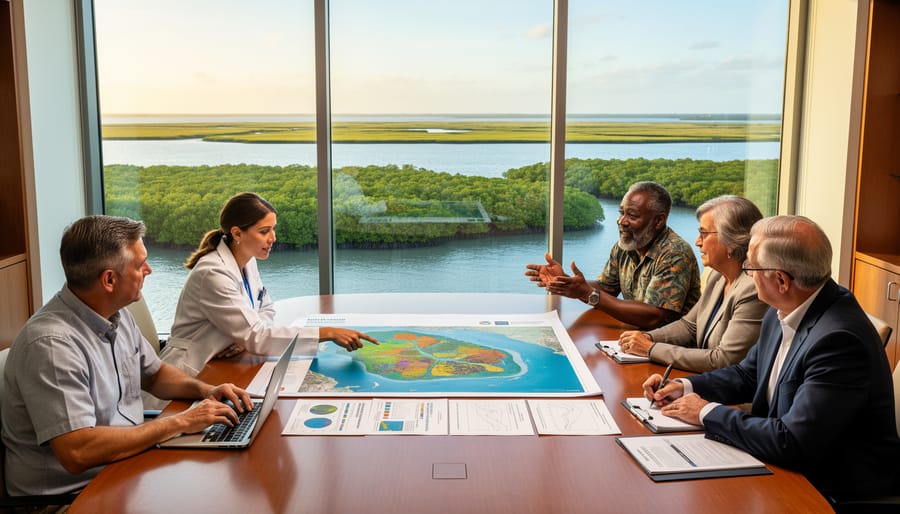
Effective enforcement transforms policy from paper promises into meaningful protection for blue carbon ecosystems. The most successful frameworks combine regular monitoring with graduated penalties and transparent reporting systems.
Satellite imagery and remote sensing now allow authorities to track mangrove clearance and coastal development in near real-time. In Indonesia’s mangrove restoration program, drone technology helps rangers monitor over 600,000 hectares, detecting illegal logging within days rather than months. Community-based monitoring adds another layer, with trained local observers reporting violations through mobile apps that connect directly to enforcement agencies.
Penalties must be substantial enough to deter violations while funding restoration. Australia’s Great Barrier Reef Marine Park imposes fines up to $3 million for unauthorized coastal clearing, with revenues directed toward habitat restoration. Madagascar’s approach includes criminal penalties for large-scale destruction alongside community service requirements for minor infractions, creating accountability at multiple levels.
The key to enforcement success lies in transparency. New Zealand publishes quarterly compliance reports online, naming violators and tracking restoration progress. This public accountability, combined with independent audits, builds trust and encourages voluntary compliance. Marine biologist Dr. Elena Torres notes that when communities see enforcement applied fairly and consistently, they become advocates rather than adversaries of conservation policy.
International Frameworks Leading the Way
The Paris Agreement and Blue Carbon
The Paris Agreement offers nations a powerful avenue to protect blue carbon ecosystems through their Nationally Determined Contributions (NDCs). These climate pledges allow countries to include mangroves, seagrass meadows, and salt marshes as part of their carbon reduction strategies, recognizing these coastal habitats as both carbon sinks and climate adaptation tools.
Several nations are leading the way in integrating blue carbon into their climate commitments. The United Arab Emirates became one of the first countries to explicitly include mangrove conservation in its NDC, committing to expand mangrove coverage by 75% by 2030. Costa Rica has incorporated coastal wetlands into its goal of becoming carbon neutral, while Indonesia, home to the world’s largest mangrove forests, has pledged to restore over 600,000 hectares of degraded coastal ecosystems.
Australia’s Emissions Reduction Fund now allows landholders to earn carbon credits by restoring tidal marshes and mangroves, creating economic incentives for coastal conservation. Madagascar has similarly embedded blue carbon restoration into its national climate strategy, partnering with local communities to protect vital mangrove areas.
These examples demonstrate that when countries formally recognize blue carbon ecosystems in their climate policies, they unlock funding, political will, and cross-sector collaboration needed for long-term protection.
The Ramsar Convention’s Role
The Ramsar Convention on Wetlands, established in 1971, stands as one of the oldest international environmental agreements protecting coastal blue carbon ecosystems. This treaty recognizes that wetlands, including mangrove forests, salt marshes, and seagrass meadows, provide essential ecological services that transcend national borders. Countries that sign the convention commit to designating at least one wetland of international importance and maintaining its ecological character.
Currently, over 2,400 Ramsar sites exist worldwide, protecting approximately 256 million hectares of wetlands. Notable examples include the Sundarbans mangrove forest spanning India and Bangladesh, the largest contiguous mangrove ecosystem on Earth, and Florida’s Everglades, which encompasses extensive coastal marshes supporting exceptional biodiversity. In Australia, the Great Barrier Reef Marine Park includes vital seagrass beds that sequester carbon while nurturing juvenile fish populations.
Marine biologist Dr. Elena Rodriguez, who monitors a Ramsar-designated mangrove site in Ecuador, shares that the designation brought crucial funding and international recognition. Her team now collaborates with local communities to restore degraded areas, demonstrating how global frameworks translate into tangible conservation outcomes that protect both carbon stores and coastal livelihoods.
Regional Cooperation Success Stories
Transboundary cooperation has proven essential for protecting blue carbon ecosystems that span national borders. The Coral Triangle Initiative, uniting six nations across Southeast Asia and the Pacific, demonstrates how regional partnerships can safeguard mangrove forests and seagrass beds critical to both carbon storage and fisheries. Since its establishment, the initiative has protected over 6.5 million hectares of marine habitat.
In the Mediterranean, the Barcelona Convention brings together 21 countries to coordinate seagrass meadow protection, establishing shared monitoring protocols and restoration targets. Marine biologist Dr. Elena Vasquez recalls witnessing this cooperation firsthand: “Watching Greek and Turkish scientists work side-by-side on Posidonia restoration showed me that ecosystems don’t recognize political boundaries, and neither should conservation.”
The Western Indian Ocean Coastal Challenge represents another success, with nine nations committing to restore 10 percent of degraded coastal ecosystems by 2030. These agreements create economies of scale for research, share best practices, and establish consistent protection standards that prevent harmful activities from simply relocating across borders, ensuring blue carbon habitats receive comprehensive protection.
National Policy Approaches That Make a Difference
Integrating Blue Carbon into Climate Policy
Countries worldwide are recognizing blue carbon’s potential and weaving it into their climate commitments. Australia’s Blue Carbon Strategy, launched in 2020, protects over 30,000 square kilometers of coastal ecosystems while supporting Indigenous-led conservation. The results speak volumes: seagrass restoration projects have sequestered an estimated 50,000 tons of carbon annually while creating coastal jobs.
The United Arab Emirates has embedded mangrove protection into its national climate plan, planting 100 million mangroves by 2030. Early measurements show these efforts could offset 1.4 million tons of carbon dioxide annually while providing critical nursery habitat for fish species that support local fishing communities.
In Kenya, the Mikoko Pamoja project became the world’s first blue carbon project to sell verified carbon credits from mangrove conservation. This community-led initiative demonstrates how national policy support can enable local action. The revenue funds school bursaries and water projects, proving that climate policy can deliver multiple benefits.
Marine biologist Dr. Aisha Mohamed, who works with Kenya’s coastal communities, shares: “When policy frameworks recognize blue carbon’s value, communities gain both environmental protection and economic opportunity. It transforms conservation from an abstract concept into tangible improvement in daily lives.”
Coastal Zone Management Laws
Comprehensive coastal zone management laws create essential frameworks that balance ecosystem protection with community needs. These regulations typically establish buffer zones around sensitive blue carbon habitats like mangroves, seagrass beds, and salt marshes, restricting harmful development while permitting sustainable activities. Countries like Australia and New Zealand have pioneered integrated coastal management approaches that bring together multiple government agencies, local communities, and scientific experts to make informed decisions about coastal resources.
Effective legislation often includes requirements for environmental impact assessments before coastal projects proceed, mandatory restoration of damaged ecosystems, and penalties for unauthorized destruction of blue carbon habitats. For instance, several Caribbean nations have enacted laws specifically protecting mangrove forests, recognizing their dual role in carbon storage and hurricane protection.
Marine biologist Dr. Elena Rodriguez shares how Costa Rica’s coastal zone law transformed her study sites: “Within five years of implementing strict mangrove protections, we documented a 40 percent increase in fish populations and measurable carbon sequestration improvements. The law gave communities tools to say no to destructive development.”
These legal frameworks work best when they include provisions for monitoring, enforcement, and regular updates based on emerging science, ensuring blue carbon ecosystems receive lasting protection while supporting coastal livelihoods.
Economic Incentives and Carbon Markets
Blue carbon credit systems represent an innovative approach to financing coastal ecosystem protection by assigning economic value to the carbon storage capacity of mangroves, seagrasses, and salt marshes. Here’s how it works: organizations that restore or protect these habitats can earn carbon credits, which companies purchase to offset their emissions. These market-based mechanisms create direct financial incentives for conservation while addressing climate change.
Payment for ecosystem services (PES) programs take a broader approach, compensating communities and landowners for maintaining the multiple benefits these ecosystems provide—from storm protection to fishery support. In the Philippines, for example, coastal communities receive payments for protecting mangrove forests that shield villages from typhoons while sequestering carbon.
Marine biologist Dr. Carlos Mendez shares his experience: “I’ve watched fishing communities transition from clearing mangroves to becoming their guardians once they understood the economic value. These programs transform conservation from a cost into an opportunity.”
While still emerging, these economic frameworks are expanding globally, offering promising pathways to fund large-scale blue carbon protection. Students and professionals interested in this intersection of ecology and economics can explore opportunities through carbon credit certification programs and environmental finance organizations.
Bridging the Gap: From Policy to Practice
Overcoming Implementation Barriers
Even the most well-designed policy frameworks face real-world challenges during implementation. Funding gaps represent perhaps the most common barrier, as blue carbon projects often require sustained financial investment over many years. Innovative solutions like blue carbon credits, where organizations offset emissions by investing in coastal restoration, are creating new revenue streams that help bridge these gaps.
Conflicting land uses present another significant obstacle. Coastal areas face competing pressures from development, aquaculture, and tourism. Dr. Maria Santos, a marine policy specialist in the Philippines, shares her experience: “We brought stakeholders together early, showing fishing communities how healthy mangroves actually increased their catch. When people see direct benefits, they become the policy’s strongest advocates.”
Technical capacity limitations particularly affect developing nations. Building local expertise through training programs and international partnerships helps communities monitor and manage their own blue carbon ecosystems. Universities and conservation organizations increasingly offer volunteer opportunities for citizens to assist with data collection and restoration efforts, strengthening both scientific understanding and community engagement.
Successful implementation requires patience, collaboration, and adaptive management. Regular policy reviews allow frameworks to evolve as we learn what works, ensuring these protective measures remain effective and relevant to changing circumstances.

Stories from the Field
Dr. Maya Rodriguez, a marine ecologist working in the Philippines, recalls the turning point when national mangrove protection policies finally took effect in her region. “For years, we documented the decline of coastal mangrove forests, but without legal backing, our data sat in reports,” she explains. “When the Enhanced National Greening Program incorporated blue carbon ecosystems, everything changed. Suddenly, we had enforcement mechanisms, funding streams, and most importantly, community support backed by law.”
The policy framework didn’t just protect existing forests; it enabled restoration. Maya’s team trained over 300 local volunteers in mangrove replanting techniques, transforming former shrimp farms back into thriving coastal habitats. “The policy gave us teeth, but also resources for education and community engagement,” she notes.
However, lessons emerged along the way. Conservation officer James Chen from California’s wetland restoration projects shares a cautionary tale: “Early policy frameworks focused solely on preservation without considering the communities who’d lived alongside these ecosystems for generations.” His work helped shape inclusive policies that recognize traditional ecological knowledge and provide alternative livelihoods for fishing communities affected by conservation zones.
These experiences underscore a crucial truth: effective policy frameworks balance protection with people. When regulations include stakeholder input, provide adequate funding, and create pathways for local participation, conservation thrives. As Maya emphasizes, “Policy opened doors we couldn’t open alone, but success required bringing communities through those doors with us.”
How You Can Support Strong Policy Frameworks
Volunteer Opportunities in Policy Advocacy
Getting involved in policy advocacy for blue carbon ecosystems is more accessible than you might think, and your voice truly matters. The Marine Biodiversity Science Center offers several pathways for participation, starting with citizen science programs that collect vital data on coastal ecosystem health. These observations directly inform policy recommendations by providing real-world evidence of ecosystem changes and conservation needs.
You can join advocacy campaigns that engage with local and national representatives about marine protection legislation. The Center regularly organizes letter-writing initiatives, town hall participation, and public comment opportunities when new environmental regulations are under review. No specialized training is required—just passion and willingness to learn.
Beyond direct advocacy, volunteer roles include assisting with policy research, translating scientific findings into accessible policy briefs, and helping communities understand how proposed frameworks affect their local coastlines. Educational outreach programs need volunteers to present at schools and community centers, building grassroots support for marine conservation policies.
Other organizations like Ocean Conservancy and local watershed councils also welcome volunteers for beach cleanups, habitat monitoring, and advocacy training workshops. These hands-on experiences deepen your understanding of why robust policy frameworks matter while creating tangible conservation impact. Start small, stay consistent, and watch how collective action shapes meaningful policy change.

Making Your Voice Heard
You don’t need to be a policymaker to influence blue carbon conservation. Your voice matters, and there are numerous accessible ways to participate in shaping protective frameworks for these critical ecosystems.
Start by engaging with public consultations when coastal development projects are proposed in your area. Government agencies are often required to seek public input on environmental impact assessments. Submit written comments highlighting the importance of blue carbon habitats, referencing scientific evidence about their carbon storage capacity and biodiversity value. Many marine biologists report that well-informed public feedback has successfully influenced project modifications to minimize ecosystem damage.
Connect with local environmental organizations working on coastal conservation. These groups often coordinate campaigns, organize community meetings with elected officials, and provide training on effective policy advocacy strategies. Volunteer opportunities range from habitat monitoring to public education programs that build broader support for blue carbon protection.
Reach out directly to your representatives. Personal letters and meetings with local, regional, and national officials create awareness about constituent priorities. Share specific examples of blue carbon ecosystems in your region and why they deserve protection. Many successful policy changes began with persistent grassroots advocacy from informed citizens who refused to let these invisible carbon champions remain overlooked.
The future of our blue carbon ecosystems rests not solely on scientific understanding, but on our collective willingness to translate knowledge into action through robust policy frameworks. These legal and governance structures serve as the foundation for protecting mangroves, seagrasses, and salt marshes that sequester carbon while supporting countless marine species and coastal communities. Without them, even the most groundbreaking research remains merely academic.
What makes this moment particularly exciting is the growing momentum behind blue carbon conservation worldwide. From international agreements like the Paris Climate Accord to innovative national policies and grassroots community initiatives, we’re witnessing an unprecedented convergence of political will, scientific evidence, and public engagement. The policy frameworks we’ve explored throughout this article demonstrate that when governments, scientists, and citizens work together, meaningful protection becomes achievable.
Consider the marine biologist who spent years documenting seagrass ecosystems, whose data now informs coastal protection laws. Or the local community members whose traditional knowledge helped shape management plans that balance conservation with sustainable livelihoods. These stories remind us that policy frameworks don’t exist in isolation—they emerge from real people making real contributions.
Your role in this conservation story matters more than you might think. Whether you’re an environmental scientist, educator, student, or simply someone who cares about our oceans, opportunities to engage exist at every level. Stay connected through our center’s e-network for updates on policy developments, volunteer opportunities, and educational programs. Share what you’ve learned with others. Participate in public comment periods when coastal policies are under review. Support organizations working to strengthen blue carbon protections.
The policies protecting these vital ecosystems today began with individuals who decided their voices mattered. Yours does too. Join us in building a future where blue carbon ecosystems thrive, not just for their climate benefits, but for the incredible biodiversity and coastal resilience they provide for generations to come.

jessica
Ava Singh is an environmental writer and marine sustainability advocate with a deep commitment to protecting the world's oceans and coastal communities. With a background in environmental policy and a passion for storytelling, Ava brings complex topics to life through clear, engaging content that educates and empowers readers. At the Marine Biodiversity & Sustainability Learning Center, Ava focuses on sharing impactful stories about community engagement, policy innovations, and conservation strategies. Her writing bridges the gap between science and the public, encouraging people to take part in preserving marine biodiversity. When she’s not writing, Ava collaborates with local initiatives to promote eco-conscious living and sustainable development, ensuring her work makes a difference both on the page and in the real world.