Marine Biodiversity Science Center

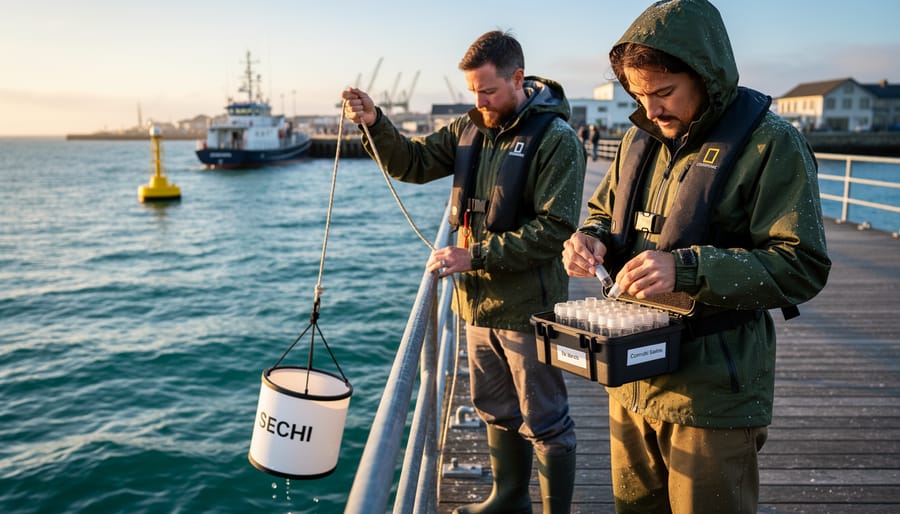
Understanding the Journal of Marine Science and Engineering impact factor empowers you to make informed decisions about publishing your research, recognizing credible science, and contributing to marine conservation efforts that truly matter. The journal currently maintains an impact factor of 2.7, positioning it as a respected platform where peer-reviewed marine research reaches global audiences of scientists, conservationists, and policymakers who shape ocean protection strategies.
This metric matters because it reflects how frequently other researchers cite studies published in this journal, indicating the real-world influence of the science within. For community scientists and educators, this number represents more than academic prestige—it signals a bridge between grassroots observation and institutional recognition, where data collected by dedicated volunteers can achieve the same scientific rigor and reach as traditional laboratory research.
The journal welcomes diverse research areas including coastal engineering, marine biology, oceanography, and increasingly, community-engaged science projects that harness collective action for conservation. Whether you’re documenting local species populations, monitoring water quality in your coastal community, or teaching students about marine ecosystems, understanding how academic journals evaluate and disseminate research helps you appreciate where your observations fit within the larger scientific framework.
Impact factors also guide researchers toward journals that balance accessibility with credibility—publications that undergo rigorous peer review while remaining open to innovative methodologies, including citizen science approaches. This knowledge becomes particularly valuable when evaluating marine conservation claims, supporting evidence-based policy, or deciding where to direct your volunteer efforts for maximum conservation impact. The intersection of measurable scientific influence and participatory research creates unprecedented opportunities for collective ocean stewardship, transforming passionate observers into recognized contributors to marine science.
What the Journal of Marine Science and Engineering Impact Factor Really Means for Your Work
Breaking Down the Numbers
The Journal of Marine Science and Engineering currently holds an impact factor that reflects its growing influence in ocean research and conservation. As of the latest metrics, the journal’s impact factor hovers around 2.7, placing it as a respected voice in marine science publishing.
But what does this number actually mean? The impact factor measures how frequently articles from a journal are cited by other researchers over a two-year period. It’s calculated by dividing the number of citations by the total number of published articles. Think of it as a measure of how widely the journal’s research resonates within the scientific community.
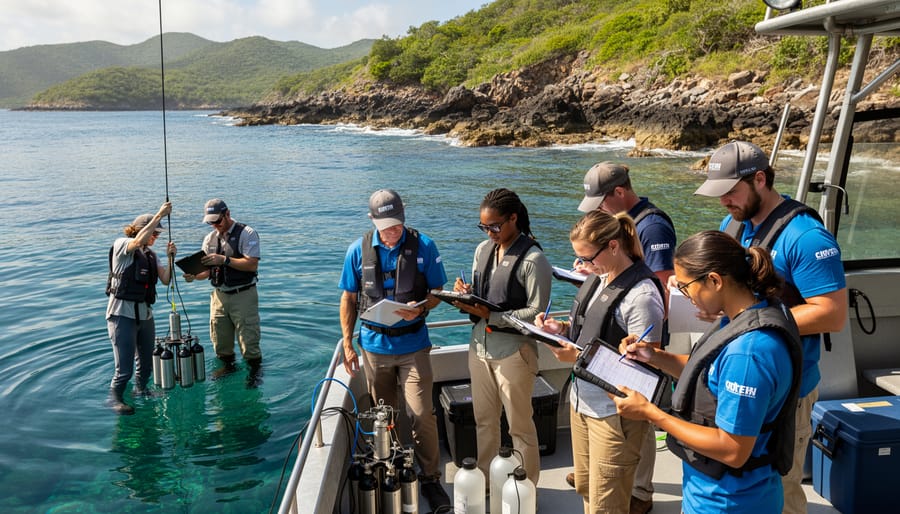
For those involved in citizen science and community-based marine research, understanding this metric matters because it shows that work published here reaches professional scientists, conservation organizations, and policymakers. When a marine biologist I spoke with, Dr. Sarah Chen, published findings from a volunteer-based coral monitoring project, the citations her work received helped validate the crucial role community scientists play in tracking ocean health.
This impact factor signals that the journal values diverse research approaches, including community-engaged studies. While it may not top the charts compared to some century-old publications, its steady growth demonstrates increasing recognition of practical, conservation-focused research. For educators and community scientists, this means your observations and data contributions can find their way into respected academic discourse, amplifying the real-world impact of collective ocean stewardship efforts.
Why This Journal Welcomes Community Science Contributions
The Journal of Marine Science and Engineering has distinguished itself by actively welcoming contributions from citizen scientists and community-based monitoring programs. This commitment reflects a growing recognition that valuable marine data doesn’t only come from traditional academic sources. The journal has published numerous studies incorporating community-collected observations, from coastal water quality monitoring projects to fish population surveys conducted by recreational divers.
Recent examples include a groundbreaking study on microplastic distribution that relied heavily on beachcomber volunteers across multiple continents, and research tracking sea turtle nesting patterns through community reporting networks. These publications demonstrate how community-engaged marine research can meet rigorous scientific standards while expanding our understanding of ocean ecosystems.
The journal’s editorial team provides clear guidelines for community science submissions, ensuring proper methodology and data validation without imposing unnecessary barriers. This approach acknowledges that motivated volunteers, when properly trained and coordinated, can gather datasets of unprecedented geographic and temporal scope. For educators and community organizers, this openness means your coastal monitoring programs or student-led marine surveys could contribute to peer-reviewed science, amplifying the impact of your conservation efforts far beyond local shores.
The Growing Bridge Between Academic Journals and Community Scientists
From Backyard Observers to Published Contributors
The path from curious coastal observer to published contributor in journals like the Journal of Marine Science and Engineering is more accessible than many realize. Across the globe, dedicated individuals are transforming their backyard observations into valuable data that advances marine research.
Take Sarah Mitchell, a retired teacher from Vancouver Island, who began photographing sea stars during her morning beach walks in 2019. When she noticed unusual lesions on the animals, she started systematically documenting their locations and conditions. Her meticulous records, submitted through a community science platform, became part of a larger dataset tracking sea star wasting syndrome. Today, her contributions appear in peer-reviewed publications examining disease patterns along the Pacific coast.
Similarly, Miguel Torres, a commercial fisherman in Nova Scotia, partnered with researchers to collect water samples during his daily trips. His access to remote locations and willingness to follow protocols provided scientists with data from areas rarely studied. The collaborative effort resulted in co-authored papers documenting seasonal plankton variations, demonstrating how local knowledge combined with scientific methodology creates publication-worthy research.
The journey typically begins with joining established citizen science programs that provide training, equipment, and data collection protocols. Organizations like Ocean Networks Canada and regional marine conservation groups offer structured opportunities where your observations meet scientific standards. Contributors receive guidance on proper documentation methods, quality control measures, and data submission processes.
What makes these stories particularly inspiring is their ripple effect. Published citizen science research validates community contributions, encourages broader participation, and demonstrates that meaningful scientific advancement does not require advanced degrees. Your careful observations of local marine environments can fill critical knowledge gaps, inform conservation policies, and contribute to humanity’s understanding of our oceans.
What Journals Are Looking For in Community Science Submissions
High-quality citizen science submissions stand out through rigorous data collection methods and clear documentation. Journals like the Journal of Marine Science and Engineering seek community science projects that follow established scientific protocols, even when conducted by non-professional researchers. This means using standardized measurement techniques, recording detailed observations with dates, locations, and environmental conditions, and collecting data consistently over time.
Successful submissions typically demonstrate collaboration between community participants and academic researchers. Dr. Maria Santos, a marine biologist who has mentored coastal monitoring groups, shares: “When volunteers work alongside scientists, they learn proper identification techniques and understand why precise measurements matter. This partnership produces data that meets publication standards while empowering communities to become active stewards of their local waters.”
Quality standards include photographic evidence for species identification, use of validated survey methods, and transparent reporting of limitations. Journals particularly value projects addressing knowledge gaps in undersampled regions or tracking seasonal changes that require regular monitoring. Temperature readings, plastic pollution surveys, and intertidal biodiversity assessments are examples of accessible yet scientifically valuable contributions.
To make your community science work publication-worthy, focus on consistency, accuracy, and collaboration. Many universities and conservation organizations offer training programs for volunteers interested in contributing to marine research. Document your methods carefully, maintain organized records, and consider partnering with established research institutions. These practices transform enthusiastic observation into credible scientific contributions that journals actively seek to publish, demonstrating that meaningful marine science extends far beyond traditional laboratory settings.
How Your Community Observations Can Contribute to Peer-Reviewed Research
Training and Resources Available to Citizen Scientists
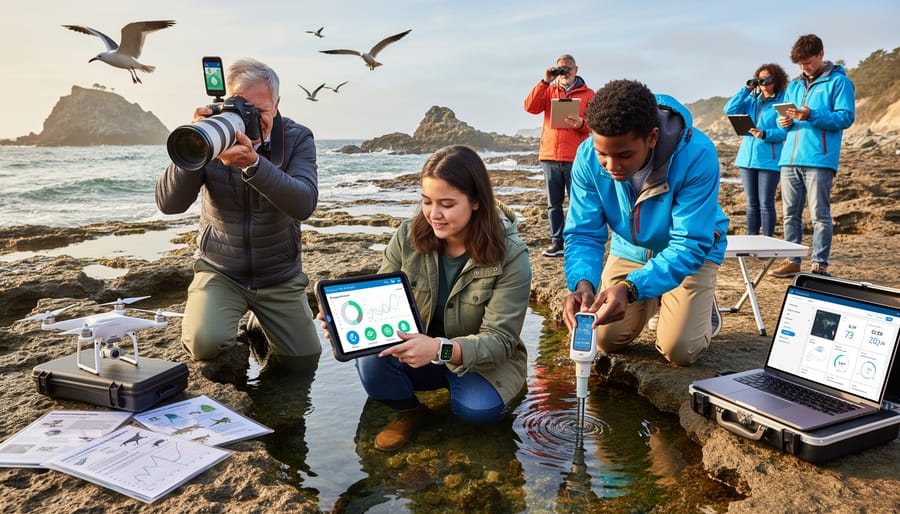
Getting started as a citizen scientist in marine research has never been more accessible, thanks to comprehensive training programs designed specifically for community members. Organizations like the Marine Conservation Institute and NOAA’s Citizen Science Program offer free online courses covering everything from species identification to proper data collection techniques. These programs ensure that volunteer observations meet the rigorous standards expected in peer-reviewed journals, including those with notable impact factors like the Journal of Marine Science and Engineering.
Mobile technology has revolutionized how everyday people contribute to marine research. Apps like iNaturalist Marine, SeabirdWatch, and Marine Debris Tracker guide users through standardized observation protocols with built-in photo verification and GPS tagging. These tools transform smartphones into scientific instruments, making data collection both accurate and enjoyable. Many programs provide tutorial videos and field guides directly within their apps, eliminating the learning curve for newcomers.
Dr. Sarah Chen, a marine biologist who coordinates volunteer programs along the Pacific Coast, shares her perspective: “I’ve watched retired teachers, fishermen, and high school students become invaluable research partners. After just a weekend training session, they’re collecting data that contributes to published studies. Their enthusiasm reminds me why I fell in love with marine science in the first place.”
Partnership programs between universities and local communities create structured volunteer opportunities. Coastal cleanup initiatives now incorporate scientific surveys, allowing participants to document plastic pollution patterns while making tangible environmental improvements. Weekend bioblitzes bring together experts and novices to comprehensively survey marine biodiversity in specific locations.
These accessible pathways ensure that anyone passionate about ocean conservation can contribute meaningful data to the scientific community, demonstrating that impactful research extends far beyond traditional academic settings.
Real Projects Making an Impact Right Now
Across the globe, marine citizen science projects are generating data that’s reshaping our understanding of ocean health and driving meaningful conservation action. These initiatives demonstrate how volunteer observations, when properly collected and analyzed, can meet the rigorous standards of peer-reviewed publication.
The Great Barrier Reef’s Eye on the Reef program stands as a powerful example. Since 2011, tourists, divers, and marine tourism operators have contributed over 30,000 observations documenting reef health, coral bleaching events, and marine life sightings. Their data has been published in multiple scientific journals, directly informing management decisions that protect specific reef zones. Marine biologist Dr. Sarah Chen notes, “The spatial coverage we achieve through citizen observers is impossible to replicate with research funding alone. These volunteers are genuinely extending our capacity to monitor reef resilience.”
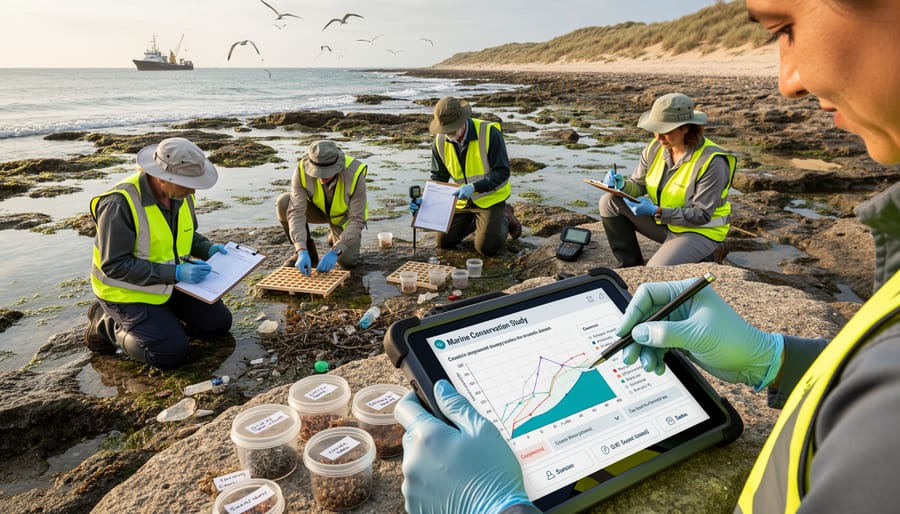
On North America’s Pacific coast, the SeaWatch program engages beachcombers in monitoring seabird mortality and marine debris. Volunteers collect standardized data during regular beach walks, with findings appearing in conservation journals and directly influencing policies on fishing gear modifications and plastic reduction initiatives. Participant James Rodriguez shares, “Knowing my monthly beach surveys contribute to published research and real policy changes makes every outing meaningful. I’m not just walking, I’m documenting.”
The Mediterranean’s Jellyfish Spotting Network has transformed tourist sightings into valuable datasets tracking jellyfish population shifts related to climate change. Published studies using this data have helped predict beach closures and understand ecosystem changes, demonstrating how vacation observations become scientific evidence.
These projects share common threads: clear protocols that ensure data quality, accessible training for volunteers, and transparent pathways showing how contributions advance both scientific knowledge and conservation outcomes. Each proves that impactful marine research isn’t confined to research vessels, it happens wherever committed observers meet the ocean.
Why This Matters for Marine Conservation Education
When Community Data Influences Conservation Policy
Community-driven research published in respected journals like the Journal of Marine Science and Engineering has repeatedly proven its power to influence real-world policy changes. When citizen scientists document environmental patterns through rigorous methodologies, their findings gain credibility that can sway governmental decisions and establish new protective measures.
One remarkable example comes from Australia, where volunteer divers monitoring coastal ecosystems documented alarming declines in seagrass meadows. Their carefully recorded observations, published in peer-reviewed journals, provided the scientific foundation for expanded marine protected areas along the Queensland coast. The data collection methods were straightforward—recording species counts, water clarity measurements, and photographic evidence—yet the consistency and scale of community involvement made the findings irrefutable.
Similarly, in the Mediterranean, networks of recreational boaters contributed to mapping critical dolphin habitats by reporting sightings through a standardized app. This community-generated dataset, validated and published by academic partners, led to new shipping lane regulations that reduced vessel strikes by 40 percent. The success demonstrates how everyday ocean enthusiasts can contribute to marine conservation in measurable ways.
Dr. Maria Santos, a marine biologist who coordinates volunteer monitoring programs, shares, “Policy makers need evidence, and when thousands of trained community members provide consistent, quality data, it becomes impossible to ignore. These aren’t just numbers—they represent people who care deeply about protecting our oceans.”
The pathway from observation to policy requires credible publication, making journals that welcome citizen science contributions essential bridges between community passion and legislative action.
Building Scientific Literacy Through Participation
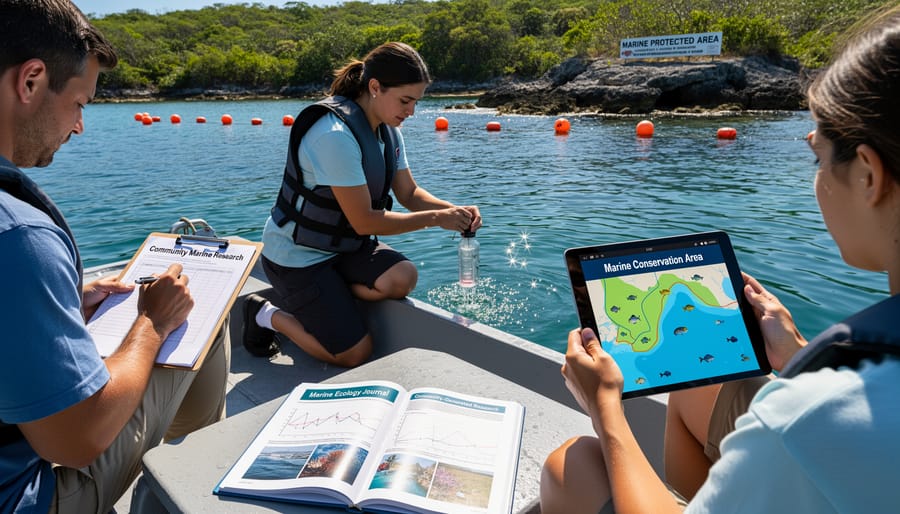
Engaging with scientific publications, even as a community member rather than a professional researcher, builds valuable scientific literacy that extends far beyond reading articles. When you participate in citizen science projects that contribute data to peer-reviewed journals like the Journal of Marine Science and Engineering, you gain firsthand experience with the scientific method: forming hypotheses, collecting systematic observations, and understanding how raw data transforms into meaningful conclusions about marine biodiversity.
Dr. Elena Martinez, a marine biologist who coordinates community monitoring programs, shares that her most effective advocates are volunteers who have participated in research projects. “Once people see their observations cited in a published study, they understand the rigor behind conservation recommendations. They become informed voices in their communities, capable of distinguishing credible science from misinformation,” she explains.
This literacy empowers you to critically evaluate environmental news, understand impact assessments for coastal development projects, and recognize when conservation policies align with scientific evidence. You learn to interpret graphs showing ocean temperature changes, understand statistical significance in population studies, and appreciate the peer-review process that validates research findings.
Educational institutions increasingly recognize this value, incorporating citizen science participation into curricula. Students who contribute to marine research develop analytical thinking skills while building genuine connections to ocean conservation. These experiences create lifelong advocates who understand that protecting our oceans requires both passion and evidence-based decision-making.
Getting Started: Your Path to Contributing Meaningful Marine Data
Ready to make waves in marine conservation? Starting your journey as a citizen scientist is easier and more rewarding than you might think. The Marine Biodiversity Science Center offers multiple pathways for people of all backgrounds to contribute meaningful data that supports published research and conservation efforts.
Your first step is visiting the Center’s volunteer portal to explore current projects. Whether you live near the coast or hundreds of miles inland, opportunities exist for remote data analysis, educational outreach, and seasonal field programs. Many contributors begin with beach cleanup surveys, where collecting litter data becomes part of larger studies on marine debris impacts. These seemingly simple observations often provide crucial datasets that researchers cite in peer-reviewed publications.
Dr. Sarah Chen, a marine biologist who coordinates the Center’s citizen science initiatives, shares an encouraging perspective: “Some of our most valuable long-term datasets come from dedicated volunteers who commit just two hours monthly. One retired teacher’s consistent tide pool observations over three years helped us document species range shifts related to ocean warming—data that contributed to two published papers.”
No scientific background? No problem. The Center provides free online training modules covering everything from species identification to proper data recording techniques. Their mobile app guides you through each observation with photos and simple prompts, ensuring your contributions meet research standards.
Consider joining a local monitoring team. These groups combine scientific work with community building, often meeting monthly for beach surveys or underwater counts. You’ll learn alongside others while building a network of conservation-minded individuals.
The path from curious observer to published contributor is more accessible than ever. Start small, stay consistent, and remember that every observation matters. Your beach walk could provide the data point that helps scientists understand migration patterns, pollution impacts, or ecosystem health. The ocean needs observers everywhere, and your unique perspective and location make your contributions irreplaceable in the larger mission of marine conservation.
The democratization of marine science represents one of the most promising developments in ocean conservation. Every observation logged by a volunteer, every photograph shared through citizen science platforms, and every conversation sparked about marine biodiversity contributes to a growing body of knowledge that informs research published in respected journals. The collective power of community engagement transcends traditional academic boundaries, proving that protecting our oceans requires voices and eyes from all backgrounds.
Marine biologist Dr. Sarah Chen reflects on this transformation: “Ten years ago, I never imagined that data from weekend divers and coastal walkers would strengthen our peer-reviewed publications. Now, it’s fundamental to our understanding of ecosystem changes.”
The future of marine conservation is optimistic precisely because it’s inclusive. Whether you’re a student, educator, retired professional, or simply someone who cares about ocean health, opportunities await. Join local beach monitoring programs, participate in global e-networks tracking marine species, or contribute observations through established citizen science platforms. Your participation matters. Together, we’re building a comprehensive understanding of our oceans that no single institution could achieve alone.

jessica
Ava Singh is an environmental writer and marine sustainability advocate with a deep commitment to protecting the world's oceans and coastal communities. With a background in environmental policy and a passion for storytelling, Ava brings complex topics to life through clear, engaging content that educates and empowers readers. At the Marine Biodiversity & Sustainability Learning Center, Ava focuses on sharing impactful stories about community engagement, policy innovations, and conservation strategies. Her writing bridges the gap between science and the public, encouraging people to take part in preserving marine biodiversity. When she’s not writing, Ava collaborates with local initiatives to promote eco-conscious living and sustainable development, ensuring her work makes a difference both on the page and in the real world.