Marine Biodiversity Science Center

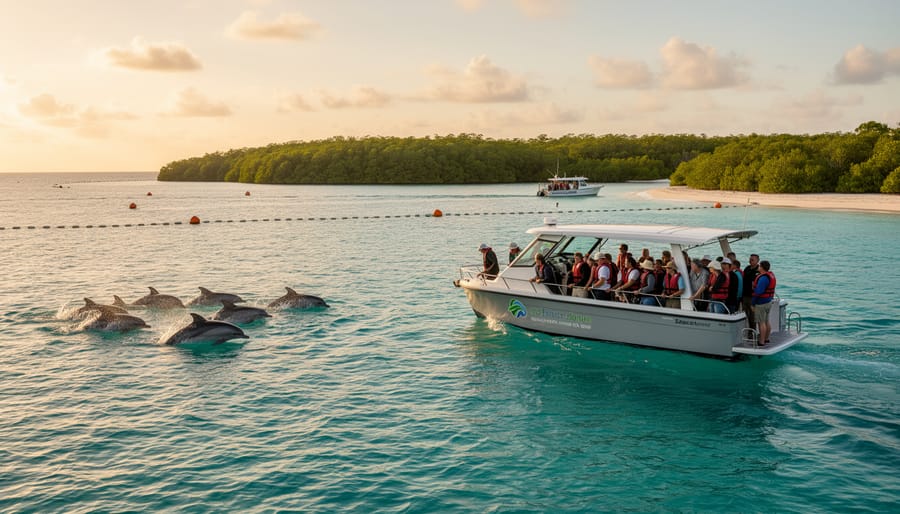
Every year, millions of tourists flock to coastal destinations to witness dolphins leaping through waves, sea turtles nesting on moonlit beaches, and vibrant coral reefs teeming with life. Yet this surge in marine tourism brings a profound paradox: the very act of seeking connection with ocean wildlife can inadvertently harm the ecosystems we cherish. When dive sites become overcrowded, when boats disturb whale migrations, or when fragile coastal habitats erode under foot traffic, our passion for the ocean risks becoming its greatest threat.
Marine ecotourism offers a transformative solution. By intentionally designing tourism experiences that prioritize conservation alongside recreation, communities worldwide are proving that economic prosperity and ecological health need not be mutually exclusive. The key lies in two interconnected management strategies: carrying capacity assessments that determine how many visitors a marine site can sustainably accommodate, and spatial zoning that designates where different activities can occur without compromising sensitive habitats.
These aren’t merely theoretical concepts confined to academic journals. From the Great Barrier Reef’s sophisticated permit systems to community-managed marine reserves in the Philippines, these frameworks are actively protecting marine biodiversity while supporting local livelihoods. Tour operators who embrace these principles report more meaningful guest experiences, as visitors encounter healthier ecosystems and develop deeper connections to conservation efforts.
This article explores how carrying capacity and zoning transform marine tourism from a potential threat into a powerful conservation tool. You’ll discover proven strategies, learn from successful case studies, and gain practical insights whether you’re managing a coastal reserve, operating dive tours, studying environmental management, or simply planning your next ocean adventure with conservation in mind.
What Marine Ecotourism Really Means (And Why It Matters)
Marine ecotourism represents far more than simply taking a vacation by the ocean. At its core, it’s a purposeful approach to tourism that interweaves three essential pillars: environmental conservation, meaningful education, and tangible support for coastal communities. Unlike conventional marine tourism, which often prioritizes profit and entertainment above all else, marine ecotourism operates on the principle that our interactions with ocean environments should actively contribute to their protection and the wellbeing of those who depend on them.
The distinction matters immensely. Traditional marine tourism might involve crowded snorkeling trips that damage coral reefs or wildlife encounters that disturb breeding grounds. Marine ecotourism, by contrast, implements strict visitor limits, follows science-based guidelines, and ensures that every experience deepens participants’ understanding of marine ecosystems. The educational components aren’t just add-ons; they’re fundamental to the experience, transforming casual observers into informed advocates.
What makes this approach truly transformative is its commitment to local empowerment. The economic benefits to local communities flow directly to those who have stewarded these waters for generations, creating powerful incentives for conservation rather than exploitation. When fishermen become whale-watching guides or coastal residents lead mangrove tours, they become invested stakeholders in protecting marine resources.
The conservation impact extends to the species and ecosystems most in need. Marine ecotourism operations actively participate in monitoring programs, contribute funding to research initiatives, and raise awareness about threats facing endangered species and habitats. A sea turtle nesting site becomes protected not despite tourism, but because of it—when managed responsibly.
This model proves that economic development and environmental protection aren’t opposing forces. They can be complementary goals that create lasting positive change for both ocean ecosystems and human communities.
The Breaking Point: Understanding Carrying Capacity in Marine Environments
Physical Carrying Capacity: How Many Boats Can One Bay Handle?
Picture a popular dive site where boats arrive throughout the morning, each carrying eager snorkelers and divers. At what point does the bay become too crowded? Physical carrying capacity addresses this fundamental question by examining the literal space available at marine tourism destinations.
This metric considers several concrete factors. Boat traffic represents perhaps the most visible constraint. Harbors and moorings have finite space, and too many vessels create navigation hazards, anchor damage to seabeds, and increased pollution from fuel and waste. Marine protected areas often establish limits based on the number of safe mooring buoys they can install, preventing boats from dropping anchors on fragile coral reefs.
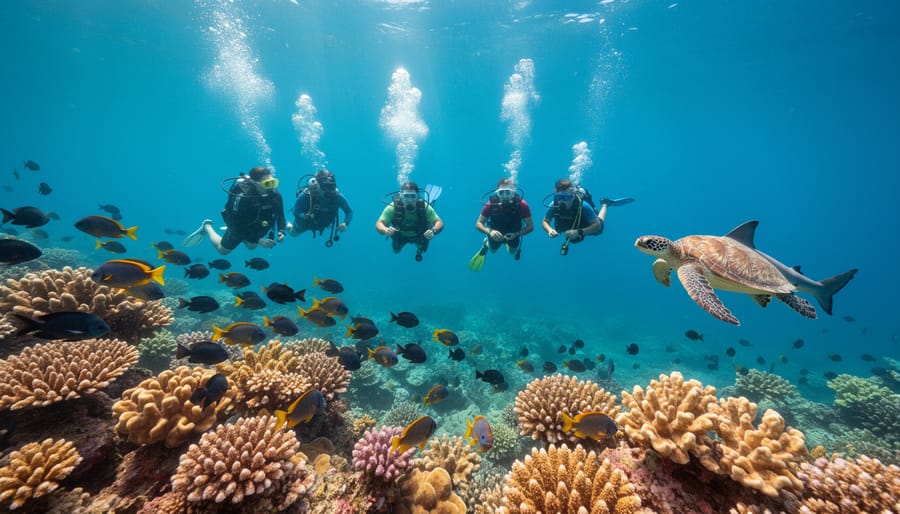
Underwater, diver density becomes critical. Research suggests that crowding diminishes not only the visitor experience but also threatens marine life. Studies from popular dive sites show that when more than 15-20 divers occupy a single reef section simultaneously, fish behavior changes dramatically as creatures retreat from the activity. Sediment stirred by fins can smother coral polyps, while inexperienced divers may accidentally contact delicate organisms.
Infrastructure limitations further define capacity thresholds. Beaches have physical space constraints for launching boats or accommodating visitors. Visitor centers, restroom facilities, and parking areas all impose practical limits on daily visitor numbers.
Dr. Elena Martinez, a marine biologist who volunteers with coastal monitoring programs, notes that “calculating physical capacity isn’t just about counting boats or bodies in the water. It’s about understanding the space each activity requires to operate safely while maintaining the natural experience visitors seek.” By establishing these baseline numbers, managers create the foundation for sustainable tourism that protects both marine ecosystems and visitor satisfaction.
Ecological Carrying Capacity: When Wildlife Says ‘Enough’
Every ecosystem has a breaking point—a threshold where tourist activities begin harming the very wildlife and habitats visitors come to experience. In marine environments, this ecological carrying capacity is particularly delicate.
Dr. Elena Cortez, a marine biologist working in the Philippines, recalls a turning point in her career: “I watched the same coral reef over five years. Initially, snorkelers brought awareness and funding for conservation. But as tour boats increased from three daily visits to fifteen, the corals began bleaching from sunscreen chemicals and accidental kicks. Resident sea turtles abandoned their feeding grounds. The ecosystem was telling us ‘enough.'”
The signs are clear when carrying capacity is exceeded. Coral reefs suffer physical damage from anchors, fins, and hands, with some popular dive sites losing up to 80 percent of live coral cover. Marine mammals display stress behaviors—dolphins interrupt feeding and resting patterns, whales alter migration routes to avoid boat traffic. Even fish populations change, as constant human presence disrupts breeding and feeding behaviors.
Wildlife habitats face cumulative impacts. Seagrass beds erode from propeller scarring, mangroves suffer from increased foot traffic and pollution, and critical breeding sites become too disturbed for successful reproduction. These aren’t abstract concerns—they’re measurable ecological thresholds that demand our attention and action.
Social Carrying Capacity: Preserving the Experience
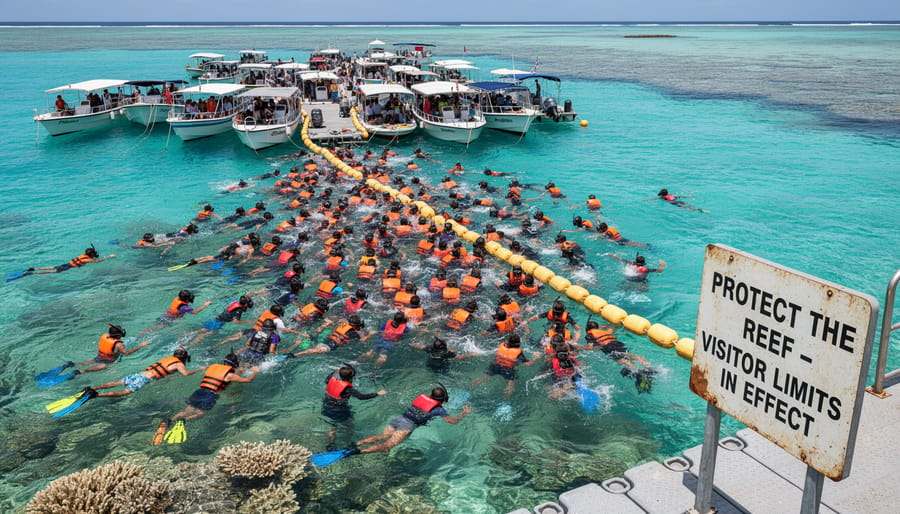
While environmental limits often dominate carrying capacity discussions, social carrying capacity recognizes that overcrowding fundamentally changes what makes marine destinations special. When snorkeling sites become congested with dozens of boats or beaches overflow with visitors, the sense of wonder and connection to nature diminishes. Dr. Maria Santos, a marine conservationist working in the Philippines, shares that “visitors come seeking peaceful encounters with marine life, but overcrowding creates stress for both wildlife and people, transforming a transformative experience into a chaotic one.”
Local communities face similar pressures. Rapid tourism growth can strain infrastructure, increase living costs, and alter cultural dynamics. Residents may feel displaced in their own communities as tourism infrastructure expands. Establishing visitor limits based on social carrying capacity preserves not only the quality of visitor experiences but also protects community wellbeing and cultural integrity. This dual benefit strengthens long-term support for conservation efforts, as both tourists and residents become invested in maintaining sustainable practices that honor both people and marine ecosystems.
Strategic Zoning: Creating Boundaries That Work
Types of Marine Zones and What They Protect
Marine protected areas use zoning as a sophisticated tool to balance conservation with human enjoyment, much like how national parks designate different areas for wilderness protection versus visitor facilities. Understanding these zones helps ecotourists make informed choices about where and how they explore ocean environments.
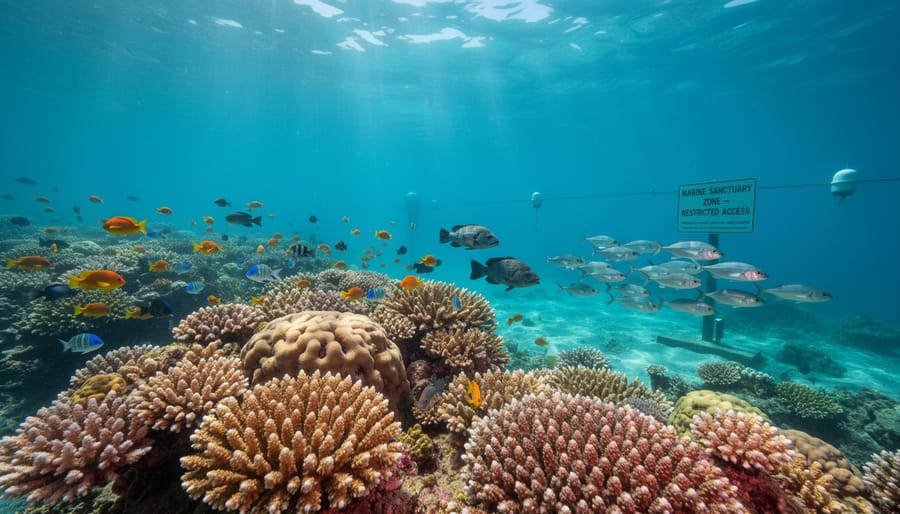
Sanctuary zones, often called no-take zones, represent the highest level of protection. Here, all extractive activities—fishing, collecting shells, or disturbing wildlife—are prohibited. These areas serve as reference sites where marine ecosystems can function without human interference, allowing scientists to study natural processes and species to reproduce safely. Visitors can still snorkel, dive, or swim in many sanctuary zones, but they must observe without touching. Think of them as underwater museums where you can look but not take souvenirs.
Controlled-use zones permit specific activities under strict regulations. Commercial and recreational fishing might be allowed with gear restrictions, catch limits, or seasonal closures. These zones protect critical habitats while supporting local livelihoods. Marine biologist Dr. Elena Rodriguez, who has studied these areas for fifteen years, notes that controlled-use zones often become unexpected success stories: “When fishers follow the rules and see fish populations recover, they become our strongest conservation advocates.”
Recreation zones cater specifically to tourism and leisure activities. Here, swimming, snorkeling, boating, and diving are encouraged, though guidelines ensure minimal environmental impact. Operators must follow capacity limits and best practices to prevent overcrowding and habitat damage.
Buffer zones surround higher-protection areas, creating gradual transitions between restricted and open-access regions. They absorb visitor pressure while shielding sensitive ecosystems, functioning as protective barriers that reduce edge effects and support ecosystem connectivity across broader seascapes.
How Effective Zoning Plans Are Created
Creating effective zoning plans for marine ecotourism destinations requires a systematic, science-based approach that balances conservation goals with visitor experiences. The process begins with comprehensive baseline assessments, where marine scientists conduct extensive surveys to map critical habitats, identify sensitive species, and document seasonal patterns. These assessments might include underwater transects to monitor coral health, acoustic monitoring for marine mammals, and genetic studies to understand population connectivity.
Dr. Maria Santos, a marine ecologist who helped establish zones in the Philippines’ Tubbataha Reefs, recalls the meticulous work involved: “We spent months collecting data on fish populations, coral coverage, and visitor patterns before drawing a single boundary line. Every zone had to be justified by solid science.”
Stakeholder engagement forms the second critical pillar. Successful zoning plans incorporate input from local fishing communities, tour operators, indigenous groups, and tourists themselves. This collaborative approach ensures plans are both ecologically sound and socially equitable. Scientists facilitate workshops where stakeholders can voice concerns and contribute local knowledge that scientific surveys might miss.
The final element is adaptive management, recognizing that marine ecosystems are dynamic. Scientists establish monitoring protocols to track indicators like species abundance, water quality, and visitor satisfaction. When monitoring reveals problems, zone boundaries or regulations can be adjusted accordingly. This flexibility, grounded in ongoing scientific assessment, ensures zoning plans remain effective as conditions change. Many sites now offer volunteer opportunities for citizen scientists to assist with monitoring, democratizing the scientific process while building public support for conservation measures.
Success Stories: Where Carrying Capacity and Zoning Are Saving Marine Life
Around the world, forward-thinking marine destinations are proving that strategic management can protect ocean ecosystems while maintaining vibrant tourism economies. These success stories offer blueprints for communities seeking to balance conservation with economic opportunity.
The Galápagos Marine Reserve stands as a pioneering example of effective zoning. Since implementing comprehensive zoning regulations in the late 1990s, the reserve divided its waters into multiple-use, limited-use, and no-take zones. The results have been remarkable. Scientists documented a 300% increase in fish biomass within protected areas over just fifteen years, while tourism revenue continued growing steadily. Dr. Elena Ramírez, a marine biologist who has studied the reserve for two decades, notes that “the zoning system allows us to protect critical breeding grounds and migratory corridors while directing tourist activities to areas that can sustainably accommodate them.”
Palau’s Protected Areas Network tells an equally inspiring story. In 2015, this small Pacific nation designated 80% of its exclusive economic zone as a no-take marine sanctuary, while carefully managing tourism in the remaining 20% through strict carrying capacity limits. Dive operators now work on a permit system that caps daily visitor numbers at popular sites like Blue Corner and German Channel. The measurable outcomes include recovering shark populations—up 34% in monitored areas—and healthier coral cover. Tourism revenue hasn’t suffered; instead, Palau shifted toward higher-value, lower-impact experiences that attract environmentally conscious travelers willing to pay premium fees.
The Great Barrier Reef Marine Park demonstrates how adaptive management makes carrying capacity work. The park employs a sophisticated zoning system with six distinct zone types, from preservation zones where entry is prohibited to general use zones allowing multiple activities. Regular monitoring programs track reef health, visitor numbers, and wildlife populations, allowing managers to adjust limits when necessary. In 2019, when thermal stress threatened certain reef sections, authorities temporarily reduced permits for those areas, allowing ecosystems time to recover.
Raja Ampat in Indonesia offers lessons from community-based management. Local communities established marine protected areas covering over 1.5 million acres, implementing visitor limits through a tag system that funds conservation. Village councils determine appropriate tourist numbers for their waters, ensuring cultural values remain central to decision-making. Marine surveys show a 250% increase in reef fish abundance since implementation, while village incomes from sustainable tourism have tripled.
These successes share common threads: robust scientific monitoring, adaptive management that responds to changing conditions, meaningful local involvement, and the courage to prioritize long-term ecosystem health over short-term profits. They demonstrate that with proper planning and commitment, marine ecotourism can genuinely support conservation goals rather than undermine them.
The Challenges: Why These Solutions Aren’t Everywhere Yet
Despite their proven effectiveness, carrying capacity assessments and marine zoning haven’t become universal practice. Understanding why helps us chart a more realistic path forward.
The most significant barrier is economic pressure. Many coastal communities depend heavily on tourism revenue, and limiting visitor numbers can feel like turning away income. Tour operators worry about lost bookings, while local governments fear reduced tax revenue. This creates a tension between short-term economic gains and long-term ecological health. Dr. Maria Santos, a marine biologist working in Southeast Asia, recalls meeting resort owners who understood the science but struggled with the business implications: “They wanted to protect the reefs that attracted guests in the first place, but worried about staying competitive if they reduced their capacity while neighboring operations didn’t.”
Enforcement presents another substantial challenge. Implementing zones and visitor limits requires consistent monitoring, which demands resources many destinations lack. Patrol boats, trained staff, and monitoring equipment all carry costs. In remote areas, enforcement becomes even more complex. Without adequate oversight, even well-designed management plans fail.
Political resistance compounds these difficulties. Establishing regulations often requires coordination across multiple government agencies, each with different priorities. Some officials prioritize economic development over conservation, while others face pressure from powerful tourism industry lobbies. Building the political will for restrictions takes time and persistent advocacy.
Long-term monitoring adds another layer of complexity. Ecosystems change slowly, meaning we need years of data to truly assess whether management strategies work. Funding agencies sometimes prefer quick results over multi-decade commitments, making sustained research difficult.
Yet these obstacles aren’t insurmountable. Communities worldwide are finding creative solutions: revenue-sharing programs that compensate operators for reduced capacity, volunteer monitoring networks that reduce costs, and collaborative governance models that bring stakeholders together. The path forward requires patience, innovation, and collective commitment. When scientists, communities, operators, and visitors work together toward shared goals, sustainable marine ecotourism becomes not just possible, but profitable for everyone involved.
How You Can Support Sustainable Marine Ecotourism
The future of our oceans depends on collective action, and each of us has a meaningful role to play in supporting sustainable marine ecotourism. Whether you’re planning your next coastal vacation, shaping young minds in a classroom, or advocating for environmental policy, your choices matter.
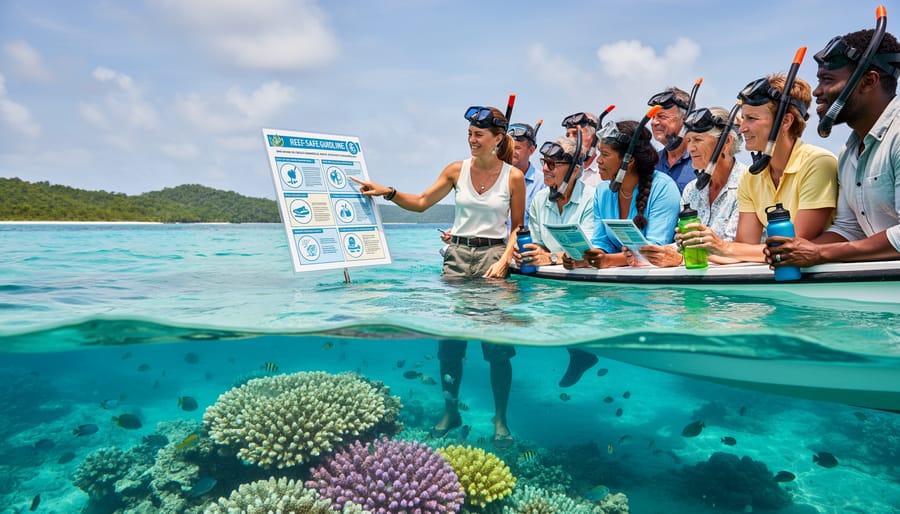
For travelers, the most impactful step is selecting certified operators who demonstrate genuine commitment to conservation principles. Look for businesses with recognized environmental certifications, those that employ local guides with marine science training, and operators who actively participate in research and monitoring programs. Before any marine excursion, familiarize yourself with wildlife interaction guidelines: maintain appropriate distances from animals, never feed wildlife, and respect seasonal closures designed to protect breeding grounds. Even small actions like using reef-safe sunscreen and avoiding single-use plastics contribute to healthier marine ecosystems.
Educators hold tremendous power to shape the next generation of ocean stewards. Incorporating marine ecotourism concepts into science curricula helps students understand the complex relationship between human activities and ecosystem health. Case studies of successful carrying capacity management or zoning systems provide tangible examples of conservation in action. Consider organizing field trips to local marine protected areas or inviting marine biologists to share their experiences, bringing these concepts to life beyond textbook pages.
Conservation professionals and engaged citizens can advocate for stronger regulatory frameworks that mandate carrying capacity assessments and science-based zoning in coastal tourism areas. Supporting legislation that requires environmental impact assessments before tourism development and attending public consultations on marine management plans ensures community voices influence decision-making processes.
Volunteer opportunities abound for those wanting hands-on involvement. Organizations like Ocean Conservancy, Reef Check, and local marine research stations welcome volunteers for beach cleanups, coral reef monitoring, and sea turtle conservation projects. Citizen science programs offer particularly valuable contributions to carrying capacity research. By participating in wildlife counts, water quality testing, or visitor behavior surveys, volunteers help scientists gather the extensive data needed for effective management decisions. Dr. Maria Santos, a marine biologist who coordinates citizen science efforts in the Philippines, shares: “Our volunteers have documented behavioral changes in whale sharks exposed to tourism, providing crucial evidence that informed new visitor limits and approach guidelines.”
These collective efforts create ripple effects that extend far beyond individual actions, building the foundation for truly sustainable marine tourism.
The future of our oceans doesn’t require choosing between protection and prosperity. Marine ecotourism, guided by the twin pillars of carrying capacity and zoning, demonstrates that we can sustain both thriving marine ecosystems and vibrant coastal economies. These frameworks aren’t abstract theories—they’re practical tools already transforming destinations worldwide, proving that strategic management creates lasting value for communities and nature alike.
Each of us plays a vital role in this solution. As tourists, we vote with our travel choices, supporting operators committed to sustainable practices. As scientists and educators, we generate the research and awareness that inform better management decisions. As advocates, we champion policies that prioritize long-term ocean health over short-term gains. Even small actions—choosing certified eco-tours, respecting marine life guidelines, or sharing knowledge with others—ripple outward with meaningful impact.
Consider the possibility: coral reefs teeming with life, whale populations recovering to historic numbers, coastal communities thriving economically while serving as ocean stewards. This vision is within reach when we embrace carrying capacity limits and thoughtful zoning. The challenge isn’t whether we can balance conservation with access—it’s whether we will.
Future generations deserve to witness the same underwater wonders that inspire us today. By supporting science-based marine ecotourism now, we ensure that the ocean’s magnificence endures, accessible and abundant, for decades to come. The choice, and the opportunity, belongs to all of us.

jessica
Ava Singh is an environmental writer and marine sustainability advocate with a deep commitment to protecting the world's oceans and coastal communities. With a background in environmental policy and a passion for storytelling, Ava brings complex topics to life through clear, engaging content that educates and empowers readers. At the Marine Biodiversity & Sustainability Learning Center, Ava focuses on sharing impactful stories about community engagement, policy innovations, and conservation strategies. Her writing bridges the gap between science and the public, encouraging people to take part in preserving marine biodiversity. When she’s not writing, Ava collaborates with local initiatives to promote eco-conscious living and sustainable development, ensuring her work makes a difference both on the page and in the real world.