Marine Biodiversity Science Center

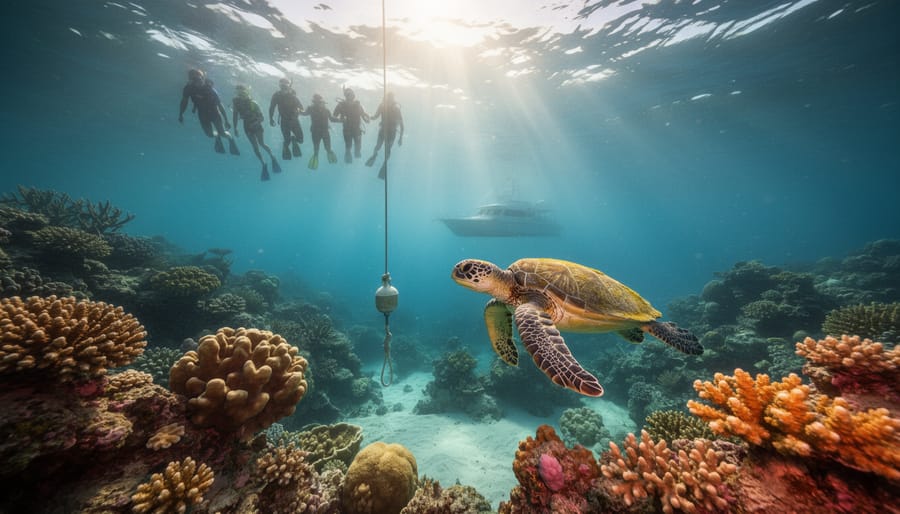
The crystal-clear waters surrounding Australia’s Great Barrier Reef can host only so many snorkelers before coral polyps begin to show stress. A kelp forest off California’s coast supports a finite number of dive boats before seafloor disturbance disrupts the entire food web. These real-world limits reflect a fundamental ecological principle: ecosystem carrying capacity, the maximum population size or activity level an environment can sustain without degradation.
For marine environments welcoming tourists, understanding carrying capacity isn’t abstract theory—it’s the difference between thriving reefs and bleached wastelands, between sustainable livelihoods and collapsed fisheries. When a coastal ecosystem exceeds its carrying capacity, the consequences cascade rapidly: trampled seagrass meadows stop sequestering carbon, disturbed nesting beaches lead to plummeting sea turtle populations, and overused mooring sites transform vibrant coral gardens into rubble fields.
Marine eco-tourism presents a paradox. The very visitors who come to witness underwater wonders can inadvertently destroy them. A single careless fin kick can damage coral that took decades to grow. Anchor drops in the wrong location scar critical habitat. Yet tourism also generates the economic incentive and public support necessary for conservation—when managed properly.
Strategic zoning offers a science-based solution, dividing marine areas into designated use categories that match human activities with ecosystem resilience. By establishing clear boundaries for where, when, and how many visitors can explore sensitive habitats, zoning systems protect biodiversity while maintaining meaningful access. This approach has transformed struggling marine parks worldwide into models of sustainability, proving that humans and nature can coexist—if we respect the limits our oceans set for us.
What Ecosystem Carrying Capacity Really Means for Our Oceans
Think of ecosystem carrying capacity as nature’s maximum occupancy sign. Just as a building has a fire code limit for how many people can safely occupy a space, our oceans have natural limits for how much activity they can handle before their health begins to deteriorate. When we exceed these limits, the consequences ripple through entire marine ecosystems, affecting everything from microscopic plankton to majestic whales.
Ecosystem carrying capacity encompasses two critical dimensions. Ecological carrying capacity refers to the threshold beyond which human activities begin harming wildlife and their habitats. Imagine a coral reef visited by hundreds of snorkelers daily. Each fin kick that grazes coral polyps, each anchored boat that scrapes the seafloor, and each swimmer wearing harmful sunscreen adds stress to the ecosystem. While a few visitors might cause negligible impact, continuous traffic without proper management can lead to coral bleaching, reduced fish populations, and ultimately, ecosystem collapse.
Physical carrying capacity addresses the infrastructure and space limitations of an area. Even if wildlife could theoretically handle more visitors, the practical constraints of available moorings, beach access points, and support facilities create natural boundaries. A small island with limited dock space can only accommodate so many tour boats, regardless of the ecological resilience of surrounding waters.
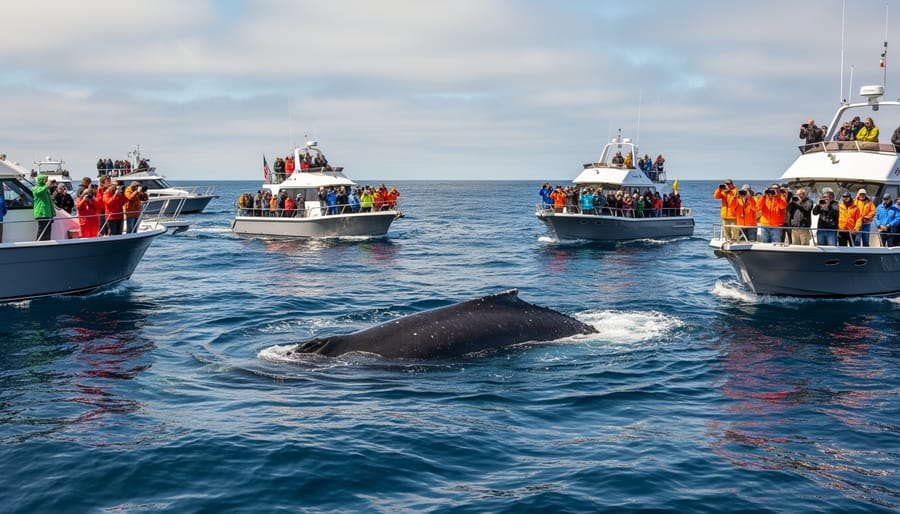
Consider the humpback whale sanctuaries off Hawaii’s coast. Marine biologist Dr. Sarah Chen, who has studied these waters for over a decade, shares a compelling observation: “We noticed that when more than ten boats congregated around a mother and calf, the whales altered their behavior dramatically. They became more agitated, spent less time resting, and moved away from their preferred nursing areas.” This real-world example demonstrates how exceeding carrying capacity disrupts critical life processes.
The encouraging news is that understanding these limits allows us to protect what we love while still experiencing it. Through careful monitoring and adaptive management, we can establish sustainable visitation levels that preserve ocean health for future generations. Volunteers working with marine monitoring programs provide invaluable data that helps scientists determine appropriate carrying capacities for different marine environments, making their contribution essential to conservation success.
When Too Many Boats Break the Balance
Stress on Marine Wildlife
The impact of marine eco-tourism on wildlife extends far beyond what visitors might observe from their boat decks. Underwater soundscapes, disrupted by engine noise and propeller vibrations, interfere with the echolocation and communication systems that dolphins and whales rely upon for navigation, hunting, and social bonding. Research shows that repeated vessel approaches can trigger stress responses in marine mammals, causing them to alter dive patterns, abandon feeding areas, or separate mothers from calves.
Dr. Elena Martinez, a marine biologist studying sea turtle nesting behavior in the Caribbean, recalls a pivotal observation: “Over three seasons, I watched as increased boat traffic near nesting beaches caused females to abort landing attempts. They’d surface, sense the commotion, and return to sea without nesting. These disruptions can have cascading effects on population recovery.”
Fish populations also respond to human presence. Studies document changes in reef fish behavior when snorkelers and divers exceed certain densities, with some species retreating to deeper waters or reducing feeding activity. The cumulative stress from crowding, noise, and physical disturbance can compromise immune systems and reproductive success.
Understanding these impacts informs marine mammal protection strategies and zoning decisions. By establishing quiet zones, limiting group sizes, and enforcing approach distances, we create refuges where wildlife can maintain natural behaviors. Volunteer monitoring programs offer opportunities for concerned citizens to participate in data collection, helping researchers track behavioral changes and assess whether carrying capacity thresholds are being respected.
Physical Damage to Fragile Habitats
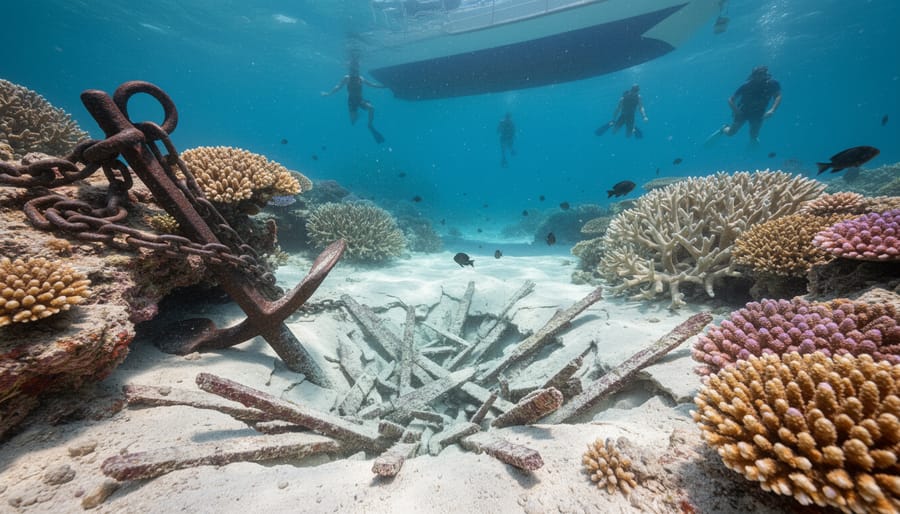
When visitor numbers exceed an ecosystem’s carrying capacity, the consequences manifest most visibly through direct physical damage. In Thailand’s Maya Bay, made famous by the film “The Beach,” up to 5,000 daily visitors caused catastrophic degradation. Boat anchors repeatedly destroyed coral formations, while tourists walking on fragile reef structures crushed decades of growth in seconds. The damage became so severe that authorities closed the bay in 2018 for ecological recovery.
Similarly, the Mediterranean’s Posidonia oceanica seagrass meadows face constant trampling from swimmers and snorkelers in popular destinations like the Spanish coast. These underwater meadows, which grow only one centimeter annually, require centuries to establish but can be destroyed in minutes. Marine biologist Dr. Elena Martínez, who volunteers with restoration projects in Mallorca, shares: “I’ve watched tourists unknowingly walk through seagrass beds that are older than their grandparents. Education is our most powerful tool.”
Beyond physical contact, pollution from tour operations compounds the problem. Sunscreen chemicals, plastic waste, and fuel discharge from poorly regulated vessels create toxic conditions. However, sustainable tourism vessels and proper zoning offer hope. The Great Barrier Reef’s permit system now limits visitor numbers to specific zones, demonstrating that strategic management can protect these irreplaceable ecosystems while maintaining tourism opportunities.
The Ripple Effect Through the Food Web
When a marine ecosystem exceeds its carrying capacity, the consequences cascade through every level of the food web. Consider how overfishing a single species affects the entire system: remove too many herbivorous fish, and algae blooms can smother coral reefs. Eliminate predators, and prey populations explode, depleting their own food sources. Marine biologist Dr. Sarah Chen observed this firsthand in the Caribbean, where unchecked tourist boat anchoring damaged seagrass beds. “Within months, we saw declines in juvenile fish populations, then in the dolphins and seabirds that fed on them,” she explains. These disruptions particularly impact threatened marine species already struggling with reduced populations. The good news? Strategic zoning and visitor management can prevent these ripple effects. Volunteers monitoring reef health help scientists identify stress points before damage becomes irreversible, demonstrating how community involvement strengthens ecosystem resilience and maintains natural balance.
How Scientists Determine Carrying Capacity for Tourism Zones
Wildlife Monitoring and Behavioral Studies
Scientists employ a variety of monitoring techniques to assess how wildlife populations respond to tourism activities and determine whether ecosystems are approaching their carrying capacity limits. These methods provide essential data for adaptive management strategies.
Behavioral observations form the cornerstone of monitoring programs. Researchers document changes in feeding patterns, resting behaviors, and social interactions when tourist vessels or divers are present. For instance, marine biologist Dr. Sarah Chen spent three years observing dolphin pods in the Mediterranean, noting that groups exposed to more than five boat encounters daily showed reduced feeding efficiency and increased stress-related vocalizations. Her work directly influenced new vessel spacing regulations.
Reproductive success serves as a critical long-term indicator. Scientists track breeding rates, offspring survival, and nesting site fidelity across seasons. Declining birth rates or abandoned nesting sites often signal that tourism pressure has exceeded sustainable levels. Sea turtle monitoring programs, for example, compare hatching success between heavily visited beaches and protected control areas.
Physiological stress indicators provide objective measurements through hormone analysis from tissue samples, feces, or blubber biopsies. Elevated cortisol levels can reveal chronic stress even when behavioral changes aren’t immediately obvious.
Many monitoring programs welcome trained volunteers, offering opportunities for citizen scientists to contribute meaningful data while gaining hands-on conservation experience. These collaborative efforts expand research capacity while fostering deeper public connection to marine protection efforts, demonstrating how community engagement strengthens both science and stewardship.
Habitat Health Assessments
Understanding an ecosystem’s health is essential for determining how many visitors it can support sustainably. Marine scientists employ several monitoring techniques to assess habitat conditions and track changes over time.
Coral cover assessments involve underwater surveys where researchers photograph fixed sections of reef and calculate the percentage of living coral versus bare rock or algae. This method, often conducted using transect lines, provides crucial data about reef resilience. Marine biologist Dr. Elena Martinez shares, “I’ve watched volunteers learn to identify coral species in just a few training sessions. Their enthusiasm and careful data collection have become invaluable to our long-term monitoring programs.”
Seagrass density measurements use quadrat sampling, where scientists count shoots within defined areas to establish baseline health indicators. These underwater meadows serve as nurseries for fish and feeding grounds for sea turtles, making their monitoring particularly important for tourism zones.
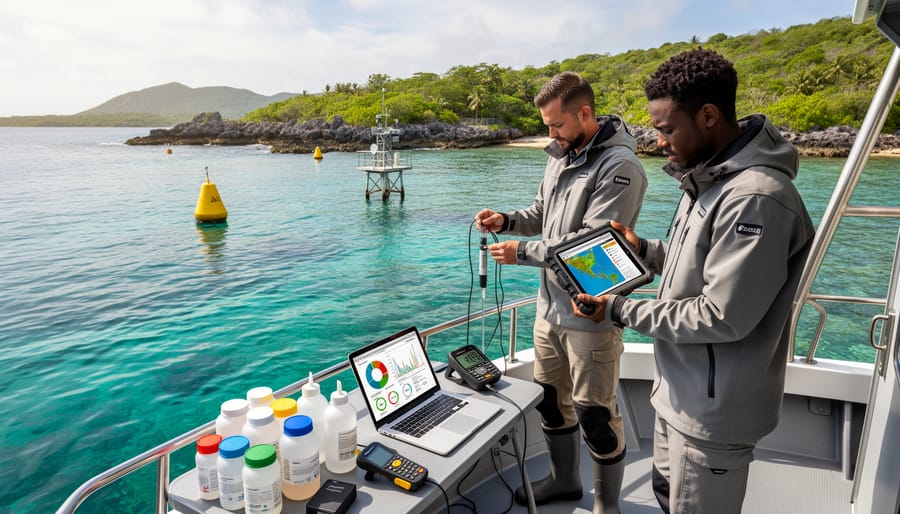
Water quality testing examines parameters like nutrient levels, turbidity, and temperature. Increased nutrients from coastal development or boat traffic can trigger algae blooms that smother corals and seagrasses. Regular sampling helps managers identify problems before they become critical.
Many conservation organizations welcome trained volunteers to assist with these assessments, offering certification programs that combine education with hands-on science. This collaborative approach not only expands monitoring capacity but also creates informed ocean advocates who understand the delicate balance between enjoying marine environments and preserving them for future generations.
Modeling Tourist Impact
Predicting sustainable visitor levels requires researchers to weave together multiple data streams into comprehensive models. Marine biologists combine baseline ecological surveys, visitor impact studies, and environmental monitoring data to determine how many tourists a specific zone can accommodate without degradation.
Dr. Maria Santos, a marine ecologist who has modeled carrying capacity for coral reef sites in the Philippines, explains: “We track variables like coral cover percentage, fish population counts, water turbidity, and physical damage indicators. Then we correlate these with visitor numbers, diving patterns, and seasonal variations to identify critical thresholds.”
These models often incorporate ecological, physical, and social dimensions. Physical carrying capacity considers space limitations—how many snorkelers can physically fit in an area. Ecological capacity examines the ecosystem’s ability to absorb disturbance and recover. Social capacity addresses visitor experience quality, ensuring crowds don’t diminish the very experience tourists seek.
Advanced modeling tools now use Geographic Information Systems (GIS) and predictive algorithms that simulate different scenarios. Researchers can test “what-if” questions: What happens if visitor numbers increase by twenty percent? How would seasonal closures affect recovery rates?
Citizen scientists and trained volunteers increasingly contribute to data collection efforts, monitoring reef health indicators and recording visitor behavior patterns. This collaborative approach strengthens models while building community investment in conservation outcomes, demonstrating how scientific rigor and public participation together create more resilient management strategies.
Zoning Strategies That Actually Work
No-Take Zones and Sanctuary Areas
No-take zones represent one of the most powerful tools in marine conservation, offering ecosystems a much-needed refuge from human activity. These protected sanctuaries, where all extractive activities and tourism are either prohibited or carefully limited, allow marine environments to function without constant human pressure. The results can be remarkable: fish populations rebound, coral reefs regenerate, and biodiversity flourishes.
Marine biologist Dr. Elena Rodriguez, who has studied no-take zones in the Caribbean for over a decade, shares an inspiring observation: “Within just five years of establishing a no-take zone, we witnessed a 300% increase in fish biomass. These areas became like savings accounts for the ocean, building resilience that benefits surrounding regions too.”
The spillover effect is particularly significant. Thriving populations within sanctuaries naturally expand beyond boundaries, replenishing adjacent areas open to sustainable tourism and fishing. This creates a win-win scenario where protection enhances both conservation and economic opportunities.
For those passionate about marine conservation, numerous volunteer opportunities exist to support no-take zone monitoring and research. Citizen scientists contribute valuable data on species recovery, helping managers adjust boundaries and regulations as ecosystems respond. By participating in these programs, you become part of the solution, directly contributing to ocean resilience while gaining hands-on experience in marine science.
Seasonal and Temporal Restrictions
Timing visitor access around an ecosystem’s natural rhythms represents one of the most effective ways to respect carrying capacity. Many marine destinations implement seasonal closures during critical life cycle events, allowing wildlife populations to thrive undisturbed during their most vulnerable periods.
Whale watching operations along the Pacific coast exemplify this approach beautifully. Tour operators voluntarily reduce activities or modify routes during calving seasons, giving mothers and newborns the space they need to bond and build strength. Marine biologist Dr. Sarah Chen, who worked with whale watching communities in Baja California, shares that “these seasonal restrictions actually improved the overall experience. Tourists appreciate seeing healthier, more relaxed animals, and operators report better business during open seasons.”
Sea turtle conservation programs demonstrate similar success. Nesting beaches often restrict nighttime access during laying seasons, as artificial lights and human presence can disorient females searching for suitable sites. Volunteers who participate in turtle monitoring programs during these restricted periods provide invaluable data while ensuring minimal disturbance. These same volunteers often become passionate advocates for temporal zoning.
Migration corridors for seabirds, fish, and marine mammals also benefit from seasonal protections, ensuring these species complete their journeys successfully. When thoughtfully implemented and clearly communicated to visitors, temporal restrictions enhance rather than diminish the ecotourism experience.
Visitor Number Caps and Permit Systems
Daily visitor limits represent one of the most effective tools for protecting sensitive marine environments while maintaining tourism opportunities. By establishing permit systems, marine protected areas can precisely control the number of people accessing vulnerable sites each day, preventing overcrowding that degrades habitats and disturbs wildlife.
The Galápagos Marine Reserve demonstrates this approach brilliantly. Their permit system caps daily visitors to specific sites, with guides trained to educate tourists about ecosystem sensitivity. Marine biologist Dr. Elena Ramírez, who helped design their protocol, shares that “limiting numbers transformed our most popular snorkeling sites. Within two years, we documented increased fish populations and healthier coral formations.”
Similarly, Australia’s Great Barrier Reef Marine Park employs zoning combined with permits for high-intensity tourism areas. Their system allocates visitor numbers based on scientific assessments of each zone’s carrying capacity, adjusting limits seasonally to account for breeding periods and environmental conditions.
These success stories reveal a critical pattern: when communities implement permit systems with clear scientific backing and transparent communication, both ecosystems and tourism industries thrive. Visitors often appreciate the exclusive, quality experience that smaller groups provide, while marine life recovers from historical overuse.
Activity-Based Zoning
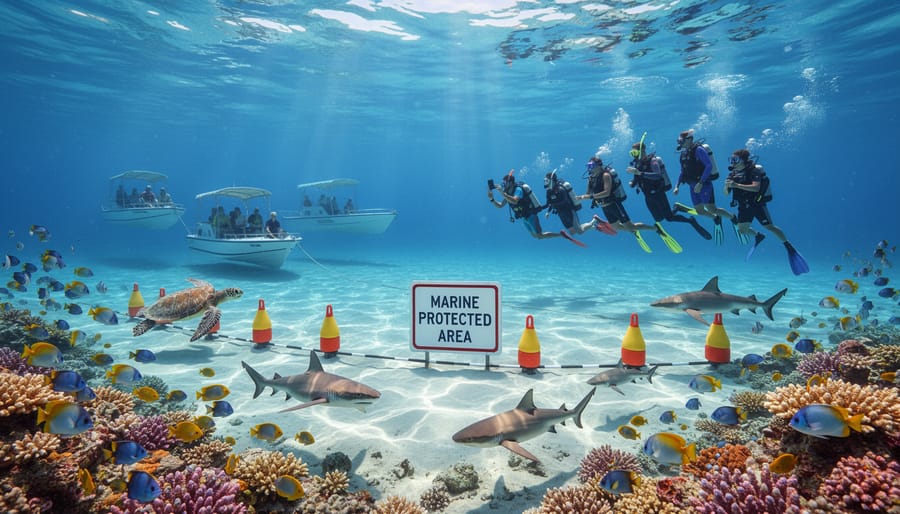
Activity-based zoning represents one of the most effective strategies for managing marine eco-tourism while respecting ecosystem carrying capacity. This approach divides protected marine areas into designated zones, each with specific permitted activities and visitor limits. For example, sensitive coral reefs might be restricted to low-impact snorkeling in limited numbers, while more resilient areas accommodate diving groups. High-speed boating zones are strategically placed away from wildlife breeding grounds and fragile habitats.
Dr. Maria Santos, a marine conservation planner working in the Philippines, shares her experience: “When we implemented activity-based zoning at our marine sanctuary, we saw immediate benefits. Wildlife harassment incidents dropped by 65%, and reef damage from anchors virtually disappeared. Tourists actually appreciated the structure because it reduced crowding and enhanced their experience.”
This zoning strategy minimizes cumulative impacts by preventing activity overlap that can overwhelm sensitive ecosystems. It also reduces conflicts between user groups, ensuring divers aren’t disturbed by jet skis and snorkelers can observe marine life without disruption. Many marine protected areas now offer volunteer opportunities to help monitor zone compliance, providing hands-on conservation experience while supporting effective management.
Success Stories: Where Carrying Capacity Management Is Saving Marine Life
Across our oceans, a quiet revolution is transforming struggling marine ecosystems into thriving havens of biodiversity. By implementing carrying capacity-based zoning, several marine protected areas have demonstrated that science-driven management can reverse decades of degradation while supporting sustainable tourism.
In the Philippines’ Apo Island Marine Reserve, carrying capacity calculations revolutionized conservation efforts. Dr. Maria Santos, who has monitored the reserve for fifteen years, recalls the transformation: “When we first established visitor quotas based on carrying capacity assessments in 2008, some worried tourism would collapse. Instead, fish biomass increased by 340% within five years, and tourist satisfaction scores improved dramatically because visitors experienced healthier reefs with less crowding.”
The reserve now limits daily visitors to 150 divers and snorkelers, distributed across designated zones that rotate seasonally to allow ecosystem recovery. Local dive operators initially skeptical of restrictions now champion the system. “We charge premium rates because we guarantee uncrowded, pristine experiences,” explains former fisherman turned dive guide Roberto Villanueva. “My income tripled, and I’m protecting the ocean that sustains my community.”
Similarly, Australia’s Great Barrier Reef Marine Park pioneered adaptive zoning that adjusts carrying capacity thresholds based on real-time ecosystem monitoring. High-intensity tourism concentrates in resilient zones, while sensitive areas remain off-limits or allow only limited access during peak ecosystem health periods. Since implementation, coral cover in protected zones has increased by an average of 2% annually, while tourism revenue simultaneously grew.
In Mexico’s Cabo Pulmo National Park, community-based conservation combined with carrying capacity management achieved remarkable recovery. Marine biologist Dr. James Chen volunteers there annually, documenting changes: “In 1995, the reef was nearly dead from overfishing. Today, it holds 400% more fish biomass than surrounding areas. The secret? Local communities enforce visitor limits religiously because they directly benefit from healthier ecosystems.”
These success stories share common elements: science-based visitor limits, rotating access zones, strong community involvement, and continuous monitoring. Volunteer programs at these sites allow everyday ocean enthusiasts to contribute to data collection, making conservation participatory and transparent.
The transformations prove that carrying capacity management isn’t merely theoretical—it’s a practical tool delivering measurable results. When communities witness rebounding fish populations, returning endangered species, and improved livelihoods, they become conservation’s most passionate advocates, ensuring long-term sustainability.
How You Can Support Sustainable Marine Eco-Tourism
Supporting sustainable marine eco-tourism begins with the choices we make as travelers and community members. When selecting tour operators, look for certifications indicating adherence to carrying capacity guidelines and environmental best practices. Ask potential operators about their group size limits, waste management protocols, and contributions to local conservation efforts. Responsible companies will eagerly share their sustainability commitments and provide transparent information about how they minimize their ecological footprint.
Participating in citizen science programs offers a powerful way to contribute directly to marine conservation while enjoying coastal experiences. Many marine education programs welcome volunteers to assist with species monitoring, beach cleanups, and habitat restoration projects. Dr. Sarah Chen, a marine biologist who coordinates volunteer initiatives, shares that citizen scientists have documented crucial data on seasonal migration patterns and population changes that would be impossible for researchers to collect alone. “Our volunteers become ocean ambassadors,” she notes, “taking their newfound knowledge back to their communities.”
The Marine Biodiversity Science Center’s e-network provides year-round engagement opportunities, even for those far from coastal areas. Through virtual workshops, online data entry projects, and digital advocacy campaigns, anyone can contribute to marine conservation efforts. Subscribe to receive updates on urgent conservation issues and participate in public comment periods for marine protected area management plans.
Simple daily actions also matter. Reduce single-use plastics, choose sustainable seafood, and share information about carrying capacity with friends planning coastal vacations. Support businesses and organizations committed to marine conservation through donations or memberships.
Remember, sustainable tourism isn’t about restricting access but about ensuring these magnificent ecosystems thrive for generations. Each thoughtful choice creates ripples of positive change. Whether you’re snorkeling alongside sea turtles, analyzing data from your computer, or simply making informed consumer decisions, you’re contributing to a collective movement protecting our ocean’s future. Together, we can ensure marine ecosystems remain vibrant, resilient, and accessible for all who approach them with respect and wonder.
The ocean’s wonders—vibrant coral cities teeming with life, graceful manta rays gliding through azure waters, whale songs echoing across vast expanses—deserve our awe and our protection in equal measure. Understanding and applying ecosystem carrying capacity isn’t about building walls around marine treasures or denying access to those who cherish them. Instead, it’s about ensuring that the experiences we treasure today remain intact for our children, their children, and generations beyond.
Science-based carrying capacity assessments and thoughtful marine zoning represent our commitment to a sustainable future. They acknowledge that the ocean, despite its vastness, has limits. By respecting these boundaries through visitor quotas, seasonal restrictions, and protected areas, we’re not restricting wonder—we’re preserving it. Every properly managed marine reserve, every responsibly conducted dive operation, and every tourist who chooses an eco-certified tour operator contributes to this collective effort.
The encouraging news is that when we act together, marine ecosystems demonstrate remarkable resilience. Coral reefs can regenerate, fish populations can rebound, and endangered species can recover. Marine biologist Dr. Sarah Chen shares, “I’ve watched dive sites transform from degraded to thriving simply because communities chose to limit daily visitors. That gives me tremendous hope.”
Whether you’re a researcher, educator, tourism operator, or ocean enthusiast, your voice and actions matter. Support marine protected areas, choose sustainable tourism operators, participate in citizen science programs, or volunteer with local conservation organizations. Together, we can ensure that marine wonders endure, inspiring wonder and driving discovery for countless generations to come.

jessica
Ava Singh is an environmental writer and marine sustainability advocate with a deep commitment to protecting the world's oceans and coastal communities. With a background in environmental policy and a passion for storytelling, Ava brings complex topics to life through clear, engaging content that educates and empowers readers. At the Marine Biodiversity & Sustainability Learning Center, Ava focuses on sharing impactful stories about community engagement, policy innovations, and conservation strategies. Her writing bridges the gap between science and the public, encouraging people to take part in preserving marine biodiversity. When she’s not writing, Ava collaborates with local initiatives to promote eco-conscious living and sustainable development, ensuring her work makes a difference both on the page and in the real world.