Marine Biodiversity Science Center

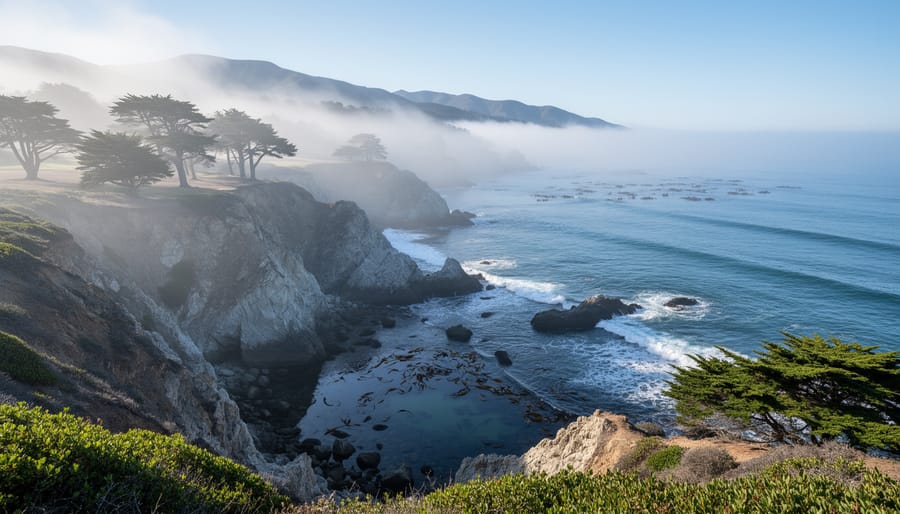
Every morning along the California coast, a thick blanket of fog rolls in from the Pacific Ocean, transforming sunlit beaches into misty, ethereal landscapes. This phenomenon, known as a marine layer, is far more than a weather pattern that frustrates sun-seekers and delights photographers. It represents a delicate atmospheric balance that has sustained coastal ecosystems for millennia, delivering moisture to redwood forests, moderating temperatures for marine life, and creating unique microclimates that support countless species found nowhere else on Earth.
The question of whether marine layers are sustainable invites us to examine both natural cycles and human impacts. These fog systems form through a precise interplay of ocean currents, temperature differentials, and atmospheric pressure, creating conditions that coastal organisms depend upon for survival. California’s iconic redwood trees, for instance, derive up to 40 percent of their water needs from marine layer fog during dry summer months. Tide pool creatures rely on the cooling moisture to survive low tides. Entire food webs depend on this reliable pattern of coastal fog.
Yet emerging research reveals troubling trends. Climate change is altering ocean temperatures and atmospheric patterns, potentially disrupting the very conditions that generate marine layers. Scientists have documented a 33 percent decrease in coastal fog frequency along parts of the California coast over the past century. This decline threatens not only weather patterns but the intricate web of life adapted to these conditions over thousands of years.
Understanding marine layer sustainability requires us to look beyond meteorology into the broader health of our ocean and atmospheric systems, recognizing that even seemingly eternal natural phenomena can become vulnerable when we alter the fundamental conditions that create them.
What Is a Marine Layer? Understanding the Science
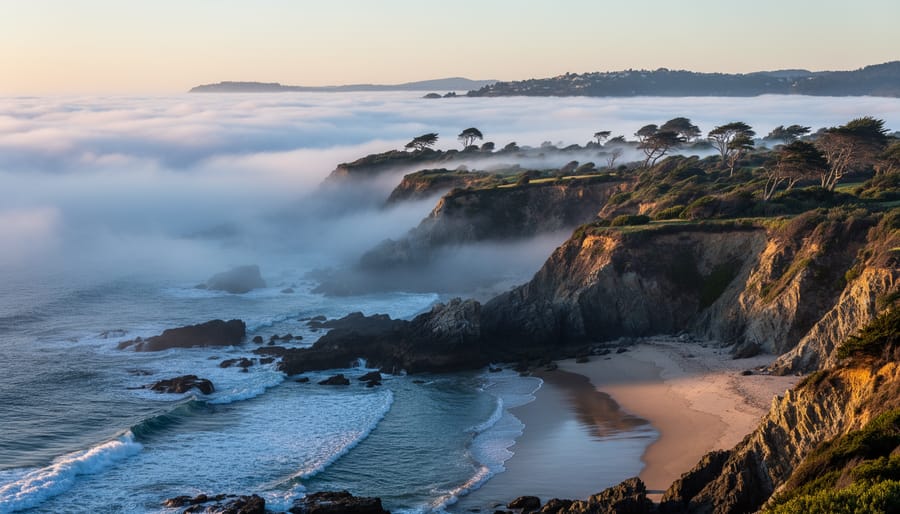
How Marine Layers Form
Marine layers form through a fascinating natural process that begins with cool ocean temperatures meeting warmer air above. When the ocean surface remains relatively cold, it cools the air directly above it, creating a layer of cool, moist air at low elevations. This process is particularly common along coastal regions where cold ocean currents flow near shore.
The key to marine layer formation lies in a phenomenon called temperature inversion. Normally, air temperature decreases with altitude, but in a temperature inversion, a layer of warm air sits above the cooler air near the ocean surface. This warm air acts like a lid, trapping the cool, moist air below and preventing it from rising and dissipating. As moisture from the ocean evaporates into this cool air layer, it eventually reaches saturation, forming the characteristic fog or low clouds we recognize as a marine layer.
Coastal geography plays a crucial role in sustaining these conditions. Mountain ranges and coastal topography channel and contain the marine layer, while prevailing winds push it inland during certain times of day, typically overnight and into morning hours. These ocean-atmosphere interactions create predictable patterns that coastal ecosystems have relied upon for thousands of years, providing essential moisture to plants and animals adapted to these unique conditions.
Where Marine Layers Occur Globally
Marine layers form most reliably along the world’s eastern ocean boundaries, where cold currents meet warm continental air. The California coast stands as perhaps the most iconic example, with marine layers blanketing cities like San Francisco and San Diego throughout spring and summer months. Similar conditions create predictable fog banks along the coasts of Peru and Chile, supported by the cold Humboldt Current.
The Canary Current nurtures marine layers along northwestern Africa, particularly around Morocco and Mauritania. Meanwhile, the Benguela Current system generates dramatic fog formations along Namibia’s Skeleton Coast, where condensation from marine layers provides critical moisture to one of Earth’s driest ecosystems. In the Southern Hemisphere, portions of southwestern Australia and South Africa’s Cape region experience regular marine layer events.
These coastal zones share key characteristics: cold ocean upwelling, stable atmospheric conditions, and temperature inversions that trap moisture near the surface. Marine biologist Dr. Elena Rodriguez, who studies California’s fog ecosystems, notes that “these foggy corridors support unique biodiversity found nowhere else on Earth.” Understanding where marine layers occur helps scientists monitor climate-related changes to these delicate atmospheric patterns and the coastal ecosystems depending on them.
The Ecological Role of Marine Layers in Coastal Sustainability
Regulating Coastal Temperatures and Microclimates
Marine layers act as nature’s thermostat along coastal regions, creating a vital cooling effect that moderates temperature extremes and sustains diverse ecosystems. When these fog banks roll in from the ocean, they can lower air temperatures by 10-20 degrees Fahrenheit, preventing the scorching heat that would otherwise stress coastal habitats during summer months.
This temperature regulation proves essential for intertidal zones, where organisms face the daily challenge of exposure during low tide. The marine layer’s cooling moisture helps prevent desiccation of sea stars, anemones, mussels, and kelp that cling to rocks between tides. Without this natural buffer, many species would struggle to survive the harsh transition between underwater and air environments.
Dr. Maria Santos, a marine biologist studying California’s coastline for fifteen years, shares an observation that captures this phenomenon perfectly: “I’ve watched tidepools on foggy mornings versus sunny afternoons. The difference is striking. The fog-protected pools remain cool and vibrant, while exposed areas show visible stress in the organisms within hours.”
The microclimates created by marine layers also support unique terrestrial ecosystems. Coastal redwood forests, for instance, depend heavily on fog drip for up to 40 percent of their water needs during dry seasons. These towering trees, in turn, provide habitat for countless species while sequestering massive amounts of carbon.
For conservation volunteers working in coastal restoration projects, understanding marine layer dynamics helps inform planting schedules and species selection, ensuring that restoration efforts work with natural climate patterns rather than against them.
Supporting Coastal Biodiversity
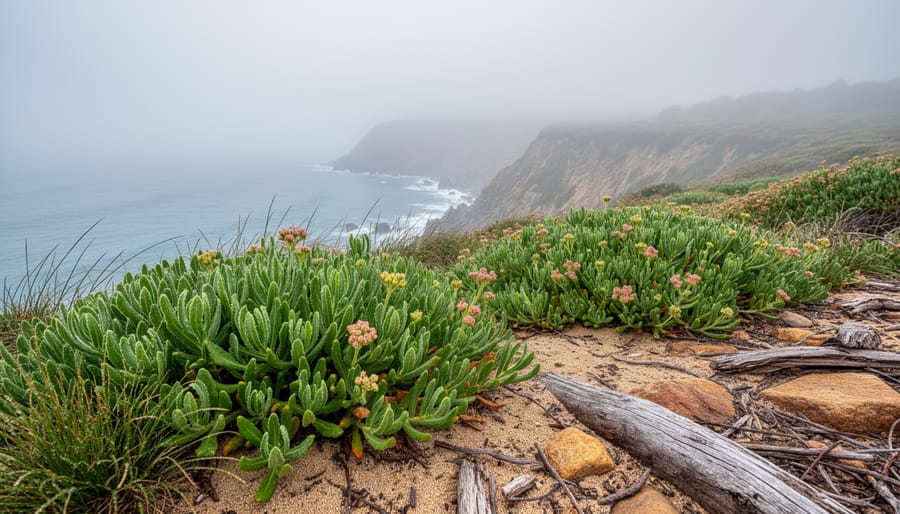
Marine layers serve as nature’s irrigation system for coastal ecosystems, delivering life-sustaining moisture to fog-dependent plants and animals that have evolved to thrive in these misty conditions. The fine water droplets suspended in marine layer fog provide crucial hydration to coastal vegetation, particularly during dry summer months when rainfall is scarce. Redwood forests, coastal scrub communities, and endemic plant species rely on this fog drip to supplement their water needs, with some studies showing that fog can contribute up to 40% of the moisture requirements for certain coastal species.
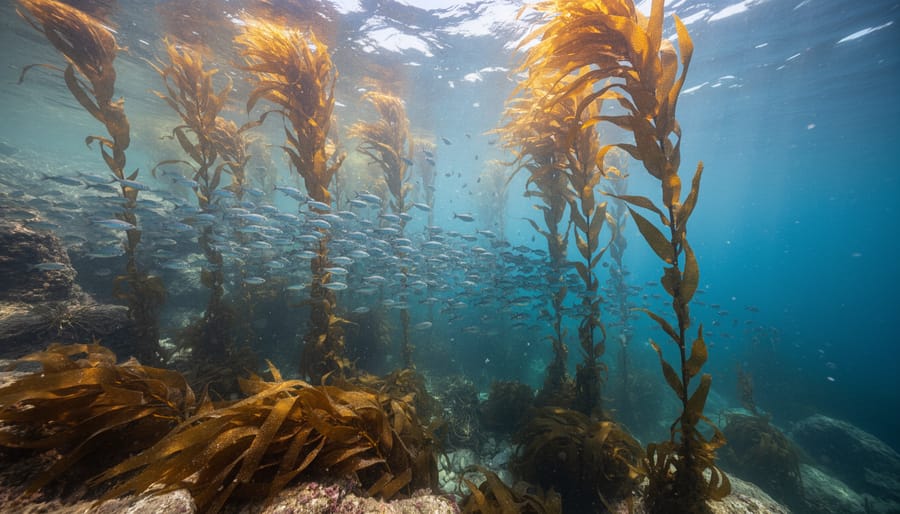
Beneath the waves, marine layers help regulate ocean surface temperatures, creating stable conditions that benefit kelp forests and the diverse marine life they support. These underwater forests, which shelter over 1,000 species of marine organisms, depend on the cool, nutrient-rich waters maintained partly by the temperature-moderating effects of persistent fog cover. When marine layers are consistent, they help prevent thermal stress that can damage these vital habitats and the coastal biodiversity they nurture.
Dr. Elena Martinez, a marine biologist who has spent fifteen years studying coastal fog ecosystems along the California coast, shares her perspective: “I remember my first foggy morning conducting field research. I watched a marbled murrelet emerge from the mist, its wings glistening with tiny water droplets. That moment crystallized for me how intimately connected seabirds are to these fog patterns. These birds nest in old-growth forests but feed in coastal waters, and the marine layer creates the cool, moist conditions their nesting sites require.”
For those inspired to support coastal fog ecosystems, volunteer opportunities exist through coastal monitoring programs and citizen science initiatives that track fog frequency and its ecological impacts.
Marine Layers and Climate Change: A Fragile Balance
Observed Changes in Marine Layer Patterns
Recent scientific observations reveal concerning shifts in marine layer behavior along coastal regions worldwide. Studies conducted over the past two decades show that these fog banks are becoming less predictable, with notable changes in their frequency, duration, and geographical distribution.
Research from California’s coast, where marine layers are most prominent, indicates that fog frequency has decreased by approximately 33% since the early 1900s. Marine biologist Dr. Sarah Chen from the Coastal Ecosystems Research Institute shares her observations: “During my fifteen years studying coastal habitats, I’ve witnessed marine layers arriving later in the season and burning off earlier in the day. This compressed timeframe affects everything from redwood forest moisture levels to kelp forest temperatures.”
Warming ocean temperatures are the primary driver behind these changes. As sea surface temperatures rise, the temperature differential between ocean and air decreases, reducing the conditions necessary for fog formation. Satellite data shows marine layers now form less frequently in traditionally fog-prone areas while occasionally appearing in previously unaffected regions, disrupting ecosystems adapted to specific moisture patterns.
Duration patterns have also shifted significantly. Marine layers that once persisted throughout morning hours now dissipate more rapidly, reducing the cooling effect on coastal zones. This change impacts marine species that depend on cooler water temperatures and affects terrestrial plants that rely on fog drip for moisture during dry seasons.
These observations underscore the interconnected nature of ocean health and atmospheric phenomena, highlighting why protecting marine environments matters for coastal ecosystem sustainability.
Implications for Marine Species and Habitats
Marine layer disruptions pose significant threats to species that have evolved over millennia to thrive under these specific coastal conditions. When these fog patterns shift or diminish, the cascading effects ripple through entire ecosystems in ways that deeply concern marine biologists.
Take the coastal redwood forest ecosystem, where persistent marine layer fog provides up to 40% of the moisture these towering giants need. As fog frequency decreases, we’re witnessing stress in salamander populations that depend on the cool, moist understory environment. Dr. Sarah Chen, a marine ecologist studying California’s coastline, shares: “I’ve watched tide pool communities struggle as reduced fog cover leads to higher temperatures and increased evaporation. Species like the ochre sea star and aggregating anemones face thermal stress they simply weren’t adapted to handle.”
Seabirds present another compelling example. Common murres and rhinoceros auklets rely on the nutrient-rich upwelling waters that marine layers help sustain. When fog patterns change, it signals broader shifts in ocean conditions. Research shows that climate change affects marine ecosystems by disrupting these delicate temperature balances, leading to reduced prey availability for seabird colonies.
The good news? Understanding these connections empowers us to take meaningful action. Citizen scientists can participate in fog monitoring projects and coastal habitat restoration efforts, directly contributing to conservation strategies that protect these vulnerable populations.
The Sustainability Question: Are Marine Layers Naturally Sustainable?
When we ask whether marine layers are naturally sustainable, we’re exploring an intriguing intersection between meteorology and environmental science. In the truest sense, marine layers represent a remarkably sustainable natural phenomenon—one that has persisted for millennia as part of Earth’s atmospheric cycles.
Marine layers form through a reliable, self-perpetuating process. Cool ocean water meets warmer air, creating fog and low clouds that roll inland, typically during nighttime and early morning hours. This cycle repeats with predictable seasonal patterns, particularly along western coastlines. The ocean’s vast thermal mass and consistent temperature gradients ensure these conditions recur naturally, making marine layers a sustainable feature of coastal climates without requiring any external intervention.
However, the concept of sustainability becomes more complex when we consider human influence on the systems that generate marine layers. Climate change is fundamentally altering ocean temperatures, atmospheric circulation patterns, and the delicate balance of conditions required for marine layer formation. Rising sea surface temperatures can modify the temperature differential that creates these fog banks, potentially disrupting their frequency, intensity, and duration.
Dr. Sarah Chen, a marine climatologist who has studied coastal fog patterns for fifteen years, shares her perspective: “What fascinates me is that while the basic physics of marine layer formation remains constant, we’re seeing shifts in when and where they occur. Some regions experience fewer foggy days than historical records show, while atmospheric changes create unexpected patterns in others.”
The ecosystems that depend on marine layers face particular vulnerability. Coastal redwood forests, for instance, derive up to 40 percent of their moisture from fog drip during dry summer months. Changes to marine layer patterns could fundamentally alter these habitats and the species they support.
So, are marine layers sustainable? As natural phenomena, yes—they operate on principles as old as our oceans. But their future sustainability depends heavily on our actions today. Protecting the climate conditions that allow marine layers to form means addressing greenhouse gas emissions, ocean warming, and atmospheric changes. Understanding this connection empowers us to appreciate how protecting our atmosphere directly sustains the coastal ecosystems we cherish.
Protecting the Conditions That Sustain Marine Layers
Ocean Temperature Regulation Through Climate Action
Protecting the natural processes that sustain marine layers begins with addressing climate change at its source. Reducing greenhouse gas emissions helps stabilize ocean temperatures, which is essential for maintaining the temperature gradients that drive marine layer formation. When we collectively work to lower our carbon footprint through renewable energy adoption, sustainable transportation choices, and supporting climate-friendly policies, we’re directly contributing to the atmospheric conditions necessary for these coastal fog systems.
Ocean health and marine layer sustainability are intrinsically connected. Healthy oceans better regulate heat absorption and distribution, maintaining the cool surface waters that generate coastal fog. Marine biologist Dr. Sarah Chen shares her perspective: “Every action we take to reduce ocean acidification and pollution strengthens the ocean’s capacity to support natural weather patterns like marine layers. It’s all interconnected.”
Simple actions make a difference. Participating in coastal clean-ups removes pollutants that can alter local ocean chemistry and temperature. Supporting marine protected areas preserves ecosystems that contribute to ocean health. Even reducing single-use plastics helps maintain the pristine conditions oceans need to function optimally. These efforts, multiplied across communities, create meaningful change that protects both marine layers and the coastal ecosystems depending on them.
Coastal Habitat Protection Programs
Coastal ecosystems depend heavily on the consistent moisture and temperature regulation provided by marine layers. Recognizing this connection, numerous marine conservation efforts now focus on protecting these fog-dependent habitats along our coastlines. Organizations like the Marine Biodiversity Science Center lead habitat restoration projects in redwood forests, coastal prairies, and tidepools—all environments that thrive under marine layer conditions.
Dr. Elena Martinez, a marine biologist with the Center, shares an inspiring perspective: “When volunteers help us monitor coastal vegetation health, they’re directly contributing to our understanding of how changing fog patterns affect these delicate ecosystems. Every data point matters.”
The Center offers hands-on volunteer opportunities year-round, from weekend beach cleanups to citizen science programs tracking fog frequency and its impact on native species. These programs welcome participants of all experience levels, providing training and mentorship. By joining these initiatives, you become part of a community working to preserve the intricate relationship between atmospheric conditions and coastal biodiversity, ensuring these vital ecosystems remain resilient for future generations.
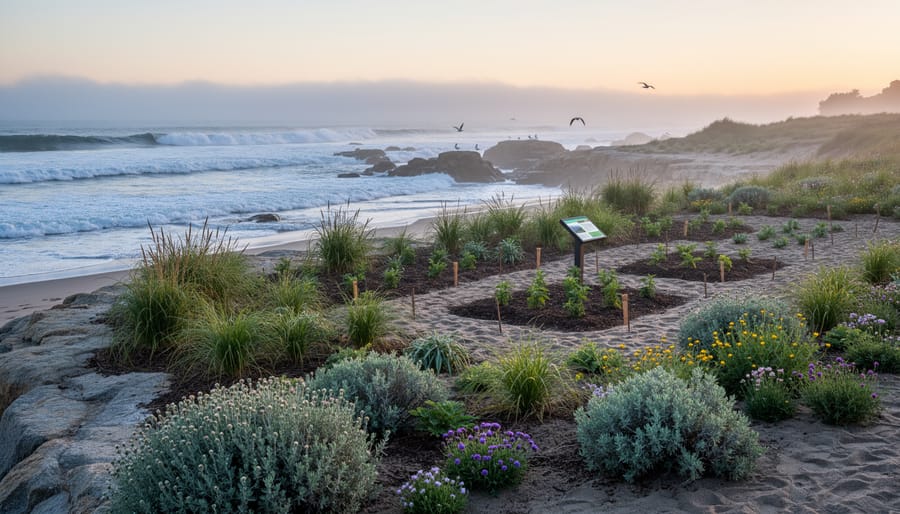
Marine layers are remarkable examples of nature’s self-sustaining systems, cycling moisture from ocean to atmosphere in patterns perfected over millennia. Yet their sustainability isn’t guaranteed in perpetuity. While these coastal phenomena have persisted throughout human history, the conditions that create them—stable ocean temperatures, atmospheric pressure patterns, and healthy coastal ecosystems—are increasingly threatened by climate change, pollution, and habitat destruction.
The future of marine layers, and the vital ecosystems they support, rests in our collective hands. Every action we take to reduce carbon emissions, protect coastal waters, and preserve marine habitats contributes to maintaining the delicate balance that allows these natural systems to thrive. Dr. Sarah Chen, a marine biologist who has dedicated two decades to coastal conservation, reminds us: “Individual choices ripple outward. When communities come together for beach cleanups, habitat restoration, or advocacy, the cumulative impact is extraordinary.”
You can be part of this transformation. Volunteer opportunities abound with local marine conservation organizations, from citizen science programs monitoring coastal conditions to hands-on restoration projects. Support policies that protect our oceans. Reduce your plastic consumption. Share what you’ve learned about marine layers and their importance with friends and family.
The story of marine layer sustainability is ultimately about our relationship with nature. These misty blankets that embrace our coastlines will endure if we commit to protecting the systems that create them. Together, we can ensure that future generations will experience the wonder of fog-kissed mornings and thriving coastal ecosystems. The ocean has sustained us—now it’s our turn to return the favor.

jessica
Ava Singh is an environmental writer and marine sustainability advocate with a deep commitment to protecting the world's oceans and coastal communities. With a background in environmental policy and a passion for storytelling, Ava brings complex topics to life through clear, engaging content that educates and empowers readers. At the Marine Biodiversity & Sustainability Learning Center, Ava focuses on sharing impactful stories about community engagement, policy innovations, and conservation strategies. Her writing bridges the gap between science and the public, encouraging people to take part in preserving marine biodiversity. When she’s not writing, Ava collaborates with local initiatives to promote eco-conscious living and sustainable development, ensuring her work makes a difference both on the page and in the real world.