Marine Biodiversity Science Center

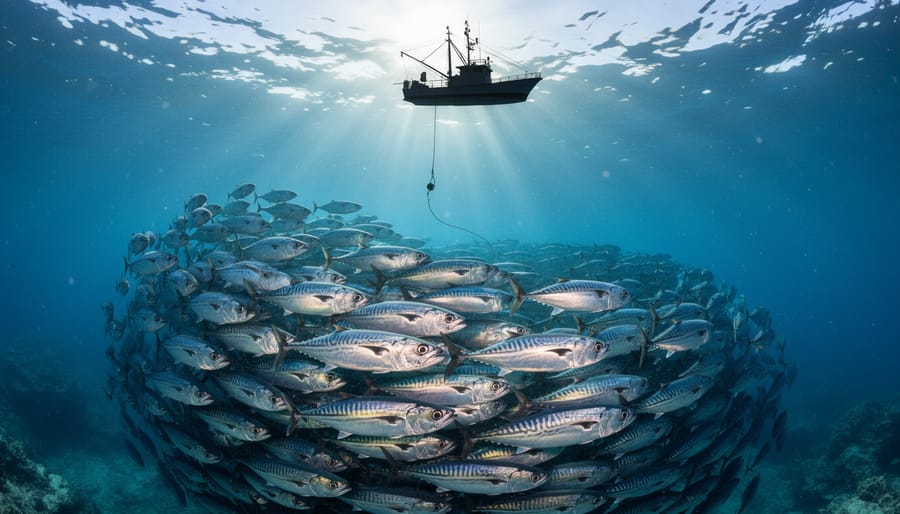
Look for the blue MSC label with the white checkmark fish on seafood packaging at your grocery store—this certification indicates the product comes from a fishery independently verified to meet rigorous sustainability standards for fish stock health, ecosystem impact, and effective management. Verify specific fishery ratings by visiting the MSC website’s track-and-trace tool, where you can enter the certification code from your product to see exactly which vessel caught your fish and review the detailed assessment report. Compare MSC-certified options against other eco-labels like Aquaculture Stewardship Council (ASC) for farmed fish or Ocean Wise recommendations, understanding that MSC focuses exclusively on wild-capture fisheries that demonstrate they’re not depleting populations faster than they can reproduce.
The Marine Stewardship Council certification has become the world’s most recognized mark for sustainable wild-caught seafood since its founding in 1997, yet many consumers remain uncertain about what that blue label actually guarantees. At its core, MSC certification represents a science-based promise: fisheries earning this designation have proven through third-party audits that they maintain healthy fish populations, minimize environmental damage to habitats and other species, and implement adaptive management systems that respond to changing ocean conditions. This matters profoundly for ocean sustainability because global fish stocks face unprecedented pressure—the UN Food and Agriculture Organization reports that 35% of monitored populations are overfished, while another 57% are fished at maximum sustainable levels, leaving virtually no room for error.
Understanding MSC certification empowers you to transform everyday purchasing decisions into meaningful conservation action, though the system isn’t without legitimate criticisms worth examining alongside its documented environmental achievements.
Understanding MSC Certification: More Than Just a Blue Label
The Three Pillars of MSC Standards
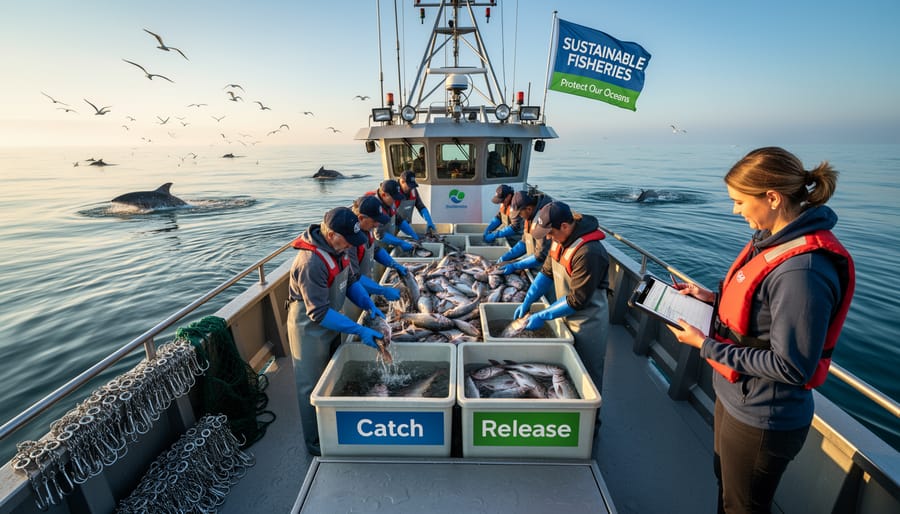
The MSC certification rests on three interconnected principles that work together to ensure fisheries operate sustainably. Understanding these pillars helps explain why MSC-certified seafood represents a meaningful choice for ocean conservation.
The first principle focuses on sustainable fish stocks. Certified fisheries must demonstrate that their fishing pressure allows populations to remain productive and recover if depleted. For example, the Alaska pollock fishery, one of the world’s largest MSC-certified operations, continuously monitors stock levels and adjusts catch limits accordingly. Marine biologist Dr. Sarah Chen, who has worked with various certified fisheries, shares: “What impressed me most was seeing fishing communities voluntarily reduce their catch when data suggested stock pressures. That’s the standard in action.”
The second principle addresses minimizing environmental impact. Fisheries must prove they limit bycatch, protect habitat, and maintain ecosystem health. The New Zealand hoki fishery provides a compelling example—after certification, they modified their trawling equipment and fishing zones to reduce seabed contact by over 90 percent, protecting vulnerable coral gardens while maintaining their operations.
The third principle requires effective fishery management. This means having robust systems to enforce rules, adapt to scientific findings, and respond to changing ocean conditions. Sustainable fishing practices depend on this adaptive management approach.
Together, these three pillars create a comprehensive framework that addresses the biological, ecological, and governance aspects of responsible fishing. When all three principles are met, fisheries can operate indefinitely without depleting marine resources or damaging ocean ecosystems.
From Ocean to Plate: The Certification Journey
Achieving MSC certification is a rigorous journey that typically spans 18-24 months. When a fishery decides to pursue certification, they engage an independent, third-party certifying body accredited by the MSC. Think of these assessors as marine detectives, examining every aspect of the fishing operation.
The assessment team evaluates the fishery against three core principles: the health of fish stocks, the ecosystem impact of fishing activities, and the effectiveness of fishery management systems. This involves analyzing years of scientific data, conducting site visits, interviewing fishers and managers, and reviewing catch records. Marine biologist Dr. Elena Martinez, who has participated in several assessments, explains: “We’re looking at the complete picture—not just whether there are enough fish today, but whether the fishing practices protect ocean habitats and ensure abundance for future generations.”
The process is transparent, with draft reports published for public comment. Stakeholders, from conservation groups to local communities, can provide input. If the fishery meets the standards, certification is granted for five years, but the work doesn’t stop there. Annual surveillance audits ensure continued compliance, with fisheries required to address any identified weaknesses through condition-based improvements. This ongoing accountability makes MSC certification a living commitment to sustainable practices.
Why MSC Certification Matters for Marine Ecosystems
Success Stories from the Sea
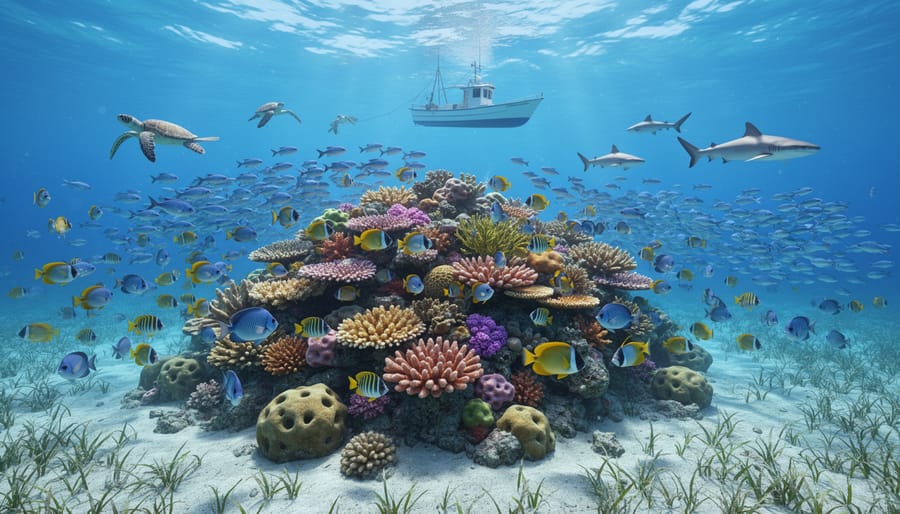
The journey from unsustainable fishing practices to MSC certification demonstrates how meaningful change happens at sea. These transformations offer tangible proof that fisheries can rebuild while maintaining viable businesses.
The Patagonian toothfish fishery in South Georgia provides a remarkable example. Once devastated by illegal fishing in the 1990s, this fishery worked systematically to eliminate bycatch of seabirds, which had reached catastrophic levels. Through the implementation of bird-scaring lines and weighted fishing gear, albatross deaths dropped by over 99 percent. The fishery achieved MSC certification in 2004 and has maintained it through rigorous monitoring. Dr. Emma Collins, a marine biologist who has studied this fishery for fifteen years, shares her perspective: “Witnessing fishing vessels transform from threats to conservation partners has been extraordinary. These crews now actively participate in seabird monitoring programs, collecting valuable data that advances our understanding of albatross populations throughout the Southern Ocean.”
The Alaskan salmon fisheries present another success story spanning multiple species and regions. After implementing strict escapement goals ensuring sufficient spawning populations return to rivers, these fisheries achieved certification while supporting thousands of livelihoods. Measurable outcomes include healthy salmon runs that have remained stable or increased since certification, with some watersheds seeing population improvements of 20-30 percent over baseline assessments.
Western Australia’s rock lobster fishery rebuilt from dangerously low stock levels in the 2000s through science-based catch reductions and habitat protection measures. Marine biologist Dr. James Rivera notes, “The recovery has been remarkable. We’ve documented breeding stock biomass increasing threefold, and the ecosystem benefits extend beyond lobsters to the entire reef community.”
These fisheries demonstrate that certification drives real environmental improvements, creating blueprints other fisheries can follow toward sustainability.
Protecting Marine Biodiversity Beyond Target Species
MSC certification extends far beyond simply managing target fish populations—it requires fisheries to demonstrate their impact on entire ocean ecosystems. The three core principles include protecting marine biodiversity through strict standards addressing bycatch reduction, habitat protection, and ecosystem health.
Certified fisheries must minimize unintended catches of non-target species, including sea turtles, dolphins, seabirds, and juvenile fish. They implement modified gear designs, time-area closures, and monitoring systems to reduce harm to vulnerable species. For example, some MSC-certified trawl fisheries use turtle excluder devices and modified nets that allow smaller fish to escape.
Habitat protection forms another critical component. Fisheries cannot operate in ways that cause irreversible damage to seafloor habitats, coral reefs, or seagrass beds. This requirement has driven innovation in fishing methods that reduce bottom contact and avoid sensitive areas entirely.
Marine biologist Dr. Sarah Chen, who has assessed numerous fisheries for MSC compliance, shares that “the most successful operations view ecosystem health as integral to their long-term viability. They understand that protecting the whole ocean environment ensures sustainable catches for generations.” This holistic approach helps maintain the delicate balance that keeps our oceans thriving.
MSC in the Context of Global Certification Systems
Complementary Certifications: A Stronger Together Approach
No single certification can address every dimension of seafood sustainability, which is why the marine conservation community benefits from a diverse ecosystem of complementary standards. While MSC focuses exclusively on wild-caught fisheries and their environmental impacts, other certifications fill critical gaps in the sustainable seafood marketplace.
The Aquaculture Stewardship Council (ASC) serves as MSC’s counterpart for farmed seafood, applying rigorous environmental and social standards to aquaculture operations. Together, MSC and ASC cover the two primary seafood production methods, giving consumers pathways to make responsible choices regardless of whether their fish came from the ocean or a farm.
Fair Trade USA and the Monterey Bay Aquarium’s Seafood Watch program complement environmental certifications by emphasizing social justice and comprehensive sustainability assessments. Fair Trade certification ensures fishing communities receive fair wages and work under safe conditions, addressing the human dimension that purely environmental programs don’t capture. Meanwhile, Seafood Watch provides accessible, region-specific recommendations that help consumers navigate the complex seafood landscape when certified options aren’t available.
Organic certifications add another layer by restricting synthetic inputs in aquaculture systems, appealing to consumers concerned about chemical use. Marine Stewardship Council scientists recognize that this certification tapestry creates stronger markets than any single program could achieve alone. When restaurants and retailers commit to multiple certification systems simultaneously, they demonstrate comprehensive sustainability commitments that drive broader industry transformation.
For conservation-minded consumers, this means looking beyond individual labels to support retailers who embrace this multi-certification approach. Your purchasing decisions, combined with those of millions of others, signal market demand for seafood that protects both marine ecosystems and the communities depending on them.
The Challenges and Criticisms of MSC Certification
While the Marine Stewardship Council has become the world’s leading seafood certification program, it hasn’t escaped scrutiny from scientists and conservation groups who are passionate about protecting our oceans. Understanding these concerns helps us appreciate both the program’s achievements and the ongoing work needed to improve sustainable fishery management.
One significant debate centers on stock assessment methods. Some marine biologists argue that MSC standards occasionally approve fisheries operating near population thresholds that make them vulnerable to environmental changes. Dr. Jennifer Jacquet, a conservation biologist at New York University, has noted instances where certified fisheries later experienced stock declines, raising questions about whether assessment models adequately account for climate change impacts and ecosystem complexity. These aren’t criticisms meant to dismiss the program entirely, but rather calls for more precautionary approaches that build greater resilience into fish populations.
Access barriers for local fisheries and small-scale fishing operations present another legitimate concern. The certification process requires extensive documentation, scientific assessments, and annual audits that can cost between $15,000 and $120,000 initially, with ongoing expenses for maintaining certification. For artisanal fishing communities that often employ the most selective, low-impact methods, these costs can be prohibitive. This creates an unfortunate paradox where large industrial operations may find certification more accessible than the traditional fishing communities whose practices frequently align closely with sustainability principles.
Several specific certifications have sparked controversy within the conservation community. The certification of certain tuna fisheries using fish aggregating devices, which can result in bycatch of sharks and juvenile fish, has drawn criticism. Similarly, some Antarctic krill fisheries have raised concerns given the critical role krill play in marine food webs.
Yet these challenges illuminate pathways for improvement rather than fundamental flaws. The MSC has responded to criticism by strengthening standards, improving transparency, and developing programs to support small-scale fishery access. This evolution demonstrates how constructive dialogue between certification bodies, scientists, and fishing communities drives progress toward truly sustainable ocean management.
How You Can Support Sustainable Seafood Markets
Making Informed Choices at the Market
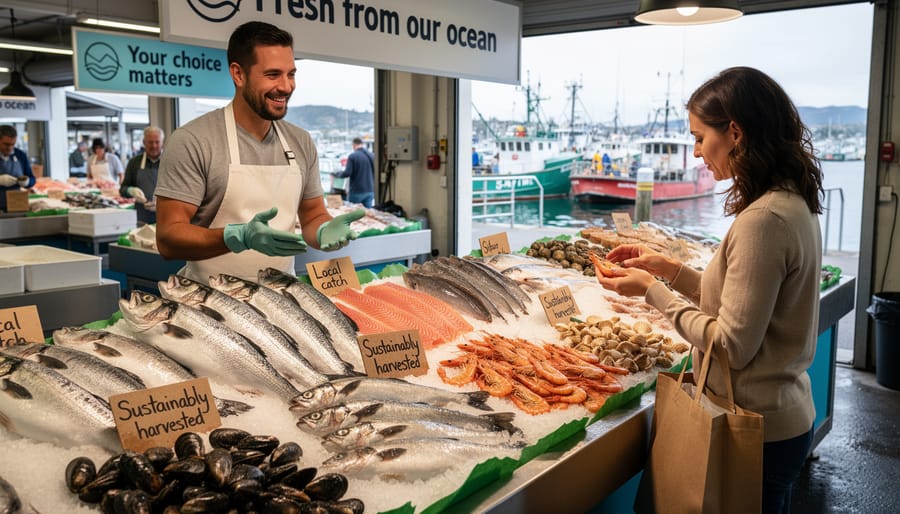
Finding MSC-certified seafood at your local market is easier than you might think. Look for the distinctive blue fish label with a white checkmark on packaging at grocery stores and fish counters. This logo guarantees that the product comes from a fishery that has met rigorous sustainability standards.
When shopping at fish counters without clear labeling, don’t hesitate to ask questions. Inquire whether their seafood carries MSC certification or other sustainability credentials. Many fishmongers appreciate customers who care about ocean health and can provide information about sourcing. If they can’t answer immediately, your questions signal demand for traceable, sustainable options.
Download seafood guide apps like Seafood Watch to make informed decisions on the go. These tools complement MSC certification by providing broader sustainability ratings and alternative choices when certified options aren’t available.
Understanding chain of custody certification adds another layer of confidence. This system tracks MSC-certified seafood through every step from boat to plate, ensuring the product you purchase genuinely comes from a certified sustainable fishery. Processors, distributors, and retailers must all maintain this certification to display the blue label, creating an unbroken verification chain that prevents mislabeling or mixing with non-certified seafood.
Get Involved: Volunteer and Research Opportunities
Whether you’re a marine science student, an experienced researcher, or simply passionate about ocean conservation, there are numerous ways to contribute to the advancement of sustainable fisheries and certification programs like MSC.
Marine research centers and universities regularly seek volunteers to assist with fisheries assessment projects, helping scientists collect data on fish populations, habitat health, and ecosystem dynamics. These hands-on opportunities provide invaluable field experience while directly supporting the scientific foundation that informs certification decisions. Many coastal research stations welcome citizen scientists to participate in monitoring programs, where your observations contribute to long-term datasets tracking marine biodiversity.
If you’re interested in the social dimensions of sustainable seafood, consider connecting with organizations that work alongside fishing communities to improve fishing practices and navigate certification processes. These programs often need volunteers for community outreach, education initiatives, and documentation projects.
For those with research backgrounds, collaborative studies examining certification effectiveness, ecosystem recovery, or market impacts always need dedicated contributors. Check our volunteer opportunities page for current openings in marine conservation projects, from coastal surveys to sustainable seafood advocacy campaigns. Every contribution, whether in the field or the community, helps strengthen the connection between science, sustainability, and ocean stewardship.
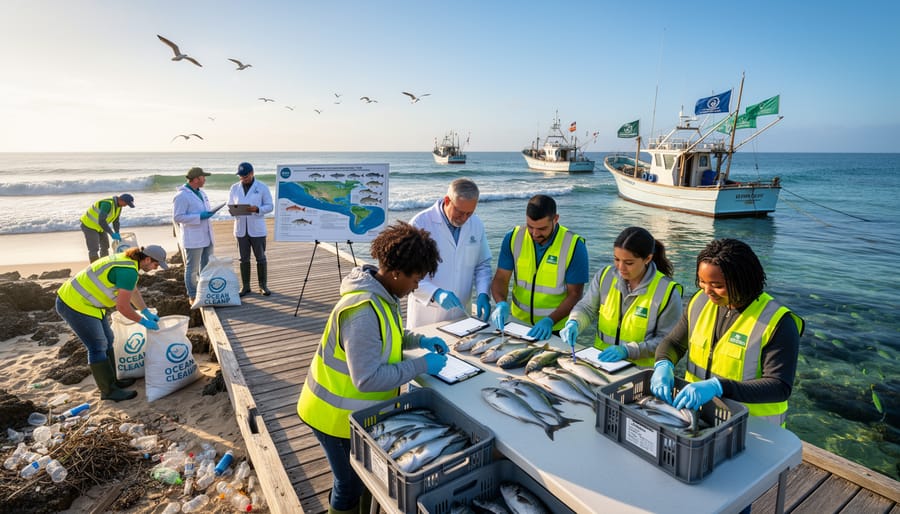
The future of our oceans rests not in any single certification program or policy, but in the collective power of millions of individual choices made daily across the globe. MSC certification represents one vital tool in our conservation toolkit, a bridge connecting conscientious consumers to fisheries committed to sustainability. Yet it thrives alongside other certifications, community-supported fisheries, and grassroots conservation initiatives, each playing their unique role in protecting marine biodiversity.
Dr. Elena Rodriguez, a marine biologist who has spent fifteen years studying coral reef ecosystems, puts it simply: “Every sustainable seafood purchase sends a market signal that reverberates through supply chains, reaching fishing communities and policy makers alike. You have more power than you realize.”
The path forward requires informed engagement rather than perfection. Understanding MSC certification alongside other sustainability standards empowers you to make choices aligned with your values. Whether you’re selecting dinner at the grocery store, volunteering with local marine conservation groups, or simply sharing knowledge with friends and family, your actions contribute to a larger movement safeguarding ocean health for future generations.
The challenges facing our oceans are significant, but so too is our capacity for positive change. Marine ecosystems have demonstrated remarkable resilience when given the chance to recover. By supporting sustainable fishing practices through MSC-certified products and other verified sources, you become part of the solution, helping ensure that ocean abundance continues to inspire wonder and sustain life for generations to come.

jessica
Ava Singh is an environmental writer and marine sustainability advocate with a deep commitment to protecting the world's oceans and coastal communities. With a background in environmental policy and a passion for storytelling, Ava brings complex topics to life through clear, engaging content that educates and empowers readers. At the Marine Biodiversity & Sustainability Learning Center, Ava focuses on sharing impactful stories about community engagement, policy innovations, and conservation strategies. Her writing bridges the gap between science and the public, encouraging people to take part in preserving marine biodiversity. When she’s not writing, Ava collaborates with local initiatives to promote eco-conscious living and sustainable development, ensuring her work makes a difference both on the page and in the real world.