Marine Biodiversity Science Center

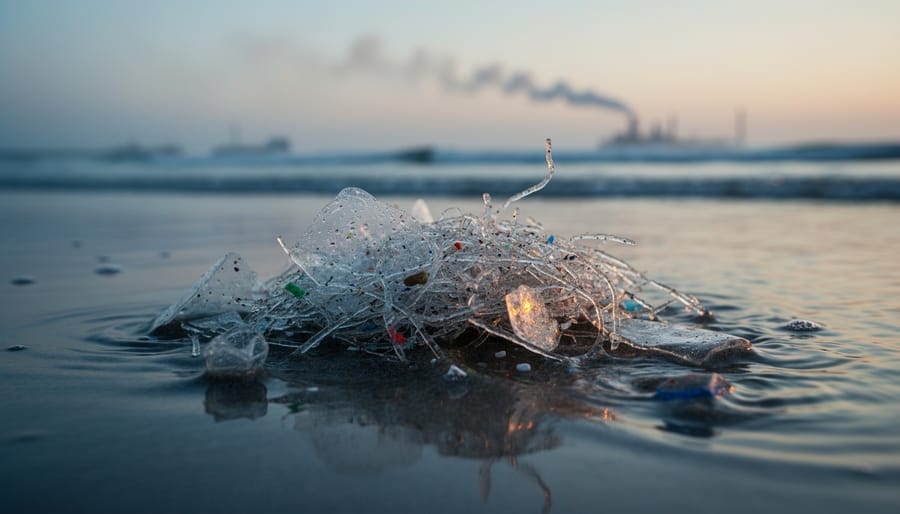
Plastic pollution directly accelerates climate change through greenhouse gas emissions released during production, degradation, and incineration, creating a feedback loop between two of the planet’s most urgent environmental crises. Every stage of plastic’s lifecycle, from fossil fuel extraction to its breakdown in oceans, releases carbon dioxide and methane into the atmosphere. By 2026, plastic production alone accounts for more than 850 million metric tons of greenhouse gases annually, a figure projected to triple by 2050 if current trends continue.
The connection between plastic waste and our changing climate runs deeper than most people realize. When plastic debris breaks down in the ocean under UV radiation, it doesn’t simply disappear. It fragments into microplastics while releasing methane and ethylene, two potent greenhouse gases that trap heat in our atmosphere. Meanwhile, the production of virgin plastic consumes roughly 6% of global oil supplies, locking us into continued fossil fuel dependence. Even well-intentioned solutions like waste incineration generate significant carbon emissions, making the plastic-climate relationship far more complex than the visible pollution we see washing ashore.
This article examines the mechanisms linking plastic pollution to climate change, breaks down the types of emissions generated across plastic’s lifecycle, and explores the scale of impact on marine ecosystems specifically. You’ll discover why reducing plastic consumption matters not only for ocean health but for climate stability, and learn about conservation strategies already showing promise. Through insights from marine biologists working at the intersection of these crises, we’ll explore how individual actions and systemic changes can address both challenges simultaneously. Understanding this connection transforms how we approach marine conservation, revealing that every piece of plastic we prevent from entering our oceans is also a climate action.
What the Plastic-Climate Connection Means
Plastic pollution and climate change aren’t separate environmental problems, they’re two sides of the same fossil fuel crisis. Every piece of plastic starts as oil or natural gas extracted from the ground, and at each stage of its existence, from factory floor to ocean floor, plastic releases greenhouse gases into the atmosphere. This connection runs deeper than most people realize: plastics fuel oil demand that drives further extraction, creating a cycle where plastic production both depends on and accelerates climate change.
The relationship works in both directions. Plastic production pumps carbon dioxide and methane into the air during manufacturing. Once discarded, plastic continues releasing greenhouse gases as it breaks down in landfills, incinerators, and natural environments. When microplastics accumulate in the ocean, they don’t just harm marine life, they interfere with the ocean’s ability to absorb carbon from the atmosphere, weakening one of Earth’s most important climate regulators.
Understanding this connection requires clarity on several key terms:
- Lifecycle emissions
- The total greenhouse gases released during plastic’s journey from fossil fuel extraction through production, use, disposal, and eventual breakdown in the environment.
- Microplastics
- Plastic fragments smaller than 5mm that form when larger pieces degrade, releasing methane and ethylene while spreading throughout marine and terrestrial ecosystems.
- Carbon sequestration interference
- The disruption of natural processes that remove CO2 from the atmosphere, particularly in oceans where plastic pollution harms phytoplankton and other organisms that capture carbon.
- Plastic-derived greenhouse gases
- Carbon dioxide, methane, and ethylene released during plastic production, degradation, and incineration, contributing directly to atmospheric warming.
A common misconception treats plastic pollution primarily as a litter problem, unsightly but climate-neutral once manufactured. The science tells a different story. Plastic’s climate impact doesn’t end when a bottle reaches the recycling bin or washes onto a beach. The material continues influencing global temperatures for decades, even centuries, as it fragments and releases gases while simultaneously undermining the planet’s natural carbon removal systems.
How Plastic Pollution Drives Climate Change
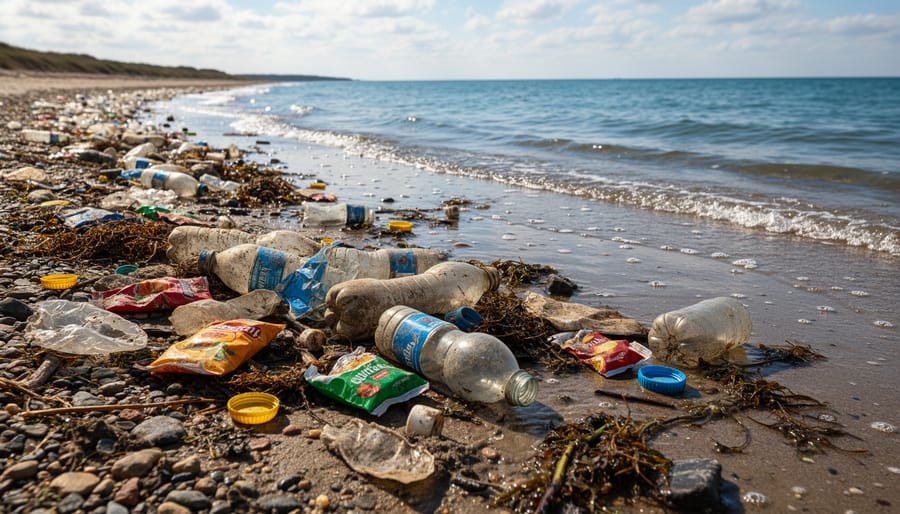
Fossil Fuel Extraction and Plastic Production
Nearly all plastic begins as crude oil or natural gas drawn from deep underground, often through drilling or fracking that releases methane into the atmosphere. Once extracted, petroleum refineries heat and chemically crack hydrocarbons to isolate ethylene and propylene, the building blocks of most plastics. These refining steps consume enormous quantities of energy, typically supplied by burning fossil fuels emit CO2 and methane in the process.
Polymerization plants then link these molecules into long chains, forming resins such as polyethylene and polypropylene. This stage alone requires high temperatures and pressures sustained by industrial furnaces and compressors, each contributing carbon dioxide emissions. Manufacturing facilities also vent or flare off waste gases that contain methane, a greenhouse gas roughly 25 times more potent than CO2 over a century.
Estimates suggest that producing one kilogram of polyethylene releases approximately 1.9 kilograms of CO2-equivalent emissions. Scaled to global production, over 450 million metric tons of new plastic in 2026, the annual carbon footprint rivals that of many mid-sized countries. Because plastic demand continues to rise, emissions from extraction and production are projected to double by 2040 unless the industry shifts to renewable feedstocks and energy sources. Every virgin plastic pellet carries this embedded climate cost long before it becomes a bottle, bag, or packaging film.
Transportation and Distribution Emissions
The global movement of plastic products generates substantial greenhouse gas emissions that compound the climate impact of plastic pollution. From manufacturing hubs in Asia to consumer markets worldwide, plastics travel thousands of miles through interconnected supply chains that rely heavily on fossil fuel-powered transportation.
Container ships burning heavy fuel oil carry millions of tons of plastic goods across oceans annually, releasing CO2, black carbon, and sulfur oxides. A single large container vessel can emit as much particulate matter as 50 million cars while transporting plastic packaging, consumer products, and raw resin pellets between continents. These maritime routes account for roughly 3% of global greenhouse gas emissions, with plastic products representing a significant cargo category.
Distribution continues the emissions trail through diesel trucks, rail freight, and air cargo networks. Last-mile delivery, the final leg to warehouses and retail stores, proves particularly carbon-intensive per unit of product. The rise of e-commerce has multiplied these impacts, as individual plastic items often travel through multiple distribution centers before reaching consumers.
Reverse logistics add another layer when unsold or returned plastic products travel back through these networks, doubling transportation emissions without any productive outcome.
Degradation and Greenhouse Gas Release
Once plastic enters the environment, it doesn’t simply sit inert. Sunlight, heat, and microbial activity gradually break down polymer chains, and this degradation releases greenhouse gases directly into the atmosphere. Research has documented methane and ethylene from plastic materials exposed to solar radiation, with polyethylene products, the most common plastics worldwide, proving particularly prolific emitters.
In marine environments, floating debris acts like a slow-release emissions source. As waves and currents tumble plastic fragments across the ocean surface, ultraviolet radiation cleaves chemical bonds, liberating trapped gases. The warmer the water and the more intense the sunlight, the faster this process accelerates. Tropical and subtropical gyres, where plastic accumulates in massive patches, function as sprawling methane generators, with emissions continuing as long as the material persists.
The same degradation occurs on land, though conditions vary. Plastics in landfills, agricultural fields, and coastal zones all emit greenhouse gases as they fragment into microplastics and eventually nanoplastics. These smaller particles don’t stop releasing emissions; instead, their increased surface area can enhance degradation rates. Each generation of breakdown exposes fresh polymer surfaces to sunlight and microbial action, perpetuating the cycle. Unlike organic materials that decompose fully, plastics release gases for decades or centuries while never truly disappearing, leaving behind a legacy of both persistent pollution and ongoing climate forcing.
Impact on Natural Carbon Sinks
Ocean ecosystems naturally absorb roughly a quarter of humanity’s carbon dioxide emissions, but plastic pollution disrupts this vital service. When plastic debris blankets the sea surface, it blocks sunlight that phytoplankton need for photosynthesis. These microscopic organisms account for half the world’s oxygen production and sequester significant carbon, yet studies show microplastics harm their growth and photosynthetic efficiency.
Coastal carbon sinks face similar threats. Seagrass meadows store carbon in sediments at rates 35 times faster than tropical rainforests, but plastic waste smothers these plants and introduces toxins that stunt their growth. Mangrove forests, which capture and store four times more carbon per acre than terrestrial forests, suffer physical damage from entangled debris while microplastics accumulate in their root systems, compromising their carbon storage capacity.
The interference extends throughout marine food webs. When zooplankton ingest microplastics, they produce smaller, faster-sinking fecal pellets that alter the biological carbon pump, the process moving carbon from surface waters to deep ocean storage. This disruption reduces the ocean’s long-term carbon sequestration, creating a feedback loop where plastic pollution both contributes to and accelerates climate change.
Forms and Sources of Climate-Impacting Plastic Pollution
Plastic pollution’s climate impact varies dramatically by size, source, and composition. While all plastic originates from fossil fuels, certain categories drive emissions more intensely through their production volume, rapid degradation, or interference with natural systems.
Macro plasticsitems visible to the naked eye, dominate by sheer mass. Single-use bottles, bags, and food containers break down slowly while leaching greenhouse gases as they fragment. Abandoned fishing gear, which accounts for roughly 10% of ocean plastic by weight, represents a particularly problematic category because its ongoing carbon footprint compounds the direct fishing impacts on marine ecosystems. These “ghost nets” continue trapping wildlife for decades, disrupting food webs that play critical roles in ocean carbon cycling.
The major categories of climate-impacting plastic pollution include:
- Single-use plastics (bottles, bags, straws) with high production volumes and rapid disposal cycles
- Fishing gear (nets, lines, traps) that persists for centuries while releasing methane during degradation
- Packaging materials accounting for 40% of plastic production and associated emissions
- Microfibers from synthetic textiles that spread atmospheric and waterborne emissions globally
- Industrial pellets (nurdles) lost during manufacturing and transport, concentrating toxins as they break down
- Tire particles contributing both microplastics and direct chemical emissions from roadway runoff
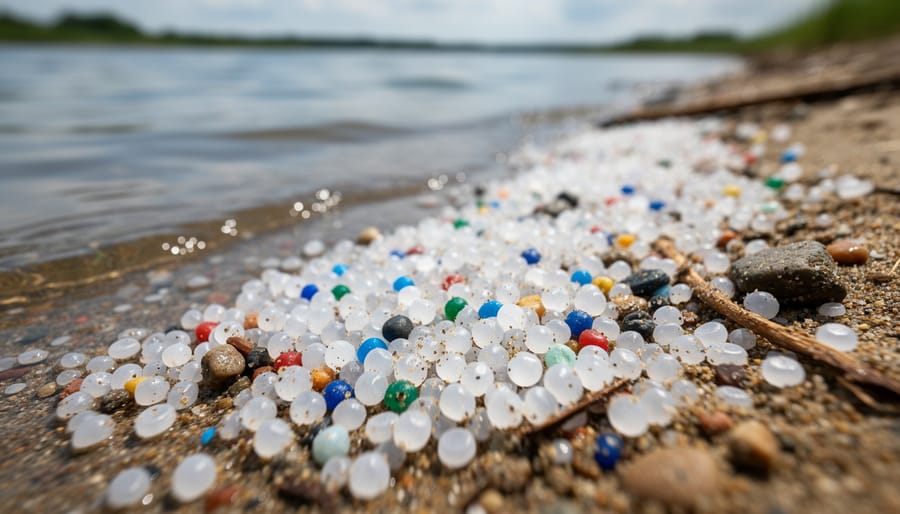
Microplasticsfragments smaller than 5mm, accelerate climate impacts because their increased surface area speeds degradation and gas release. These particles form through breakdown of larger items or enter ecosystems directly from cosmetics, textiles, and tire wear. A single wash load can release 700,000 microfibers into waterways. In marine environments, microplastics interfere with phytoplankton photosynthesis, diminishing the ocean’s capacity to absorb atmospheric CO2.
Nanoplasticsthough invisible and less studied, may pose outsized climate risks. At less than 1 micron, these particles penetrate cell membranes and biological barriers, potentially disrupting organisms at the base of food webs that regulate carbon flux between atmosphere and ocean depths. Their production during larger plastic degradation continues for centuries, creating a long-tail emission source even after visible pollution disappears.
Packaging and single-use products contribute the largest share of plastic’s climate footprint, not because they degrade fastest but because production volumes dwarf other categories. The 146 million metric tons of packaging produced annually generates emissions equivalent to 189 coal-fired power plants.
The Scale of Plastic’s Climate Footprint
The plastic industry’s climate footprint is staggering and growing rapidly. Current estimates place plastic lifecycle emissions at approximately 1.8 billion tonnes of CO2 equivalent annually, roughly 3.4% of global greenhouse gas emissions. To put that in perspective, if plastic production were a country, it would rank as the fifth-largest emitter worldwide, surpassing most individual nations.
Breaking down these emissions reveals where the damage occurs. Extraction and refining of fossil fuels for plastic feedstocks account for 61% of the plastic industry’s carbon footprint. Manufacturing and conversion processes contribute another 30%, while transport, end-of-life disposal, and other activities make up the remaining 9%. The energy intensity of cracking petrochemicals and polymerization reactions means that producing just one kilogram of virgin plastic typically releases 2 to 6 kilograms of CO2, depending on the polymer type and production method.
What makes this trajectory particularly alarming is the projected growth. Industry forecasts predict that plastic production will nearly triple by 2050, driven by increasing global demand and the petrochemical sector’s pivot toward plastics as transportation fuels decline. Under a business-as-usual scenario, plastic lifecycle emissions could reach 6.5 billion tonnes of CO2 equivalent by mid-century, consuming 10 to 13% of the remaining carbon budget needed to limit warming to 1.5°C. That’s comparable to the emissions from 615 coal-fired power plants running continuously.
Compared to other sectors, plastic’s climate impact rivals international aviation, which accounts for roughly 2.5% of global emissions. Yet while aviation receives significant policy attention and reduction targets, plastic production operates with far less regulatory oversight despite its comparable and rapidly expanding footprint. The numbers make clear that addressing climate change without tackling plastic pollution is mathematically untenable.
Marine Ecosystems at the Intersection
Marine ecosystems serve as Earth’s largest carbon sink, absorbing approximately 25 percent of human-generated carbon dioxide annually. However, plastic pollution actively undermines these critical climate-regulating systems. When plastic debris accumulates in oceans, it disrupts the biological pump that transports carbon from surface waters to deep-sea storage, where it would otherwise remain sequestered for centuries.
Phytoplankton, microscopic organisms responsible for producing half the world’s oxygen and absorbing massive amounts of CO2, face multiple threats from plastic contamination. Microplastics block sunlight penetration, reducing photosynthetic efficiency. These particles also release toxic additives that inhibit phytoplankton growth and reproduction. Research shows microplastic concentrations above certain thresholds reduce phytoplankton populations by up to 40 percent in affected areas, directly weakening the ocean’s capacity to capture atmospheric carbon.
Coastal ecosystems amplify this problem. Mangroves, salt marshes, and seagrass beds store carbon at rates five to ten times higher than terrestrial forests, yet plastic accumulation smothers these habitats. A single large debris item can kill swaths of seagrass, releasing stored carbon back into the atmosphere while eliminating future sequestration potential. These invisible ocean threats extend throughout the water column, affecting everything from filter-feeding shellfish to apex predators.
Dr. Sarah Chen, a marine biologist with fifteen years studying plastic impacts in the Pacific, witnessed this intersection firsthand during a 2025 research expedition. “We documented a reef system where plastic fouling had reduced coral coverage by 60 percent,” she explains. “But what struck me was the cascade effect, fewer fish, less biological mixing, measurably lower carbon uptake in surrounding waters. The plastic wasn’t just killing organisms; it was breaking the climate regulation machinery these ecosystems have performed for millennia.”
The loss extends beyond carbon cycling. Healthy marine food webs transfer carbon through predator-prey relationships, eventually depositing it on the seafloor through fecal matter and dead organisms. Plastic ingestion disrupts this transfer, as animals waste energy processing indigestible materials and experience reduced feeding success, fundamentally altering the ocean’s role as a climate stabilizer.
Mitigation Strategies That Address Both Crises
Individual and Community Action
Individual action creates measurable climate benefits when communities amplify those choices. Switching from single-use plastics to reusables, water bottles, coffee cups, grocery bags, food containers, directly reduces demand for virgin plastic production and its associated emissions. Each avoided plastic item prevents roughly 3.5 kg of CO2 from entering the atmosphere across its lifecycle, from manufacturing through disposal.
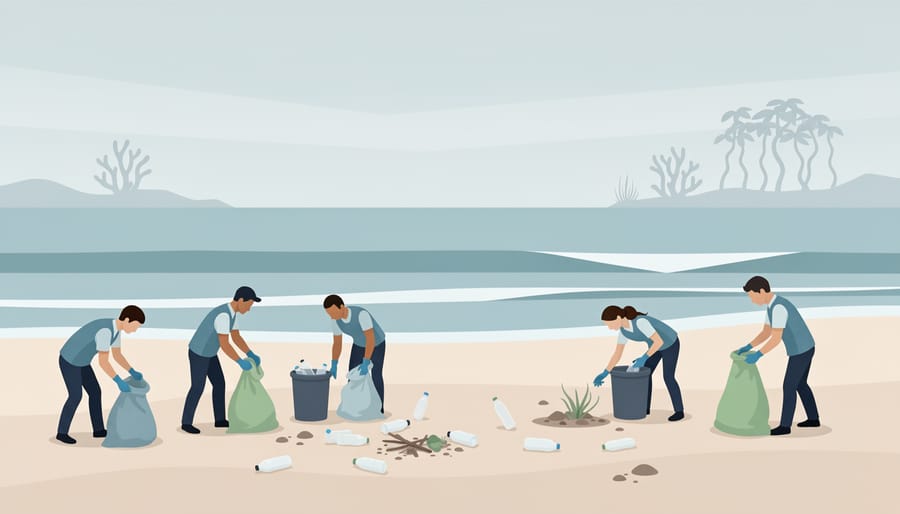
Community programs magnify individual impact. Beach and river cleanup initiatives organized by the Marine Biodiversity Science Center not only remove existing pollution but document debris patterns that inform policy and design better waste management systems. Volunteers in our 2025 coastal monitoring program collected 12,000 kg of plastic while contributing data that helped three municipalities redesign their recycling infrastructure.
Local zero-waste stores, repair cafés, and tool libraries create circular systems that keep materials in use longer. Participating in municipal composting programs diverts organic waste that would otherwise contaminate plastic recycling streams. Supporting businesses that use minimal packaging or offer refill stations shifts market demand toward lower-emission alternatives.
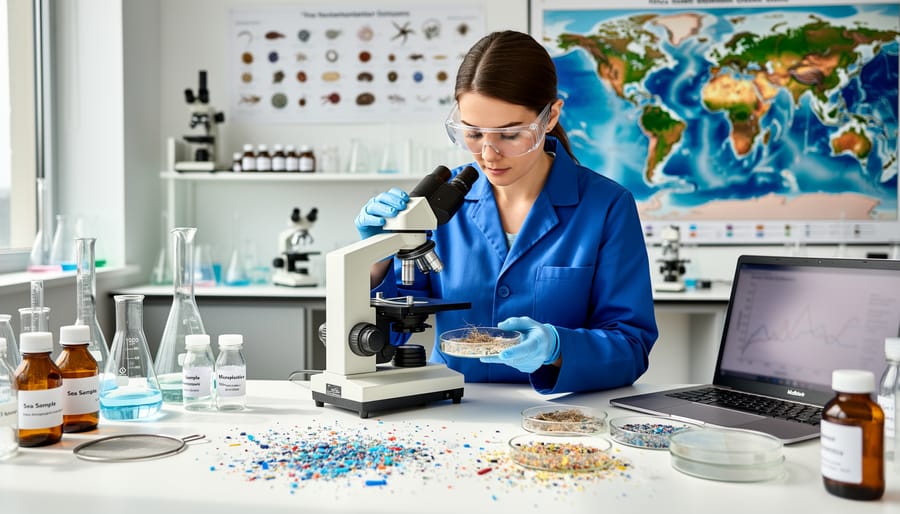
The Center’s volunteer programs offer hands-on opportunities to address both crises simultaneously, from monitoring microplastic concentrations in coastal waters to educating school groups about the plastic-climate connection. These activities build the collective knowledge and momentum needed for systemic change while delivering immediate environmental benefits.
Systemic and Policy Solutions
Meaningful progress on plastic pollution’s climate impact requires action beyond individual behavior. Extended producer responsibility (EPR) schemes shift the burden of waste management back to manufacturers, compelling companies to design products that are easier to recycle or made from lower-emission materials. Countries with robust EPR programs have reduced plastic waste by 30 to 40 percent while lowering associated emissions from production and disposal.
Capping virgin plastic production represents another essential policy lever. The International Energy Agency projects that without intervention, plastic manufacturing could account for 20 percent of global oil consumption by 2050. Production caps force industries to prioritize recycled content and alternative materials, cutting emissions at the source rather than managing waste downstream. Several nations have proposed binding targets that would limit new plastic resin manufacturing, pairing these with investments in circular economy infrastructure.
International cooperation through UN plastic initiatives aims to establish legally binding agreements that link plastic reduction to climate goals. A proposed global treaty would standardize reporting on lifecycle emissions, phase out the most problematic polymers, and create funding mechanisms for developing nations to leapfrog fossil fuel-based plastic systems. These agreements recognize that marine debris, greenhouse gases, and ecosystem disruption cannot be tackled in isolation.
National policies banning single-use plastics have demonstrated quick wins, cutting emissions from both production and end-of-life treatment while protecting marine habitats that sequester carbon. Effective measures combine regulatory pressure with economic incentives, ensuring that reducing plastic becomes financially advantageous rather than optional.
How Does Plastic Pollution Affect Climate Change Works
The process starts underground, where extracting and refining petroleum to produce plastic releases massive amounts of carbon dioxide and methane into the atmosphere. Once manufactured, plastic products travel through global supply chains, each transportation step burning fossil fuels and adding emissions. When these products reach consumers and eventually become waste, the climate impact accelerates rather than stops.
In landfills and natural environments, plastic doesn’t biodegrade, it photodegrades. Sunlight breaks polymer chains into smaller fragments, releasing methane and ethylene as byproducts. This degradation continues for decades, with microplastics in oceans generating greenhouse gases as they fragment further under UV exposure. Ocean plastic creates an additional feedback loop: it damages phytoplankton populations that normally absorb roughly 30% of human-generated CO2. Fewer phytoplankton means less carbon sequestration and more atmospheric warming.
Coastal ecosystems face compound damage. Plastic smothers seagrass beds and mangrove roots, habitats that store carbon at rates up to four times higher than terrestrial forests. When plastic blocks sunlight or physically damages these plants, their carbon-capturing capacity drops. Marine animals that ingest plastic suffer reduced feeding efficiency, disrupting food webs that cycle carbon through ocean depths.
Understanding these mechanisms through education programs helps communities identify intervention points where reducing plastic use delivers immediate climate benefits.
Common Questions About Plastic and Climate
Plastic pollution and climate change overlap in ways that surprise many people, sparking questions about how our daily choices fit into these global crises. The answers reveal both the complexity of the problem and the clarity of effective solutions.
Is recycling plastic enough to address its climate impact?
Recycling helps but falls short because most plastic never gets recycled, and the process itself requires significant energy. Reducing plastic consumption and preventing production in the first place cuts emissions far more effectively than end-of-life solutions.
Which types of plastic contribute most to climate change?
Polyethylene and polypropylene, the most common plastics used in packaging and single-use products, have the largest climate footprint due to their massive production volumes and fossil fuel intensity. These materials dominate global plastic manufacturing and therefore emissions.
Can biodegradable plastics solve both pollution and climate problems?
Not reliably. Many biodegradable plastics require specific industrial conditions to break down and still release greenhouse gases during production and decomposition. They can reduce visible litter but don’t eliminate the climate burden and may create new problems in marine environments where conditions rarely match industrial composting facilities.
How does plastic in the ocean specifically worsen climate change?
Ocean plastic releases methane and ethylene as it degrades under sunlight, while also harming marine organisms like phytoplankton that absorb massive amounts of CO2. This dual impact turns oceans from carbon sinks into less effective climate regulators.
Understanding these connections helps cut through misleading claims about easy fixes. No single material swap or recycling program addresses the root cause, which remains our reliance on fossil-fuel-based plastics produced at scales that overwhelm natural systems. The marine environment illustrates this clearly: coastal cleanups remove visible debris and protect wildlife, yet without reducing production upstream, plastic continues entering oceans and amplifying climate disruption.
Effective action targets multiple points simultaneously. Choosing reusable alternatives eliminates demand for virgin plastic. Supporting policies that cap production tackles the problem at its source. Participating in research and monitoring, like programs offered through marine conservation organizations, builds the data needed to refine strategies. Each approach reinforces the others, creating momentum toward systems that protect both ocean health and climate stability.
The evidence is clear: plastic pollution and climate change are not separate crises but interconnected threats that demand unified responses. Every stage of plastic’s journey, from fossil fuel extraction through production, use, degradation, and disposal, releases greenhouse gases while simultaneously degrading the natural systems our planet relies on to regulate carbon. Marine ecosystems, which should be our greatest allies in climate stability, are instead struggling under the weight of plastic contamination that disrupts their carbon sequestration capacity.
This dual challenge requires dual action. When we reduce plastic consumption, switch to sustainable alternatives, or participate in cleanup efforts, we’re simultaneously cutting emissions and protecting biodiversity. The solutions aren’t just possible, they’re already working. Communities worldwide are proving that local action creates measurable impact, from coastal cleanups that restore habitat to policy shifts that fundamentally reshape how we produce and consume materials.
You don’t need to choose between fighting plastic pollution and addressing climate change. Every action you take can serve both causes.
The Marine Biodiversity Science Center offers concrete ways to translate this knowledge into impact. Our educational programs equip participants with the scientific understanding to recognize these connections and communicate them effectively. Through volunteer opportunities ranging from beach monitoring to citizen science initiatives, you can contribute directly to research that informs conservation strategies while removing pollution from vulnerable ecosystems. These experiences connect you with marine biologists, fellow conservationists, and the ocean itself, reminding us why this work matters.
The scale of these crises can feel overwhelming, but collective action builds momentum. Start with one change, join one cleanup, share one conversation. Your engagement ripples outward, inspiring others while contributing to the larger movement toward a healthier ocean and a stable climate. The solutions exist. What we need now is participation.

jessica
Ava Singh is an environmental writer and marine sustainability advocate with a deep commitment to protecting the world's oceans and coastal communities. With a background in environmental policy and a passion for storytelling, Ava brings complex topics to life through clear, engaging content that educates and empowers readers. At the Marine Biodiversity & Sustainability Learning Center, Ava focuses on sharing impactful stories about community engagement, policy innovations, and conservation strategies. Her writing bridges the gap between science and the public, encouraging people to take part in preserving marine biodiversity. When she’s not writing, Ava collaborates with local initiatives to promote eco-conscious living and sustainable development, ensuring her work makes a difference both on the page and in the real world.