Marine Biodiversity Science Center

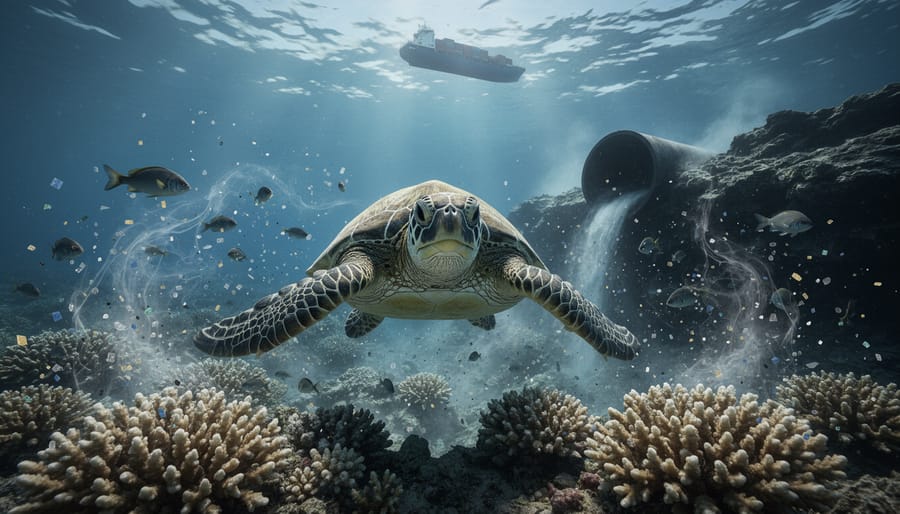
Every minute, the equivalent of one garbage truck of plastic enters our oceans, but this visible debris represents only part of a far more insidious threat. Beneath the surface, a complex mixture of industrial chemicals, pharmaceuticals, pesticides, and heavy metals silently transforms marine ecosystems in ways we are only beginning to understand. These pollutants do not simply disappear into the vastness of the sea; they accumulate in sediments, concentrate through food chains, and fundamentally alter the chemistry of ocean water itself.
Chemical pollution now affects every ocean basin on Earth, from the shallow coral reefs teeming with life to the deepest trenches six miles below the surface. Scientists have detected flame retardants in Arctic seals, antidepressants in fish tissues, and microplastics carrying toxic hitchhikers to the most remote marine environments. Unlike oil spills or plastic bottles that capture public attention, chemical contaminants often remain invisible to the naked eye while causing reproductive failures in sea turtles, hormonal disruptions in fish populations, and the collapse of sensitive species that form the foundation of marine food webs.
The challenge we face is both urgent and solvable. Understanding how chemicals enter our oceans, recognizing their impacts on marine life and human health, and implementing effective solutions requires collaboration between researchers, policymakers, industries, and individuals. Marine biologist Dr. Sarah Chen, who has spent fifteen years studying contaminated coastal waters, often reminds volunteers that protecting our oceans begins with recognizing that every stream, river, and storm drain eventually connects to the sea. This introduction explores the science behind ocean chemical pollution and charts a course toward healthier, more resilient marine ecosystems through informed action and collective stewardship.
What Is Ocean Chemical Pollution?
The Major Chemical Culprits
Our oceans are absorbing a complex cocktail of chemical pollutants, each with unique pathways and devastating impacts on marine life. Understanding these major categories helps us recognize the scope of the challenge and identify where action is most needed.
Heavy metals like mercury and lead enter the ocean through industrial discharge, mining operations, and atmospheric deposition. Mercury, particularly in its methylmercury form, accumulates in fish tissue and concentrates as it moves up the food chain, a process called biomagnification. A tuna at the top of the food web can contain mercury levels millions of times higher than the surrounding water. Lead, once common in gasoline and paint, continues to contaminate coastal waters near urban centers, affecting shellfish development and coral reef health.
Persistent organic pollutants, or POPs, are synthetic chemicals that resist natural breakdown processes and can persist in marine environments for decades. This category includes legacy chemicals like DDT and PCBs, banned in many countries but still circulating in ocean currents and sediments. These compounds disrupt hormone systems in marine mammals and seabirds, leading to reproductive failures and immune system dysfunction.
Agricultural pesticides wash into waterways during storms and irrigation, eventually reaching coastal zones where they harm non-target species. Modern pesticides like neonicotinoids affect the nervous systems of marine invertebrates, while herbicides damage essential seagrass meadows and kelp forests that serve as nurseries for countless species.
Pharmaceutical pollution represents a growing concern as wastewater treatment plants cannot fully remove medications from sewage. Antibiotics, antidepressants, and hormones enter marine ecosystems, altering fish behavior and contributing to antibiotic-resistant bacteria in coastal waters. Marine biologist Dr. Elena Rodriguez notes, “We’re essentially medicating the ocean without understanding the prescription.”
Industrial chemicals including flame retardants, plasticizers, and per- and polyfluoroalkyl substances (PFAS) contaminate every ocean basin. These “forever chemicals” accumulate in marine food webs and have been detected in organisms from Arctic cod to deep-sea fish.
Finally, microplastic-associated toxins create a double threat. Tiny plastic particles absorb waterborne pollutants like sponges and deliver concentrated doses of toxins to organisms that ingest them, magnifying exposure to multiple contaminants simultaneously.
How Chemical Pollution Enters Our Oceans
The journey of chemical pollutants from land to sea follows multiple interconnected pathways, creating a complex web of contamination that threatens marine ecosystems worldwide. Understanding these routes is essential for developing effective solutions.
Agricultural runoff represents one of the most significant contributors to ocean chemical pollution. When rain falls on farmland treated with fertilizers, pesticides, and herbicides, these chemicals wash into streams and rivers that eventually empty into the ocean. Excess nitrogen and phosphorus from fertilizers can trigger harmful algal blooms in coastal waters, while persistent pesticides accumulate in marine food webs, affecting everything from microscopic plankton to apex predators.
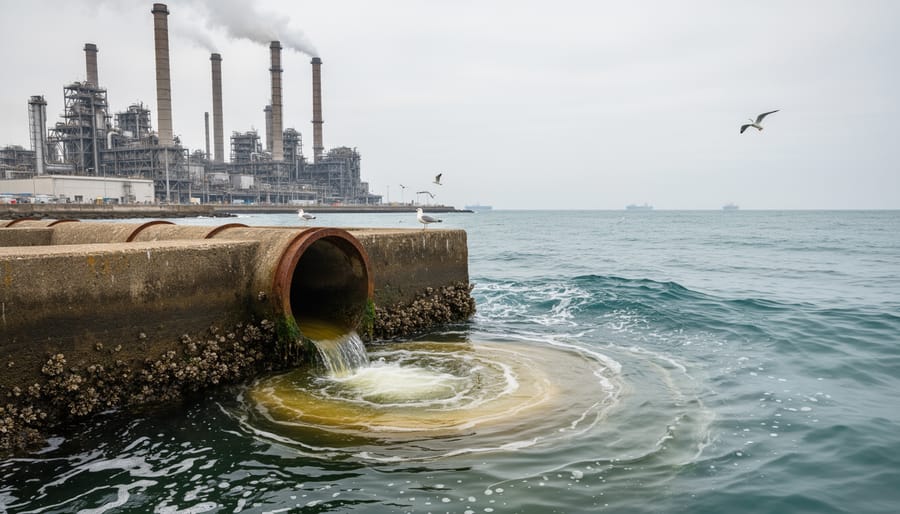
Industrial discharge introduces heavy metals, synthetic chemicals, and manufacturing byproducts directly into waterways. Even with regulations in place, permitted discharges still release measurable quantities of pollutants, while illegal dumping exacerbates the problem. Factories producing plastics, textiles, electronics, and pharmaceuticals can release toxic compounds that persist in marine environments for decades.
A less visible but equally important pathway is atmospheric deposition. Chemicals evaporate into the air from industrial facilities, vehicle emissions, and even treated agricultural fields. These airborne pollutants eventually settle on the ocean’s surface, sometimes traveling thousands of miles from their original source. This means that even remote ocean areas far from human population centers are not immune to contamination.
Wastewater treatment plants, while designed to protect our waterways, cannot remove all chemical contaminants. Pharmaceuticals, personal care products, and microplastics often pass through treatment systems and enter coastal waters through outflow pipes. Similarly, aging infrastructure and combined sewer systems can release untreated wastewater directly into the ocean during heavy rainfall events.
Shipping activities add another dimension to ocean pollution through fuel spills, antifouling paints containing toxic compounds, and ballast water discharge. The cumulative effect of these diverse pathways means that addressing ocean chemical pollution requires coordinated action across multiple sectors and a recognition that our daily choices on land directly impact the health of our seas.
The Devastating Impact on Marine Life
Bioaccumulation and Biomagnification
When chemical pollutants enter the ocean, they don’t simply disappear. Instead, they become trapped in a disturbing cycle that transforms tiny concentrations of toxins into dangerous levels as they travel through marine food webs.
Bioaccumulation occurs when an individual organism absorbs toxic substances faster than it can eliminate them. Think of it like a piggy bank that only accepts deposits—chemicals like mercury, PCBs, and DDT gradually build up in an animal’s tissues over its lifetime. A small fish filtering contaminated water might accumulate these toxins in its fatty tissues, where they remain stored.
Biomagnification takes this process further up the food chain. When that small fish gets eaten by a larger predator, the toxins transfer to the new host. The predator doesn’t just get one fish’s worth of toxins—it accumulates the chemical burden from hundreds or thousands of prey items throughout its life. Imagine stacking coins from multiple piggy banks into one larger container. At each level of the food web, toxin concentrations increase dramatically, sometimes by factors of ten or more.
Marine biologist Dr. Sarah Chen witnessed this firsthand while studying orcas in the Pacific Northwest. “We found that apex predators like orcas can carry toxin levels millions of times higher than the surrounding water,” she explains. “One contaminated salmon might seem insignificant, but when an orca eats thousands over its lifetime, those chemicals concentrate to levels that impair reproduction and immune function.”
This process particularly affects long-lived predators like tuna, sharks, seals, and dolphins. Unfortunately, it also extends to humans who consume seafood, making ocean chemical pollution not just an environmental issue but a public health concern requiring urgent attention and community involvement in monitoring efforts.
Real Stories from the Field
Dr. Maria Santos still remembers the day she realized something was terribly wrong with the sea turtle population she’d been monitoring off the coast of Florida for over a decade. “We were finding hatchlings with severe developmental abnormalities—missing flippers, malformed shells, organs developing outside their bodies,” she recalls. “When we tested the sand and surrounding waters, we found elevated levels of industrial chemicals, including flame retardants and plasticizers. These compounds were disrupting the hormonal signals that guide proper development.”
Her experience echoes findings from researchers worldwide who are documenting chemical pollution’s devastating effects on marine life. Dr. James Chen, who studies coral reef ecosystems in the Pacific, describes a different but equally troubling phenomenon. “We’ve observed entire fish populations exhibiting bizarre behaviors—swimming in circles, unable to detect predators, failing to recognize their home reefs. Chemical pollutants, particularly those from agricultural runoff and pharmaceutical waste, are literally rewiring their nervous systems.”
The reproductive impacts have proven particularly alarming. Marine biologist Dr. Aisha Patel spent three years investigating declining seal populations in the North Sea. “We documented a 60 percent drop in successful births over just two decades,” she explains. “Tissue analysis revealed high concentrations of persistent organic pollutants that were interfering with the seals’ reproductive hormones. Mothers were producing less milk, and pups were being born severely underweight.”
These aren’t isolated incidents. Dr. Santos emphasizes that chemical pollution creates cascading effects throughout entire ecosystems. “When we lose keystone species or see widespread reproductive failures, the entire food web destabilizes. I’ve watched thriving coastal ecosystems transform into biological deserts within my career.”
Yet these researchers remain hopeful. Dr. Chen actively involves citizen scientists in water quality monitoring, creating opportunities for the public to contribute meaningful data. “Every person who volunteers to collect samples or document wildlife observations helps us build a more complete picture of the problem,” he notes.
Their stories underscore an urgent truth: chemical pollution isn’t just an abstract environmental issue—it’s actively reshaping ocean ecosystems before our eyes. But through collaborative research, public engagement, and determined action, these scientists believe we can still reverse course and protect marine biodiversity for future generations.
The Human Connection: Why Ocean Chemical Pollution Matters to You
The ocean’s health is inseparable from our own. When we talk about chemical pollution in marine environments, we’re not just discussing a distant ecological problem—we’re talking about a direct threat to human wellbeing that reaches your dinner table and beyond.
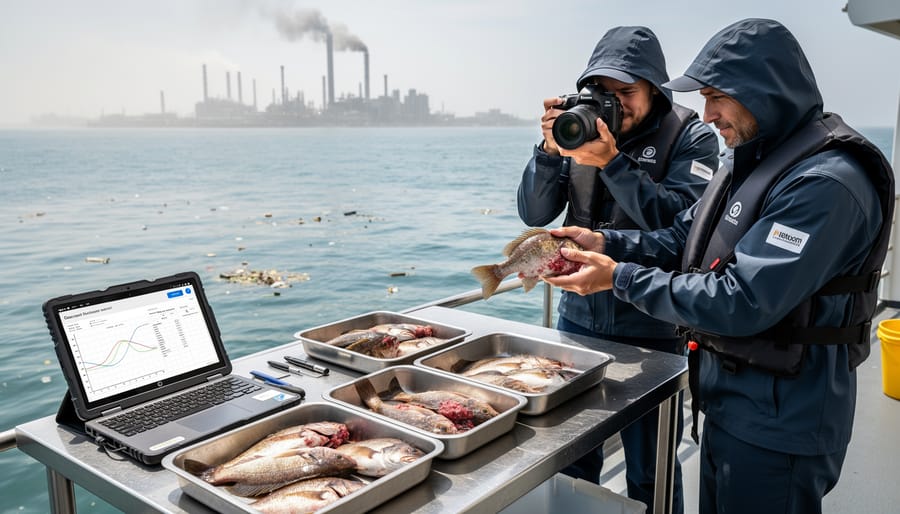
Consider this: over three billion people worldwide rely on seafood as their primary source of protein. Dr. Maria Santos, a marine toxicologist who has spent two decades studying contaminant accumulation in fish, shares a sobering observation: “Every week, I analyze tissue samples from commercially important species. The presence of heavy metals, persistent organic pollutants, and microplastics has become the norm rather than the exception.” These chemicals bioaccumulate as they move up the food chain, meaning the tuna or salmon on your plate may carry concentrated doses of pollutants that originated from industrial runoff, agricultural chemicals, or plastic degradation.
The consequences extend far beyond individual health concerns. Coastal communities that depend on fishing for their livelihoods face economic devastation when pollution forces fishery closures or reduces fish populations. Disrupted fisheries mean lost jobs, food insecurity, and the erosion of cultural traditions tied to the sea.
Furthermore, healthy oceans provide critical ecosystem services that we often take for granted. Marine ecosystems act as natural water filters, climate regulators, and carbon sinks. When chemical pollution compromises these functions, we all pay the price through degraded water quality, accelerated climate change, and reduced coastal protection.
Understanding this connection transforms ocean chemical pollution from an abstract environmental issue into a personal health imperative. The good news? Recognizing our interconnection with ocean health empowers us to make meaningful changes, both individually and collectively, to protect the marine environments that sustain us all.
Marine Chemical Pollution and Toxics Education: Building Knowledge for Change
What You Can Learn
Understanding ocean chemical pollution opens doors to fascinating educational pathways that blend science, policy, and hands-on conservation work. Whether you’re a student beginning your environmental journey or a professional seeking to deepen your expertise, this field offers rich learning opportunities across multiple disciplines.
Start with toxicology basics to understand how different chemicals behave in marine environments. You’ll explore how pollutants move through water columns, accumulate in sediments, and transfer through food webs. This foundation helps you grasp why certain chemicals pose greater threats than others and how their effects cascade through entire ecosystems.
Monitoring techniques form another essential knowledge area. Learn to identify pollution sources, collect water and tissue samples, and interpret analytical data. These practical skills are increasingly valuable as environmental careers grow. Modern monitoring now includes emerging technologies like remote sensing and autonomous underwater vehicles, making this an exciting time to enter the field.
Understanding regulatory frameworks reveals how science translates into policy. Explore international agreements like the Stockholm Convention on persistent organic pollutants and regional initiatives that protect coastal waters. This knowledge empowers you to engage meaningfully in environmental advocacy and policy development.
Pollution prevention strategies teach proactive approaches, from green chemistry principles to sustainable industrial practices. You’ll discover how innovation can reduce harmful inputs before they reach our oceans.
The Marine Biodiversity Science Center offers specialized programs connecting learners with practicing marine biologists who share their experiences studying chemical pollution firsthand. These mentorships provide invaluable insights into real-world research challenges and solutions.
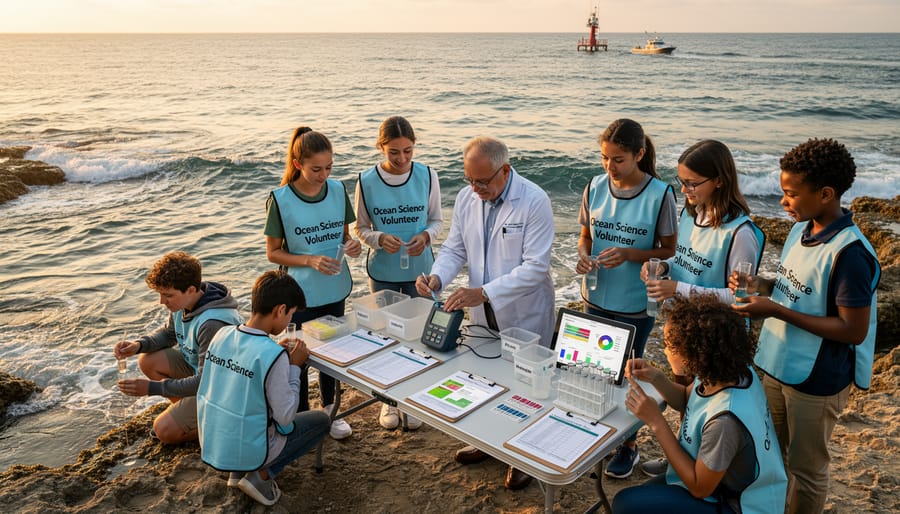
Perhaps most rewarding are the community science opportunities that allow anyone to contribute meaningful data. From beach cleanups to water quality testing, these programs transform concerned citizens into active participants in ocean protection, proving that everyone has a role in solving this global challenge.
From Knowledge to Action
Understanding ocean chemical pollution is one thing—taking action is another. Across the globe, individuals armed with knowledge are transforming concern into tangible impact, proving that education truly empowers change.
In California’s San Francisco Bay, community scientists trained in water quality monitoring have created the Bay Microplastics Project. Volunteers collect water samples and analyze them for microplastic contamination, generating data that informs local policy decisions. Marine biologist Dr. Rebecca Chen shares, “When residents see the pollution data they’ve collected themselves, it becomes personal. They become the most passionate advocates for change.”
Students are making waves too. At a Florida high school, chemistry students identified elevated heavy metal concentrations in a nearby estuary through their semester project. Their findings, presented to the county commission, accelerated cleanup efforts and earned them a state science award. The project demonstrated how classroom learning translates directly into environmental protection.
Professional networks have leveraged toxics education to influence policy. The Ocean Pollution Research Alliance, comprising scientists and educators, successfully advocated for stricter regulations on industrial discharge in coastal waters. By presenting clear, accessible data to policymakers, they bridged the gap between scientific research and legislative action.
Even individual behavior shifts create ripples of change. Communities educated about pharmaceutical pollution have established medication take-back programs, preventing tons of drugs from entering waterways. These initiatives show that informed citizens don’t just understand problems—they become the solution, inspiring others through their commitment to protecting our ocean’s future.
What’s Being Done: Solutions and Success Stories
Despite the daunting scale of ocean chemical pollution, meaningful progress is happening through a combination of policy action, technological innovation, and community engagement. These efforts demonstrate that change is not only possible but already underway.
International agreements like the Stockholm Convention on Persistent Organic Pollutants have successfully banned or restricted numerous harmful chemicals, including PCBs and certain pesticides. The treaty, now ratified by over 180 countries, shows what coordinated global action can achieve. More recently, the European Union’s REACH regulation has established stricter controls on chemical manufacturing and use, preventing thousands of tons of hazardous substances from reaching waterways.
Technological innovations are offering new tools in the fight against chemical pollution. Scientists at the Helmholtz Centre for Environmental Research developed bacteria capable of breaking down microplastics and their associated chemical pollutants. Meanwhile, advanced filtration systems installed in wastewater treatment plants across Scandinavia now remove up to 95 percent of pharmaceutical residues before they reach the ocean.
The cleanup of Boston Harbor stands as a powerful success story. Once considered one of the most polluted harbors in America, decades of regulatory enforcement and infrastructure improvements transformed it into a thriving marine ecosystem. Marine biologist Dr. Sarah Chen, who has monitored the harbor’s recovery since 2005, shares her observations: “We’ve documented the return of species that hadn’t been seen here in fifty years. The water quality improvements show that dedicated effort and proper funding can reverse even severe chemical contamination.”
Grassroots movements are equally vital to this progress. The Surfrider Foundation’s Ocean Friendly Gardens program has helped over 10,000 homeowners replace chemical-intensive landscaping with native plants, preventing polluted runoff from reaching coastal waters. In coastal communities worldwide, volunteer monitoring programs train citizens to test water quality and identify pollution sources, creating early warning systems that complement official oversight.
Corporate accountability campaigns have also driven change. Public pressure led major retailers to phase out products containing microbeads, while clothing manufacturers increasingly adopt production methods that reduce textile chemical discharge. These victories prove that consumer awareness translates into tangible environmental protection.
The path forward requires sustaining and expanding these efforts, but the precedents for success are clear and growing stronger each year.
How You Can Make a Difference
Join the Movement: Volunteer Opportunities
You don’t need a degree in marine chemistry to make a real difference in fighting ocean chemical pollution. Volunteer opportunities exist for people at every experience level, from concerned citizens to seasoned researchers, all united in protecting our marine ecosystems.
For those new to ocean conservation, citizen science programs offer excellent entry points. Coastal monitoring initiatives train volunteers to collect water samples and document pollution sources along shorelines. These programs provide hands-on training, teaching you to identify chemical runoff indicators and contribute valuable data to ongoing research. Many participants describe these experiences as transformative, connecting them directly to the ocean’s health while building community with like-minded individuals.
If you have educational skills, consider becoming a marine conservation educator. These volunteers lead workshops at schools, community centers, and beach cleanups, helping others understand how everyday choices affect ocean chemistry. You’ll receive comprehensive materials and support, making complex topics like microplastics and pharmaceutical contamination accessible to diverse audiences.
For professionals with scientific backgrounds, specialized roles await in laboratory analysis, chemical testing protocol development, and field research assistance. Marine biologists and chemists regularly seek volunteers to help process samples, maintain monitoring equipment, and analyze pollution patterns.
Ready to dive in? Join our e-network to receive monthly volunteer opportunity updates, virtual training sessions, and exclusive access to our chemical pollution monitoring toolkit. Whether you can spare two hours monthly or want deeper involvement, there’s a role waiting for you. Together, we’re building a powerful movement of ocean advocates, one volunteer at a time.
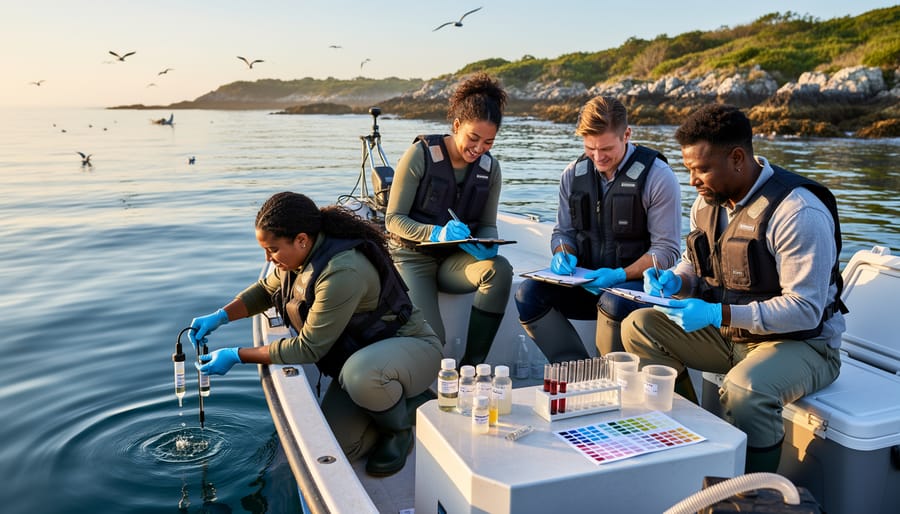
The health of our oceans stands at a critical juncture, but this moment also presents unprecedented opportunity for meaningful change. While the scale of chemical pollution affecting marine ecosystems can seem overwhelming, the growing awareness and collective action happening worldwide demonstrate that transformation is within reach. Every piece of plastic refused, every conversation started, and every policy supported contributes to the larger movement protecting our blue planet.
Dr. Sarah Chen, a marine toxicologist who has spent fifteen years studying coastal contamination, shares an encouraging perspective: “I’ve witnessed remarkable recovery in areas where communities committed to reducing chemical inputs. Marine life is incredibly resilient when given the chance to heal. What we need now is sustained effort and widespread participation.”
The solutions exist, the science is clear, and the pathways forward are accessible to everyone, regardless of background or expertise. Whether you’re an educator inspiring the next generation of ocean advocates, a student beginning to explore marine conservation, or simply someone who cares about the future of our planet, your voice and actions matter.
Begin by deepening your understanding of local marine issues, connect with conservation organizations in your area, and look for volunteer opportunities that align with your skills and interests. Share what you learn with friends, family, and colleagues. Small actions, multiplied across communities, create the momentum needed for systemic change. The ocean has sustained humanity for millennia; now it’s our turn to return that care and commitment.

jessica
Ava Singh is an environmental writer and marine sustainability advocate with a deep commitment to protecting the world's oceans and coastal communities. With a background in environmental policy and a passion for storytelling, Ava brings complex topics to life through clear, engaging content that educates and empowers readers. At the Marine Biodiversity & Sustainability Learning Center, Ava focuses on sharing impactful stories about community engagement, policy innovations, and conservation strategies. Her writing bridges the gap between science and the public, encouraging people to take part in preserving marine biodiversity. When she’s not writing, Ava collaborates with local initiatives to promote eco-conscious living and sustainable development, ensuring her work makes a difference both on the page and in the real world.