Marine Biodiversity Science Center

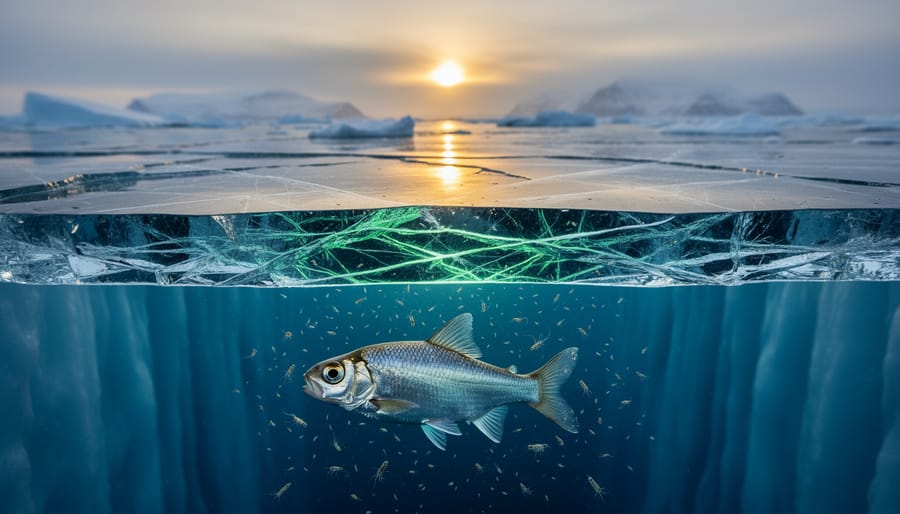
Beneath the frozen surface of polar ice lies a hidden world that holds critical secrets about our changing planet. Brine ice—the salty, semi-frozen channels that form when seawater freezes—creates a unique microhabitat where microscopic algae and bacteria thrive in conditions that would kill most life forms. These intricate networks of brine pockets and channels function as both refuge and nursery for essential marine microorganisms that form the foundation of polar food webs.
As global temperatures rise and climate change threatens marine biodiversity, understanding brine ice becomes increasingly urgent. When seawater freezes, salt is expelled into concentrated pockets that remain liquid even at temperatures well below zero degrees Celsius. This process creates a complex microscopic maze where temperatures can reach minus 20 degrees Celsius and salinity levels exceed three times that of normal seawater. Despite these extreme conditions, specialized algae called ice algae flourish here, producing the organic matter that sustains krill, fish larvae, and ultimately the entire Arctic and Antarctic marine ecosystems.
The chemistry of brine ice directly influences global ocean circulation patterns, carbon sequestration rates, and the survival of species from tiny copepods to massive whales. As sea ice melts earlier and forms later each year, these delicate brine structures spend less time supporting the microorganisms that countless marine species depend upon for survival.
What Is Brine Ice and Why Should We Care?
The Secret Life of Freezing Seawater
When seawater freezes, something remarkable happens beneath the surface. Unlike freshwater, which freezes uniformly, seawater undergoes a selective process. As temperatures drop below -1.8°C (28.8°F), water molecules begin forming ice crystals, but here’s the fascinating part: salt doesn’t fit into the crystalline structure of ice.
Picture this process like a molecular sorting system. As ice crystals form, they exclude salt particles, pushing them into the remaining liquid water below. This creates pockets of super-salty brine that are actually saltier than the original seawater. Marine biologist Dr. Sarah Chen describes witnessing this process in Antarctica: “When you observe newly formed sea ice, you can see these tiny channels filled with concentrated brine. It’s like watching the ocean create its own chemical laboratory.”
This brine rejection process has profound consequences. The heavy, salt-rich water sinks, creating underwater currents that help drive ocean circulation patterns. Meanwhile, the ice above becomes a matrix of frozen freshwater riddled with brine channels, creating unique microhabitats where specialized organisms thrive despite extreme conditions. Understanding this delicate balance becomes increasingly important as our warming climate alters these freezing patterns.
Brine Channels: Tiny Highways in the Ice
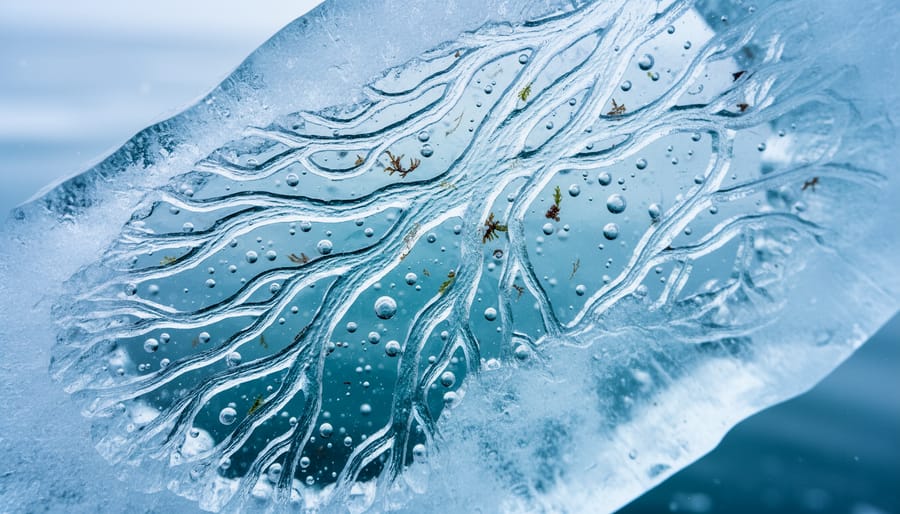
As seawater freezes in polar regions, salt doesn’t simply disappear. Instead, it gets concentrated into intricate networks called brine channels—microscopic passageways that thread through the ice like a complex highway system. These channels form when pure water crystallizes, pushing dissolved salts into narrow pockets and tubes that remain liquid even at temperatures well below the freezing point of freshwater.
These tiny corridors range from mere micrometers to several millimeters in width, creating a three-dimensional labyrinth within what appears to be solid ice. The brine solution flowing through them can be several times saltier than seawater, with temperatures plunging as low as -20°C while remaining liquid due to salt’s freezing-point depression effect.
What makes these channels truly remarkable is their role as thriving ecosystems. Despite the extreme conditions, they harbor diverse communities of ice algae, bacteria, and microscopic organisms specially adapted to these frigid, salty environments. Marine biologist Dr. Sarah Chen describes them as “oases in a frozen desert—each channel supports a complete microbial food web that forms the foundation of polar marine ecosystems.”
These brine channel communities provide essential nutrition for krill and other organisms that sustain larger marine life, making them critical to ocean health far beyond the ice itself.
Climate Change Is Rewriting Brine Chemistry
Warmer Ice, Different Chemistry
As Arctic and Antarctic temperatures rise, the delicate chemical balance within sea ice undergoes dramatic transformations. When ice warms even by a few degrees, brine pockets expand and become less concentrated. Think of it like diluting saltwater—the warmer the ice, the more the brine spreads out, changing everything from salt concentration to the availability of nutrients that tiny organisms depend on.
Temperature shifts also affect pH levels within these frozen ecosystems. Dr. Sarah Chen, a marine biologist who has spent fifteen winters studying Antarctic ice cores, explains: “We’re seeing significant acidification in warming brine channels, similar to broader ocean chemistry changes. This creates challenging conditions for ice algae and bacteria that form the foundation of polar food webs.”
The chemical composition shifts in other ways too. Warmer ice releases more nutrients into surrounding waters earlier in the season, disrupting the carefully timed blooms that polar species have evolved to anticipate. Carbonate chemistry becomes less stable, affecting organisms that build calcium-based structures. These seemingly small chemical adjustments ripple through entire ecosystems, demonstrating how interconnected our polar environments truly are and why understanding these changes matters for marine conservation efforts worldwide.
The Timing Problem
Climate change is disrupting the delicate timing of brine ice formation and melting, creating a cascade of consequences for Arctic marine ecosystems. Think of it as a carefully choreographed dance that’s now happening out of sync. In recent decades, sea ice has been melting earlier in spring and forming later in autumn, compressing the window when brine ice can perform its essential role in ocean chemistry.
Dr. Sarah Chen, a marine biologist who has spent fifteen winters studying Arctic sea ice dynamics, explains the problem this way: “When ice melts too early, brine channels release their concentrated nutrients and salts before the spring phytoplankton bloom can fully utilize them. It’s like opening a store before customers arrive—the resources don’t connect with the organisms that need them most.”
The later freeze-up presents equally troubling challenges. Brine ice formation requires sustained cold temperatures to develop its intricate channel system. Warmer autumn temperatures mean ice forms more slowly and often less completely, producing weaker brine networks that can’t efficiently process nutrients or support the microbial communities that depend on them. These timing shifts ripple through the entire food web, affecting everything from microscopic algae to the seals and polar bears at the top of the chain.
The Ripple Effect on Marine Life
Algae: The Foundation Under Threat
Within the labyrinth of brine channels, ice algae have found an unlikely home. These microscopic photosynthesizers cling to channel walls, forming dense communities that transform sea ice into a living ecosystem. They’ve adapted remarkably to this extreme environment, thriving in temperatures well below freezing and salinity levels several times higher than seawater. The brine channels provide everything these algae need: liquid water, nutrients concentrated by the freezing process, and enough light filtering through the ice above.
But this foundation is cracking. As climate change warms polar regions, the delicate chemistry of brine ice is shifting. When ice forms more quickly due to unstable freezing patterns, brine channels become either too narrow or drain too rapidly, leaving algae stranded. Changes in salinity gradients affect nutrient availability, while warmer temperatures can actually stress these cold-adapted organisms. Marine biologist Dr. Sarah Chen, who studies Arctic ice communities, explains: “We’re seeing algal blooms arrive at the wrong times, when the animals depending on them aren’t ready. It’s like showing up to a restaurant after it’s already closed.”
When ice algae populations decline, the entire food web trembles from its foundation upward.
When Tiny Changes Mean Big Consequences
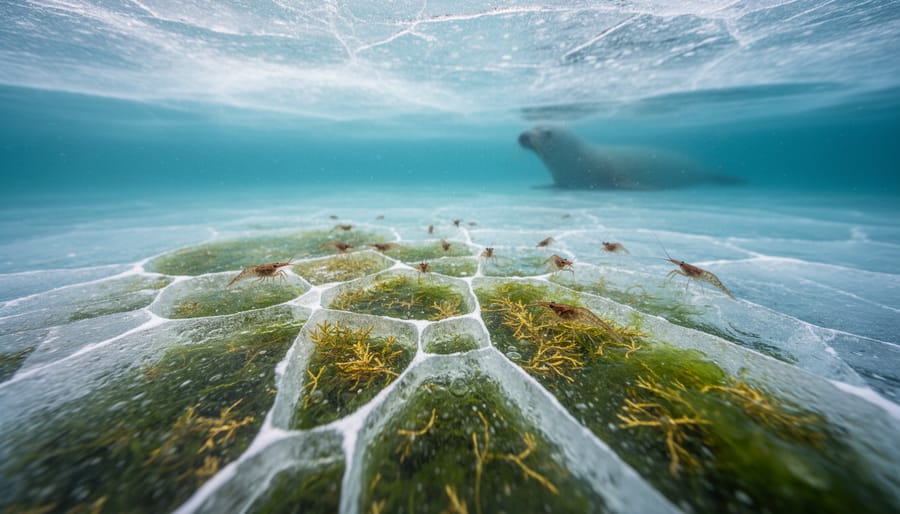
When brine pockets in sea ice shift from stable to unstable, the ripple effects cascade through entire Arctic marine ecosystems. Microscopic algae living in these briny channels form the foundation of the polar food web, and their fate determines the survival of countless species above them.
Dr. Sarah Chen, a marine biologist who has spent fifteen winters studying Antarctic krill, recalls the moment she truly understood these connections. “I was observing krill behavior near melting ice when I noticed their feeding patterns had changed dramatically,” she shares. “The algae they depend on were blooming earlier and disappearing faster due to unstable brine channels. The krill looked smaller, weaker.”
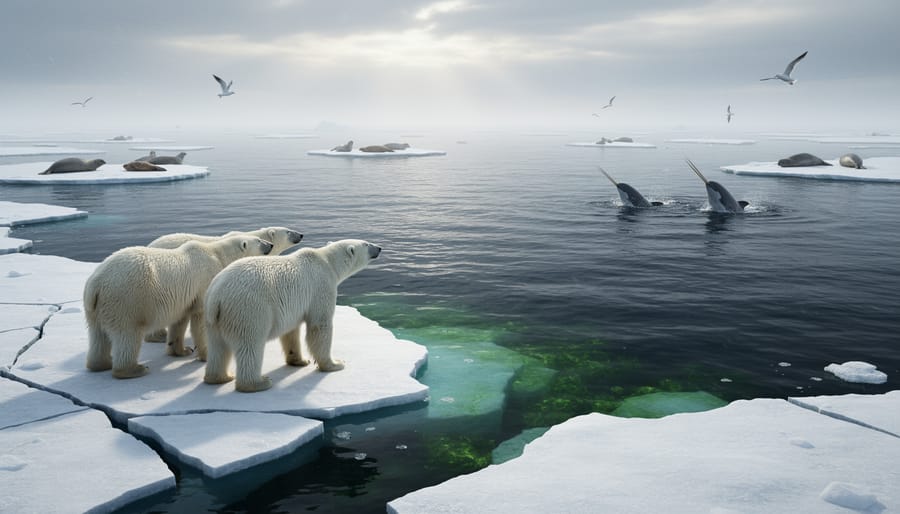
This matters because krill populations support everything from fish to seals to polar bears. When changing ice chemistry disrupts algae growth timing, krill populations decline. Fish that feed on krill then struggle to find adequate nutrition during critical breeding seasons. Seals depending on these fish face longer hunting trips, leaving pups vulnerable. Polar bears, already threatened by shrinking ice platforms, find their prey base further diminished.
These seemingly tiny chemical shifts in brine composition create cascading consequences that restructure entire marine communities, demonstrating how intimately connected ocean life remains to the microscopic world within ice.
Species on the Edge
The changing chemistry of brine ice poses serious threats to species already fighting for survival in polar ecosystems. Polar cod, a keystone species in Arctic food webs, relies on the intricate network of brine channels for shelter during early life stages. As warming temperatures alter the structure and stability of these ice formations, juvenile cod lose critical nursery habitat, threatening populations that sustain seals, whales, and seabirds.
Ice algae communities that flourish in brine channels form the foundation of the Arctic food web, supporting krill populations that feed everything from fish to baleen whales. When ice forms too quickly or melts prematurely due to climate shifts, these microscopic organisms struggle to establish themselves. This ripple effect reaches species like ringed seals, which depend on stable sea ice for pupping dens, and emperor penguins in Antarctica, whose chicks require predictable ice platforms.
Our center works directly with researchers monitoring these vulnerable species, offering volunteer opportunities for citizen scientists to contribute to population surveys and habitat assessments, helping us understand and respond to these urgent changes.
What Scientists Are Learning Right Now
Breakthrough Research from the Ice
Scientists studying Arctic and Antarctic ice cores are uncovering remarkable changes in brine chemistry that reveal how our polar regions are responding to climate change. Recent research published in leading oceanographic journals shows that as temperatures rise, brine channels within sea ice are becoming less saline and more variable in their chemical composition. This shift affects everything from the microscopic algae that form the base of polar food webs to the bacterial communities that recycle nutrients within the ice.
Dr. Elena Rodriguez, a marine biologist who has spent fifteen winters studying Antarctic sea ice, shares an exciting discovery: “We’ve found that warming temperatures are fundamentally altering the timing of brine drainage. This creates cascading effects throughout the entire ecosystem, from tiny diatoms to seals and penguins.”
These findings also reveal that changing brine chemistry impacts how sea ice reflects sunlight, potentially accelerating warming in a feedback loop. Understanding these transformations helps scientists predict future changes to polar ecosystems and develop better conservation strategies for the species that depend on stable sea ice conditions.
How You Can Contribute to the Science
You don’t need to travel to the Arctic to contribute meaningful data to brine ice research. Several citizen science initiatives welcome participants from around the world to support polar marine conservation efforts.
Programs like NASA’s GLOBE Observer allow you to document cloud cover and ice conditions, providing valuable climate data that complements satellite observations of polar regions. The Secchi Disk Study invites ocean enthusiasts to measure water transparency worldwide, helping scientists track changes in marine ecosystems affected by ice melt and brine dynamics.
If you’re near coastal areas, consider joining local beach cleanup initiatives or water quality monitoring programs. These efforts generate data about how freshwater influx from melting ice affects marine environments globally. Organizations like Polar Bears International and the Ocean Conservancy offer virtual volunteer opportunities, from data analysis to educational outreach.
Students and educators can participate in Adopt-a-Float programs, tracking autonomous oceanographic instruments that measure salinity, temperature, and other crucial indicators in polar waters. Marine biologist Dr. Patricia Chen notes, “Every data point from citizen scientists helps us understand the full picture of how brine ice loss ripples through marine food webs.”
Your observations, combined with thousands of others, create comprehensive datasets that inform conservation strategies and climate models, proving that everyone can contribute to protecting our polar oceans.
Taking Action for Our Polar Oceans
Understanding the science behind brine ice and its role in polar ecosystems is the first step, but meaningful change requires action. The encouraging news is that protecting these vital ice systems doesn’t demand radical lifestyle overhauls. Instead, it relies on consistent, thoughtful choices that collectively make a significant difference.
Reducing your carbon footprint directly addresses the root cause of melting sea ice and shifting brine dynamics. Simple adjustments like choosing energy-efficient appliances, reducing meat consumption, and opting for public transportation or carpooling can meaningfully lower emissions. Every ton of carbon dioxide we prevent from entering the atmosphere helps stabilize polar temperatures and preserve the delicate brine channel ecosystems.
Supporting organizations dedicated to polar research and conservation amplifies your impact beyond individual action. Groups like the Ocean Conservancy, Polar Bears International, and local marine science institutes conduct critical research on climate change impacts on sea ice chemistry. Financial contributions, no matter how modest, fund essential monitoring programs that track brine ice formation and the organisms depending on it.
Consider volunteering with citizen science projects that monitor ocean health and ice conditions. Dr. Sarah Chen, a marine biologist studying Arctic brine communities, shares that “some of our most valuable data comes from engaged volunteers who help us track seasonal changes and document wildlife patterns.” These opportunities connect you directly with ongoing research while building a community of ocean advocates.
Educators can integrate polar ocean science into curricula, inspiring the next generation of marine conservationists. Share documentaries, organize beach cleanups, or invite marine scientists to speak with students about their work in polar regions.
Remember, hope isn’t passive optimism but active engagement. Each step we take collectively strengthens the resilience of our polar oceans and the remarkable brine ice systems within them.
The delicate chemistry of brine ice reveals a profound truth: even the smallest processes in our polar regions ripple outward to affect entire ocean ecosystems and global climate patterns. As we’ve explored, these crystalline structures serve as vital habitats, nutrient recyclers, and climate regulators—roles now increasingly threatened by warming temperatures and shifting ice dynamics. Understanding this interconnectedness empowers us to recognize that protecting polar ecosystems isn’t just about preserving distant landscapes; it’s about safeguarding the intricate web of life that sustains our planet’s marine biodiversity.
Yet there is reason for hope. Every scientific discovery about brine ice chemistry brings us closer to developing effective conservation strategies and climate adaptation plans. Dr. Elena Rodriguez, a polar marine biologist who has spent fifteen years studying ice algae communities, reminds us: “Knowledge transforms concern into action. When people understand these systems, they become advocates.”
You can be part of this vital work. The Marine Biodiversity Science Center offers volunteer opportunities in data collection, educational outreach, and citizen science projects that directly support polar research. Whether you’re a student, educator, or passionate community member, your engagement matters. Together, through scientific understanding and collective action, we can protect these remarkable frozen ecosystems for generations to come.

jessica
Ava Singh is an environmental writer and marine sustainability advocate with a deep commitment to protecting the world's oceans and coastal communities. With a background in environmental policy and a passion for storytelling, Ava brings complex topics to life through clear, engaging content that educates and empowers readers. At the Marine Biodiversity & Sustainability Learning Center, Ava focuses on sharing impactful stories about community engagement, policy innovations, and conservation strategies. Her writing bridges the gap between science and the public, encouraging people to take part in preserving marine biodiversity. When she’s not writing, Ava collaborates with local initiatives to promote eco-conscious living and sustainable development, ensuring her work makes a difference both on the page and in the real world.