Marine Biodiversity Science Center

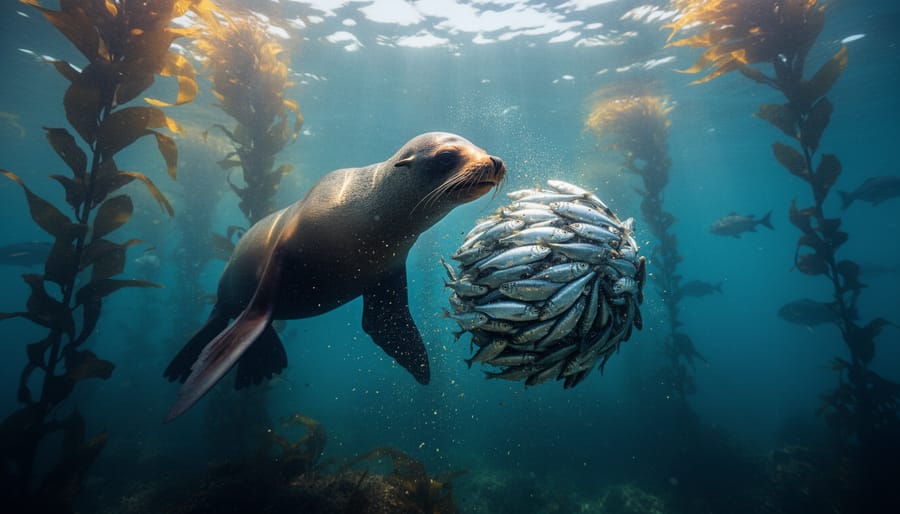
Beneath the ocean’s surface, a silent drama unfolds every second: predator meets prey in an ancient dance that shapes entire marine ecosystems. A sea lion chases a school of sardines through kelp forests. An orca pod coordinates a strategic hunt for seals on Antarctic ice. A tiny larval fish dodges the snapping jaws of a jellyfish. These interactions, multiplied across billions of encounters daily, determine which species thrive, which populations collapse, and how energy flows through our oceans.
But this delicate balance is shifting. Ocean temperatures are rising at unprecedented rates, currents are changing course, and prey species are migrating to new territories. When a cod population moves northward seeking cooler waters, what happens to the seals that depend on them? When warming seas alter the timing of plankton blooms, how do young fish survive their most vulnerable weeks? These questions are no longer academic exercises. They are urgent puzzles that marine scientists are racing to solve using predictive modeling techniques that can forecast the future of ocean food webs.
Marine predation is not just about who eats whom. It is the fundamental mechanism controlling fish populations that feed three billion people, maintaining coral reef health that protects coastlines, and supporting whale populations that sequester carbon in the deep ocean. Understanding how climate change disrupts these predator-prey relationships gives us the power to predict ecosystem collapse before it happens and to design conservation strategies that work with nature’s complexity rather than against it.
Dr. Maria Santos, a marine ecologist who has spent twenty years studying seal foraging behavior in the Arctic, puts it simply: “Every predator tells us a story about ocean health. When their hunting patterns change, they are showing us exactly where and how our oceans are transforming.”
This article explores how scientists are decoding these stories and what they reveal about our ocean’s future.
The Delicate Balance: Understanding Marine Predation
Why Predators Matter More Than You Think
Marine predators are the unsung architects of ocean health, playing roles far more critical than simply hunting prey. These apex species—from sharks and orcas to seals and predatory fish—maintain the delicate balance that keeps entire ecosystems functioning. Without them, marine environments would look dramatically different, and not in ways we’d welcome.
Top predators regulate prey populations through what scientists call “top-down control.” When predators are present, they prevent herbivores from overgrazing kelp forests and seagrass beds, habitats that support thousands of other species. They also target weak and sick individuals, which helps maintain genetic strength in prey populations and reduces disease transmission. This natural selection process has shaped marine life for millions of years.
Perhaps most fascinating is the “landscape of fear” that predators create. Their mere presence changes prey behavior, causing fish to avoid certain areas and alter feeding patterns. This behavioral shift cascades through the food web, affecting everything from plankton to coastal vegetation.
Dr. Elena Ramirez, a marine ecologist who has studied shark populations for two decades, shares a powerful observation: “During my research in the Bahamas, we documented how reef shark populations directly correlated with coral health. Areas with healthy predator numbers showed 40% greater biodiversity than nearby reefs where sharks had been removed.”
The loss of marine predators threatens this intricate web. When we protect predators, we’re really safeguarding the entire ocean ecosystem—an investment that benefits countless species, including ourselves. Volunteer opportunities with marine monitoring programs offer everyone a chance to contribute to predator conservation efforts and witness these remarkable animals firsthand.
Classic Predator-Prey Dynamics in Marine Ecosystems
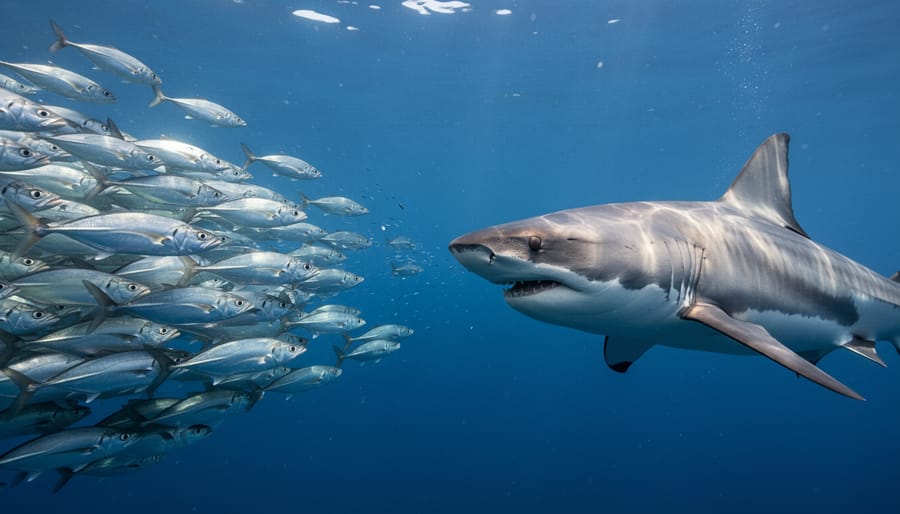
Marine ecosystems thrive on intricate predator-prey relationships that maintain ecological balance. Consider sharks, the ocean’s apex predators, which regulate fish populations and prevent overgrazing of critical habitats like seagrass beds and coral reefs. When sharks are removed from an ecosystem, cascading effects ripple throughout the food web.
Orcas hunting seals demonstrate remarkable cooperative strategies, maintaining healthy seal populations while preventing them from depleting fish stocks. Marine biologist Dr. Sarah Chen, who has studied orcas in the Pacific Northwest for fifteen years, describes witnessing their coordinated hunting techniques as “watching a perfectly choreographed dance that has evolved over millennia.”
Perhaps no relationship illustrates ecosystem balance better than sea otters and sea urchins. Otters consume urchins, preventing them from decimating kelp forests that serve as nurseries for countless marine species. When otter populations declined historically, urchin barrens replaced thriving kelp ecosystems, demonstrating how losing one predator can transform entire underwater landscapes.
These relationships remind us that every species plays a vital role in maintaining marine biodiversity.
When the Water Warms: Climate Impacts on Marine Predation
Temperature-Driven Changes in Hunting Success
Rising ocean temperatures are fundamentally reshaping the dynamics between marine predators and their prey, creating a complex cascade of metabolic and behavioral changes. As water warms, both predators and prey experience increased metabolic rates, meaning they require more energy to survive. However, these changes don’t affect all species equally, creating winners and losers in the race to adapt.
Predators like sharks and tuna operate more efficiently in warmer waters up to a point, but their prey often becomes scarcer or relocates to cooler regions. Research off the coast of California documented how warming events caused market squid populations to shift northward, leaving predatory sea lions struggling to find sufficient food near their traditional breeding grounds. Marine biologist Dr. Elena Martinez, who has tracked these patterns for over a decade, notes that nursing sea lion mothers now travel twice the distance they did twenty years ago to reach productive feeding areas.
The metabolic mismatch extends to smaller scales as well. Studies in the Mediterranean found that warming waters increased the hunting speed of amberjacks by 15 percent, but simultaneously decreased the density of their primary prey, sardines, by nearly 40 percent in traditional hunting zones. This means predators expend more energy searching across larger areas, often with diminishing returns.
Perhaps most concerning are the documented collapses in predation success during marine heatwaves. During the 2015-2016 Pacific heat anomaly, researchers observed that seabird colonies experienced unprecedented breeding failures as forage fish moved deeper or farther offshore, beyond the diving range of surface-feeding predators.
Shifting Ranges and Mismatched Migrations
Climate change is fundamentally rewiring the ocean’s biological clock, causing predators and prey to shift their ranges at different rates and arrive at critical feeding grounds on mismatched schedules. This phenomenon, known as phenological mismatch, threatens to unravel predator-prey relationships that have evolved over millennia.
As ocean temperatures rise, many species are moving poleward in search of cooler waters, but not all are traveling at the same speed. Cold-water fish species may migrate northward while their predators remain anchored to specific breeding sites or follow different environmental cues. The result is a growing spatial disconnect between hunters and their historical prey.
Timing mismatches are equally concerning. Many marine predators time their breeding cycles to coincide with seasonal prey abundance, such as plankton blooms or fish spawning events. However, warming waters are causing these blooms to occur earlier in the year. When predators arrive at traditional feeding grounds expecting abundant food for their offspring, they may find the pantry already bare.
Dr. Elena Martinez, a marine biologist studying Arctic seabirds, shares a sobering observation: “We’re seeing seabird colonies where chick survival has dropped by forty percent because the fish they depend on now peak in abundance two weeks earlier than the birds’ nesting schedule.”
These disruptions cascade through food webs, affecting not just individual species but entire marine communities. Understanding and predicting these shifts requires sophisticated modeling approaches that can track multiple species simultaneously, accounting for their different responses to changing ocean conditions and helping conservationists anticipate where intervention might preserve critical ecological relationships.
The Cascade Effect: When One Change Triggers Many
Marine ecosystems operate as intricate webs where the removal or addition of a single predator can trigger unexpected transformations throughout the food chain. This phenomenon, known as a trophic cascade, demonstrates nature’s profound interconnectedness.
Consider the sea otter story along the Pacific coast. When otter populations declined due to overhunting, their primary prey—sea urchins—exploded in numbers. These voracious grazers devastated kelp forests, transforming vibrant underwater ecosystems into barren seascapes. The loss rippled outward: fish that depended on kelp for shelter disappeared, affecting commercial fisheries and coastal communities. When conservation efforts helped otters recover, kelp forests gradually returned, bringing back the rich biodiversity they support.
A similar cascade occurred with shark populations in the Atlantic. As apex predators declined from overfishing, mid-level predators like rays and skates flourished. Their increased numbers decimated scallop and other shellfish populations, causing the collapse of a century-old fishery.
Marine biologist Dr. Elena Torres witnessed these effects firsthand while studying Caribbean reef systems. “We documented how lionfish invasions altered entire reef communities within months,” she explains. “Their efficient predation on herbivorous fish allowed algae to overtake corals, fundamentally restructuring these ecosystems.”
Understanding these cascades helps scientists predict how climate-driven changes in predation patterns might reshape tomorrow’s oceans.
Predicting the Future: How Scientists Model Marine Predation Under Climate Change
The Building Blocks of Marine Climate Models
Marine scientists construct predictive models by weaving together diverse data streams that capture the complex dance between ocean conditions and predator-prey relationships. These ocean climate models begin with oceanographic data: water temperature readings at various depths, salinity levels, current patterns, and oxygen concentrations. Satellites and autonomous underwater vehicles continuously gather this information, creating detailed snapshots of ocean conditions.
Species behavior patterns form another critical layer. Researchers track how predators like sharks, orcas, and seabirds respond to environmental changes. Do they dive deeper when surface waters warm? Do they migrate earlier? Field observations, tagging studies, and acoustic monitoring contribute behavioral data that helps models predict future responses.
Historical climate records provide essential context. Ice cores, sediment samples, and long-term monitoring stations reveal how marine ecosystems responded to past climate shifts, offering clues about future patterns. Dr. Sarah Chen, a marine ecologist studying Pacific predators, shares how her team uses century-old whaling records combined with modern satellite data to understand shifting orca hunting grounds.
Biological information rounds out these models: metabolic rates, breeding cycles, prey preferences, and energy requirements. These parameters help scientists understand how climate-driven changes cascade through food webs. When integrated, these building blocks create powerful tools for anticipating how warming oceans will reshape predator-prey dynamics, enabling proactive conservation strategies rather than reactive responses.
From Data to Predictions: How the Models Work
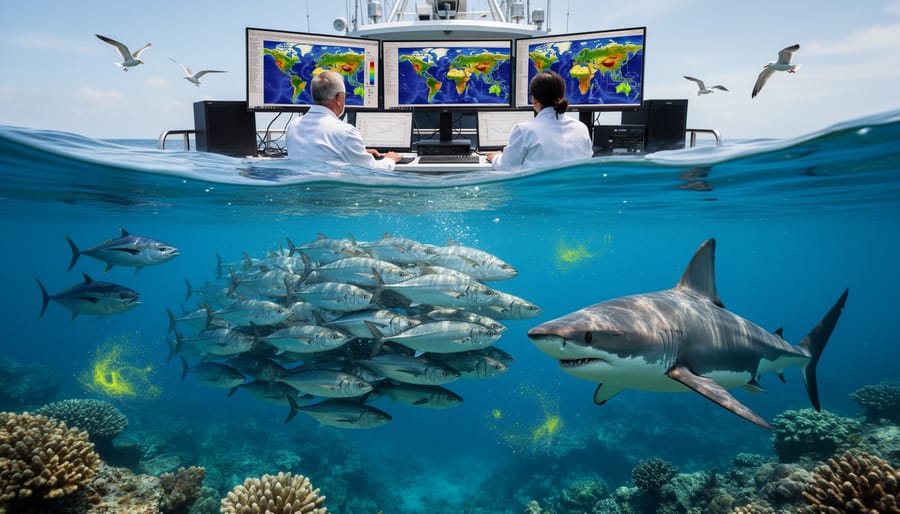
Scientists use powerful computer simulations to predict how marine predation will change as oceans warm and ecosystems shift. These models work like sophisticated what-if machines, combining vast datasets about ocean temperature, currents, prey distribution, and predator behavior.
The process begins with feeding historical data into the models—information about when and where predators hunt, how prey populations have fluctuated, and how past environmental changes affected these relationships. Scientists then adjust variables like water temperature or prey abundance to simulate future climate scenarios.
Dr. Elena Rodriguez, a marine ecologist who uses these models, explains: “We can test hundreds of scenarios in weeks that would take decades to observe in nature. It’s like having a time machine that shows us possible futures.”
The models reveal patterns invisible to the naked eye, such as how a two-degree temperature rise might shift shark migration routes or alter seal hunting success. These predictions help conservationists identify vulnerable species and prioritize protection efforts before populations crash.
While no model is perfect, they provide crucial roadmaps for action, guiding everything from marine protected area placement to fishing regulations.
What the Models Are Telling Us
Recent predictive models paint a nuanced picture of marine predation’s future. Computer simulations analyzing ocean temperature shifts, prey distribution changes, and predator migration patterns reveal concerning trends: apex predators like sharks and tuna may face significant hunting territory shifts, with some species forced into 40% smaller ranges by 2050. Smaller predators, particularly those in polar regions, show vulnerability as ice-dependent prey populations decline.
However, the models also identify surprising adaptive responses. Some predator species demonstrate remarkable flexibility, with certain seal populations already adjusting their diving depths and hunting schedules to track shifting prey. Models suggest that coastal predators may benefit from increased productivity in some warming zones, though this varies dramatically by region.
Dr. Elena Martinez, a marine ecologist who has spent two decades modeling predator-prey relationships, shares an important insight: “These models aren’t crystal balls, but they’re powerful planning tools. They show us where interventions could make the biggest difference.” The key finding across most models? Protected marine corridors that allow predators to follow their prey as distributions shift could significantly reduce predicted population declines, giving ocean ecosystems the resilience they need.
Real-World Examples: Predation Shifts We’re Already Seeing
The Arctic’s Changing Hunters
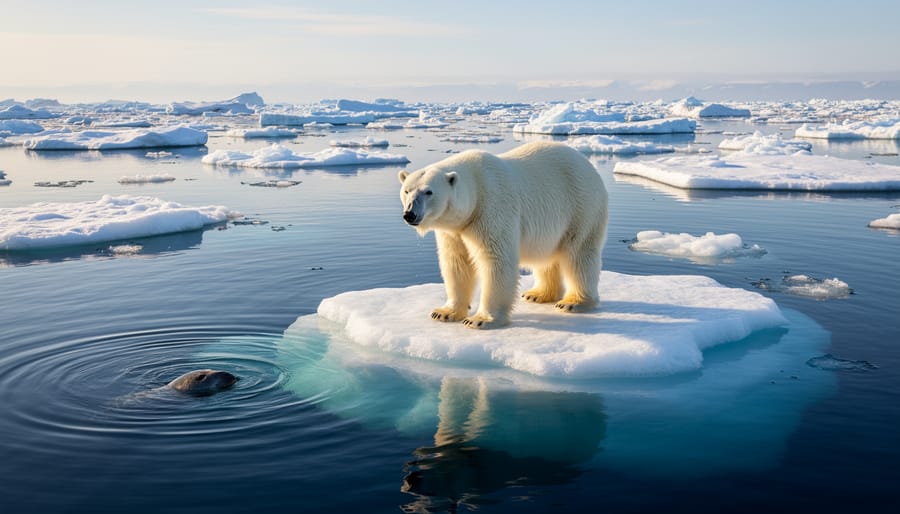
The Arctic Ocean is transforming before our eyes, and its apex predators are adapting to unprecedented change. As sea ice retreats at alarming rates, polar bears, orcas, and seals face shifting hunting grounds and altered prey availability. Marine biologist Dr. Sarah Chen, who has studied Arctic predators for fifteen years, describes witnessing orcas in regions where they were historically rare: “We’re seeing killer whales hunting bowhead whales and narwhals in areas that were once protected by ice. It’s a complete restructuring of predation patterns.”
The changes extend beyond traditional Arctic species. Warmer waters are drawing temperate predators northward, including great white sharks and various tuna species, creating entirely new competitive dynamics. These newcomers encounter Arctic cod, seals, and other prey that have never faced such predators, potentially disrupting food webs that have remained stable for millennia.
For polar bears, reduced sea ice means less access to seals, their primary prey. Some populations are adapting by spending more time on land, while others are traveling greater distances between hunting grounds. These shifts have cascading effects throughout the ecosystem, affecting everything from fish populations to seabird colonies.
Understanding these changes is crucial for conservation efforts, and citizen scientists can contribute by reporting unusual wildlife sightings through programs like Arctic observation networks.
Coral Reef Predators in Crisis
Coral reefs, often called the rainforests of the sea, face unprecedented threats from climate change that are fundamentally altering predator-prey dynamics. Rising ocean temperatures and increasing acidification are creating cascading ecosystem disruptions that threaten the delicate balance these vibrant communities depend upon.
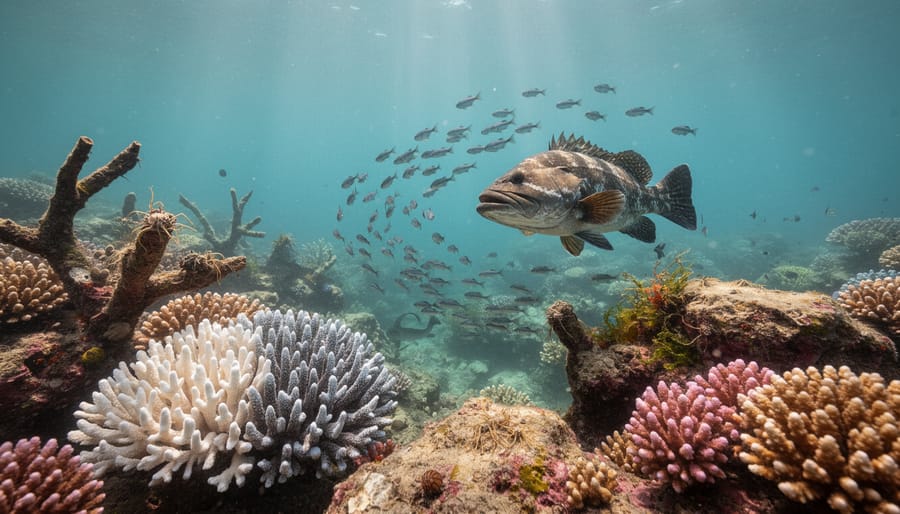
Warming waters stress coral hosts, making them more vulnerable to bleaching and disease, which in turn reduces habitat complexity that reef predators like groupers, sharks, and moray eels rely on for hunting. As coral structures degrade, smaller prey fish lose protective refuges, paradoxically making them easier targets initially but ultimately leading to population crashes that leave predators without sufficient food sources.
Ocean acidification compounds these challenges by weakening the shells and skeletons of many prey species, from mollusks to crustaceans, disrupting the foundational food web. Marine biologist Dr. Elena Torres, who has studied Caribbean reef systems for fifteen years, shares: “We’re witnessing predator species abandoning degraded reefs they’ve inhabited for generations, desperately searching for healthier hunting grounds that are increasingly scarce.”
The good news? Restoration efforts and marine protected areas show promise. Volunteer opportunities with organizations like Reef Check allow citizen scientists to monitor these critical changes, contributing valuable data that helps predict and prevent further collapse.
A Marine Biologist’s Perspective
Dr. Sarah Chen still remembers the moment that changed her research trajectory. While studying kelp forest ecosystems off California’s coast in 2019, she noticed something unsettling: the sea otters she’d been tracking for years were hunting far more frantically than usual, yet catching less prey. Temperature sensors revealed ocean warming had shifted the distribution of their primary food source, sea urchins, forcing the otters into unfamiliar territory where larger predators lurked.
“That’s when predictive modeling became personal for me,” Chen reflects. “I realized we weren’t just documenting change, we were witnessing ecosystem relationships unravel in real-time.” Her team now uses climate models to anticipate where these mismatches will occur next, helping conservation managers prepare strategic interventions. Chen encourages others to join citizen science projects monitoring local marine life, explaining that even simple observations of predator behavior contribute invaluable data to these predictive models, turning concern into meaningful action.
Why This Matters for Humans
The changing dynamics of marine predation might seem like a distant concern reserved for scientific journals, but these shifts ripple directly into our daily lives in ways that affect what we eat, how coastal economies function, and the overall health of our planet.
Consider this: nearly three billion people worldwide depend on seafood as their primary source of protein. When climate change disrupts predator-prey relationships in the ocean, it doesn’t just rearrange who eats whom beneath the waves. It fundamentally alters fish populations that fishing communities rely upon for their livelihoods and families count on for nutrition. When apex predators like sharks decline or shift their ranges due to warming waters, prey species can explode in population, sometimes devastating commercially valuable shellfish beds or kelp forests that serve as nurseries for juvenile fish.
Coastal communities from Maine to Malaysia are already experiencing these changes firsthand. Dr. Sarah Chen, a marine biologist who has worked with fishing cooperatives in Southeast Asia for over a decade, shares a telling observation: “Fishers are the first to notice when predation patterns shift. They’ll tell you that certain fish have disappeared from traditional grounds, or that species they’ve never seen before are suddenly abundant. Their economic stability hangs in the balance.”
Beyond fisheries, healthy predation relationships maintain the ocean ecosystems that regulate our climate, produce much of the oxygen we breathe, and protect coastlines from erosion and storm damage. When these natural checks and balances fall out of sync, the consequences cascade through the entire marine food web, potentially leading to ecosystem collapse in extreme cases.
Understanding and predicting these changes isn’t just academic curiosity. It’s essential for sustainable fisheries management, protecting the livelihoods of 260 million people employed in fishing industries worldwide, and ensuring global food security for future generations. The ocean’s health is inseparable from our own, making marine predation research one of the most practically important conservation priorities of our time.
How You Can Make a Difference
Volunteer Opportunities in Marine Monitoring
You can directly contribute to marine predation research through several established citizen science programs that collect vital data for predictive models. The Marine Predator Observation Network welcomes volunteers aboard research vessels and coastal observation points to record predator-prey interactions, water temperatures, and behavioral patterns. Your observations become part of datasets that scientists use to refine climate impact models.
Reef Life Survey trains recreational divers to conduct standardized underwater surveys, documenting fish abundance and predator behavior across global sites. This program has contributed to over 10,000 surveys worldwide, providing irreplaceable long-term data on how warming waters affect predation dynamics on coral reefs.
For land-based opportunities, Seabird Watch coordinates coastal monitoring where volunteers track seabird feeding patterns and breeding success. These top predators serve as indicators of broader ecosystem changes, and your regular observations help scientists detect shifts in marine food webs before they become critical.
The SharkSmart program uses public sighting reports and beach observations to map predator movements, combining community data with satellite tracking to improve predictions about changing migration patterns. Even a single observation you submit could help complete a crucial data gap in understanding how marine predators respond to environmental changes, making your participation genuinely meaningful to conservation outcomes.
Supporting Science-Based Conservation
You can make a real difference in protecting marine predators and their ecosystems through informed advocacy and active participation. Start by supporting policies that prioritize ocean health—contact your representatives about marine protected areas, sustainable fishing regulations, and climate action initiatives. Your voice matters in shaping legislation that safeguards these critical species.
Consider contributing to research institutions dedicated to marine science. Organizations like the Ocean Conservancy and local marine laboratories often welcome donations that directly fund climate impact studies and predator monitoring programs. Many also offer volunteer opportunities for citizen science projects, where you can help collect valuable data on species populations and behavior patterns.
Dr. Sarah Chen, a marine biologist studying shark populations, shares: “Our most successful research campaigns involve everyday people who care deeply about ocean conservation. Volunteers have helped us tag hundreds of sharks, providing insights we simply couldn’t gather alone.”
Educational programs offer another powerful avenue for engagement. Attend workshops, webinars, or local aquarium events to deepen your understanding of marine predation dynamics. Share what you learn with your community through social media, school presentations, or conservation groups. By becoming an informed advocate, you amplify the message that science-based conservation is essential for our ocean’s future—and inspire others to join this vital movement.
Join Our E-Network
Stay connected with our global community dedicated to understanding and protecting marine ecosystems. By joining our e-network, you’ll receive quarterly updates on the latest marine predation research, including breakthrough discoveries in predictive modeling and climate impact studies. Our newsletter features personal stories from marine biologists working in the field, highlighting their observations of changing predator-prey dynamics in real-time.
Subscribers gain early access to citizen science opportunities, from participating in coastal monitoring projects to contributing data through mobile applications. We regularly share volunteer positions at marine research stations and conservation organizations worldwide, making it easy to transform your passion into action.
Our community forum connects environmental scientists, educators, students, and ocean enthusiasts, fostering meaningful discussions about emerging research and conservation strategies. Together, we’re building a network that translates scientific knowledge into collective impact, ensuring healthier oceans for future generations. Sign up today and become part of the solution.
Understanding marine predation in our rapidly changing climate isn’t just an academic exercise—it’s essential for protecting the ocean ecosystems that sustain life on Earth. As we’ve explored, warming waters, shifting currents, and changing chemistry are fundamentally altering who eats whom beneath the waves, with cascading effects that reach far beyond the ocean itself.
The good news is that we’re not facing these challenges blindly. Predictive modeling gives us an unprecedented ability to anticipate changes before they become crises. Dr. Elena Martinez, a marine ecologist who has spent two decades studying predator-prey dynamics in the Pacific, reminds us that “every model we refine, every data point we collect, brings us closer to making decisions that actually work for marine life rather than against it.” These tools allow conservationists to identify vulnerable species, predict ecosystem shifts, and implement protective measures proactively rather than reactively.
But models and research mean little without action, and that’s where each of us comes in. Whether you’re a scientist, educator, student, or simply someone who cares about our oceans, there are meaningful ways to contribute. Citizen science programs like reef monitoring initiatives welcome volunteers to collect vital data that feeds directly into predictive models. Supporting marine protected areas, reducing your carbon footprint, and spreading awareness about ocean health all create ripples of positive change.
The challenges facing marine predators and their prey are significant, but they’re not insurmountable. Armed with knowledge, equipped with advanced modeling capabilities, and united by collective responsibility, we have genuine reason for optimism. Our oceans have remarkable resilience when given the chance to recover. The question isn’t whether we can make a difference—it’s whether we will choose to act while there’s still time.

jessica
Ava Singh is an environmental writer and marine sustainability advocate with a deep commitment to protecting the world's oceans and coastal communities. With a background in environmental policy and a passion for storytelling, Ava brings complex topics to life through clear, engaging content that educates and empowers readers. At the Marine Biodiversity & Sustainability Learning Center, Ava focuses on sharing impactful stories about community engagement, policy innovations, and conservation strategies. Her writing bridges the gap between science and the public, encouraging people to take part in preserving marine biodiversity. When she’s not writing, Ava collaborates with local initiatives to promote eco-conscious living and sustainable development, ensuring her work makes a difference both on the page and in the real world.