Marine Biodiversity Science Center

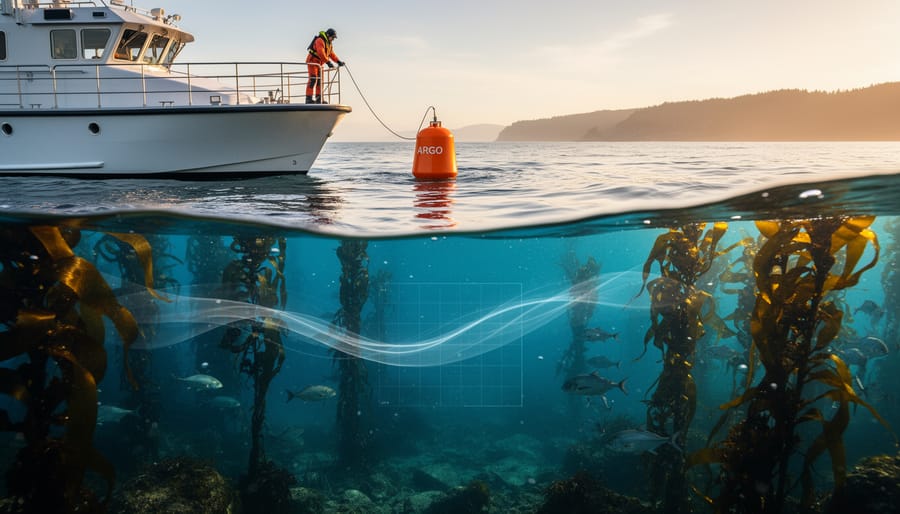
Picture a vast digital ocean where currents flow in equations, marine ecosystems pulse through algorithms, and the future unfolds in pixels on a screen. Climate modeling represents our most powerful tool for understanding what lies ahead for our oceans, transforming decades of data collection into predictions that guide everything from fishing regulations to coral reef restoration efforts.
Marine climate models operate like sophisticated time machines, processing temperature readings from thousands of ocean buoys, satellite measurements of sea ice extent, chemical analyses of water samples, and behavioral observations of marine species. Scientists feed these diverse data streams into supercomputers that simulate ocean circulation patterns, chemical changes, and biological responses across decades or even centuries. The models don’t just predict warmer waters; they reveal cascading effects like oxygen depletion in deep-sea habitats, shifting migration patterns for commercial fish species, and acidification rates that threaten shellfish populations.
Dr. Sarah Chen, a biological oceanographer at the Marine Ecosystems Lab, recalls the moment her team’s model accurately predicted a massive kelp forest die-off three years before it occurred. “We could see the warming pattern emerging in our simulations, but convincing policymakers to act on a computer prediction was incredibly challenging,” she explains. “When the die-off happened exactly as modeled, it transformed how our regional government approaches marine conservation planning.”
These predictive capabilities matter because they provide early warnings, allowing conservationists to relocate vulnerable species, establish marine protected areas in future refugia zones, and allocate resources before crises strike. Understanding how scientists build and interpret these models empowers everyone, from students to citizens, to participate meaningfully in evidence-based conservation conversations.
Why We Need to See Into the Ocean’s Future
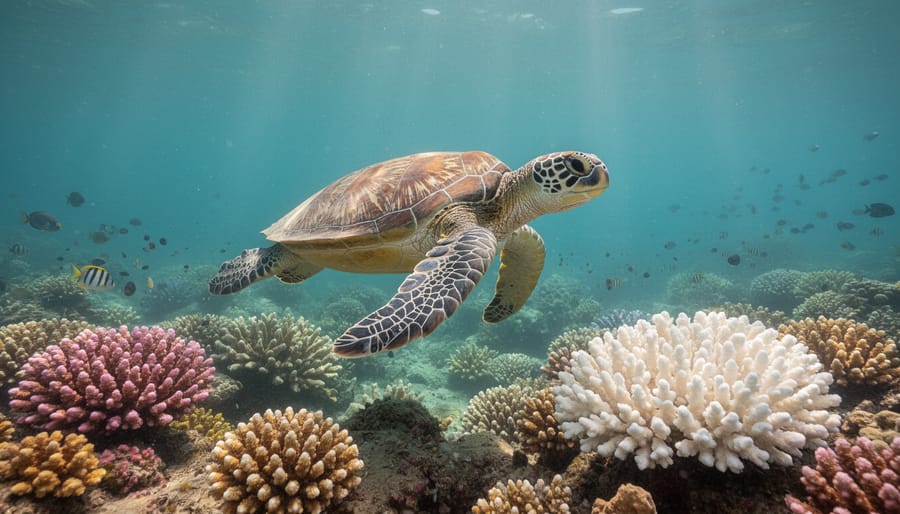
Our oceans are sending us urgent signals that we can no longer ignore. Across the globe, marine scientists are documenting profound changes in ocean environments: surface waters have warmed by an average of 1.5°F since the early 20th century, ocean acidity has increased by 30% as seas absorb excess atmospheric carbon dioxide, and countless species are migrating toward the poles in search of cooler waters. Coral reefs, often called the rainforests of the sea, are experiencing devastating bleaching events with increasing frequency. These aren’t abstract future scenarios; they’re happening right now, reshaping the ocean as we know it.
Yet observing current changes only tells us where we’ve been, not where we’re heading. Marine biologist Dr. Rachel Morrison, who has spent two decades studying Pacific coral ecosystems, explains it this way: “Imagine driving a car while only looking in the rearview mirror. You might see where you’ve been, but you have no idea what’s around the next bend or if there’s a cliff ahead. That’s what managing our oceans without predictive models feels like.”
The challenge is that marine ecosystems don’t change in simple, linear ways. A one-degree temperature increase doesn’t just mean slightly warmer water; it triggers cascading effects through entire food webs, altering migration patterns, breeding cycles, and species interactions in ways that can take decades to fully manifest. By the time we see these impacts clearly, it may be too late to prevent irreversible damage.
This is why predictive modeling has become essential for marine conservation. Instead of constantly reacting to crises as they unfold, models allow us to anticipate changes, identify vulnerable ecosystems before they collapse, and implement protective measures while we still have time. They transform conservation from a defensive scramble into a strategic, proactive effort that can actually stay ahead of the challenges our oceans face.
What Climate Models Actually Tell Us About the Ocean
The Building Blocks: Temperature, Currents, and Chemistry
Climate models are powerful tools, but their accuracy depends on tracking the right variables. In marine environments, scientists monitor several key “building blocks” that together paint a comprehensive picture of ocean health.
Sea surface temperature serves as perhaps the most fundamental variable. Even a one-degree Celsius increase can trigger coral bleaching events, as the symbiotic algae that give corals their color and energy become stressed and abandon their hosts. Dr. Sarah Chen, a marine biologist working in the Great Barrier Reef, recalls witnessing entire reef sections lose their vibrant colors within days during the 2016 bleaching event, demonstrating temperature’s immediate impact.
Ocean currents act as the planet’s circulatory system, distributing heat, nutrients, and marine species across vast distances. When the Gulf Stream weakens or shifts, fish populations that depend on these nutrient highways must relocate, affecting entire fishing communities from Maine to Norway.
Salinity levels influence water density and ocean circulation patterns. Freshwater influx from melting ice sheets disrupts this delicate balance, potentially slowing crucial currents that regulate regional climates.
Ocean pH levels have dropped 0.1 units since preindustrial times as seas absorb excess atmospheric carbon dioxide. This acidification dissolves the calcium carbonate shells of creatures like pteropods, tiny sea snails that form the foundation of many marine food webs.
Oxygen content determines which species can survive in specific zones. Warming waters hold less dissolved oxygen, creating expanding “dead zones” where few organisms can persist.
Modern AI-powered models now track these variables simultaneously, revealing how changes cascade through marine ecosystems and helping conservationists identify which species face the greatest risks.
From Data Points to Future Scenarios
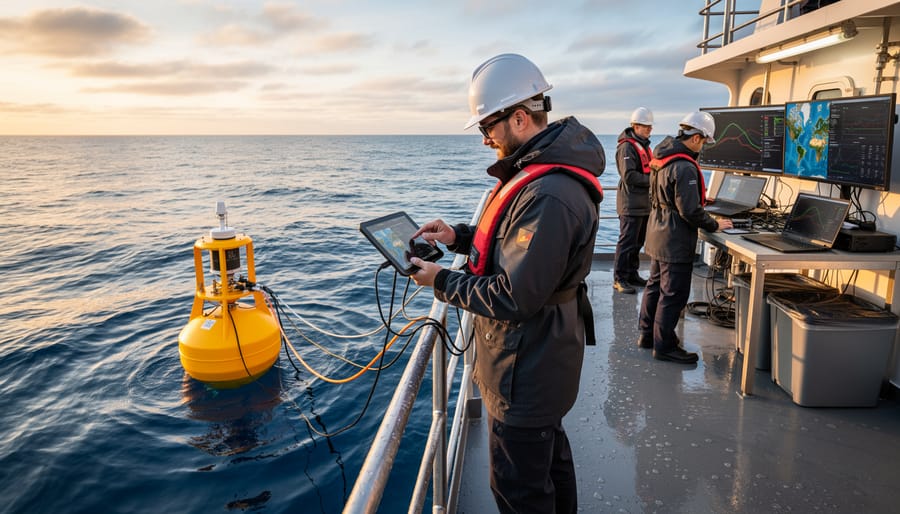
Climate scientists face a fascinating challenge: transforming decades of ocean temperature readings, current measurements, and atmospheric data into meaningful glimpses of our marine future. This process begins with feeding historical information into sophisticated computer models that replicate how oceans behave. These models process everything from surface temperatures to deep-water circulation patterns, much like marine weather models predict shorter-term conditions.
The transformation from data to scenarios involves running these models under different assumptions about human behavior and greenhouse gas emissions. Scientists typically develop three main pathways. The best-case scenario assumes aggressive global action to reduce emissions, potentially limiting ocean warming to 1.5 degrees Celsius by 2100. Under this pathway, coral reefs might adapt, and marine ecosystems could stabilize with proper conservation support.
The worst-case scenario projects continued high emissions, leading to warming exceeding 4 degrees Celsius. This would fundamentally reshape ocean chemistry and temperature, forcing massive species migrations and threatening entire marine food webs. The most likely scenario falls between these extremes, predicting moderate warming of 2 to 3 degrees, with significant but manageable impacts on marine life.
Dr. Sarah Chen, an oceanographer studying coral resilience, explains the human element behind these projections: “We’re not fortune tellers. These scenarios show possible futures based on choices we make today. Every data point represents real places, real species, and ultimately guides real conservation decisions.”
Understanding these scenarios empowers us to act. When marine biologists design protected areas or restoration projects, they use these projections to identify which habitats need immediate attention and which species require targeted conservation interventions.
How Marine Species Respond to a Changing Climate
Migration Patterns and Shifting Habitats
Climate models reveal a fundamental truth: as ocean temperatures rise, marine species are on the move. Through predictive habitat modeling, scientists track how fish, sea turtles, and marine mammals shift toward cooler waters or descend to deeper depths in search of their preferred temperature ranges.
The evidence is compelling. Atlantic cod populations have moved northward along the U.S. East Coast by nearly 200 miles over recent decades, following the colder waters they need to thrive. Loggerhead sea turtles, traditionally nesting on southern beaches, now appear with increasing frequency along previously unsuitable northern coastlines. Gray whales in the Pacific have altered their migration timing and routes as their prey species relocate.
Marine biologist Dr. Elena Rodriguez has spent fifteen years tracking these shifts. “We’re watching entire ecosystems reorganize in real-time,” she explains. “Our models predicted these northward movements, but seeing juvenile fish species appear in waters where they’ve never been recorded still takes your breath away.”
These migrations create cascading effects. When predators follow prey to new territories, they encounter different competitors and food webs. Coastal communities dependent on specific fisheries face economic challenges as traditional catches move elsewhere. Understanding these patterns through climate modeling helps managers anticipate changes, adjust fishing zones, and protect critical migration corridors. The models don’t just predict movement—they guide proactive conservation strategies that acknowledge our ocean’s dynamic, changing nature.
Vulnerable Species and Ecosystem Collapse Risks
Climate models play a crucial role in identifying which marine species and ecosystems face the greatest threats, helping scientists prioritize conservation efforts where they’re needed most. By integrating data on ocean temperature, acidification rates, dissolved oxygen levels, and other variables, these models reveal vulnerability hotspots across our oceans.
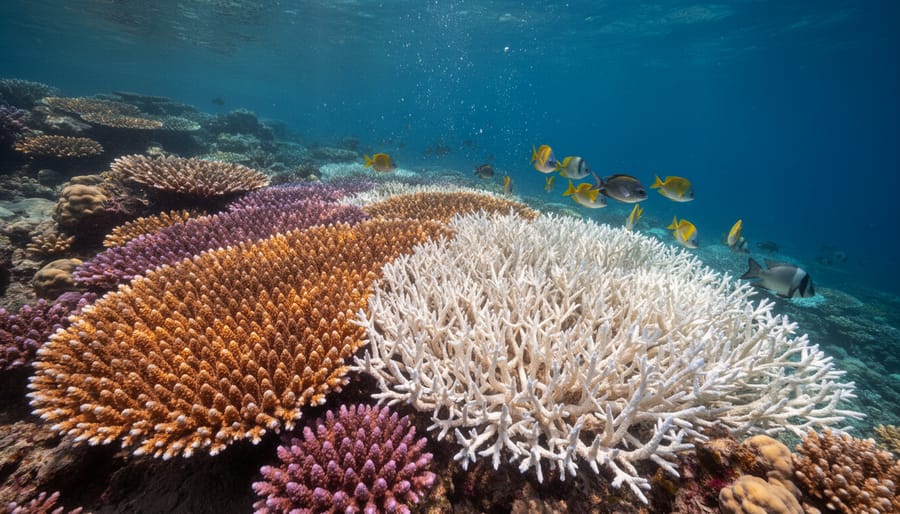
Coral reefs emerge as particularly vulnerable systems in model projections. When ocean temperatures exceed certain thresholds for extended periods, models predict widespread bleaching events that could devastate reef ecosystems supporting over 25% of marine species. Using spatial analysis techniques, researchers map where thermal stress will intensify most rapidly, identifying reefs that might serve as climate refugia—cooler pockets where corals could potentially survive.
Similarly, models show kelp forests facing compression of their viable habitat range as warming waters push from below while maintaining their cold-water boundaries. Arctic ecosystems face compound threats, with sea ice loss disrupting species from polar bears to ice-dependent seals and the entire food web beneath.
What makes these projections particularly valuable is their ability to reveal cascading effects. Marine biologist Dr. Sofia Chen explains: “When models show us losing kelp forests, we’re not just losing one species—we’re watching entire food webs unravel, affecting everything from sea urchins to sea otters to commercially important fish species.” These insights help conservationists understand not just where action is needed, but which interventions might protect the greatest biodiversity by preserving keystone ecosystems.
Surprising Winners in a Warmer Ocean
Climate models reveal an unexpected reality: not all species will lose ground as oceans warm. Some marine organisms are poised to become surprising winners, expanding their ranges into newly suitable waters. Species like certain squid, jellyfish, and smaller fish adapted to warmer temperatures are already moving poleward, following their preferred thermal conditions. For example, tropical reef fish are appearing in temperate waters once too cold for their survival, while some commercially valuable species like lobsters are shifting northward along coastlines.
However, these “winners” present complex challenges for ecosystem balance. When warm-water species colonize new areas, they can outcompete native species, alter food webs, and fundamentally change community structures that evolved over millennia. A single invasive species thriving in warmer conditions can trigger cascading effects throughout the ecosystem.
Dr. Elena Rodriguez, a marine ecologist studying range shifts in the Mediterranean, shares her perspective: “We’re witnessing ecosystems in flux. Understanding which species will thrive helps us anticipate biodiversity changes and adapt conservation strategies accordingly.” These predictions inform marine protected area design and fisheries management.
You can contribute to tracking these shifts by participating in citizen science programs that monitor species distributions, helping scientists refine their climate models with real-world observations.
Real Scientists, Real Predictions: Stories from the Field
Dr. Elena Martinez remembers the moment her climate model’s prediction came true. As a marine biologist studying Caribbean coral ecosystems, she had spent two years developing models that predicted bleaching events based on water temperature patterns and ocean current shifts. “When the model indicated a severe bleaching event would hit the Florida Keys three months before it happened, I was both vindicated and heartbroken,” she recalls. But that accurate prediction allowed marine park managers to implement emergency cooling measures in critical nursery areas, saving 40% more coral fragments than in previous bleaching events.
The power of climate modeling lies not just in its scientific precision, but in the dedicated researchers who translate complex data into actionable conservation strategies. Dr. James Chen, an oceanographer at the Marine Climate Research Institute, works specifically on predicting shifts in fish migration patterns as ocean temperatures rise. His team’s models successfully forecasted the northward movement of commercially important fish species along the Atlantic coast, giving fishing communities and regulators a five-year head start to adapt their practices and policies.
“People think we just sit behind computers all day, but modeling climate change requires us to be in the field constantly,” explains Dr. Chen. “We’re collecting water samples, tagging fish, deploying temperature sensors, and talking to local fishermen who’ve observed changes firsthand. Their traditional knowledge often validates what our models are showing us.”
These personal connections drive the passion behind the science. Dr. Sarah Okonkwo’s coastal modeling project in West Africa emerged from conversations with fishing communities watching their beaches erode at alarming rates. Her predictive models, which integrate sea-level rise data with local tidal patterns, have guided the construction of strategic mangrove restoration zones. Three years later, those restored areas have reduced coastal erosion by 60% in targeted regions.
Perhaps most inspiring is the collaboration between modelers and conservation practitioners. When Dr. Martinez’s coral bleaching predictions became consistently reliable, she partnered with local dive shops and tourism operators to create a volunteer monitoring network. Community members now help collect real-time temperature data that improves model accuracy, while simultaneously becoming invested in reef protection efforts. This blend of cutting-edge science and grassroots engagement demonstrates how climate modeling becomes a bridge between prediction and preservation, transforming abstract data into tangible hope for our oceans’ future.
Turning Predictions Into Protection
Marine Protected Areas of Tomorrow
Climate models are becoming powerful tools not just for understanding change, but for proactively designing the marine protected areas of tomorrow. As ocean temperatures shift and currents alter their paths, many species are moving to new locations in search of suitable habitat—and conservation strategies must move with them.
Advanced climate models help scientists identify climate refugia: areas where stable conditions are likely to persist even as surrounding waters warm. These refugia act as safe havens where vulnerable species can survive periods of rapid change. By overlaying species distribution models with climate projections, researchers can pinpoint where tomorrow’s biodiversity hotspots will emerge, ensuring protected areas are established where they’ll matter most in coming decades.
Dr. Elena Vargas, a marine spatial planner working in the Caribbean, shares her experience: “We used to design protected areas based solely on where species are now. Climate modeling changed everything. We’re now protecting migration corridors and future habitat that doesn’t look critical today but will be essential by 2050.”
This forward-thinking approach is particularly crucial for slow-moving species like corals and deep-sea ecosystems that cannot quickly relocate. Models reveal which areas will maintain the temperature, pH, and current patterns these communities need, guiding conservation investments toward places with the greatest long-term potential for preserving marine biodiversity.
Early Warning Systems for Marine Ecosystems
Predictive modeling has revolutionized how we protect marine ecosystems by creating early warning systems that detect threats before they escalate into full-blown crises. These sophisticated monitoring networks combine climate models with real-time ocean data to identify concerning patterns, giving conservationists precious time to respond.
Think of these systems as smoke detectors for the ocean. They continuously analyze temperature fluctuations, oxygen levels, acidification rates, and current patterns to predict events like coral bleaching, harmful algal blooms, or mass migration disruptions. When models detect conditions approaching critical thresholds, they automatically alert resource managers and scientists.
Dr. Elena Martinez, a marine biologist working with reef monitoring programs in the Caribbean, describes the transformation: “Five years ago, we’d discover bleaching events only after they’d already damaged large portions of reef. Now our models give us 2-4 weeks advance notice, allowing us to implement emergency cooling strategies and document the event from the beginning.”
These early warning systems have proven invaluable for protecting vulnerable species. Models that track ocean temperature and prey distribution now help predict when sea turtle nesting beaches might face flooding or when migratory species need protected corridors. Conservation organizations increasingly rely on these tools to deploy resources efficiently and maximize their protective impact when ecosystems face climate-driven stress.
How You Can Contribute to Better Predictions
You don’t need a PhD to make a meaningful difference in climate science. Climate models are only as good as the data they receive, and citizen scientists play an increasingly vital role in gathering the observations that refine our predictions about ocean health.
The Marine Biodiversity Science Center welcomes volunteers to participate in several data collection initiatives. Our Coastal Monitoring Program trains community members to survey local tide pools and document species presence, water temperatures, and physical changes to habitats. These seemingly simple observations, when collected consistently across multiple locations and years, provide invaluable baseline data that helps scientists detect shifts in species distributions and ecosystem dynamics.
Dr. Sarah Chen, who coordinates our volunteer programs, shares a compelling example: “Last year, our citizen scientists documented unusual jellyfish blooms three weeks before our research team would have noticed. That early data allowed us to investigate the causes and incorporate these findings into regional climate models, improving predictions about warming-related species changes.”
Beyond the Marine Biodiversity Science Center, numerous programs need your help. The Global Ocean Observing System welcomes volunteers to report marine observations through mobile apps. Beach cleanup initiatives often include data collection components where participants log the types and quantities of debris found, information that helps model ocean current patterns and pollution distribution.
marine data collection initiatives also extend to recreational activities. Divers can contribute underwater observations, fishers can log catch data, and beachgoers can photograph coastal erosion. Even backyard weather stations that record rainfall and temperature contribute to the broader climate datasets scientists use.
The beauty of citizen science lies in its accessibility. Whether you have two hours monthly or can commit to regular monitoring, your contributions matter. Every data point strengthens our understanding of how climate change affects marine ecosystems, ultimately improving our ability to protect them for future generations.
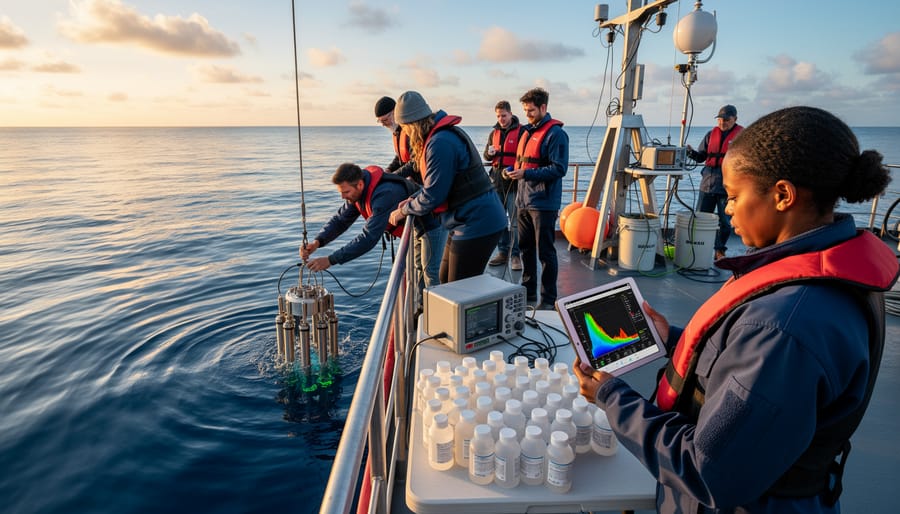
The future of our oceans doesn’t have to be a mystery we helplessly observe as it unfolds. Climate modeling has given us something precious: foresight. These sophisticated tools allow us to peer decades into the future, anticipate changes before they fully materialize, and most importantly, take action while we still have time to make a difference. Rather than watching passively as warming waters and shifting currents reshape marine ecosystems, we now possess the scientific capability to predict, prepare, and protect.
The predictions generated by climate models carry a profound responsibility. They reveal which coral reefs face the greatest bleaching risk, which fish populations will need to migrate, and which coastal ecosystems require urgent protection. But predictions alone cannot save our oceans. The true power lies in how we respond to what the models tell us.
This is where each of us enters the story. Marine conservation thrives on collective action informed by solid science. Whether you’re a student exploring career paths in marine biology, an educator inspiring the next generation of ocean stewards, or simply someone who cares about the blue planet we call home, there are meaningful ways to contribute. Support organizations working to establish marine protected areas. Participate in citizen science projects that feed crucial data into climate models. Share what you’ve learned about ocean changes with your community.
The challenges facing our oceans are real, but so is our capacity to address them. When scientific understanding meets determined action, remarkable things happen. Protected areas recover. Vulnerable species adapt with our help. Communities develop resilience strategies based on accurate predictions. Together, guided by the insights climate modeling provides, we can ensure that future generations inherit oceans as vibrant and biodiverse as the ones that inspire us today.

jessica
Ava Singh is an environmental writer and marine sustainability advocate with a deep commitment to protecting the world's oceans and coastal communities. With a background in environmental policy and a passion for storytelling, Ava brings complex topics to life through clear, engaging content that educates and empowers readers. At the Marine Biodiversity & Sustainability Learning Center, Ava focuses on sharing impactful stories about community engagement, policy innovations, and conservation strategies. Her writing bridges the gap between science and the public, encouraging people to take part in preserving marine biodiversity. When she’s not writing, Ava collaborates with local initiatives to promote eco-conscious living and sustainable development, ensuring her work makes a difference both on the page and in the real world.