Marine Biodiversity Science Center

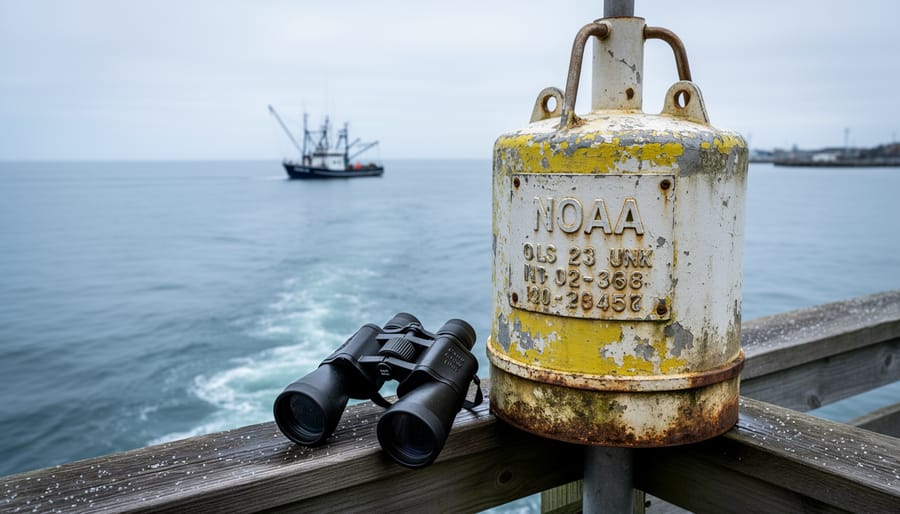
The Sustainable Fisheries Act of 1996 fundamentally transformed how the United States manages its ocean resources by requiring science-based catch limits, mandating the rebuilding of depleted fish populations, and minimizing harm to marine ecosystems. This legislation amended the Magnuson-Stevens Fishery Conservation and Management Act to address a crisis: decades of overfishing had pushed numerous commercial species toward collapse, threatening both marine biodiversity and the coastal communities that depend on healthy fisheries.
Before 1996, fishery managers lacked the legal tools to enforce conservation measures effectively. The Act changed that by establishing ten national standards for fishery management, with the most critical requiring that fishing pressure cannot exceed levels that would prevent stocks from producing maximum sustainable yield. Regional fishery management councils must now use the best available science to set annual catch limits, and they’re legally required to rebuild overfished stocks within ten years when biologically possible.
The policy framework works through a combination of mandates and flexibility. While the Act sets strict conservation requirements, it allows councils to choose from various management approaches, including the rights-based systems that have become increasingly common in U.S. waters. Understanding how sustainable fishing works requires grasping this balance between federal oversight and regional adaptation.
Three decades after its passage, the Act remains the backbone of fisheries conservation in American waters. For students, conservationists, and engaged citizens, learning how this legislation operates isn’t just an academic exercise. The mechanisms it established continue to shape debates about ocean governance, climate adaptation in fisheries, and the future of coastal communities. The successes and ongoing challenges of this law offer essential lessons for marine conservation worldwide.
What the Sustainable Fisheries Act Changed

The Sustainable Fisheries Act of 1996 fundamentally reshaped U.S. ocean policy by amending the Magnuson-Stevens Fishery Conservation and Management Act, transforming it from a framework primarily focused on maximizing catch to one centered on long-term sustainability. Before this legislation, federal fisheries management lacked the teeth to prevent overfishing, regulations existed, but enforcement mechanisms and binding requirements were often insufficient to reverse declining fish populations.
The law introduced mandatory accountability through its catch limit provisions. Regional fishery management councils could no longer set quotas based purely on economic or political considerations; they had to use the best available scientific data to determine what fish populations could sustain. This requirement fundamentally changed the decision-making process, placing biological science at the center of management decisions rather than treating it as one input among many.
Equally significant were the Act’s essential fish habitat protections. For the first time, federal law required managers to identify and conserve the specific ocean areas where fish spawn, breed, feed, and develop. This spatial approach recognized that healthy fish populations depend on healthy ecosystems, not just controlling how many fish are caught.
The rebuilding provisions gave the Act real power. When a stock fell below sustainable levels, managers faced a legal obligation to develop a plan that would restore the population within a specific timeframe, typically ten years, though biological constraints could extend this period. This mandate created urgency and accountability that previous frameworks lacked.
Together, these provisions established a precautionary framework that prioritizes conservation while still allowing sustainable harvest. The Act didn’t ban fishing; it created rules to ensure fisheries could continue indefinitely rather than collapsing from overexploitation.
Rights-Based Fisheries: The Act’s Enabling Framework
How Allocation Programs Work
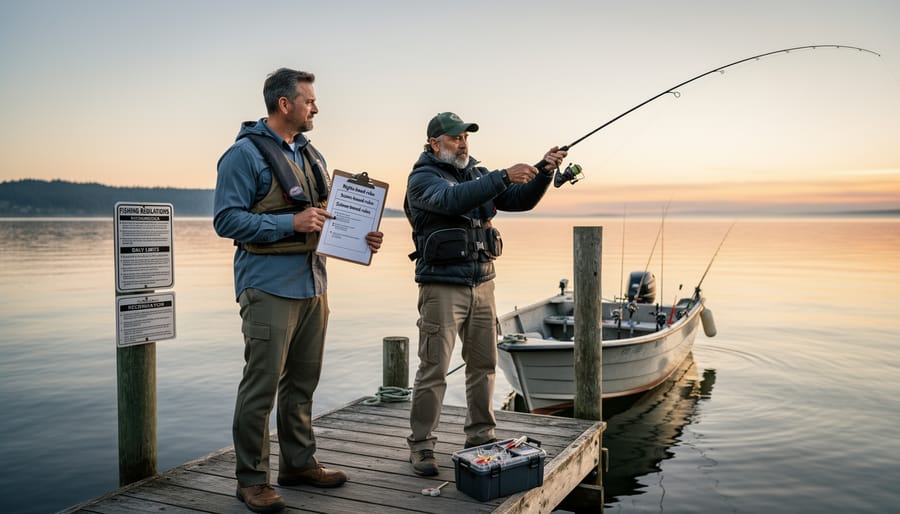
Allocation programs establish individual accountability within fishery limits set by science. When a fishery converts to rights-based fishing managers first determine the total allowable catch for a stock, then divide that quota among participants based on criteria like historical landings, vessel characteristics, or community needs.
Fishers receive their allocation as a percentage of the total quota rather than a fixed poundage, which means their actual catch allowance adjusts each year as stock assessments change. Some programs issue transferable shares that participants can lease or sell, creating flexibility for operations of different scales. Others tie allocations to specific communities or cooperatives to preserve local fishing heritage.
The accountability shift is fundamental. Instead of competing to catch as much as possible before a season closes, fishers manage their individual quota throughout the year. They choose when to fish based on market conditions, weather safety, and operational efficiency. Electronic reporting systems, observers, and vessel monitoring track catches against each allocation in near real-time.
When someone exceeds their allocation, consequences typically include pound-for-pound deductions from future years, fines, or temporary fishing prohibitions. This accountability structure incentivizes careful harvest practices and accurate reporting, because your quota for next season depends on staying within limits this year. The system transforms fishers from competitors racing against each other into stewards managing their portion of a shared resource.
Real-World Applications
The Pacific Coast groundfish catch share program demonstrates how rights-based management transforms fishing operations. Fishermen in this program receive individual allocations that can be fished throughout the season rather than during short, hectic openings. This structure allows vessel operators to plan fishing trips around weather, market prices, and crew availability. The program includes both individual fishing quotas and cooperative management options, giving participants flexibility in how they organize their operations.
Alaska’s halibut and sablefish individual fishing quota program exemplifies long-term rights allocation. Quota share holders receive annual harvest privileges based on their share percentage. The system allows fishermen to build equity in fishing access, which can be sold, leased, or transferred according to program rules. Geographic restrictions ensure harvests remain distributed across traditional fishing communities rather than concentrating in single ports.
Both programs incorporate transferability restrictions designed to prevent excessive consolidation. Limits on how much quota one entity can control maintain diverse fleet participation. Owner-on-board requirements in certain fisheries keep fishing operations connected to active participants rather than becoming purely investment vehicles.
These rights-based frameworks shift enforcement focus from monitoring short competitive seasons to year-round accountability. Observers and electronic monitoring verify that harvest stays within individual allocations. Fishermen have direct incentives to avoid exceeding their limits since overages affect their future allocations. This creates a fundamentally different relationship between regulators and harvesters, one based on individual responsibility rather than fleet-wide race dynamics.
The Science Behind Sustainable Limits
The Sustainable Fisheries Act fundamentally transformed fisheries management by mandating that all harvest decisions rest on rigorous scientific analysis rather than political pressure or economic expedience. Before 1996, regional councils could set catch limits based largely on industry demands, with predictable results for fish populations. The Act changed that by requiring fishery management councils to establish annual catch limits derived from the best available science, a mandate that sounds straightforward but represents a seismic shift in how we balance harvest and conservation.
At the heart of this science-based approach lies the stock assessment process. Teams of fisheries biologists gather data from commercial catches, research surveys, and fishery-independent sampling to estimate population size, age structure, reproductive rates, and natural mortality. They analyze decades of catch history, environmental conditions, and biological samples to build mathematical models of how fish populations respond to fishing pressure. These assessments aren’t perfect, fish live underwater and don’t cooperate with census takers, but they provide the foundation for sustainable management.
“Every stock assessment is really a conversation between what we can measure and what we need to know. The 1996 Act gave us the authority to say ‘we don’t have enough data to allow this level of fishing’, and that precautionary stance has made all the difference.”
The Act introduced the concept of maximum sustainable yield as a management benchmark, the largest average catch that can be taken continuously without depleting the stock. Councils must set catch limits below this threshold, accounting for scientific uncertainty. When populations drop below target levels, the Act requires rebuilding plans with strict timelines, typically ten years unless the biology of the species demands longer.
What makes this framework resilient is its precautionary principle: when scientists face uncertainty about stock size or recruitment, managers must err on the side of conservation. If environmental conditions shift, if survey data show unexpected declines, or if our understanding of the ecosystem changes, catch limits adjust accordingly. This isn’t a static rulebook but an adaptive system that responds to new information, exactly what’s needed as ocean conditions continue to change.
Protecting Critical Marine Habitats

The 1996 Act introduced a requirement that fundamentally changed how fisheries managers think about ocean conservation: the identification and protection of essential fish habitat. This provision recognized that sustainable fisheries depend not just on catch limits, but on preserving the physical, biological, and chemical features of marine ecosystems that fish populations need to survive and reproduce.
EFH spawning, breeding, feeding and nursery areas must be described and identified in each fishery management plan. This means councils examine where different life stages occur, from larvae drifting in surface waters to juveniles sheltering in estuaries to adults gathering on offshore reefs. The law requires mapping these zones using the best available information, which might include traditional fisher knowledge, research surveys, and habitat studies.
Once essential habitat is identified, the Act creates a consultation process. Any federal action that might damage these areas, whether it’s dredging, coastal development, offshore energy projects, or even other fishing methods, triggers a review. Fishery management councils assess potential impacts and can recommend measures to conserve habitat function. This might mean restricting certain gear types in sensitive areas, timing activities to avoid spawning seasons, or requiring modifications to minimize bottom disturbance.
The protection isn’t absolute, but it shifts the burden. Before the Act, habitat degradation often went unchecked until fish populations collapsed. Now there’s a mechanism to evaluate trade-offs before damage occurs. Councils must balance use with conservation, considering both immediate economic needs and long-term productivity.
The essential habitat provisions work alongside other environmental laws, creating overlapping layers of protection for critical marine zones. It’s an ongoing process of refinement as scientists learn more about species’ habitat needs and how those requirements shift with environmental change.
Implementation Challenges and Adaptive Management
Implementing the Sustainable Fisheries Act has never been a straightforward process. From the beginning, fishery managers faced the difficult work of translating legislative mandates into real-world policies that could satisfy both conservation goals and the economic needs of fishing-dependent regions.
One of the most persistent challenges involves data quality and availability. Accurate stock assessments require consistent, long-term datasets on fish populations, fishing effort, and ecosystem conditions. For many fisheries, particularly those in remote areas or those targeting less commercially valuable species, comprehensive data collection remains expensive and logistically complex. Managers must make decisions with uncertainty, applying precautionary principles when information gaps exist, a reality that can frustrate both conservationists pushing for stricter limits and fishers who question restrictions based on incomplete evidence.
Regional differences add another layer of complexity. What works for the highly regulated groundfish fisheries of New England may not suit the diverse small-boat operations in the Gulf of Mexico. Local fishing communities have distinct economic structures, cultural fishing traditions, and ecological conditions. The regional fishery management council system attempts to address this diversity, but balancing national conservation standards with regional flexibility requires constant negotiation and compromise.
Climate change has emerged as perhaps the most significant obstacle to effective implementation. As ocean temperatures shift, species migrate to new ranges, altering traditional fishing grounds and complicating the geographic boundaries of management jurisdictions. Warming waters affect reproductive success, growth rates, and prey availability, factors that can make historical stock assessment models less reliable. Fishery managers increasingly turn to tools like the climate resilience toolkit to incorporate environmental variability into their planning frameworks.
Economic pressures create ongoing tension. When rebuilding timelines force reduced catch limits, fishing businesses face hardship. Communities built around fishing infrastructure, processing plants, ice houses, marine supply shops, feel the ripple effects. Finding the balance between short-term economic pain and long-term sustainability requires difficult conversations about transition support, alternative livelihoods, and the true cost of depleted fisheries.
This is why adaptive management has become central to modern fisheries policy. The Act established a framework that allows for adjustments as new science emerges and conditions change. Annual review processes, updated stock assessments, and flexibility in management measures mean the system can respond to both successes and setbacks, treating fisheries management as an ongoing learning process rather than a fixed solution.
How You Can Support Sustainable Fisheries
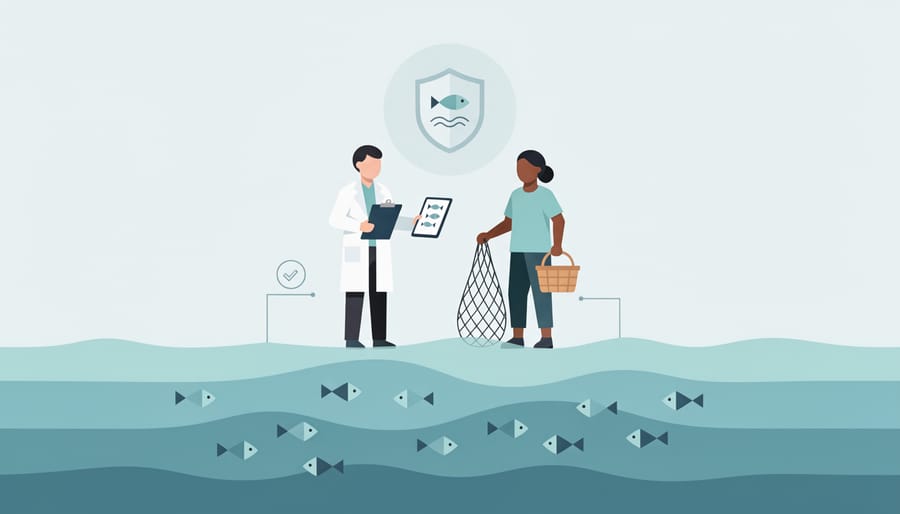
The legislation that set the framework for sustainable fisheries can only succeed when informed citizens participate in the management process. Whether you have scientific training or simply care about ocean health, multiple pathways exist for meaningful involvement in fisheries conservation.
Public comment periods offer perhaps the most direct way to influence fisheries policy. Regional fishery management councils hold regular meetings where they consider new regulations, catch limit adjustments, and habitat protections. These councils operate under federal transparency requirements, meaning meeting schedules, proposed rule changes, and supporting documents are publicly available. Your written testimony or in-person comments become part of the official record that managers must consider. The National Marine Fisheries Service maintains a centralized portal where you can track open comment periods across all eight regional councils.
Citizen science programs have expanded dramatically in recent years, creating opportunities to contribute directly to the data that informs stock assessments. Recreational anglers can participate in catch reporting apps that help scientists understand fishing effort and species distribution. Scuba divers can join reef fish surveys that document population trends in areas where commercial fishing doesn’t occur. Coastal residents can monitor spawning runs or participate in beach seine surveys during critical life history stages. This field data fills gaps that vessels and research stations cannot cover alone.
For those seeking deeper engagement, the center’s e-network provides regular updates on emerging fisheries issues, alerts about upcoming comment periods, and connections to researchers working on stock assessment challenges. Volunteers with boating experience can assist with habitat surveys or tagging studies. Educators can help develop curriculum materials that teach younger generations about sustainable fishing practices and the science behind catch limits.
Supporting sustainable seafood markets represents another practical action. When consumers specifically request fish from well-managed fisheries, they create economic incentives that reinforce the conservation goals of the Act. Many fishers who operate under rights-based programs take pride in their sustainability credentials and appreciate customers who recognize that value. Your purchasing choices send signals throughout the supply chain about which management approaches the public wants to see expanded.
Common Questions About the Sustainable Fisheries Act
The Sustainable Fisheries Act raises important practical questions for anyone interested in marine conservation and fisheries policy. Understanding how this framework operates helps clarify both its strengths and ongoing challenges.
What’s the difference between the Magnuson-Stevens Act and the Sustainable Fisheries Act?
The Sustainable Fisheries Act of 1996 is actually an amendment to the Magnuson-Stevens Fishery Conservation and Management Act. It added critical requirements like mandatory science-based catch limits, essential fish habitat protections, and rebuilding timelines for depleted stocks, strengthening the original 1976 law significantly.
How are catch limits actually enforced?
Enforcement varies by fishery but typically combines vessel monitoring systems, at-sea observers, dockside monitoring, and electronic reporting. When a fishery reaches its annual catch limit, managers can close the season or implement additional restrictions to prevent overharvest.
Can fisheries management adapt to climate change?
Yes, though it’s challenging. Regional fishery management councils now incorporate climate considerations into their stock assessments and management plans, including shifting species distributions, changing ocean temperatures, and altered productivity patterns. The science-based approach required by the Act allows for adaptive management as conditions change.
What role do commercial fishers play in management decisions?
Fishers serve on regional fishery management councils, participate in advisory panels, contribute to stock assessments through logbook data, and engage in public comment periods. This collaborative approach recognizes that fishers possess valuable knowledge about marine ecosystems and fishing operations.
One question people often ask concerns international fisheries. The Sustainable Fisheries Act governs U.S. waters, generally within 200 nautical miles of the coast, but doesn’t directly regulate international fishing. However, it influences global practices through U.S. participation in international fishery management organizations and requirements that imported seafood meet comparable sustainability standards.
When stocks don’t recover as anticipated, the Act requires councils to adjust their approach. Management plans must be revisited, rebuilding timelines may be extended, and additional conservation measures implemented. This adaptive process acknowledges that marine ecosystems don’t always respond predictably to management actions, especially when facing multiple stressors like pollution, habitat loss, or changing ocean conditions.
The relationship between the Act and endangered species protection works through coordination with the Endangered Species Act and Marine Mammal Protection Act. Fishery management plans must ensure that fishing activities don’t jeopardize protected species or destroy critical habitat. When conflicts arise, such as fishing gear that might harm sea turtles or marine mammals, councils develop mitigation measures, modify gear requirements, or establish protective zones.
These questions reflect the complexity of managing living marine resources. The Act provides a flexible framework that allows managers to respond to new scientific information, changing environmental conditions, and evolving understanding of ecosystem dynamics while maintaining its core commitment to preventing overfishing and rebuilding depleted stocks.
Thirty years after its passage, the Sustainable Fisheries Act stands as proof that thoughtful policy can evolve alongside our understanding of ocean systems. This isn’t a static piece of legislation gathering dust, it’s a living framework that adapts as scientists gather new data, as climate patterns shift, and as communities find better ways to balance their livelihoods with conservation needs. Regional fishery management councils continue refining their approaches, incorporating ecosystem-based management and adjusting to warming waters that push species into new territories.
What makes this framework resilient is its foundation in adaptive management and public participation. You have a voice in these processes. Fishery management plans undergo regular review with public comment periods where your input shapes regional decisions. The Marine Biodiversity Science Center’s e-network keeps subscribers informed when these opportunities arise, translating complex regulatory proposals into clear explanations of what’s at stake.
Real ocean conservation happens when engaged people stay involved, attending council meetings, contributing to citizen science programs that monitor fish populations, and holding decision-makers accountable to science-based standards. Whether you’re a marine biology student, a recreational angler, or simply someone who cares about healthy oceans, the public process needs your participation. The Act created the framework, but ongoing vigilance and community engagement keep it working. Sign up for our network, learn when your regional council meets, and join the ongoing work of stewarding these shared resources for generations ahead.

jessica
Ava Singh is an environmental writer and marine sustainability advocate with a deep commitment to protecting the world's oceans and coastal communities. With a background in environmental policy and a passion for storytelling, Ava brings complex topics to life through clear, engaging content that educates and empowers readers. At the Marine Biodiversity & Sustainability Learning Center, Ava focuses on sharing impactful stories about community engagement, policy innovations, and conservation strategies. Her writing bridges the gap between science and the public, encouraging people to take part in preserving marine biodiversity. When she’s not writing, Ava collaborates with local initiatives to promote eco-conscious living and sustainable development, ensuring her work makes a difference both on the page and in the real world.