Marine Biodiversity Science Center

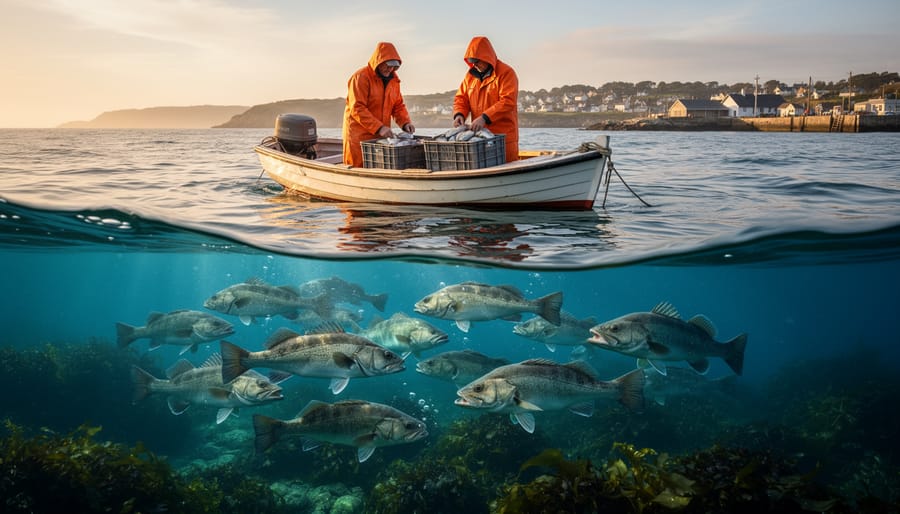
Understand that fishing quotas work as annual catch limits determined by scientific stock assessments, designed to prevent overfishing while maintaining healthy fish populations for future generations. These regulations typically set maximum allowable catches based on the reproductive capacity of each species, water temperature changes, and ecosystem health indicators collected through ongoing marine surveys.
Recognize the difference between open-access fisheries and rights-based management systems. Traditional open-access approaches often trigger “race for fish” scenarios where vessels compete to catch as much as possible before seasons close, leading to overcapitalization and waste. Rights-based systems, including Individual Transferable Quotas (ITQs) and community fishing rights, allocate specific catch shares to fishers or communities, transforming their relationship with ocean resources from exploitation to stewardship.
Examine the evidence from successful implementations. Iceland’s quota system, established in the 1980s, rebuilt previously depleted cod stocks while stabilizing fishing incomes. New Zealand’s ITQ program covers over 100 species and has maintained sustainable harvest levels for three decades. Closer to home, fishing communities revolutionizing conservation demonstrate how localized management can balance ecological health with cultural traditions and economic viability.
Acknowledge that these systems face legitimate criticisms. Small-scale fishers sometimes struggle to afford quota shares, potentially consolidating fishing rights among larger operations. Enforcement challenges persist in remote waters, and setting accurate quotas requires extensive scientific data that many regions lack. Bycatch regulations, while essential for protecting non-target species, can create economic hardship for fishers operating in mixed-species environments.
The effectiveness of sustainable fishing quotas ultimately depends on adaptive management that responds to changing ocean conditions, inclusive governance that incorporates fisher knowledge alongside scientific data, and transparent monitoring systems that build public trust in the regulatory process.
The Crisis That Changed Everything
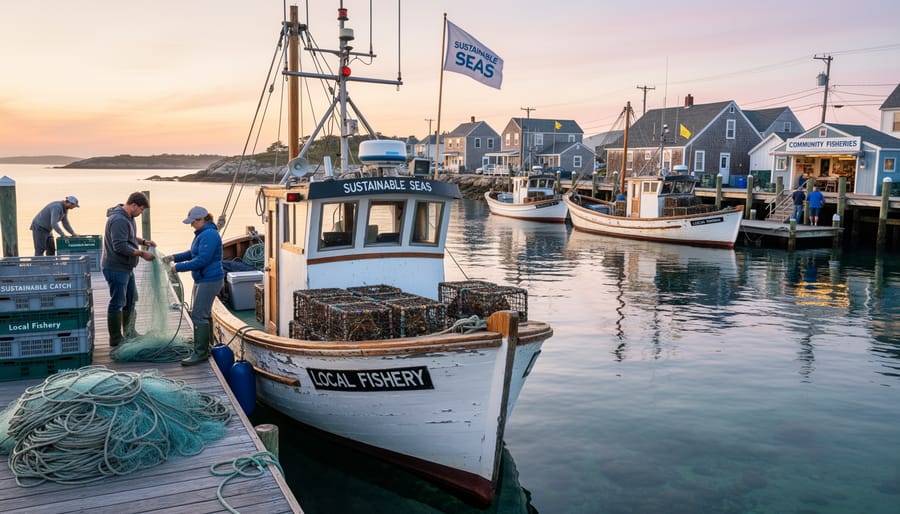
When Everyone Owns the Fish, No One Does
Imagine a lake filled with fish that belongs to everyone in a village. Sounds ideal, right? But here’s the problem: when no individual owns the fish, each villager races to catch as many as possible before their neighbors do. This phenomenon, known as the tragedy of the commons, has devastated fish populations worldwide.
In open-access fisheries, this race-to-fish mentality creates a dangerous cycle. Fishers invest in bigger boats, more advanced gear, and longer hours at sea, not because they want to deplete the ocean, but because economic survival demands they catch fish before someone else does. The result? Fishing capacity often exceeds what fish populations can sustain by two to three times in many regions.
Dr. Maria Santos, a marine biologist who has worked with fishing communities for over fifteen years, recalls her first encounter with this crisis. “I met fishers who remembered when their nets came up full after just an hour. Now they spend entire days at sea for a fraction of the catch. They weren’t greedy—they were trapped in a system that forced everyone to compete for a shrinking resource.”
The mathematics are sobering. When access is unrestricted, individual fishers benefit fully from each fish they catch but share the cost of depletion across everyone. This imbalance encourages overfishing even when fishers recognize the long-term damage. Breaking this cycle requires transforming how we allocate and manage fishing rights.
What Rights-Based Fisheries Actually Mean
Individual Transferable Quotas: Ownership That Works
Individual Transferable Quotas represent a fundamental shift in how we manage fisheries. Rather than creating a competitive race where every fisher rushes to catch as much as possible before others do, ITQs assign each fisher or vessel a secure, tradeable percentage of the total allowable catch. This seemingly simple change transforms the entire fishing equation.
Consider Iceland’s cod fishery. Before ITQs were introduced in the 1980s, fishers worked grueling hours in dangerous conditions, racing against their competitors. Boats became overcapitalized as fishers invested in bigger engines and more gear just to stay competitive. The resource suffered from overexploitation. After implementing ITQs, fishers could plan their seasons strategically, invest in quality over quantity, and even leave fish in the water for next year since their quota would still be waiting. The stock rebounded, and economic returns improved.
Marine biologist Dr. Sarah Chen, who studied New Zealand’s orange roughy fishery transition to ITQs, shares this perspective: “When fishers own a guaranteed share, they become stakeholders in the resource’s future. I’ve watched fishing families who previously opposed catch limits become vocal advocates for conservative quotas because they understood their children would inherit those fishing rights.”
The tradeable aspect matters too. Fishers who want to retire can sell their quota to younger entrants, creating pathways into the industry while allowing natural fleet consolidation. Those facing temporary hardships can lease their quota rather than fishing unsustainably out of desperation.
This ownership model aligns economic incentives with conservation outcomes, turning fishers into ocean stewards.
Territorial Use Rights and Community-Based Management
Territorial Use Rights in Fisheries (TURFs) represent a powerful alternative to top-down quota systems by granting specific fishing communities exclusive rights to harvest marine resources within defined geographic areas. This approach transforms fishers from competitors racing to extract fish into stewards invested in long-term resource health. When communities know they alone will benefit from conservation efforts, they become motivated guardians rather than exploiters.
Indigenous communities worldwide have practiced territorial management for generations, often with remarkable success. In Chile, artisanal fishing communities manage TURFs called “Áreas de Manejo” where they exclusively harvest kelp and benthic species. Research shows these areas contain significantly higher shellfish populations compared to open-access zones. The Haida Nation in British Columbia has similarly managed herring fisheries for centuries using traditional ecological knowledge, maintaining healthy stocks through careful harvest timing and spatial restrictions.
Japan’s coastal fishing cooperatives demonstrate how formal TURF systems support both local fisheries conservation and economic prosperity. These cooperatives self-regulate harvest levels, establish seasonal closures, and actively restore habitat. Community members monitor their territories regularly, reporting violations and adjusting practices based on observed abundance.
The success of TURFs depends on secure long-term rights, clear territorial boundaries, community cohesion, and support from government institutions. Marine biologist Dr. Elena Rodriguez notes that communities with strong social networks and cultural connections to fishing grounds consistently outperform centralized management systems in maintaining fish populations while supporting livelihoods.
Setting Quotas That Actually Protect Fish Populations
The Role of Marine Scientists in Quota Setting
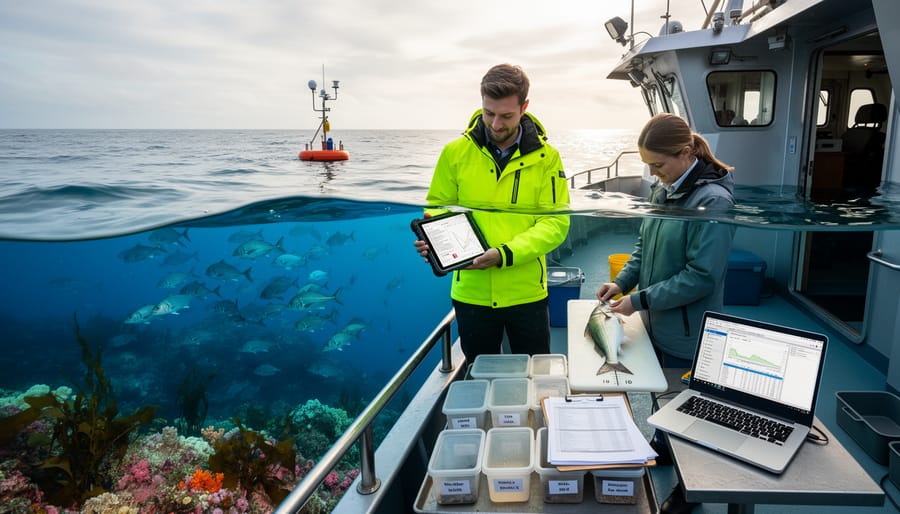
Marine scientists serve as the critical bridge between ocean ecosystems and fishing policy, conducting the stock assessments that inform quota decisions. These researchers spend months at sea and in laboratories, analyzing population data, reproduction rates, and ecosystem health to determine how many fish can be harvested without compromising future generations.
Stock assessments involve far more than simply counting fish. Scientists collect data from multiple sources: research vessel surveys, fishery-dependent information from commercial catches, tagging studies, and increasingly, acoustic monitoring and environmental DNA sampling. They examine age structures within populations, spawning success rates, and the complex relationships between species. This comprehensive approach helps ensure that quotas reflect the true health of marine populations rather than short-term abundance fluctuations.
Dr. Sarah Chen, a fisheries biologist who has worked in Alaska’s groundfish fisheries for fifteen years, emphasizes the importance of collaboration with fishing communities. “Early in my career, I viewed my role purely as a data collector,” she recalls. “But I quickly learned that fishers possess invaluable knowledge about ecosystem changes, fish behavior, and seasonal patterns that our surveys might miss.”
Dr. Chen now spends significant time aboard commercial vessels, building trust with fishers while gathering real-time information. This partnership has proven essential for accurate assessments. When fishers report unusual migration patterns or observe changes in species composition, scientists can investigate these observations and adjust models accordingly.
The relationship between scientists and fishing communities hasn’t always been smooth, but increasingly, both groups recognize their shared investment in healthy fish populations. Many research programs now actively recruit fishers as citizen scientists, compensating them for collecting biological samples and oceanographic data during regular fishing operations. This collaborative approach strengthens both the science and the implementation of sustainable quotas.
The Regulations That Make It Work
Technology Meets Tradition: Modern Monitoring Tools
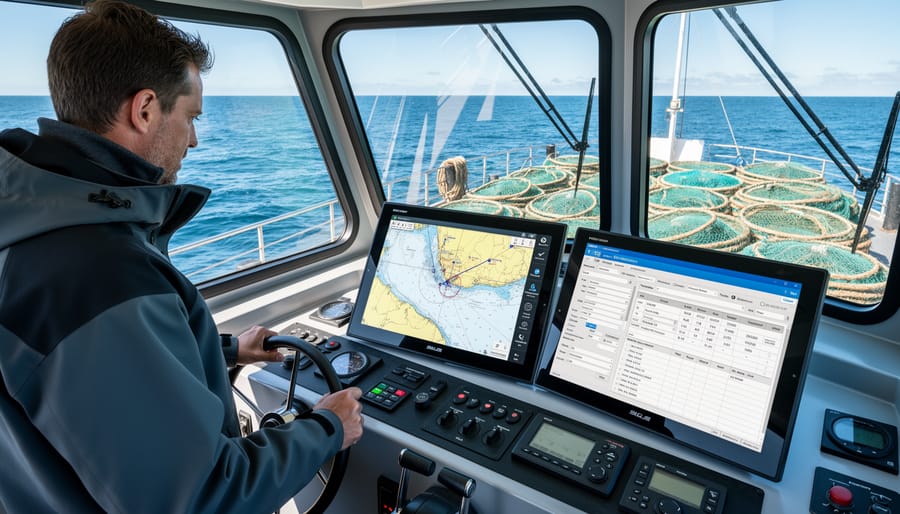
Today’s fisheries management leverages cutting-edge technology while honoring centuries of indigenous wisdom. GPS tracking systems monitor vessel movements in real-time, ensuring boats remain within designated fishing zones. Electronic logbooks have revolutionized data collection, allowing fishers to instantly report their catches through tablet devices, creating unprecedented transparency in harvest rates.
Observer programs place trained scientists aboard fishing vessels to document bycatch, verify quotas, and assess ecosystem health firsthand. Marine biologist Sarah Chen recalls her first observation trip: “Spending weeks with commercial fishers taught me that effective conservation requires bridging the gap between science and practice. Their daily observations became invaluable to our research.”
Equally important is traditional ecological knowledge passed down through generations of fishing communities. Indigenous fishers often recognize subtle environmental changes years before scientific instruments detect them. Their seasonal patterns, migration route observations, and species behavior insights now inform modern quota-setting processes.
This blend of satellite technology and ancestral knowledge creates more resilient management systems. When coastal communities in Alaska partnered with researchers to combine elder testimony with drone surveillance, they identified critical spawning grounds that required protection, demonstrating how innovation and tradition can work together to safeguard our oceans for future generations.
When Regulations Need to Change: Adaptive Management
The ocean doesn’t stand still, and neither should fishing regulations. Adaptive management represents the gold standard in sustainable fisheries, allowing quota systems to evolve based on fresh scientific evidence, environmental shifts, and real-world outcomes.
Think of it as steering a ship through changing waters. Marine biologist Dr. Sarah Chen, who has spent fifteen years monitoring Pacific rockfish populations, explains it simply: “We collect data constantly through surveys, catch reports, and ecosystem monitoring. When the science tells us conditions have changed, whether from warming waters or recovered populations, we adjust quotas accordingly.”
Climate change has made adaptive management more crucial than ever. As ocean temperatures rise and species migrate to cooler waters, fixed regulations quickly become outdated. Effective systems now incorporate climate projections and real-time data into quota-setting processes.
This approach requires collaboration between scientists, fishers, and managers who meet regularly to review evidence and make necessary adjustments. Some regions update quotas annually, while others maintain flexibility for mid-season changes when unexpected conditions arise.
The beauty of adaptive management lies in its humility: it acknowledges we don’t have all the answers and remains committed to learning as we go, always prioritizing ocean health alongside fishing communities’ livelihoods.
Success Stories From Around the World
Iceland’s Cod Recovery: A Model for the World
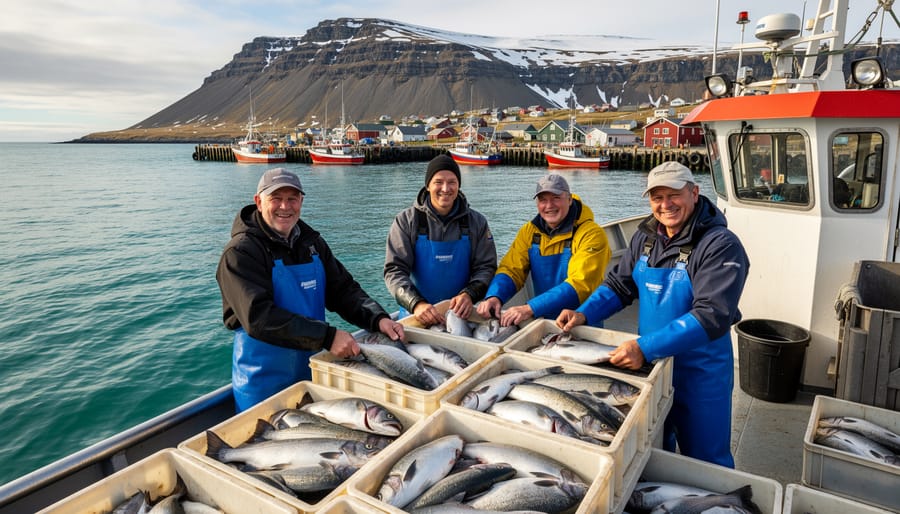
Iceland’s approach to Atlantic cod management stands as one of the most compelling success stories in sustainable fisheries. After decades of overfishing pushed cod stocks to dangerously low levels in the 1990s, Iceland implemented a comprehensive Individual Transferable Quota system in 1984, refined through subsequent decades. The results speak volumes: cod stocks have rebounded significantly, with biomass increasing by over 60% since 2000.
The system allocates fishing rights based on rigorous scientific assessments conducted annually by the Marine and Freshwater Research Institute. These quotas adjust to real-time stock conditions, ensuring fishing pressure never exceeds what the population can sustain. Importantly, this approach hasn’t sacrificed economic prosperity. Iceland’s fishing industry now generates approximately $2 billion annually while employing roughly 7% of the workforce in stable, long-term positions rather than boom-and-bust cycles.
Marine biologist Dr. Hanna Sigurdsson, who has monitored these stocks for fifteen years, shares her perspective: “We’ve witnessed ecosystem recovery beyond just cod numbers. The entire food web has strengthened, from zooplankton populations to seabird colonies.” This holistic recovery demonstrates how science-based quotas benefit not only target species but entire marine ecosystems, offering a replicable model for fisheries worldwide facing similar challenges.
Small-Scale Fisheries Making Big Impacts
While large-scale fisheries often dominate headlines, some of the most inspiring conservation successes are happening in small coastal communities across developing nations. These fisheries, which collectively employ over 90 percent of the world’s capture fishers, are proving that rights-based management works at every scale.
In the Philippines, community-managed marine reserves have transformed depleted fishing grounds into thriving ecosystems. Local fishing cooperatives receive exclusive harvest rights to designated areas in exchange for following science-based catch limits and seasonal closures. Marine biologist Dr. Elena Santos, who has worked with these communities for fifteen years, shares: “When fishers become stakeholders rather than rule-followers, everything changes. They police their own waters more effectively than any government agency could.”
Similar approaches in Belize, Madagascar, and Indonesia demonstrate that territorial use rights work across diverse cultural contexts. These systems typically combine traditional ecological knowledge with modern stock assessments, creating management plans that communities genuinely understand and support.
The results speak for themselves. A 2022 study tracking 42 community-managed fisheries found that fish populations increased by an average of 66 percent within five years, while fisher incomes rose by 40 percent. These improvements stem from giving communities both the authority to manage resources and the assurance that their restraint today will benefit them tomorrow.
For those inspired to support these efforts, numerous volunteer programs connect marine conservation enthusiasts with community-based projects, offering hands-on opportunities to contribute to sustainable fisheries development worldwide.
The Challenges We Can’t Ignore
Ensuring Fair Access for All Fishers
While rights-based fishing systems offer powerful conservation tools, they only succeed when access remains equitable. The initial allocation of fishing quotas presents one of the most contentious challenges in marine management. How do we fairly distribute ocean resources among commercial fleets, small-scale fishers, indigenous communities, and newcomers to the industry?
Many successful programs now incorporate community fishing quotas specifically reserved for small-scale operations. In Alaska, the Community Development Quota program allocates a percentage of the total catch to coastal villages, enabling indigenous communities to maintain traditional fishing practices while participating in modern markets. This approach recognizes that fishing represents more than economics for these communities—it’s cultural heritage and food security.
Quota consolidation poses another significant concern. Without protective measures, larger operations can buy out smaller fishers, concentrating fishing rights in fewer hands. Some regions address this through ownership caps that limit how much quota any single entity can hold, while others establish community trusts that keep quotas tied to local fishing communities rather than allowing unrestricted trading.
Marine biologist Dr. Elena Vasquez, who works with artisanal fishing cooperatives in Mexico, shares an inspiring perspective: “When we designed our local quota system, fishers themselves identified fairness principles. They insisted on provisions protecting access for future generations and seasonal fishers who depend on specific catches for their livelihoods.”
Achieving fair access requires ongoing dialogue, adaptive management, and commitment to protecting diverse fishing traditions while pursuing conservation goals.
How You Can Support Sustainable Fisheries
You don’t need to be a marine scientist to make a meaningful difference in supporting sustainable fisheries. Every choice you make as a consumer, volunteer, or advocate contributes to the health of our oceans and the communities that depend on them.
When shopping for seafood, look for eco-certification labels from organizations like the Marine Stewardship Council or Ocean Wise. These programs verify that fish were caught using methods that comply with science-based quotas and minimize environmental impact. Ask questions at your local fish market about where and how the seafood was caught. By creating demand for sustainably harvested fish, you directly support fishers who follow regulations and encourage others to do the same.
The Marine Biodiversity Science Center offers numerous volunteer opportunities that connect you directly to fisheries conservation work. You can participate in citizen science projects that monitor local fish populations, assist researchers collecting data used to inform quota decisions, or help educate the public about ocean sustainability at community events. Dr. Sarah Chen, one of our marine biologists, shares that volunteers have been instrumental in tracking juvenile fish populations in coastal nursery habitats, providing crucial data that shapes protective regulations.
Advocacy matters too. Contact your local representatives to express support for science-based fisheries management funding. Share what you learn about sustainable fishing with friends and family. Join community forums where fishing regulations are discussed, bringing the voice of conservation into these important conversations.
Remember, sustainable fisheries require collaboration between scientists, fishers, policymakers, and citizens. Your participation, whether through mindful purchasing, hands-on volunteering, or speaking up for marine protection, helps ensure abundant oceans for generations to come.
Remember those fishers we met at the beginning, watching their once-depleted waters come back to life? Their story isn’t unique anymore. Across the globe, rights-based management systems are proving that we don’t have to choose between thriving oceans and thriving fishing communities. The evidence is clear: when fishers have secure, long-term stakes in healthy fish populations, everyone benefits. Catch shares, territorial use rights, and community-based quotas aren’t just policy tools; they’re pathways to restoration and resilience.
The journey toward sustainable fisheries requires all of us. Whether you’re a marine scientist, educator, student, or simply someone who cares about ocean health, there’s a role for you in this movement. Join our e-network to stay connected with the latest research, success stories, and conservation strategies. Consider volunteering with monitoring programs in your region, where you can work alongside marine biologists collecting data that shapes future management decisions. Every voice advocating for science-based fisheries policies, every hand helping with coastal surveys, every conversation spreading awareness contributes to healthier oceans. The transformation is happening now, and it needs your engagement to continue growing.

jessica
Ava Singh is an environmental writer and marine sustainability advocate with a deep commitment to protecting the world's oceans and coastal communities. With a background in environmental policy and a passion for storytelling, Ava brings complex topics to life through clear, engaging content that educates and empowers readers. At the Marine Biodiversity & Sustainability Learning Center, Ava focuses on sharing impactful stories about community engagement, policy innovations, and conservation strategies. Her writing bridges the gap between science and the public, encouraging people to take part in preserving marine biodiversity. When she’s not writing, Ava collaborates with local initiatives to promote eco-conscious living and sustainable development, ensuring her work makes a difference both on the page and in the real world.