Marine Biodiversity Science Center


The Gulf of Mexico Fisheries Management Council serves as the primary decision-making body for sustainable fish populations in federal waters of the Gulf, developing regulations and management plans that balance commercial and recreational fishing with marine conservation. Working in partnership with NOAA Fisheries, this regional council determines catch limits, monitors stock health, and establishes the rules that govern how, when, and where fishing occurs across 2.5 million square kilometers of ocean.
Understanding how the Gulf Council operates matters to anyone who cares about seafood sustainability, coastal livelihoods, or marine ecosystem health. The Council brings together voting representatives from five Gulf states, federal agencies, and stakeholders to make science-based decisions about species ranging from red snapper and grouper to shrimp and reef fish. These aren’t bureaucratic exercises. The regulations they develop directly affect whether fish populations thrive or collapse, whether fishing communities prosper, and whether future generations will inherit healthy ocean ecosystems.
What makes the Gulf Council particularly relevant in 2026 is its transparent, participatory approach. Every management decision follows a public process that includes stakeholder input, scientific review, and opportunities for anyone to comment on proposed changes. The Council regularly considers modifications to stock catch limits, regional allocations, and fishing seasons during multi-day meetings open to public observation.
For marine conservation advocates, the Gulf Council represents democracy in action for our oceans. The same body that prevented overfishing of several key species continues adapting management strategies as science evolves and climate impacts intensify. Whether you’re a researcher tracking population trends, an educator teaching marine policy, or simply someone who wants to understand how fishing regulations protect ocean life, the Gulf Council’s work shapes the future of one of the world’s most productive marine ecosystems.
What Is the Gulf of Mexico Fisheries Management Council?
The Gulf of Mexico Fisheries Management Council stands as one of eight regional councils charged with managing marine fisheries in federal waters off U.S. coasts. Congress created these councils in 1976 through the Magnuson-Stevens Fishery Conservation and Management Act, a landmark law that established a coordinated system for balancing conservation needs with fishing opportunities. The Gulf Council specifically oversees fisheries in federal waters extending from the seaward boundary of state jurisdiction (typically three to nine nautical miles offshore) out to 200 nautical miles, covering an immense area of biologically rich habitat.
The Council’s structure reflects its collaborative mission. It consists of seventeen voting members: eleven appointed by the Secretary of Commerce (with nominees submitted by the five Gulf state governors), the regional fishery management director from each Gulf state, and the Southeast Regional Administrator of NOAA Fisheries. This mix ensures that both state and federal perspectives shape management decisions. The Magnuson-Stevens council authority gives these members the power to develop fishery management plans that determine when, where, and how fishing can occur in federal waters.
The Council doesn’t work alone. NOAA and the Gulf Council maintain a partnership where the Council develops management measures and regulations, while NOAA Fisheries conducts the scientific research, coordinates public review, and ultimately implements the rules. This division allows the Council to focus on policy development while NOAA handles enforcement and compliance. The Council relies heavily on scientific and statistical committees, advisory panels representing different fishing sectors, and public input to inform its decisions.
Members serve three-year terms and bring diverse expertise, from commercial fishing captains to marine scientists, recreational fishing advocates to conservation specialists. This breadth of experience helps the Council weigh competing interests and craft regulations that work in the real world, not just on paper. The Council holds regular meetings throughout the year, typically spanning four days, where it considers proposed actions ranging from adjusting catch limits to protecting essential fish habitat.
The Science Behind Sustainable Fisheries Management
Stock Assessments and Catch Limits
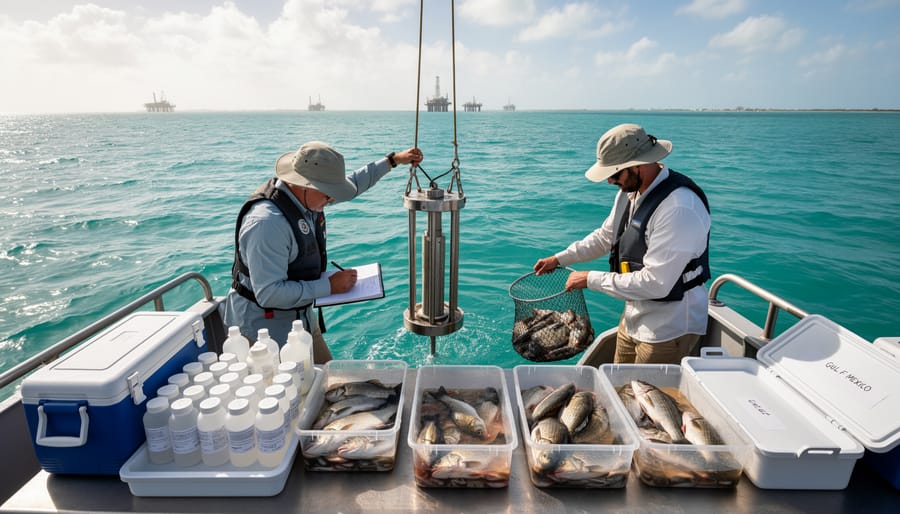
Stock assessments form the scientific foundation for every fishing regulation the Gulf Council implements. Marine biologists and fisheries scientists analyze population data, reproductive rates, mortality patterns, and ecosystem dynamics to calculate how many fish can be harvested without compromising future generations. This research determines the maximum sustainable yield for each species, the largest catch that can be taken year after year while maintaining a healthy, self-renewing population.
From these assessments, the Council establishes annual catch limits that function as hard caps on how many fish can be removed from Gulf waters in a given year. These limits aren’t arbitrary political compromises; they represent the intersection of science and law translating biological data into enforceable regulations. When management plans set ACLs they also include accountability measures, automatic responses if catches exceed limits, such as shortened seasons or reduced quotas the following year.
The Council regularly reviews and adjusts these limits as new data emerges. Current work focuses on modifying stock catch limits and regional allocations across the five Gulf states, ensuring regulations reflect the latest understanding of fish populations. This adaptive approach allows management to respond to changing conditions while protecting the resource for fishing communities and marine ecosystems alike.
Ecosystem-Based Management Approaches
The Gulf Council has evolved beyond managing fish as isolated populations, recognizing that healthy fisheries depend on intact ecosystems where species, habitats, and environmental conditions interact in complex ways. This ecosystem-based approach examines how decisions about one species ripple through the food web and considers the physical environment that supports marine life.
Habitat protection forms a cornerstone of this strategy. The Council evaluates how fishing gear affects essential fish habitat, coral reefs, seagrass beds, mangrove forests, and soft-bottom areas where species spawn, feed, and shelter. Management measures now incorporate spatial protections that limit certain fishing activities in sensitive areas, allowing ecosystems to maintain their productivity. These habitat considerations directly influence gear restrictions, area closures, and seasonal regulations that appear in fishery management plans.
Predator-prey relationships also shape modern management decisions. Scientists working with the Council analyze how changes in one species’ abundance affect others throughout the food chain. For example, regulations affecting forage fish populations must account for the needs of larger predators like grouper and amberjack. Stock assessments increasingly incorporate these trophic connections, ensuring catch limits for one species don’t inadvertently destabilize populations that depend on it for food.
Climate impacts have become central to the Council’s planning as warming waters shift species distributions, alter spawning patterns, and change habitat availability. Management frameworks now build in flexibility to respond when fish populations move outside traditional zones or when environmental conditions stress marine ecosystems. This adaptive approach helps regulations stay relevant as Gulf conditions evolve.
Key Species and Management Plans
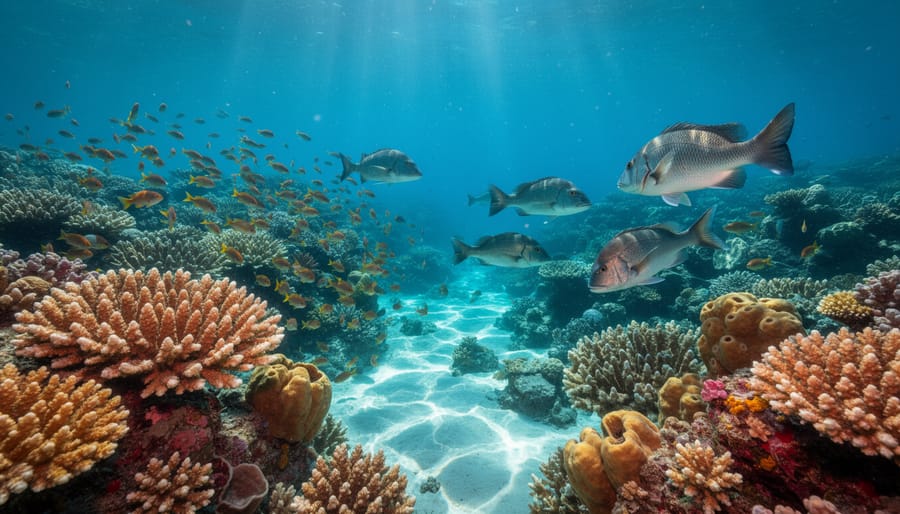
The Gulf Council oversees a comprehensive suite of fishery management plans that collectively govern dozens of economically and ecologically important species. These plans represent the backbone of federal fisheries stewardship in Gulf waters, each one tailored to address the unique biology, fishery characteristics, and conservation challenges of different species groups.
The Reef Fish Fishery Management Plan stands as perhaps the Council’s most complex and consequential framework, covering more than 30 species including red snapper, various grouper species, greater amberjack, gray triggerfish, and hogfish. Red snapper management alone has sparked decades of intensive scientific study and heated stakeholder debate, as the species supports both vibrant commercial and recreational fisheries while requiring careful harvest controls to maintain rebuilding gains. The plan establishes species-specific catch limits, seasonal closures, size restrictions, and gear requirements designed to prevent overfishing while allowing sustainable harvest.
Grouper management under this plan presents its own set of challenges. The Council regulates shallow-water groupers like gag and red grouper separately from deepwater species such as yellowedge grouper and warsaw grouper, recognizing that these fish occupy different habitats, mature at different rates, and face distinct fishing pressures. Greater amberjack regulations must account for this species’ migratory patterns and the fact that it supports fisheries across state and federal boundaries.
| Species Group | Management Plan | Key Regulations | Primary Conservation Focus |
|---|---|---|---|
| Red Snapper, Grouper, Amberjack | Reef Fish FMP | Catch limits, size minimums, seasonal closures, gear restrictions | Rebuilding overfished stocks, habitat protection |
| Shrimp (Brown, White, Pink) | Shrimp FMP | Effort controls, turtle excluder devices, seasonal closures, bycatch reduction | Minimizing bycatch, protecting juveniles |
| King Mackerel, Spanish Mackerel, Cobia | Coastal Migratory Pelagics FMP | Trip limits, minimum sizes, commercial quotas, recreational bag limits | Cross-jurisdictional coordination, accounting for migrations |
| Spiny Lobster | Spiny Lobster FMP | Size limits, trap restrictions, seasonal closures | Protecting spawning stock, gear impacts |
The Coastal Migratory Pelagics Fishery Management Plan addresses highly mobile species including king mackerel, Spanish mackerel, and cobia. Because these fish migrate extensively along the Gulf and Atlantic coasts, the Council coordinates this plan with its South Atlantic counterpart. Management measures include separate quotas for different geographical zones and fishing sectors, reflecting the reality that these species cross state and regional boundaries throughout their life cycles.
The Shrimp Fishery Management Plan governs the Gulf’s most valuable commercial fishery by landed weight. Rather than setting catch limits like finfish plans, shrimp management focuses on effort controls, seasonal timing to allow shrimp to reach marketable sizes, and critically important bycatch reduction requirements. Turtle excluder devices and bycatch reduction devices in shrimp trawls have dramatically reduced impacts on sea turtles and finfish, demonstrating how gear technology can advance both conservation and industry interests.
The Council is actively considering modifications to stock catch limits, jurisdictional apportionment between states, and regional allocations across these plans, reflecting the adaptive nature of science-based management as new data emerges and conditions change.
How Stakeholder Engagement Shapes Policy
The Four-Day Council Meeting Process
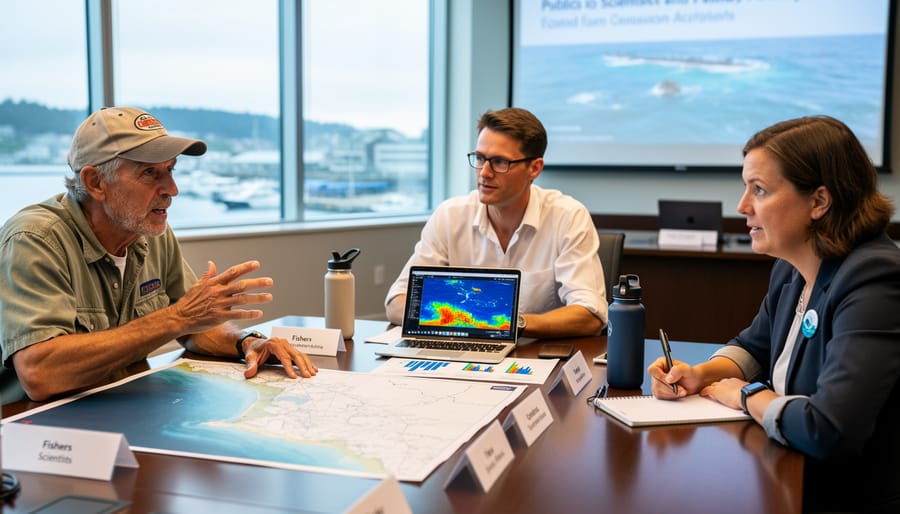
The Council convenes approximately five times per year for four-day sessions that combine scientific review, stakeholder input, and policy deliberation. These meetings follow a structured format designed to ensure thorough examination of every proposed action affecting Gulf fisheries in the exclusive economic zone.
Day one typically begins with presentations from the Council’s Scientific and Statistical Committee, which reviews stock assessments and recommends catch limits based on the latest data. Committee scientists explain their methodology, uncertainty estimates, and confidence levels for each stock under consideration. The Advisory Panel, composed of commercial fishers, charter boat captains, recreational anglers, and conservation advocates, then offers perspectives on how proposed measures would affect operations on the water.
Days two and three focus on deliberating specific management actions. Council members work through agenda items systematically, hearing public testimony on each proposed amendment or regulatory change. Members ask questions, debate trade-offs, and consider whether modifications to stock catch limits, jurisdictional apportionment, or regional allocations best serve conservation goals while supporting fishing communities.
The final day centers on voting. Each proposed action receives a motion, discussion, and recorded vote from the voting members representing the five Gulf states and federal agencies. Approved measures move forward to NOAA Fisheries for regulatory implementation, including formal public comment periods before final rules take effect.
These meetings are open to the public, with written comments accepted before and after each session, ensuring transparency throughout the decision-making process.
Balancing Conservation with Economic Reality
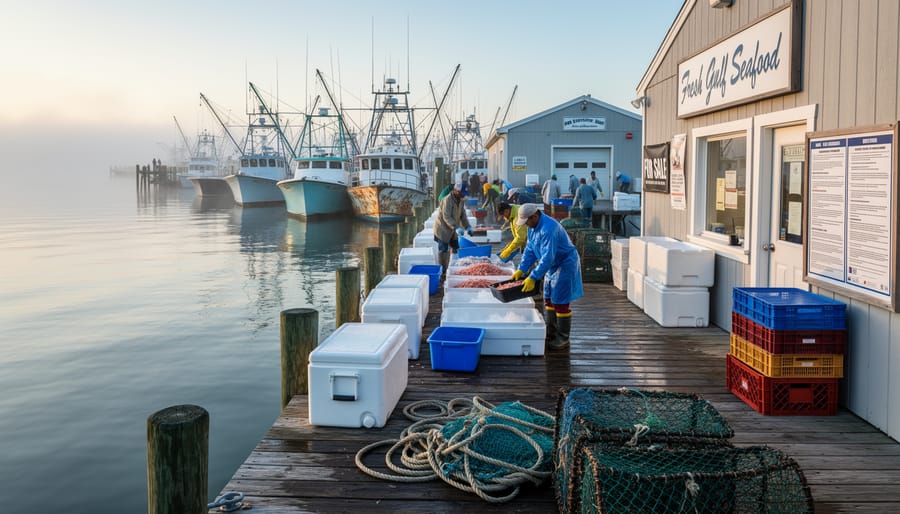
The Gulf Council navigates one of the most complex challenges in marine resource management: ensuring fish populations thrive for generations while protecting the livelihoods of thousands who depend on the Gulf’s waters. Commercial fishing operations, recreational charter businesses, seafood processors, and coastal communities all rely on healthy fisheries, yet overfishing threatens the very foundation of these economies. When the Council sets annual catch limits or closes areas to protect spawning aggregations, the immediate economic impact can feel severe to fishing families who’ve worked these waters for generations.
This tension plays out in jurisdictional apportionment decisions, where the Council must allocate fishing quotas between states and determine how much each sector, commercial versus recreational, can harvest. A reduction in red snapper quota might mean fewer charter trips in Alabama or reduced landings for Louisiana commercial fleets. The Council weighs extensive economic data alongside biological assessments, recognizing that regulations affecting one state’s allocation ripple through its entire coastal economy.
The challenge intensifies because conservation measures often require short-term sacrifice for long-term gain. Restricting harvest today to rebuild an overfished stock means economic hardship now, even as it promises sustainable yields in future years. Different sectors experience these trade-offs differently: recreational anglers might face shorter seasons, while commercial fishers contend with lower quotas or gear restrictions that increase operational costs.
Yet this balance reflects the fundamental sustainability pillars that guide responsible resource use. The Council’s approach acknowledges that fishing communities cannot prosper without healthy fish populations, and marine ecosystems cannot recover without economic systems that support conservation-minded fishing practices. When stock assessments show a species recovering, the Council can increase catch limits, demonstrating how science-based management creates opportunities rather than just imposing restrictions. The work remains difficult, requiring constant negotiation between ecological necessity and economic reality, but it represents the only viable path toward fisheries that sustain both people and ocean life.
Current Challenges Facing Gulf Fisheries
The Gulf Council faces an evolving set of challenges that test the limits of traditional fisheries management. Climate change stands out as the most pervasive threat, reshaping the Gulf’s marine environment in ways that demand urgent adaptation. Rising water temperatures are shifting the distribution of commercially important species, pushing some fish populations into deeper waters or farther north than historical patterns would predict. These movements complicate stock assessments and blur the lines of jurisdictional authority that have guided management for decades.
Habitat degradation continues to undermine the foundation of healthy fisheries. Coastal development, nutrient runoff, and wetland loss have damaged critical spawning and nursery grounds that young fish depend on. The Council must weigh whether stricter harvest limits can compensate for habitat that no longer functions as it should, or whether recovery demands parallel investments in restoration that fall outside its direct authority.
Invasive species pose another mounting concern. Non-native organisms can outcompete native fish for food and habitat, disrupting the ecological relationships that managers have worked to understand. The Council is exploring how governance structures designed for native species can incorporate the unpredictable impacts of invaders that weren’t part of the original management equation.
Several Gulf stocks remain overfished or are rebuilding from past overexploitation, requiring the Council to maintain strict catch limits even when fishing communities push for relief. Red snapper, gag grouper, and other species need time to recover, but extending rebuilding timelines means lost income for fishers and difficult conversations about who bears the economic burden of past mistakes.
Emerging technologies offer some hope for better monitoring and enforcement. AI and blockchain systems could improve catch reporting accuracy and help managers track fishing effort in real time, reducing the lag between data collection and policy response. The Council is evaluating how these tools might strengthen compliance without imposing unworkable costs on small-scale operators.
These challenges share a common thread: they demand that the Council move faster, think more flexibly, and coordinate more broadly than ever before. Governance structures built for relatively stable ecosystems must now accommodate rapid change while maintaining the stakeholder trust that makes management possible.
Success Stories: When Management Works
Science-based management delivers tangible results when given time to work. The Gulf of Mexico’s fisheries demonstrate how sustained commitment to conservation policies can reverse population declines and restore ecosystem balance, benefiting both marine life and the communities that depend on these resources.
Red snapper stands as one of the Council’s most striking recovery stories. Once severely depleted in the 1980s, this iconic species has rebounded through strict catch limits, seasonal closures, and rebuilding targets developed by the Council and implemented by NOAA Fisheries. Population assessments now show biomass levels approaching healthy targets, allowing gradual expansion of fishing seasons while maintaining conservation gains. Commercial operations and recreational anglers alike benefit from this careful calibration of harvest pressure.
Gag grouper populations have similarly responded to targeted management interventions. After assessments revealed declining spawning stock, the Council implemented size limits, bag restrictions, and seasonal closures during critical spawning periods. These measures protected breeding populations during vulnerable life stages, and recent stock assessments show promising signs of stabilization. The approach demonstrates how timing restrictions can protect reproduction without eliminating fishing opportunity entirely.
The shrimp fishery showcases how technology integration supports both conservation and industry viability. Turtle excluder devices, required on shrimp trawls since the 1990s, dramatically reduced sea turtle bycatch while maintaining productive shrimp harvests. This innovation proved that gear modifications could address unintended impacts without destroying fishing businesses.
These successes emerge from collaborative processes where scientists, fishers, and advocates, including women in conservation leadership, work through complex trade-offs together. The Council’s transparent meeting structure and stakeholder engagement create buy-in for difficult decisions, building trust that regulations serve legitimate conservation goals rather than arbitrary restrictions.
Recovery doesn’t happen overnight. These case studies span decades of consistent management, demonstrating that patience and adaptive approaches yield sustainable fisheries. The Gulf’s improving stocks prove that science-driven policies work when stakeholders remain committed through the recovery timeline.
How You Can Support Sustainable Gulf Fisheries
You don’t need to be a fisheries scientist or professional angler to make a difference. The Council’s management decisions ultimately succeed or fail based on public engagement, and your voice matters whether you’re a coastal resident, a concerned citizen, or someone who simply enjoys Gulf seafood.
The most direct way to influence fisheries policy is participating in public comment periods coordinated by NOAA Fisheries. When the Council considers new regulations or amendments to management plans, they open these proposals for review. You can submit written comments through the Council’s website or attend their four-day meetings to speak during designated public testimony sessions. These aren’t formalities, Council members genuinely weigh stakeholder input when making final decisions about catch limits, seasonal closures, and conservation measures.
Your everyday choices create market signals that shape fishing practices. Look for Gulf seafood certified by sustainable fisheries programs, ask questions at fish counters about where and how seafood was caught, and support restaurants committed to responsible sourcing. When consumers demand sustainably harvested fish, commercial operations respond by adopting practices that align with the Council’s conservation goals.
Volunteer opportunities let you contribute directly to the science informing management decisions:
- Join citizen science programs monitoring fish populations, water quality, and habitat conditions along the Gulf coast
- Participate in annual fish counts and reef surveys that provide data for stock assessments
- Attend Council meetings as an observer to learn how decisions are made and identify where your expertise could help
- Subscribe to the Marine Biodiversity Science Center’s e-network for updates on Gulf conservation initiatives and upcoming comment periods
- Connect with local fishing communities and conservation groups working on habitat restoration projects
The Center offers educational programs specifically focused on Gulf marine ecosystems, training volunteers in monitoring techniques and providing platforms to share findings with researchers. These hands-on experiences deepen your understanding of fisheries challenges while building the community networks essential for long-term conservation success.
Stay informed about Council actions by following their meeting schedules and reviewing proposed amendments to Fishery Management Plans. Even if you can’t attend meetings in person, webcast recordings and written summaries keep you current on regulatory changes affecting Gulf fisheries in the exclusive economic zone. Knowledge translates to influence when you understand the issues well enough to submit meaningful comments or discuss them within your community.
The future of Gulf fisheries isn’t predetermined, it’s shaped every day by the collective choices of scientists, policymakers, fishing communities, and people like you. When these groups work together through transparent processes and science-based decision-making, remarkable progress becomes possible. The Council’s management measures have already demonstrated that depleted fish populations can recover, damaged ecosystems can heal, and fishing communities can thrive when we commit to long-term sustainability over short-term gains.
What makes the Gulf Council’s approach work isn’t just the quality of stock assessments or the rigor of regulations. It’s the recognition that effective governance requires diverse perspectives. Commercial fishers bring practical knowledge from years on the water. Recreational anglers understand what healthy fisheries mean for coastal communities. Marine scientists provide the data that grounds decisions in ecological reality. Conservation advocates ensure we’re protecting not just individual species but entire marine ecosystems. And engaged citizens remind us why this work matters, because our oceans belong to everyone, and their health affects us all.
Your involvement strengthens this process. Attend public comment periods when the Council considers new regulations. Choose sustainable seafood that supports responsible fishing practices. Join the Marine Biodiversity Science Center’s e-network to stay informed about Gulf conservation efforts. Volunteer with marine monitoring programs that contribute vital data to management decisions. Every action, however small, reinforces the collaborative foundation that makes science-based fisheries management possible. Together, we’re not just preserving seafood availability, we’re protecting the incredible biodiversity that makes the Gulf of Mexico one of the world’s most productive and resilient marine ecosystems.

jessica
Ava Singh is an environmental writer and marine sustainability advocate with a deep commitment to protecting the world's oceans and coastal communities. With a background in environmental policy and a passion for storytelling, Ava brings complex topics to life through clear, engaging content that educates and empowers readers. At the Marine Biodiversity & Sustainability Learning Center, Ava focuses on sharing impactful stories about community engagement, policy innovations, and conservation strategies. Her writing bridges the gap between science and the public, encouraging people to take part in preserving marine biodiversity. When she’s not writing, Ava collaborates with local initiatives to promote eco-conscious living and sustainable development, ensuring her work makes a difference both on the page and in the real world.