Marine Biodiversity Science Center

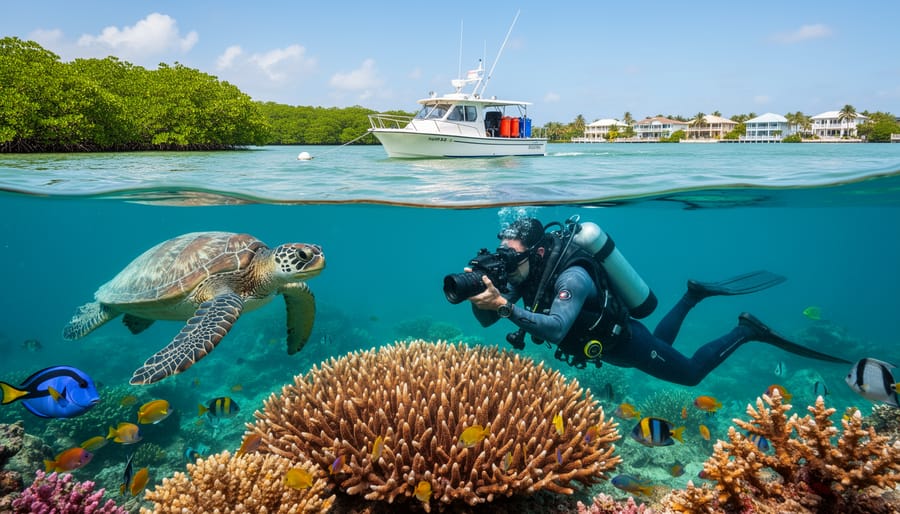
Florida’s coastal waters harbor the only living coral reef system in the continental United States, making the state a crucial frontier for marine research that directly impacts global ocean health. Every day, scientists across Florida’s 1,350 miles of coastline work to decode the mysteries of marine ecosystems facing unprecedented challenges—from coral bleaching events to sea grass die-offs, from manatee population dynamics to the behavior of migrating sea turtles.
This research matters far beyond academic publications. The discoveries made in Florida’s waters inform conservation policies, restore damaged habitats, protect endangered species, and safeguard coastal communities from storm surge and erosion. When researchers identify a disease affecting stone crabs, local fishing economies depend on their findings. When marine biologists track red tide patterns, public health officials use that data to protect beachgoers. The connection between rigorous science and everyday life is immediate and measurable.
Florida’s unique position as a marine research hub stems from its extraordinary biodiversity. The state’s waters host three distinct marine environments—the Atlantic Ocean, the Gulf of Mexico, and the Florida Keys—each supporting different species and facing distinct threats. This diversity creates natural laboratories where scientists can study everything from deep-sea ecosystems to shallow mangrove forests, from cold-water springs to warm tropical reefs.
Whether you’re an environmental scientist seeking cutting-edge research, a student exploring career paths, or simply someone who cares about ocean health, Florida’s marine research community offers compelling stories of discovery and clear opportunities for involvement. The work happening here today shapes the future of our oceans—and everyone has a role to play in supporting it.
The Living Laboratory: Why Florida Matters for Marine Science
Florida’s Marine Biodiversity at a Glance
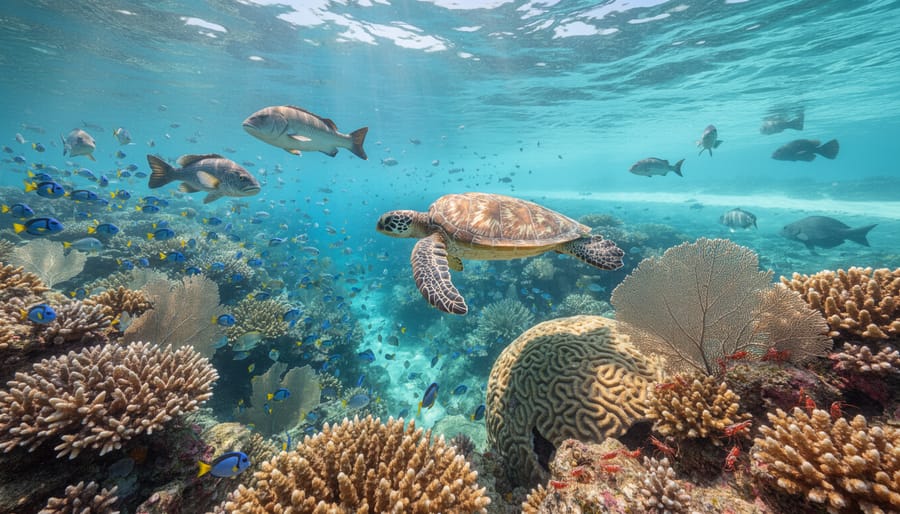
Florida’s waters harbor an extraordinary tapestry of marine life, creating a natural laboratory that draws researchers from around the globe. The state’s unique position as a meeting point between tropical and temperate waters, combined with diverse habitats ranging from shallow seagrass meadows to deep offshore canyons, supports ecosystems found nowhere else on Earth.
The Florida Reef Tract stands as the only living coral barrier reef in the continental United States, stretching over 350 miles and providing critical habitat for more than 500 fish species and countless invertebrates. Scientists focus intensively on threatened elkhorn and staghorn corals, working to understand their resilience to warming waters and disease outbreaks that have devastated populations in recent decades.
Florida’s seagrass beds, covering approximately 2.7 million acres, represent another research priority. These underwater meadows serve as nurseries for commercially important species like snook, redfish, and stone crabs while supporting the state’s iconic manatee population. With fewer than 8,500 manatees remaining, researchers track these gentle giants to understand their habitat needs and reduce human-caused mortality.
The state also hosts significant populations of five sea turtle species, all protected under federal law. Loggerheads, greens, and leatherbacks nest along Florida beaches in numbers that make the state a global hotspot for sea turtle research and conservation.
Beyond charismatic species, Florida’s mangrove forests and estuarine systems support endemic fish populations and serve as critical buffers against coastal storms. Marine biologist Dr. Sarah Chen notes, “Every time we survey Florida’s waters, we discover new species interactions and realize how interconnected these ecosystems truly are. It’s both humbling and inspiring.”
Research Institutions Leading the Way
Florida’s thriving marine research landscape is anchored by several world-class institutions dedicated to understanding and protecting our ocean ecosystems. The Mote Marine Laboratory, with locations in Sarasota and the Florida Keys, focuses on coral reef restoration, red tide research, and sea turtle conservation. Their innovative coral spawning programs have successfully reintroduced thousands of corals back into Florida’s waters, and they frequently welcome volunteers to assist with hands-on conservation projects.
The University of Florida’s Institute of Food and Agricultural Sciences operates coastal research facilities studying fisheries management, aquaculture, and water quality. Meanwhile, Nova Southeastern University’s Oceanographic Center conducts cutting-edge research on deep-sea ecosystems and marine biodiversity. The Florida Fish and Wildlife Conservation Commission’s Fish and Wildlife Research Institute provides critical data that shapes state conservation policies, monitoring everything from manatee populations to seagrass health.
These institutions don’t work in isolation. They collaborate with each other, with local communities, and with citizen scientists who contribute valuable observations. Whether you’re a student considering marine science, an educator seeking resources, or simply someone passionate about ocean conservation, these centers offer pathways to engage with meaningful research that directly impacts Florida’s coastal future.
When Oceans Thrive, Communities Flourish
The Economic Lifeline: Fishing and Tourism
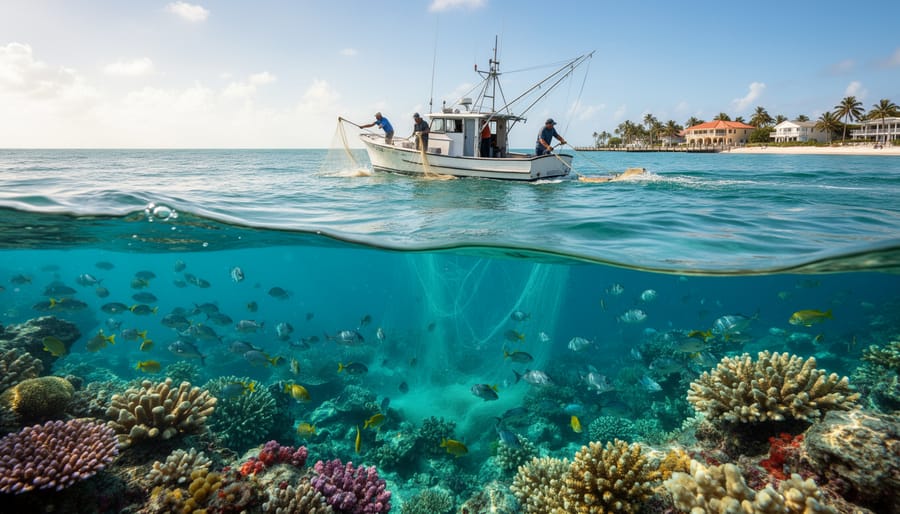
Florida’s marine ecosystems generate over $20 billion annually through commercial and recreational fishing, sport diving, and coastal tourism. These thriving industries depend entirely on healthy ocean habitats that marine research works diligently to protect and restore.
The state’s commercial fishing sector employs thousands of Floridians, with species like grouper, snapper, and stone crab forming the backbone of many coastal communities. When marine researchers monitor fish populations and water quality, they provide essential data that helps maintain sustainable harvests for future generations. Dr. Sarah Chen, a fisheries biologist working along the Gulf Coast, shares that “every data point we collect helps fishing families plan their futures with confidence.”
Coastal tourism similarly relies on pristine waters and abundant marine life. Visitors flock to Florida’s shores for snorkeling, diving, and wildlife watching experiences worth billions in annual revenue. When coral reefs thrive and sea turtle populations rebound thanks to research-driven conservation, hotels, restaurants, and tour operators prosper alongside nature.
Collaboration between researchers and ocean conservation groups strengthens these economic benefits while ensuring environmental sustainability. Community members can support this vital connection by participating in citizen science programs, choosing sustainable seafood, and volunteering with local marine conservation initiatives that protect both livelihoods and ocean health.
Food Security and Public Health
Florida’s marine research plays a vital role in protecting both ocean ecosystems and the health of coastal communities. Sustainable fisheries management, informed by ongoing scientific studies, ensures that local populations have continued access to nutritious seafood while preserving fish stocks for future generations. Researchers monitor species populations, breeding patterns, and harvest levels to establish guidelines that support both commercial fishing operations and community food security.
Water quality research addresses critical public health concerns, particularly the increasing frequency of harmful algal blooms along Florida’s coastlines. These blooms, often called red tides, produce toxins that contaminate shellfish and release airborne irritants affecting respiratory health. Marine scientists collect samples, track bloom patterns, and develop early warning systems that alert communities to potential dangers.
Dr. Sarah Chen, a marine toxicologist with the Florida Coastal Research Institute, shares her motivation: “Every water sample we test could prevent someone from consuming contaminated seafood. We’re protecting families while gathering data that helps us understand how to prevent future blooms.”
Volunteers assist researchers by reporting bloom sightings and collecting basic water samples from accessible locations. These citizen science efforts expand monitoring coverage across Florida’s extensive coastline, creating a protective network that safeguards both marine life and human health.
Natural Protection: Ecosystems as Infrastructure
Florida’s coastal ecosystems function as natural infrastructure, providing essential protection that human-built structures simply cannot match. Mangrove forests, with their dense root systems, act as wave breakers during storms, reducing surge impact by up to 25 feet over just half a mile of forest. Research conducted by Florida marine scientists has documented how these tangled roots dissipate energy from approaching waves while trapping sediment that would otherwise erode beaches and shorelines.
Coral reefs serve as the ocean’s first line of defense, breaking wave energy before it reaches shore. Studies show healthy reefs can reduce wave energy by 97%, protecting coastal properties worth billions of dollars. Recent research initiatives track how reef restoration efforts enhance this protective capacity, with transplanted corals creating broader barriers within just a few years.
Scientists emphasize that protecting these ecosystems costs far less than building seawalls or replacing eroded beaches. Communities can support this natural infrastructure through volunteer reef monitoring programs and mangrove restoration projects, turning conservation into a practical investment in coastal resilience.
Groundbreaking Research Protecting Florida’s Waters
Coral Restoration: Race Against Time
Florida’s coral reefs face an unprecedented crisis, with rising ocean temperatures and stony coral tissue loss disease devastating these vital ecosystems. Yet researchers refuse to accept defeat. Across the state, scientists have developed groundbreaking coral restoration programs that offer genuine hope for recovery.
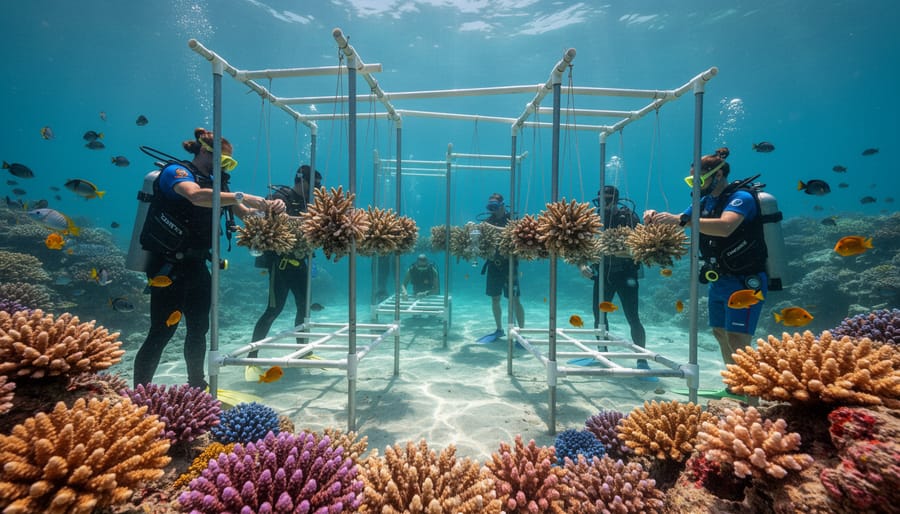
At Mote Marine Laboratory’s offshore coral nurseries, scientists cultivate thousands of coral fragments using innovative techniques. These underwater gardens grow disease-resistant coral strains that can better withstand warming waters. Once mature, trained volunteers help transplant these corals back onto damaged reefs, creating living monuments to conservation.
The Coral Restoration Foundation operates the world’s largest coral nursery in the Florida Keys, where marine biotechnology innovations help identify resilient coral genetics. Their research has shown that certain coral genotypes can survive conditions that kill others, offering a blueprint for future reef resilience.
Dr. Sarah Chen, a coral disease specialist, shares her optimism: “Every coral we plant is a seed of hope. Our volunteers often tell us that hands-on restoration transforms their understanding of ocean conservation.”
Want to join the effort? Organizations throughout Florida welcome volunteers for coral planting expeditions, requiring only basic swimming skills and a passion for ocean health. These programs prove that collective action can turn the tide for our reefs.
Combating Red Tide and Harmful Algal Blooms
Florida’s persistent battles with red tide and harmful algal blooms (HABs) have catalyzed groundbreaking research efforts across the state. These toxic blooms, primarily caused by the microscopic alga Karenia brevis, release brevetoxins that kill fish, sicken sea turtles and manatees, and cause respiratory problems in humans along affected beaches.
Scientists at facilities including Mote Marine Laboratory and the Fish and Wildlife Research Institute are developing innovative early warning systems that combine satellite imagery, water sampling, and artificial intelligence to predict bloom formation and movement. This research enables coastal communities to prepare for impacts and helps fisheries managers protect vulnerable marine resources.
Prevention strategies being explored include nutrient pollution reduction, as excess nitrogen and phosphorus from stormwater runoff, septic systems, and agricultural operations can fuel bloom growth. Researchers are also testing biological controls and compounds that might neutralize toxins without harming other marine life.
Dr. Cynthia Heil, who has studied Florida’s HABs for over two decades, emphasizes the importance of citizen science in tracking blooms. “Our volunteers provide critical observations from areas we can’t monitor daily,” she explains. Community members can join HAB monitoring networks, reporting bloom sightings and collecting water samples under researcher guidance.
These collaborative efforts are essential for protecting both marine ecosystems and coastal economies that depend on healthy waters. Understanding and mitigating harmful algal blooms represents one of Florida’s most pressing marine conservation challenges.
Sea Turtle Recovery Programs
Florida’s sea turtle populations have experienced remarkable recovery thanks to decades of dedicated research and conservation. Five species nest along Florida’s coastlines—loggerhead, green, leatherback, hawksbill, and Kemp’s ridley—making the state’s beaches some of the most important nesting habitats in North America.
Long-term monitoring programs track nesting patterns, hatching success rates, and population trends across hundreds of miles of shoreline. Researchers tag nesting females, allowing them to follow individual turtles throughout their lifetimes and understand migration patterns. This data has been instrumental in identifying critical habitats and implementing protective measures like lighting ordinances near nesting beaches and seasonal beach access restrictions.
Dr. Maria Santos, who has monitored sea turtles for fifteen years along the Gulf Coast, recalls a particularly moving experience: “I tagged a juvenile green turtle in 2008, and we encountered her again last year, returning to nest for the first time. Seeing that full life cycle complete reminded me why this work matters—every turtle we protect today contributes to future generations.”
The numbers tell a hopeful story. Loggerhead nesting has increased significantly since the 1990s, and green turtle populations continue their upward trajectory. These successes demonstrate how sustained research combined with community involvement creates measurable conservation victories.
Volunteers play a vital role in these programs, participating in nighttime patrols during nesting season and helping relocate nests threatened by erosion or development.
Community-Powered Conservation: Your Role in Marine Research
Volunteer Opportunities That Make a Difference
Florida’s marine research community welcomes volunteers of all backgrounds and experience levels, offering meaningful ways to contribute to ocean conservation while gaining hands-on experience. Whether you’re a student exploring career paths or simply passionate about protecting coastal ecosystems, there’s a place for you in these impactful programs.
Beach cleanup initiatives through organizations like Coastal Conservation Association Florida and local research institutions provide entry-level opportunities that directly improve marine habitats. Volunteers collect not only trash but also valuable data on pollution patterns, helping scientists track ocean health trends and advocate for policy changes.
Sea turtle monitoring programs stand among the most popular volunteer activities along Florida’s coastline. During nesting season (May through October), trained volunteers conduct nighttime beach patrols, document nesting sites, and protect hatchlings as they make their journey to the ocean. Programs at Gumbo Limbo Nature Center, Sea Turtle Conservancy, and various state parks offer certification courses that prepare participants for these critical conservation roles.
For those interested in deeper scientific involvement, citizen science projects like Reef Check Florida and the Florida Fish and Wildlife Conservation Commission’s fish monitoring programs teach volunteers to identify species and collect standardized data underwater. These contributions expand research capacity far beyond what professional scientists could accomplish alone.
Seagrass and mangrove restoration projects provide another hands-on option, with volunteers planting nursery-grown specimens in degraded areas. These efforts yield tangible results you can literally watch grow, creating habitat for countless marine species while strengthening coastal resilience against storms. Most programs require no prior experience—just enthusiasm and a willingness to learn.
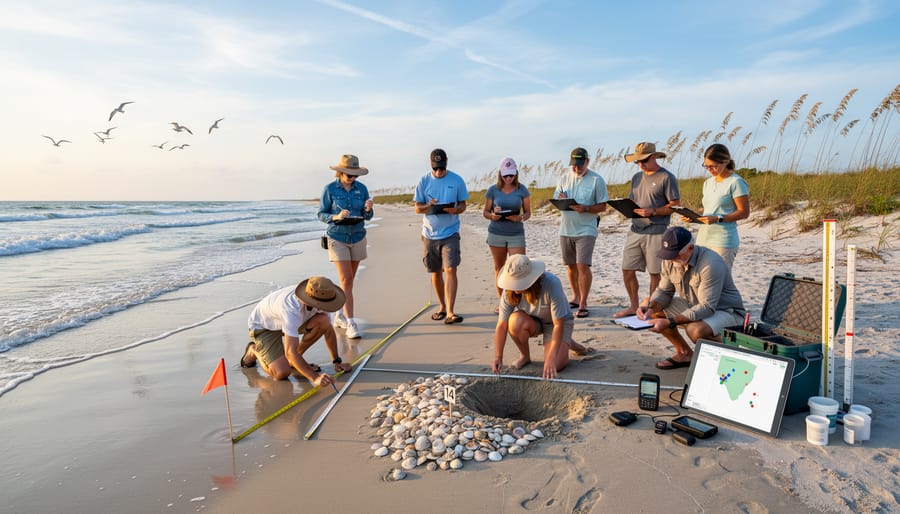
Citizen Science: Everyday People, Real Impact
You don’t need a marine biology degree to make meaningful contributions to Florida’s ocean science. Across the Sunshine State, innovative citizen science programs are transforming everyday beachgoers, anglers, and nature enthusiasts into valuable research partners.
One standout initiative is the FWC’s Fish and Wildlife Research Institute’s iNaturalist project, where participants photograph and identify marine species using a smartphone app. These observations help scientists track species distribution, detect invasive species, and monitor biodiversity changes in real-time. Since launching, volunteers have contributed thousands of verified observations that inform conservation decisions affecting coastal community health and ecosystem management.
Water quality monitoring programs like EarthEcho Water Challenge and local initiatives through organizations such as Tampa Bay Watch invite residents to test water samples at nearby beaches and estuaries. Volunteers collect data on temperature, pH, dissolved oxygen, and turbidity—information that proves essential for detecting pollution events and tracking environmental trends.
The Great Annual Fish Count mobilizes recreational divers to survey reef fish populations, while the Marine Mammal Stranding Network trains coastal residents to report and respond to distressed dolphins, manatees, and sea turtles. Each report contributes to understanding population health and migration patterns.
These programs demonstrate that impactful marine research doesn’t require lab coats or research vessels. Your weekend beach walk, fishing trip, or dive excursion can generate data that shapes conservation policy and protects Florida’s irreplaceable marine treasures for generations to come.
The Future of Florida’s Marine Ecosystems
Florida’s marine ecosystems stand at a crossroads, facing unprecedented challenges that demand innovative research and adaptive solutions. Climate change, sea-level rise challenges, and ocean acidification are reshaping the state’s coastal waters, but scientists are working tirelessly to understand these changes and develop strategies that benefit both marine life and human communities.
Rising ocean temperatures are already pushing some species to shift their ranges northward, while threatening temperature-sensitive organisms like coral reefs. Research teams across Florida are monitoring these migrations and developing heat-resistant coral strains through selective breeding programs. At the Mote Marine Laboratory, scientists have successfully grown coral varieties that can withstand warmer waters, offering hope for reef restoration efforts in coming decades.
Ocean acidification, caused by increased carbon dioxide absorption, poses another serious threat to shell-forming organisms and the food webs that depend on them. Florida researchers are establishing long-term monitoring stations to track pH changes and studying how different species adapt to more acidic conditions. This data is crucial for predicting which fisheries might be affected and helping coastal communities prepare for potential economic impacts.
Dr. Maria Santos, a marine ecologist in the Florida Keys, shares an optimistic perspective: “Every challenge we identify through research becomes an opportunity for intervention. We’re not just documenting decline; we’re engineering solutions.” Her team recently discovered that certain seagrass species show remarkable resilience to changing conditions, information that guides restoration site selection.
Public participation is vital to this forward-looking research. Citizen scientists can join water quality monitoring programs, contribute to species surveys, and help with habitat restoration projects. Organizations like the Florida Fish and Wildlife Conservation Commission coordinate volunteer opportunities ranging from weekend beach cleanups to multi-year data collection efforts. By combining cutting-edge science with community engagement, Florida is building resilience into its marine ecosystems for generations to come.
The future of Florida’s marine ecosystems rests not solely in the hands of researchers and policymakers, but in the collective actions of everyone who cherishes our coastal treasures. From the crystal-clear springs of the Gulf Coast to the vibrant coral reefs of the Keys, Florida’s marine environments are both remarkably resilient and profoundly vulnerable. The research being conducted across our state reveals a fundamental truth: healthy oceans and thriving communities are inseparable partners in our shared future.
Every data point collected, every restoration project completed, and every conservation success story demonstrates what becomes possible when science meets community engagement. Marine biologist Dr. Sarah Chen, who has studied sea turtle nesting patterns for two decades, often reminds volunteers that their beach surveys contribute to global conservation knowledge. “Each observation matters,” she says. “You become part of something larger than yourself.”
Getting involved is simpler than many realize. Opportunities abound for citizen scientists to participate in coral reef monitoring programs, join coastal cleanup initiatives, or contribute to wildlife tracking projects. Educational institutions throughout Florida welcome volunteers of all experience levels, offering training programs that transform curiosity into meaningful action.
The ocean’s health is our health. By supporting marine research through participation, advocacy, or simply spreading awareness, you become an essential thread in the conservation tapestry. Together, we can ensure that Florida’s marine wonders continue inspiring future generations, sustaining local economies, and reminding us of our profound connection to the natural world.

jessica
Ava Singh is an environmental writer and marine sustainability advocate with a deep commitment to protecting the world's oceans and coastal communities. With a background in environmental policy and a passion for storytelling, Ava brings complex topics to life through clear, engaging content that educates and empowers readers. At the Marine Biodiversity & Sustainability Learning Center, Ava focuses on sharing impactful stories about community engagement, policy innovations, and conservation strategies. Her writing bridges the gap between science and the public, encouraging people to take part in preserving marine biodiversity. When she’s not writing, Ava collaborates with local initiatives to promote eco-conscious living and sustainable development, ensuring her work makes a difference both on the page and in the real world.