Marine Biodiversity Science Center

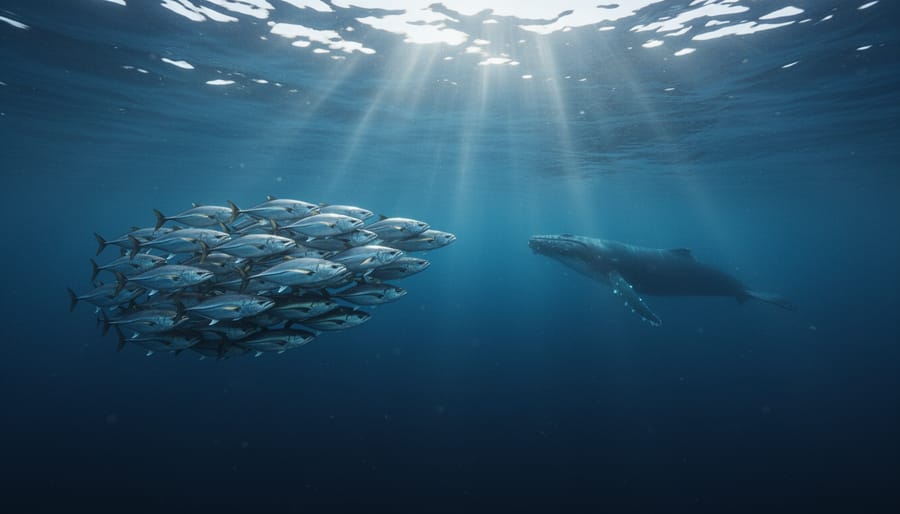
The open ocean pelagic zone is the vast, three-dimensional water column that extends from the ocean surface down to just above the seafloor, far from coastal boundaries and continental shelves. This immense habitat covers roughly 70 percent of Earth’s surface and contains 99 percent of the biosphere’s livable space by volume, making it the largest ecosystem on the planet. Yet despite its dominance, the pelagic zone remains one of the least understood and most underprotected environments we have.
What makes this zone remarkable is not just its scale but its vertical complexity. Life here exists in distinct layers, each defined by depth, light availability, temperature, and pressure. The sunlit epipelagic layer supports vibrant communities of phytoplankton, fish, and marine mammals. Below that, the twilight mesopelagic zone hosts one of Earth’s largest animal migrations as billions of creatures rise and fall daily. Deeper still, the bathypelagic and abyssopelagic layers harbor bizarre, pressure-adapted species in near-freezing darkness.
Understanding the pelagic zone matters now more than ever. This open-water system drives global nutrient cycling, absorbs atmospheric carbon dioxide, and sustains the migratory routes of whales, sea turtles, sharks, and tuna that cross entire ocean basins. Commercial fisheries depend on pelagic species for protein that feeds hundreds of millions of people. Climate change, plastic pollution, overfishing, and deep-sea mining threaten to disrupt processes we’re only beginning to map.
This article breaks down the pelagic zone’s structure, explains how energy and nutrients flow through its layers, identifies the ecological niches within each depth stratum, and connects this knowledge to real-world conservation challenges. Whether you’re a student beginning marine studies, a scientist tracking migratory species, or simply curious about what lies beyond the shore, grasping how the open ocean functions is the first step toward protecting it.
What the Open Ocean Pelagic Zone Means for Marine Life
The open ocean pelagic zone encompasses the entire water column away from both coastlines and the seafloor, creating the largest habitat on our planet. This three-dimensional realm stretches across approximately 70% of Earth’s ocean surface and extends from the sun-drenched surface down to just above the bottom sediments. Unlike the nutrient-rich coastal waters where kelp ecosystems thrive in shallow zones anchored to rock, or the benthic environment where organisms live on or burrow into the seafloor, the pelagic zone exists entirely within the open water itself.
- Pelagic Zone
- The open-water region of the ocean that exists away from the coast and seafloor, encompassing the entire water column from surface to deep layers. Derived from the Greek word pelagos, meaning “open sea.”
- Water Column
- The vertical section of ocean from surface to bottom, containing distinct layers of water with varying temperatures, light levels, and pressure conditions.
- Benthic Zone
- The ecological region at the lowest level of a body of water, including the sediment surface and sub-surface layers where bottom-dwelling organisms live.
- Coastal Waters
- The relatively shallow ocean areas near shore influenced by land runoff, tidal currents, and proximity to the continental shelf.
- Open Ocean
- The vast marine region beyond the continental shelves, characterized by deep water, minimal land influence, and distance from coastlines.
This distinction matters profoundly for migratory species conservation. Bluefin tuna cross entire ocean basins through pelagic waters during spawning migrations. Great white sharks traverse thousands of miles between coastal hunting grounds and mysterious open-ocean destinations. Leatherback sea turtles dive deep into the pelagic realm pursuing jellyfish, while humpback whales navigate its layers during annual journeys between feeding and breeding areas. Understanding the ocean species scale within this zone reveals just how many organisms depend on its health for survival.
The pelagic zone operates without fixed physical structure. Marine life here must swim continuously, drift with currents, or migrate vertically through the water column to find food, avoid predators, and complete life cycles. This fundamental difference from reef or coastal habitats shapes every aspect of pelagic ecology and makes protecting these interconnected open-water pathways essential for maintaining global marine biodiversity.
How the Pelagic Zone Functions as an Ecosystem
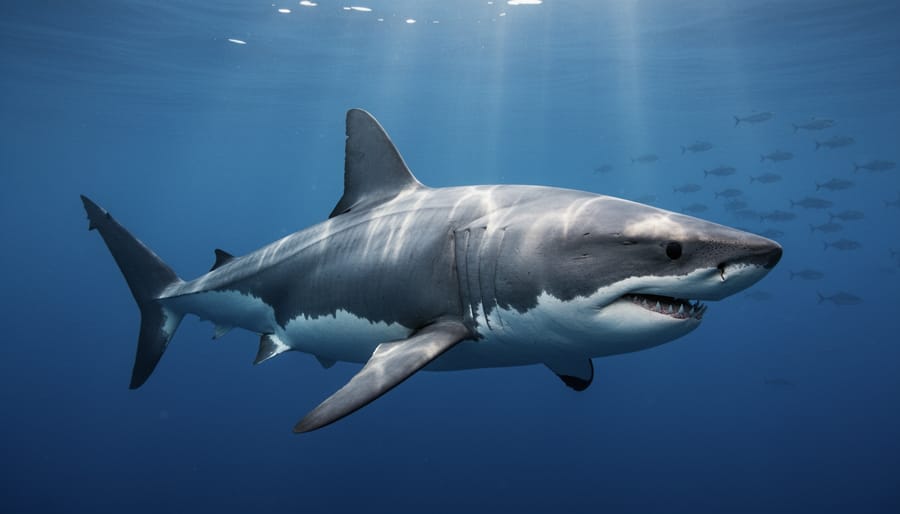
The Foundation: Phytoplankton and Primary Production
Every journey across the open ocean, whether by a humpback whale or a bluefin tuna, begins with organisms you can’t see without a microscope. Phytoplankton, microscopic algae drifting in sunlit surface waters, convert solar energy into organic matter through photosynthesis, producing roughly half the oxygen we breathe while forming the foundation of pelagic food webs.
These single-celled producers thrive in the epipelagic zone where sufficient sunlight penetrates. Species like diatoms and dinoflagellates multiply rapidly when nutrients are available, creating blooms visible from space. Their photosynthetic efficiency rivals terrestrial plants, yet they accomplish this while floating freely in the water column.
Without phytoplankton, the entire pelagic ecosystem collapses. Zooplankton graze on these microscopic algae, small fish consume the zooplankton, and progressively larger predators follow, creating the energy pathway that ultimately supports the great migrations we observe. When phytoplankton productivity declines due to nutrient depletion or warming waters, effects ripple upward through every trophic level, impacting migratory species thousands of miles away from where the disruption began.
Energy Transfer Through the Water Column
Energy flows through the pelagic zone in a remarkably efficient vertical cascade. Phytoplankton, those microscopic primary producers, are consumed by zooplankton, tiny drifting animals that range from single-celled organisms to thumbnail-sized crustaceans. These grazers convert plant energy into animal protein, becoming food for small fish like sardines, anchovies, and juvenile herring.
These forage fish form dense schools that attract larger predators: squid, mackerel, and medium-sized tuna. At the top of this food web sit apex migratory predators, bluefin tuna, mako sharks, and marlin, that can swim thousands of miles pursuing energy-rich prey.
This vertical energy transfer gets a daily boost from diel vertical migration, one of the ocean’s largest synchronized movements. Each night, billions of zooplankton and small fish rise from deeper waters toward the surface to feed on phytoplankton under cover of darkness. Before dawn, they descend again to escape visual predators. This migration pumps nutrients downward and provides feeding opportunities across multiple depth zones, connecting the sunlit surface to the twilight realm below and sustaining migratory species throughout their ocean journeys.
Vertical Layers of the Pelagic Zone
The Sunlit Epipelagic Zone
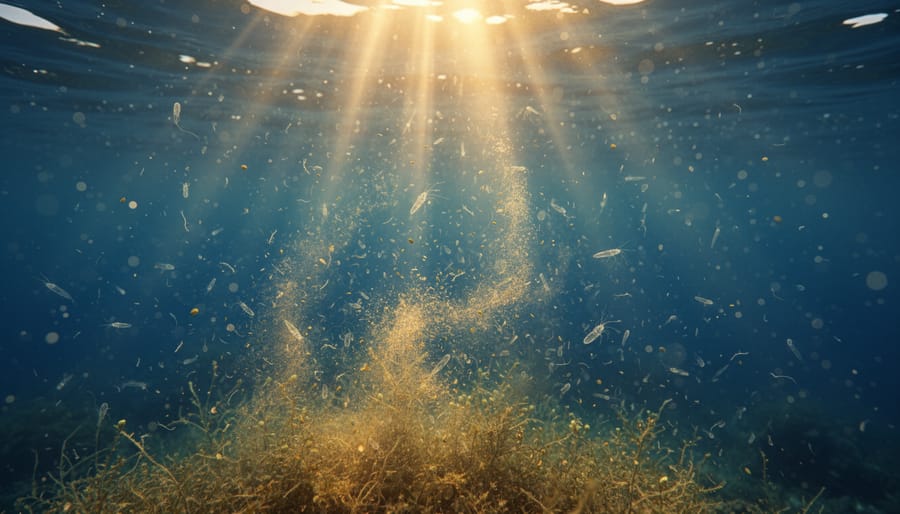
The epipelagic zone, stretching from the ocean surface down to roughly 200 meters, is the pelagic realm’s most productive layer. Here, sunlight penetrates with enough intensity to fuel photosynthesis, transforming phytoplankton into the foundation of the entire ocean food web. This abundant energy supports dense concentrations of zooplankton, small fish like sardines and anchovies, and the apex predators that follow them, bluefin tuna, sailfish, dolphins, and sea turtles all converge here to feed.
Unlike the biodiversity hotspots found in coral reef ecosystems the epipelagic zone’s richness lies in its sheer volume and productivity rather than structural complexity. It serves as a critical nursery for many species, where larvae and juveniles grow rapidly on plankton blooms. Surface-feeding behaviors dominate: whales lunge through krill swarms, seabirds plunge-dive for fish, and filter-feeders like manta rays glide with mouths agape, all capitalizing on the zone’s light-driven abundance.
The Twilight Mesopelagic Zone
Just beneath the sunlit surface lies the mesopelagic zone, stretching from 200 to 1,000 meters depth. Here, light fades to near darkness, creating what marine biologists call the twilight zone. Only about 1% of surface sunlight penetrates to 200 meters, and by 700 meters, darkness is nearly complete.
This dim environment has driven remarkable adaptations. Many fish produce bioluminescence through specialized organs, using light for hunting, communication, or camouflage. Others have evolved oversized eyes to detect the faintest flickers of movement. The sperm whale, one of the deepest-diving mammals, routinely descends into these depths on 45-minute hunts for giant squid. Leatherback sea turtles follow jellyfish populations here, diving deeper than any other sea turtle species.
The mesopelagic hosts enormous biomass, potentially exceeding all fish in shallower waters combined. It serves as crucial daytime refuge for billions of small fish and invertebrates that migrate vertically each night to feed in surface waters, then retreat here to avoid predators during daylight.
The Deep Zones: Bathypelagic and Beyond
Below 1000 meters, the ocean enters realms of perpetual darkness and crushing pressure. The bathypelagic zone (1000-4000m) exists in complete blackness, where temperatures hover near freezing and pressure reaches 100 times surface levels. Here, bioluminescent organisms create the only light, and specialized scavengers rely on marine snow, organic matter drifting down from upper layers.
Deeper still, the abyssopelagic (4000-6000m) and hadopelagic zones (below 6000m in oceanic trenches) seem inhospitable, yet they play crucial roles. Sperm whales dive to these depths hunting giant squid, with recorded dives exceeding 2000 meters. Beaked whales routinely reach similar depths, holding their breath for over an hour.
These deep zones function as the ocean’s carbon storage vault. Sinking organic matter sequesters carbon for centuries, helping regulate Earth’s climate. While sparse in life compared to surface waters, these depths harbor unique biodiversity and serve as essential feeding grounds for the most specialized deep-diving marine mammals on their migrations through pelagic waters.
Why the Pelagic Zone Matters for Conservation
Supporting Migratory Species Across Ocean Basins
The open ocean pelagic zone serves as a vast highway system for some of Earth’s most remarkable travelers. Bluefin tuna cross entire ocean basins, from spawning grounds in the Gulf of Mexico to feeding areas off Norway, relying on productive surface waters rich in small fish and squid. These apex predators can swim over 6,000 miles in a single year, following seasonal abundance patterns in the epipelagic zone.
Great white sharks undertake similar transoceanic journeys, diving repeatedly between surface waters and the mesopelagic zone to hunt prey at different depths. Satellite tracking reveals individuals traveling from California to Hawaii and back, depending on healthy pelagic ecosystems at every stage.
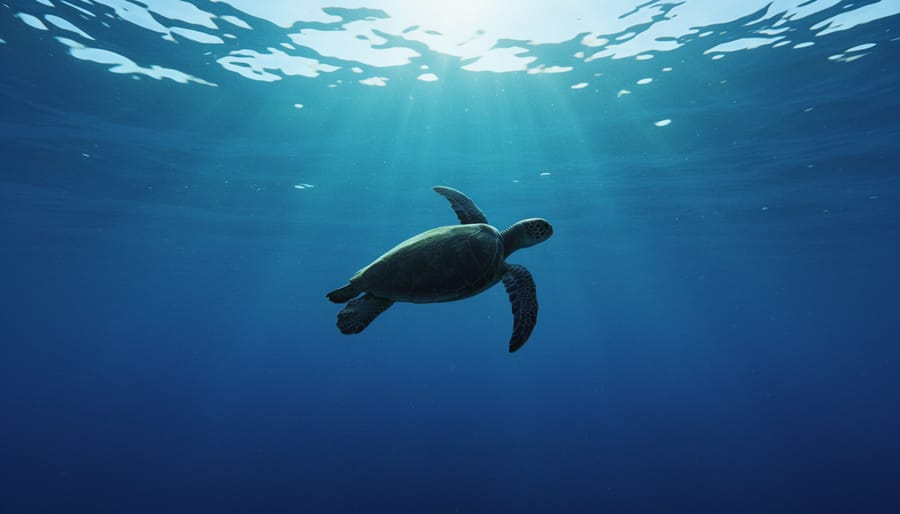
Loggerhead turtles spend decades in open water before returning to nest, feeding on jellyfish and other invertebrates throughout the water column. Humpback whales migrate up to 5,000 miles between polar feeding grounds and tropical breeding areas, timing their journeys to coincide with seasonal productivity blooms that support their massive energy needs.
When pelagic ecosystems degrade through overfishing, pollution, or warming waters, these migration corridors collapse, leaving species without critical feeding stations or safe passage routes between breeding and foraging habitats.
Human Uses and Economic Importance
The open ocean pelagic zone supports a global fishing industry valued at over $100 billion annually, with commercial fleets targeting tuna, billfish, and squid across international waters. These fisheries employ millions of people and provide protein for billions worldwide, yet many stocks face collapse without science-based catch limits and bycatch reduction. Pelagic ecotourism generates significant revenue through whale watching, shark diving, and sportfishing charters, creating economic incentives for conservation. The zone also hosts major shipping lanes that carry 90% of global trade and emerging offshore wind and wave energy installations. Balancing these economic uses with ecosystem health requires transparent governance, spatial planning that protects critical migration corridors, and enforcement of international agreements. Sustainable management isn’t just environmental stewardship, it’s economic necessity, ensuring the pelagic zone continues supporting both marine life and human livelihoods for generations.
Threats Facing the Open Ocean Pelagic Zone
The open ocean pelagic zone faces an alarming combination of threats that jeopardize migratory species and the entire marine ecosystem. Industrial fishing operations harvest over 80 million tons of pelagic fish annually, with longline fleets deploying lines stretching 60 miles or more, each bristling with thousands of baited hooks. Bycatch remains catastrophic: an estimated 300,000 whales, dolphins, and porpoises die in fishing gear each year, alongside millions of sharks, sea turtles, and seabirds. Overfishing has depleted bluefin tuna populations by more than 97% in some regions, while hammerhead sharks have declined by 90% in the Atlantic.
Plastic pollution transforms vast stretches of the pelagic zone into toxic soup. The Great Pacific Garbage Patch now covers an area twice the size of Texas, and microplastics permeate every layer of the water column. Sea turtles mistake floating bags for jellyfish, albatrosses feed plastic fragments to their chicks, and even deep-sea organisms ingest synthetic particles raining down from surface waters. This pollution disrupts ecosystems far beyond the concentrated harm seen in reef biodiversity hotspots, affecting creatures across thousands of miles.
Climate change drives multiple compounding stressors. Ocean temperatures have risen by an average of 1.2 degrees Celsius since pre-industrial times, forcing species to shift their ranges and disrupting migration patterns refined over millennia. Acidification threatens organisms with calcium carbonate shells at the food web’s base. Deoxygenation creates expanding dead zones where oxygen concentrations drop below levels needed to support most life, squeezing species into shrinking habitable spaces.
Noise pollution from shipping, seismic surveys, and military sonar interferes with whale communication and navigation. These sounds travel hundreds of miles underwater, masking the calls whales use to find mates and coordinate movements across ocean basins.
Dr. Sarah Chen, who has spent 15 years tracking blue whales in the Pacific, reflects on these challenges: “I’ve watched shipping lanes bisect critical feeding grounds and listened to underwater recordings where whale songs are drowned out by engine noise. Unlike protected coastal systems such as mangroves and biodiversity reserves, the high seas remain largely unregulated. We’re losing species we barely understand in waters no nation claims responsibility for protecting.”
How You Can Help Protect Pelagic Ecosystems
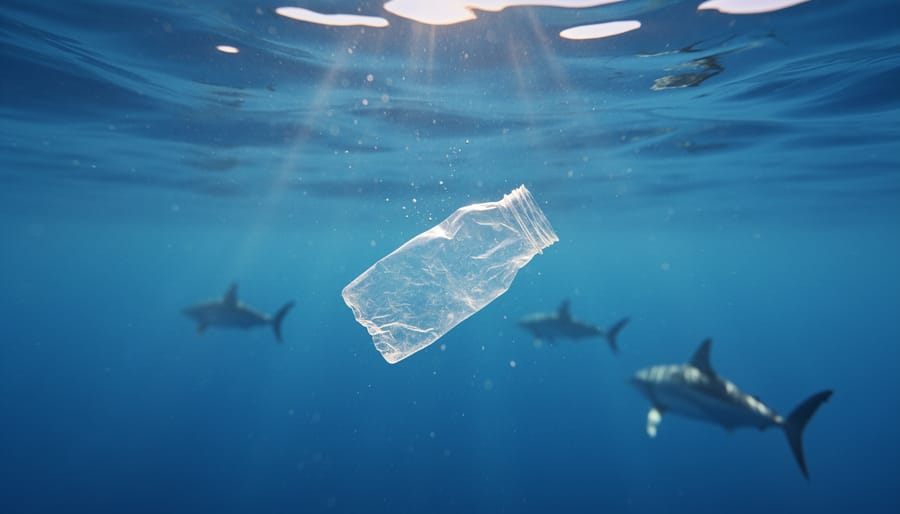
Protecting the open ocean pelagic zone starts with individual choices that collectively create significant impact. You can advocate for expanded marine protected areas in international waters by contacting your elected representatives and supporting organizations pushing for high-seas conservation treaties. The 2026 Global Ocean Treaty implementation offers unprecedented opportunities to protect critical migration corridors, and public pressure matters.
Reduce your plastic footprint by eliminating single-use plastics, properly disposing of fishing line and gear, and participating in beach cleanups that prevent debris from reaching pelagic waters. Even small actions help, since coastal pollution like salt marsh loss can disrupt the entire ocean ecosystem, affecting species that depend on healthy coastal nurseries before migrating to open waters.
Choose sustainable seafood by consulting guides from the Marine Stewardship Council or Ocean Wise, which identify fisheries using methods that minimize bycatch of sea turtles, sharks, and marine mammals. Ask questions at restaurants and grocery stores about sourcing practices.
Join citizen science initiatives that track migratory species. Programs like OCEARCH’s shark tagging project and Whale Alert allow you to contribute meaningful data. The Marine Biodiversity Science Center offers hands-on volunteer opportunities in 2026, including research expeditions monitoring pelagic species, data analysis projects you can complete remotely, and educational outreach programs teaching communities about ocean conservation. Visit our volunteer portal to explore current openings that match your skills and schedule.
Every action compounds. Whether you commit two hours monthly to data entry or join a weeklong research cruise, your participation advances the science protecting these vital ecosystems.
How The Open Ocean Pelagic Zone Works
The pelagic zone operates through an interconnected series of biological and physical processes that sustain life across thousands of miles of open water. At its core, the system runs on solar energy captured by microscopic phytoplankton in the sunlit surface layer. These tiny organisms convert sunlight and dissolved nutrients into organic matter through photosynthesis, producing roughly half of Earth’s oxygen in the process.
This energy then cascades upward through the food web. Zooplankton graze on phytoplankton, small fish consume zooplankton, and progressively larger predators feed on smaller ones, creating pathways that support everything from sardines to blue whales. Meanwhile, dead organisms, fecal matter, and other organic particles sink downward as “marine snow,” transporting carbon and nutrients into deeper layers.
Ocean currents act as the zone’s circulatory system, distributing heat, nutrients, and organisms across vast distances. Upwelling areas bring deep, nutrient-rich water to the surface, creating productive feeding grounds where migratory species congregate. The continuous mixing of water masses maintains chemical balance and replenishes depleted surface nutrients, keeping the entire system functioning season after season.
Types of The Open Ocean Pelagic Zone
The open ocean pelagic zone divides into five distinct vertical layers, each defined by depth, light availability, and the species adapted to survive there.
The epipelagic zone (0-200 meters) is the sunlit surface layer where photosynthesis occurs and most migratory species feed. Bluefin tuna, dolphins, and sea turtles frequent these warm, productive waters.
Below lies the mesopelagic zone (200-1,000 meters), also called the twilight zone. Here, diminishing light creates a realm of bioluminescent creatures and deep-diving predators like sperm whales hunting giant squid.
The bathypelagic zone (1,000-4,000 meters) exists in complete darkness under crushing pressure. Only specialized fish with slow metabolisms inhabit this cold, nutrient-poor layer.
Deeper still, the abyssopelagic zone (4,000-6,000 meters) covers the abyssal plains with near-freezing temperatures and sparse life.
Finally, the hadopelagic zone (below 6,000 meters) fills ocean trenches with Earth’s most extreme marine conditions, supporting uniquely adapted organisms rarely encountered by surface-dwelling species.
Each layer functions as a distinct habitat while remaining connected through vertical migration and nutrient cycling that sustains the entire pelagic ecosystem.
Common Questions About the Pelagic Zone
What’s the difference between pelagic and benthic zones?
The pelagic zone is the open water column where organisms swim or float freely, while the benthic zone is the ocean floor and the layer of water directly above it where bottom-dwelling creatures live. Pelagic species like tuna and dolphins move through water layers, whereas benthic organisms like crabs and sea stars inhabit the seafloor.
Why is the open ocean called a ‘blue desert’?
Scientists use this term because large stretches of the open ocean, particularly in subtropical gyres, have low nutrient concentrations and consequently low productivity compared to coastal waters. Though it appears barren, this zone still supports migratory species that travel vast distances to find productive feeding areas.
How deep do migratory species dive?
Dive depths vary dramatically by species: leatherback turtles regularly reach 1,200 meters, sperm whales can dive beyond 2,000 meters to hunt giant squid, while most tuna species stay within the top 500 meters. These diving capabilities allow species to access prey in different pelagic layers and avoid predators.
What percentage of ocean species live in the pelagic zone?
While precise counts remain incomplete, researchers estimate that roughly half of all marine species inhabit pelagic waters at some point in their life cycle. This includes everything from microscopic zooplankton to the largest animals on Earth, the great whales.
How does climate change affect pelagic ecosystems?
Rising temperatures shift species distributions toward the poles, ocean acidification weakens shells of planktonic organisms at the food web’s base, and expanding oxygen-depleted zones squeeze habitat for migratory fish and marine mammals. These changes disrupt migration patterns and reduce prey availability in areas where species have fed for millennia.
Can you visit the open ocean pelagic zone?
Yes, through whale-watching tours, research expeditions, and volunteer programs that let you experience this habitat firsthand. The Marine Biodiversity Science Center offers opportunities to join scientists studying migratory species in their pelagic habitat, giving you direct insight into conservation challenges facing the open ocean.
Understanding these fundamental aspects of the pelagic zone helps you grasp why protecting this vast habitat matters so urgently. Each question reveals a piece of the larger puzzle: how interconnected pelagic ecosystems are, why they’re vulnerable despite their size, and what makes them irreplaceable for species that cross entire ocean basins during their lives.
The open ocean pelagic zone stands as Earth’s largest and most vital marine habitat, sustaining the epic migrations of whales, sharks, turtles, and tuna that traverse entire ocean basins. Without this vast blue realm functioning properly, these species lose the feeding grounds, nurseries, and migration corridors they’ve depended on for millennia. Protecting the pelagic zone isn’t just about saving individual animals, it’s about maintaining the planetary systems that regulate our climate, produce oxygen, and feed hundreds of millions of people.
The good news? Conservation momentum is building. Scientists are mapping critical habitats with unprecedented precision, governments are negotiating high-seas protections, and communities worldwide are demanding sustainable ocean management. Every action matters, whether you’re choosing certified sustainable seafood, reducing single-use plastics, or sharing knowledge about pelagic ecosystems with others.
The Marine Biodiversity Science Center invites you to be part of this movement. Join our volunteer programs to contribute real data that shapes conservation policy. Participate in citizen science initiatives tracking migratory species. Support campaigns for expanded marine protected areas in international waters. Your involvement, combined with thousands of others taking similar steps, creates the collective force needed to safeguard these magnificent open-ocean ecosystems.
The pelagic zone has sustained life for millions of years. With informed action and shared commitment, we can ensure it thrives for generations to come.

jessica
Ava Singh is an environmental writer and marine sustainability advocate with a deep commitment to protecting the world's oceans and coastal communities. With a background in environmental policy and a passion for storytelling, Ava brings complex topics to life through clear, engaging content that educates and empowers readers. At the Marine Biodiversity & Sustainability Learning Center, Ava focuses on sharing impactful stories about community engagement, policy innovations, and conservation strategies. Her writing bridges the gap between science and the public, encouraging people to take part in preserving marine biodiversity. When she’s not writing, Ava collaborates with local initiatives to promote eco-conscious living and sustainable development, ensuring her work makes a difference both on the page and in the real world.