Marine Biodiversity Science Center

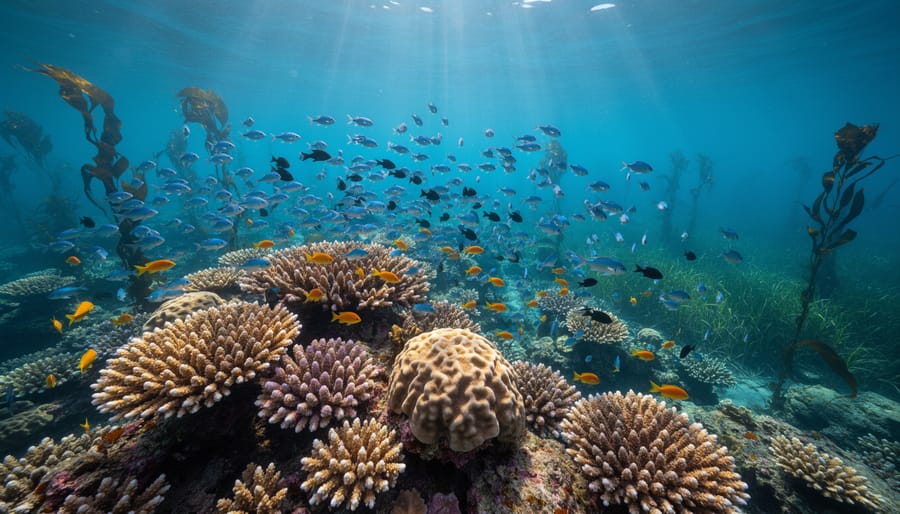
Sustainable fisheries management is the practice of harvesting fish and other seafood at a pace that lets populations replenish themselves, while protecting the marine ecosystems those species depend on. In plain terms, it means we take from the ocean today without emptying it for tomorrow.
That balance matters because fish stocks aren’t bottomless. When too many adults are removed before they can reproduce, populations shrink, food webs shift, and the coastal communities that rely on them lose both income and food. Done well, management keeps catches steady year after year and lets damaged habitats recover.
This article walks through how it actually works: the science behind setting catch limits, the main types and components of management, and where these approaches are already helping fisheries and aquaculture operations thrive. Along the way, you’ll see how the idea connects to the broader field of Sustainable Marine Fisheries and Aquaculture Management.
There’s good news here. Many fisheries around the world have rebuilt once clear limits, better data, and community buy-in were put in place. And you don’t need a research vessel to help. Volunteer monitoring programs, beach surveys, and citizen science projects all feed the data that makes sustainable decisions possible.
What Sustainable Fisheries Management Means in Plain Language
Why Healthy Fisheries Matter for Marine Biodiversity
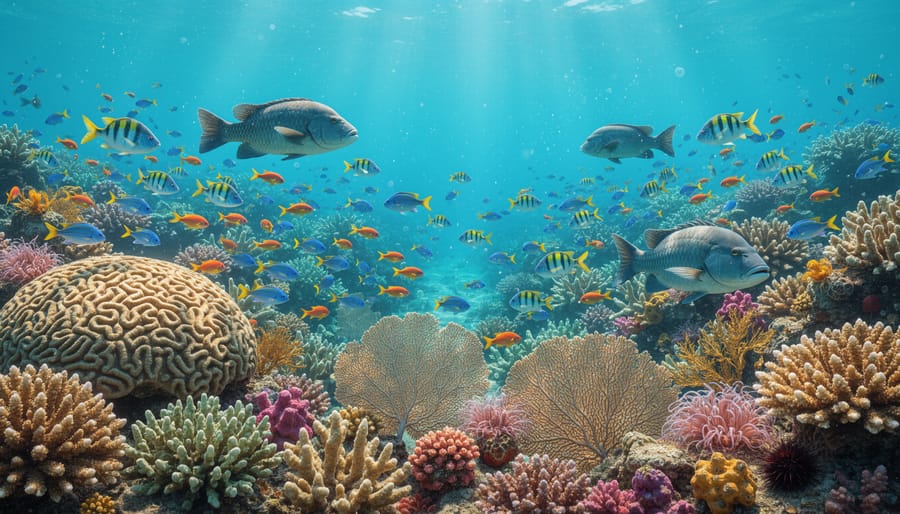
Fish are not isolated resources. Every species sits inside a food web, and pulling too many fish from one link can send ripples through the whole system. When a top predator such as tuna or cod is heavily depleted, its prey can surge and then crash, and the plankton, seabirds, and marine mammals that rely on those fish feel the change too. Research on how overfishing disrupts food webs shows that the effects rarely stop at the target species.
How fish are caught matters just as much as how many. Bottom trawls can flatten seafloor habitats like sponge gardens and cold-water coral. Nets and longlines can also snare sea turtles, sharks, and seabirds that were never the intended catch. This unintended catch, called bycatch, is one of the biggest threats to vulnerable marine life.
The encouraging part is that this damage can often be reversed. Fish populations are alive and capable of rebounding when given room to breed. Management that respects living stocks and MSY the maximum sustainable yield, keeps harvests within what a population can replace. Add gear that reduces bycatch and protected nursery areas, and depleted species can recover, taking pressure off threatened animals that share their waters. Healthy fisheries and healthy biodiversity turn out to be the same goal.
How Sustainable Fisheries Management Works: From Ocean Data to Fishing Rules
Measuring Fish Populations: Stock Assessments Explained
Nobody can count every fish in the ocean, so scientists estimate. A stock assessment combines several lines of evidence into a single picture of how a population is doing.
The first source is the survey trawl. Research vessels tow standardized nets in the same places, at the same times of year, using the same methods. Because nothing changes except the fish, the results show whether numbers are rising or falling. Some surveys also rely on sonar or egg counts instead of nets, especially for species that school in open water.
The second source is catch records, which show how much fishers land and how much effort it takes to land it. If boats work harder for less fish, that’s an early warning sign.
The third is age and size data. Scientists read growth rings in tiny ear bones called otoliths, much like tree rings, to work out how old each fish is. A healthy population holds plenty of young fish coming up and older, larger fish that produce the most eggs. A population missing its older members is under strain.
Models then blend all of this to estimate how fast the stock reproduces and grows. From that, scientists calculate a safe harvest level, often described as the amount of fish that can be taken while the population stays productive. Long-term research in places like marine sanctuaries also gives scientists a valuable benchmark for how an undisturbed population behaves.
Turning Science Into Rules: Setting Limits and Monitoring Compliance
Once scientists have a picture of how healthy a fish population is, the next step is translating that picture into rules that fishers can actually follow. The starting point is usually a catch limit, often called a total allowable catch. This is the maximum amount of a species that can be harvested in a season while still leaving enough fish behind to reproduce and rebuild. If the assessment shows a population is thriving, the limit may rise. If it shows signs of strain, the limit is tightened to give the stock room to recover.
Catch limits are rarely the only tool. Managers might also set minimum landing sizes so young fish can grow and spawn at least once before being caught, or close certain areas during breeding seasons. Some fisheries require specific gear, such as nets with escape panels for turtles or larger mesh sizes that let juveniles slip through. Each rule connects back to a specific finding in the data, which is why good management feels less like a list of restrictions and more like a set of targeted adjustments.
Rules only work if they’re followed, so monitoring is just as important as setting them. Trained fisheries observers ride aboard commercial vessels to record what is caught, what is thrown back, and whether any protected species are caught by accident. Their logbooks give managers a firsthand view that dockside records can’t match. Many fleets also carry vessel monitoring systems, small transponders that report a boat’s position so managers can confirm it stays within permitted zones. Increasingly, onboard cameras and electronic logbooks add another layer, helping verify catch reports without needing a person on every trip.
Dockside checks round out the picture. Inspectors compare what lands at the harbour with what was reported at sea, and processors and buyers keep traceable records so a fish can be followed from boat to plate. Together, these checks create a chain of accountability that makes it harder for illegal or unreported catches to slip through.
Some of the most valuable monitoring comes from the people who live and work along the coast. Fishers who report unusual sightings, local groups that keep an eye on protected areas, and citizen scientists who log what they observe all help fill gaps that formal surveys can’t cover. This kind of [collaborative conservation](https://www.marinebiodiversity.ca/collaborative-conservation-how-teamwork-can-save-our-oceans-and-marine-life/) builds shared ownership of the rules, and communities that help shape and monitor them tend to follow them more willingly. That trust, as much as any technology, is what turns a rulebook into real protection for the sea.
The Tools and Approaches Behind Sustainable Fisheries: Key Management Types
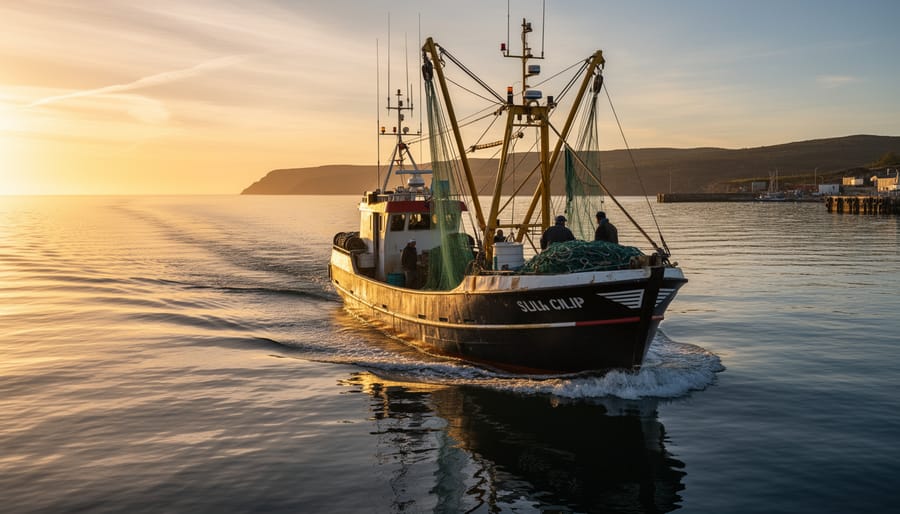
Managing Wild Capture Fisheries
Wild capture fisheries are managed with three main kinds of tools, and each one steers fishing in a different way.
Input controls limit how much fishing effort goes into the water. Think of caps on the number of boats, restrictions on fishing days, and rules about gear, such as minimum mesh sizes that let young fish slip through the net. The idea is simple: if you restrict the means of catching fish, you restrict the catch.
Output controls work from the other direction by limiting what comes out of the water. Total allowable catch limits, individual quotas, and size or seasonal limits all fall into this group. Here, the science from stock assessments sets the ceiling, and fishers can harvest only up to that number.
Neither approach is perfect alone. Input controls can be hard to tune, since fishers often find more efficient ways to catch fish within the limits. Output controls need good monitoring to make sure the numbers add up. Many fisheries combine both for a stronger safety net.
Then there’s the “rest period” strategy. marine protected areas close or restrict fishing in specific places, giving fish room to grow larger, spawn, and rebuild. Bigger, older fish produce far more young, and those young can spill over into nearby waters, helping surrounding fisheries too.
Where Sustainable Aquaculture Fits In
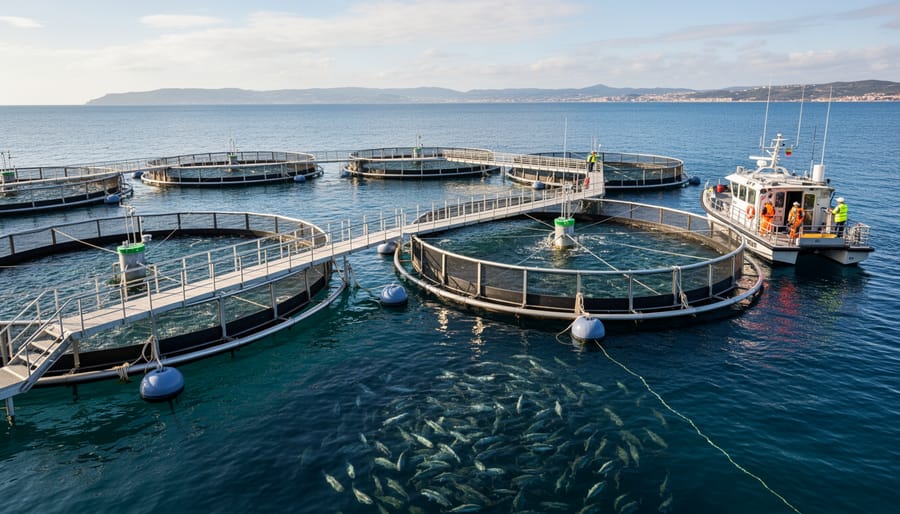
Wild-catch management is only half the picture. Aquaculture, the farming of fish, shellfish, and seaweed, now supplies a large share of the seafood people eat, so how it’s done matters just as much as how wild stocks are fished.
Responsible farming starts with feed. Many farmed fish are fed meals and oils made partly from wild-caught fish, so sourcing from well-managed fisheries, or swapping in plant-based and byproduct ingredients, helps avoid shifting pressure onto wild populations. Water quality is another priority. Crowded pens and ponds can release excess nutrients and waste, so careful stocking densities, site selection, and water monitoring keep surrounding habitats healthy.
Farms also have to manage two linked risks: escapes and disease. Fish that slip out of nets can compete with or breed alongside wild relatives, and parasites or pathogens can spread between farmed and wild fish. Secure equipment, regular health checks, and good site spacing reduce both problems.
Some of the lowest-impact options skip feed altogether. Oysters, mussels, and clams filter plankton from the water, and seaweed absorbs nutrients as it grows. Done well, these can even improve local water conditions.
Aquaculture isn’t automatically sustainable, and it isn’t automatically harmful. Its footprint depends on the species, the location, and the practices behind it.
How Sustainable Fisheries Management Is Used Around the World
Making Sustainable Seafood Choices as a Consumer
You don’t need to become a seafood expert to make a difference at the dinner table. Start with credible certification labels, such as the MSC blue fish tick for wild-caught fish or ASC and BAP marks for farmed seafood, which signal that independent auditors have checked how the fish was caught or raised.
Next, talk to the person behind the counter. Simple questions like “Where was this caught?” and “How was it caught or farmed?” tell sellers that customers care, and good fishmongers are usually glad to answer.
Variety matters too. When we all chase the same few popular species, those stocks bear the pressure. Trying locally abundant fish, mussels, or clams spreads demand more evenly and gives struggling populations room to recover.
None of this has to be perfect. Small daily choices add up, and when enough eco-friendly consumers shop this way, fisheries and fish farms feel the shift.
Get Involved: How You Can Support Healthier Oceans
Healthier oceans aren’t built by scientists and regulators alone. They depend on ordinary people who show up, pay attention, and share what they learn. That’s exactly why the center runs volunteer programs and an online e-network, so anyone who cares about marine life can find a meaningful way to contribute, whether they live on the coast or hundreds of miles inland.
Volunteer roles are varied, which means there’s a fit for almost every schedule and skill set:
– Citizen science: Record what you see on the shoreline, such as species sightings, shell and debris counts, or seasonal changes. These observations help researchers spot patterns that are hard to catch with limited survey time.
– Coastal cleanups: Remove plastic and lost fishing gear from beaches and shallows, protecting wildlife from entanglement and ingestion.
– Outreach: Talk with neighbors, local markets, and community groups about responsible seafood choices and why healthy fisheries matter.
– Education support: Help students and families explore marine science through workshops, school visits, and hands-on activities.
The online e-network keeps all of this connected. Members swap tips, hear about upcoming events, and learn from others doing similar work in different places.
Marine biologists often say the same thing about volunteers. One researcher who spent years running coastal monitoring surveys put it this way: “I started out thinking data came only from boats and lab equipment. Then a group of volunteers handed me three seasons of beach observations I never could have gathered alone. It changed how I think about who gets to do science.”
Every logged observation and every bag of collected debris adds up. When many people act together, the difference is measurable, and it keeps growing.
Sustainable fisheries management comes down to a simple but powerful balance: using the best available science to decide how much we can take from the sea, while protecting the fish, habitats, and communities that make those harvests possible. Whether it’s guiding wild catch through stock assessments and sensible limits or shaping responsible aquaculture through careful feed, water, and disease practices, the goal stays the same. Healthy oceans can keep feeding us, and the people who depend on them, for generations.
The encouraging part is that this approach works. Fish populations rebound when they’re given room and respect, and every informed choice adds to that momentum. Keep asking questions, keep learning, and choose seafood that’s responsibly sourced when you can. If you’re ready to do more, join our volunteer community and e-network, where curious people turn good intentions into real conservation. Together, we can keep our oceans abundant, diverse, and thriving.

jessica
Ava Singh is an environmental writer and marine sustainability advocate with a deep commitment to protecting the world's oceans and coastal communities. With a background in environmental policy and a passion for storytelling, Ava brings complex topics to life through clear, engaging content that educates and empowers readers. At the Marine Biodiversity & Sustainability Learning Center, Ava focuses on sharing impactful stories about community engagement, policy innovations, and conservation strategies. Her writing bridges the gap between science and the public, encouraging people to take part in preserving marine biodiversity. When she’s not writing, Ava collaborates with local initiatives to promote eco-conscious living and sustainable development, ensuring her work makes a difference both on the page and in the real world.