Marine Biodiversity Science Center

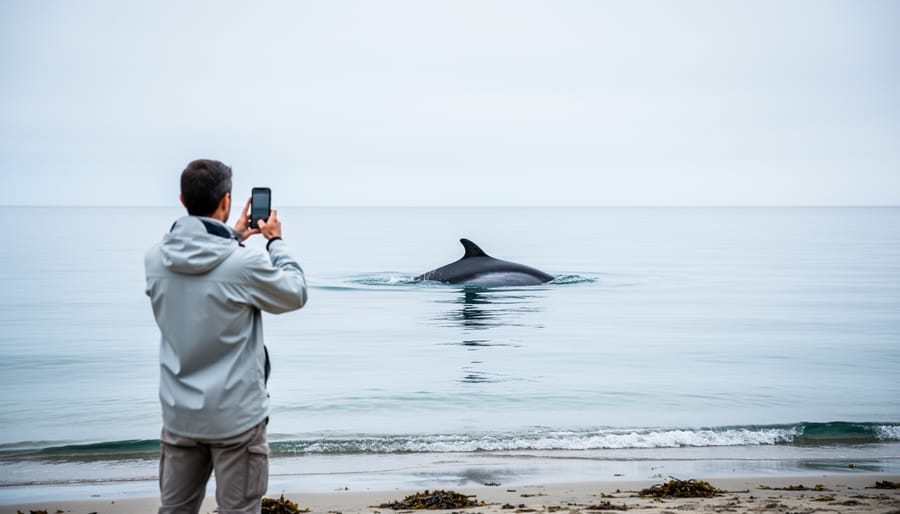
The U.S. Marine Mammal Commission doesn’t collect citizen sighting reports. It’s an independent federal agency that oversees and advises on how the nation protects whales, dolphins, seals, manatees, and other marine mammals. Think of it as the watchdog and science advisor for the law, not a hotline for your photos.
Created under the Marine Mammal Protection Act of 1972, the Commission reviews the work of agencies like NOAA Fisheries and the U.S. Fish and Wildlife Service, funds and recommends research, and flags gaps in protection. Its job is to make sure decisions rest on the best available science.
So where do your sightings fit? Your observations still matter, just through a different door. Photos of a dorsal fin or a fluke can feed local photo-ID catalogs, stranding networks, and research groups, and those datasets are the kind of evidence that eventually informs the decisions the Commission reviews.
This article explains what the Commission does, how photo-ID works, where citizen data actually goes, how to observe animals lawfully, and how to find volunteer programs that welcome your help.
What the Marine Mammal Commission Is and What It Does
The Marine Mammal Protection Act in Brief
The Marine Mammal Protection Act was passed in 1972, and its core idea is simple: marine mammals deserve protection from harm. The law broadly prohibits the “take” of whales, dolphins, seals, sea lions, manatees, polar bears, and other covered species. In legal terms, take covers more than killing or capturing. It includes harassing an animal, which means actions that could disturb or disrupt natural behaviors such as feeding, resting, nursing, or migrating.
That broad definition matters for anyone watching wildlife. An animal that changes course, dives suddenly, or abandons a resting spot because of a nearby boat or person may be experiencing harassment, even if nobody meant harm. Good observers learn to watch quietly and from a respectful distance, which keeps animals safe and keeps people on the right side of the law.
Where the Commission Fits Among Federal Agencies
Think of the Commission as an independent watchdog and advisor, while other agencies hold the day-to-day responsibilities. NOAA Fisheries manages whales, dolphins, porpoises, and most seals and sea lions. The U.S. Fish and Wildlife Service handles walruses, polar bears, sea otters, manatees, and dugongs. These agencies write regulations, issue permits, run population assessments, and respond to strandings and entanglements.
The Commission sits outside that chain of command. It reviews what those agencies are doing, asks whether their programs are working, and recommends improvements. It also points out research gaps and encourages studies that managers need but might not otherwise get funded. Its advice isn’t binding, but it carries real weight because it comes from independent scientific review.
For observers, the takeaway is practical: the agencies manage and respond, the Commission keeps the whole system accountable. If you see a stranded or entangled animal, you contact the proper authorities, not the Commission.
Photo-ID and Sightings: How Everyday Observations Become Science
What Researchers Look For in a Good Photo
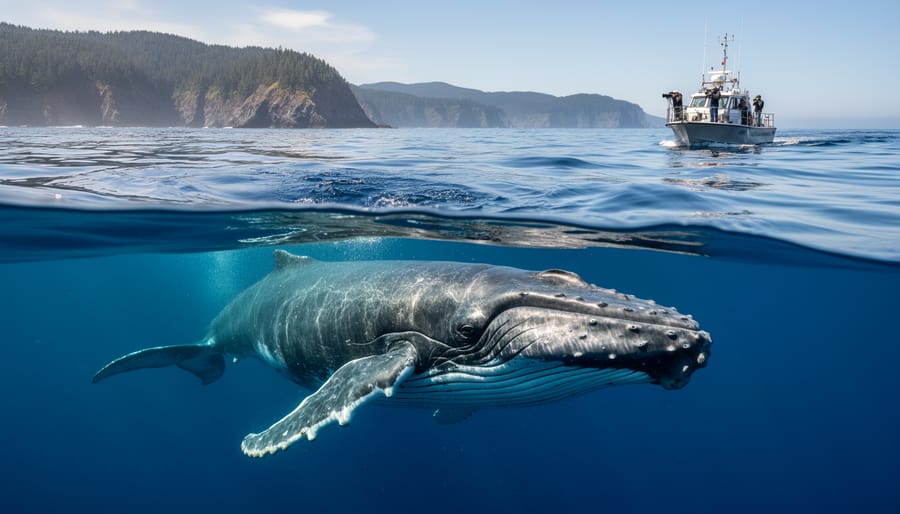
A useful photo starts with the animal’s natural markings. Researchers match individuals by features like dorsal fin notches, scars, the pigment patterns on a whale’s flukes, or the saddle patch behind a dolphin’s fin. If the photo shows those features sharply, a trained reviewer can often compare it against a catalog in minutes.
Three things make the biggest difference:
– Angle. Shoot square to the animal rather than from an extreme angle. For fin-based identification, a straight side view of the dorsal fin is ideal. For whales that lift their tails, the underside of the flukes is what counts.
– Lighting. Soft, even light beats harsh glare. Try to keep the sun behind you so shadows don’t hide notches and scars.
– Focus and framing. A slightly sharp, well-framed image is better than a dramatic but blurry one. Take several shots, since the best frame is rarely the first.
The photo is only half of the story. A report becomes far more valuable when it includes the date and time, the location (GPS coordinates or a precise landmark description), the species if you know it, and an estimate of group size. Add a brief note on behavior, such as feeding, traveling, resting, or socializing. Researchers use these details to track movements and habitat use over time.
If you’re unsure about the species or the count, say so. An honest “possibly three animals” is more useful than a confident guess, because it keeps the record accurate.
How Commission Oversight Connects to Community Data
From Your Camera to a Conservation Decision
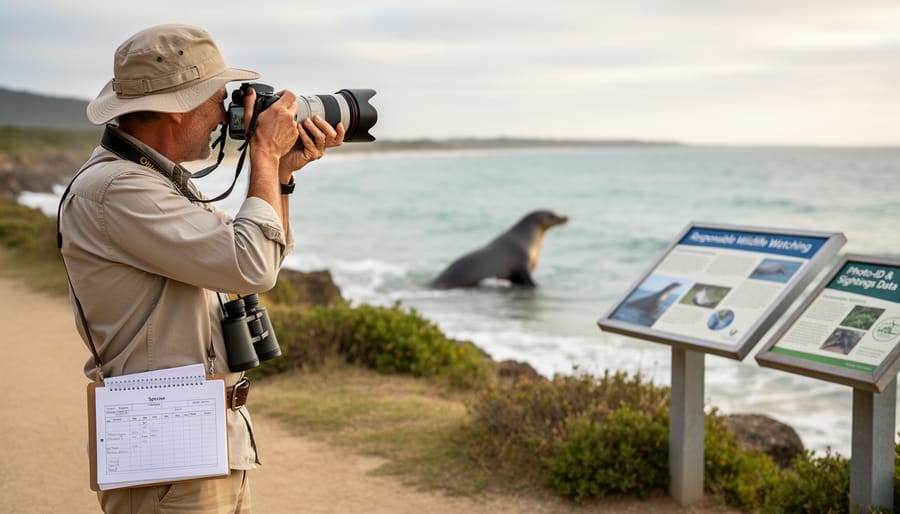
A single photograph can travel a surprisingly long way. Here is the typical path, though details vary by region and organization:
- Observe from a respectful distance and take clear photos of dorsal fins, flukes, or other markings.
- Note the date, location, species, group size, and behavior while the details are fresh.
- Submit your report to a research group or regional sightings network, not to the Commission itself.
- Experts verify the species and check that the photo and location details are usable.
- Researchers match the markings against a catalog of known individuals to see whether the animal has been recorded before.
- The confirmed record joins a larger dataset used in population, movement, and threat assessments.
That last step is where observations meet policy. Scientists and agencies draw on these records, alongside their own surveys, to understand how animals use an area and where they face risks. The Marine Mammal Commission then reviews and advises on that work. If you want to see how this plays out in practice, read about marine community science and how platforms handle photo and sighting data from everyday observers.
Observing Responsibly: Staying Within the Law and Safe for Wildlife
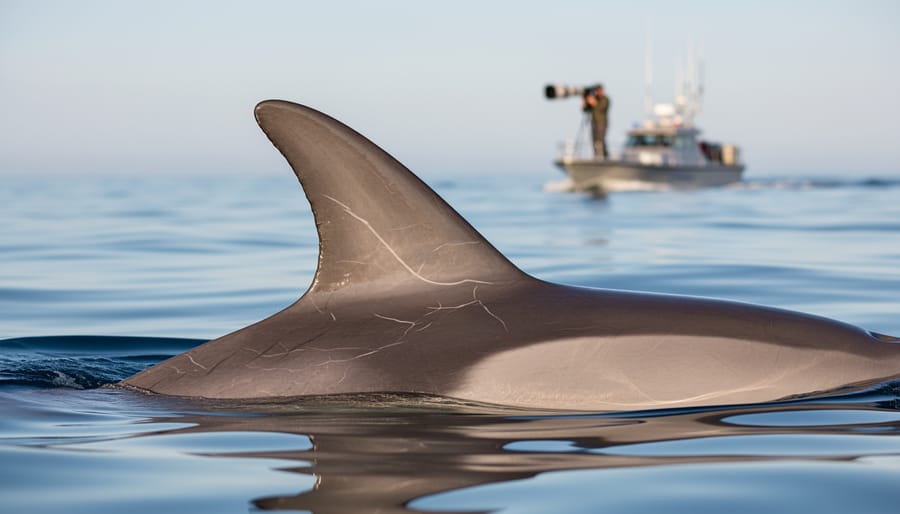
The Marine Mammal Protection Act makes it illegal to harass marine mammals, and “harassment” covers more than most people expect. It includes any act that could disturb an animal or change its natural behavior, such as interrupting feeding, resting, nursing, or travel. The good news is that responsible observing and following the law lead to the same habits, and those habits make you a more valuable observer.
Start with distance. Federal guidance generally recommends staying well back from marine mammals, but the exact distance varies by species and region. Some protected species and some areas carry stricter rules than others, so check current local requirements and NOAA Fisheries guidance for the waters where you’ll be watching. A zoom lens or binoculars lets you keep that space while still capturing the markings researchers need.
A few simple habits go a long way:
– Never feed marine mammals, which teaches them to approach boats and people and puts them at risk.
– Don’t chase, surround, or cut off an animal’s path, and don’t try to touch one.
– Let animals decide whether to approach you, and slow down or move away if they show signs of stress.
– Keep dogs and drones away unless you’ve confirmed local rules allow otherwise.
If you come across a stranded, injured, or entangled animal, resist the urge to help directly. Pushing a beached animal back into the water or cutting away gear can harm both you and the animal. Instead, keep your distance, note the location, take photos from afar, and call your regional stranding network or NOAA Fisheries hotline right away. Trained responders have the permits, equipment, and experience to act safely.
Your restraint is a real contribution, because calm, undisturbed animals produce the natural-behavior records scientists value most.
Ways to Get Involved as a Volunteer Observer
You don’t need a degree to help marine mammals. Plenty of the most useful work happens on beaches, ferries, and headlands, done by people who simply show up, pay attention, and write things down.
One of the best starting points is a regional photo-ID catalog or sightings network. Many coastal research groups and nonprofits maintain these, and they welcome careful photos and notes from the public. Matching your dorsal fin or fluke image against a catalog can confirm who an animal is and where it has traveled. Ask the organizer how they prefer submissions to be formatted so your effort is as useful as possible.
Shoreline and boat-based surveys are another way in. Volunteers count animals, record behavior, and log conditions at set times and places, which gives researchers consistent data over many seasons. Consistency is the real gift here, since a modest record kept for years often tells us more than a dramatic one-off sighting.
Stranding response work deserves a clear caution. Teams rely on trained, authorized people, so the right role for most newcomers is supporting them in appropriate ways: staffing hotlines, helping with beach monitoring, or assisting with crowd management once a team is on site. Never handle or move an animal yourself.
If you’re ready to begin, the Marine Biodiversity Science Center’s volunteer work shows how hands-on contributions help restore coastal wildlife habitats, and you can also join our online e-network to hear about opportunities as they open.
Requirements, training, and age limits differ from one program to the next and change over time, so confirm the current details directly with each organizer before you sign up.
Common Questions About Citizen Marine Mammal Sightings
Readers often ask the same handful of things when they start paying attention to whales, dolphins, seals, and manatees. Here are short, evergreen answers.
Does the Marine Mammal Commission accept sighting reports directly?
No. The Commission oversees and advises on marine mammal conservation, but it doesn’t run citizen reporting programs. Send sightings to a regional photo-ID catalog, a research institution, or a local sightings network instead.
Do I need special equipment?
Not at all. A smartphone with a decent camera and a note of the date, location, and species can be valuable, and a zoom lens or binoculars simply helps you stay at a respectful distance.
What if I find a stranded or entangled animal?
Keep your distance, keep people and pets back, and don’t try to push, rescue, or untangle the animal yourself. Contact your regional stranding network or NOAA Fisheries as quickly as possible, and share the location and what you can see.
Can I share photos on social media?
Yes, but please report your sighting to a research network too, since social posts rarely reach scientists. Avoid posting exact locations of vulnerable animals, and never share images taken by approaching or disturbing wildlife.
Finding a program near you usually starts with your coastal state’s wildlife agency, a nearby aquarium or marine science center, or a regional stranding network. Each one sets its own training and participation requirements, so confirm the details with the organizer before you head out. If you aren’t sure where to begin, the Marine Biodiversity Science Center’s volunteer opportunities and online e-network can point you toward a good first step.
What Every Observer Should Remember
The U.S. Marine Mammal Commission oversees and advises. It does not collect citizen sighting reports itself, so send your photos and notes to a regional photo-ID catalog, research group, or sightings network instead.
Remember that photo-ID turns a single clear image of a dorsal fin or fluke into a data point researchers can track over years. Keep your distance, never feed or chase wildlife, and check current local rules before you head out. Volunteer pathways are open to everyone, whatever your experience.
Every careful photograph, every honest sighting note, adds a small piece to a much larger picture. The U.S. Marine Mammal Commission keeps watch over the framework that protects whales, dolphins, seals, and manatees, but the everyday observations that bring that framework to life come from people like you, standing on a shoreline or a boat deck with a curious eye and a steady hand.
That’s the hopeful part. Marine mammal protection isn’t only the work of agencies and laboratories. It grows when ordinary observers give animals space, record what they see accurately, and share it with the programs that can use it.
Ready to take a first step? Join the Marine Biodiversity Science Center’s volunteer programs and sign up for our e-network to find training, local opportunities, and a community that cares as much as you do.

jessica
Ava Singh is an environmental writer and marine sustainability advocate with a deep commitment to protecting the world's oceans and coastal communities. With a background in environmental policy and a passion for storytelling, Ava brings complex topics to life through clear, engaging content that educates and empowers readers. At the Marine Biodiversity & Sustainability Learning Center, Ava focuses on sharing impactful stories about community engagement, policy innovations, and conservation strategies. Her writing bridges the gap between science and the public, encouraging people to take part in preserving marine biodiversity. When she’s not writing, Ava collaborates with local initiatives to promote eco-conscious living and sustainable development, ensuring her work makes a difference both on the page and in the real world.