Marine Biodiversity Science Center

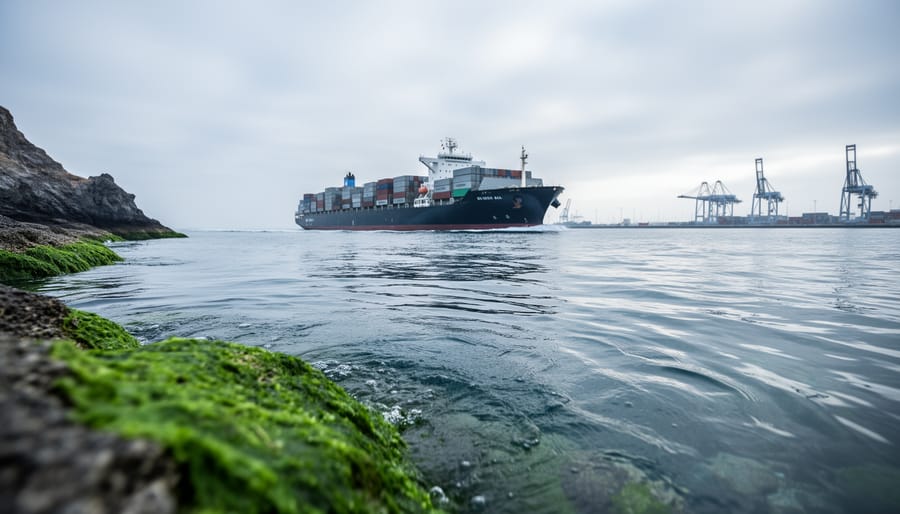
America’s Maritime Action Plan, published by the White House in February 2026, aims to revitalize U.S. shipbuilding and commercial maritime capacity through a coordinated federal strategy. For marine conservationists and environmental professionals, this policy carries significant implications: rebuilding domestic ship construction and expanding maritime operations will alter coastal ecosystems, increase vessel traffic, and potentially intensify impacts on marine biodiversity unless robust environmental safeguards are woven into implementation.
The plan emerged from Executive Order 14269, “Restoring America’s Maritime Dominance,” signed in April 2025, and represents collaboration among the Departments of State, War, Commerce, Labor, Transportation, and Homeland Security, alongside the Office of Management and Budget. At its core, the policy addresses a stark reality: less than 1% of the world’s new commercial ships are currently built in the United States. Of the nation’s 66 shipyards, only eight actively construct new vessels, though an additional 11 possess that capacity.
This expansion agenda presents both risks and opportunities. Increased shipbuilding means more industrial activity in sensitive coastal zones, greater potential for marine pollution during construction and operation, and heightened underwater noise affecting cetaceans and other marine life. Yet the policy’s development phase also opens pathways for the conservation community to shape environmental provisions, advocate for green shipbuilding technologies, and ensure that maritime growth doesn’t come at the expense of ocean health.
Understanding your role in this process matters. Whether you’re a marine scientist tracking shipping lane impacts, an educator preparing the next generation of ocean stewards, or a citizen concerned about coastal waters, the coming months offer critical windows for engagement before implementation details solidify.
What Is America’s Maritime Action Plan?
America’s Maritime Action Plan, published by the White House in February 2026, serves as the operational blueprint for implementing Executive Order 14269, “Restoring America’s Maritime Dominance,” which President Donald J. Trump signed on April 9, 2025. The Executive Order 14269 record outlines the administration’s commitment to revitalizing the nation’s shipbuilding industry and expanding its commercial fleet capacity.
Development of the plan involved coordination from multiple high-level government offices. The Secretary of State and the Assistant to the President for National Security Affairs (APNSA), working alongside the Director of the Office of Management and Budget (OMB), led the effort. Their work drew on expertise from six additional federal departments: War (DOW), Commerce (DOC), Labor (DOL), Transportation (DOT), Homeland Security (DHS), and the United States Trade Representative (USTR). This cross-agency collaboration reflects the plan’s scope, touching on national security, economic competitiveness, labor markets, and trade policy.
The plan confronts a stark reality in American maritime capacity. Less than 1% of the world’s new commercial ships currently come from U.S. shipyards, a figure that underscores decades of decline in domestic shipbuilding. The nation maintains 66 shipyards, but only eight actively build new vessels. Another eleven possess construction capacity without current new-build activity, while 22 operate dry docks for repairs and 25 specialize in out-of-water repair work. These statistics reveal both the challenge and potential: infrastructure exists, but construction activity has withered.
For marine conservationists and environmental professionals, understanding this framework matters because any expansion in shipbuilding activity and maritime operations will directly affect coastal ecosystems, shipping routes, and the marine species that depend on them. The plan’s implementation will shape vessel traffic patterns, construction site impacts, and operational practices across U.S. waters for years to come.
How the Plan Affects Marine Shipping and Ecosystems
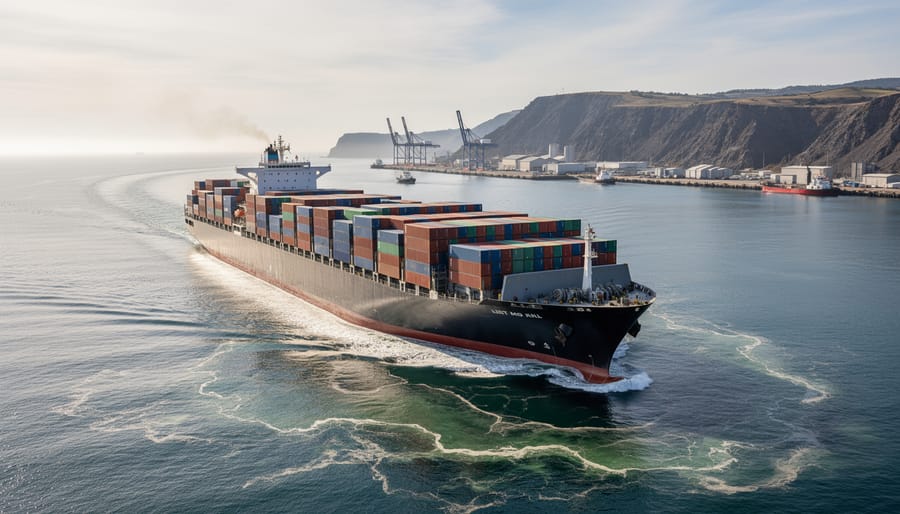
America’s Maritime Action Plan aims to expand domestic shipbuilding from under 1% of global commercial ship production to a more substantial share, which will necessarily increase vessel traffic in U.S. coastal waters and shipping lanes. This expansion carries significant implications for marine ecosystems already stressed by existing maritime activity.
The plan’s emphasis on restoring shipbuilding capacity across the nation’s 66 shipyards means more construction noise in coastal areas, increased vessel movements during sea trials, and higher operational tempo along traditional shipping corridors. Each additional ship contributes to the cumulative environmental burden that marine species must navigate.
The primary environmental concerns from expanded maritime operations include:
- Acoustic disturbance from engine noise, propeller cavitation, and sonar systems that interfere with marine mammal communication and navigation
- Water quality degradation through ballast water discharge, antifouling paint leaching, and fuel spills
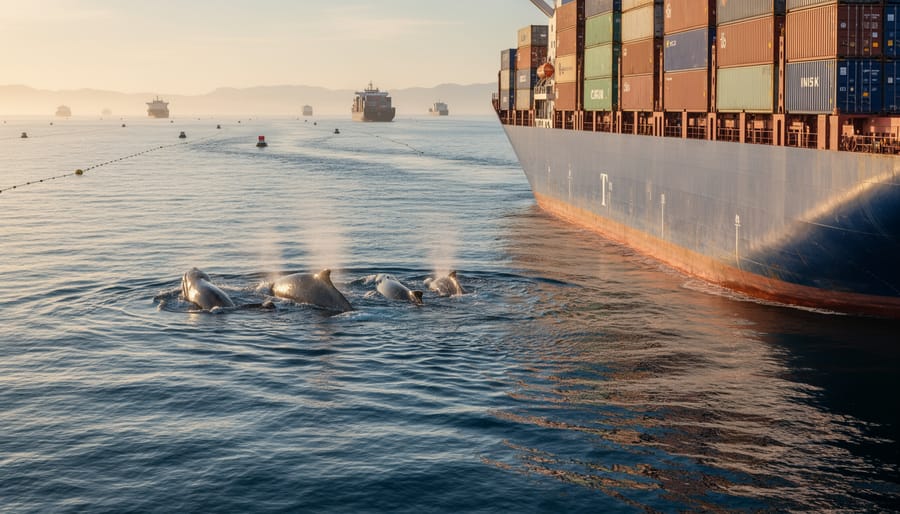
- Collision risks with whales, dolphins, sea turtles, and other species in high-traffic zones
- Invasive species introduction via ballast water and hull fouling organisms
- Coastal habitat disruption from port expansion, dredging operations, and increased anchor damage
Research in ocean acoustics shows that shipping noise can mask the calls of baleen whales over distances of hundreds of miles, disrupting feeding coordination and mating behaviors. Scientists now use virtual acoustic environment modeling to predict how increased vessel density will affect underwater soundscapes in critical habitats.
The shipbuilding expansion also raises concerns about operational byproducts. Improved marine waste management practices at shipyards can reduce pollution during construction, but operational vessels still generate persistent threats. Ships shed microplastics from paint coatings and synthetic ropes, adding to ocean contamination.
The challenge isn’t whether maritime expansion will occur, but whether it incorporates science-based protections from the outset. The implementation phase presents a window for conservationists to ensure environmental safeguards become standard requirements rather than afterthoughts in America’s renewed maritime strategy.
Who Can Participate in Maritime Policy Discussions and Environmental Oversight
The federal structure of America’s Maritime Action Plan creates multiple avenues for meaningful engagement. Environmental organizations of any size can participate, from national conservation networks to local watershed groups focused on coastal protection. Research institutions bring scientific expertise to the discussion, while marine educators play a vital role in translating policy implications for broader audiences.
Individual citizens also have standing to engage with the plan’s implementation. You don’t need to represent an organization or hold specialized credentials to submit comments during public review periods. This inclusive framework reflects the National Environmental Policy Act (NEPA) mandate that federal agencies must consider environmental impacts and allow public input before major actions.
The most structured pathway comes through NEPA’s environmental review process. When agencies prepare Environmental Impact Statements or Environmental Assessments for maritime infrastructure projects, they must publish notices in the Federal Register and hold comment periods, typically ranging from 30 to 90 days. Conservation groups can request early stakeholder consultations during scoping phases, when project alternatives are still being defined.
Beyond NEPA, the Marine Mammal Protection Act and Endangered Species Act create additional consultation requirements when shipping activities might affect protected species. State-level coastal zone management programs offer another entry point, particularly for projects in state waters or affecting coastal resources.
Collaborative working groups sometimes emerge during complex policy implementation. These bring together agency representatives, industry stakeholders, and conservation voices to address specific challenges like shipping lane adjustments or mitigation protocols. Participation often requires submitting a request to the coordinating agency demonstrating relevant expertise or stake in the outcome.
How to Engage with the Plan and Advocate for Marine Protection
Engaging with America’s Maritime Action Plan requires proactive monitoring and strategic participation. Start by subscribing to the Federal Register’s daily notifications, filtering for announcements from the Departments of Transportation, Commerce, and Homeland Security. These agencies typically post Requests for Information (RFIs), Environmental Impact Statement notices, and public comment periods with 30 to 60 days for stakeholder input. Set calendar reminders for closing dates, agencies are not obligated to consider comments received after deadlines.
When public comment windows open, craft submissions that connect maritime expansion directly to measurable environmental concerns. Reference specific data: ship strike mortality rates in known migration corridors, documented noise levels that interfere with cetacean communication, or ballast water invasion risks in particular ecosystems. Generic advocacy statements carry less weight than evidence-based input citing peer-reviewed research or monitoring data from your region. Use plain, direct language and stay within any stated word or page limits.
Beyond formal comment periods, seek out stakeholder working groups convened during the plan’s implementation phase. Contact the Office of Marine and Aviation Operations at NOAA or the Maritime Administration (MARAD) to inquire about upcoming consultations on route planning, infrastructure siting, or environmental review processes. These sessions often allow for verbal testimony and direct dialogue with decision-makers.
Partner with established conservation organizations already engaged in maritime policy work. Groups with existing relationships to federal agencies can amplify your input, coordinate joint submissions, and alert you to engagement opportunities that may not be widely publicized. If you have access to relevant scientific data, acoustic monitoring, species distribution models, or habitat use patterns, offer to share it with agencies conducting environmental assessments. Original field data from affected areas strengthens the evidence base for protective measures and positions you as a credible voice in ongoing policy discussions.
Rights and Responsibilities in the Maritime Policy Process
When you participate in the maritime policy process, you’re operating within a structured legal framework that protects both your voice and the integrity of environmental review. Understanding these rights and responsibilities helps you engage effectively while ensuring federal agencies meet their obligations.
Your Rights as a Stakeholder
Federal law guarantees you access to key documents and decision-making processes. Under the National Environmental Policy Act (NEPA), agencies must prepare environmental assessments or impact statements for major actions like shipyard expansion or shipping route changes. You’re entitled to review these documents during public comment periods, which typically run 30 to 90 days. Agencies must respond to substantive comments, those raising specific environmental concerns or offering scientific evidence, in their final decisions. You also have the right to transparency: federal register notices announce upcoming decisions, and agencies must explain how they weighed environmental factors against economic goals.
The Administrative Procedure Act further ensures you can challenge arbitrary decisions through formal appeals, though this requires demonstrating how a policy violates existing environmental law.
Your Responsibilities in the Process
Effective advocacy requires meeting procedural standards. Submit comments before published deadlines, late submissions won’t be considered. Follow designated channels: use official portals like rather than informal emails. Most importantly, ground your input in evidence. Comments citing peer-reviewed research on ship strike frequencies or noise impact thresholds carry far more weight than general concerns.
Be specific about which aspect of the plan you’re addressing and propose concrete alternatives. If you’re advocating for seasonal shipping restrictions, reference the marine mammal populations affected and suggest precise implementation mechanisms. Federal agencies must consider environmental impacts under existing law, but substantive, well-documented stakeholder input strengthens the case for protective measures.
Mitigation Strategies: What Marine Conservationists Should Advocate For
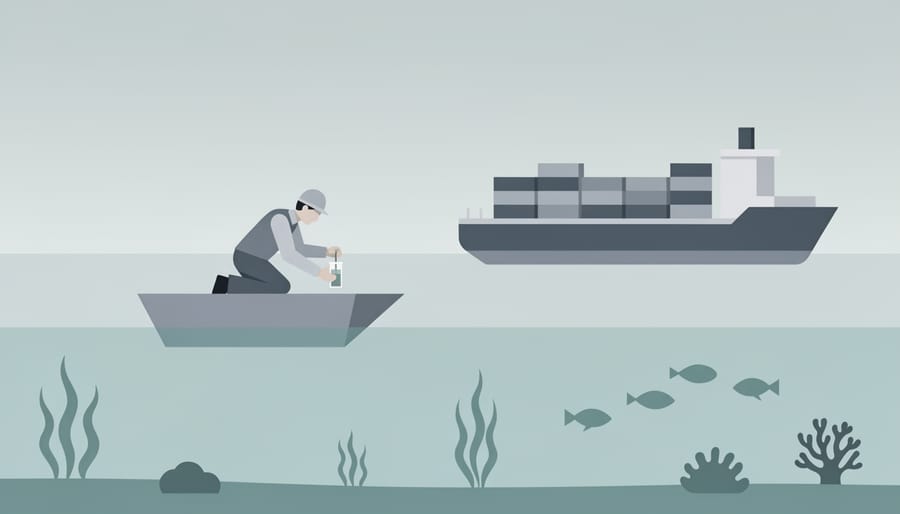
Effective mitigation starts with slowing vessels through biologically sensitive areas. Speed restrictions in zones with high concentrations of marine mammals can reduce fatal ship strikes by up to 80%. Conservationists should push for mandatory slow-speed zones, typically 10 knots or less, in known migration corridors, feeding grounds, and critical habitats. These measures work best when paired with seasonal route adjustments that steer shipping traffic away from areas during peak breeding or calving seasons.
Ballast water remains one of shipping’s most insidious threats. Advanced treatment systems using ultraviolet light, filtration, or chemical disinfection can eliminate invasive species before they’re discharged into new ecosystems. Advocates should demand that any new vessels built under the Maritime Action Plan include these systems as standard equipment, not optional upgrades. The technology exists; it’s a matter of making it non-negotiable in shipyard contracts and federal procurement guidelines.
| Mitigation Strategy | Target Impact | Implementation Feasibility | Conservation Effectiveness |
|---|---|---|---|
| Slow-speed zones (10 knots) | Ship strikes, noise pollution | High, existing navigation tech supports compliance | Very high, proven 80% reduction in lethal collisions |
| Seasonal route adjustments | Habitat disruption during breeding/migration | Moderate, requires coordination with commercial shipping | High, protects critical life stages |
| Advanced ballast water treatment | Invasive species introduction | High, technology mature and available | Very high, prevents ecosystem disruption |
| Vessel quieting technologies | Underwater noise interference | Moderate, retrofit costs vary by vessel type | High, reduces acoustic masking for marine mammals |
| Marine mammal detection systems | Real-time collision avoidance | Moderate, requires trained operators and technology integration | Moderate to high, effectiveness depends on response protocols |
Vessel quieting technologies deserve equal attention. Propeller design modifications, hull coatings that reduce cavitation, and vibration dampening systems can lower a ship’s acoustic footprint significantly. This matters because underwater noise interferes with whale communication, echolocation in dolphins, and fish spawning behaviors. Marine mammal detection systems, using thermal imaging, acoustic monitoring, or AI-powered visual recognition, offer a last line of defense, alerting bridge crews to nearby animals in real time.
Education plays a crucial role in turning these technical solutions into industry standards. Marine educators should integrate maritime policy advocacy into curricula, training the next generation to view mitigation not as regulatory burden but as operational excellence. Workshops for naval architects, shipyard managers, and maritime operators can demonstrate that protecting marine life and building a competitive fleet aren’t mutually exclusive goals.
Where to Get Help and Official Resources
Navigating the federal landscape of maritime policy requires knowing which agencies to contact and where to find authoritative information. Because America’s Maritime Action Plan involves coordination across multiple departments, understanding their specific roles helps you direct questions appropriately and access the most relevant resources.
For official government information, start with these key resources:
- The White House website hosts the full text of Executive Order 14269 and the February 2026 Maritime Action Plan
- Federal Register () publishes all public comment periods, proposed regulations, and environmental assessments related to maritime activities
- Department of Transportation’s Maritime Administration (MARAD) oversees shipping routes, vessel operations, and environmental compliance
- Department of Commerce’s National Oceanic and Atmospheric Administration (NOAA) provides marine mammal protection resources and habitat data
- Department of Homeland Security’s Coast Guard manages vessel traffic systems and marine environmental response
- Environmental Protection Agency’s NEPA portal offers access to environmental impact statements for federal maritime projects
Conservation organizations also provide valuable support for engaging with maritime policy. The Ocean Conservancy, Marine Conservation Institute, and Natural Resources Defense Council maintain active maritime programs with guidance for effective advocacy. Regional groups like the Pacific Environment network often track specific shipping corridor impacts and coordinate stakeholder responses.
For scientific resources, NOAA’s Marine Biodiversity Observation Network and the International Union for Conservation of Nature’s Marine Mammal Protected Areas Task Force offer data on shipping impacts and mitigation effectiveness. Academic institutions with marine policy centers, such as Duke University’s Marine Lab and Stanford’s Center for Ocean Solutions, frequently publish accessible research summaries that strengthen science-based comments on maritime regulations.
Opportunities for Volunteers and Marine Educators
Marine conservationists have numerous avenues to contribute meaningfully to maritime policy oversight and environmental protection. Citizen science programs offer accessible entry points for tracking marine mammal populations affected by shipping activities. Organizations like the Ocean Research & Conservation Association and the Whale and Dolphin Conservation Society coordinate volunteer monitoring networks where participants record sightings, document vessel interactions, and submit acoustic data. These grassroots observations provide crucial baseline information for assessing how expanded shipping operations under the Maritime Action Plan impact migration patterns and critical habitats.
Marine education initiatives present another vital opportunity. Volunteers can develop curriculum materials explaining the policy’s environmental dimensions for K-12 classrooms, lead public workshops on maritime impacts, or host webinars connecting shipping industry stakeholders with conservation scientists. Many university extension programs seek volunteers to assist with outreach campaigns that translate technical environmental assessments into accessible formats for diverse audiences.
Dr. Elena Moss, a marine mammal biologist at Scripps Institution of Oceanography, exemplifies this engagement. “I started attending stakeholder meetings after noticing increased ship strikes in our study area,” she recalls. “By presenting our acoustic monitoring data during public comment periods, we convinced port authorities to implement voluntary slow-speed zones during gray whale migration season. Scientists have credibility in these processes, but you have to show up and speak up.”
The Marine Biodiversity Science Center maintains an active volunteer network focused on shipping impact monitoring. Participants assist with underwater noise measurements, analyze shipping route data against marine protected areas, and help prepare science-based recommendations for federal agencies implementing the plan.
Frequently Asked Questions
The Maritime Action Plan raises important questions for anyone concerned about marine ecosystems and shipping policy. Here are answers to the most common queries we receive from conservationists, educators, and engaged citizens.
When was America’s Maritime Action Plan published?
The plan was published by the White House in February 2026 as the implementation framework for Executive Order 14269, which President Trump signed on April 9, 2025.
Which federal agencies are involved in the plan?
The Secretary of State and the Assistant to the President for National Security Affairs coordinated development with the Office of Management and Budget, working alongside the Departments of War, Commerce, Labor, Transportation, Homeland Security, and the U.S. Trade Representative.
How does expanding shipbuilding affect marine life?
Increased maritime activity brings risks of heightened underwater noise disrupting marine mammal communication, greater ship strike potential, expanded ballast water discharge carrying invasive species, and intensified habitat disturbance in coastal areas where shipyards operate and vessels transit.
Can individuals influence maritime policy decisions?
Yes. Federal agencies must allow public comment on environmental assessments, and conservation organizations can submit scientific data, join stakeholder consultations, and participate in NEPA review processes that shape how the plan affects marine ecosystems.
Understanding these fundamentals helps you engage meaningfully with maritime policy. The plan aims to restore domestic shipbuilding capacity in a nation that currently produces less than 1% of the world’s new commercial ships across 66 shipyards. While economic goals drive the initiative, environmental stakeholders play a vital role in ensuring expansion incorporates science-based protections for marine biodiversity. Your questions and participation during public comment periods carry weight in federal decision-making processes.
America’s Maritime Action Plan presents both challenges and opportunities for marine conservation. While expanding domestic shipbuilding capacity may increase pressure on coastal ecosystems, the policy process itself creates meaningful pathways for environmental advocates to shape how this expansion unfolds. The plan’s implementation isn’t predetermined, it will be influenced by the quality and persistence of public engagement over the coming months and years.
Your voice matters in this process. Federal agencies must consider environmental impacts under existing law, and substantive scientific input can drive real changes in how maritime development proceeds. Whether you’re a marine biologist, educator, or concerned citizen, participating in comment periods, supporting evidence-based mitigation measures, and collaborating with conservation organizations amplifies the call for ocean-friendly practices.
The science is clear: we can build maritime capacity while protecting marine biodiversity, but only if conservation considerations are woven into planning from the start. Slow-speed zones, seasonal route adjustments, and advanced technologies exist to reduce harm, we must ensure they’re required, not optional.
Join the Marine Biodiversity Science Center’s e-network to receive timely updates on maritime policy developments, upcoming comment periods, and collaborative advocacy opportunities. Together, we can ensure that America’s maritime future supports both economic goals and thriving ocean ecosystems. The work begins with staying informed and showing up when decisions are made.

jessica
Ava Singh is an environmental writer and marine sustainability advocate with a deep commitment to protecting the world's oceans and coastal communities. With a background in environmental policy and a passion for storytelling, Ava brings complex topics to life through clear, engaging content that educates and empowers readers. At the Marine Biodiversity & Sustainability Learning Center, Ava focuses on sharing impactful stories about community engagement, policy innovations, and conservation strategies. Her writing bridges the gap between science and the public, encouraging people to take part in preserving marine biodiversity. When she’s not writing, Ava collaborates with local initiatives to promote eco-conscious living and sustainable development, ensuring her work makes a difference both on the page and in the real world.