Marine Biodiversity Science Center

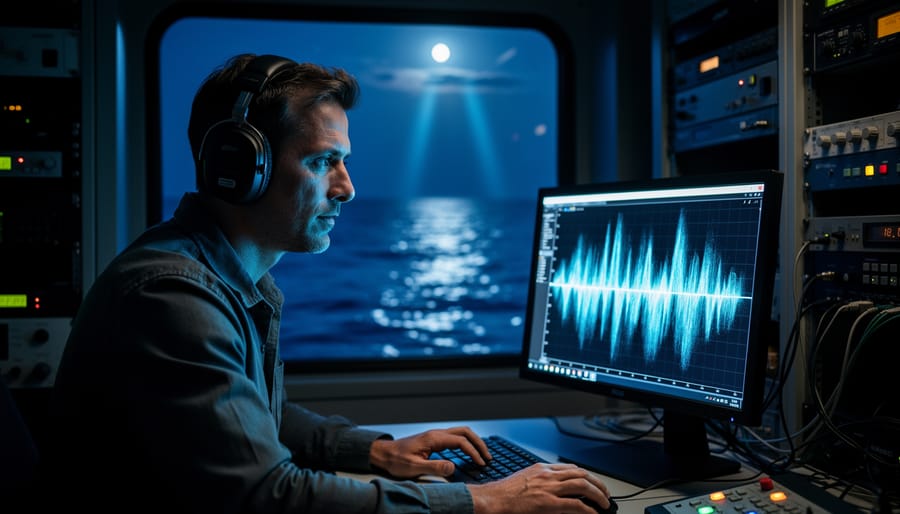
A virtual acoustic environment is a digitally recreated soundscape that mimics real-world acoustic conditions, allowing researchers and educators to simulate, analyze, and experience how sound behaves in specific spaces without physically being there. In marine science, this technology has become essential for understanding how underwater noise travels, how marine animals communicate in different ocean conditions, and how human activities affect the acoustic landscape beneath the waves.
The stakes couldn’t be higher. Sound is the primary sense for most marine life, from whales navigating across ocean basins to fish larvae finding suitable habitat. Yet ocean acoustics remain largely invisible to the public, even as shipping traffic, sonar systems, and coastal construction create unprecedented levels of underwater noise. Virtual acoustic environments give us a window into this hidden world, transforming abstract sound data into experiences we can hear, visualize, and understand.
Dr. Maria Chen, a marine bioacoustician who uses virtual acoustic modeling to study coral reef soundscapes, puts it simply: “We can’t protect what we can’t perceive. These tools let students in landlocked classrooms hear a healthy reef at dawn or understand how a single cargo ship changes the acoustic environment for hundreds of miles.”
This article will walk you through what virtual acoustic environments are, how scientists build them using real oceanographic data, the different types serving various research and educational needs, and the practical applications reshaping marine conservation in 2026. Whether you’re an educator looking to bring ocean science into your classroom, a student exploring marine technology, or simply curious about how researchers study the underwater soundscape, you’ll discover why this emerging field matters and how you can engage with it.
What a Virtual Acoustic Environment Means in Ocean Science
A virtual acoustic environment is essentially a digital twin of an ocean soundscape. Instead of diving hundreds of feet below the surface with recording equipment, scientists and educators can recreate what the underwater world sounds like using computer models built from real acoustic data, oceanographic measurements, and mathematical simulations of how sound travels through seawater.
Think of it like a weather forecast model, but for sound instead of temperature and precipitation. Researchers collect recordings from underwater microphones, measure ocean conditions like temperature gradients and salinity levels, then feed this information into sophisticated software that predicts how sound waves will behave in that specific marine environment. The result is an immersive audio experience that lets you hear what a humpback whale encounter sounds like at 200 meters depth, or how ship noise spreads across a coral reef ecosystem, all from a classroom or research lab.
These digital recreations rely on sound propagation modeling to accurately simulate the complex ways ocean sound behaves. Unlike air, seawater’s density and the ocean’s layered structure bend sound waves, create acoustic channels, and affect what marine animals can hear at different depths and distances.
Understanding a few basic terms helps clarify what these virtual environments capture:
- Acoustic propagation
- How sound waves travel through water, affected by temperature, pressure, salinity, and the seafloor. These factors determine how far sounds travel and how they change along the way.
- Soundscape
- The complete collection of sounds in a marine area at any given time, including biological sounds from animals, geological sounds like underwater earthquakes, and human-generated noise.
- Ambient noise
- The background sound level in the ocean, created by waves, rain, distant shipping, marine life, and other continuous sources. It forms the acoustic baseline against which other sounds must be heard.
- Sound pressure level
- A measurement of sound intensity in decibels, indicating how loud a sound is underwater. Marine mammals and fish depend on specific sound pressure levels to communicate and navigate.
What makes virtual acoustic environments particularly valuable is their ability to show patterns invisible to the human eye. You can visualize how a dolphin’s echolocation click spreads through murky coastal waters, or experience how seasonal temperature changes create acoustic dead zones where whale songs can’t penetrate. This transforms abstract scientific concepts into tangible experiences that researchers can analyze and students can actually hear.
How Virtual Acoustic Environments Work
The Technology Behind the Simulation
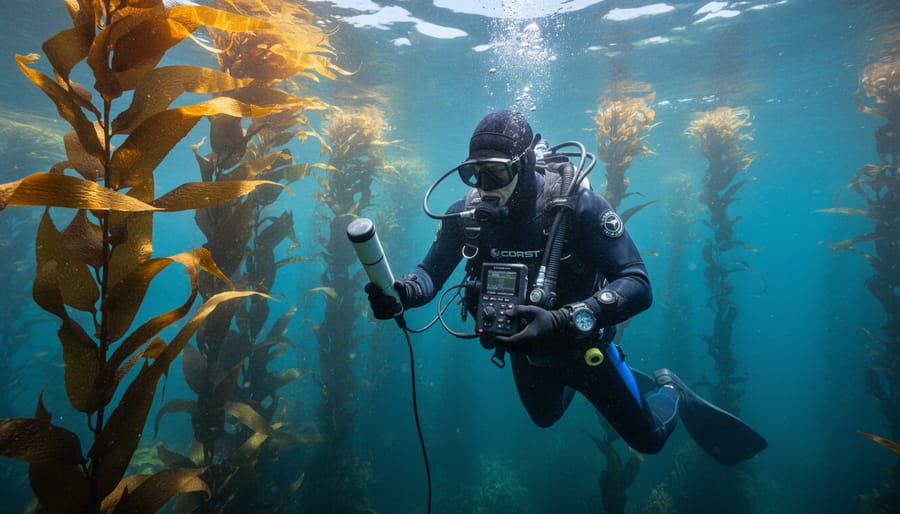
The foundation of any virtual acoustic environment starts with capturing real ocean sounds using underwater microphones called hydrophones. These specialized instruments can detect everything from whale songs to the crackling sounds of snapping shrimp, recording frequencies both above and below what human ears can perceive. Researchers deploy hydrophones in various configurations, sometimes anchored to the seafloor for months at a time, other times towed behind research vessels to survey large areas.
Once collected, this acoustic data feeds into sophisticated modeling software that simulates how sound waves travel through ocean water. These programs account for the physical properties that affect underwater sound: water temperature creates layers that bend sound waves, salinity changes how fast sound moves, and the seafloor’s composition determines whether sounds reflect or absorb. The software essentially builds a digital twin of the ocean environment, predicting where sounds will travel and how they’ll change along the way.
The final step brings these simulations to life through audio rendering systems and, increasingly, virtual reality platforms. Modern VR headsets can position listeners inside a three-dimensional soundscape, letting them hear how a humpback whale song might sound from different distances or depths. Some installations use speaker arrays in planetarium-style domes, surrounding audiences with spatially accurate ocean sounds. The technology has become accessible enough that marine education centers can now create immersive experiences that once required expensive research equipment.
From Data to Experience
The journey from raw underwater recordings to an immersive acoustic experience involves several transformation steps that make invisible sound patterns tangible and meaningful.
First, researchers clean the recorded data, filtering out equipment noise and enhancing the biological or environmental sounds they want to highlight. This processed audio becomes the foundation, but it’s still just flat recordings, not yet an environment you can explore.
The real transformation happens through spatial audio processing. Scientists map each sound to its original location in three-dimensional space, using multiple hydrophone recordings to pinpoint where whale calls, snapping shrimp, or boat engines originated. Specialized software then recreates how sound waves would reach a listener’s ears from different directions, accounting for the ocean’s acoustic properties.
When you experience the final virtual environment through headphones or speakers, turning your head changes what you hear, a whale song grows louder as you face its direction, just as it would underwater. Some platforms add visual elements, but the acoustic layer alone can transport you into the ocean’s soundscape.
This process turns gigabytes of data into something anyone can understand: an experience of listening beneath the waves, making ocean acoustics accessible to students, policymakers, and the public.
Different Types of Ocean Virtual Acoustic Environments
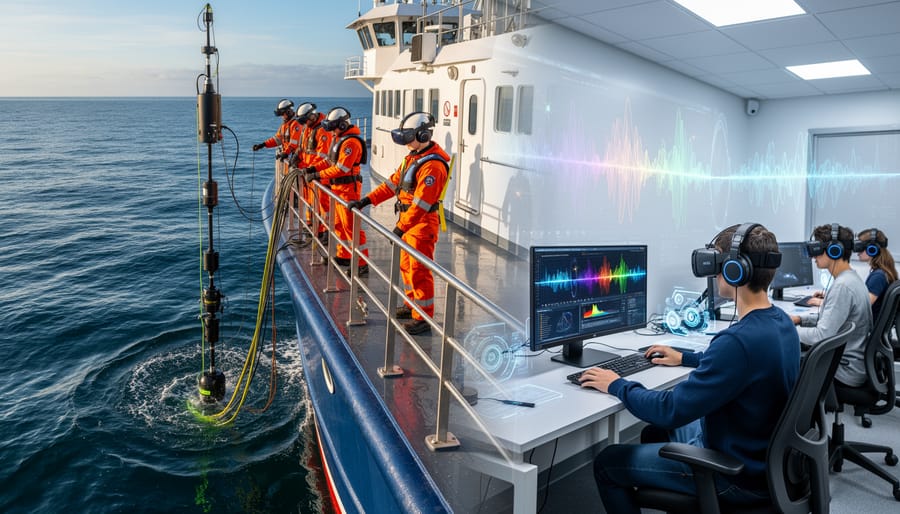
Virtual acoustic environments come in different forms, each designed for specific goals and audiences in marine science and education. Understanding these categories helps clarify how this technology serves everyone from research scientists to schoolchildren curious about ocean life.
Research-grade simulations represent the most sophisticated type. Marine biologists use these detailed models to study whale communication patterns, analyze how shipping noise affects fish behavior, or predict sound propagation across vast ocean regions. These environments incorporate precise oceanographic data, temperature gradients, salinity variations, seafloor topology, to model acoustic conditions with scientific accuracy. A research team studying humpback whale songs, for example, might simulate how calls travel through different water layers to understand communication ranges between individuals separated by dozens of kilometers.
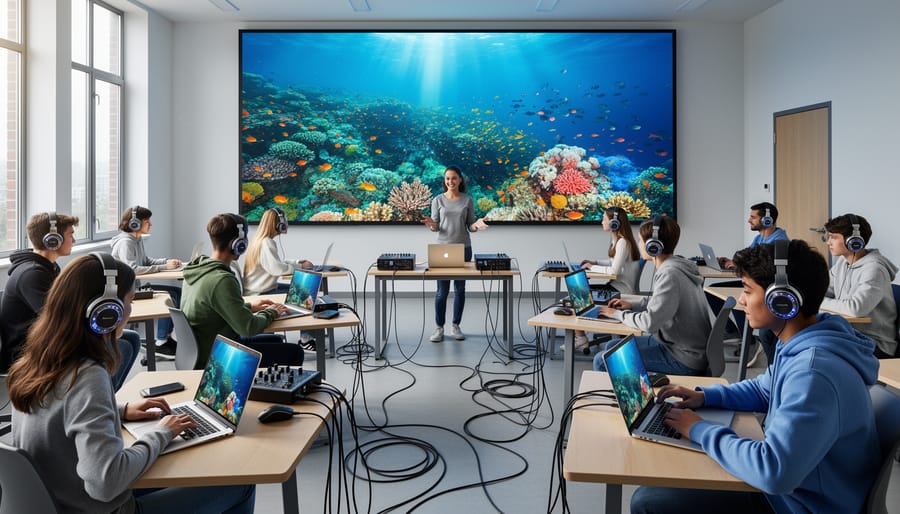
Educational platforms bring underwater soundscapes into classrooms without requiring expensive field trips or specialized equipment. These simplified versions let students explore coral reef sounds, compare Arctic versus tropical ocean acoustics, or hear how marine life responds to different times of day. Teachers can adjust variables like depth or distance to demonstrate acoustic principles. One middle school program uses virtual environments to let students “dive” to different depths, hearing how whale calls change as pressure and temperature affect sound waves. The technology makes abstract concepts like frequency and wavelength tangible through direct listening experiences.
Public awareness installations take virtual acoustic environments beyond laboratories and classrooms. Aquariums, science museums, and conservation centers create immersive sound exhibits where visitors don headphones and experience ocean soundscapes firsthand. These installations often combine audio with visual elements, a darkened room with projected underwater footage, synchronized with the crackling of snapping shrimp or the haunting calls of minke whales. They work powerfully for building emotional connections to marine ecosystems most people will never visit.
Conservation planning tools represent a growing application category. Environmental consultants and government agencies use acoustic simulations to assess how proposed shipping lanes, offshore wind farms, or seismic surveys might impact marine animals. By modeling noise propagation before construction begins, planners can identify quieter routes or implement mitigation measures. These tools translate complex acoustic science into decision-making frameworks that protect vulnerable species while supporting human activities.
Each type shares a common purpose: making the invisible world of ocean sound accessible and understandable to those who need that knowledge, whether for research discoveries, educational growth, public engagement, or conservation action.
How Marine Scientists and Educators Use Virtual Acoustic Environments
Supporting Ocean Acoustic Environment Education
Virtual acoustic environments have revolutionized how we teach ocean sound science by transforming abstract concepts into tangible experiences. Students who’ve never visited the ocean can now hear a humpback whale’s song echoing through deep water or detect the subtle clicks of a foraging dolphin, experiences that were previously limited to trained marine biologists with specialized equipment.
Dr. Sarah Chen, a marine biology instructor at a coastal community college, recalls the moment this technology changed her teaching approach. “I used to show spectrograms and explain frequency patterns on whiteboards, but students struggled to connect those visual representations to actual marine life,” she explains. “When we introduced a virtual acoustic environment simulation in our lab, everything clicked. Students could hear how a whale’s call changes as it travels through different water temperatures, then immediately see those changes reflected in the data. That connection between sound and science became real.”
These platforms excel at revealing sound behaviors invisible to the naked eye. A classroom simulation can slow down a dolphin’s echolocation click, normally too rapid for human perception, allowing students to hear individual pulses and understand how these animals navigate murky water. Virtual environments also layer multiple sound sources, demonstrating how shipping noise masks whale communication or how coral reefs produce distinct acoustic signatures.
The accessibility factor matters enormously for inland schools and underserved communities. Students hundreds of miles from the nearest ocean can explore the same soundscapes that marine researchers study, fostering ocean literacy and inspiring conservation awareness regardless of geographic location. This democratization of marine acoustic education creates pathways for diverse voices to enter ocean science careers.
Why Virtual Acoustic Environments Matter for Marine Conservation
Virtual acoustic environments have emerged as powerful tools for protecting marine ecosystems precisely because they translate complex underwater sound data into formats that decision-makers and the public can understand. When policymakers experience a virtual recreation of how ship noise masks whale calls or how seismic surveys disrupt fish communication, the abstract concept of ocean noise pollution becomes tangible. These simulations have already influenced shipping route modifications in critical habitats and informed new regulations on offshore industrial activities in several coastal nations.
Marine protected area design now increasingly incorporates acoustic considerations, and virtual environments help planners visualize how protected zones should account for sound propagation patterns. A marine sanctuary that looks perfect on a map might fail to protect whales if it doesn’t consider how noise from nearby shipping lanes travels underwater. Virtual acoustic modeling reveals these hidden connections before boundaries are finalized.
For public engagement, the technology addresses a fundamental challenge: ocean soundscapes remain an invisible threat to most people who’ve never experienced underwater listening. Museum installations and educational programs using virtual acoustic environments have proven remarkably effective at building public support for marine conservation measures. When visitors hear how sound shapes marine life behavior and survival, they grasp why protecting ocean soundscapes matters as much as protecting visible habitats.
Perhaps most importantly for ongoing conservation work, virtual acoustic environments enable researchers to monitor ecosystem health through passive acoustic monitoring networks. By comparing current soundscape simulations against baseline recordings, scientists can detect shifts in species presence, identify emerging noise threats, and track recovery in protected areas without the expense and disruption of constant physical surveys.
Common Questions About Virtual Ocean Acoustic Environments
How accurate are virtual acoustic environments compared to actually being underwater?
Modern virtual acoustic environments can reproduce underwater soundscapes with remarkable fidelity when built from high-quality hydrophone recordings and validated acoustic models. They capture the essential characteristics of marine sound, frequency ranges, propagation patterns, and ambient noise, though they can’t perfectly replicate every subtle variation you’d experience diving in that exact location at that exact moment.
Can schools afford virtual acoustic environment technology?
Access has become significantly more affordable. Many institutions now offer free online virtual acoustic experiences through web browsers, requiring only standard computers and headphones. More sophisticated installations with 3D audio or VR components cost more, but educational licenses and grant programs often make them accessible to schools and marine science centers.
What makes these different from just listening to ocean recordings?
Virtual acoustic environments add spatial dimension and interactivity. Unlike a simple recording, they let you move through the soundscape, hear how sound changes with depth or distance from sources, and often adjust conditions like time of day or season. You can isolate specific sound sources, a humpback whale call versus boat noise, or compare pristine versus polluted acoustic conditions.
Do I need special equipment to experience one?
Basic experiences work with regular headphones and a computer or smartphone. Headphones matter more than you might think, they create the stereo separation needed for spatial audio. For the fullest immersion, some installations use VR headsets or specialized audio systems, but these aren’t required for meaningful educational experiences.
Where can I try a virtual ocean acoustic environment myself?
Several marine research institutions and aquariums now offer public access. Check websites of major oceanographic institutes, natural history museums with ocean exhibits, and university marine labs. Some conservation organizations provide online platforms where you can explore different marine habitats and compare healthy soundscapes with those degraded by noise pollution or threats like microplastics affecting marine ecosystems.
Can virtual environments help with actual research, or are they just educational tools?
They serve both purposes. Researchers use them to test hypotheses about how marine animals might respond to acoustic changes, train machine learning algorithms to identify species from their calls, and model sound propagation for conservation planning. The same platforms that advance science also make that knowledge accessible to students and the public.
The questions people ask about virtual acoustic environments reveal genuine curiosity mixed with practical concerns. Educators want to know if the technology fits their budgets and classrooms. Scientists wonder about validation and research applications. The public simply wants to experience what the ocean sounds like without getting wet.
What matters most isn’t the sophistication of the technology but what it enables us to understand. A student wearing headphones in a classroom can hear how a coral reef’s dawn chorus differs from its midday quiet, or how shipping noise masks whale communication across hundreds of miles. These aren’t abstract concepts anymore, they become visceral, memorable experiences that stick with people long after the lesson ends.
Getting Involved in Ocean Acoustic Research and Education
You don’t need specialized training or expensive equipment to contribute to ocean acoustic research. Citizen science projects like Orcasound invite volunteers to monitor live hydrophone streams and identify whale calls, helping researchers track orca populations in real time. Similar programs exist worldwide, from recording dolphin vocalizations in the Mediterranean to monitoring coral reef soundscapes in the Caribbean. These projects provide training materials and online communities where you can learn alongside other enthusiasts.
Many marine research institutions offer volunteer positions for acoustic monitoring field work. You might assist with deploying hydrophones, managing data collection, or analyzing sound recordings under the guidance of marine biologists. Organizations like the Marine Biodiversity Science Center often post opportunities on their websites, particularly during peak research seasons.
Educational workshops and webinars provide another entry point. Universities and aquariums regularly host sessions on passive acoustic monitoring, covering everything from basic sound physics to conservation applications. These workshops frequently include hands-on experience with acoustic analysis software, giving you practical skills while expanding your understanding of marine soundscapes.
Online resources make self-directed learning accessible to anyone. The Cornell Lab of Ornithology’s Raven software, free for personal use, lets you visualize and analyze underwater recordings. Platforms like Discovery of Sound in the Sea offer comprehensive tutorials on ocean acoustics. Many research institutions share their hydrophone data publicly, so you can explore real ocean soundscapes from your computer.
Contributing to ocean acoustic science means helping document baseline conditions before they change, identifying areas needing protection, and raising awareness about noise pollution. Your observations, whether identifying a whale call or noting unusual sounds, add valuable data points to our collective understanding of marine acoustic environments.
Virtual acoustic environments represent more than just technological innovation, they’re opening doors to a world that was once accessible only to specialized researchers with expensive equipment. By transforming abstract scientific data into experiences anyone can hear and understand, these digital soundscapes are democratizing ocean science and building connections between people and the underwater world they rarely encounter.
When you can actually listen to how noise pollution affects whale communication, or experience the difference between a healthy reef and a degraded one, the stakes of marine conservation become visceral rather than theoretical. This technology bridges the gap between knowing ocean ecosystems need protection and understanding why on a deeper, more personal level.
The future of ocean conservation depends on informed action from diverse communities, scientists, policymakers, educators, students, and citizens who care about marine biodiversity. Virtual acoustic environments give us all a common language for discussing underwater sound, its ecological importance, and the human impacts threatening it.
Whether you’re an educator bringing ocean science into your classroom, a student exploring marine biology, or simply someone curious about the hidden acoustic life of our oceans, these tools make participation possible. Start by exploring available virtual acoustic platforms, consider volunteering with acoustic monitoring projects in your region, or support organizations working to reduce underwater noise pollution. Every contribution matters when we’re working collectively to protect the soundscapes that countless marine species depend on for survival.

jessica
Ava Singh is an environmental writer and marine sustainability advocate with a deep commitment to protecting the world's oceans and coastal communities. With a background in environmental policy and a passion for storytelling, Ava brings complex topics to life through clear, engaging content that educates and empowers readers. At the Marine Biodiversity & Sustainability Learning Center, Ava focuses on sharing impactful stories about community engagement, policy innovations, and conservation strategies. Her writing bridges the gap between science and the public, encouraging people to take part in preserving marine biodiversity. When she’s not writing, Ava collaborates with local initiatives to promote eco-conscious living and sustainable development, ensuring her work makes a difference both on the page and in the real world.