Marine Biodiversity Science Center

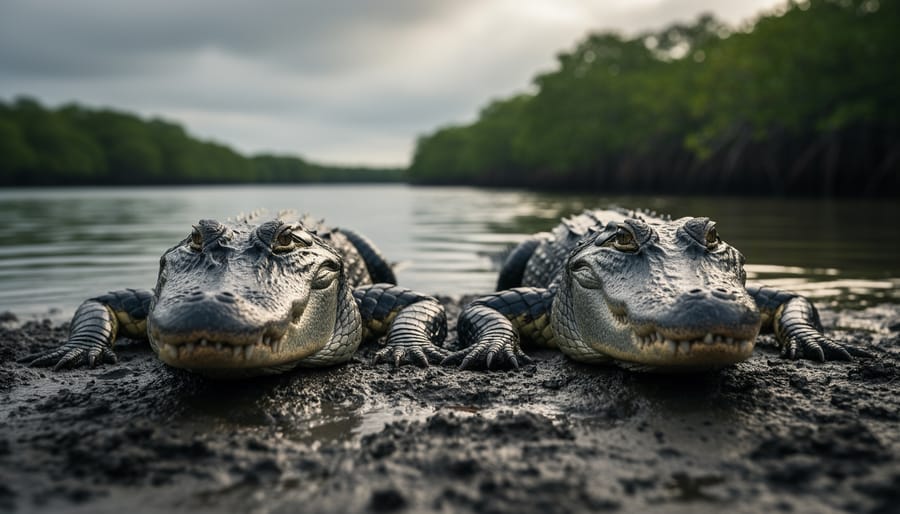
The most reliable way to tell crocodiles and alligators apart is snout shape: crocodiles have narrow, V-shaped snouts while alligators sport wide, U-shaped ones. This distinction matters whether you’re a wildlife educator teaching students to identify species, a conservation volunteer working in coastal habitats, or simply someone curious about the apex predators sharing our waterways.
Beyond the snout, visible teeth when the mouth is closed offer another quick identifier. Crocodiles display a prominent fourth tooth on their lower jaw that juts up outside the upper jaw, creating that classic toothy grin. Alligators tuck their lower teeth neatly inside their upper jaw, presenting a cleaner profile. These physical differences aren’t merely cosmetic. They reflect millions of years of evolutionary adaptation to distinct ecological niches and hunting strategies.
The two reptiles also occupy different territories across the globe. Alligators live primarily in freshwater environments throughout the southeastern United States and a small region of China. Crocodiles claim a broader range, thriving in tropical regions across Africa, Asia, Australia, and the Americas, often in saltwater or brackish environments thanks to specialized salt glands that alligators lack.
Dr. Maria Santos, a marine biologist who has tracked saltwater crocodiles in estuarine systems for over a decade, notes that understanding these differences has become increasingly important for conservation efforts. “When communities can accurately identify which species they’re encountering, they make better decisions about habitat protection and coexistence,” she explains. Both species face habitat loss and human conflict, making education about their unique characteristics essential for their survival in 2026 and beyond.
Crocodiles and Alligators at a Glance
When you spot a large reptile basking near the water’s edge, a few key features will tell you whether you’re looking at a crocodile or an alligator. These ancient predators share a common ancestor but have evolved distinct traits that suit them to different ecological niches.
| Feature | Crocodiles | Alligators |
|---|---|---|
| Snout Shape | V-shaped, narrow and pointed | U-shaped, broad and rounded |
| Teeth Visible When Mouth Closed | Both upper and lower teeth visible, especially large fourth lower tooth | Only upper teeth visible; upper jaw overlaps lower |
| Habitat Preference | Saltwater and brackish environments; coastal areas, estuaries | Freshwater only; swamps, marshes, rivers, lakes |
| Temperament | Generally more aggressive; more likely to perceive threats | Less aggressive toward humans; more tolerant of proximity |
| Geographic Range | Africa, Asia, Australia, Americas (tropical regions) | Southeastern United States and eastern China only |
| Typical Coloration | Lighter tan, olive, or grayish-green | Darker, often nearly black |
The snout shape offers the most reliable field identification marker. Crocodiles’ pointed snouts reflect their diverse diet and hunting strategy, while alligators’ rounded snouts are built for crushing power. This difference alone can help you identify the animal from a safe distance.
Habitat provides another immediate clue. If you’re near a saltwater or brackish environment anywhere in the world’s tropical belt, you’re in crocodile territory. Alligators stick exclusively to freshwater systems and have an extremely limited range compared to their crocodile cousins. Understanding where each species thrives matters for both personal safety and conservation planning, as habitat protection strategies must account for these distinct ecological requirements.
What Crocodiles and Alligators Are
What Crocodiles Are
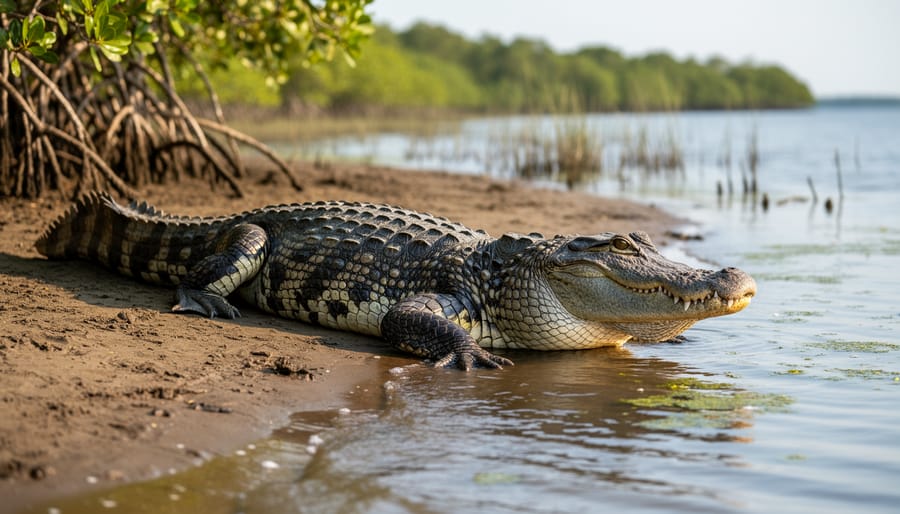
Crocodiles belong to the family Crocodylidae within the order Crocodylia, comprising approximately 14 recognized species distributed across tropical and subtropical regions worldwide. These ancient reptiles have survived relatively unchanged for over 200 million years, evolving into highly efficient apex predators perfectly adapted to aquatic environments.
The family includes several notable species. The saltwater crocodile (Crocodylus porosus) holds the distinction of being the largest living reptile, with males reaching lengths exceeding 20 feet and weighing over 2,000 pounds. These formidable predators inhabit coastal waters, estuaries, and rivers across Southeast Asia, northern Australia, and the eastern coast of India. The Nile crocodile (Crocodylus niloticus), Africa’s largest freshwater predator, plays a similar apex role across sub-Saharan Africa. Other species include the American crocodile, Orinoco crocodile, and the critically endangered Philippine crocodile.
As apex predators, crocodiles regulate prey populations and maintain ecosystem balance in both marine and brackish water habitats. Their presence indicates healthy waterway ecosystems. Saltwater crocodiles, in particular, serve as essential links between terrestrial, freshwater, and marine environments, moving freely between these zones and transferring nutrients across ecosystem boundaries.
Despite their evolutionary success, many crocodile species face severe conservation pressures. Habitat destruction, illegal hunting for skins, and human-wildlife conflict threaten populations worldwide. Seven species currently face extinction risk, with some populations reduced to mere hundreds of individuals. Climate change further compounds these challenges, altering coastal habitats and nesting sites critical for reproduction.
What Alligators Are
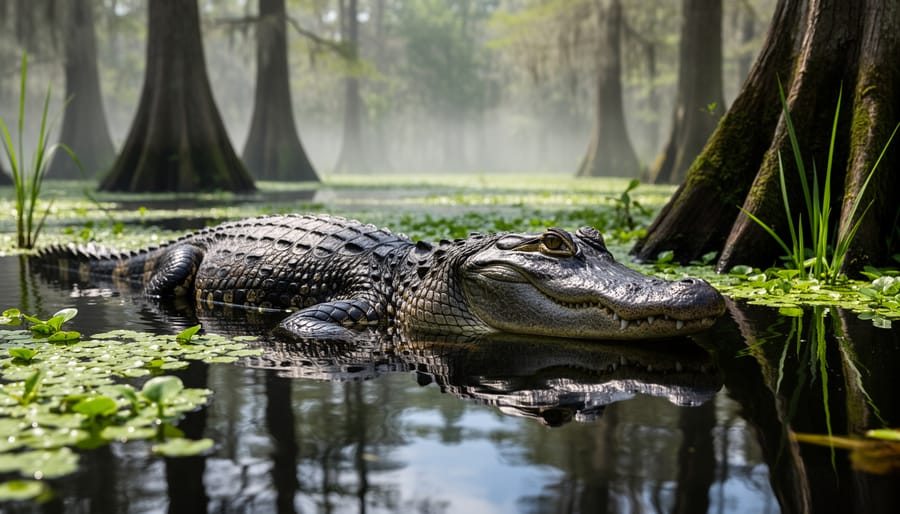
Alligators belong to the family Alligatoridae and include only two surviving species: the American alligator (Alligator mississippiensis) and the critically endangered Chinese alligator (Alligator sinensis). Unlike their crocodile relatives, alligators have evolved as freshwater specialists, thriving exclusively in rivers, swamps, marshes, and lakes where salinity remains low.
The American alligator, found throughout the southeastern United States, serves as a keystone species in wetland ecosystems. These reptiles create “gator holes” during dry seasons, depressions that retain water and provide critical refuge for fish, turtles, birds, and other wildlife. Their nesting mounds become elevated platforms where plants colonize, diversifying habitat structure. By controlling prey populations and cycling nutrients through the food web, alligators maintain the delicate balance that dozens of species depend upon.
The American alligator represents one of conservation’s most remarkable success stories. Once hunted nearly to extinction for their valuable hides, the species was listed as endangered in 1967. Through strict legal protection, habitat preservation, and regulated hunting programs, populations rebounded so successfully that the species was removed from the endangered list in 1987. Today, over five million American alligators inhabit their historic range, demonstrating how targeted conservation measures can reverse even severe population declines when implemented with scientific rigor and public support.
Physical Characteristics: How to Tell Them Apart
Snout Shape: The Most Obvious Difference
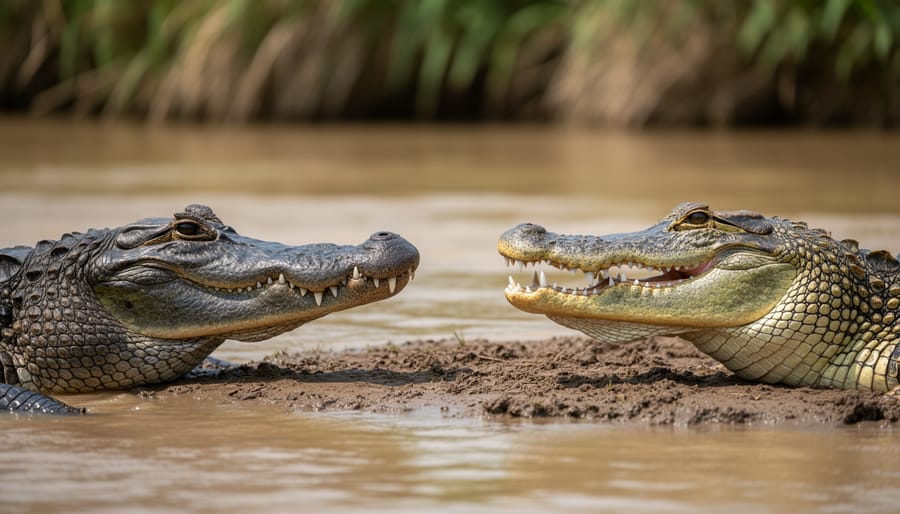
The snout is the quickest way to tell these reptiles apart. Crocodiles have narrow, V-shaped snouts that taper to a point, while alligators sport wide, U-shaped snouts with a rounded appearance. This isn’t just cosmetic, each shape reflects different feeding strategies honed over millions of years.
A crocodile’s slender snout delivers a faster, more precise strike, letting it catch fish, birds, and smaller prey that require agility. The pointed design also reduces water resistance during rapid movements. Alligators’ broader snouts generate more crushing force, perfect for grabbing turtles, large fish, and mammals where power matters more than speed. Their jaw muscles evolved to crack shells and bones that would resist a narrower bite.
When you identify crocs in the wild, look at the snout first. If it’s pointed and triangular, you’re seeing a crocodile. If it’s broad and rounded like a shovel, that’s an alligator. The difference is consistent across species and visible even at a distance.
Teeth and Jaw Structure
When a crocodile closes its mouth, you’ll see teeth from both the upper and lower jaws protruding in an interlocking pattern. The most distinctive is the enlarged fourth tooth on the lower jaw, which fits into a notch on the outside of the upper jaw and remains visible even when the mouth is fully shut. This creates the characteristic toothy grin that makes crocodiles instantly recognizable.
Alligators present a very different picture. Their broader upper jaw completely overlaps the lower jaw, concealing nearly all the lower teeth when the mouth closes. You’ll see primarily upper teeth, creating a much smoother jaw line without the prominent exposed lower teeth that characterize crocodiles.
These structural differences reflect distinct feeding strategies. Crocodiles’ interlocking teeth are well-suited for gripping and tearing a varied diet of fish, birds, and mammals. Their jaw structure allows for a powerful bite while maintaining the ability to manipulate prey. Alligators’ overlapping jaw design concentrates crushing force, ideal for their diet of turtles, fish, and other prey that benefit from a bone-crushing bite rather than precise tearing. Both species replace their teeth throughout their lives, cycling through thousands of teeth over decades.
Skin Texture and Coloration
Beyond snout shape and teeth, the skin of crocodiles and alligators reveals telling differences in both texture and color. Crocodiles generally display lighter coloration, ranging from tan to olive-green or grayish-brown, which provides camouflage in sandy riverbanks and coastal waters. Their skin often appears rougher with more prominent, irregular scale patterns.
Alligators wear darker armor, typically appearing nearly black or dark gray-green, especially as adults. This deeper coloration suits their swampy, vegetation-dense habitats where shadows and murky water dominate. Their scales tend to have a slightly smoother appearance with more uniform patterns.
A crucial distinction lies beneath the surface: crocodiles possess specialized sensory organs called integumentary sense organs (ISOs) distributed across their entire body, visible as small dots on their scales. These organs detect pressure changes and chemical signals in water, helping crocodiles hunt in murky conditions and navigate coastal environments. Alligators have similar organs, but only around their jaws, giving crocodiles a significant sensory advantage in detecting prey and environmental changes across their skin.
Size Variations
Size varies dramatically between species, with saltwater crocodiles holding the title of world’s largest living reptile. Males commonly reach 17 feet and can exceed 20 feet in exceptional cases, with the largest confirmed specimen measuring 20.24 feet. American alligators rank as the second-largest crocodilian in the Western Hemisphere but are considerably smaller, with males averaging 11 to 15 feet and rarely surpassing 16 feet.
Key size comparisons across major species:
- Saltwater crocodiles: average 14-17 feet (males), maximum recorded 20.24 feet
- Nile crocodiles: average 12-16 feet (males), maximum around 18 feet
- American alligators: average 11-15 feet (males), maximum verified 15.9 feet
- American crocodiles: average 13-16 feet (males), reaching 20 feet in rare instances
- Chinese alligators: average 5-7 feet, the smallest living crocodilian species
Females of both groups measure smaller than males, typically 25-30% shorter. Weight differences mirror length variations, with large saltwater crocodiles weighing over 2,000 pounds compared to American alligators at 800-1,000 pounds. These size distinctions reflect each species’ evolutionary adaptations to their specific habitats and available prey.
Habitat and Geographic Distribution
Crocodile Habitats: Saltwater Specialists
Crocodiles stand apart from their alligator cousins through a remarkable physiological adaptation: specialized salt glands on their tongues that actively excrete excess salt. This evolutionary advantage allows crocodiles to thrive in brackish and marine environments that would prove lethal to alligators, whose bodies cannot regulate salt concentrations effectively.
Saltwater crocodiles, the largest living reptiles, exemplify this adaptability. They inhabit coastal areas, estuaries, river mouths, and mangrove habitats across northern Australia, Southeast Asia, and parts of India. Individual saltwater crocodiles have been documented traveling hundreds of kilometers across open ocean between islands, a journey impossible for any alligator species.
This salt tolerance expands crocodile territory across the tropics. American crocodiles occupy coastal Florida, the Caribbean, Central America, and northern South America. Nile crocodiles dominate African river systems and coastal zones from the Nile Delta to Madagascar. Smaller species like the Indo-Pacific crocodile fill ecological niches throughout island nations of the Pacific and Indian Oceans.
Their distribution follows the warm waters of tropical and subtropical zones worldwide, creating a global presence in marine and transitional ecosystems where freshwater meets the sea.
Alligator Habitats: Freshwater Focused
Unlike their saltwater-tolerant cousins, alligators thrive exclusively in freshwater habitat s. Their bodies lack the specialized salt glands that allow crocodiles to excrete excess salt, making prolonged exposure to saltwater potentially fatal. This physiological limitation confines alligators to inland waterways where salinity remains low.
American alligators dominate the southeastern United States, from North Carolina south through Florida and west to Texas. They inhabit slow-moving rivers, cypress swamps, freshwater marshes, and even human-made reservoirs and retention ponds. These reptiles prefer still or sluggish waters with abundant vegetation, which provides cover for ambush hunting and nesting sites along muddy banks.
The Chinese alligator occupies a drastically smaller range in the lower Yangtze River basin of eastern China. Critically endangered, fewer than 200 individuals survive in the wild, restricted to fragmented wetlands and ponds. Habitat destruction and agricultural conversion have reduced their territory to a fraction of its historical extent.
Water temperature also shapes alligator distribution. They need warm climates since they cannot regulate body temperature internally. During winter, alligators enter a state of brumation, burrowing into mud or remaining dormant until temperatures rise, a behavior suited to their predictable freshwater environments.
Behavior and Temperament Differences
Crocodiles and alligators display markedly different temperaments, with crocodiles demonstrating significantly higher aggression levels toward humans and other perceived threats. Saltwater crocodiles and Nile crocodiles, in particular, are responsible for the majority of crocodilian attacks on humans worldwide, with documented incidents occurring when these apex predators defend territory, protect nests, or pursue prey. American alligators, by contrast, tend to be more tolerant of human presence and typically retreat unless cornered, threatened, or habituated to human feeding, though they remain powerful, unpredictable wild animals that warrant caution and respect.
The behavior differences stem partly from evolutionary adaptations to distinct ecological niches. Crocodiles evolved in environments where competition for resources was intense, favoring aggressive territorial defense and opportunistic hunting strategies that include taking large mammalian prey. Their wider geographic range across Africa, Asia, and Australia placed them in ecosystems with diverse and formidable competitors, selecting for bold, assertive behavior. Alligators developed in more stable freshwater wetlands with fewer large predators, allowing for less aggressive temperaments while still maintaining effective predation capabilities.
Territorial behavior also differs between the two groups. Male crocodiles maintain larger territories and defend them more vigorously, especially during breeding season, leading to violent confrontations with intruders. Alligators establish territories as well, but conflicts often resolve through vocal displays and posturing rather than physical combat. Female crocodiles guard nests with exceptional ferocity, attacking any creature, including humans, that ventures too close, whereas female alligators, though protective, allow more approach distance before initiating defensive responses.
These temperament variations have real implications for conservation work and human safety. Marine biologists and volunteers studying saltwater crocodiles in coastal ecosystems employ strict safety protocols, maintaining significant distances and using protective barriers during fieldwork. Understanding these behavioral distinctions doesn’t diminish the conservation value of either species, both play irreplaceable roles in their ecosystems, but it does inform how we approach research, education, and coexistence strategies in areas where humans and crocodilians share space.
Conservation Status and Threats
Success Stories and Ongoing Challenges
The American alligator represents one of conservation’s most remarkable turnarounds. Once hunted to near-extinction for its valuable hide and threatened by habitat loss throughout the southeastern United States, the species was listed as endangered under the Endangered Species Act in 1973. Through strict legal protections, habitat restoration, and careful population management, American alligator numbers rebounded so successfully that the species was removed from the endangered list in 1987 and now maintains a “least concern” status with stable populations throughout its range.
In stark contrast, the Chinese alligator faces a precarious future. With fewer than 150 individuals remaining in the wild along the Yangtze River valley, this species teeters on the brink of extinction due to agricultural expansion, dam construction, and human settlement in its limited freshwater habitat. Captive breeding programs in China hold several thousand individuals, but reintroduction efforts struggle against continued habitat fragmentation and human-wildlife conflict.
Conservation status classifications help prioritize protection efforts based on extinction risk:
- Critically Endangered
- Species facing an extremely high risk of extinction in the wild, such as the Chinese alligator and Philippine crocodile, with populations often numbering fewer than a few hundred individuals.
- Endangered
- Species at very high risk of extinction, including the Orinoco crocodile, which has experienced severe population declines but retains slightly more viable numbers than critically endangered species.
- Vulnerable
- Species facing a high risk of extinction in the medium term, such as the American crocodile in some regions, where habitat loss and human activity continue to threaten populations.
- Least Concern
- Species with stable, healthy populations across their range, exemplified by the American alligator and saltwater crocodile, though they still require ongoing monitoring and habitat protection.
Various crocodile species face mounting pressures even when not immediately threatened with extinction. Saltwater crocodiles, while stable overall, confront habitat degradation in coastal ecosystems across Southeast Asia and northern Australia due to coastal development, aquaculture expansion, and climate change impacts on nesting beaches. Nile crocodiles experience localized declines from illegal hunting and retaliatory killings following livestock predation, despite legal protections throughout much of Africa.
Protected areas, international trade regulations through CITES, and national legal frameworks form the backbone of crocodilian conservation. Countries like Costa Rica and Australia have demonstrated that combining strict habitat protection with regulated ecotourism can generate economic incentives for conservation while maintaining healthy populations. Yet enforcement remains inconsistent, particularly in developing nations where resource constraints limit monitoring and anti-poaching efforts.
How Conservation Efforts Protect Both Species
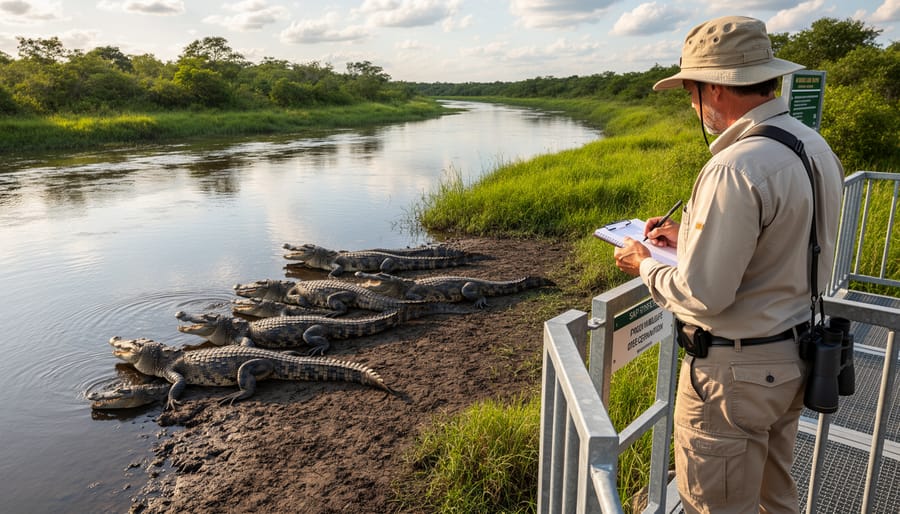
Habitat restoration forms the backbone of modern crocodilian conservation, with efforts focused on protecting and rebuilding wetlands, mangroves, and coastal estuaries that both species depend on. Captive breeding programs have proven remarkably effective, Chinese alligator populations now survive largely due to coordinated breeding efforts between Chinese and international facilities, with gradual reintroduction to protected wetland areas.
Anti-poaching patrols and stricter enforcement of wildlife trade regulations have reduced illegal hunting pressure, though challenges persist in regions where crocodile skins command high prices. Community engagement programs increasingly recognize that local populations must benefit from conservation to support it long-term, creating incentives through ecotourism and sustainable resource management.
Dr. Sarah Chen, a marine biologist with our research team, recalls her work monitoring saltwater crocodile nesting sites in northern Australia’s coastal wetlands: “We collaborated with Indigenous rangers who’ve protected these animals for generations. Their traditional knowledge about tidal patterns and crocodile behavior was invaluable for identifying critical nesting habitat. When communities see themselves as stewards rather than competitors, conservation outcomes improve dramatically.”
Protected marine areas now safeguard key crocodile breeding grounds, while freshwater reserves shield alligator populations from development pressures.
Which Species You’re Likely to Encounter
For North American Residents and Visitors
In the southeastern United States, you’ll almost certainly encounter alligators rather than crocodiles. Alligators thrive throughout Florida, Louisiana, Georgia, South Carolina, Alabama, Mississippi, and parts of Texas and Arkansas, anywhere with freshwater swamps, marshes, lakes, and slow-moving rivers.
American crocodiles occupy a much smaller range, limited primarily to the southern tip of Florida, especially around the Everglades, Florida Bay, and the Keys. They prefer coastal brackish and saltwater environments, so you’re far more likely to spot one near mangroves or tidal areas than inland freshwater bodies.
If you’re spending time near water in these regions, maintain a safe distance from any large reptile. Never feed wildlife, as this creates dangerous associations with humans. Most attacks occur when people get too close, especially during nesting season (April through June). If you spot a crocodilian exhibiting threatening behavior near residential areas, swimming beaches, or frequently used trails, contact your state wildlife agency immediately rather than attempting to handle the situation yourself.
For Travelers to Tropical Regions
Tropical and subtropical regions across Africa, Asia, Australia, Central America, and northern South America are crocodile territory. Saltwater crocodiles inhabit coastal areas from India through Southeast Asia to northern Australia, while Nile crocodiles range across sub-Saharan Africa. American crocodiles appear in coastal Mexico, Central America, and parts of the Caribbean and northern South America.
Before visiting these regions, research which species inhabit your destination and their behavior patterns. Saltwater crocodiles, the world’s largest living reptile, are particularly territorial and aggressive. Never swim in waters with warning signs, avoid riverbanks at dusk and dawn when crocodiles are most active, and maintain a safe distance of at least 5 meters from any crocodile you spot.
Support conservation by choosing eco-tour operators who follow responsible wildlife viewing guidelines and contribute to local protection programs. Your tourism dollars, when directed toward ethical operations, fund habitat preservation and community education initiatives that reduce human-wildlife conflict while protecting these ancient predators.
For Marine Conservationists and Researchers
Saltwater crocodiles are the primary focus for marine conservationists working in coastal and estuarine ecosystems, particularly in the Indo-Pacific region. Their ability to tolerate saltwater makes them key indicators of coastal habitat health and mangrove ecosystem integrity. Researchers studying marine-terrestrial interface zones frequently encounter these apex predators alongside marine species.
American crocodiles also inhabit brackish and coastal waters in Florida and throughout the Caribbean, making them relevant to marine conservation work in these regions. In contrast, alligators remain freshwater specialists, important for wetland ecology but rarely encountered in marine research contexts.
The Marine Biodiversity Science Center offers volunteer positions monitoring saltwater crocodile populations in coastal protected areas, contributing to long-term datasets on habitat use and nesting success. These opportunities allow participants to work alongside marine biologists documenting crocodile interactions with sea turtle nesting beaches, seagrass beds, and coral reef-adjacent mangrove systems, critical data for integrated coastal management strategies.
What Each Option Is
Crocodiles and alligators are both large, semi-aquatic reptiles belonging to the order Crocodylia, yet they represent distinct evolutionary branches within this ancient lineage.
Crocodiles are members of the family Crocodylidae, comprising 14 species distributed across tropical regions of Africa, Asia, Australia, and the Americas. They’ve evolved specialized salt glands on their tongues that allow them to excrete excess salt, enabling many species to thrive in brackish water and coastal marine environments. Saltwater crocodiles, the largest living reptiles, can reach over 20 feet and venture into open ocean. Their V-shaped snouts and visible teeth give them a distinctly aggressive appearance that matches their typically more assertive temperament.
Alligators belong to the family Alligatoridae and include just two species: the American alligator and the critically endangered Chinese alligator. Unlike their crocodile cousins, alligators lack functional salt glands and remain restricted to freshwater habitats like swamps, marshes, and slow-moving rivers. Their broader, U-shaped snouts and hidden teeth create a less menacing profile. American alligators typically max out around 13-15 feet and generally display less aggression toward humans than most crocodile species.
Who Should Choose Which
Since you can’t “choose” between crocodiles and alligators the way you’d pick a product, the choice here is about which species matters most to your work, travel plans, or conservation focus.
If you live in or visit the southeastern United States, alligators are your primary concern. They’re the species you’ll encounter in freshwater environments from North Carolina to Texas. Homeowners near wetlands, educators developing local curricacy, and freshwater conservationists should prioritize understanding alligator behavior and habitat needs.
Choose to focus on crocodiles if you work in coastal marine ecosystems, particularly in tropical regions. Marine biologists studying estuarine systems, travelers heading to Africa, Asia, Australia, or Central America, and conservationists addressing saltwater habitat loss need crocodile expertise. Saltwater crocodiles especially matter for anyone working where freshwater meets the ocean.
For comprehensive marine biodiversity work, you need knowledge of both. Coastal regions like southern Florida host American crocodiles and alligators in overlapping ranges, requiring dual awareness. Researchers studying climate change impacts on aquatic reptiles should understand how both groups respond differently to environmental shifts, since their distinct physiological adaptations create varying vulnerabilities.
Common Questions About Crocodiles and Alligators
Can crocodiles and alligators interbreed?
No, crocodiles and alligators cannot interbreed despite being related reptiles. They belong to different families within the order Crocodylia and diverged evolutionarily about 80 million years ago, making them genetically incompatible for producing offspring.
Which is more dangerous to humans?
Crocodiles, particularly saltwater and Nile crocodiles, are statistically more dangerous to humans than alligators. Their aggressive territorial behavior, larger average size, and habitat overlap with human coastal activities contribute to more frequent attacks, though unprovoked encounters with either species remain relatively rare.
Why don’t we see alligators in saltwater?
Alligators lack the specialized salt glands that crocodiles possess, preventing them from effectively filtering excess salt from their bodies. While they can tolerate brief exposure to brackish water, extended time in saltwater environments would lead to dangerous salt accumulation in their bloodstream.
Are there crocodiles in the United States?
Yes, American crocodiles inhabit southern Florida, particularly in the Everglades, Florida Bay, and the Florida Keys. They represent the northern limit of crocodile distribution in the Western Hemisphere and prefer coastal brackish and saltwater habitats where they rarely overlap with the more abundant alligator populations.
Beyond these common queries, people often wonder about the ecological importance of both species. Crocodilians serve as apex predators that regulate fish and mammal populations, preventing overgrazing of aquatic vegetation and maintaining biodiversity in their ecosystems. Their nesting mounds create elevated dry areas that other species use during flooding, while abandoned burrows provide refuge for fish, turtles, and invertebrates during droughts.
Conservation efforts for these ancient reptiles need sustained support. You can contribute by supporting wetland and coastal habitat protection initiatives, participating in citizen science programs that monitor wild populations, and avoiding products made from illegally harvested crocodilian skins. The Marine Biodiversity Science Center offers volunteer opportunities for those interested in fieldwork with saltwater crocodiles and habitat restoration projects. Even small actions matter: reporting sightings to wildlife authorities helps researchers track population health, while educating others about these misunderstood animals counters fear-based persecution that threatens their survival.
Crocodiles and alligators may share 200 million years of evolutionary history, but their distinct adaptations have carved out separate ecological niches across the globe. From the saltwater crocodile patrolling tropical coastlines to the American alligator engineering freshwater wetlands, each species plays an irreplaceable role in maintaining healthy aquatic ecosystems. Understanding these differences isn’t just about identification, it’s about recognizing that both groups face mounting pressures from habitat loss, climate change, and human encroachment.
The conservation victories we’ve achieved, like the American alligator’s remarkable recovery, prove that dedicated action works. Yet many crocodile species remain critically endangered, and even stable populations need ongoing protection. You can make a tangible difference by supporting habitat restoration initiatives, participating in citizen science monitoring programs in your region, and advocating for policies that protect wetland ecosystems.
Join the Marine Biodiversity Science Center’s e-network to receive updates on crocodilian research, volunteer opportunities with coastal conservation projects, and ways to contribute to long-term population studies. Whether you’re spotting alligators in Louisiana swamps or learning about saltwater crocodiles in Australia, your awareness and engagement strengthen the collective effort to ensure these ancient reptiles thrive for generations to come.

jessica
Ava Singh is an environmental writer and marine sustainability advocate with a deep commitment to protecting the world's oceans and coastal communities. With a background in environmental policy and a passion for storytelling, Ava brings complex topics to life through clear, engaging content that educates and empowers readers. At the Marine Biodiversity & Sustainability Learning Center, Ava focuses on sharing impactful stories about community engagement, policy innovations, and conservation strategies. Her writing bridges the gap between science and the public, encouraging people to take part in preserving marine biodiversity. When she’s not writing, Ava collaborates with local initiatives to promote eco-conscious living and sustainable development, ensuring her work makes a difference both on the page and in the real world.