Marine Biodiversity Science Center

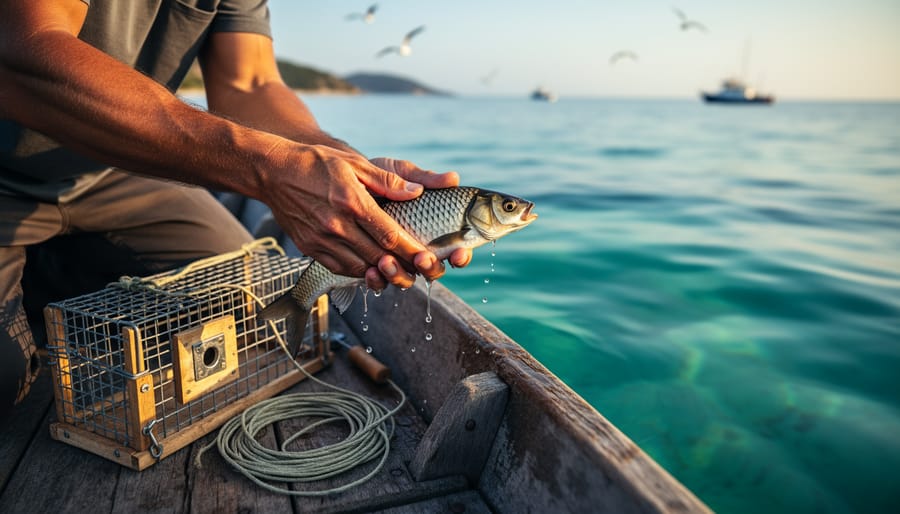
Our oceans stand at a crossroads. Industrial fishing practices have pushed marine ecosystems to their breaking point, with nearly 90% of global fish stocks fully exploited or overfished. Yet beneath these sobering statistics lies a powerful truth: the techniques we choose today determine whether our grandchildren will inherit thriving oceans or barren seas.
Sustainable fishing techniques represent more than just alternative methods—they embody a fundamental shift in how humanity interacts with marine life. These practices balance our need for seafood with the ocean’s capacity to regenerate, ensuring that fish populations remain healthy, ecosystems stay intact, and coastal communities can depend on fishing for generations to come.
From selective gear that allows juvenile fish to escape and grow to maturity, to seasonal closures that protect spawning populations, sustainable fishing combines traditional wisdom with cutting-edge science. Marine biologists like Dr. Sarah Chen have witnessed firsthand how implementing these techniques can revive depleted fisheries. “Within five years of adopting sustainable practices, we saw target species populations rebound by 40%,” she shares from her work with Pacific coastal communities.
The encouraging reality is that sustainable fishing works. Commercial operations, small-scale fishers, and even recreational anglers are proving that we can harvest ocean resources responsibly. Whether you’re a fisherman, seafood consumer, or simply someone who cares about ocean health, understanding these techniques empowers you to become part of the solution. The ocean’s recovery begins with the choices we make today.
Why Traditional Fishing Methods Are Failing Our Oceans
Our oceans are in trouble, and the fishing methods we’ve relied on for decades are a significant part of the problem. While the seafood industry sustains billions of people worldwide, many traditional approaches have pushed marine ecosystems to their breaking point.
Consider this: approximately 34% of global fish stocks are currently overfished, meaning we’re removing fish faster than populations can naturally replenish themselves. The consequences ripple through entire food webs. When we deplete key species like cod or tuna, we don’t just lose those fish—we disrupt the delicate balance that countless other marine organisms depend upon for survival.
Bycatch represents one of the most devastating aspects of destructive fishing practices. Commercial fishing operations unintentionally capture and kill millions of tons of non-target species annually, including sea turtles, dolphins, seabirds, and juvenile fish. Imagine a fishing net designed to catch shrimp—it doesn’t discriminate. Everything in its path gets swept up, often resulting in up to 90% bycatch in some operations.
Bottom trawling, a common industrial fishing method, drags heavy nets across the seafloor, essentially clear-cutting underwater habitats. Marine biologist Dr. Sarah Chen describes witnessing trawled areas: “What was once a thriving coral and sponge community becomes a flattened desert. The recovery can take decades, if it happens at all.”
Habitat destruction extends beyond the seafloor. Coastal mangroves and seagrass beds, which serve as critical nurseries for juvenile fish, face degradation from fishing infrastructure and pollution. Without these protective environments, fish populations struggle to rebuild, perpetuating a cycle of decline.
The good news? Recognizing these challenges marks the first step toward meaningful change. Understanding why conventional methods fail helps us appreciate why sustainable alternatives aren’t just preferable—they’re essential for ocean health and future food security.
The Science Behind Sustainable Fishing Techniques
Sustainable fishing begins with understanding how marine ecosystems function as interconnected systems. Rather than focusing solely on harvesting target species, truly sustainable approaches consider the entire food web, habitat health, and long-term population dynamics. This holistic perspective, known as ecosystem-based management, guides modern science-based fishing solutions that protect ocean biodiversity while supporting fishing communities.
At its core, sustainability means harvesting fish at a rate that allows populations to replenish naturally. Scientists determine this through stock assessments, analyzing data on fish abundance, reproduction rates, and mortality. When fishing pressure exceeds what a population can sustain, it risks collapse. The devastating story of Atlantic cod in the 1990s taught researchers invaluable lessons about respecting these biological limits.
Modern sustainable techniques minimize bycatch, the unintended capture of non-target species like sea turtles, dolphins, or juvenile fish. They also reduce habitat damage, particularly to sensitive seafloor ecosystems. Selectivity becomes key: catching the right species, at the right size, using methods that leave ecosystems intact.
Dr. Sarah Chen, a marine biologist I recently spoke with, emphasized that sustainability isn’t static. “We constantly adapt our recommendations based on new research about climate change impacts, shifting migration patterns, and ecosystem health,” she explained. This adaptive management approach means fisheries adjust practices as conditions change.
Scientific monitoring provides the foundation for these decisions. Researchers track fish populations through surveys, analyze catch data, and study ecosystem interactions. This evidence-based approach removes guesswork, replacing it with informed strategies that balance human needs with ocean health. When properly implemented, these techniques ensure future generations inherit thriving oceans teeming with life.
Proven Techniques That Are Making a Difference
Selective Fishing Gear: Catching Only What We Need
Modern fishing gear innovations have revolutionized our ability to target specific species while protecting marine life that shouldn’t be caught. These selective technologies represent one of the most effective tools in reducing bycatch, the unintended capture of non-target species that has long plagued commercial fishing operations.
Circle hooks have emerged as a simple yet powerful solution. Unlike traditional J-shaped hooks that often lodge deep in a fish’s throat, circle hooks are designed to catch in the corner of the mouth when tension is applied. This design dramatically reduces injury to unwanted catches, allowing fishermen to release them safely. Studies show circle hooks reduce sea turtle bycatch by up to 90% in longline fisheries, while maintaining comparable catch rates for target species like tuna and swordfish.
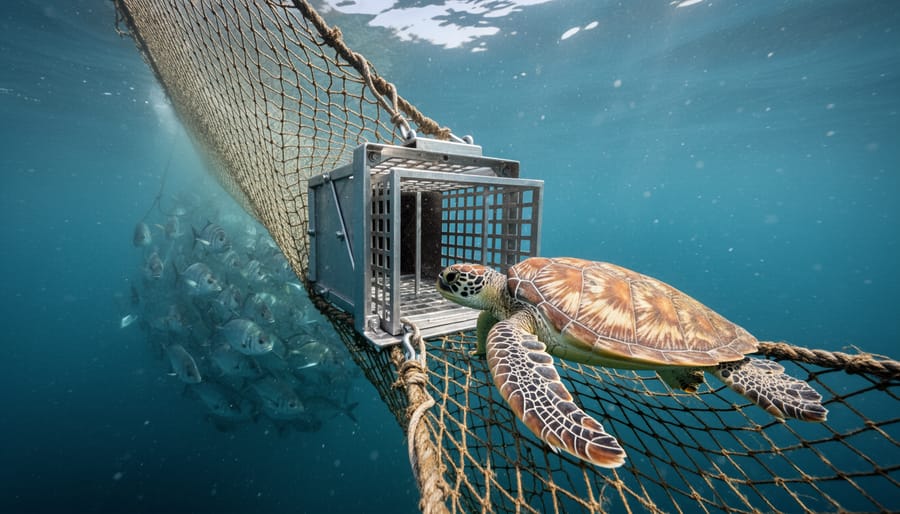
Turtle Excluder Devices (TEDs) provide another success story. These metal grids installed in shrimp trawl nets create an escape hatch for sea turtles and other large animals while retaining the desired catch. Since becoming mandatory in many fisheries during the 1990s, TEDs have saved hundreds of thousands of sea turtles from drowning in nets. Marine biologist Dr. Sarah Chen recalls her early career studying TEDs: “I was skeptical at first, but watching that first loggerhead swim free through the escape opening changed everything for me. We’d found a way to protect turtles without destroying livelihoods.”
Modified net designs, including larger mesh sizes and acoustic pingers that warn marine mammals away, continue advancing bycatch reduction. These innovations prove that economic viability and conservation can coexist through thoughtful engineering and collaborative research.
Marine Protected Areas and Seasonal Closures
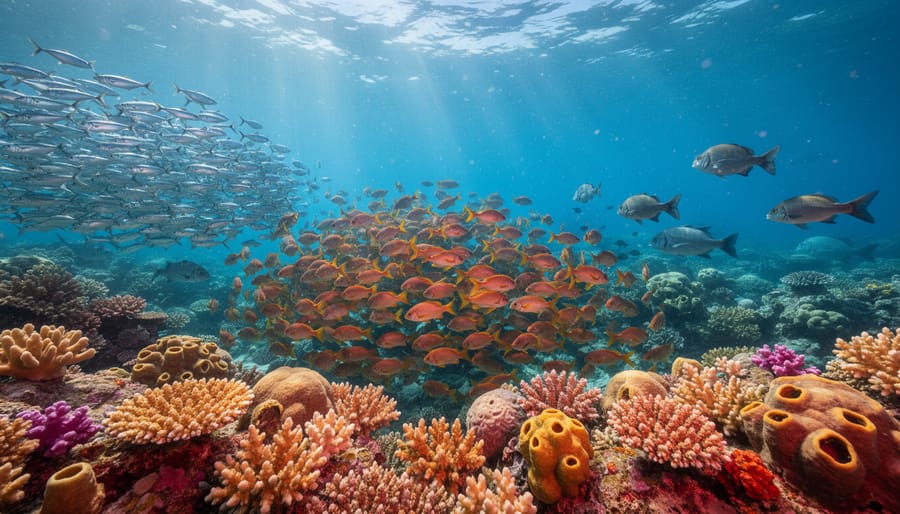
Marine Protected Areas (MPAs) function as underwater sanctuaries where fish populations can spawn, grow, and rebuild without the pressure of fishing activities. These designated zones, combined with seasonal closures during critical breeding periods, create safe havens that allow marine ecosystems to regenerate naturally. The concept is straightforward yet powerful: give nature time and space to recover, and it will.
The results speak volumes. New Zealand’s Leigh Marine Reserve, established in 1975, demonstrated a remarkable five-fold increase in snapper populations within a decade. Similarly, the Phoenix Islands Protected Area in Kiribati, one of the world’s largest MPAs, has become a biodiversity hotspot supporting endangered species and maintaining thriving ocean ecosystems.
Dr. Maria Santos, a marine biologist who has studied MPAs for fifteen years, shares her perspective: “I’ve witnessed barren reefs transform into vibrant underwater forests. The spillover effect means adjacent fishing grounds also benefit as fish populations expand beyond MPA boundaries.”
Seasonal closures complement MPAs by protecting species during vulnerable spawning periods. Norway’s winter cod closure has helped maintain healthy cod stocks, while Alaska’s salmon management includes precise timing restrictions that have sustained commercial fisheries for generations.
These tools demonstrate that strategic conservation doesn’t eliminate fishing but rather ensures its long-term viability, benefiting both marine life and fishing communities.
Catch Share Programs and Quota Systems
Catch share programs represent one of the most effective policy tools for preventing overfishing while maintaining viable fishing communities. These systems allocate specific portions of the total allowable catch to individual fishermen or groups, based on scientific assessments of fish populations. Rather than creating a competitive race to catch as many fish as possible before stocks run out, quota systems give fishermen secure access to their share throughout the season.
Dr. Maria Santos, a fisheries biologist who helped implement a catch share program in New England, recalls the transformation: “Within three years, we saw groundfish populations begin recovering. Fishermen could plan their seasons, invest in selective gear, and actually earned more despite catching less.” The program reduced bycatch by 40% as boats had time to fish strategically rather than frantically.
These science-based limits work because they align economic incentives with conservation goals. Fishermen become stewards of the resource, since healthy fish populations directly benefit their future livelihoods. Community-supported fishery programs often incorporate catch share principles, connecting consumers directly with local fishermen who follow sustainable quotas. By supporting these initiatives and advocating for science-based fisheries management, you help ensure thriving oceans and coastal communities for generations to come.
Aquaculture Done Right: The Future of Fish Farming
Not all fish farming is created equal. While traditional aquaculture has often harmed coastal ecosystems through pollution and disease transmission, innovative approaches are proving that raising fish can actually benefit the environment.
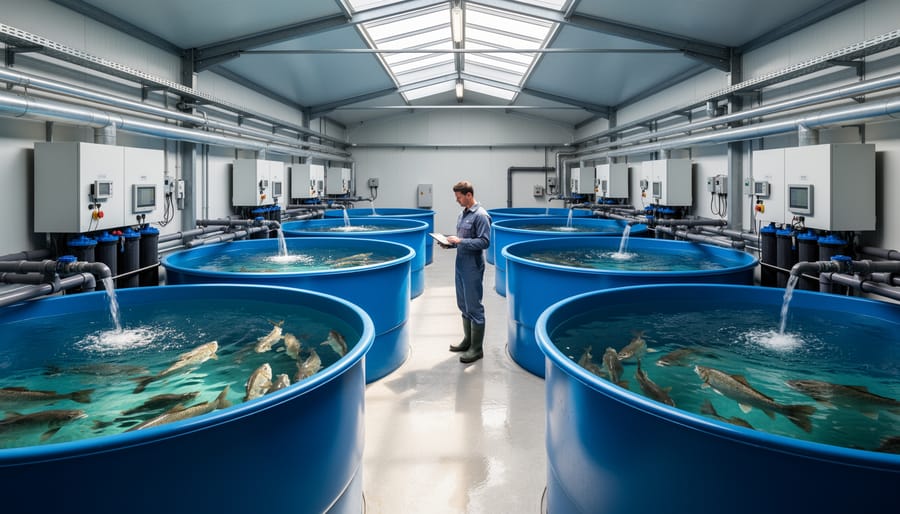
Recirculating aquaculture systems (RAS) represent a game-changing technology. These land-based facilities filter and reuse up to 99% of their water, eliminating the pollution that plagues ocean-based fish farms. Dr. Maria Chen, a marine biologist working with inland fish farms in Colorado, shares her excitement: “We’re producing thousands of pounds of salmon annually while using less water than a golf course. It’s like creating a self-contained ocean.”
Integrated multi-trophic aquaculture (IMTA) takes inspiration from natural ecosystems by farming multiple species together. Fish waste becomes nutrients for seaweed and shellfish, which filter the water naturally. This creates a balanced system where nothing goes to waste.
The feed question matters enormously. Sustainable farms now source protein from algae, insects, and agricultural byproducts rather than depleting wild fish stocks for fishmeal. This shift alone could revolutionize the industry’s environmental footprint.
Many coastal communities offer volunteer opportunities at sustainable aquaculture facilities, providing hands-on experience with these innovative systems. By supporting responsible fish farming through our purchasing choices and involvement, we’re helping create a viable alternative to overfishing our oceans.
Real Stories from the Field: Marine Biologists and Fishers Working Together
When Dr. Maria Santos first approached the fishing cooperatives in Costa Rica’s Golfo Dulce, she expected resistance. Instead, she found eager partners ready to protect their livelihoods and the ocean they depended on. “The fishers knew something was wrong,” Maria recalls. “Their catches were getting smaller each year, and they wanted solutions.” Together, they implemented circle hooks and turtle excluder devices, reducing bycatch by 70% while maintaining profitable catches. Five years later, the community has become a model for sustainable fishing, with younger generations joining the cooperatives specifically because of their conservation commitment.
In Alaska, commercial fisher James Kowalski partnered with marine researchers to test new selective fishing gear. “I was skeptical at first,” he admits. “I thought sustainability meant sacrificing income.” But the data told a different story. By switching to modified trawl nets with escape panels, his crew reduced juvenile fish bycatch by 85% while actually improving the quality and market value of their catch. “We’re catching bigger, healthier fish now,” James explains. “And we know there will be fish for my kids to catch too.”
These collaborations demonstrate something powerful: fishers aren’t the problem, they’re essential partners in the solution. Marine biologist Dr. Kenji Tanaka has worked with small-scale fishing communities across Southeast Asia for over a decade. His approach focuses on co-creating solutions rather than imposing regulations. “When fishers help design the research and see the benefits themselves, they become the strongest advocates for sustainable practices,” he observes.
The results speak volumes. Communities involved in collaborative management programs report not just healthier fish populations, but stronger social bonds and economic stability. In the Philippines, one village created a marine protected area after working with researchers, and within three years, their fishing yields in surrounding waters increased by 40%.
These stories remind us that ocean conservation succeeds when we bridge the gap between science and lived experience, creating partnerships built on mutual respect and shared goals.
The Role of Education in Transforming Fishing Practices
Education stands as one of the most powerful tools for transforming fishing practices from extraction-based industries into sustainable stewardship models. Around the globe, innovative programs are equipping both seasoned fishers and newcomers with knowledge about ocean ecosystems, fish population dynamics, and responsible harvesting techniques that ensure long-term viability.
Formal certification programs have emerged as game-changers in the industry. The Marine Stewardship Council’s training initiatives teach fishers about stock assessment, bycatch reduction methods, and habitat protection strategies. These programs combine classroom learning with hands-on fieldwork, allowing participants to understand the direct connection between their practices and ocean health. Dr. Maria Santos, a fisheries biologist who leads certification workshops in coastal Portugal, shares that “watching fishers embrace selective gear after understanding its impact on juvenile fish populations reminds me why marine conservation education matters so deeply.”
Community workshops have proven particularly effective in reaching traditional fishing communities. These grassroots initiatives respect local knowledge while introducing scientific insights about changing ocean conditions and adaptive management strategies. In Alaska, indigenous-led programs blend ancestral fishing wisdom with modern sustainability science, creating culturally relevant educational frameworks.
School initiatives are cultivating the next generation of ocean stewards. Programs like Seafood Watch’s curriculum bring sustainable fishing concepts into classrooms, teaching students to make informed seafood choices and understand the broader impacts of fishing methods. Youth aquaculture projects in coastal communities provide hands-on experience with sustainable food production.
These educational efforts extend beyond fishing communities to consumers, restaurants, and retailers. Public awareness campaigns help people understand how their purchasing decisions influence fishing practices, creating market demand for sustainably caught seafood that incentivizes responsible harvesting methods throughout the supply chain.
How You Can Support Sustainable Fishing
Making Informed Seafood Choices
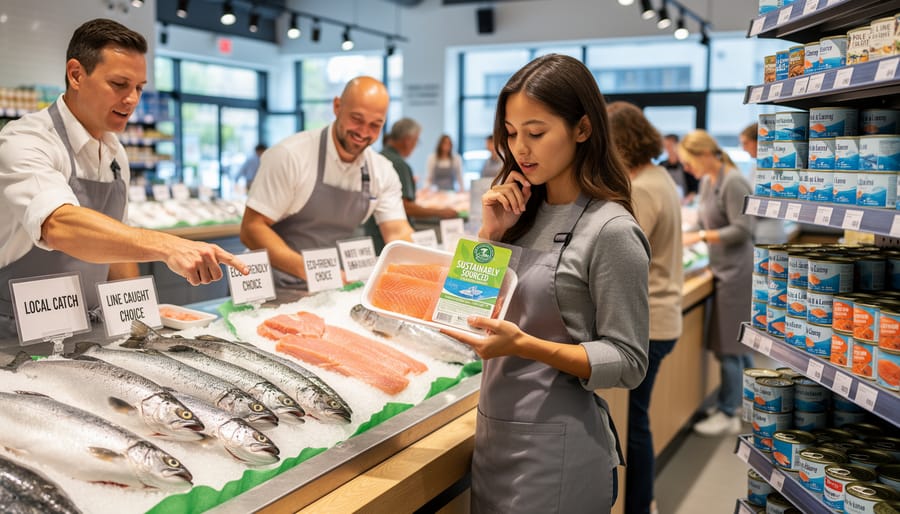
Your everyday purchasing decisions hold remarkable power in shaping the future of our oceans. When shopping for seafood, look for the Marine Stewardship Council (MSC) blue label, which certifies wild-caught fish from sustainable fisheries that maintain healthy populations and minimize environmental impact. The Aquaculture Stewardship Council (ASC) label indicates responsibly farmed seafood that meets strict standards for water quality, feed sources, and ecosystem protection.
Several free smartphone apps can guide your choices at the market. Seafood Watch, developed by the Monterey Bay Aquarium, provides regional recommendations rating fish as “Best Choice,” “Good Alternative,” or “Avoid” based on current sustainability data. The app even includes sushi guides for dining out.
Marine biologist Dr. Elena Torres shares her approach: “I always ask my fishmonger questions about the source and fishing method. This conversation signals consumer demand for transparency and encourages retailers to stock sustainable options.” Consider supporting local fishers who use selective gear like hand lines or traps, and diversify your seafood choices beyond popular species to reduce pressure on overfished populations. Remember, every sustainable purchase contributes to healthier marine ecosystems and supports fishing communities committed to long-term ocean stewardship.
Volunteer Opportunities and Citizen Science
You can make a tangible difference in advancing sustainable fishing through hands-on involvement with marine conservation programs. The Marine Biodiversity Science Center offers volunteer opportunities ranging from fish population monitoring to habitat restoration projects, where participants work alongside marine biologists collecting crucial data about local fisheries and ecosystem health. These experiences provide invaluable insights into how fishing practices affect marine environments while contributing to ongoing research.
Citizen science initiatives like FishWatch allow you to report fish sightings and unusual catches through mobile apps, helping scientists track species distribution and abundance patterns. Beach cleanup programs organized by Ocean Conservancy directly combat one of fishing’s persistent challenges—marine debris from abandoned gear and packaging. Monthly cleanup events often coincide with educational workshops about sustainable seafood choices.
For those interested in deeper engagement, bycatch monitoring programs train volunteers to observe and record non-target species interactions at fishing sites. This data informs management decisions and technique improvements. Many programs welcome participants of all experience levels, providing training and mentorship opportunities. By dedicating just a few hours monthly, you join a global network of ocean advocates actively shaping the future of marine conservation and sustainable fishing practices.
Spreading Awareness Through Your Network
Your voice matters more than you might think. When you share what you’ve learned about sustainable fishing with friends, family, or colleagues, you create ripples that extend far beyond a single conversation. Post about responsible seafood choices on social media, recommend sustainable options at your local market, or simply discuss these practices at dinner.
Consider joining online communities focused on marine conservation where you can exchange ideas and stay informed about ocean health threats. Many marine biologists I’ve worked with began their conservation journey through casual discussions that sparked deeper engagement. Support local and national policies promoting sustainable fisheries by contacting representatives or signing petitions from credible organizations. Every email sent, every conversation started, and every conscious purchasing decision contributes to building momentum for ocean-friendly practices. Together, we’re creating a culture where sustainability isn’t exceptional but expected.
The future of our oceans depends on choices we make today, but here’s the empowering truth: sustainable fishing techniques are already proving that we can reverse decades of damage. From the Mediterranean fishers adopting circle hooks to the Alaskan communities implementing seasonal closures, real people are demonstrating that conservation and livelihood can coexist. The science is clear, the methods are accessible, and the momentum is building.
Every action ripples outward. When you choose sustainably sourced seafood, you’re voting with your wallet for responsible practices. When you share knowledge about selective gear or bycatch reduction with your community, you’re multiplying impact. The collective power of informed citizens, dedicated researchers, and committed fishing communities creates lasting change that no single entity could achieve alone.
The Marine Biodiversity Science Center stands ready to support your journey into marine conservation. Whether you’re an educator looking to bring ocean science into your classroom, a student eager to contribute to field research, or simply someone passionate about protecting marine life, our programs offer meaningful ways to engage. Join our volunteer monitoring initiatives to collect vital data on local fish populations. Participate in our community workshops to learn directly from marine biologists about sustainable practices. Connect with our network of researchers working at the frontiers of conservation science.
The ocean’s recovery begins with understanding, grows through action, and succeeds through community. Start today by exploring how you can contribute to protecting the remarkable biodiversity beneath the waves.

jessica
Ava Singh is an environmental writer and marine sustainability advocate with a deep commitment to protecting the world's oceans and coastal communities. With a background in environmental policy and a passion for storytelling, Ava brings complex topics to life through clear, engaging content that educates and empowers readers. At the Marine Biodiversity & Sustainability Learning Center, Ava focuses on sharing impactful stories about community engagement, policy innovations, and conservation strategies. Her writing bridges the gap between science and the public, encouraging people to take part in preserving marine biodiversity. When she’s not writing, Ava collaborates with local initiatives to promote eco-conscious living and sustainable development, ensuring her work makes a difference both on the page and in the real world.