Marine Biodiversity Science Center

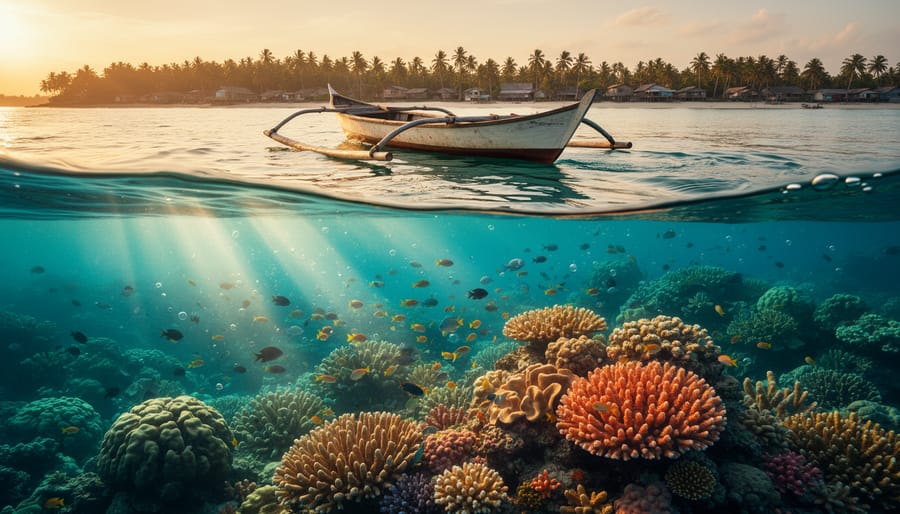
Beneath the ocean’s surface lies a moral imperative as vibrant as the reefs themselves: we bear ethical responsibility for ecosystems we’ve pushed to the brink of collapse. When a single dynamite blast obliterates centuries of coral growth to capture fish for tonight’s dinner, or when sunscreen chemicals from a beach vacation bleach polyps that sustain millions of marine species, we’re confronting questions that transcend science and economics. These aren’t merely environmental issues—they’re profound ethical challenges about our duties to vulnerable ecosystems, future generations who will inherit degraded oceans, and coastal communities whose survival depends on reef health.
The case for coral reef protection rests on foundations deeper than biodiversity statistics or tourism revenue. It emerges from principles of intergenerational justice, recognizing that our children deserve the same oceanic wonders we’ve experienced. It stems from environmental stewardship, acknowledging that dominion over nature carries obligations, not just privileges. It reflects concerns for environmental justice, as reef destruction disproportionately harms Indigenous peoples and developing nations with the least responsibility for climate change yet the greatest dependence on marine resources.
Marine biologist Dr. Sarah Chen recalls the moment her ethical awakening crystallized: witnessing a Philippine fishing community’s grief as their ancestral reef turned ghostly white. “They hadn’t caused the warming waters,” she reflects, “but they lost everything.” This human dimension—the faces behind the science—transforms abstract principles into urgent moral claims demanding our response, our action, and our accountability.
The Moral Foundation: Why Coral Reefs Deserve Our Protection
Beyond Economics: The Intrinsic Value of Coral Ecosystems
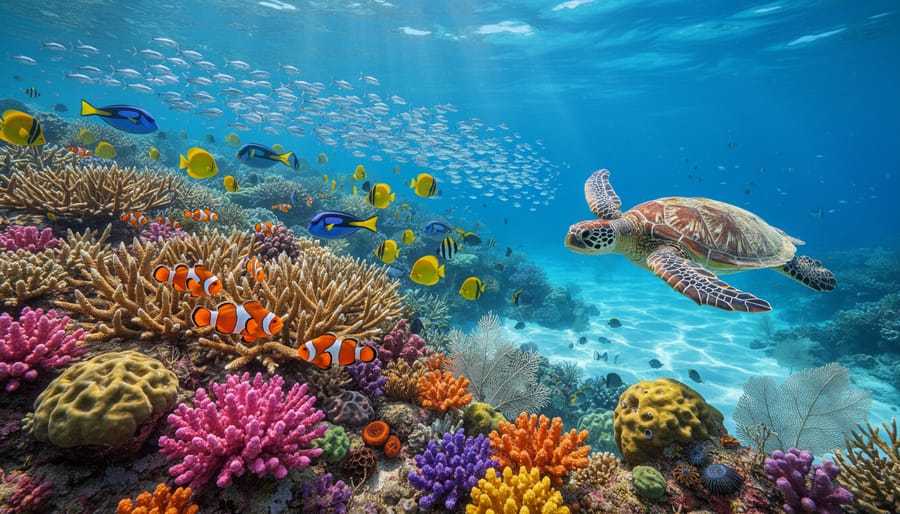
While economic arguments for protecting coral reefs are compelling, reducing these magnificent ecosystems to their monetary value misses something fundamental. Coral reefs possess intrinsic worth that exists independently of human benefit—a value rooted in their very existence as complex, ancient communities of life.
The biodiversity argument stands as a powerful ethical pillar. Coral reefs support approximately 25% of all marine species despite occupying less than 1% of the ocean floor. Each species, from the smallest polyp to the largest grouper, represents millions of years of evolutionary refinement. When we allow coral reefs to degrade, we’re not just losing resources—we’re erasing irreplaceable genetic libraries and severing evolutionary pathways that can never be recreated. Dr. Elena Martinez, a marine biologist who has spent two decades studying Caribbean reefs, reflects on this reality: “Every time I witness coral bleaching, I’m watching the end of countless stories that began long before humans walked the earth. These organisms have earned their place in the ocean through eons of adaptation. Who are we to write their final chapter?”
This perspective aligns with ecosystem integrity as a moral imperative. Healthy coral reefs represent self-sustaining systems in balance—a state that has intrinsic moral worth beyond utility. Protecting this integrity acknowledges our responsibility as one species among many sharing this planet.
For those moved by these ethical considerations, volunteer opportunities with reef monitoring programs offer meaningful ways to translate conviction into action, ensuring these ancient ecosystems persist for their own sake.
Our Debt to Future Generations
When we marvel at a vibrant coral reef today, we’re experiencing an ecosystem that took thousands of years to develop. Yet our actions in the coming decades will determine whether future generations can share in this wonder or will only know coral reefs through photographs and museum exhibits.
The concept of intergenerational justice demands that we consider the needs and rights of people not yet born. Children entering the world today will reach adulthood in an era when ocean temperatures, acidity levels, and marine biodiversity will be shaped by the choices we make now. Marine biologist Dr. Elena Rodriguez shares a powerful perspective from her work with youth education programs: “When I see the excitement in young students’ eyes during their first snorkeling experience, I think about whether my own grandchildren will have that same opportunity. We’re not just protecting coral—we’re preserving possibilities for discovery, wonder, and connection with nature.”
Future generations will depend on healthy oceans for food security, coastal protection, medical discoveries, and climate regulation. Coral reefs support fisheries that feed over one billion people globally, and scientists continue to find promising pharmaceutical compounds in reef organisms. By degrading these ecosystems, we’re not only eliminating beauty but potentially destroying solutions to future challenges we haven’t yet encountered.
Our obligation extends beyond preservation to active restoration. Volunteer opportunities with reef monitoring programs and coral nursery projects allow individuals to contribute directly to rebuilding what has been damaged, offering hope that future generations will inherit oceans enriched by our commitment rather than impoverished by our neglect.
The Communities at Stake: Human Lives Depend on Reef Health
Food Security and Economic Survival
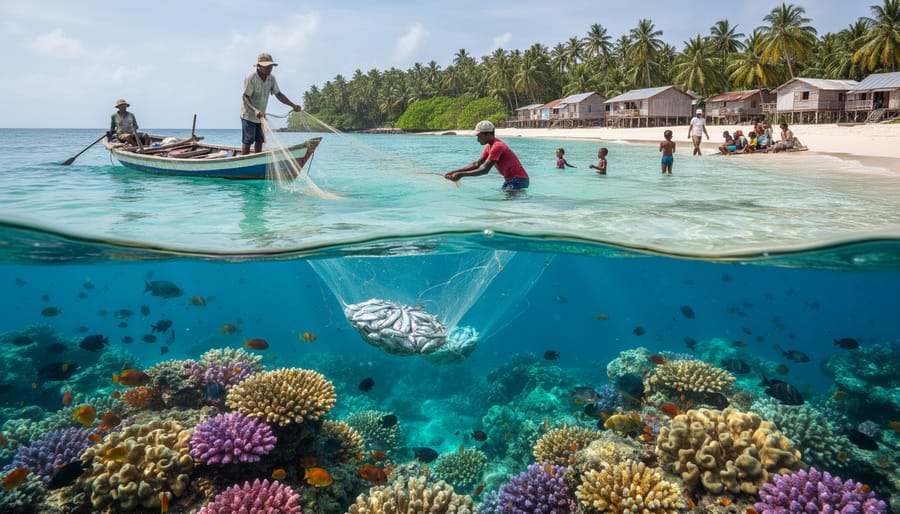
For over one billion people worldwide, coral reefs represent more than ecological treasures—they are lifelines. Coastal communities, particularly in developing nations across Southeast Asia, the Caribbean, and the Pacific Islands, depend directly on reef ecosystems for their primary protein source and economic livelihood. When reefs degrade, fish populations collapse, devastating families who have sustainably harvested these waters for generations.
The ethical dimension becomes stark when we consider who bears the consequences of reef destruction. Often, the communities most vulnerable to reef decline have contributed least to the global threats—climate change, pollution, and destructive industrial practices—that endanger these ecosystems. Small-scale fishers practicing traditional methods face impossible choices as their catches dwindle, sometimes forced toward more destructive techniques simply to survive.
Marine biologist Dr. Ayana Elizabeth Johnson shares stories of Caribbean fishers who’ve witnessed 70% declines in reef fish over their lifetimes, watching their children inherit seas they barely recognize. This raises profound questions of intergenerational justice and our responsibility to those whose survival intertwines with reef health.
Supporting sustainable fishing practices and empowering local communities with conservation resources isn’t just environmentally sound—it’s a moral imperative. Protecting reefs means protecting people, honoring both their cultural heritage and fundamental right to food security.
Cultural Heritage and Indigenous Rights
For countless coastal and indigenous communities worldwide, coral reefs represent far more than marine ecosystems—they embody ancestral connections, spiritual significance, and cultural identity passed down through generations. Pacific Islander communities, for instance, have maintained deep relationships with reefs for thousands of years, viewing them as sacred spaces that sustain both physical and spiritual wellbeing. Traditional knowledge systems include sophisticated reef management practices that predate modern marine science by centuries.
These communities often serve as the most effective stewards of coral reefs, holding invaluable ecological knowledge about seasonal changes, fish behavior, and sustainable harvesting practices. When external conservation efforts overlook or dismiss indigenous expertise, they not only disrespect cultural heritage but also miss opportunities for more effective protection strategies. Hawaiian practices like kapu (conservation closures) and the concept of ahupua’a (integrated land-to-sea management) demonstrate how traditional wisdom aligns with contemporary conservation science.
Our ethical responsibility extends beyond environmental protection to honoring the rights of indigenous peoples to maintain their cultural practices and participate meaningfully in conservation decisions affecting their ancestral waters. Dr. Maria Santos, a marine biologist working alongside Filipino fishing communities, shares: “The fishermen taught me to read the reef in ways my formal training never covered. Real conservation happens when we combine scientific knowledge with generations of lived experience.”
Protecting coral reefs means protecting the cultures inseparable from them—a duty rooted in respect, justice, and recognition of shared humanity.
The Weight of Our Actions: How Human Behavior Harms Reefs
Climate Change and Carbon Emissions: Our Collective Responsibility
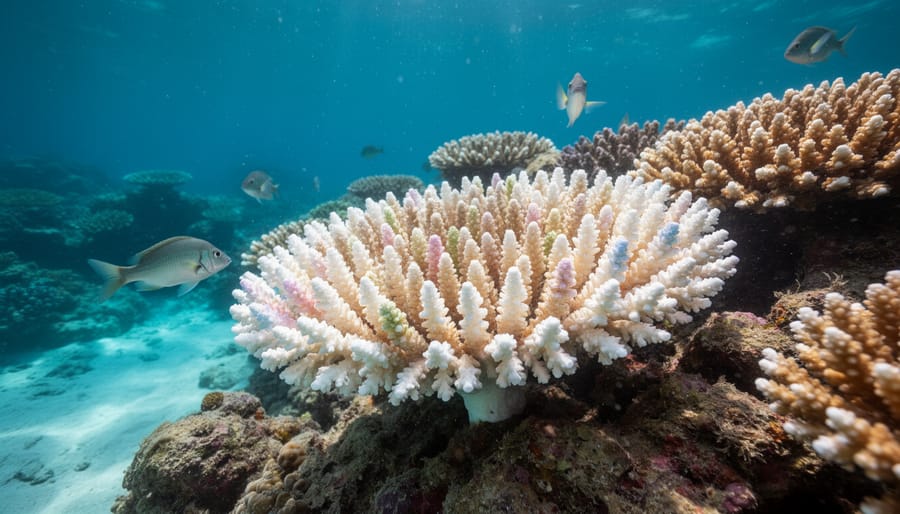
Climate change stands as perhaps the most significant threat to coral reefs worldwide, and it represents a collective ethical challenge that transcends borders and generations. Rising ocean temperatures trigger coral bleaching events, where stressed corals expel their symbiotic algae and lose their vibrant colors and primary food source. Meanwhile, increased atmospheric carbon dioxide doesn’t just warm our planet; approximately one-third is absorbed by oceans, causing acidification that weakens coral skeletons and disrupts the delicate chemistry these ecosystems depend upon.
Dr. Sarah Chen, a marine biologist who has monitored Caribbean reefs for two decades, shares a sobering observation: “I’ve watched reefs I’ve known since childhood transform from thriving underwater gardens to ghostly remnants. What strikes me most is knowing that every person’s carbon footprint contributes to this decline, but also that every reduction matters.”
This reality places an ethical burden on all of us. Our daily choices regarding energy consumption, transportation, and consumption patterns directly impact these distant yet vulnerable ecosystems. Supporting renewable energy, reducing personal emissions, and advocating for climate policies become acts of moral responsibility toward species and ecosystems that cannot speak for themselves. Volunteer programs now integrate carbon literacy education, helping participants understand their connection to reef health and empowering them with practical steps to minimize their environmental impact while supporting restoration efforts.
Pollution and Coastal Development: Direct Impact, Direct Responsibility
Coastal ecosystems bear the brunt of human development, and coral reefs are particularly vulnerable to our expanding footprint. Pollution and runoff from agricultural fertilizers, sewage, and industrial waste introduce excess nutrients that trigger harmful algal blooms, smothering corals and blocking vital sunlight. Plastic debris entangles reef structures and leaches toxic chemicals, while microplastics infiltrate the entire food web.
Coastal construction projects compound these problems through sedimentation that suffocates coral polyps and destroys nursery habitats. Each construction permit approved, every untreated wastewater discharge, and all single-use plastics discarded represent choices with direct consequences for reef health.
The ethical responsibility here is clear and immediate. Corporations must implement sustainable practices and wastewater treatment systems, while individuals can reduce plastic consumption, support reef-safe products, and participate in coastal cleanups. Marine biologist Dr. Sarah Chen shares, “I’ve witnessed volunteers remove thousands of pounds of debris from a single reef site, giving corals room to breathe again. Every piece of trash removed matters.”
Our daily decisions ripple outward to these underwater communities, making accountability not just corporate policy but personal imperative.
Destructive Fishing and Tourism Practices
Human activities devastate coral reefs through practices driven by short-term profit over long-term sustainability. Dynamite and cyanide fishing, still prevalent in Southeast Asia and the Pacific, obliterate entire reef structures to harvest fish quickly. These methods don’t just kill target species—they destroy centuries-old coral colonies and eliminate habitat for thousands of marine organisms. The ethical implications are profound: we’re trading temporary economic gain for permanent ecological loss.
Unsustainable harvesting of coral for jewelry, aquarium trade, and construction materials further depletes reef ecosystems. Marine biologist Dr. Sarah Chen shares, “I’ve witnessed reefs stripped bare by collectors. What takes decades to grow disappears in hours, and the communities depending on those reefs lose their livelihoods.”
Tourism, while economically vital for coastal communities, often harms the very reefs attracting visitors. Irresponsible tourism practices include anchor damage, tourist trampling, and chemical sunscreen pollution. However, ethical consumer choices make a difference. Choose reef-safe sunscreens, select certified eco-tour operators, maintain proper distance from marine life, and never touch or remove coral. Supporting businesses committed to sustainable practices sends a clear market signal that conservation matters.
Putting Ethics Into Action: Frameworks for Responsible Reef Protection
Science-Based Conservation with Ethical Oversight
Effective coral reef conservation requires rigorous scientific research conducted with ethical integrity. This means ensuring that field studies minimize disturbance to delicate ecosystems, respect local communities who depend on these resources, and prioritize long-term reef health over short-term research gains. Scientists must obtain proper permits, work collaboratively with indigenous knowledge holders, and ensure their methods don’t inadvertently harm the organisms they’re studying.
When applied thoughtfully, research-driven conservation yields remarkable results. The Coral Restoration Foundation in Florida has pioneered nursery programs that grow coral fragments in underwater structures before transplanting them to degraded reefs. Marine biologist Dr. Sarah Chen, who leads restoration efforts in the Caribbean, shares that “combining genetic research with hands-on restoration gives coral populations their best fighting chance against climate change.”
Similarly, the Great Barrier Reef Marine Park Authority uses extensive monitoring data to establish no-take zones where fish populations recover and coral resilience improves. These protected areas are determined through stakeholder consultations that balance conservation needs with fishing community livelihoods.
Volunteer opportunities abound for those interested in contributing to ethical, science-based conservation. Reef Check trains citizen scientists to conduct standardized surveys, while Coral Watch teaches divers to monitor coral bleaching. These programs demonstrate how transparent, participatory research strengthens both scientific understanding and public commitment to reef protection.
Legal Protections and International Cooperation
Safeguarding coral reefs requires robust legal frameworks and unprecedented global cooperation. Marine protected areas serve as critical sanctuaries where reefs can recover from human pressures, but their success depends entirely on rigorous enforcement and adequate funding. Currently, only a fraction of the world’s coral reefs enjoy meaningful legal protection, and many MPAs exist as “paper parks” without the resources to prevent illegal fishing or destructive activities.
International agreements like the Paris Climate Accord and the Convention on Biological Diversity establish ethical commitments to reef conservation, yet implementation varies dramatically across nations. Cross-border collaboration becomes essential when dealing with migrating species and ocean currents that don’t respect political boundaries. Dr. Maria Santos, a marine policy expert who helped establish protected zones in the Coral Triangle, shares: “The most successful conservation stories I’ve witnessed happened when neighboring countries pooled resources and shared monitoring data.”
The ethical imperative extends beyond creating laws to ensuring they’re enforced equitably. Indigenous communities often serve as the most effective reef guardians when given legal recognition and support, combining traditional ecological knowledge with modern conservation science.
Community-Led Conservation: Empowering Local Voices
Local communities living near coral reefs hold invaluable traditional knowledge and have the strongest stake in long-term reef health. Ethical conservation recognizes that top-down approaches often fail because they exclude the very people whose livelihoods and cultural identities are intertwined with these ecosystems. When communities lead conservation efforts, outcomes improve dramatically.
In Fiji, the Locally Managed Marine Area network demonstrates this power. Over 400 communities now manage their own marine resources using traditional practices combined with modern science. Fish populations have rebounded, and communities report increased food security and income from sustainable tourism. Village elders share that protecting reefs honors their ancestors while securing their children’s futures.
Similarly, the Mesoamerican Reef Leadership Program trains local fishers as marine monitors and guides. Former fisherman Carlos Martinez from Honduras explains how becoming a conservation leader transformed his relationship with the reef: “I always knew the reef fed my family, but now I understand my responsibility to feed the reef’s future.”
These success stories reveal an ethical truth: conservation thrives when it respects human dignity, incorporates local wisdom, and ensures communities benefit from protection efforts. Supporting community-led initiatives through volunteer programs, partnerships, and funding creates lasting change that honors both ecological and social justice.
Your Role in the Solution: Taking Ethical Action
Making Conscious Consumer Choices
Our daily purchasing decisions carry profound ethical weight for coral reef ecosystems. Start with sustainable seafood choices by consulting resources like the Ocean Wise program or Marine Stewardship Council certifications, which help you avoid species caught using destructive fishing methods that damage reefs. When visiting coastal areas, select reef-safe sunscreens containing non-nano zinc oxide or titanium dioxide rather than chemicals like oxybenzone and octinoxate, which scientific studies have linked to coral bleaching and developmental issues in marine organisms.
Making responsible tourism decisions means choosing tour operators committed to marine protection through proper waste management, limited group sizes, and educational programming. Marine biologist Dr. Elena Patel shares, “I’ve witnessed the stark difference between protected reefs visited by responsible operators and degraded sites where tourism lacks regulation. Your choice of tour company directly determines whether your visit contributes to conservation or destruction.” Support businesses that employ local communities, reducing pressure on reef resources while fostering economic alternatives to extractive industries.
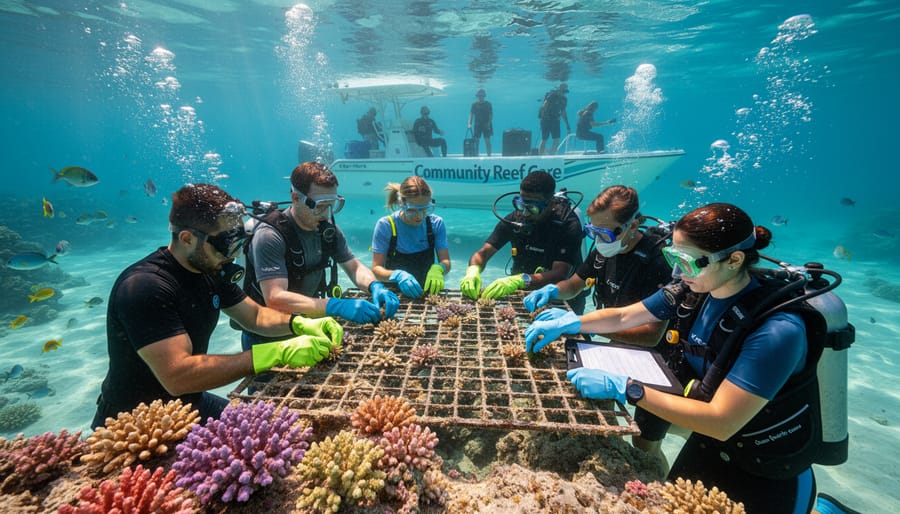
Becoming a Reef Advocate and Volunteer
Translating ethical understanding into tangible action begins with getting involved in reef conservation efforts. The Marine Biodiversity Science Center offers diverse volunteer opportunities, from citizen science projects monitoring reef health to educational outreach programs that bring marine conservation into local communities. Volunteers assist researchers in collecting vital data, participate in restoration initiatives, and help maintain critical long-term monitoring programs that track ecosystem changes.
Dr. Maria Santos, a marine biologist at the center, shares how volunteers transformed her research: “Community members bring invaluable local knowledge and dedication. One volunteer spotted a coral spawning event we might have missed, leading to breakthrough insights about reproduction patterns in warming waters.” Her story exemplifies the meaningful contributions everyday citizens make to scientific understanding.
Student volunteers often describe their experiences as transformative. “Working alongside scientists showed me how my actions connect to broader environmental impacts,” reflects college student James Chen, who now advocates for sustainable fishing practices in his community. “I understood intellectually why reefs matter, but witnessing their fragility firsthand ignited genuine commitment.”
Beyond direct research support, reef advocates educate others about sustainable seafood choices, support marine protected areas, and reduce their carbon footprints. Organizations like Coral Restoration Foundation and Reef Check offer additional pathways for involvement, welcoming participants regardless of scientific background. Every contribution, from beach cleanups to policy advocacy, strengthens the collective effort protecting these irreplaceable ecosystems for future generations.
Supporting Policy and Education Initiatives
Protecting coral reefs requires more than individual action—it demands collective advocacy and sustained educational engagement. Supporting marine conservation organizations provides crucial funding for research, restoration projects, and policy development. Consider donating to or volunteering with groups that conduct reef monitoring, organize beach cleanups, or advocate for protective legislation. Many organizations offer citizen science programs where you can contribute valuable data while learning from marine biologists in the field.
Engaging with policymakers amplifies conservation efforts significantly. Contact local representatives to support marine protected areas, sustainable fishing regulations, and climate action policies. Attend town halls and public hearings on coastal development to ensure reef protection remains a priority. Your voice matters in shaping environmental policy.
Educational initiatives create lasting change by fostering environmental stewardship in future generations. Participate in workshops, webinars, and certification programs offered by aquariums and conservation centers. Share knowledge within your community through presentations or social media, translating complex scientific concepts into accessible messages. Marine biologist Dr. Sarah Chen notes that “every person who understands reef ecosystems becomes an advocate—education transforms passion into meaningful action.” By combining personal commitment with organized advocacy and continuous learning, we transform ethical principles into tangible protection for these irreplaceable ecosystems.
The ethical imperative to protect coral reefs extends beyond scientific necessity—it reflects our fundamental responsibility to preserve life’s diversity for future generations and acknowledge our interconnectedness with all marine species. These underwater ecosystems, home to approximately 25% of all marine life, remind us that conservation is not merely an environmental issue but a profound moral commitment to stewardship and justice.
Hope flourishes when individual actions unite into collective movements. Every person who chooses sustainable seafood, reduces carbon emissions, or speaks out against destructive coastal development becomes part of a global network of reef guardians. Marine biologist Dr. Elena Rodriguez shares her perspective: “I’ve witnessed dying reefs recover when communities rallied together. What seemed impossible became reality through persistent, collaborative effort. That’s the power we all hold.”
The transition from passive concern to active participation defines meaningful conservation. Whether you’re a scientist, educator, student, or simply someone who cares about our oceans, your contribution matters. Small actions ripple outward—teaching children about reef ecosystems, participating in beach cleanups, supporting marine protected areas, or advocating for climate policies all weave into the larger tapestry of reef protection.
Your journey as a marine conservation advocate begins today. Join our e-network to receive updates on volunteer opportunities, citizen science projects, and educational programs that connect you directly with reef conservation efforts. Together, we can ensure that coral reefs continue to thrive, inspiring wonder and sustaining life for generations to come. The ocean’s future depends on choices we make now—be part of the solution.

jessica
Ava Singh is an environmental writer and marine sustainability advocate with a deep commitment to protecting the world's oceans and coastal communities. With a background in environmental policy and a passion for storytelling, Ava brings complex topics to life through clear, engaging content that educates and empowers readers. At the Marine Biodiversity & Sustainability Learning Center, Ava focuses on sharing impactful stories about community engagement, policy innovations, and conservation strategies. Her writing bridges the gap between science and the public, encouraging people to take part in preserving marine biodiversity. When she’s not writing, Ava collaborates with local initiatives to promote eco-conscious living and sustainable development, ensuring her work makes a difference both on the page and in the real world.