Marine Biodiversity Science Center

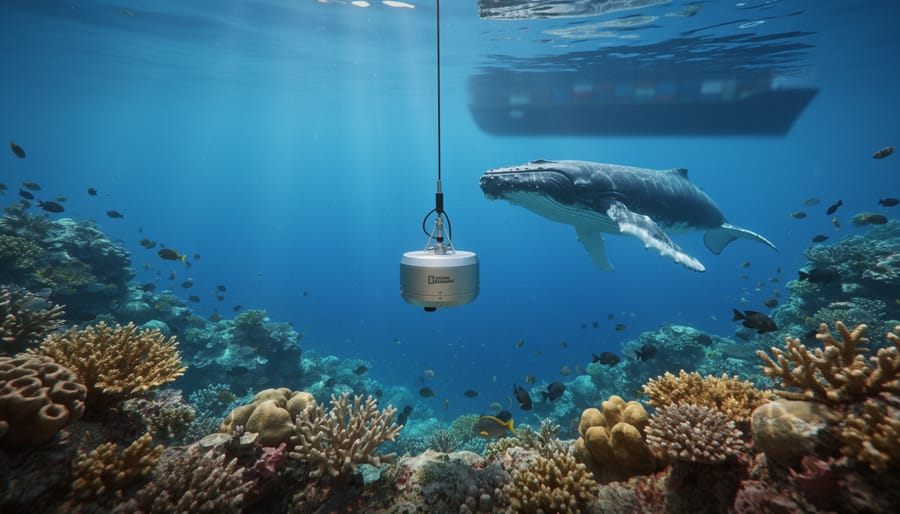
Beneath the ocean’s surface exists a symphony most humans will never hear—a complex acoustic landscape where whales sing haunting ballads, snapping shrimp create crackling choruses, and fish grunt, whistle, and drum to communicate across vast distances. Marine bioacoustics, the study of sound production and reception in ocean environments, reveals that our seas are anything but silent. Every click, buzz, and resonant call serves a purpose: finding mates, navigating murky waters, warning of predators, or claiming territory in the world’s largest habitat.
Understanding these underwater soundscapes has become critical for marine conservation. Noise pollution from shipping vessels, seismic surveys, and coastal development now drowns out the vital communications marine species depend on for survival. Whales beach themselves after military sonar disrupts their navigation. Coral reef fish larvae fail to locate suitable habitats when engine noise masks the acoustic cues they follow. The consequences ripple through entire ecosystems.
Yet this scientific field offers hope. Researchers now use passive acoustic monitoring to track endangered species, identify biodiversity hotspots, and measure ecosystem health without disturbing marine life. Marine biologists working in remote locations record these soundscapes, cataloging the acoustic signatures of thousands of species. Their discoveries inform protected area management, shipping route modifications, and international regulations that reduce harmful ocean noise—proving that understanding the ocean’s music is essential to preserving the species that create it.
The Hidden Concert Beneath the Waves
What Marine Bioacoustics Reveals About Ocean Health
Scientists are transforming how we understand ocean health by listening to the sea. Marine bioacoustics—the study of underwater sounds—allows researchers to monitor entire ecosystems without disturbing them. By deploying hydrophones (underwater microphones) across different marine environments, scientists can record the complex soundscapes that reveal which species are present, how populations are changing, and whether ecosystems are thriving or declining.
Dr. Michelle Torres, a marine bioacoustician working in coral reef restoration, explains: “Every healthy reef has its own acoustic signature—a chorus of snapping shrimp, feeding fish, and vocalizing marine mammals. When we return to monitor restored reefs, we literally hear recovery happening.” This approach to marine science communication makes conservation progress tangible and measurable.
Acoustic monitoring offers several advantages over traditional survey methods. It operates continuously, day and night, capturing rare events and seasonal patterns. Scientists can detect whale migrations, track fish spawning aggregations, and even identify individual animals by their unique calls. Changes in the soundscape—such as decreased biological sounds or increased vessel noise—alert researchers to environmental stressors before visible damage occurs.
This technology also creates opportunities for citizen scientists. Organizations worldwide now invite volunteers to help analyze acoustic data, identifying species calls and contributing to global biodiversity databases. By listening to the ocean, we gain unprecedented insights into marine life while building the scientific foundation needed for effective conservation action.
Nature’s Composers: Marine Animals That Make Music
Whales: The Ocean’s Singers
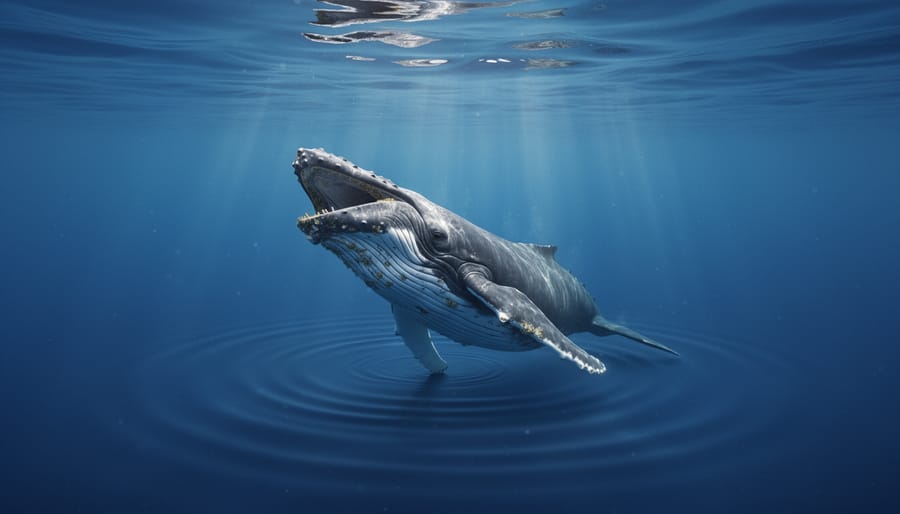
Humpback whales produce some of the most complex vocalizations in the animal kingdom. These haunting songs, which can last up to 20 minutes and be heard across vast ocean distances, consist of repeated themes and phrases that evolve over time. Marine biologist Dr. Ellen Garland discovered that whale songs spread across populations like cultural phenomena, with new patterns moving from one group to another across thousands of miles of ocean.
What makes these songs particularly remarkable is their structure. Male humpbacks perform intricate compositions during breeding season, and all males in a population sing virtually the same song in any given year. Yet the song changes progressively, suggesting a form of cultural transmission previously thought unique to humans.
Scientists use specialized hydrophones to record and analyze these vocalizations, revealing that whales communicate information about identity, location, and possibly emotional states. These studies have transformed our understanding of cetacean intelligence and social complexity.
Unfortunately, humpback populations face increasing threats despite recovering from commercial whaling. Ocean noise pollution from shipping traffic, naval sonar, and offshore drilling interferes with their ability to communicate and navigate. Climate change also disrupts their migration patterns and food sources.
Conservation efforts need continued support. Organizations worldwide offer volunteer opportunities in whale monitoring programs, where citizen scientists help collect acoustic data. Your participation in beach cleanups, sustainable seafood choices, and support for marine protected areas directly contributes to protecting these magnificent ocean singers for future generations.
The Percussion Section: Snapping Shrimp and Clicking Dolphins
Among the ocean’s most unexpected percussionists are the tiny but mighty snapping shrimp. These small crustaceans, living in massive colonies, create one of the loudest biological sounds in the ocean. By rapidly closing their specialized claw, they generate a cavitation bubble that produces a sharp crack reaching up to 210 decibels—loud enough to stun prey and deter predators. When thousands inhabit coral reefs or seagrass beds together, their collective snapping creates a constant crackling chorus resembling bacon sizzling in a pan.
Dolphins contribute their own percussive elements through echolocation clicks. These sharp, rapid-fire sounds serve as their biological sonar, allowing them to navigate murky waters and locate fish with remarkable precision. Each click lasts mere milliseconds but can reach frequencies above 150 kilohertz—well beyond human hearing range.
Marine biologist Dr. Sarah Chen describes listening to these soundscapes during field research: “The first time I heard a healthy reef ecosystem with both snapping shrimp and dolphins, I was overwhelmed by the complexity. It’s nature’s percussion section working in perfect, unintentional harmony.”
These acoustic environments indicate ecosystem health, making them valuable monitoring tools for conservation efforts.
Fish Choruses and Coral Reef Symphonies
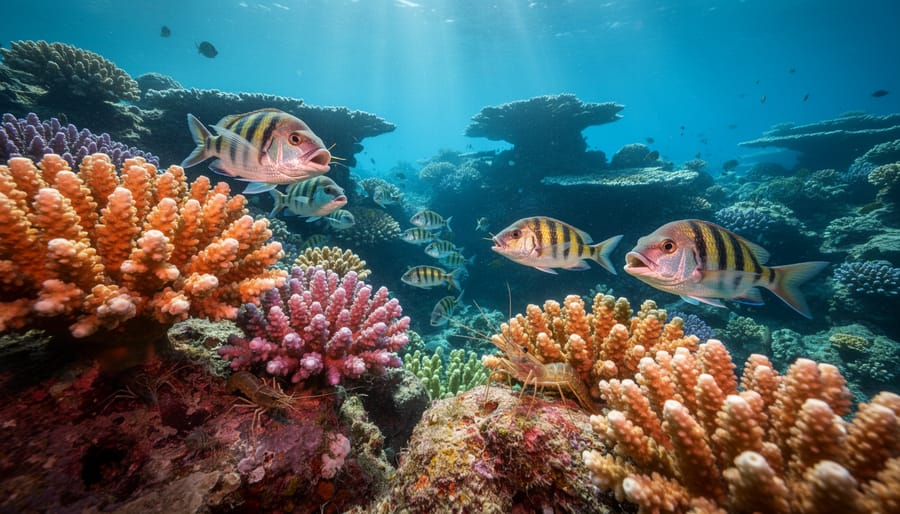
Beneath the waves, coral reefs host some of nature’s most intricate acoustic performances. Fish don’t just swim silently—many species actively vocalize using specialized muscles that vibrate their swim bladders, creating grunts, chirps, pops, and even purring sounds. During dawn and dusk, certain reef fish synchronize their calls into what scientists call the “dawn chorus” and “dusk chorus,” much like songbirds in a forest.
Dr. Maria Chen, a marine bioacoustics researcher, describes her first experience recording a healthy reef: “The complexity was overwhelming—like stepping into a bustling city. Each fish species had its own acoustic signature, creating layers of sound that indicated a thriving ecosystem.”
These soundscapes serve critical functions beyond communication. Healthy reefs produce characteristic crackling sounds from snapping shrimp and a low-frequency rumble from fish activity. Scientists now use acoustic monitoring to assess reef health, as degraded reefs fall eerily silent. The loss of these symphonies signals declining biodiversity.
Volunteer citizen scientists can contribute to acoustic monitoring projects by helping analyze underwater recordings, identifying fish calls, and documenting sound patterns. This collaborative effort helps researchers track reef recovery and identify areas needing protection, proving that anyone can tune into conservation efforts.
Recording the Ocean: How Scientists Capture Marine Soundscapes
From Hydrophones to AI: The Tech Behind Marine Audio Research
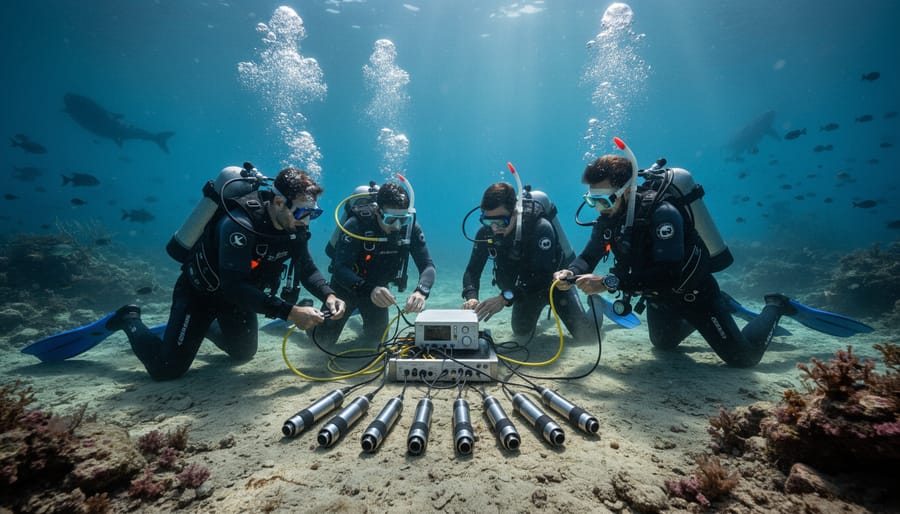
The underwater world’s symphony begins with hydrophones—specialized microphones engineered to capture sound beneath the waves. Unlike air microphones, these devices convert underwater pressure waves into electrical signals, withstanding extreme ocean conditions while recording everything from whale songs to snapping shrimp clicks. Modern hydrophone arrays can be deployed for months, collecting terabytes of continuous acoustic data from remote ocean locations.
This is where artificial intelligence transforms marine audio research. Machine learning algorithms now scan thousands of hours of recordings in minutes, identifying species-specific calls that would take human researchers years to analyze manually. Dr. Sarah Chen, a marine bioacoustician, shares: “AI helps us detect patterns we’d never spot alone—like how dolphin communication changes near shipping lanes or seasonal shifts in fish chorusing.”
These technological advances are making marine science accessible to citizen scientists too. Volunteers can now help classify whale calls through online platforms, contributing to global databases that track population health and migration patterns. This combination of cutting-edge technology and community participation creates unprecedented opportunities to understand and protect our ocean’s acoustic environment.
Why Marine Music Matters for Conservation
Noise Pollution: The Silent Threat to Marine Musicians
The ocean’s symphony faces a growing crisis: anthropogenic noise pollution. Human activities have transformed once-pristine marine soundscapes into cacophonous environments that disrupt the vital acoustic communications of marine life.
Shipping vessels produce low-frequency rumbles that can travel hundreds of miles underwater, masking the calls of baleen whales trying to find mates or maintain contact with their pods. Commercial shipping traffic has doubled global ocean noise levels every decade since the 1960s. Seismic surveys for oil and gas exploration blast sound waves reaching 260 decibels every few seconds for weeks or months, causing marine mammals to flee critical habitats and fish populations to scatter.
Military sonar poses particularly severe threats. These high-intensity pulses can cause mass strandings of beaked whales and dolphins, whose sensitive hearing systems suffer physical trauma from the extreme sound pressure. Studies have documented behavioral changes in marine mammals up to 200 kilometers from sonar sources.
Dr. Sarah Chen, a marine bioacoustics researcher, shares her perspective: “I’ve monitored the same coral reef for fifteen years. The increase in boat traffic has fundamentally changed how fish communicate during spawning season. It’s heartbreaking to witness.”
Conservation efforts offer hope. Quieter ship propeller designs, seasonal shipping lane modifications, and marine protected acoustic refuges can help restore ocean soundscapes. Volunteer opportunities exist through citizen science programs monitoring coastal noise levels, allowing everyone to contribute to protecting these marine musicians.
Listening for Recovery: Acoustic Monitoring in Marine Protected Areas
Scientists increasingly rely on acoustic monitoring to assess whether marine protected areas are actually working. By recording soundscapes before and after conservation measures are implemented, researchers can track the return of vocal species and the restoration of natural acoustic patterns. Dr. Maya Chen, a marine bioacoustician studying coral reef recovery in Indonesia, explains: “When fish populations rebound, we hear it. The crackling of shrimp, grunts of groupers, and calls of healthy fish communities create a sonic signature of success.”
This method proves especially valuable because traditional visual surveys can miss nocturnal species or those hiding in complex habitats. Acoustic monitoring runs continuously, capturing round-the-clock activity patterns. In areas where fishing restrictions have been enforced, scientists document measurable increases in biological sounds within just a few years. These audio records provide conservation managers with quantifiable evidence that their interventions are succeeding, helping secure continued funding and community support for protection efforts.
How You Can Help Protect Ocean Soundscapes
You don’t need to be a marine biologist to make a meaningful difference in protecting ocean soundscapes. Numerous opportunities exist for people of all backgrounds to contribute to marine acoustic conservation and help scientists better understand our oceans’ sonic environments.
Citizen science projects offer an accessible entry point. Programs like Whale FM and Orcasound allow volunteers to analyze marine mammal vocalizations from their computers, helping researchers catalog and identify different species and behaviors. Dr. Michelle Torres, a marine bioacoustics researcher, shares that “some of our most valuable data contributions have come from dedicated citizen scientists who spend just a few hours a week listening to underwater recordings. Their pattern recognition skills often rival our trained analysts.”
For those near coastal areas, volunteer opportunities with local marine conservation organizations often include hydrophone monitoring programs. These initiatives train community members to deploy listening equipment, collect data, and report unusual acoustic activity that might indicate marine mammal distress or illegal fishing operations.
Supporting noise reduction initiatives represents another crucial avenue. Advocate for stricter regulations on commercial shipping speeds in marine protected areas, particularly during critical breeding and migration seasons. Contact local representatives about implementing quieter vessel technologies and establishing acoustic refuges where anthropogenic noise is minimized.
Educational outreach amplifies conservation impact exponentially. Share what you’ve learned about ocean soundscapes with others through social media, community presentations, or school programs. Organizations like Ocean Conservation Trust provide free educational resources for engaging public with ocean science through the fascinating world of marine bioacoustics.
Finally, consider supporting research institutions and conservation groups working on acoustic monitoring projects through donations or fundraising. Even small contributions help maintain hydrophone networks and fund critical research that shapes protective policies for our ocean’s magnificent soundscape.
The symphony beneath the waves tells a story far greater than individual calls and clicks—it reveals the pulse of ocean health itself. When we protect marine soundscapes, we safeguard entire ecosystems, from the tiniest plankton to the largest whales. Every recording of whale song, every study of reef acoustics, and every effort to reduce ocean noise pollution contributes to understanding and preserving the intricate web of marine life that depends on sound for survival.
The urgency is real, but so is the power of collective action. Marine biologist Dr. Sarah Chen shares: “I’ve watched volunteers transform from curious observers to passionate advocates after just one hydrophone listening session. That moment of hearing the ocean’s voice changes people forever.” You can be part of this transformation. Support marine protected areas where soundscapes can thrive undisturbed. Reduce your carbon footprint to combat ocean acidification, which affects sound transmission. Participate in citizen science projects that monitor marine acoustics. Advocate for quieter shipping practices and responsible coastal development.
The ocean’s music needs our voices too. Together, we can ensure that future generations inherit seas that sing with life, abundance, and wonder. The time to listen—and act—is now.

jessica
Ava Singh is an environmental writer and marine sustainability advocate with a deep commitment to protecting the world's oceans and coastal communities. With a background in environmental policy and a passion for storytelling, Ava brings complex topics to life through clear, engaging content that educates and empowers readers. At the Marine Biodiversity & Sustainability Learning Center, Ava focuses on sharing impactful stories about community engagement, policy innovations, and conservation strategies. Her writing bridges the gap between science and the public, encouraging people to take part in preserving marine biodiversity. When she’s not writing, Ava collaborates with local initiatives to promote eco-conscious living and sustainable development, ensuring her work makes a difference both on the page and in the real world.