Marine Biodiversity Science Center

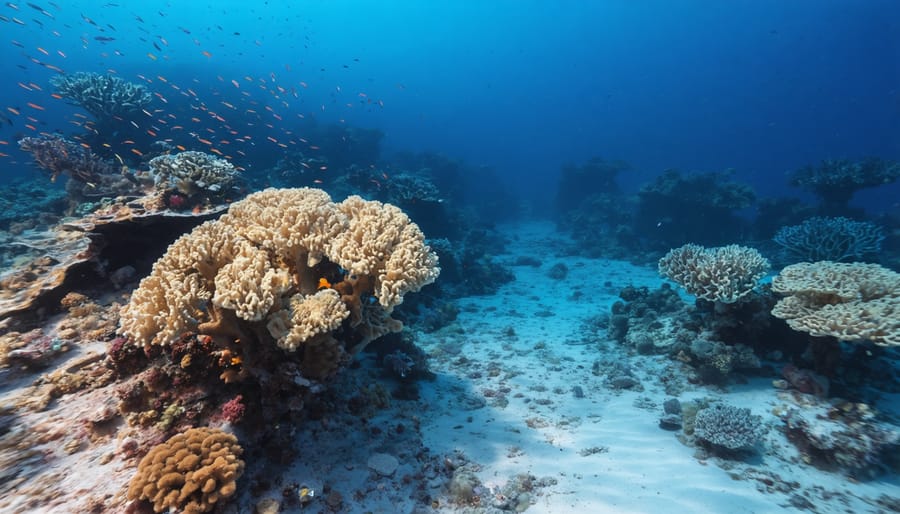
The world’s oceans are experiencing unprecedented changes as global temperatures continue to rise, triggering a cascade of effects that threatens marine ecosystems on an unprecedented scale. Recent studies reveal that marine heatwaves have doubled in frequency since 1980, creating what scientists call “underwater deserts” in formerly vibrant ocean habitats. From the bleaching of the Great Barrier Reef to the mass migration of fish populations seeking cooler waters, these changes are reshaping marine communities at an alarming rate.
The impact extends far beyond individual species, disrupting entire food webs and threatening the livelihoods of millions who depend on healthy oceans. As ocean temperatures rise, coral reefs – home to 25% of all marine species – face increasing stress, while acidification makes it harder for shellfish and other calcifying organisms to build and maintain their protective structures. These changes ripple through marine ecosystems, affecting everything from microscopic plankton to apex predators.
Understanding these effects isn’t just an academic exercise – it’s crucial for developing effective conservation strategies and ensuring the survival of marine ecosystems that have evolved over millions of years. This article explores the complex web of impacts that global warming has on marine life, examining both the immediate consequences and long-term implications for ocean biodiversity and human communities alike.
Understanding Marine Heatwaves
The Science Behind Ocean Temperature Spikes
Marine heatwaves are becoming increasingly frequent and intense due to climate change impacts on oceans. These temperature spikes occur when ocean waters remain significantly warmer than average for extended periods, typically lasting days to months. The primary drivers include trapped heat from greenhouse gases, changes in ocean currents, and atmospheric conditions that prevent heat dissipation.
Think of the ocean as Earth’s heat sponge – it absorbs about 90% of excess heat from global warming. When this heat accumulates faster than it can disperse, it creates patches of unusually warm water. These warm patches can expand and intensify when certain weather patterns, like high-pressure systems, prevent the ocean from cooling through evaporation or mixing with cooler waters.
The relationship between marine heatwaves and global warming is clear: as our planet continues to warm, these events become more frequent, more intense, and longer-lasting. Scientists have observed that marine heatwaves are now 50% more frequent than in the mid-20th century. This trend particularly affects shallow coastal waters, where temperature changes can be more dramatic and impactful on marine ecosystems.
Tracking the Rising Trend
Recent data from global ocean monitoring systems reveals an alarming increase in marine heatwave frequency and intensity. Studies show that ocean heatwaves have doubled in frequency since 1982, with particularly severe events recorded in the past decade. The Northeast Pacific experienced an unprecedented heatwave nicknamed “The Blob” between 2014-2016, during which temperatures rose up to 2.5°C above normal levels.
Marine scientists have documented a 54% increase in annual marine heatwave days globally from 1987 to 2016. These events now last an average of 40% longer than they did in the 1980s, with some persisting for months or even years. The Mediterranean Sea has been particularly affected, experiencing temperature spikes of up to 5°C above normal in recent years.
Satellite data indicates that extreme heating events are becoming more predictable, allowing researchers to develop early warning systems. However, the intensity of these events often exceeds previous projections. The Great Barrier Reef, for instance, has endured four major bleaching events since 2016, with the 2020 event affecting 25% of the reef system – the most widespread bleaching ever recorded.
These statistics underline the urgent need for enhanced monitoring systems and immediate action to protect marine ecosystems.
Direct Impacts on Marine Species
Coral Reef Communities
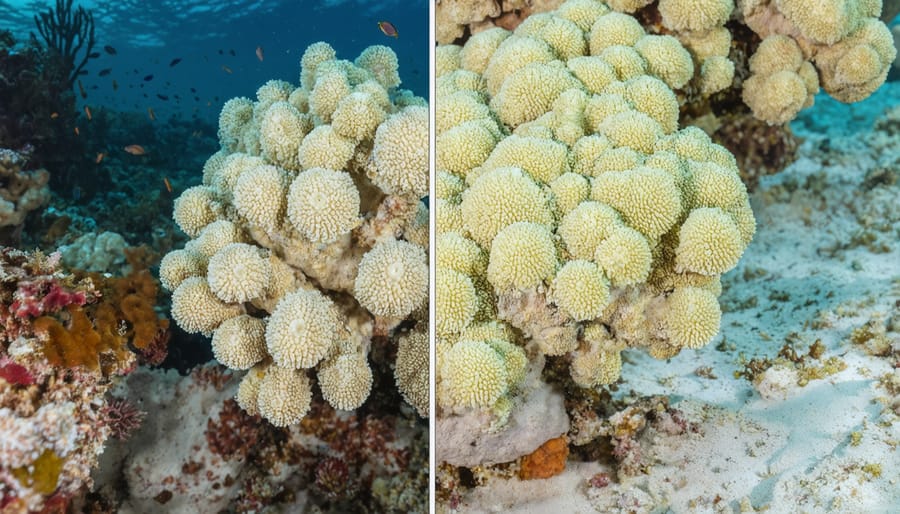
Coral reefs, often called the rainforests of the sea, are experiencing unprecedented stress due to rising ocean temperatures. When water temperatures exceed their tolerance threshold, corals expel their symbiotic algae, resulting in bleaching events that transform vibrant underwater ecosystems into ghostly white landscapes. These events, becoming more frequent and severe with global warming, can lead to widespread coral mortality if conditions don’t improve quickly enough.
The Great Barrier Reef has experienced multiple mass bleaching events since 2016, with the 2022 event being particularly concerning as it occurred during a La Niña year, typically associated with cooler temperatures. Combined with ocean acidification, these thermal stresses are pushing many reef systems toward ecological tipping points.
Marine biologist Dr. Sarah Chen shares her observations: “We’re witnessing cascade effects throughout the entire reef ecosystem. When corals die, we lose not just the physical structure but also critical habitat for thousands of species, from tiny crustaceans to commercially important fish.”
However, some coral communities show promising signs of adaptation. Certain species demonstrate heat resistance, and restoration efforts using these resilient corals offer hope. Community-led initiatives, including coral gardening and protection of reef areas, are helping these essential ecosystems persist despite challenging conditions. These success stories highlight the importance of immediate action in preserving these irreplaceable marine habitats.
Fish Population Shifts
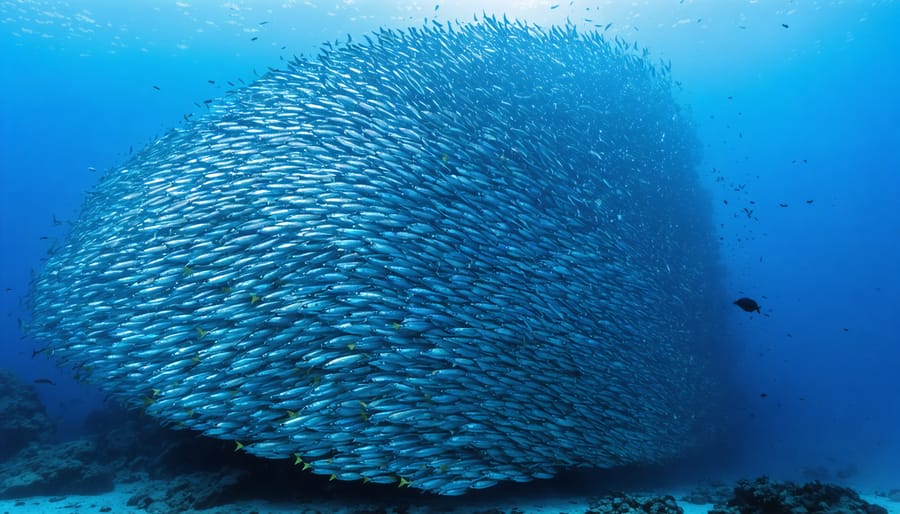
Climate change is dramatically reshaping fish populations worldwide, with many species altering their traditional migration patterns in search of cooler waters. Marine biologists have observed significant northward shifts in fish communities, with some species moving up to 40 kilometers per decade to escape warming waters.
These shifts create ripple effects throughout marine ecosystems. Cold-water species like cod and pollock are being forced into deeper waters or toward the poles, while warm-water species expand their ranges into previously inhospitable areas. This redistribution affects not only the fish themselves but also the communities and economies that depend on them for sustenance and livelihood.
Mortality rates among fish populations have increased notably in regions experiencing frequent marine heatwaves. Young fish are particularly vulnerable, with some species showing up to 50% higher mortality rates during extreme temperature events. The Mediterranean Sea, for instance, has witnessed mass die-offs of various fish species when temperatures exceed their thermal tolerance.
Scientists have documented concerning trends in fish reproduction cycles, with many species spawning earlier in the season or in different locations altogether. These changes can lead to mismatches between fish larvae and their prey availability, potentially affecting survival rates of entire year classes.
Recent studies indicate that while some fish species show remarkable adaptability to changing conditions, others struggle to adjust quickly enough. This disparity creates new challenges for marine ecosystem management and highlights the urgent need for comprehensive conservation strategies.
Impact on Marine Mammals
Global warming has dramatically altered the behavioral patterns of marine mammals, particularly affecting their feeding and breeding cycles. As ocean temperatures rise, many species find their traditional feeding grounds disrupted due to shifts in prey distribution. For instance, whales that rely on krill must travel longer distances to find adequate food sources, expending more energy and potentially compromising their health.
The timing of breeding seasons has also been significantly impacted. Warmer waters can trigger earlier breeding cycles, creating a mismatch between reproduction periods and peak food availability. This desynchronization particularly affects seal populations, whose pups require specific ice conditions for survival during their first weeks of life.
Marine mammals face additional challenges as rising temperatures affect their metabolic rates and energy requirements. Species like polar bears, which depend on sea ice for hunting, must swim longer distances between ice floes, leading to increased energy expenditure and reduced hunting success. Similarly, dolphins and porpoises are experiencing changes in their distribution patterns as they follow shifting fish populations to maintain their food supply.
Research conducted by marine biologists shows that some species are attempting to adapt by altering their migration routes and timing. However, these adaptations may not be occurring quickly enough to keep pace with rapid environmental changes. The success of these adaptations often depends on the species’ ability to locate new feeding grounds and establish alternative breeding sites.
The interconnected nature of marine ecosystems means that these changes have far-reaching consequences for both marine mammal populations and the communities that depend on them.
Ecosystem-Wide Changes
Food Web Disruption
The intricate web of marine life relationships, carefully balanced over millions of years, is experiencing unprecedented disruption due to global warming. As ocean temperatures rise, traditional predator-prey relationships are being altered, creating ripple effects throughout entire marine ecosystems.
One striking example is the relationship between zooplankton and phytoplankton. Warming waters affect the timing of phytoplankton blooms, which no longer align with zooplankton reproduction cycles. This misalignment creates a “temporal mismatch,” leaving many species without adequate food sources during critical life stages.
Changes in water temperature are also forcing species to migrate to new areas, disrupting established food chains. For instance, as small fish move to cooler waters, their predators must either adapt by following them or find alternative prey. This phenomenon has been observed in the North Atlantic, where cod populations have shifted northward, affecting both commercial fishing and the dietary patterns of larger marine mammals.
Coral reef ecosystems demonstrate perhaps the most visible food web disruption. When coral bleaching occurs, the reef-dependent species lose their habitat and food sources. Small fish that feed on coral-dwelling organisms disappear, followed by their predators, creating a cascade of local extinctions that can permanently alter marine communities.
Marine biologists have observed that these disruptions often create “winner” and “loser” species, with some opportunistic organisms thriving in the changed conditions while others struggle to survive. This reorganization of marine food webs threatens biodiversity and ecosystem stability, potentially leading to long-lasting changes in ocean ecosystems.
Habitat Loss and Transformation
The transformation of marine habitats due to global warming represents one of the most significant threats to ocean ecosystems. Rising sea temperatures and changing ocean chemistry are dramatically altering the physical characteristics of marine environments, forcing many species to adapt or relocate.
Coral reefs, often called the rainforests of the sea, are experiencing unprecedented bleaching events as water temperatures exceed their tolerance levels. These vibrant underwater ecosystems, which normally provide shelter and feeding grounds for countless marine species, are turning into barren underwater deserts. According to recent studies, over 50% of the world’s coral reefs have already been lost or severely damaged.
Seagrass meadows and kelp forests are also facing significant challenges. These crucial habitats, which serve as nurseries for juvenile fish and help sequester carbon, are diminishing due to marine heatwaves and changing water conditions. In some regions, entire kelp forests have disappeared within a matter of years, leading to what scientists call “ecological desertification” of coastal waters.
Coastal wetlands and mangrove forests face a double threat from rising seas and increasing storm intensity. These areas, vital for protecting coastlines and supporting marine biodiversity, are being squeezed between advancing seas and human development, leaving many species without their traditional breeding and feeding grounds.
The good news is that protected marine areas have shown remarkable resilience, demonstrating that with proper conservation measures, some habitats can adapt and recover. Marine scientists are working on innovative solutions, including coral restoration projects and artificial reef creation, offering hope for habitat preservation.
Conservation Efforts and Solutions
Current Protection Measures
Several marine conservation initiatives are currently in place to protect marine ecosystems from the impacts of global warming. The establishment of Marine Protected Areas (MPAs) has become a cornerstone of ocean conservation, with approximately 7% of the world’s oceans now under some form of protection. These sanctuaries provide safe havens where marine species can adapt to changing conditions with minimal human interference.
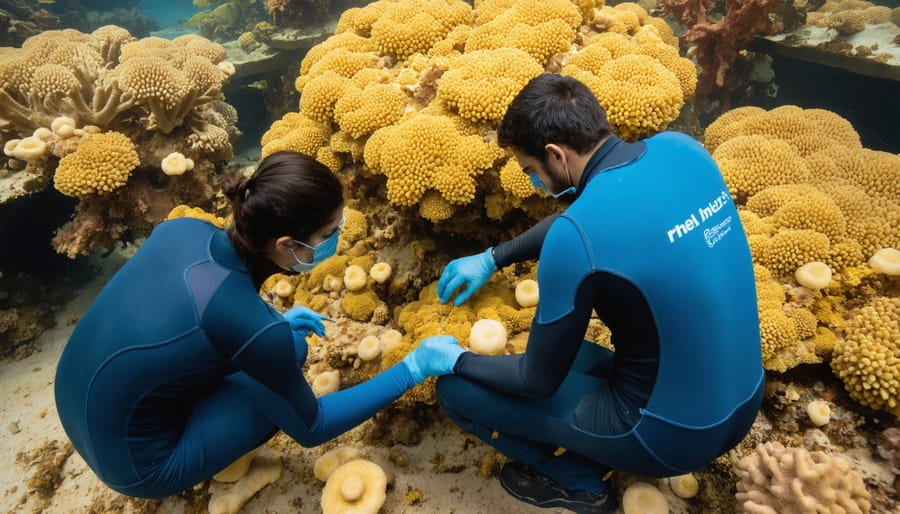
Coral reef restoration projects have gained momentum worldwide, with scientists and volunteers working together to cultivate and transplant heat-resistant coral species. The Great Barrier Reef’s “Reef Restoration and Adaptation Program” stands out as a pioneering effort, combining advanced technology with traditional conservation methods to enhance coral resilience.
Carbon emission reduction programs targeting the shipping industry have shown promising results, with major shipping companies adopting cleaner technologies and alternative fuels. The International Maritime Organization’s regulations on sulfur emissions have already led to significant improvements in ocean water quality.
Local community-based conservation efforts have also proven effective, particularly in coastal areas. These programs often combine traditional ecological knowledge with modern scientific approaches, creating sustainable fishing practices and protecting critical marine habitats. Citizen science projects enable the public to participate in marine monitoring, providing valuable data while raising awareness about ocean conservation needs.
The implementation of early warning systems for marine heatwaves has helped communities and conservation teams respond more quickly to potential threats, reducing the impact on vulnerable species.
Future Adaptation Strategies
As marine ecosystems face unprecedented challenges from global warming, scientists and conservationists are developing innovative adaptation strategies to protect marine life. Marine protected areas (MPAs) are being redesigned with climate resilience in mind, incorporating “climate-smart” principles that account for species migration patterns and changing ocean conditions.
Assisted evolution programs are showing promise in developing heat-resistant coral strains that can better withstand rising ocean temperatures. These initiatives combine traditional coral breeding techniques with cutting-edge genetic research to create more resilient reef systems.
Seagrass restoration projects are gaining traction as effective carbon sinks while providing crucial habitat for marine species. Communities worldwide are implementing artificial reef structures that offer alternative habitats for displaced marine life and help maintain biodiversity in warming waters.
Advanced monitoring systems using satellite technology and underwater sensors now provide real-time data on ocean conditions, allowing for rapid response to marine heatwaves. This early warning system helps conservation teams deploy emergency measures to protect vulnerable species during extreme events.
Citizen science programs are increasingly vital, engaging local communities in data collection and conservation efforts. Marine biologists are working with fishing communities to develop sustainable practices that consider changing migration patterns and breeding seasons.
Looking ahead, research focuses on developing “thermal refuges” – areas where cooler water conditions persist naturally – and protecting these zones as sanctuaries for temperature-sensitive species. These multi-faceted approaches, combined with global efforts to reduce greenhouse gas emissions, offer hope for marine ecosystem preservation.
The devastating effects of global warming on marine life require immediate attention and collective action. From coral bleaching and habitat destruction to shifts in migration patterns and species extinction, our oceans face unprecedented challenges. However, there is still hope. Through coordinated conservation efforts, sustainable fishing practices, and reduced carbon emissions, we can help protect marine ecosystems. Every individual can contribute by making climate-conscious choices, supporting marine conservation organizations, and participating in local beach cleanups. Education and awareness are crucial – share knowledge about marine conservation with others and advocate for stronger environmental policies. Together, we can create a future where marine life thrives, maintaining the delicate balance of our ocean ecosystems for generations to come. The time to act is now, as every small step toward marine conservation counts in this global effort to preserve our precious ocean biodiversity.

jessica
Ava Singh is an environmental writer and marine sustainability advocate with a deep commitment to protecting the world's oceans and coastal communities. With a background in environmental policy and a passion for storytelling, Ava brings complex topics to life through clear, engaging content that educates and empowers readers. At the Marine Biodiversity & Sustainability Learning Center, Ava focuses on sharing impactful stories about community engagement, policy innovations, and conservation strategies. Her writing bridges the gap between science and the public, encouraging people to take part in preserving marine biodiversity. When she’s not writing, Ava collaborates with local initiatives to promote eco-conscious living and sustainable development, ensuring her work makes a difference both on the page and in the real world.