Marine Biodiversity Science Center


When marine mammals strand on coastlines, every second counts in coordinating an effective emergency response. Clear, standardized distress signals serve as the vital communication backbone between rescue teams, marine life rehabilitation centers, and first responders during critical rescue operations. From internationally recognized pyrotechnic flares to radio distress frequencies and digital emergency position-indicating radio beacons (EPIRBs), these signals form an intricate network of life-saving communications that can mean the difference between successful rescue and tragic loss. Understanding these signals isn’t just protocol—it’s an essential skill for anyone involved in marine mammal rescue operations, from seasoned biologists to dedicated volunteers joining their first response team.
This comprehensive guide explores the various emergency signals used in marine mammal rescue operations, their specific applications, and how they integrate into broader rescue protocols. Whether you’re a professional responder or an concerned citizen hoping to assist in future rescue efforts, mastering these communication tools is crucial for contributing to successful rescue outcomes.
Universal Marine Distress Signals for Stranding Events
Visual Communication Signals
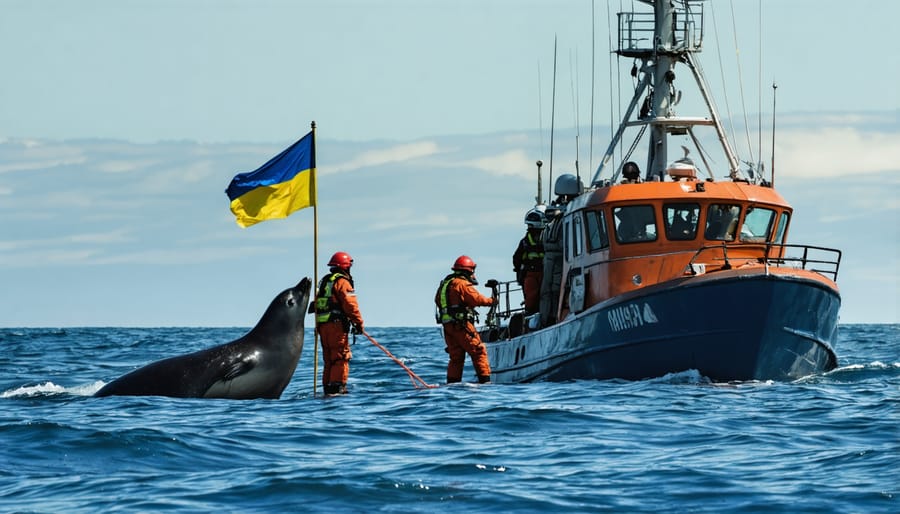
During marine rescue operations, clear visual communication is essential for coordinating efforts between rescue teams. The International Code of Signals establishes standardized flag signals, with the “N” and “C” flags commonly used to indicate distress. Rescue teams also employ specific hand signals, including the universal “OK” signal (thumb and index finger forming a circle) and the “need assistance” signal (both arms raised overhead in a “Y” position).
Light signals play a crucial role, especially during low-visibility conditions or night operations. The SOS distress signal (three short flashes, three long flashes, three short flashes) remains the most recognized emergency signal. Rescue vessels use searchlights in specific patterns: sweeping movements indicate searching operations, while fixed beams guide rescue teams to specific locations.
Modern rescue operations increasingly incorporate LED signal devices and laser flares, which offer extended visibility and battery life compared to traditional pyrotechnic flares. These visual signals are often used in conjunction with other communication methods to ensure clear coordination between rescue teams, vessels, and shore-based operations centers.
For volunteer rescuers, understanding these basic visual signals is fundamental to participating effectively in marine mammal rescue efforts. Regular training sessions often include practical demonstrations of these signals to ensure all team members can communicate efficiently during emergency situations.
Audio Communication Protocols
In marine emergency situations, clear audio communication is crucial for coordinating rescue efforts effectively. Rescue teams primarily rely on whistle signals, with a standardized system of short and long blasts conveying specific messages. A single long blast typically indicates “attention” or “stop,” while three short blasts signal “reverse direction.” Two long blasts commonly mean “approach me” or “stand by for instructions.”
Marine sirens operate on different frequencies to avoid confusion with other maritime signals. Low-frequency sirens (500-1000 Hz) carry further in foggy conditions and are used for long-distance communication, while high-frequency signals (2000-4000 Hz) are preferred for close-range coordination among team members.
Handheld megaphones and portable PA systems serve as backup communication tools, especially in noisy environments or when coordinating large rescue teams. These devices typically operate at 110-120 decibels, ensuring messages can be heard clearly over wind and wave noise.
Modern rescue operations also incorporate digital sound markers and acoustic beacons, which emit regular pulses to help teams maintain position during poor visibility conditions. These technological aids complement traditional audio signals, enhancing the overall effectiveness of marine emergency response efforts.
Emergency Response Team Communication
Team Position Indicators
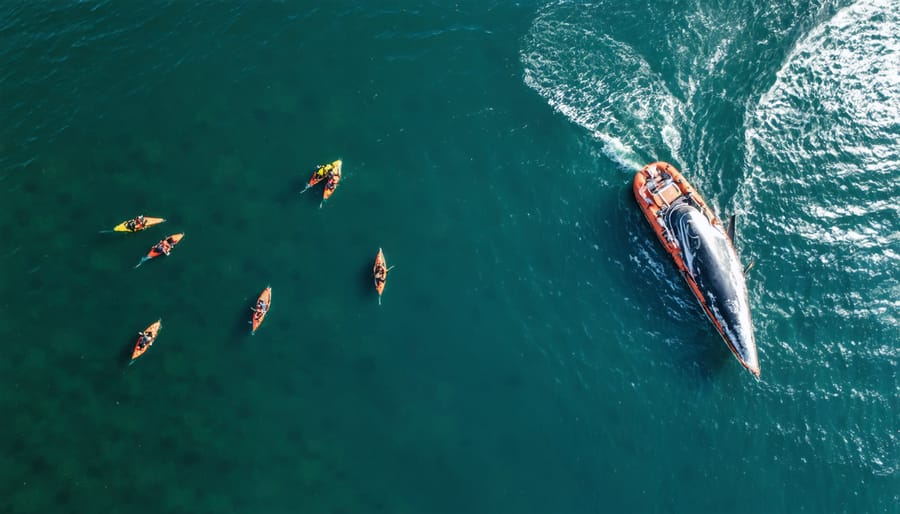
During marine mammal rescue operations, clear team position indicators are crucial for coordinating efforts effectively. Rescuers use a combination of hand signals, flags, and light signals to communicate their positions and movements across the stranding site.
The primary position indicator is the raised rescue flag system. Red flags indicate team leaders and medical coordinators, while yellow flags mark the positions of assessment teams. Green flags are used by transport teams, ensuring clear visibility of their movements when relocating animals.
Hand signals play a vital role in close-range communication. The “arms crossed above head” signal indicates a team member needs immediate assistance, while “one arm raised” shows readiness to receive instructions. Two arms raised in a “V” formation signals successful completion of a task and readiness to move to another location.
For nighttime operations, teams employ light signals using waterproof flashlights. Three quick flashes indicate a team’s position, while continuous sweeping movements guide other teams to specific locations. A single sustained beam pointed upward marks the location of the command post.
Teams also use whistle signals as audio position indicators, particularly useful in poor visibility conditions. One long blast indicates a team’s position, while three short blasts signal urgent assistance needed. These acoustic signals complement visual indicators, ensuring robust communication even in challenging conditions.
Urgency Level Signals
In marine emergencies, different signals convey varying levels of urgency, helping responders quickly assess and react to situations. The internationally recognized system uses three primary urgency levels: Distress, Urgency, and Safety.
Distress signals, the highest level of emergency, indicate immediate danger to life. These include the MAYDAY radio call, red flares, or the SOS signal (… — …) in Morse code. When marine mammals are involved in mass strandings, rescuers use red flags or emergency strobe lights to indicate critical cases requiring immediate medical attention.
Urgency signals, the second level, communicate serious situations that could potentially escalate. The PAN-PAN radio call serves this purpose, often accompanied by orange flares or flags. During marine mammal rescue operations, orange markers typically indicate animals requiring prompt attention but not in immediate life-threatening danger.
Safety signals, the lowest urgency level, warn about navigational hazards or weather changes that might affect rescue operations. The SECURITE radio call and yellow or green visual signals fall into this category. Rescue teams often use green flags to mark stable animals or areas safe for volunteer activity.
Sound signals also play a crucial role, with three prolonged blasts indicating urgency, while short, repeated blasts signal immediate danger. These standardized signals ensure clear communication across international waters and among diverse rescue teams, ultimately improving response effectiveness and saving more marine lives.
Public Safety and Crowd Control Signals
Beach Closure Indicators
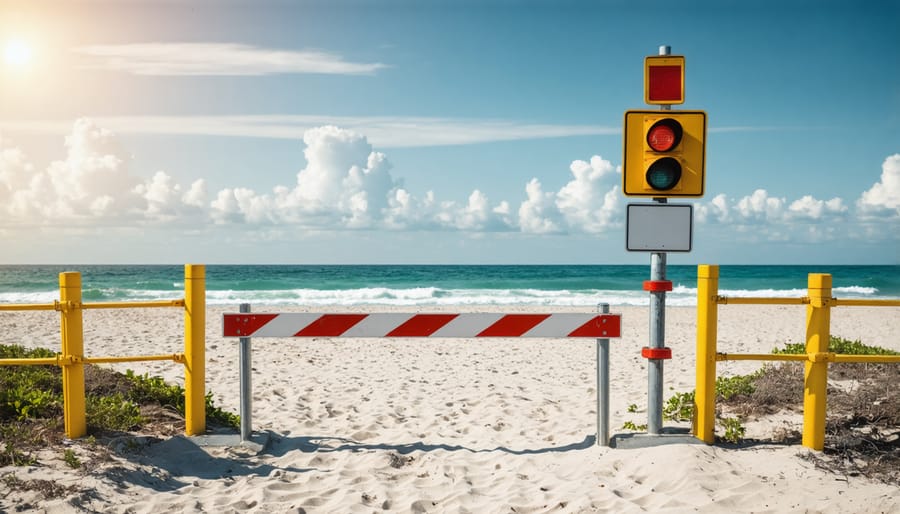
Beach closure indicators serve as crucial visual warnings to protect both marine life and the public during emergency situations. Red flags and specialized barrier tape are commonly deployed to restrict beach access, particularly during marine mammal strandings or when hazardous conditions arise. These indicators often work in conjunction with modern rescue technologies to ensure effective response coordination.
Standard beach closure markers include:
– Double red flags indicating complete beach closure
– Yellow caution tape marked with “Marine Rescue in Progress”
– LED message boards displaying emergency information
– Temporary barrier fencing with reflective markers
Local authorities typically position these indicators at key access points, including main entrances, parking areas, and popular walkways. The placement strategy ensures maximum visibility while creating a safety buffer zone around affected areas. These visual warnings are often supplemented by electronic notifications through beach safety apps and local emergency alert systems.
Conservation teams can quickly deploy these markers using pre-positioned emergency kits stored at strategic locations along the coastline. This rapid response capability is essential for protecting stranded marine mammals and maintaining public safety during rescue operations.
Safe Distance Markers
Safe distance markers play a crucial role in marine rescue operations, protecting both responders and distressed marine animals. These visual signals typically consist of colored buoys, flags, or floating markers that establish clear safety zones around the incident area. Red markers usually indicate the immediate rescue zone, where only authorized personnel may enter, while yellow markers designate observation areas for support teams and qualified volunteers.
Marine rescue coordinators employ a standardized three-zone system: the critical zone (0-50 meters), the support zone (50-100 meters), and the observation zone (beyond 100 meters). Each zone serves specific purposes and requires different levels of expertise and protective equipment. The critical zone, for instance, is reserved for trained rescue personnel wearing appropriate safety gear.
For larger marine mammals like whales, these safe distance markers may extend further, sometimes up to 500 meters, depending on the species and situation. Digital tracking buoys with GPS capabilities are increasingly used to maintain these safety perimeters, especially in challenging conditions or when dealing with multiple strandings. These modern tools help rescue teams maintain consistent safety boundaries while adapting to changing tides and weather conditions.
Equipment and Resource Signals
Medical Emergency Signals
In marine emergencies requiring medical assistance, specific signal patterns are used to communicate urgent health-related needs. The internationally recognized signal for medical emergencies at sea consists of square flag “W” (Whiskey) accompanied by the “NOVEMBER” code flag. For vessels without signal flags, three white flares fired at one-minute intervals indicate a medical emergency.
Radio communication using “Pan-Pan Medico” precedes any medical emergency message on Channel 16 VHF. This alerts nearby vessels and coastal stations that medical consultation is needed. In situations involving marine mammal strandings, rescuers use hand signals: crossed arms above the head indicate immediate medical attention required, while a single raised arm requests general medical support.
Following established marine health protocols is crucial during rescue operations. For nighttime emergencies, a combination of red and green lights shown simultaneously, or the Morse code “- – – • • • – – -” (SOS) with the addition of “M” (- -) indicates medical distress. These signals ensure rapid response and appropriate medical assistance deployment in marine environments.
Equipment Request Signals
During marine emergencies, specific signals are used to request essential rescue equipment. Rescue teams employ a combination of visual and auditory signals to communicate their equipment needs effectively. The most common visual signal for medical assistance is the “X” formed with arms or equipment, while a “Y” signal indicates the need for a helicopter pickup.
For equipment-specific requests, teams use numbered flag combinations or light signals. A single red flare typically requests towing equipment, while two red flares in succession signal the need for pumping equipment. Three short blasts on a whistle or horn indicate a request for additional flotation devices.
Hand signals also play a crucial role: a circular motion above the head requests rope or line deployment, while patting the top of the head calls for additional personal protective equipment (PPE). For night operations, teams use combinations of flashlight signals: three short flashes repeated at intervals request additional lighting equipment, while an SOS pattern (three short, three long, three short) indicates urgent need for specialized rescue gear.
Marine rescue coordinators emphasize the importance of standardizing these signals across international rescue operations to ensure swift and effective equipment deployment during critical situations.
Real-World Application Examples
One of the most notable applications of marine emergency signals occurred during the 2009 mass stranding event in Tasmania, where over 200 pilot whales were found beached. Rescuers used a coordinated system of flag signals to direct teams across a vast stretch of coastline, ultimately saving 54 whales through their efficient communication methods.
In 2015, during a complex dolphin stranding in New Zealand’s Golden Bay, emergency flares proved crucial in alerting nearby vessels to avoid the rescue area. The incident demonstrated how traditional maritime distress signals could be adapted for marine mammal rescue operations, leading to the development of specialized animal rehabilitation techniques.
The 2018 Cape Cod mass stranding response showcased the effectiveness of modern LED emergency beacons. These waterproof signals allowed night operations to continue safely, resulting in the successful rescue of 12 Atlantic white-sided dolphins. The event highlighted how technological advances in emergency signaling have enhanced rescue capabilities.
Perhaps the most inspiring example comes from the 2020 Sri Lankan blue whale incident, where a network of small fishing vessels used synchronized radio communications and visual signals to guide a disoriented whale back to deeper waters. This community-led effort demonstrated how local knowledge combined with standardized emergency signals can create successful outcomes in marine mammal rescue operations.
Standardized emergency signals are the cornerstone of effective marine mammal rescue operations, enabling coordinated responses that can mean the difference between life and death for stranded animals. These universal protocols transcend language barriers and ensure that rescuers worldwide can work together seamlessly during critical situations. By understanding and properly utilizing these signals, rescue teams can maximize their efficiency while maintaining safety for both humans and marine mammals.
As our oceans face increasing challenges, the role of trained responders becomes ever more crucial. We encourage readers to take the next step by participating in marine mammal rescue training programs offered by local conservation organizations. Whether you’re a professional scientist or a concerned citizen, your involvement can contribute to the preservation of marine life. Remember, effective communication through standardized signals is not just about following protocol—it’s about being part of a global community dedicated to protecting our ocean’s most vulnerable inhabitants.

jessica
Ava Singh is an environmental writer and marine sustainability advocate with a deep commitment to protecting the world's oceans and coastal communities. With a background in environmental policy and a passion for storytelling, Ava brings complex topics to life through clear, engaging content that educates and empowers readers. At the Marine Biodiversity & Sustainability Learning Center, Ava focuses on sharing impactful stories about community engagement, policy innovations, and conservation strategies. Her writing bridges the gap between science and the public, encouraging people to take part in preserving marine biodiversity. When she’s not writing, Ava collaborates with local initiatives to promote eco-conscious living and sustainable development, ensuring her work makes a difference both on the page and in the real world.