Marine Biodiversity Science Center

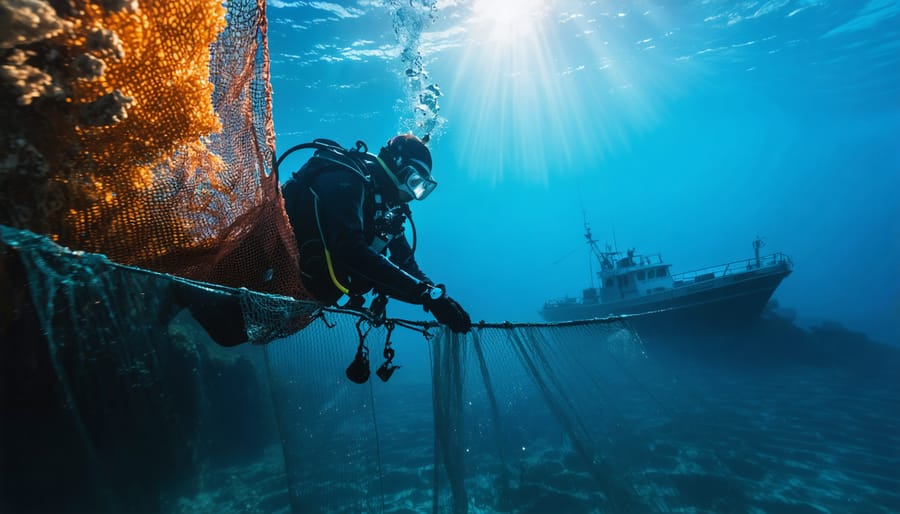
Our oceans are drowning in 8 million metric tons of plastic annually, yet proven solutions already exist that can reverse this crisis within our lifetime. From innovative cleanup technologies removing legacy pollution to circular economy models preventing waste at its source, the path to healthier seas combines cutting-edge science with community action.
The challenge spans multiple fronts: plastic debris suffocating marine life, chemical runoff creating dead zones, and microplastics infiltrating the entire food chain. Marine biologist Dr. Sarah Chen, who spent two decades studying coral reefs, recalls finding plastic fragments in 73% of fish samples from pristine waters. “That moment crystallized for me that no ocean remains untouched, but also that targeted interventions show measurable recovery within just five years,” she explains.
Solutions operate across three critical scales. Individual actions like reducing single-use plastics and participating in beach cleanups create immediate local impact. Community-level initiatives such as improved waste management infrastructure and restoration of coastal wetlands that filter pollutants address regional challenges. Meanwhile, international agreements regulating marine dumping and industrial discharge establish the policy framework for lasting change.
The encouraging reality is that marine ecosystems demonstrate remarkable resilience when given the chance. Damaged coral reefs rebound, fish populations recover, and water quality improves faster than most scientists initially predicted. Every action matters, from the student volunteer removing ghost nets to the engineer designing biodegradable alternatives. Together, these solutions form a comprehensive strategy that transforms our relationship with the ocean from exploitation to stewardship.
Understanding the Marine Pollution Crisis
Our oceans are facing an unprecedented crisis. Every year, an estimated 8 million metric tons of plastic waste enters marine environments, joining a complex mixture of pollutants that threaten the delicate balance of ocean ecosystems. Understanding the scope and nature of these threats is the essential first step toward implementing effective solutions.
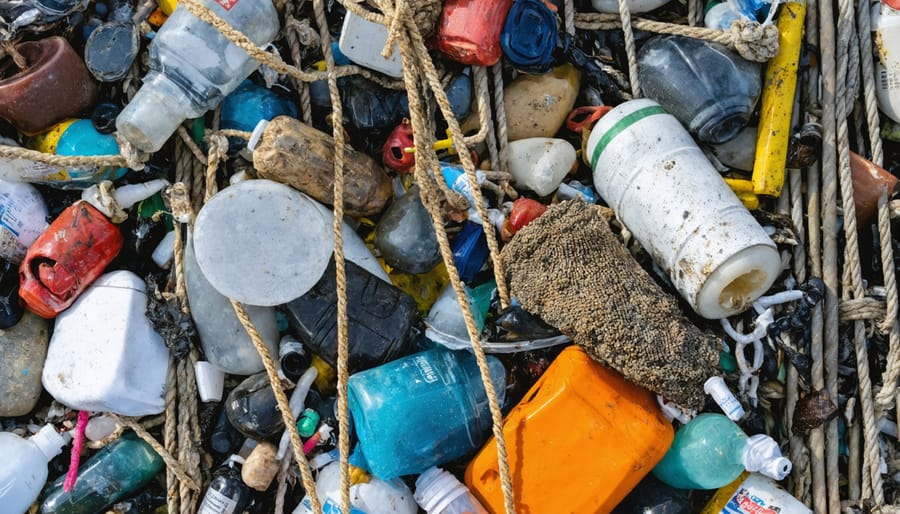
Marine pollution takes many forms, each with distinct characteristics and consequences. Plastic pollution has become the most visible threat, with everything from massive fishing nets to microscopic particles infiltrating every level of the ocean food chain. These plastics don’t simply disappear—they break down into smaller fragments that marine animals mistake for food, leading to starvation, poisoning, and death.
Chemical pollutants present a less visible but equally serious challenge. Agricultural runoff carries fertilizers and pesticides into coastal waters, creating oxygen-depleted dead zones where marine life cannot survive. Industrial chemicals, heavy metals, and oil spills introduce toxic substances that accumulate in marine organisms, magnifying as they move up the food chain and eventually reaching human consumers of seafood.
Beyond physical and chemical threats, noise pollution from shipping traffic and industrial activities disrupts marine mammals’ communication and navigation systems, while thermal pollution from power plants and climate change alters water temperatures that marine species depend on for survival. The cumulative marine pollution impacts extend beyond individual species, destabilizing entire ecosystems that billions of people rely on for food, livelihoods, and climate regulation.
Marine biologist Dr. Sarah Chen, who has studied coral reef degradation for fifteen years, reminds us that while the statistics can feel overwhelming, understanding these challenges empowers us to act. Each type of pollution has corresponding solutions, and when communities, organizations, and individuals work together, measurable positive change becomes possible. The ocean’s remarkable resilience means that our efforts today can yield significant recovery within our lifetimes.
Source Reduction: Stopping Pollution at Its Origin
Policy and Legislative Frameworks That Work
Effective legislation has proven essential in combating marine pollution worldwide. Single-use plastic bans represent one of the most successful policy interventions, with over 100 countries implementing some form of restriction. Kenya’s 2017 ban on plastic bags stands out as particularly effective, imposing hefty fines and even jail time for violations, resulting in dramatically cleaner coastlines. Rwanda’s similar ban has transformed its beaches and waterways, demonstrating that strict enforcement coupled with public education creates lasting change.
Extended Producer Responsibility (EPR) programs shift the burden of waste management to manufacturers, incentivizing them to design more sustainable products. Germany’s packaging ordinance requires companies to fund the collection and recycling of their products, achieving recycling rates exceeding 70%. Canada is now expanding EPR frameworks across provinces, holding producers accountable for the entire lifecycle of their products and supporting broader environmental health initiatives.
International agreements provide crucial coordination for transboundary pollution issues. The MARPOL Convention regulates ship-based pollution, while the Basel Convention controls hazardous waste movement. More recently, the 2022 UN resolution to develop a legally binding treaty on plastic pollution represents a historic commitment to addressing this crisis comprehensively.
These policies work best when combined with community engagement and adequate enforcement mechanisms. Marine biologist Dr. Sarah Chen notes, “Laws create the framework, but community buy-in ensures lasting success. I’ve witnessed coastal communities in Southeast Asia transform their relationship with plastic once regulations aligned with local values and provided viable alternatives.”
Industry Innovation and Corporate Responsibility
The private sector is increasingly recognizing both its responsibility and the business opportunity in combating marine pollution. Forward-thinking companies are developing innovative solutions that demonstrate environmental stewardship can align with economic success.
Adidas has pioneered sustainable footwear by partnering with Parley for the Oceans to create shoes from recycled ocean plastic. Since 2015, this collaboration has intercepted millions of plastic bottles from beaches and coastal communities, transforming waste into high-performance athletic wear. The initiative shows how major brands can integrate ocean conservation into their core product lines while meeting consumer demand for eco-conscious options.
In the packaging industry, companies like Notpla are revolutionizing single-use plastics with seaweed-based alternatives that biodegrade naturally within weeks. Their edible water pods and compostable food containers offer genuinely circular solutions that return nutrients to the environment rather than polluting it. Similarly, Loop Industries has developed technology to break down any PET plastic into its base components, enabling infinite recycling without quality degradation.
The shipping industry, responsible for significant ocean pollution, is also evolving. Maersk has committed to carbon-neutral operations by 2040 and invested in vessels powered by green methanol. Meanwhile, The Ocean Cleanup collaborates with corporations to fund large-scale plastic removal operations, creating a model where businesses offset their environmental impact through tangible cleanup efforts.
Marine biologist Dr. Sarah Chen, who consults with beverage companies on sustainable packaging, shares an encouraging perspective: “Five years ago, these corporations viewed ocean conservation as purely charitable. Now they understand it’s essential for long-term viability. Their supply chains depend on healthy oceans.”
These success stories demonstrate that industry innovation, when coupled with genuine accountability, creates scalable solutions that individual actions alone cannot achieve. As more companies adopt circular economy principles, they’re proving that protecting our oceans and building profitable businesses aren’t mutually exclusive goals.

Cleanup Technologies and Restoration Efforts
Ocean and Coastal Cleanup Innovations
Innovative technologies are transforming our ability to tackle ocean pollution at unprecedented scales. Leading this charge are large-scale floating barriers, such as those deployed by ocean cleanup initiatives, which use natural currents to passively concentrate plastic debris in strategic locations. These U-shaped systems extend deep below the surface to capture submerged plastics while allowing marine life to pass safely underneath.
Autonomous collection systems represent another breakthrough, with specially designed vessels equipped with artificial intelligence to identify and retrieve floating debris. These robotic collectors can operate continuously in remote ocean areas, gathering plastics before they break down into smaller, more problematic pieces. Some systems even sort materials onboard, preparing them for recycling upon return to port.
Perhaps most exciting are emerging microplastic filtration technologies. Researchers have developed specialized filters that can be integrated into wastewater treatment facilities, capturing tiny plastic particles before they enter waterways. Scientists are also testing innovative materials, including bioengineered organisms and magnetic nanoparticles, that attract and remove microplastics from water columns.
Dr. Elena Martinez, a marine technologist working on filtration systems, shares her perspective: “Every innovation brings us closer to cleaner oceans, but technology alone isn’t enough. We need people to support these initiatives through awareness, advocacy, and participation in local cleanup efforts.”
Volunteers can contribute by joining beach cleanup organizations that provide data to researchers developing these technologies. Your observations about debris types and locations help engineers design more effective collection systems tailored to specific coastal environments.
Community-Led Restoration Projects
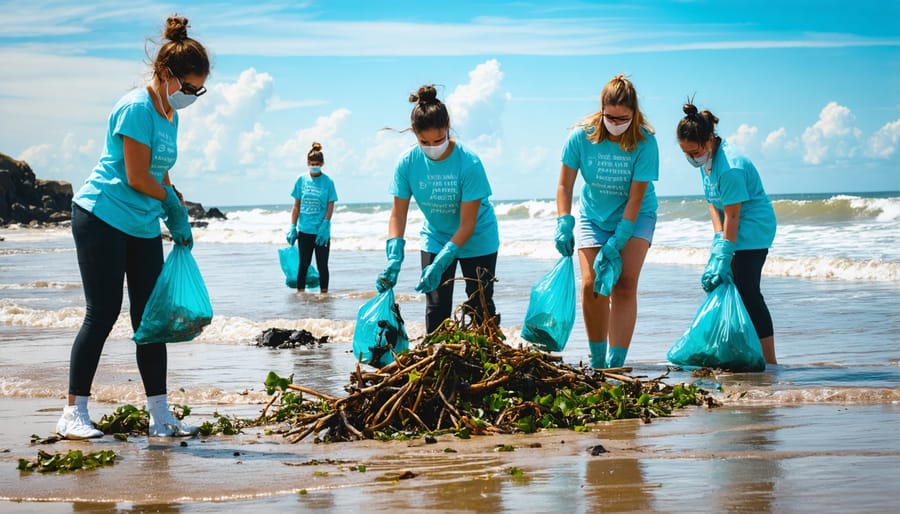
Across the globe, communities are taking ocean health into their own hands through powerful grassroots initiatives. Beach cleanups, coastal habitat restoration, and citizen science programs demonstrate how collective action creates measurable change. These collaborative conservation efforts bridge the gap between scientific research and public engagement, empowering everyday citizens to become stewards of marine ecosystems.
Dr. Maria Santos, a marine biologist working with coastal communities in the Philippines, has witnessed this transformation firsthand. “When we started our mangrove restoration project five years ago, we had twelve volunteers,” she shares. “Today, over 300 community members actively participate in planting, monitoring, and protecting these vital nursery habitats. We’ve restored 25 hectares of mangrove forests, and local fishers report seeing fish populations rebound.”
Citizen science programs are particularly impactful, allowing volunteers to contribute valuable data while learning about marine ecosystems. Programs like Reef Check and Ocean Conservancy’s International Coastal Cleanup engage thousands of participants annually in collecting standardized data on marine debris, coral health, and species populations. This information directly informs conservation strategies and policy decisions.
Getting involved is easier than ever. Local organizations worldwide offer regular cleanup events, restoration workdays, and training programs. Many require no special skills—just a willingness to help. Whether you can commit two hours monthly or become a trained volunteer surveyor, your participation matters.
These community-driven projects prove that meaningful conservation doesn’t always require advanced degrees or substantial funding. Sometimes, it simply requires people who care enough to show up, roll up their sleeves, and work together toward healthier oceans.
Wastewater and Stormwater Management Solutions
Advanced Treatment Technologies
Cutting-edge wastewater treatment technologies are emerging as powerful allies in preventing pollutants from reaching our oceans. Traditional treatment plants were never designed to capture microplastics, pharmaceutical residues, or many modern synthetic chemicals, but advanced systems are changing this reality.
Membrane bioreactor technology combines biological treatment with ultrafiltration membranes that can capture particles as small as 0.1 microns, effectively removing up to 99% of microplastics and microfibers before they enter marine environments. These systems are now operational in coastal cities from Singapore to San Francisco, with marine biologist Dr. Rachel Chen noting that “the difference in water quality downstream is measurable within months of implementation.”
Advanced oxidation processes use combinations of ozone, UV light, and hydrogen peroxide to break down pharmaceuticals and personal care products that conventional treatment misses. Meanwhile, activated carbon filtration removes persistent organic pollutants and heavy metals that threaten marine life.
Coastal communities worldwide are investing in these upgrades. Stockholm’s Henriksdal plant now removes 95% of microplastics, while Australia’s Bondi treatment facility has become a model for pharmaceutical removal. These technologies require higher initial investment but offer remarkable long-term benefits for ocean health.
Volunteers can advocate for treatment plant upgrades in their communities by attending municipal planning meetings and supporting green infrastructure bonds that fund these essential improvements.
Nature-Based Solutions for Runoff
Nature offers powerful, cost-effective tools for preventing pollution from reaching our oceans. These green infrastructure solutions work by mimicking natural processes to capture, filter, and absorb runoff before it enters waterways.
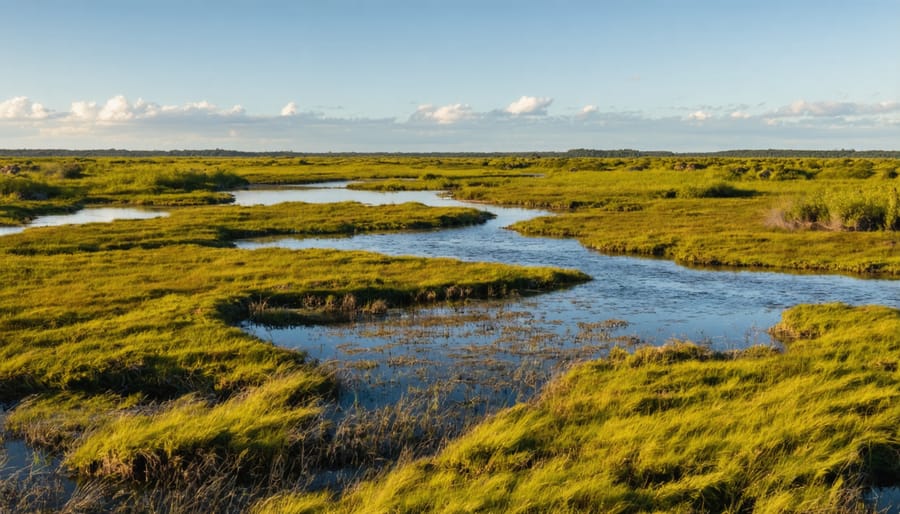
Wetland restoration stands as one of the most effective approaches. Coastal wetlands act as natural sponges, trapping sediments, excess nutrients, and various pollutants while providing critical habitat for fish and wildlife. The Tijuana Estuary in California, for example, filters agricultural runoff from upstream areas, preventing thousands of pounds of nitrogen from entering the Pacific Ocean annually.
Bioswales and rain gardens represent practical solutions for urban environments. These vegetated channels and shallow depressions capture stormwater from streets and parking lots, allowing it to slowly infiltrate the soil while plants and microorganisms break down contaminants like oil, heavy metals, and pesticides. Portland, Oregon has installed over 2,000 green street facilities that collectively manage millions of gallons of stormwater each year.
Marine biologist Dr. Sarah Chen shares her experience: “After our community installed rain gardens throughout the neighborhood, we documented a 60% reduction in pollutants entering the nearby estuary. Volunteers helped plant native species, and now they monitor water quality—it’s conservation in action.”
These solutions don’t require advanced technology, making them accessible for communities worldwide. Local watershed groups often need volunteers for planting events and maintenance, offering hands-on opportunities to protect marine ecosystems.
Education and Behavior Change Initiatives
Changing behaviors and raising awareness stands as one of our most powerful tools in combating marine pollution. When individuals understand how their daily choices affect ocean health, they become ambassadors for change within their communities, creating ripples of positive impact that extend far beyond initial expectations.
Educational programs have proven remarkably effective in transforming attitudes toward marine environments. Schools implementing ocean literacy curricula report students becoming advocates who influence their families’ purchasing decisions and waste habits. Dr. Maria Santos, a marine biologist who leads coastal education programs in California, shares a memorable story: “I watched a ten-year-old convince her entire apartment building to switch from single-use plastics to reusable alternatives. She made posters showing sea turtles and explained everything she’d learned. Within months, the complex had reduced its plastic waste by 60 percent.”
Social marketing campaigns leveraging compelling visuals and emotional storytelling have successfully shifted public perception. The viral impact of images showing marine life affected by plastic pollution sparked global movements like Plastic Free July and beach cleanup initiatives. These campaigns work because they connect abstract environmental problems to tangible consequences, making the issue personal and urgent without resorting to fear-mongering.
Community-based approaches have demonstrated lasting success by fostering ownership and pride. Coastal towns implementing “adopt-a-beach” programs report sustained participation rates and measurable reductions in shoreline debris. These initiatives create social accountability while providing volunteer opportunities that bring diverse groups together around shared environmental goals.
Behavioral economics principles have enhanced these efforts. Simple interventions like placing recycling bins in convenient locations, offering small incentives for returning fishing gear, or defaulting to “no straw” policies in restaurants have achieved surprising results. Studies show that making sustainable choices the easy choice dramatically increases compliance.
The key to lasting behavior change lies in maintaining momentum through celebration of progress, continued education, and building communities where environmental stewardship becomes part of collective identity. When people see their actions contributing to measurable improvements in ocean health, they remain engaged and inspire others to join the movement.
Marine Protected Areas and Ecosystem-Based Management
Marine protected areas (MPAs) function as sanctuaries where ocean ecosystems can heal from pollution impacts while building resilience against future threats. These designated zones restrict harmful activities like industrial fishing, coastal development, and waste dumping, creating safe havens where marine life can flourish without constant human pressure.
The science behind MPAs reveals their remarkable effectiveness. When protected from pollution stressors, marine ecosystems activate natural filtering processes. Seagrass beds and salt marshes absorb excess nutrients that cause harmful algal blooms, while healthy coral reefs buffer against storm damage that could otherwise wash pollutants inland. Research shows that well-managed MPAs can restore fish populations to historical levels within 10-15 years, demonstrating nature’s powerful capacity for recovery when given the chance.
Ecosystem-based management takes this approach further by treating ocean environments as interconnected systems rather than isolated parts. Instead of addressing plastic pollution or overfishing separately, this holistic strategy recognizes how different threats compound each other. Marine biologist Dr. Sarah Chen explains: “When we protected a coastal area near Vancouver, we didn’t just see fish return—we witnessed entire food webs stabilize. Cleaner water meant healthier plankton, which fed recovered fish populations, which attracted marine mammals we hadn’t seen in decades.”
This integrated approach works because ecosystems naturally regulate themselves when pollution pressure decreases. Biodiversity returns, creating redundancy that makes environments more resistant to future contamination events.
For those inspired to support these efforts, volunteer opportunities exist with organizations monitoring MPA effectiveness. Citizen scientists collect water samples, photograph marine life, and document ecosystem recovery—tangible ways to contribute to these living laboratories of ocean restoration.
How You Can Be Part of the Solution
Addressing marine pollution doesn’t require extraordinary resources or expertise—it starts with choices we make every day. Whether you have five minutes or five hours to dedicate, there’s a meaningful way for you to contribute to healthier oceans.
Begin with simple lifestyle adjustments that reduce your plastic footprint. Choose reusable water bottles, shopping bags, and food containers. When purchasing seafood, select sustainably sourced options certified by reputable organizations. Opt for natural-fiber clothing over synthetic materials that shed microplastics during washing, or use a microfiber-catching laundry bag to trap these particles before they enter waterways.
Taking your commitment further, participate in coastal cleanups organized by local conservation groups. These events not only remove tons of debris from beaches and shorelines but also provide valuable data about pollution sources. Dr. Maria Santos, a marine biologist with fifteen years of field experience, shares: “Every cleanup volunteer becomes a citizen scientist. The trash they collect tells us where pollution originates and helps us target prevention efforts more effectively.”
For those seeking ongoing engagement, the Marine Biodiversity Science Center offers diverse volunteer opportunities through their ocean conservation programs. Volunteers assist with everything from water quality monitoring and species surveys to educational outreach and habitat restoration projects. These programs welcome participants regardless of scientific background, providing training and mentorship alongside hands-on conservation work.
Amplify your impact through advocacy. Contact elected officials to support marine protection legislation and sustainable fishing regulations. Share credible information about ocean health on social media to expand awareness within your network. Support organizations conducting critical research and conservation work through donations or monthly memberships.
Remember, collective action creates transformative change. When individual choices multiply across communities, they reshape markets, influence policies, and ultimately protect the marine ecosystems that sustain all life on Earth. Your participation matters—the ocean’s future depends on it.
The good news is clear: marine pollution solutions exist, they’re effective, and they’re already making a difference in oceans around the world. From innovative cleanup technologies removing plastic from ocean gyres to comprehensive policy frameworks preventing pollution at its source, we’re witnessing real progress. The evidence demonstrates that when technology, policy, and individual action work together, we can reverse the damage and restore marine ecosystems to health.
What we’ve explored throughout this article reveals a fundamental truth about ocean conservation: no single approach will solve marine pollution alone. Instead, success comes from combining cutting-edge technologies like AI-powered waste tracking systems with robust international agreements, strong grassroots movements, and millions of individual choices made daily. Each element strengthens the others, creating momentum toward cleaner, healthier oceans.
The marine biologists and conservationists working on these challenges share a common message: every action matters, and collective impact is powerful. Whether you’re a scientist, educator, student, or simply someone who cares about our blue planet, you have a role to play in this solution.
We invite you to move beyond awareness and into action. Join our volunteer programs to participate in beach cleanups, citizen science projects, or educational outreach. Share what you’ve learned with your community. Support policies that protect marine environments. Together, we’re not just imagining a future with thriving oceans—we’re actively creating it. The ocean has given us so much; now it’s our turn to give back.

jessica
Ava Singh is an environmental writer and marine sustainability advocate with a deep commitment to protecting the world's oceans and coastal communities. With a background in environmental policy and a passion for storytelling, Ava brings complex topics to life through clear, engaging content that educates and empowers readers. At the Marine Biodiversity & Sustainability Learning Center, Ava focuses on sharing impactful stories about community engagement, policy innovations, and conservation strategies. Her writing bridges the gap between science and the public, encouraging people to take part in preserving marine biodiversity. When she’s not writing, Ava collaborates with local initiatives to promote eco-conscious living and sustainable development, ensuring her work makes a difference both on the page and in the real world.