Marine Biodiversity Science Center

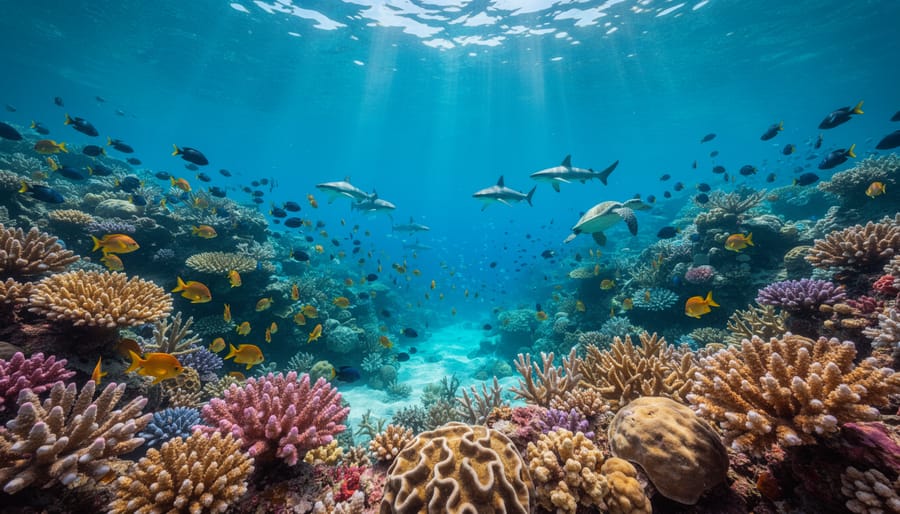
The ocean is changing faster than at any point in human history. Rising temperatures, acidifying waters, and intensifying storms are testing marine ecosystems in unprecedented ways—yet some coral reefs, kelp forests, and coastal habitats are proving remarkably capable of withstanding and recovering from these shocks. This capacity, known as environmental resilience, has become the cornerstone of modern marine conservation policy worldwide.
Environmental resilience in marine systems refers to an ecosystem’s ability to absorb disturbance, reorganize during change, and maintain essential functions and structures. Unlike traditional conservation approaches that simply aimed to protect ecosystems from human interference, resilience-based strategies recognize that change is inevitable and focus instead on strengthening the inherent capacity of marine environments to adapt and persist through climate disruption.
For the environmental scientists mapping vulnerable coastlines, the policymakers drafting climate adaptation plans, and the concerned citizens seeking meaningful ways to protect our oceans, understanding resilience has become essential. Marine ecosystems with high resilience can recover from bleaching events, withstand storm damage, and maintain biodiversity even as conditions shift. Those lacking resilience may cross critical thresholds, transforming into entirely different—and often less productive—states.
This article explores how climate change challenges marine resilience, examines the policy frameworks that effectively build adaptive capacity in coastal and ocean systems, and reveals the innovative conservation strategies already making measurable differences. From community-led mangrove restoration projects to international agreements protecting migration corridors, resilience thinking is reshaping how we approach marine conservation. More importantly, it offers concrete pathways for everyone—from researchers to weekend beach volunteers—to contribute to healthier, more adaptable oceans capable of sustaining life for generations to come.
What Environmental Resilience Really Means for Our Oceans
The Three Pillars of Marine Resilience
Marine resilience rests on three fundamental pillars that determine how ocean ecosystems respond to environmental stress. Understanding these pillars helps scientists and policymakers develop more effective conservation strategies.
Resistance represents an ecosystem’s ability to withstand disturbances without significant change. Think of mangrove forests facing storm surges—their intricate root systems act as natural barriers, absorbing wave energy and protecting coastlines. These remarkable ecosystems can resist erosion and flooding that would devastate unprotected shores. Similarly, healthy coral reefs with diverse species compositions show greater resistance to bleaching events than degraded monocultures. Dr. Maria Santos, a marine biologist who has studied Caribbean reefs for fifteen years, explains: “Diverse reefs are like well-diversified investment portfolios—when one species struggles, others can maintain ecosystem functions.”
Recovery describes how quickly an ecosystem bounces back after disturbance. Kelp forests exemplify this pillar beautifully. After storm damage or sea urchin outbreaks, these underwater giants can regrow at rates exceeding half a meter per day under favorable conditions. Their rapid recovery depends on maintaining populations of grazers that control competing algae and preserving the rocky substrate where kelp attaches.
Transformation, perhaps the most dynamic pillar, involves fundamental adaptation to new conditions. As ocean temperatures rise, some coral species are migrating poleward, establishing in waters once too cold for their survival. Mangrove systems are similarly expanding their ranges, creating novel ecosystems that provide different but valuable services.
These three pillars rarely operate independently. Successful conservation recognizes that building resistance and supporting recovery can buy time for necessary transformations. Volunteers participating in reef monitoring programs contribute vital data that helps scientists track these processes, turning citizen engagement into powerful conservation tools that strengthen all three pillars simultaneously.
Climate Threats That Test Ocean Resilience
Rising Temperatures and Ocean Acidification
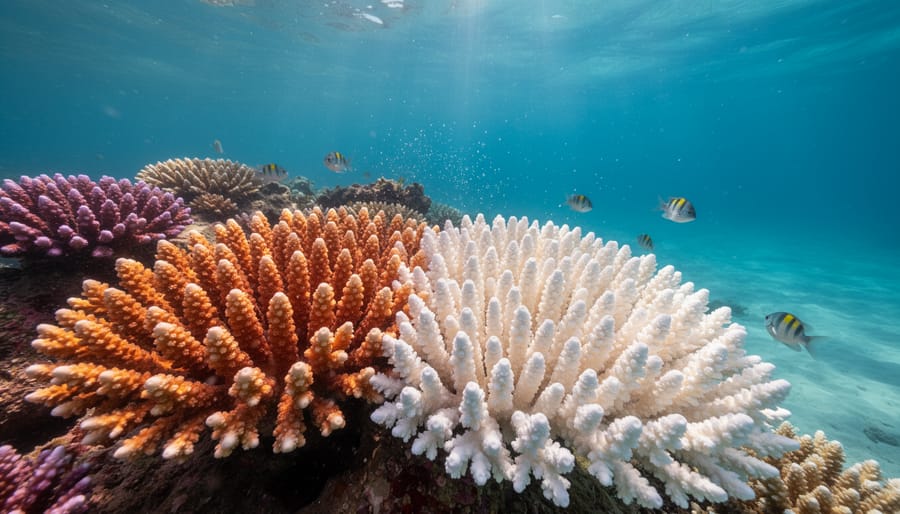
Our oceans are absorbing the majority of excess heat and carbon dioxide from the atmosphere, fundamentally altering marine environments in ways that test the limits of ecosystem resilience. As waters warm, marine species face thermal stress that disrupts critical biological processes. The climate change impacts are perhaps most visible in coral reefs, where even a temperature increase of 1-2 degrees Celsius can trigger mass bleaching events. When corals expel their symbiotic algae under stress, they lose both their vibrant colors and primary food source, leaving ghostly white skeletons behind.
Simultaneously, ocean acidification creates an equally pressing challenge. As seawater absorbs CO2, it forms carbonic acid, reducing pH levels and making it harder for organisms to build calcium carbonate structures. Shellfish, pteropods, and young oysters struggle to form protective shells, while adult organisms must expend more energy maintaining existing structures.
Marine biologist Dr. Elena Rodriguez has witnessed these changes firsthand during her research on Pacific oyster populations. She explains that hatcheries now face unprecedented larval mortality rates, threatening both wild populations and coastal economies dependent on shellfish harvesting. These interconnected stressors demonstrate why building environmental resilience requires comprehensive policy approaches that address multiple threats simultaneously while supporting both ecosystem recovery and community adaptation.
Extreme Weather Events and Changing Currents
Extreme weather events are becoming more frequent and intense due to climate change, fundamentally reshaping marine ecosystems. Hurricanes and severe storms generate massive physical forces that can destroy coral reefs, seagrass meadows, and coastal mangroves—critical habitats that countless species depend upon for shelter, feeding, and reproduction. The increasing intensity of these events leaves less time for ecosystems to recover between disturbances, testing their resilience in unprecedented ways.
Shifting ocean circulation patterns present equally significant challenges. As global temperatures rise, major current systems like the Gulf Stream are showing signs of change, affecting nutrient distribution and water temperatures across vast ocean regions. These shifts force marine species to migrate to new areas in search of suitable conditions, disrupting established food webs and ecological relationships. Cold-water species are moving toward the poles, while warm-water species expand their ranges, creating novel ecosystems with unpredictable interactions.
Marine biologist Dr. Sarah Chen has witnessed these changes firsthand while monitoring reef systems in the Caribbean. She notes that post-hurricane recovery now often coincides with heat stress events, creating compounding pressures that overwhelm even historically resilient coral communities. Understanding these complex interactions is essential for developing effective conservation policies that anticipate and prepare for our changing ocean conditions.
Sea Level Rise and Habitat Loss
Rising sea levels pose an existential threat to coastal ecosystems that serve as nurseries and protective barriers for countless marine species. Salt marshes, which filter pollutants and provide critical habitat for juvenile fish, are drowning as water rises faster than vegetation can migrate inland. Mangrove forests, already reduced by 35% globally, face similar pressures while losing their ability to protect coastlines from storm surges and sequester carbon dioxide. When these ecosystems disappear, the effects ripple throughout the food web. Marine biologist Dr. Elena Rodriguez, who has monitored Florida’s mangrove communities for two decades, shares that she’s witnessed entire fish populations decline as their nursery habitats vanish. The loss creates a domino effect: fewer juvenile fish means reduced populations for commercial fisheries, while compromised coastal buffers leave human communities more vulnerable. However, restoration projects worldwide demonstrate resilience when communities act. Volunteers can join local habitat restoration initiatives, helping replant native vegetation and monitor ecosystem recovery, turning concerning trends into opportunities for meaningful conservation impact.
Real-World Examples of Marine Resilience in Action
The Coral Reefs That Survived the Heat
In the aftermath of devastating bleaching events that have plagued coral reefs worldwide, scientists have discovered something remarkable: certain coral populations are surviving—and even thriving—in conditions that would typically prove fatal. These resilient reefs offer crucial insights into how marine ecosystems might adapt to our warming oceans.
Dr. Emily Tran, a marine biologist working in the Gulf of Aqaba, shares an inspiring discovery: “We found coral colonies that withstood water temperatures three degrees Celsius above their normal threshold. These aren’t just survivors—they’re potential blueprints for reef recovery.” These heat-resistant corals possess unique genetic traits that allow their symbiotic algae to function efficiently even under thermal stress. Some produce higher levels of heat-shock proteins, while others have partnered with more temperature-tolerant algae species.
Research teams are now cataloging these resilient populations across global hotspots, from the Red Sea to American Samoa. Scientists use genetic sequencing to identify the specific adaptations that confer heat resistance, creating a living library of resilient coral strains. This groundbreaking work isn’t confined to laboratories—volunteers with organizations like Reef Check participate in monitoring programs, helping scientists track which coral species persist through warming events.
The conservation applications are transformative. Restoration projects increasingly use heat-resistant coral fragments for reef rehabilitation, essentially “climate-proofing” vulnerable areas. Seed banks preserve resilient genetic material, while assisted evolution experiments explore whether these advantageous traits can be encouraged in other coral populations. This research represents more than scientific curiosity—it’s a roadmap for helping coral reefs adapt to our changing climate.
When Seagrass Meadows Come Back Stronger
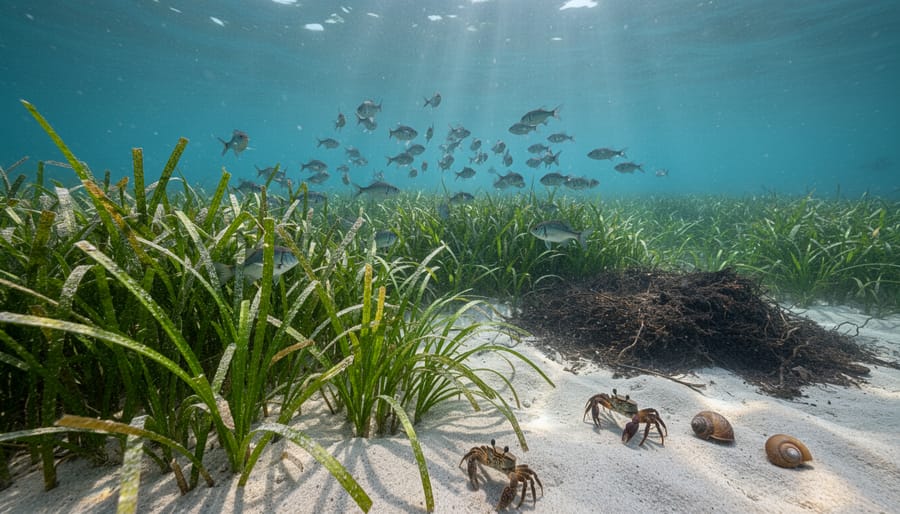
Along coastlines from Virginia to Indonesia, seagrass meadows that were once degraded or destroyed are making remarkable comebacks, offering hope and tangible lessons in ecosystem resilience. These underwater gardens, often called the “lungs of the sea,” demonstrate nature’s capacity to recover when given the right support and protection.
In Virginia’s Chesapeake Bay, restoration efforts have transformed barren seafloor back into thriving seagrass habitat. Dr. Maria Chen, a marine biologist who has monitored these sites for over a decade, recalls the transformation: “We started with just a few test plots in 2001. Now we have over 9,000 acres of healthy eelgrass. It’s like watching a desert bloom.” The recovery has brought back fish populations, improved water clarity, and created crucial habitat for juvenile species.
What makes seagrass particularly valuable in building climate resilience is its exceptional ability to sequester carbon. These meadows capture carbon dioxide up to 35 times faster than tropical rainforests, storing it in their roots and the sediment below for centuries. When seagrass ecosystems recover, they become powerful allies in mitigating climate change while simultaneously protecting coastlines from storm surge and erosion.
Volunteers play essential roles in these restoration projects, from planting shoots to monitoring water quality. Community groups in Florida and California regularly organize seagrass planting days, where participants wade into shallow waters to carefully anchor young plants into the sediment. These hands-on experiences connect people directly to marine conservation while accelerating ecosystem recovery—proof that resilience grows stronger when communities and nature work together.
How Conservation Policy Builds Climate Resilience
Marine Protected Areas as Resilience Refuges
Marine Protected Areas function as resilience refuges by establishing safe havens where marine ecosystems can maintain the biological diversity and ecological processes essential for adapting to climate change. Within these protected boundaries, coral reefs, kelp forests, and seagrass meadows can recover from disturbances and build the ecological robustness needed to withstand rising temperatures and ocean acidification.
These sanctuaries preserve genetic diversity across marine populations, which serves as nature’s insurance policy against environmental shifts. When fishing pressure and coastal development are restricted, species populations grow larger and more genetically varied. This genetic richness provides the raw material for natural selection, allowing populations to adapt as ocean conditions change.
Dr. Sarah Martinez, a marine biologist who has studied Caribbean reef systems for fifteen years, shares an encouraging observation: “In well-enforced MPAs, we’ve documented fish populations with more diverse genetic profiles and coral colonies showing greater thermal tolerance. These protected populations can potentially repopulate degraded areas outside the reserves.”
MPAs also maintain critical ecological functions like nutrient cycling and habitat provision that support entire food webs. By protecting key species such as herbivorous fish that control algae growth on reefs, these areas sustain the natural processes that keep ecosystems functional and adaptive.
For those inspired to support this work, numerous organizations offer volunteer opportunities in MPA monitoring and community education programs that strengthen these vital resilience refuges.
Ecosystem-Based Management Approaches
Traditional conservation often focuses on protecting individual species or specific habitats, but ecosystem-based management takes a broader view. This approach recognizes that marine environments function as interconnected webs where coral reefs, mangroves, seagrass beds, and open ocean systems work together to create resilience against climate impacts.
By managing entire ecosystems rather than isolated components, we can better protect the complex relationships that help marine environments adapt to changing conditions. For example, maintaining healthy mangrove forests not only protects coastlines from storm surge but also provides nursery habitat for fish species that support coral reef health miles offshore.
Dr. Sarah Chen, a marine ecologist working in the Caribbean, shares her perspective: “When we shifted from managing individual fish stocks to considering the whole ecosystem, we saw remarkable improvements. Protecting seagrass meadows helped rebuild fish populations naturally, which in turn supported healthier reefs capable of withstanding warming waters.”
This holistic strategy requires collaboration across jurisdictions and sectors, bringing together fishing communities, tourism operators, scientists, and policymakers. Volunteer monitoring programs play a crucial role in gathering the extensive data needed for ecosystem-based management, offering opportunities for citizens to contribute directly to conservation success while building community investment in marine resilience.
Adaptive Management and Policy Flexibility
Effective marine conservation requires policies that evolve alongside our understanding of ocean ecosystems and climate impacts. Adaptive management strategies create frameworks that respond to new scientific data, unexpected ecological shifts, and changing environmental conditions rather than remaining fixed.
The Great Barrier Reef Marine Park Authority exemplifies this approach, regularly updating zoning plans based on coral health monitoring and climate projections. When scientists discovered unexpected resilience in certain reef areas, managers quickly adjusted protection priorities to safeguard these climate refugia. Similarly, California’s Marine Protected Area network incorporates five-year review cycles, allowing adjustments based on species recovery data and ocean temperature trends.
Marine biologist Dr. Sarah Chen describes this approach as “learning while doing.” She explains, “We monitor, evaluate, and adjust our strategies continuously. When warming waters shifted fish populations northward faster than predicted, our adaptive framework let us respond within months instead of years.”
This flexibility proves essential as climate change accelerates. Successful adaptive policies include clear monitoring protocols, stakeholder input mechanisms, and decision-making processes that can incorporate emerging science without bureaucratic delays. Citizens can support these efforts by participating in monitoring programs and engaging in public comment periods when policies undergo review.
What Scientists and Communities Are Doing Right Now
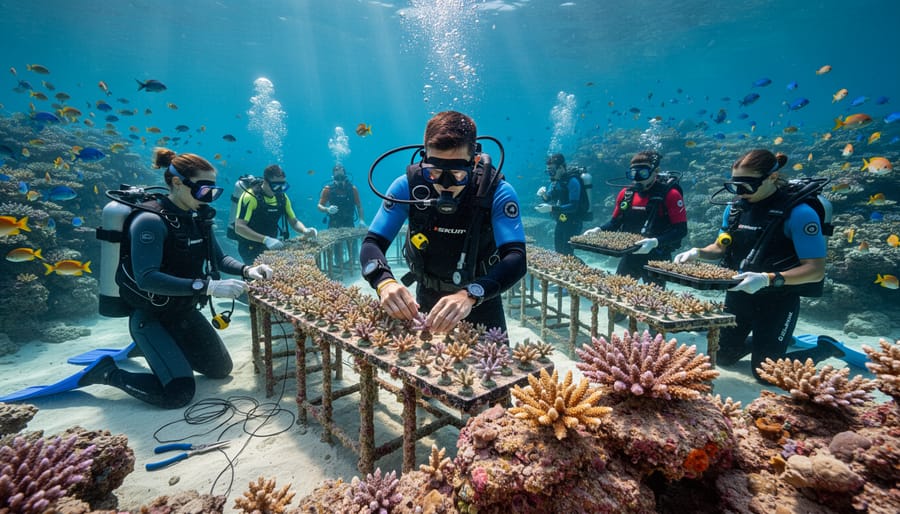
Restoration Projects That Work with Nature
Across the globe, innovative restoration projects are proving that working alongside natural processes can rebuild degraded marine ecosystems while enhancing their ability to withstand future climate shocks. These efforts represent a crucial bridge between scientific understanding and practical action.
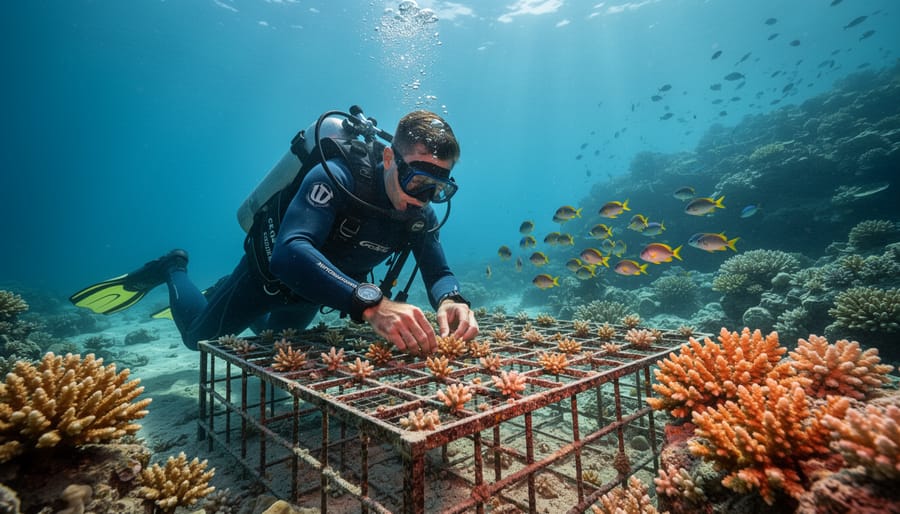
Coral gardening initiatives have emerged as particularly promising interventions. In the Caribbean and Indo-Pacific, marine biologists cultivate climate-resilient coral fragments in underwater nurseries, then transplant them onto damaged reefs. Dr. Elena Martinez, who leads a coral restoration program in the Florida Keys, shares: “We’re not just replacing corals—we’re selecting heat-tolerant species that can survive warmer waters. It’s like giving reefs an evolutionary head start.” These projects often welcome volunteer divers who can assist with monitoring and transplantation after proper training.
Oyster reef rebuilding offers dual benefits: restoring vital habitat while improving water quality. A single oyster filters up to 50 gallons of water daily, and their reefs provide crucial storm surge protection for coastal communities. Organizations along the Atlantic and Gulf coasts regularly host volunteer days where community members help construct reef structures using recycled shells.
Mangrove replanting projects in Southeast Asia, East Africa, and Latin America demonstrate remarkable success rates when local communities lead the efforts. These coastal forests sequester carbon at rates up to four times higher than terrestrial forests while protecting shorelines from erosion and storms. Many marine conservation programs now integrate mangrove restoration with community development, creating sustainable livelihoods alongside ecological recovery.
Monitoring Networks That Track Recovery
Understanding whether recovery strategies work requires consistent, long-term monitoring—and this is where both professional scientists and everyday citizens play vital roles. Citizen science programs have become powerful tools for tracking resilience indicators across marine ecosystems. Volunteers participate in reef health surveys, water quality testing, and species population counts, generating valuable data that would be impossible for research institutions to collect alone. Programs like Reef Check train divers worldwide to assess coral condition using standardized protocols, contributing information that directly influences marine protected area management.
Professional monitoring networks complement these efforts with sophisticated technology. Acoustic sensors track fish populations, satellite imagery reveals habitat changes, and oceanographic buoys measure temperature fluctuations and acidification levels. Marine biologist Dr. Sarah Chen explains: “We’re essentially taking the ocean’s vital signs. These measurements tell us if ecosystems are bouncing back or need additional intervention.”
This combined data feeds into adaptive management frameworks, where policymakers adjust conservation strategies based on real-time evidence. When monitoring reveals declining resilience indicators—such as reduced biodiversity or slowed coral regeneration—agencies can modify fishing regulations, expand protected zones, or increase restoration investments. The beauty of these networks is their accessibility: anyone passionate about ocean health can contribute meaningful observations that shape conservation policy.
How You Can Support Marine Climate Resilience
Get Involved Through Volunteering and Advocacy
Building marine resilience requires active participation from people at all levels. Numerous marine conservation organizations offer hands-on volunteer opportunities, from beach cleanups and coral restoration projects to species monitoring programs. Organizations like the Ocean Conservancy and local aquariums regularly seek volunteers to assist with education programs and field research. These experiences provide valuable skills while directly contributing to ocean conservation initiatives.
Advocacy represents another powerful tool for change. Contact your elected officials to support legislation strengthening marine protected areas and climate adaptation funding. Sign petitions calling for sustainable fishing practices and reduced ocean pollution. Share your knowledge on social media to amplify conservation messages within your community.
Citizen science projects offer exciting ways to contribute meaningful data to research efforts. Programs like Reef Check train divers to monitor coral health, while apps like iNaturalist allow anyone to document marine species observations. These contributions help scientists track ecosystem changes and inform conservation strategies. Marine biologist Dr. Sarah Chen shares, “Citizen scientists have helped us identify shifting species ranges that we wouldn’t have caught otherwise. Every observation matters.” Your participation, whether through volunteering, advocacy, or data collection, strengthens our collective capacity to protect marine ecosystems.
Everyday Choices That Make Oceans Stronger
Individual actions create ripples that strengthen ocean resilience. Start with seafood choices by consulting science-based guides like the Monterey Bay Aquarium’s Seafood Watch, which helps identify sustainably harvested fish that support healthy marine populations. Marine biologist Dr. Sarah Chen shares: “When I explain to my family how buying certified sustainable seafood protects fish nurseries and coral reefs, they become active participants in conservation—it transforms dinner into an act of stewardship.”
Reducing plastic consumption directly protects marine life from entanglement and ingestion. Choose reusable bags, bottles, and containers, and participate in beach cleanups—volunteers remove millions of pounds of debris annually while collecting valuable data for researchers. Even small actions matter: properly disposing of fishing line prevents wildlife injuries, while choosing products without microbeads keeps plastic particles from entering food webs.
Lowering your carbon footprint through energy conservation, sustainable transportation, and supporting renewable energy directly addresses ocean acidification and warming. Every degree of temperature rise avoided helps coral reefs, kelp forests, and polar ecosystems maintain their resilience. Consider volunteering with coastal restoration projects or citizen science programs that monitor ocean health—these hands-on opportunities connect you with marine scientists while contributing real data to conservation efforts.
Environmental resilience offers our brightest path forward in safeguarding the ocean’s future. As climate change intensifies, the difference between thriving marine ecosystems and degraded ones increasingly hinges on how well we build and protect natural resilience mechanisms. The good news is that resilience isn’t passive—it responds to our choices.
Every action counts, from the policies nations adopt to protect marine corridors, to the decisions each of us makes about consumption and advocacy. When governments establish well-designed marine protected areas, they create refuges where ecosystems can recover and adapt. When communities restore coastal habitats like mangroves and seagrass beds, they strengthen natural buffers against storms and acidification. When individuals reduce their carbon footprint and support sustainable seafood choices, they ease the pressures bearing down on marine life.
The marine biologists and conservationists working at the frontlines of this challenge share a common conviction: collective action genuinely transforms outcomes. Dr. Sarah Chen, who monitors coral resilience in warming waters, puts it simply: “I’ve seen degraded reefs bounce back when given half a chance. Our interventions matter.”
This is where you come in. Whether you’re a scientist, student, educator, or simply someone who cares about the ocean, your engagement amplifies impact. Join our volunteer monitoring programs, participate in our e-network to stay informed about emerging research and policy developments, or share what you learn with your community. Together, we can build the resilience our oceans desperately need—and secure a healthier marine environment for generations to come.

jessica
Ava Singh is an environmental writer and marine sustainability advocate with a deep commitment to protecting the world's oceans and coastal communities. With a background in environmental policy and a passion for storytelling, Ava brings complex topics to life through clear, engaging content that educates and empowers readers. At the Marine Biodiversity & Sustainability Learning Center, Ava focuses on sharing impactful stories about community engagement, policy innovations, and conservation strategies. Her writing bridges the gap between science and the public, encouraging people to take part in preserving marine biodiversity. When she’s not writing, Ava collaborates with local initiatives to promote eco-conscious living and sustainable development, ensuring her work makes a difference both on the page and in the real world.