Marine Biodiversity Science Center

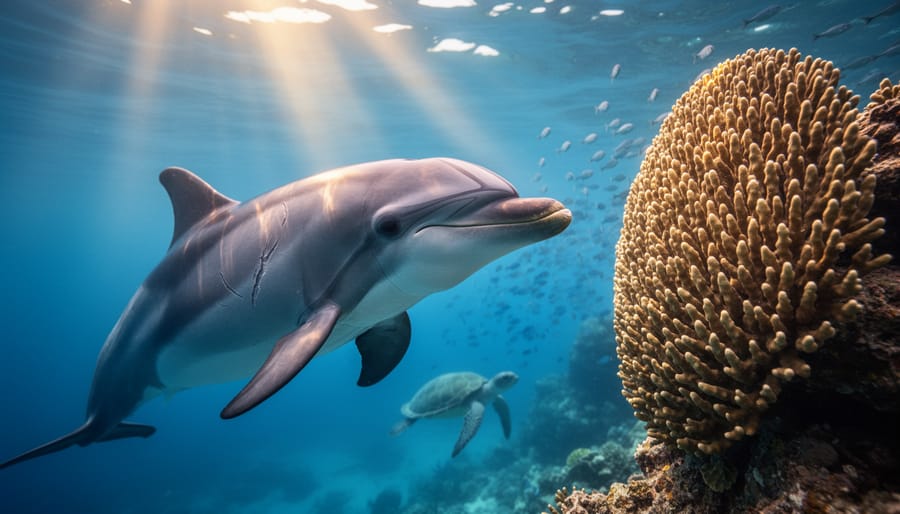
Watch a dolphin navigate back to a feeding site it visited months ago, or observe an octopus solving puzzles it encountered only once before—these remarkable abilities reveal sophisticated memory processes at work beneath the waves. Marine animals rely on three fundamental memory processes to survive, learn, and adapt in their ocean environments: encoding, storage, and retrieval. Understanding how these processes function in marine life offers critical insights for conservation efforts and helps us protect species facing unprecedented environmental changes.
Encoding occurs when a sea turtle first encounters a predator or a parrotfish learns to identify toxic algae, transforming sensory experiences into neural signals. Storage maintains these encoded memories over time, allowing migratory species like humpback whales to remember precise feeding grounds across vast distances and decades. Retrieval activates stored information when needed, enabling a seal to recognize a successful hunting technique or a cleaner wrasse to recall specific client fish and their preferences.
These three processes work together seamlessly, forming the foundation of marine animal cognition and behavior. For marine conservationists and educators, recognizing how memory shapes animal responses to habitat loss, climate change, and human interaction transforms our approach to protection strategies. By exploring each memory process through marine examples, we can better appreciate the cognitive complexity of ocean life and develop more effective conservation interventions that account for how animals learn, remember, and adapt to their changing world.
Why Marine Memory Matters More Than You Think
Understanding how marine animals encode, store, and retrieve memories isn’t just fascinating science—it’s essential for protecting ocean life in our rapidly changing world. These cognitive abilities directly influence survival, and recognizing this helps us design better conservation strategies.
Consider habitat protection efforts. When we understand that sea turtles encode magnetic signatures of their birthplace beaches and retrieve these memories decades later to return for nesting, we recognize why protecting not just current nesting sites but also their magnetic corridors matters. Similarly, knowing that octopuses store spatial memories of den locations and hunting grounds for weeks informs minimum reserve sizes that actually support their behavioral needs.
Rehabilitation programs benefit enormously from memory research. Marine biologist Dr. Sarah Chen, who works with rescued dolphins at a California facility, shares how this knowledge transforms their approach: “We now know these animals remember traumatic events and human interactions. By understanding their memory processes, we create rehabilitation environments that help them encode positive experiences, which improves their chances of successful release.” Her team designs enrichment activities that encourage healthy memory formation, helping animals relearn natural behaviors.
Memory research also helps predict how marine species respond to environmental changes. Fish that remember seasonal feeding grounds may struggle when climate shifts alter food availability at encoded locations. Understanding this allows conservationists to anticipate challenges and develop adaptive management strategies.
For those inspired to contribute, volunteer opportunities exist at research facilities studying marine cognition. Citizen scientists can participate in photo-identification projects that track individual animals over time, helping researchers understand how memory influences migration patterns and social behaviors. Your observations could directly inform policies that protect the cognitive landscapes marine animals depend upon for survival.
The Three Stages: How Marine Animals Process Information
Just like humans, marine animals don’t simply absorb information from their ocean environment—they actively process it through three distinct memory stages that scientists have been studying for decades. Understanding these processes not only reveals the remarkable cognitive abilities of dolphins, sea turtles, and octopuses, but also helps conservationists develop more effective protection strategies.
The first stage, encoding, is when a marine animal initially perceives and registers information. Think of a young sea turtle encountering a jellyfish for the first time—its brain captures details about shape, movement, and taste. Storage, the second stage, involves maintaining this information over time, whether for minutes or years. The turtle’s nervous system essentially files away this encounter for future reference. Finally, retrieval is the process of accessing stored memories when needed. When that same turtle spots a similar jellyfish months later, it recalls the earlier experience and responds accordingly.
Marine biologist Dr. Sarah Chen explains, “These three processes work together seamlessly in marine species, allowing them to navigate vast oceans, remember feeding grounds, and recognize individuals within their social groups.” By understanding how marine animals encode, store, and retrieve information, we can better protect critical habitats and support conservation programs that rely on these natural behaviors.
Encoding: How Ocean Life Takes In the World
Sensory Channels in the Ocean
Marine animals encode information through remarkably diverse sensory channels, each adapted to the unique challenges of underwater environments. The first step in forming memories—encoding—depends on how effectively animals detect and process sensory information from their surroundings.
Dolphins exemplify sophisticated auditory encoding through echolocation and social learning. They emit high-frequency clicks that bounce off objects, creating detailed acoustic maps of their environment. This sensory information becomes encoded into memory, allowing dolphins to recognize prey, navigate complex habitats, and identify individual pod members even in murky water. Marine biologist Dr. Sarah Chen, who has spent fifteen years studying bottlenose dolphins, shares that these animals can remember specific echolocation signatures of familiar individuals for decades.
Sharks utilize electroreception through specialized organs called ampullae of Lorenzini, which detect the weak electrical fields generated by living organisms. This sensory channel encodes information about prey location, even when buried beneath sand. Studies show that sharks remember productive hunting grounds, demonstrating how electroreceptive encoding translates into long-term spatial memories.
Octopuses rely heavily on chemoreception and touch, with taste receptors covering their eight arms. Each sucker independently samples chemical signatures, encoding information about food quality, predators, and territorial boundaries. This distributed sensory system allows octopuses to process multiple information streams simultaneously.
Understanding these encoding mechanisms helps conservationists develop more effective marine protected areas. Volunteers participating in coastal monitoring programs contribute valuable data about how sensory pollution—such as underwater noise or chemical runoff—disrupts these critical encoding processes, informing science-based conservation strategies.
From Stimulus to Neural Signal
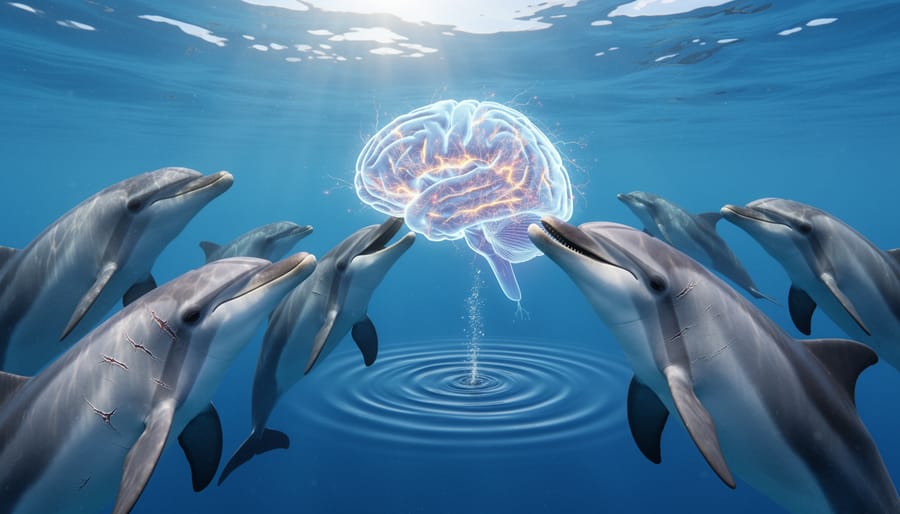
Every moment, marine animals are bombarded with information from their underwater world: the shimmer of light filtering through waves, the chemical signature of a predator, the vibration of a fellow pod member’s call. But how does a dolphin’s brain transform these external stimuli into meaningful neural signals that can be learned and remembered?
The journey begins with specialized sensory receptors. When a sea turtle encounters a specific beach temperature during nesting, thermal receptors in its skin convert this physical sensation into electrical impulses. Similarly, when a clownfish sees the distinctive tentacles of its host anemone, photoreceptor cells in its eyes translate those visual patterns into chemical signals.
These sensory signals travel along neural pathways to specialized brain regions. In fish, the optic tectum processes visual information, while the olfactory bulb handles chemical cues crucial for navigation and mate recognition. Marine biologist Dr. Sarah Chen recalls observing this process firsthand: “Watching juvenile salmon respond to their natal stream’s chemical signature for the first time is remarkable. You can see the behavioral shift as their brains process and encode this life-saving information.”
The conversion process is remarkably efficient. Neurons fire in specific patterns, creating unique “signatures” for different stimuli. A humpback whale hearing a new song pattern will generate distinct neural firing sequences that become the foundation for memory formation. This biological translation from environmental stimulus to brain signal represents the critical first step in how marine animals learn to navigate vast oceans, recognize kin, and survive in their complex aquatic environments.
Storage: Where Marine Memories Live
Short-Term vs. Long-Term Memory in Marine Species
Marine animals rely on two distinct memory systems that work together to ensure survival: short-term working memory and long-term memory storage. Understanding these systems reveals how marine species navigate complex challenges, from daily foraging to annual migrations spanning thousands of miles.
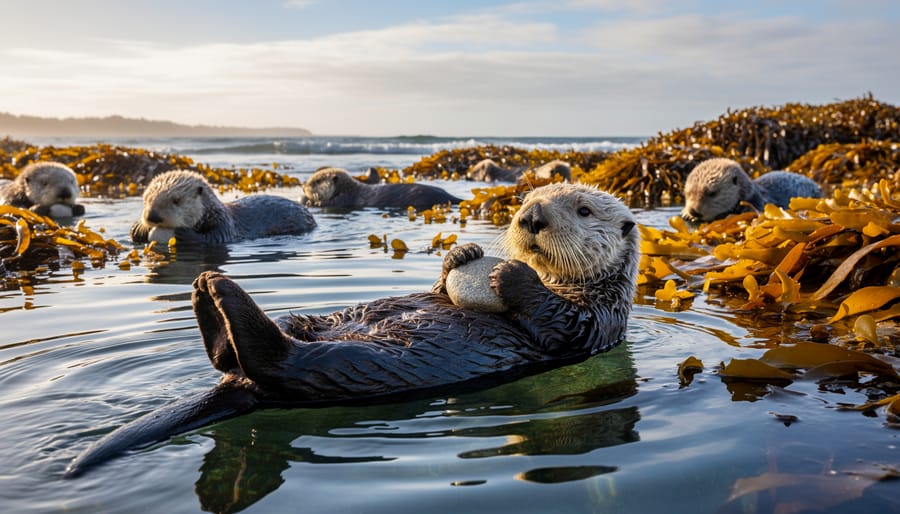
Working memory functions like a mental notepad, holding information temporarily while animals complete immediate tasks. Sea otters demonstrate this beautifully during foraging dives. They remember which rocks on the seafloor yielded the most abundant prey during a single diving session, allowing them to optimize their efforts before surfacing. This short-term memory typically lasts minutes to hours, just long enough to maximize efficiency during active hunting.
In contrast, long-term memory storage enables marine animals to retain critical information for months, years, or even lifetimes. Gray whales undertake one of the longest migrations of any mammal, traveling up to 12,000 miles round-trip between feeding grounds in the Arctic and breeding lagoons in Mexico. They remember these precise routes year after year, passing along migration knowledge through generations. Similarly, sea turtles return to the exact beaches where they hatched decades earlier, demonstrating remarkable long-term spatial memory.
Marine biologist Dr. Sarah Chen shares: “Watching humpback whales return to the same feeding spots season after season taught me that their memory isn’t just impressive—it’s essential for survival. Understanding these memory processes helps us protect critical habitat areas these animals depend on.”
For conservation volunteers participating in marine monitoring programs, recognizing these memory patterns helps identify crucial feeding grounds and migration corridors that require protection, directly supporting species survival in our changing oceans.
The Biological Basis of Marine Memory
Understanding how marine animals form memories begins at the cellular level, where fascinating biological processes mirror those found in our own brains. Marine neuroscientists have discovered that fish, cephalopods, and marine mammals all experience neural plasticity—the brain’s remarkable ability to reorganize and strengthen connections between neurons based on experience.
When a cleaner wrasse learns to recognize a client fish, or an octopus remembers the location of a favorite den, synaptic changes occur in their neural networks. These synapses, the junctions where neurons communicate, become more efficient through repeated activation, a process called long-term potentiation. Research on goldfish has shown that environmental enrichment actually increases the number and size of neurons in memory-related brain regions, demonstrating the physical nature of learning.
Dr. Elena Ramirez, a marine neurobiologist studying bottlenose dolphins at the Monterey Bay Research Institute, describes her breakthrough moment: “When we analyzed brain tissue samples, we could actually see denser synaptic connections in dolphins trained for cooperative tasks. Their cognitive abilities weren’t just behavioral—they were written into their neural architecture.”
Cephalopods present particularly intriguing cases, as their distributed nervous system contains two-thirds of their neurons in their arms, creating a decentralized memory network. This biological foundation for memory has profound conservation implications: if marine animals physically encode learned behaviors, habitat disruption or capture can erase generations of environmental knowledge, making rehabilitation and successful reintroduction far more challenging than previously understood.
Retrieval: Putting Memories to Work
Recognition and Recall in the Ocean
The final stage of memory processing splits into two distinct pathways: recognition and recall. Recognition memory allows marine animals to identify familiar stimuli when encountered again, while recall memory involves retrieving stored information without external cues. Understanding this distinction helps researchers and conservationists appreciate the complexity of marine cognition.
Recognition memory is like answering a multiple-choice question. Territorial damselfish demonstrate this ability by identifying intruders who have previously challenged their territory. When a familiar rival approaches, the resident fish responds differently than to a complete stranger, showing they recognize the individual without needing to actively search their memory banks.
Recall memory, by contrast, resembles answering an essay question where you must generate information independently. Seal mothers returning to crowded breeding colonies perform remarkable feats of recall, remembering the specific location and unique vocalizations of their pups among thousands of similar-looking and similar-sounding youngsters. This retrieval happens without obvious cues, relying entirely on stored memories.
Dr. Sarah Mitchell, a marine biologist studying reef fish cognition, shares that “watching cleaner wrasse recall the locations of their client fish territories taught me how sophisticated these memory systems truly are.” Coral reef residents regularly demonstrate both recognition and recall, navigating complex social hierarchies and territorial boundaries. For volunteers participating in fish behavior monitoring programs, documenting these memory-driven interactions provides valuable data supporting marine protected area design and species-specific conservation strategies.
When Marine Memory Fails
Even the most remarkable marine memories can falter when environmental conditions deteriorate. Just as human memory suffers under stress, marine animals face significant cognitive challenges when their ocean home becomes compromised. Stress, pollution, and noise can all disrupt the delicate retrieval process, preventing animals from accessing stored information when they need it most.
Chronic stress from warming waters or food scarcity floods marine animals’ systems with hormones that interfere with memory recall. Pollution introduces toxins that damage neural pathways, while underwater noise from shipping and industrial activities masks acoustic cues animals rely on for navigation and communication. Habitat destruction removes the environmental landmarks that trigger memory retrieval, leaving animals disoriented in once-familiar territory.
Marine biologist Dr. Sarah Chen shares a sobering observation: “We’ve documented sea turtles swimming past their traditional nesting beaches, seemingly unable to recognize sites their ancestors used for generations. The beaches haven’t moved, but coastal development has altered their sensory landscape so dramatically that memory retrieval fails.”
Understanding these memory impairments strengthens the case for marine protected areas, noise reduction initiatives, and pollution controls—conservation actions that protect not just habitats, but the cognitive abilities marine life depends on for survival.
Real-World Applications: Conservation Through Understanding
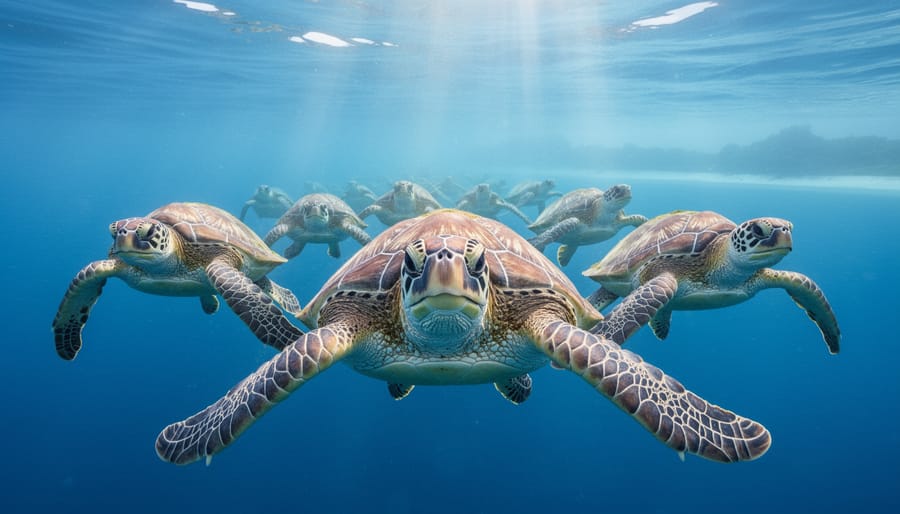
Understanding how marine animals encode, store, and retrieve information has revolutionized conservation approaches worldwide. When marine biologists recognize that sea turtles use spatial memory to navigate thousands of miles to nesting beaches, conservation efforts shift to protect not just the beaches themselves, but the entire migratory corridor and magnetic field patterns these animals rely on for encoding navigational information.
The Florida Keys National Marine Sanctuary has implemented habitat restoration programs informed by research on how reef fish encode and remember shelter locations. By strategically placing artificial reef structures in patterns that match natural coral formations, researchers found that relocated fish successfully stored and retrieved these new habitat locations, improving survival rates by 40 percent. This science-based approach demonstrates how memory research directly translates into actionable conservation strategies.
Dr. Sarah Mitchell, a marine biologist working with sea lion rehabilitation programs, shares a compelling example: “We discovered that rescued sea lions who underwent memory-enrichment exercises during rehabilitation had significantly higher post-release survival rates. By training them to encode and retrieve information about prey locations and predator avoidance, we’re essentially rebuilding their survival toolkit before they return to the wild.”
These insights have shaped policy decisions too. The Marine Mammal Protection Act now incorporates provisions recognizing the importance of acoustic environments for cetacean memory formation. Noise pollution regulations in critical habitats acknowledge that disruptive sounds can interfere with how whales and dolphins encode essential survival information.
Volunteer opportunities abound for those inspired by this research. Citizen scientists can contribute to memory-based studies by documenting animal behavior patterns, participating in photo identification projects that track individual animals over time, or supporting rehabilitation centers that use memory-enrichment techniques. Organizations like the Ocean Conservation Society regularly seek volunteers to assist with behavioral observation projects, where even untrained observers help gather crucial data about how marine animals use memory in their daily lives.
Understanding memory processes transforms observers into informed advocates, creating conservation strategies grounded in how marine life actually experiences and remembers their environment.
Understanding how encoding, storage, and retrieval work together in marine animals reveals the remarkable cognitive abilities beneath the ocean’s surface. These three memory processes don’t operate in isolation—they form an interconnected system that allows dolphins to recognize pod members decades later, enables sea turtles to navigate thousands of miles to nesting beaches, and helps octopuses solve complex problems. When a whale shark encodes the location of a productive feeding ground, stores that information across seasons, and retrieves it months later, we witness memory processes working in concert to ensure survival.
This intricate cognitive machinery makes marine animals vulnerable to human impacts. Disrupted habitats can interfere with spatial memory formation, while pollution may damage neural structures essential for storage. By supporting marine research, you contribute directly to uncovering these connections and developing effective conservation strategies.
The Marine Biodiversity Science Center offers hands-on volunteer opportunities where you can participate in groundbreaking research studying marine cognition and behavior. Whether you’re an educator seeking classroom resources, a student exploring career paths, or simply passionate about ocean conservation, your involvement matters. Visit our center to learn about current projects, join field expeditions, or contribute to citizen science initiatives. Together, we can protect the remarkable minds that inhabit our oceans—ensuring these intelligent creatures continue thriving for generations to come.

jessica
Ava Singh is an environmental writer and marine sustainability advocate with a deep commitment to protecting the world's oceans and coastal communities. With a background in environmental policy and a passion for storytelling, Ava brings complex topics to life through clear, engaging content that educates and empowers readers. At the Marine Biodiversity & Sustainability Learning Center, Ava focuses on sharing impactful stories about community engagement, policy innovations, and conservation strategies. Her writing bridges the gap between science and the public, encouraging people to take part in preserving marine biodiversity. When she’s not writing, Ava collaborates with local initiatives to promote eco-conscious living and sustainable development, ensuring her work makes a difference both on the page and in the real world.