Marine Biodiversity Science Center

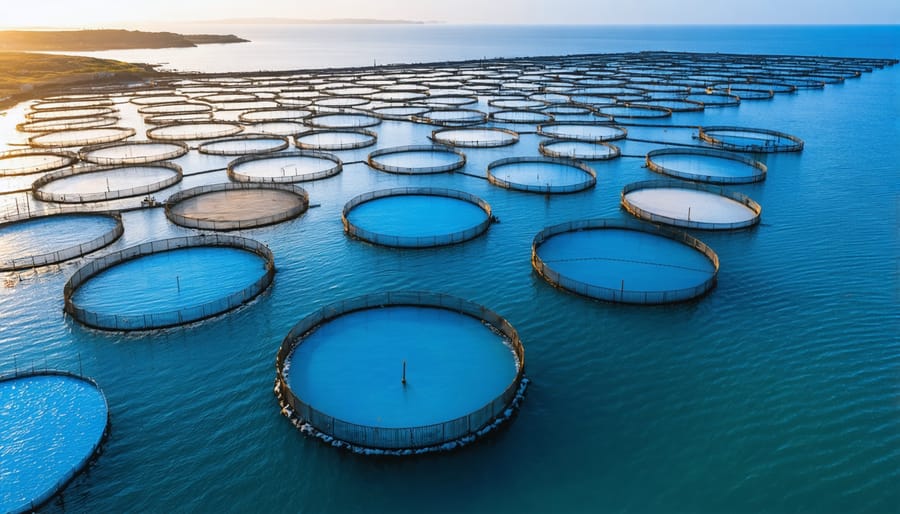
Aquaculture stands at a critical crossroads between feeding our growing global population and protecting the delicate balance of marine ecosystems. As the fastest-growing food production sector worldwide, fish farming now provides over half of all seafood consumed globally, yet its environmental footprint raises urgent concerns among scientists and conservationists. From nutrient pollution in coastal waters to the spread of diseases among wild fish populations, aquaculture’s impacts ripple through marine food webs and coastal habitats with complex consequences. However, emerging sustainable practices and innovative technologies are reshaping the industry, offering hope for a future where aquaculture can thrive without compromising environmental health. This introduction explores the multifaceted relationship between fish farming and marine ecosystems, examining both challenges and promising solutions that could transform how we produce seafood in the 21st century.
The delicate balance between meeting global food security needs and preserving marine biodiversity requires us to understand and address aquaculture’s environmental impacts with both urgency and nuance. Through careful examination of current practices and their consequences, we can work toward solutions that support both human needs and ecosystem health.
Water Quality Impacts of Coastal Aquaculture
Nutrient Pollution and Eutrophication
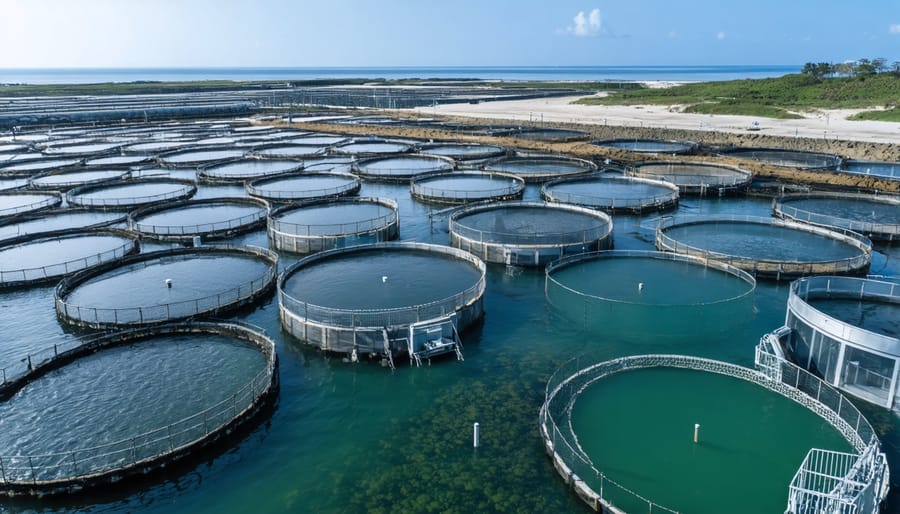
One of the most significant environmental challenges in aquaculture is nutrient pollution, which leads to water quality degradation in coastal ecosystems. When fish are fed in aquaculture facilities, not all the feed is consumed – some sinks to the bottom while nutrients from fish waste accumulate in the water column.
This excess organic matter, rich in nitrogen and phosphorus, can trigger a process called eutrophication. During eutrophication, these nutrients fuel rapid algal growth, creating dense blooms that can block sunlight from reaching underwater plants and marine life. As these algae die and decompose, bacteria consume oxygen from the water, creating “dead zones” where oxygen levels are too low to support most marine life.
The impact extends beyond the immediate farm area. Currents can carry nutrient-rich water to neighboring ecosystems, affecting wild fish populations, seagrass beds, and coral reefs. In some regions, these effects have been observed kilometers away from the source.
Modern aquaculture facilities are implementing several solutions to address this challenge. These include improved feed formulations that fish can digest more efficiently, better feeding techniques that reduce waste, and integrated multi-trophic aquaculture systems where species like seaweed and shellfish help filter excess nutrients from the water. Regular monitoring of water quality parameters helps farmers maintain optimal conditions while protecting the surrounding environment.
Chemical Contamination
The use of chemicals in aquaculture operations presents significant environmental challenges, particularly in intensive farming systems. Antibiotics, widely administered to prevent and treat diseases in farmed fish, can lead to the development of antibiotic-resistant bacteria in marine ecosystems. These resistant strains pose risks not only to wild marine life but potentially to human health through consumption of affected seafood.
Pesticides and parasiticides, commonly used to control sea lice and other parasites in fish farms, can persist in the marine environment long after their application. These chemicals often affect non-target species, including crustaceans and other invertebrates essential to the marine food web. Research has shown that even low concentrations of these substances can impact the reproduction and development of nearby wild populations.
Antifoulants, applied to nets and equipment to prevent biological growth, contribute to chemical pollution in coastal waters. These compounds can leach into the surrounding environment, affecting local marine life and accumulating in sediments. Additionally, disinfectants and cleaning agents used in routine maintenance operations add to the chemical burden in aquaculture zones.
Dr. Sarah Martinez, a marine biologist studying chemical impacts in salmon farms, notes: “We’re seeing promising developments in natural alternatives to traditional chemicals. Some farms are now using cleaner fish like wrasse to control parasites, while others are implementing improved containment systems that reduce the need for chemical treatments.”
Modern aquaculture facilities are increasingly adopting environmentally friendly practices, including biological pest control methods and improved water filtration systems, demonstrating that sustainable solutions are possible while maintaining productive operations.
Impact on Wild Marine Species
Disease Transmission
The interaction between farmed and wild fish populations creates significant pathways for disease transmission, leading to concerning disease outbreaks in marine environments. When fish are densely packed in aquaculture facilities, pathogens can multiply rapidly and spread more easily than in natural settings. This concentrated environment acts as an amplifier for various diseases, including bacterial infections, viral outbreaks, and parasitic infestations.
The proximity of aquaculture operations to wild fish populations poses particular risks. Pathogens can travel through water currents, affecting native species that may have limited natural immunity to these diseases. Sea lice infestations, for example, have become a significant concern in salmon farming regions, where these parasites can spread from farmed to wild salmon populations, particularly affecting juvenile wild salmon during their crucial migration periods.
Disease transmission isn’t limited to fish-to-fish contact. Water exchange between farming operations and surrounding waters can carry pathogens, while escaped farmed fish can directly introduce diseases to wild populations. The use of antibiotics and other treatments in aquaculture facilities may also contribute to the development of resistant strains of pathogens, creating long-term challenges for both farmed and wild populations.
Monitoring and management strategies are essential to minimize these risks. These include maintaining appropriate stocking densities, implementing regular health screenings, and establishing buffer zones between farms and wild fish habitats. Advanced filtration systems and improved containment methods can help reduce the exchange of pathogens between farmed and wild populations, protecting the delicate balance of marine ecosystems.
Genetic Interactions
One of the most significant concerns in aquaculture is the genetic interaction between farmed and wild fish populations. When farmed fish escape their enclosures, they can interbreed with wild populations, potentially leading to reduced genetic diversity and fitness in native species. These escaped fish, often selectively bred for rapid growth and farm conditions, may pass on traits that are disadvantageous in the wild.
Research has shown that farm-raised salmon, for instance, can significantly impact wild salmon populations when they escape. These domesticated fish typically have reduced survival skills and different behavioral patterns, yet they can successfully mate with wild fish. The resulting offspring often exhibit decreased survival rates and altered migration patterns, weakening the overall population’s resilience.
The problem is particularly acute in regions where native fish populations are already vulnerable. In Norway, where Atlantic salmon farming is extensive, scientists have documented genetic changes in wild salmon populations directly linked to interbreeding with escaped farm fish. Similar concerns exist in Scotland, Chile, and Canada’s coastal waters.
To address these challenges, aquaculture facilities are implementing improved containment systems and developing sterile fish populations. Some facilities now use triple-layered nets and advanced monitoring systems to prevent escapes. Additionally, genetic marking of farmed fish helps researchers track escape incidents and assess their impact on wild populations.
Marine biologists emphasize the importance of maintaining genetic diversity in wild fish populations, as it enables them to adapt to changing environmental conditions and resist diseases. This understanding has led to stricter regulations on farm operations and increased investment in escape-prevention technologies.
Habitat Modification and Loss
Mangrove Destruction
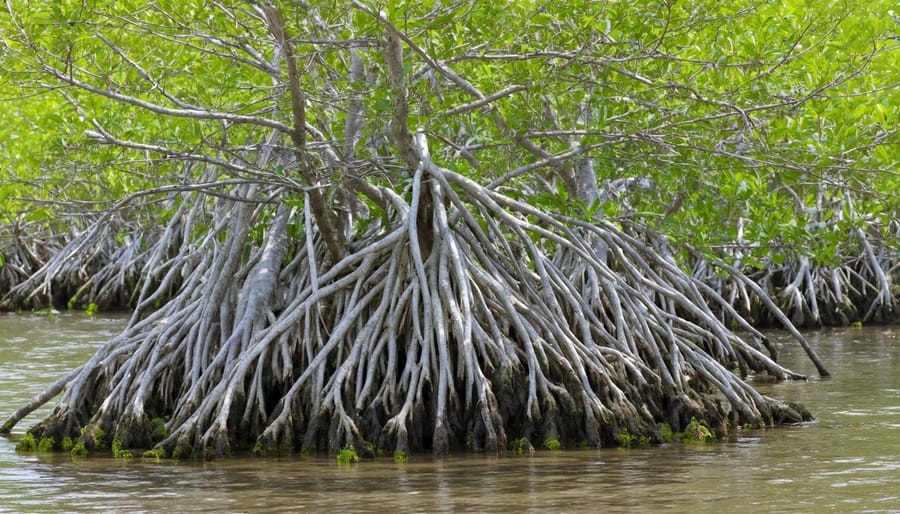
The expansion of aquaculture has led to significant destruction of mangrove forests, particularly in Southeast Asia and Latin America. These coastal ecosystems, which serve as crucial nurseries for marine life and natural barriers against storms, are being cleared at an alarming rate to make way for shrimp farms and other aquaculture operations.
Mangrove loss has far-reaching consequences for both local communities and marine biodiversity. These forests sequester up to five times more carbon than terrestrial forests and provide essential habitat for countless species, including juvenile fish that later populate coral reefs and commercial fishing grounds. When mangroves are cleared for aquaculture, this vital ecosystem service is lost, leading to increased coastal erosion and reduced protection from tropical storms and tsunamis.
The conversion of mangroves to aquaculture ponds also releases stored carbon into the atmosphere, contributing to climate change. Studies have shown that a typical shrimp farm operates for only 3-9 years before soil acidification and pollution render it unusable, yet the environmental damage persists for decades. The destruction of mangrove ecosystems for short-term aquaculture gains represents a significant threat to coastal resilience and marine biodiversity.
However, there is growing recognition of the need to protect these valuable ecosystems. Several countries have implemented strict regulations on mangrove conversion, and innovative aquaculture practices are being developed that work in harmony with existing mangrove forests rather than replacing them.
Seabed Alterations
Aquaculture operations can significantly alter seabed environments, particularly beneath fish cages and shellfish farms. As organic matter from uneaten feed and fish waste accumulates on the ocean floor, it creates what marine biologists call “enrichment zones” – areas with dramatically altered chemical and physical properties.
These changes often manifest as a dark, organic-rich sediment layer that can be several centimeters thick. The decomposition of this organic matter consumes oxygen, potentially creating hypoxic or anoxic conditions that make it difficult for native bottom-dwelling organisms to survive. Studies have shown that the diversity of benthic communities can decrease by up to 70% directly beneath fish farms.
The extent of seabed alteration depends on several factors, including water depth, current patterns, and farm management practices. In areas with strong currents, waste materials may disperse more widely, reducing local impact but potentially affecting a larger area. Conversely, in sheltered locations, the concentration of organic matter can be intense, leading to long-lasting changes in sediment composition.
Recovery of affected seabed areas is possible when farms are fallowed or relocated, though the process can take several months to years depending on local conditions. Some innovative farms are now implementing rotating production sites and integrated multi-trophic aquaculture systems to minimize seabed impact while maintaining productive operations.
Sustainable Solutions and Future Directions
The future of aquaculture lies in innovative solutions that balance food production with environmental stewardship. Recent advances in sustainable aquaculture practices have shown promising results in minimizing ecological impacts while maintaining productivity.
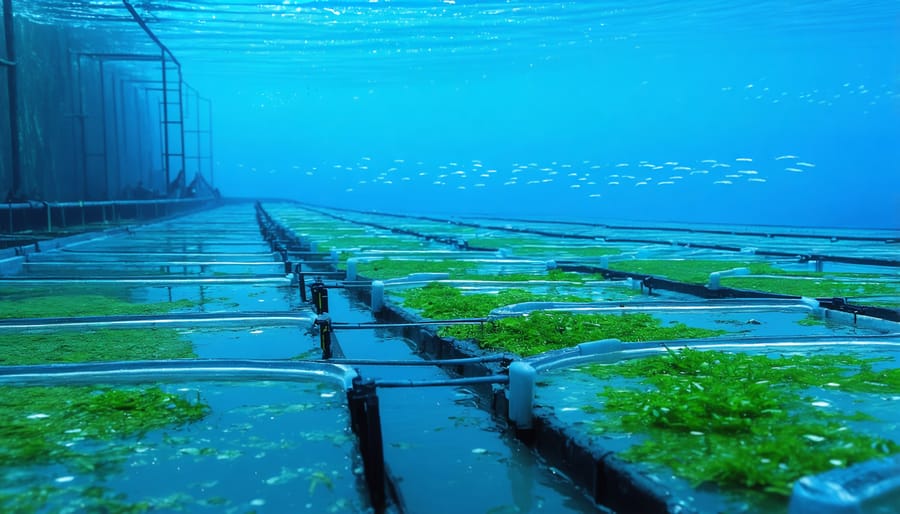
Integrated Multi-Trophic Aquaculture (IMTA) represents one of the most promising approaches. This system mimics natural ecosystems by combining different species that work together symbiotically. For example, farming fish alongside seaweed and shellfish allows the latter to filter waste products, effectively reducing pollution while creating additional revenue streams.
Recirculating Aquaculture Systems (RAS) are revolutionizing indoor fish farming. These closed-loop systems filter and reuse water, dramatically reducing water consumption and preventing escaped fish from impacting wild populations. While initially more expensive to set up, RAS facilities are becoming more cost-effective as technology improves.
Offshore aquaculture presents another viable solution. By moving operations further from coastal areas, farms can take advantage of stronger currents that naturally disperse waste and reduce the concentration of pollutants. These facilities also minimize conflicts with coastal ecosystems and other maritime activities.
Technological innovations in feed development are addressing concerns about wild fish exploitation. Alternative protein sources, including insect meal, algae-based feeds, and plant proteins, are reducing the industry’s dependence on wild-caught fish for feed production.
Monitoring and certification programs are becoming more sophisticated, using AI and satellite technology to track environmental impacts in real-time. These systems help farmers adjust their practices promptly, preventing long-term damage to marine ecosystems.
The implementation of these solutions requires collaboration between scientists, industry leaders, and policymakers. With continued research and investment in sustainable technologies, aquaculture can evolve into an environmentally responsible industry that helps meet global food security needs while protecting our marine ecosystems.
As we’ve explored throughout this article, aquaculture presents both challenges and opportunities for environmental stewardship. The impacts on water quality, marine ecosystems, and coastal habitats are significant, but innovative solutions and sustainable practices are emerging to address these concerns. By implementing integrated multi-trophic aquaculture systems, adopting strict waste management protocols, and utilizing advanced monitoring technologies, the industry is making strides toward environmental responsibility.
The future of aquaculture lies in our collective commitment to sustainable practices. Farmers, scientists, and regulators must work together to develop and implement better standards, while consumers can drive positive change through informed purchasing decisions. Supporting farms that prioritize environmental stewardship, maintain proper stocking densities, and use responsible feed sources helps create market demand for sustainable practices.
You can make a difference by choosing certified sustainable seafood products, participating in local coastal cleanup efforts, and staying informed about aquaculture developments in your region. Consider joining citizen science projects that monitor water quality near aquaculture facilities or supporting research initiatives focused on improving aquaculture sustainability.
The path forward requires balance – meeting growing global food demands while protecting our precious marine ecosystems. Through continued innovation, stronger regulations, and public engagement, we can foster an aquaculture industry that not only feeds the world but also safeguards our oceans for future generations. The time to act is now, and every choice matters in building a more sustainable future for aquaculture.

jessica
Ava Singh is an environmental writer and marine sustainability advocate with a deep commitment to protecting the world's oceans and coastal communities. With a background in environmental policy and a passion for storytelling, Ava brings complex topics to life through clear, engaging content that educates and empowers readers. At the Marine Biodiversity & Sustainability Learning Center, Ava focuses on sharing impactful stories about community engagement, policy innovations, and conservation strategies. Her writing bridges the gap between science and the public, encouraging people to take part in preserving marine biodiversity. When she’s not writing, Ava collaborates with local initiatives to promote eco-conscious living and sustainable development, ensuring her work makes a difference both on the page and in the real world.