Marine Biodiversity Science Center

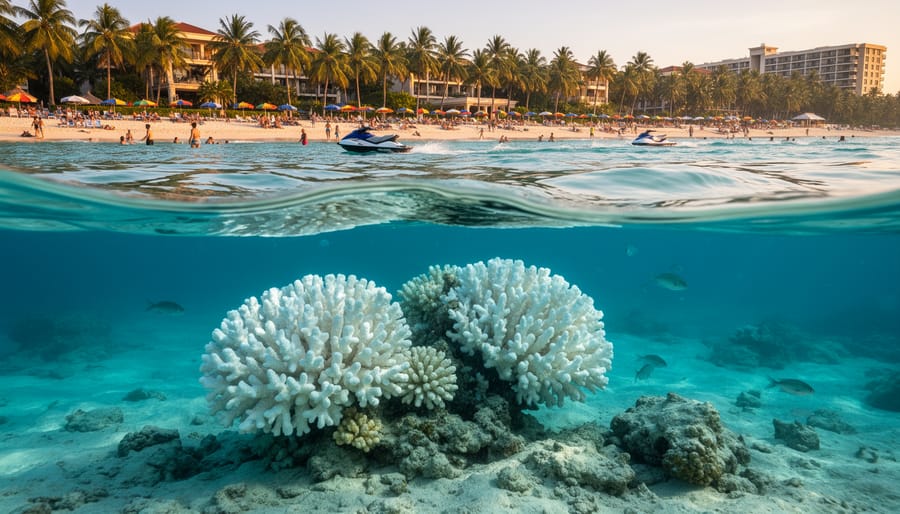
The world’s coastal-ocean ecosystems stand at a critical juncture. These vibrant zones where land meets sea—encompassing coral reefs, mangrove forests, seagrass meadows, and estuaries—face mounting pressures from climate change, pollution, overfishing, and coastal development. Rising sea temperatures bleach coral reefs, turning kaleidoscopic underwater gardens into ghostly white skeletons. Ocean acidification weakens the shells of countless marine organisms, from tiny plankton to commercially important shellfish. Coastal construction destroys nursery habitats where juvenile fish once found shelter, while agricultural runoff creates dead zones devoid of oxygen.
Yet these ecosystems form the foundation of ocean health. Coastal zones produce over 90 percent of global fisheries and protect shorelines from storm surges and erosion. They sequester vast amounts of carbon dioxide and sustain biodiversity that rivals tropical rainforests. Mangroves alone provide nursery grounds for approximately 80 percent of global fish catches, while seagrass beds support everything from seahorses to dugongs.
Understanding how coastal-ocean ecosystems will respond to mounting environmental stressors is not merely an academic exercise. It determines the fate of half a billion people who depend directly on coastal resources for food and livelihoods. Scientists worldwide are documenting rapid transformations: species migrating toward cooler poles, harmful algal blooms proliferating in warmer waters, and entire food webs restructuring in response to changing conditions.
This article examines the specific mechanisms driving these changes, explores the cascading effects across marine communities, and illuminates pathways toward resilience. The science reveals both sobering challenges and genuine opportunities for restoration—if we act decisively now.
The Coastal-Ocean Ecosystem: Where Land Meets Sea
Why These Transitional Zones Matter
Coastal ecosystems function as the ocean’s most productive life-support systems, playing irreplaceable roles that extend far beyond their relatively small geographic footprint. These transitional zones where land meets sea serve as critical nurseries for approximately 80% of commercially important fish species, providing sheltered waters where juvenile fish can grow protected from open-ocean predators.
The ecological services these areas provide are staggering in scope. Mangrove forests, seagrass meadows, and salt marshes act as natural water filtration systems, trapping sediments and absorbing excess nutrients before they reach coral reefs and deeper waters. A single acre of seagrass can support up to 40,000 fish and 50 million invertebrates, creating biodiversity hotspots that rival tropical rainforests in species density.
Marine biologist Dr. Sarah Chen describes these areas as “biological highways” where nutrients from terrestrial runoff mix with oceanic waters, creating incredibly productive feeding grounds. “I’ve watched humpback whale calves learn to feed in these zones, sea turtles return to nest on beaches they left decades ago, and witnessed the intricate dance of species interdependence,” she explains.
These ecosystems also provide crucial storm protection, with coastal wetlands absorbing wave energy and reducing flooding impacts for human communities. They sequester carbon at rates up to 40 times faster than terrestrial forests, making them essential allies in addressing climate change while simultaneously supporting the livelihoods of over 3 billion people worldwide who depend on marine and coastal resources.
The Delicate Balance at Risk
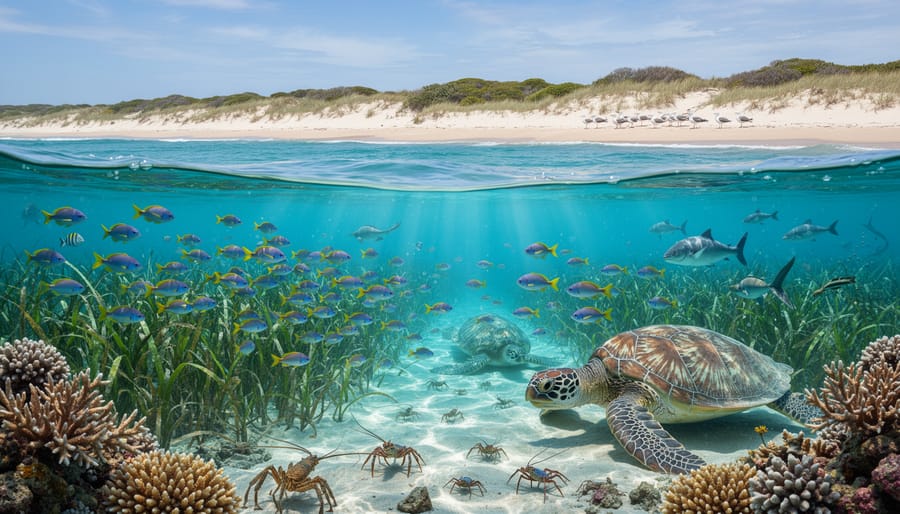
Coastal-ocean ecosystems possess a remarkable natural resilience, having weathered countless environmental challenges over millennia. Coral reefs can recover from bleaching events when given time and proper conditions. Seagrass meadows filter pollutants and stabilize sediments even as tides shift. Mangrove forests rebuild after storms, their intricate root systems providing nurseries for countless marine species. These ecosystems function as interconnected webs of life, where each organism plays a vital role in maintaining overall health and stability.
However, this resilience has limits. Marine biologist Dr. Sarah Chen, who has studied coastal ecosystems for over two decades, describes them as “rubber bands that can stretch and bounce back, but only so far before they snap.” When multiple stressors occur simultaneously—pollution, physical disturbance, climate change, and intensive tourism—these systems become overwhelmed. The very characteristics that make coastal areas attractive to tourists—pristine beaches, vibrant coral reefs, diverse wildlife—are also indicators of ecosystem health that can quickly deteriorate under pressure. Understanding this delicate balance is essential for recognizing why even seemingly small tourism impacts can trigger cascading ecological consequences.
Physical Transformation: When Paradise Gets Paved
Habitat Loss and Fragmentation
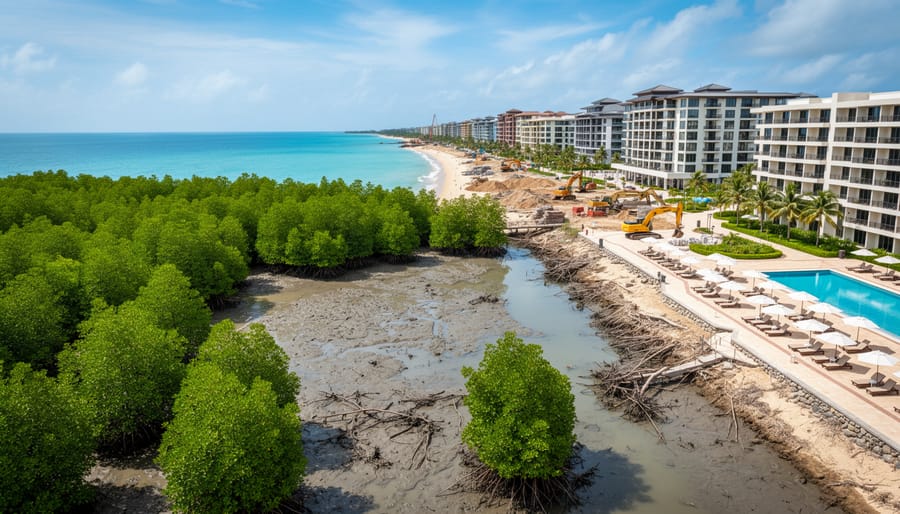
The construction of beachfront hotels, sprawling resorts, marinas, and tourist infrastructure drives some of the most devastating coastal development impacts on marine ecosystems worldwide. These developments often require clearing vital coastal habitats, fundamentally altering the landscape and fragmenting once-continuous ecosystems into isolated patches.
Mangrove forests, which serve as nurseries for countless fish species and protect coastlines from storms, face particular threat. In Southeast Asia, approximately 35% of mangrove forests have been destroyed since the 1980s, with tourism development being a major driver. The construction of beachfront resorts in Thailand’s Phuket region eliminated nearly 60% of local mangroves between 1975 and 2004, leaving coastal communities more vulnerable to erosion and tsunamis.
Seagrass meadows suffer similarly devastating losses. Marina construction and boat anchoring in the Caribbean have destroyed vast underwater meadows that filter water and sequester carbon. In the Mediterranean, coastal development has contributed to a 34% decline in Posidonia oceanica seagrass beds since the mid-20th century.
Coral reefs face destruction from dredging operations to create harbors and artificial beaches. The construction of Cancun’s hotel zone involved extensive reef removal, while coastal sand dunes providing storm protection are routinely bulldozed for unobstructed ocean views. Dr. Maria Santos, a marine biologist working in the Philippines, shares: “I’ve watched entire reef systems disappear within five years of resort construction beginning. The saddest part is that these ecosystems took centuries to develop.”
Coastal Engineering and Altered Ecosystems
Coastal engineering projects, while designed to protect shorelines and infrastructure, often create unintended consequences for marine ecosystems. Jetties and groins interrupt the natural longshore drift of sediment, causing erosion downstream and altering beach profiles that countless species depend upon for nesting and feeding. Seawalls, though effective barriers against storm surge, eliminate the natural transition zone between land and sea, destroying vital intertidal habitats where crabs, mollusks, and shorebirds thrive.
Beach nourishment projects present particularly complex challenges. While pumping sand onto eroding beaches may seem environmentally friendly, the process smothers benthic communities and disrupts the grain size distribution that influences everything from turtle nesting success to the burrowing ability of beach invertebrates. Marine biologist Dr. Sarah Chen recalls surveying a newly nourished beach where ghost crab populations had plummeted by 70 percent due to incompatible sand composition.
These structures also amplify wave energy in unexpected ways, accelerating erosion in adjacent areas and creating a domino effect of coastal hardening. The cumulative impact extends offshore, where altered sediment transport patterns affect seagrass meadows and coral reefs. Understanding these interconnections helps us advocate for nature-based solutions like living shorelines that work with, rather than against, coastal processes.
The Footprint of Human Traffic
Every year, millions of visitors flock to coastal areas, leaving behind more than just footprints in the sand. The physical presence of beachgoers, snorkelers, and divers creates surprisingly significant impacts on fragile marine habitats. Trampling along shorelines and coral reefs crushes delicate organisms, compacts sediment, and destroys critical nursery habitats for juvenile fish and invertebrates. Marine biologist Dr. Sarah Chen recalls surveying a popular snorkeling site where coral breakage increased by 40% during peak tourist season, with many fragments too damaged to recover.
Boat anchors pose another devastating threat, dragging across seagrass meadows and coral formations, leaving scars that can take decades to heal. A single anchor drop can destroy centuries of coral growth in seconds. Repetitive foot traffic on beaches accelerates erosion, destabilizes dune systems, and disrupts nesting sites for sea turtles and shorebirds.
The good news? Simple changes make tremendous differences. Many coastal areas now offer mooring buoys to eliminate anchor damage, while designated pathways protect sensitive habitats. Volunteers with reef monitoring programs help track damage patterns and educate visitors about proper marine etiquette, transforming tourists into conservation ambassadors.
Water Quality Under Pressure
The Sewage and Nutrient Problem
Coastal development often outpaces infrastructure improvements, creating a dangerous mismatch between tourist populations and wastewater treatment capacity. In many popular beach destinations, aging septic systems fail during peak season, while overwhelmed treatment facilities discharge partially treated sewage directly into coastal waters. This raw or inadequately treated wastewater carries excess nutrients, particularly nitrogen and phosphorus, which act as fertilizers in marine environments.
The consequences are dramatic and visible. Nutrient pollution triggers explosive algal blooms that blanket the water surface, blocking sunlight essential for seagrasses and corals below. When these algae die and decompose, bacteria consume available oxygen, creating hypoxic zones, or dead zones, where marine life cannot survive. Fish flee these areas, while stationary organisms like oysters and corals suffocate.
Marine biologist Dr. Sarah Chen recalls surveying a once-thriving reef off a tourist hotspot: “We found a graveyard. The nutrient runoff from failing hotel septic systems had triggered blooms that completely smothered the coral community.” Her team now works with local communities to upgrade wastewater systems, demonstrating how infrastructure investment protects both marine ecosystems and the tourism industry itself. Volunteers can support these efforts through beach monitoring programs that track water quality indicators.
Chemical Contamination from Tourism Activities
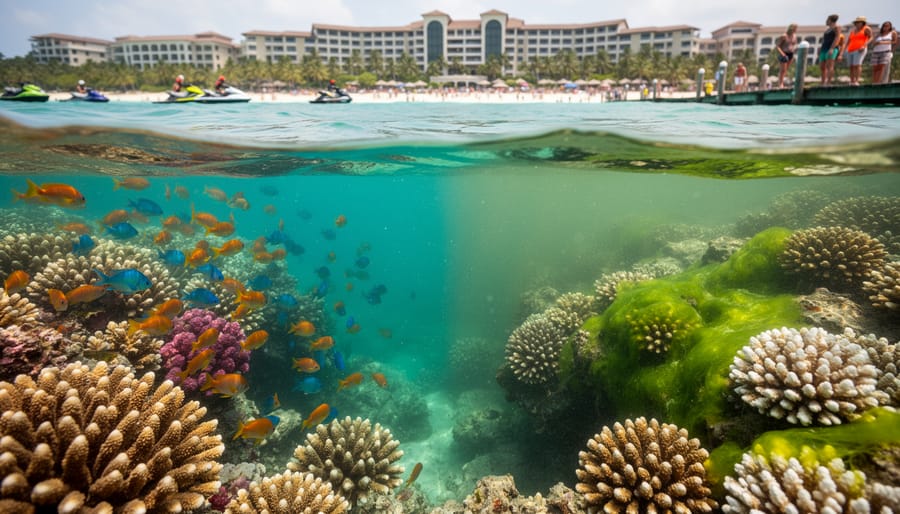
Tourism activities introduce a complex mixture of chemical pollutants into coastal waters, creating widespread ocean pollution effects that threaten marine life. Sunscreen chemicals, particularly oxybenzone and octinoxate, wash off swimmers’ skin in quantities that can reach several thousand liters annually at popular beaches. These compounds disrupt coral reproduction, cause bleaching in coral larvae, and damage coral DNA, contributing to reef degradation even at concentrations as low as 62 parts per trillion.
Boat operations release petroleum products, including gasoline and diesel fuel, which contain toxic hydrocarbons harmful to fish gills and filter-feeding organisms. Marina cleaning products, antifouling paints containing heavy metals like copper, and sewage discharge from vessels further compound the problem. Marine biologist Dr. Sarah Chen, who has monitored Caribbean reefs for fifteen years, notes that sites near tourist marinas show 40 percent lower coral coverage compared to protected areas.
The encouraging news is that solutions exist. Reef-safe sunscreens using mineral-based ingredients, stricter marina regulations, and eco-certified boat operators are gaining traction. Volunteers can participate in beach clean-ups and water quality monitoring programs, directly contributing to healthier coastal ecosystems while raising awareness about chemical contamination.
Plastic and Solid Waste Invasion
Coastal tourism generates staggering amounts of waste, with plastic debris being particularly devastating. Single-use plastics from beach visitors, including bottles, bags, and food packaging, often end up in the ocean where they persist for centuries. These larger items break down into microplastics, tiny fragments less than 5mm that now pervade coastal waters worldwide.
Marine wildlife faces severe consequences from this plastic invasion. Sea turtles mistake plastic bags for jellyfish, while seabirds feed plastic fragments to their chicks, causing starvation and internal injuries. Microplastics accumulate in the tissues of fish and shellfish, entering the food chain and potentially affecting human health.
Marine biologist Dr. Sarah Chen recalls a heartbreaking moment during a beach cleanup: “We found a young seal entangled in fishing line and surrounded by plastic waste. After freeing it, our volunteer team collected over 200 pounds of debris in just two hours from that single beach.”
The good news? Coastal cleanups make a measurable difference. Organizations worldwide need volunteers to remove debris, monitor pollution levels, and educate beachgoers about proper waste disposal, turning concerned citizens into active conservation participants.
Disrupting Marine Life: Behavioral and Biological Impacts
Wildlife Disturbance and Stress
The seemingly peaceful presence of boats and watercraft creates an invisible web of stress throughout coastal waters. Marine mammals, fish, and seabirds rely on sound for communication, navigation, and locating prey, but propeller noise and engine vibrations disrupt these essential activities. Studies show that dolphins and whales alter their vocal patterns and abandon feeding grounds when vessel traffic intensifies, leading to decreased foraging success and potential malnutrition during critical breeding seasons.
Human foot traffic on beaches presents equally significant challenges. Sea turtles attempting to nest often abandon their efforts when encountering tourists, while shorebirds expend precious energy fleeing from beachgoers rather than feeding to fuel long migrations. Even seemingly harmless wildlife watching can cause chronic stress when animals are repeatedly approached too closely, affecting their reproductive success and long-term survival.
Dr. Elena Martinez, a marine biologist who has studied coastal dolphin populations for fifteen years, witnessed this transformation firsthand. “I’ve watched a resident pod of bottlenose dolphins gradually shift their core habitat area further from shore as recreational boating increased,” she explains. “These dolphins now travel an extra three miles daily to reach their traditional feeding grounds, burning energy they desperately need for raising their calves. We’ve documented a twenty percent decline in successful births over the past decade.”
Understanding these disturbances empowers us to make better choices. Many conservation organizations need volunteers to monitor wildlife behavior and educate visitors about respectful viewing distances, creating immediate opportunities for anyone passionate about protecting these vulnerable populations.
Overexploitation Through Tourism
Tourism-driven overexploitation creates a vicious cycle where the very attractions that draw visitors become degraded through unsustainable practices. Coastal restaurants often source seafood through methods that bypass sustainable fishing quotas, targeting juvenile fish and spawning aggregations to meet demand for “fresh daily catches.” This practice depletes breeding populations faster than they can recover.
The souvenir trade fuels destructive collection of marine life. Shells, sand dollars, and coral fragments taken as keepsakes represent living organisms or critical habitat structures. In popular destinations, entire reef sections have been stripped bare by collectors, eliminating shelter for juvenile fish and invertebrates. Marine biologist Dr. Sarah Chen recalls surveying a once-thriving Philippine reef reduced to rubble after years of coral harvesting for tourist trinkets.
Wildlife harassment for photographs poses another significant threat. Tour operators chase dolphins, sea turtles, and whale sharks to guarantee customer encounters, causing chronic stress that affects feeding and breeding behaviors. Repeated disturbances force animals to abandon critical habitats.
However, positive change emerges through responsible tourism initiatives. Volunteer programs now train tourists in reef monitoring and beach cleanups, transforming passive observers into active conservation participants. By choosing eco-certified operators and refusing to purchase marine souvenirs, travelers directly support ecosystem recovery.
Invasive Species Hitchhiking on Tourism
Tourism boats and cruise ships act as unintentional ferries for marine hitchhikers, transporting non-native species across vast ocean distances. Barnacles, algae, and tiny organisms cling to hulls, while ballast water carries microscopic invaders that establish themselves in new waters. Marinas and docks associated with tourism infrastructure create perfect invasion points where these species gain their first foothold.
The consequences can be devastating. Invasive species often lack natural predators in their new environments, allowing them to reproduce rapidly and outcompete native marine life for food and habitat. The invasive species spread disrupts food webs and can fundamentally alter ecosystem functioning.
Marine biologist Dr. Sarah Chen witnessed this firsthand in the Mediterranean, where invasive algae introduced through tourism vessels now blanket once-diverse coral communities. “It’s heartbreaking to see native species disappear,” she notes, “but early detection programs involving local dive operators are making a real difference.” Volunteers can participate in monitoring efforts, helping identify and report non-native species before they become established, turning tourists into conservation allies.
Climate Change Amplification: A Compounding Crisis
Weakened Resilience to Environmental Stress
Tourism-related degradation significantly compromises the ability of coastal ecosystems to withstand mounting environmental pressures from climate change. When coral reefs are already stressed by physical damage from boat anchors, nutrient pollution from coastal development, and sedimentation from construction, they become far more vulnerable to coral bleaching events triggered by rising ocean temperatures. Healthy coral systems can often recover from moderate bleaching, but degraded reefs lack the resilience needed to bounce back.
Marine biologist Dr. Elena Rodriguez, who has studied Caribbean reefs for over two decades, explains: “I’ve watched reefs that survived centuries of natural disturbances collapse within years once tourism pressure intensified. It’s like asking someone to run a marathon after they’ve already been fighting an infection—they simply don’t have the reserves.”
This weakened state extends beyond corals. Mangrove forests stripped for beachfront development lose their capacity to buffer coastlines from increasingly powerful storms. Seagrass beds trampled by tourists struggle to sequester carbon and filter pollutants effectively. When multiple stressors combine—pollution, physical damage, and climate impacts—ecosystems experience a cascading failure rather than gradual decline.
The solution requires reducing baseline stressors through sustainable tourism practices and supporting marine conservation programs that actively restore ecosystem health. By giving these environments breathing room, we enhance their natural capacity to adapt and survive in our changing climate.
The Carbon Footprint of Coastal Tourism
Coastal tourism generates substantial greenhouse gas emissions through multiple pathways, creating a damaging feedback loop that intensifies climate impacts on the very ecosystems tourists come to enjoy. Air travel remains the largest contributor, with flights to tropical destinations producing significant carbon dioxide emissions per passenger. Once at their destination, visitors rely heavily on energy-intensive accommodations, restaurants, and transportation that often depend on fossil fuels, particularly in developing regions with limited renewable energy infrastructure.
The cruise industry adds another layer of emissions, as these floating resorts consume enormous amounts of fuel while carrying thousands of passengers between coastal destinations. Ground transportation, from rental cars to tour buses, further compounds the carbon footprint. This cycle creates a troubling paradox: as tourism grows in coastal areas, emissions accelerate ocean warming and acidification, degrading the coral reefs, beaches, and marine life that attract visitors in the first place. Marine biologist Dr. Elena Rodriguez notes from her fieldwork in the Caribbean that destinations experiencing rapid tourism growth often show faster rates of coral bleaching and ecosystem decline, directly linked to both local and global emission sources.
Turning the Tide: Conservation Solutions That Work
Sustainable Tourism Models Making a Difference
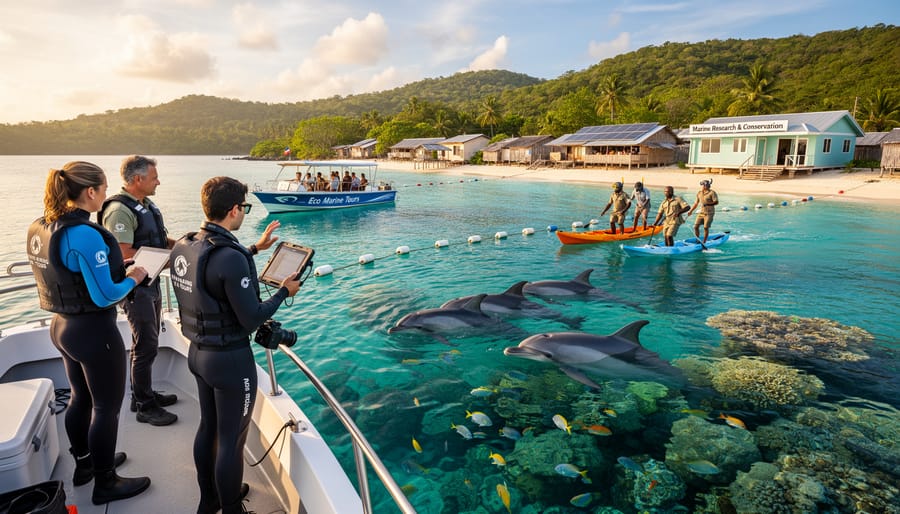
Around the globe, innovative tourism models are proving that economic prosperity and ecological preservation can coexist harmoniously. Marine protected areas with carefully managed visitor access demonstrate this balance beautifully. In Palau, for instance, the island nation implemented a mandatory reef-safe sunscreen policy and visitor pledge, reducing chemical pollution while maintaining tourism revenue. Meanwhile, the Great Barrier Reef’s Marine Park Authority uses zoning systems that designate no-go areas for marine life recovery while opening other zones to controlled tourism activities.
Certification programs like Green Fins in Southeast Asia and Blue Flag for beaches worldwide help tourism operators adopt sustainable practices. These programs provide clear guidelines for minimizing anchor damage, managing waste, and protecting wildlife. Marine biologist Dr. Sarah Chen shares how working with dive operators in the Philippines transformed local practices: “Once operators understood that healthier reefs meant better dive experiences and repeat customers, they became our strongest conservation partners.”
Community-based ecotourism initiatives empower coastal residents to become ecosystem stewards. In Belize, former fishermen now lead snorkeling tours, sharing their intimate knowledge of marine life while monitoring reef health. These programs create economic incentives for conservation, demonstrating that protecting ocean ecosystems directly benefits local livelihoods and enriches visitor experiences through authentic, educational encounters with marine biodiversity.
Technology and Innovation for Cleaner Coasts
Innovation offers exciting pathways to reduce tourism’s footprint on coastal waters. Reef-safe sunscreens, free from oxybenzone and octinoxate, prevent chemical damage to coral polyps and other marine organisms. Many coastal destinations now encourage or require these products, demonstrating how consumer choices directly protect ecosystems.
Advanced wastewater treatment systems represent another breakthrough. Modern facilities use multi-stage filtration and UV treatment to remove nutrients, pathogens, and microplastics before discharge. Some resorts have implemented closed-loop systems that recycle water for landscaping, dramatically reducing pollution entering nearshore environments.
Real-time monitoring technology empowers better management decisions. Dr. Elena Martinez, a marine biologist working with Caribbean resorts, shares that “sensor networks tracking water quality parameters allow us to identify pollution sources immediately and adjust operations accordingly.” Drone surveys and satellite imaging help assess reef health and visitor impacts across large areas.
These technological solutions work best when paired with education programs that engage tourists as conservation partners. When visitors understand their role in protecting coastal ecosystems, they become advocates for sustainable practices long after their vacations end.
How You Can Be Part of the Solution
Protecting coastal-ocean ecosystems requires collective action from every stakeholder. As a tourist, you can make meaningful choices by selecting eco-certified accommodations, participating in beach cleanups, and respecting marine wildlife by maintaining safe distances and following local guidelines. Support businesses committed to sustainable practices, whether through reduced plastic use, responsible waste management, or conservation partnerships.
The Marine Biodiversity Science Center offers numerous volunteer opportunities for those wanting hands-on involvement. From monitoring coastal water quality to assisting with habitat restoration projects, volunteers gain valuable experience while directly contributing to conservation efforts. Marine biologist Dr. Elena Torres shares, “Our volunteers are essential to data collection efforts that inform regional conservation policies. Last year alone, community scientists helped us document coral health across 50 reef sites.”
Businesses can implement green certifications, reduce single-use plastics, and allocate portions of profits to marine conservation initiatives. Communities can advocate for stronger coastal protection policies and participate in citizen science programs. Even small actions compound into significant impact when adopted widely. Whether you contribute through mindful tourism choices, volunteering time, or supporting conservation organizations financially, your involvement helps safeguard these vital ecosystems for future generations.
The challenges facing coastal-ocean ecosystems from tourism are undeniably complex, spanning from physical habitat destruction to chemical pollution and disruption of marine life behaviors. Yet, amid these concerns lies tremendous reason for hope. The growing awareness of tourism’s environmental footprint has catalyzed a global movement toward sustainable practices that demonstrate we can protect these vital ecosystems while still enjoying their beauty.
Marine biologist Dr. Elena Rodriguez, who has spent fifteen years studying coral reef recovery in the Caribbean, shares an inspiring perspective: “I’ve witnessed degraded reefs bounce back when communities commit to sustainable tourism practices. The resilience of these ecosystems, combined with human determination, creates real possibilities for restoration.”
The path forward requires collective action from every stakeholder. Tour operators must prioritize environmental certification and education. Local governments need to enforce protective regulations while supporting community-based conservation. Visitors hold perhaps the most immediate power through their daily choices—selecting eco-certified accommodations, respecting wildlife viewing guidelines, and supporting conservation-focused businesses.
For those inspired to make a direct difference, volunteer opportunities abound. Programs worldwide welcome participants to assist with coral restoration, beach cleanups, sea turtle monitoring, and marine debris removal. These hands-on experiences not only contribute to ecosystem health but also create lasting connections between people and the ocean.
Students and educators can amplify impact by integrating marine conservation into curricula and research projects, fostering the next generation of ocean stewards. Every informed choice, every conversation about sustainable tourism, and every act of environmental stewardship contributes to preserving coastal-ocean ecosystems for future generations.
The question isn’t whether sustainable tourism is possible—it’s whether we’ll choose to embrace it. Your engagement matters. Start today by researching your next coastal destination’s environmental practices, supporting conservation organizations, or volunteering with local marine protection initiatives. Together, we can ensure that coastal-ocean ecosystems thrive alongside responsible tourism.

jessica
Ava Singh is an environmental writer and marine sustainability advocate with a deep commitment to protecting the world's oceans and coastal communities. With a background in environmental policy and a passion for storytelling, Ava brings complex topics to life through clear, engaging content that educates and empowers readers. At the Marine Biodiversity & Sustainability Learning Center, Ava focuses on sharing impactful stories about community engagement, policy innovations, and conservation strategies. Her writing bridges the gap between science and the public, encouraging people to take part in preserving marine biodiversity. When she’s not writing, Ava collaborates with local initiatives to promote eco-conscious living and sustainable development, ensuring her work makes a difference both on the page and in the real world.