Marine Biodiversity Science Center

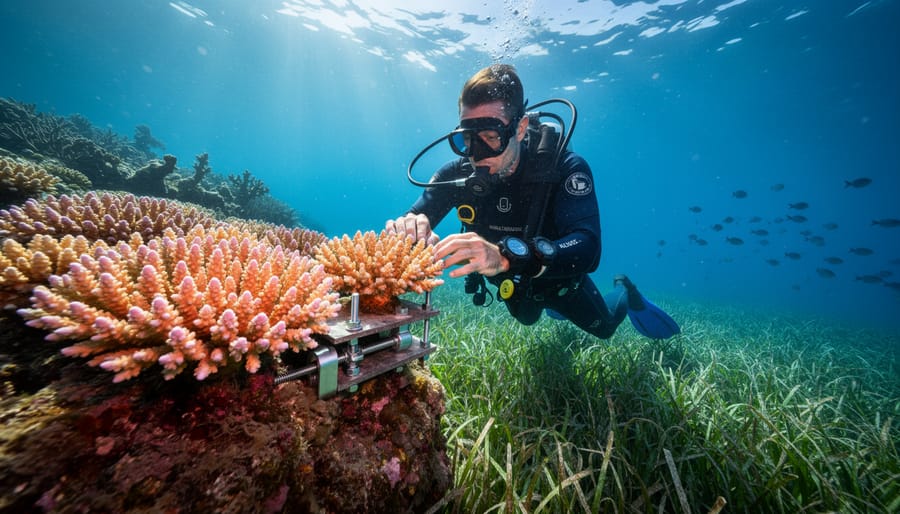
Marine restoration jobs involve the hands-on work of repairing and revitalizing damaged ocean ecosystems, from replanting coral reefs and restoring seagrass meadows to rebuilding oyster beds and removing invasive species. These careers sit at the intersection of science, conservation, and tangible environmental impact, offering professionals the chance to reverse decades of habitat degradation while building resilience against climate change.
The field has expanded dramatically as coastal communities and governments recognize that healthy marine ecosystems provide essential services: storm protection, carbon storage, fisheries support, and water filtration worth billions of dollars annually. What makes marine restoration careers particularly compelling is their direct, measurable outcomes. You can see the corals you transplanted grow, count the fish returning to restored habitats, and monitor water quality improvements in real time.
Marine restoration encompasses a surprisingly diverse range of roles. Field technicians dive to plant coral fragments or monitor restoration sites. Project managers coordinate multi-year initiatives across government agencies, nonprofits, and research institutions. Restoration ecologists design science-based recovery plans, while community engagement specialists recruit volunteers and educate the public. GIS analysts map degraded areas and track progress. Hatchery specialists cultivate native species for reintroduction. The variety means there’s room for people with different skill sets, from those who want to spend every day in the water to those who prefer lab work, data analysis, or stakeholder coordination.
This article breaks down what marine restoration professionals actually do, the types of positions available across sectors, the qualifications you’ll need, and practical pathways into this growing field.
What Marine Restoration Jobs Are
Marine restoration jobs are professional positions dedicated to actively repairing damaged ocean and coastal ecosystems through scientific intervention and hands-on rehabilitation efforts. These careers sit at the intersection of marine biology, environmental engineering, and conservation science, where practitioners work to reverse habitat degradation and restore ecosystem function to areas impacted by pollution, climate change, overfishing, or coastal development.
Unlike traditional marine conservation roles that primarily focus on protecting existing healthy ecosystems from future harm, restoration professionals take a more interventionist approach. They design and implement active recovery programs for degraded habitats, using techniques ranging from coral transplantation and seagrass replanting to artificial reef construction and genetic rescue of threatened populations. This work requires both theoretical knowledge and practical skills, as restoration practitioners must understand complex ecological processes while also getting their hands dirty in the field.
- Marine Restoration
- The practice of assisting the recovery of ocean ecosystems that have been degraded, damaged, or destroyed through targeted scientific interventions. This goes beyond simple protection to include active rehabilitation measures.
- Ecosystem Rehabilitation
- The process of repairing ecosystem function and structure in degraded habitats, aiming to return them to a healthier state that supports biodiversity and ecological services. Full restoration to pristine conditions may not always be the goal.
- Restoration Ecology
- The scientific discipline that studies how ecosystems recover from disturbance and develops evidence-based methods for accelerating that recovery. It combines theoretical ecology with practical application.
The scope of marine restoration work spans multiple habitat types. Professionals might spend their days cultivating coral fragments in underwater nurseries, mapping seagrass meadows with drone technology, building oyster reef structures, or monitoring the success of kelp forest recovery projects. This ecosystem restoration work demands versatility, as each project brings unique challenges tied to specific ecosystems, local conditions, and community needs.
How Marine Restoration Work Functions
The Restoration Process
A typical restoration project unfolds in five distinct phases. First comes the baseline assessment: scientists survey the degraded site, documenting species composition, substrate conditions, water quality parameters, and identifying the primary stressors that caused decline. This data establishes measurable benchmarks for future success.
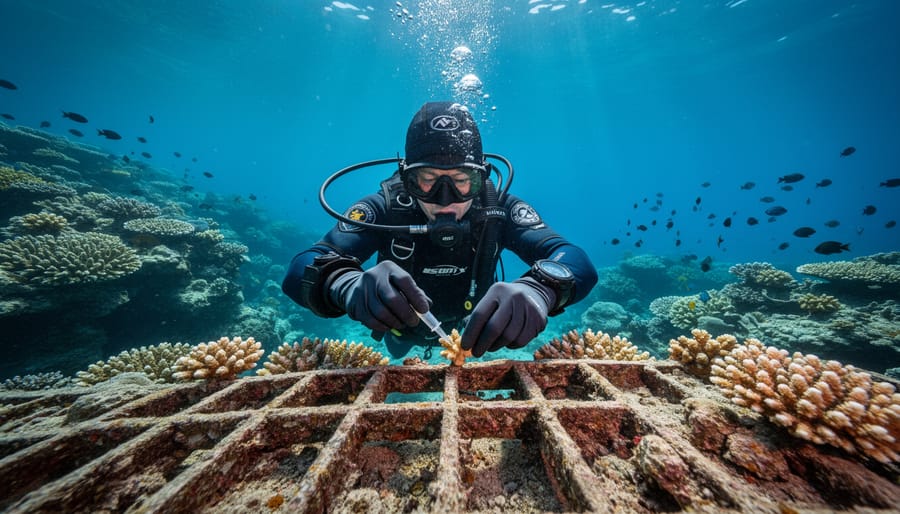
Next, restoration teams develop a site-specific plan, selecting appropriate techniques and target species based on local conditions. Implementation follows, the hands-on phase where technicians transplant coral fragments, plant seagrass shoots, or deploy artificial reef structures. This stage demands careful timing, often synchronized with seasonal reproduction cycles or favorable weather windows.
Immediately after installation, intensive monitoring begins. Restoration workers track survival rates, growth metrics, and early signs of natural recruitment. This close observation period, typically spanning six to twelve months, catches problems before they escalate.
Long-term evaluation extends for years, using marine monitoring systems to measure ecosystem function recovery: fish abundance, water filtration rates, carbon sequestration, and habitat complexity. These extended datasets prove whether restoration saves oceans at meaningful ecological scales and inform adaptive management decisions that refine future projects.
Technology and Tools Used
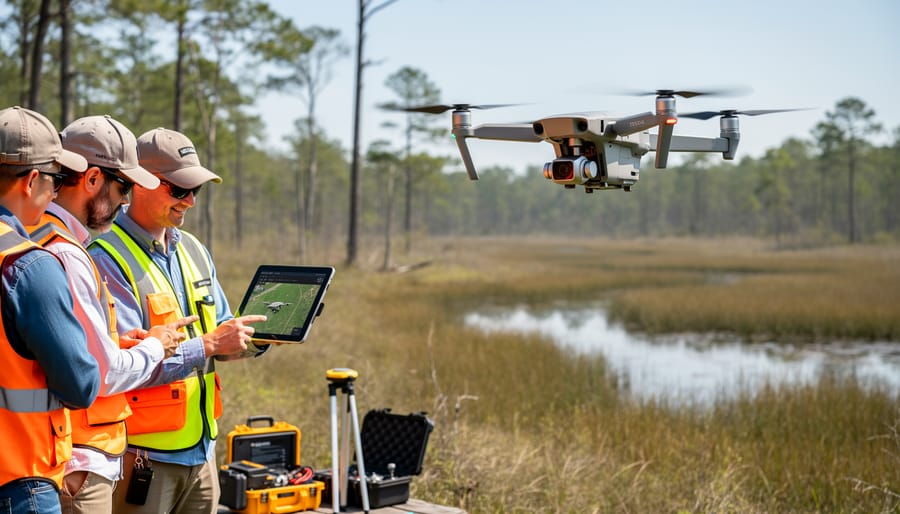
Marine restoration professionals rely on an expanding toolkit that blends cutting-edge science with practical field applications. Coral microfragmentation accelerates reef recovery by breaking healthy coral colonies into small pieces that grow 25 to 50 times faster than naturally propagating corals, allowing practitioners to cultivate reef-building species in nurseries before transplanting them to degraded sites. Drone mapping has transformed site assessment by capturing high-resolution aerial and bathymetric data across thousands of acres in hours rather than weeks, enabling teams to identify priority restoration zones and track recovery over time with remarkable precision.
Underwater robots equipped with cameras, sensors, and sampling tools now handle tasks that were once time-intensive for divers, from surveying deep-water habitats to deploying substrate materials in challenging conditions. Genetic rescue techniques represent another frontier, where restoration workers apply selective breeding and assisted gene flow to cultivate heat-tolerant coral strains or disease-resistant oyster lines, building resilience into restored populations facing climate change. Environmental DNA sampling allows teams to monitor species presence and community composition without physical collection, while 3D-printed reef structures provide customizable frameworks that mimic natural complexity and accelerate colonization by marine life.
Categories of Marine Restoration Careers
Fieldwork and Hands-On Restoration Roles
These positions put you in direct contact with damaged ecosystems, executing the physical work of rebuilding marine habitats. Restoration divers spend 30 to 60 percent of their time underwater, installing coral fragments onto degraded reefs, securing substrate materials, and maintaining restoration structures. They need advanced diving certifications, comfort working in varying visibility conditions, and the ability to use specialized tools while managing buoyancy and safety protocols.
Habitat technicians support restoration projects from shore-based facilities and field sites. They prepare transplant materials, maintain water quality in holding systems, record data during site visits, and assist with equipment deployment. This role suits those who want fieldwork without constant diving.
Nursery managers oversee coral or seagrass propagation facilities, monitoring growth rates, managing water chemistry, treating diseases, and coordinating harvest schedules for outplanting. The position blends aquaculture skills with ecological knowledge and requires meticulous record-keeping.
Transplantation specialists focus on the final stage of restoration, positioning healthy organisms onto degraded sites. They select optimal microhabitats, secure specimens to maximize survival, and return weeks later to assess establishment success. This work demands pattern recognition, ecological understanding, and physical stamina for repetitive underwater tasks.
Scientific and Research Positions
Scientific research roles form the intellectual backbone of marine restoration, translating ecological theory into practical recovery strategies. Marine ecologists study ecosystem interactions and baseline conditions to identify the root causes of degradation, whether pollution, overfishing, or climate stress, and determine which restoration interventions will work best in specific environments.
Restoration biologists design and test new techniques in controlled settings before field deployment. They might experiment with optimal coral fragment sizes for faster growth or investigate which seagrass species thrive in warming waters. Their work bridges laboratory science and real-world application.
Geneticists have become essential as restoration projects increasingly incorporate genetic diversity to build climate resilience. They analyze population genetics, select diverse parent stock for coral nurseries, and track genetic markers to ensure restored populations can adapt to changing ocean conditions.
Monitoring specialists develop long-term assessment protocols to measure restoration success. They design survey methods, analyze trend data, and determine whether restored habitats are achieving ecological benchmarks like increased fish abundance or improved water quality. Their findings inform adaptive management, allowing teams to refine techniques based on what the data reveals rather than assumptions.
Project Management and Coordination
Behind every successful marine restoration project stands a team of professionals who transform scientific vision into operational reality. Project management and coordination roles bridge the gap between research, funding, regulation, and community action.
Restoration project managers orchestrate entire initiatives from conception through completion. They develop budgets, coordinate multidisciplinary teams, track timelines, and ensure deliverables meet both scientific standards and funder expectations. A project manager might simultaneously juggle grant reporting, vendor contracts for equipment, volunteer scheduling, and stakeholder meetings, all while adapting to weather delays or unexpected ecological findings.
Permit coordinators navigate the complex regulatory landscape that governs marine restoration work. They secure authorizations from agencies like NOAA, state environmental departments, and coastal management programs. This requires understanding environmental law, preparing detailed permit applications, and maintaining compliance throughout project implementation. Their work determines whether restoration can legally proceed.
Community engagement specialists connect restoration science with local stakeholders. They organize public outreach events, recruit volunteers, collaborate with fishing communities and indigenous groups, and translate technical findings into accessible messaging. These professionals recognize that lasting restoration depends on community ownership and participation, not just biological intervention.
Together, these coordination roles ensure restoration projects succeed beyond the laboratory and dive site.
Where Marine Restoration Jobs Are Applied
Ecosystem-Specific Applications
Restoration careers take dramatically different shapes depending on the ecosystem. Coral reef jobs center on propagation and outplanting: nursery technicians cultivate coral fragments on suspended structures, while restoration divers transplant mature colonies back to degraded reefs. These roles demand advanced dive certifications and meticulous record-keeping to track growth rates and survival.
Seagrass specialists work in shallow, turbid waters, hand-planting shoots into sediment and installing protective grids to prevent uprooting. The work requires stamina for repetitive planting motions and tolerance for poor visibility. Oyster reef restorers deploy shell bags or concrete reef balls to create settlement substrate, then monitor larval recruitment, positions that blend heavy construction with aquaculture skills.
Restoring coastal ecosystems like mangrove forests involves terrestrial skills: propagule collection, nursery management in tidal zones, and coordinating community planting events where hundreds of saplings go into the mud in a single day. Mangrove jobs often overlap with social science, requiring cultural sensitivity and stakeholder engagement.
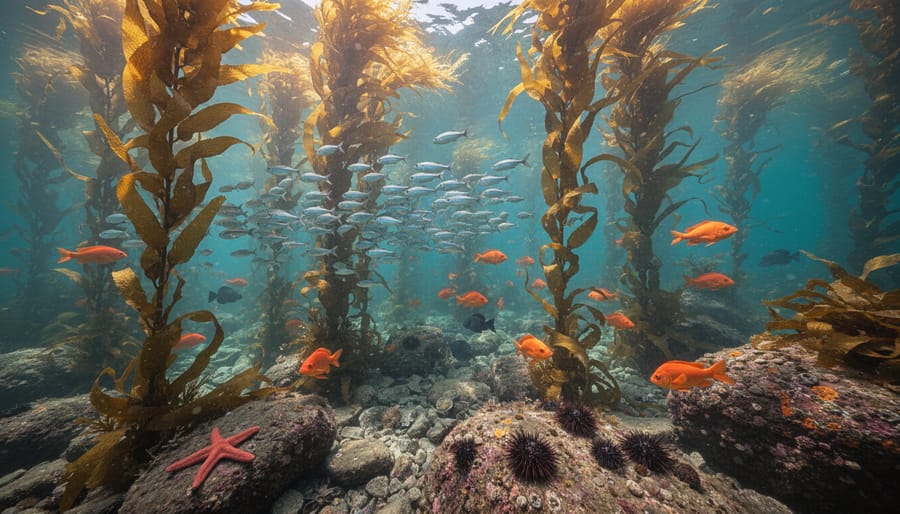
Kelp forest restoration teams anchor spore-laden ropes to rocky substrate or remove sea urchins that overgraze kelp beds, cold-water work in surge-prone environments. These positions attract divers comfortable with California’s frigid coasts or Tasmania’s remote sites. Each ecosystem demands its own technical toolkit, from coral epoxy and cable ties to shovels and GPS units, shaping daily workflows and the profile of workers the field recruits.
Employment Sectors
Government agencies employ marine restoration professionals at federal, state, and local levels. In the United States, NOAA’s Restoration Center and the National Marine Fisheries Service hire restoration specialists, project managers, and field technicians to implement large-scale habitat recovery programs. State coastal management departments and regional resource agencies maintain restoration teams to address local ecosystem damage and meet regulatory requirements.
Nonprofit organizations form the backbone of community-driven restoration work. Groups like The Nature Conservancy, Reef Restoration Foundation, and regional marine conservation trusts hire restoration scientists, dive teams, and outreach coordinators. These positions often blend fieldwork with fundraising and public education, offering professionals the chance to work directly with volunteers and community stakeholders.
Research institutions and universities employ restoration ecologists and project scientists who develop new techniques while training the next generation of professionals. Marine labs conduct applied research, testing restoration methods and monitoring long-term outcomes. These roles typically require advanced degrees and focus on publishing findings that improve restoration practices.
Private consulting firms have emerged as major employers, hiring restoration planners, environmental compliance specialists, and technical divers to design and implement projects for clients ranging from coastal developers to offshore energy companies. These positions tend to offer competitive salaries and exposure to diverse restoration challenges across multiple ecosystems and geographic regions.
Community-based organizations, particularly in coastal developing nations, employ local restoration practitioners who combine traditional ecological knowledge with scientific methods, creating culturally grounded restoration programs.
Skills and Qualifications Needed
Educational pathways into marine restoration vary by role. Entry-level fieldwork positions often require a bachelor’s degree in marine biology, ecology, environmental science, or oceanography, while research and management roles typically demand advanced degrees. That said, demonstrated field experience and technical certifications can sometimes substitute for formal education, especially for hands-on restoration technician positions.
For most marine restoration careers, certain core competencies prove essential:
- Scientific diving certification (AAUS or equivalent) for underwater restoration work
- Species identification skills for target organisms and local biodiversity
- Data collection and recording protocols following standardized scientific methods
- Project management abilities to coordinate multi-phase restoration initiatives
- Geographic information systems (GIS) and spatial analysis for site mapping
- Small boat operation and seamanship for accessing remote restoration sites
Beyond these technical skills, restoration professionals need strong collaborative abilities. Projects involve working with diverse teams including scientists, community volunteers, government officials, and local stakeholders. Clear communication skills help translate complex ecological concepts for non-specialist audiences and secure community buy-in for restoration efforts.
Physical fitness matters significantly for field-based roles, which demand swimming stamina, the ability to work in challenging marine conditions, and comfort performing repetitive tasks like coral fragment attachment or seagrass planting. Adaptability and problem-solving prove equally important since ocean conditions change rapidly and restoration plans often require on-the-spot adjustments.
Entry pathways include internships with restoration nonprofits, volunteer positions through organizations like the Marine Biodiversity Science Center, or seasonal technician roles that provide hands-on training. Many professionals begin as restoration volunteers, gain experience and certifications, then transition into paid positions. Graduate research assistantships focused on restoration ecology offer another common entry route, particularly for those targeting research-intensive careers.
Real Voices from the Field
I never imagined I’d spend my mornings underwater zip-tying coral fragments to metal frames, but here I am five years into my career as a restoration technician with the Florida Reef Tract Recovery Initiative, and I wouldn’t trade it for anything.
My path started with a marine biology degree and what I thought would be a summer volunteer position at a coral nursery. That three-month commitment turned into my life’s work. The learning curve was steep, mastering scientific diving protocols, understanding coral genetics, coordinating with commercial fishers who initially viewed our work skeptically. I’ve dealt with everything from equipment failures during critical transplant windows to watching hurricanes undo months of painstaking progress.
What keeps me going? Last month, I revisited a reef we restored in 2022. The original transplants had spawned, recruiting new corals naturally across the site. Juvenile snappers darted between branches we’d placed with our own hands. We didn’t just rebuild structure; we catalyzed an entire ecosystem’s return.
My advice for anyone considering this field: get your hands wet early through volunteer programs, even if you’re still deciding on formal education. Restoration demands both scientific rigor and physical resilience, you’ll troubleshoot genetic analyses one day and haul cinder blocks in surge the next. The work is hard, funding feels perpetually uncertain, and progress measures in decades, not quarters. But if you want a career where your daily efforts directly heal the ocean, this is it.
Common Questions About Marine Restoration Careers
Do you need a PhD to work in marine restoration? What does a typical career trajectory look like, and can you start through volunteer work? These are some of the most common questions from people drawn to this rewarding field.
Do I need a PhD to work in marine restoration?
No. While advanced degrees open doors to research and leadership positions, many restoration roles require only a bachelor’s degree in marine biology, environmental science, or related fields. Entry-level fieldwork positions often value diving certifications and hands-on experience over graduate credentials.
Can I start my career as a volunteer?
Absolutely. Volunteer programs with restoration nonprofits and research institutions provide essential training and networking opportunities. Many paid positions are filled by candidates who started as volunteers and demonstrated commitment to the work.
What salary range can I expect in marine restoration?
Entry-level technicians typically earn $30,000-$45,000 annually, while experienced project managers and senior scientists can earn $60,000-$90,000 or more. Salaries vary significantly by organization type, with government and private sector positions often paying higher than nonprofit roles.
What does career advancement look like in this field?
Most professionals start in fieldwork roles, then move into specialized positions like monitoring coordinator or nursery manager. From there, paths diverge into project management, research leadership, or consulting, with opportunities to influence policy and large-scale restoration strategy.
Geographic location also affects compensation and job availability. Coastal regions with active restoration programs, such as Florida, California, and Hawaii, offer more opportunities but also attract more competition. Remote positions focused on data analysis, grant writing, and project coordination have become more common, expanding options for professionals who don’t live near major marine centers. Seasonal work is typical when starting out, but building a diverse skill set across multiple restoration techniques improves prospects for year-round employment. Those who combine scientific knowledge with project management abilities or community engagement skills tend to advance more quickly in this growing field.
The field of marine restoration is expanding rapidly as ocean ecosystems face mounting pressures from climate change, pollution, and habitat loss. Restoration professionals are no longer niche specialists, they’re becoming essential contributors to coastal resilience, biodiversity recovery, and carbon sequestration efforts worldwide. Governments, conservation organizations, and private sectors are investing more heavily in restoration programs, creating a steady pipeline of career opportunities for those with the right mix of passion and expertise.
What makes these careers particularly meaningful is the tangible impact. Unlike many environmental professions where results can feel abstract or decades away, restoration workers see direct outcomes: coral fragments growing into thriving colonies, seagrass meadows returning to barren seafloors, fish populations rebounding in restored habitats. You’re not just studying problems, you’re actively solving them.
If you’re drawn to this work, start exploring now. The Marine Biodiversity Science Center offers volunteer programs and educational resources designed to introduce newcomers to restoration techniques and connect them with practitioners in the field. Whether you’re a student planning your career path or a professional considering a transition, the ocean needs your skills. The best time to begin your restoration journey is today.

jessica
Ava Singh is an environmental writer and marine sustainability advocate with a deep commitment to protecting the world's oceans and coastal communities. With a background in environmental policy and a passion for storytelling, Ava brings complex topics to life through clear, engaging content that educates and empowers readers. At the Marine Biodiversity & Sustainability Learning Center, Ava focuses on sharing impactful stories about community engagement, policy innovations, and conservation strategies. Her writing bridges the gap between science and the public, encouraging people to take part in preserving marine biodiversity. When she’s not writing, Ava collaborates with local initiatives to promote eco-conscious living and sustainable development, ensuring her work makes a difference both on the page and in the real world.